Dr. Joe Dispenza: Stop Losing Your FREE WILL to the PROGRAM!
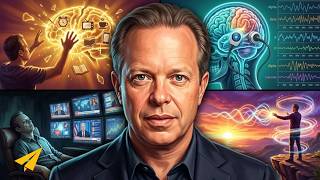
Dr. Joe Dispenza explains how past emotions keep you on autopilot, hijacking your free will through chronic stress that down-regulates genes and creates disease. He teaches a three-step practice: set a future intention, generate the elevated emotion before it happens, and check in throughout the day to recalibrate your brain-heart coherence and attract what you want.
Chapters
Okay, well, most people, number one, they get up in the morning and the first thing they do is they think about the problems in their life. And those problems are memories from the past. So the moment they think about their problems, they're thinking in the past, right? Every one of those problems has an emotion attached to them. So they start feeling unhappy or unworthy or whatever. And how you think and how you feel is your state of being. So most people's entire state of being is in the past when they start the day. So if they're in the familiar past, they're going to live in a predictable future, right? So they get up and they check their cell phone, they check their texts, their WhatsApp, their Facebook, They post something on Facebook, they tweet, they Twitter, they check the news. Then they go to the bathroom, get a cup of coffee, take a shower, get dressed, check more emails, drive to work the same way, do the same thing. So they're in a program. They've actually lost their free will to the program. Hey, it's Evan Carmichael, and I watch these videos every day because I need them for motivation. Being around successful entrepreneurs every morning helps me believe that I can do great things too. It's like your morning coffee, but for your goals, kickstarting your day with a blast of positivity. So here is a challenge for you. Try watching one video every morning for the next 30 days, and let's find out together if they help you do great things too. If you're in, leave a hashtag #believe in the comments below so I can celebrate with you. So today, let's get some incredible motivation from the one and only Joe Dispenza. Enjoy. So if you start your day and you start your day with this simple question, what is the greatest ideal of myself that I can be today? You ask yourself that question. Now listen, your body's gonna go like, "Well, we gotta get a cup of coffee and you gotta—" I'm tired. I'm tired, yeah. And you gotta go, "Ah, ah, ah, ah, ah, body, you're not the mind, I'm the mind right now. You're gonna sit here, I'm gonna feed you. You're gonna get your coffee, you're gonna do all those things, but right now, this is my time. You're gonna obey me," right? So now, the body's no longer the mind, you're the mind. And so when it wants to get up and you become aware of it, and we turn back to the present moment, every time you do, that's a victory. And you're changing some aspect of yourself. So then ask yourself, I do this all the time, write down 4 thoughts that you're going to stay conscious of the whole day. I can't, it's too hard. You'd be surprised the moment you become conscious of what those thoughts are, how unconscious you've been to them all day, you know, for weeks on end. Write down what you speak, how you speak, 4 things you want to change, how you act. How do you act? Do you complain? Do you blame? You make excuses? You feel sorry for yourself? That's a victim consciousness. What emotions do you live by? Is it possible that you're so used to living by guilt you don't even know it's guilt? It just feels like you. Do you allow your energy to drop? Become conscious of those states of mind and body and review them and say, this is the old self. Then say, what thoughts do I want to fire and wire in my brain? And start firing and wiring and start feeling it. What behaviors will I demonstrate today? What choices will I make? One day, one lifetime. And just like you did, rehearse them. Rehearse the whole entire thing. Begin to install the neurological hardware in your brain. And if you keep installing it, the hardware is going to become a software program. You're going to start thinking and acting that way. And then here's the tough part. Can you teach your body emotionally what your future is going to feel like before it's made manifest? And don't get up until you feel that way. I think the first thing is to learn. Every time you learn, you make new connections in your brain, and learning is making those connections. And I was joking with my staff this week. I said, Nobody reads anymore. Nobody reads. Nobody reads anything. Learn information. Why? Because we found out that in our events, if you can be present and not look at your cell phone or not talk about your past, but be present with the content, and I can combine quantum physics with neuroscience, with neuroendocrinology, with psychoneuroimmunology, mind-body connection, epigenetics, electromagnetism, you can really get it. Like, you can give me the nod, and then I say, okay, you I'm looking at an audience of 1,500, 1,600 people. Okay, well, turn to the person next to you and teach it back to them. If you can't explain that, it's not wired in your brain, and you'll doubt that it's possible, and you'll do something differently. Okay, if you can explain it, then you're causing your brain to fire in new sequences and new patterns and new combinations. Whenever you make your brain work differently, you're changing your mind. Why? Because mind is the brain in action. So you keep reminding yourself of this. Now, this— it's easier to forget this than remember it. You know, it takes practice to really— you can't get it in one bite. It's a learning process, right? So now you're installing the neurological hardware in your brain in preparation for the experience. So knowledge is the precursor to the experience, right? Without the knowledge and the information, it's conjecturous, right? So the more you understand the what in the terms of what you're doing and the why you're doing it, the application, the practical aspect, the how becomes exciting. Like, oh, I'm going to get it. As an example, you can take someone and throw them in an ice bath. We have no knowledge of ice, what that can do. And then because they have no knowledge, the ice bath is actually going to cost them harm. Right? You take that person, you can teach them a few things and put them in an ice bath and actually be instrumental, actually gain value from it. Well, the prefrontal cortex, the one that said, now you got to make this valuable. You can take a person and you can put them in an environment and they can perceive the environment as a problem and you can measure their autonomic response and it'll weaken their autonomic response. You can take that person and have them perceive it as a challenge and it'll actually strengthen their autonomic response. Okay. So now what's the reason behind this? Well, you got to put as much tension on your inner world of how you're thinking and how you're feeling and how you're going to behave as much as your outer world of three-dimensional reality. And meditation is just a way to say, okay, let me get my brain and body right. I'm going to present Ed Mylett to the world today. I got one lifetime, one Groundhog Day, one day. I just want something different, something unusual, something mystical, some sign from the universe that I created. And I wanted to come in a way that I would never think of. That would be the unknown, because if I can predict it, it's the known. Okay, let me— before I get up and grab my phone and do all my things and get plugged back into my known world. Let me just say, okay, who do I no longer want to be? I want to become so conscious that I won't go unconscious again. The fundamental question is, how many times am I going to forget until I stop forgetting and start remembering? That is the moment. There's nothing mystical about this. This is the work. And then you're going to say, okay, who do I want to be when I open my eyes? Okay, let me think about this. How would greatness live? I don't know. Read a book on greatness. Read a book on Nelson Mandela. You want You want to be wealthy? Read about wealthy people and you're going to see that they didn't just make their wealth. They lost a ton of money and failed a million times. And that's reality. Okay, well, what were the qualities? They had perseverance. They had determination. They cut their losses. They forgave. They forgot about it. They went on. Okay, so how am I going to behave? Let me rehearse how I'm going to behave. What I'm going to do, let me take my time. I have plenty of time to do this. Let me just behave. Let me think about how I'm going to behave differently in this situation. How am I going to change my emotional response? I had a fall from grace yesterday and went back to my old self. Let me just, I'll set an alarm on my phone every 3 hours. I'm just gonna go off and I'm gonna take a moment and get back into the feelings of my future. Okay. If I can do that over and over again, well, what do you think could happen in my life as a result of it? So knowledge being the forerunner, the application, simple stuff, simple stuff. Practice heart coherence. There's plenty of stuff that we can, you know, we can talk about. Practice brain coherence. It's, we know, we know I asked the brain scientists, what percentage of people at the end of a week-long event, uh, what percentage of people will have their brains changed for the better? They said 100%. 100%. One week fully immersed in, into the experience. You practice it every day. Now you can't do it once or twice and say, why isn't my bank account full? You know what I'm gonna tell you? You're not that good. Yeah. That's the only reason why. If you were that good, it would happen. Mm-hmm. You're not that good. So show up again. And show up again and keep showing up. And I just was talking to a staff member today. The universe only gives us what we think we're worthy of receiving. That's right. Right. So then people who show up for themselves every day, believe they're worthy, they, they, they start feeling pretty damn worthy. Like they, they're like, I'm worthy for this. Not like an entitlement way, like something, or they just like, I'm, I'm really, I'm real. I feel like it's gonna happen. I'm worthy for it. Just the thought alone could create an emotion that could make us sick. Is that what I'm hearing? Yeah. Because that thought, when you're seeing that thought in your mind or remembering that image, it's the image and the emotion, it's the thought and the feeling, it's the stimulus and response that's immediately conditioning the body into that state of imbalance. So it's a scientific fact that the long-term effects of the hormones of stress push the genetic buttons and create disease. If you can turn on that stress response just by thought alone, Your thoughts are literally gonna make you sick. Okay. Crazy. So that's the greatest example of the mind-body connection. So the next fundamental question is, okay, if our thoughts can make us sick, is it possible that my thoughts could make me well? Well, if that's the case, then I'm gonna have to manage my attention and I'm gonna have to manage my energy because where I place my attention is where I place my energy. And I'm gonna have to inhibit that thought that has conditioned the body to subconsciously be the mind of that emotion. And the body's so objective that it does not know the difference between the real-life experience that's creating that emotion and the emotion that person is fabricating by thought alone. To the body, it's exactly the same. So the body's believing it's being chased by a predator. The body's believing it's in an offensive situation where it has to attack. The body's believing it's constantly needing to be ready, and it's constantly out of homeostasis, is constantly out of balance. It's in emergency, it's in fight or flight. It's a different system in the autonomic nervous system where you're stepping on the gas, where you're mobilizing enormous amounts of energy for some threat, some danger, real or imagined. But that thought and that feeling, the image, the emotion, the stimulus response is conditioning the body to automatically be the mind of that emotion. So then now the body becomes conditioned and addicted. Now, this gets to be a problem because people get addicted to their own thoughts. It becomes their personality, right? It is their identity. And they become addicted to the life they don't even like because the response to the coworker, to the boss, to the ex is actually giving them a rush of energy, a rush of adrenaline. And they're associating that rush of energy with some problem or condition in their life. And now come time to change and manage your attention and manage your emotion, It's no different than breaking addiction to anything. There's cravings. The body wants to return back to how it's been conditioned into the familiar past, into the known. I believe that there are latent systems in the brain and body that have to be activated in order for us to have a lucid or mystical moment. Yeah. And I've been chasing the mystical now for at least 20 years. And I think people start out in a spiritual quest for a lot of reasons. Some people want to be abundant, some people want to be healthy, some people want better relationships. And that's kind of the reason why people start. But as they start creating things they want in their life, and as they start connecting to this invisible field of information called the quantum field, you know, that's a free— that field is made up of energy, and energy is frequency, and all frequency carries information. When you can hook up to that field, then your brain processes a new stream of consciousness, and that consciousness coexists with energy. So all of a sudden, you have a very transcendental moment, and your inner world starts becoming more real than your outer world. And those moments then leave lasting impressions in our brain because you feel the energy of that experience. And when you feel altered in some way because you feel more electric or more alive, You pay more attention to the images in your brain and you're starting to create memories. And now the brain becomes wired differently. And I think that you perceive a broader spectrum of reality. Also, to make sure you're actually taking action after watching this video, I've designed a special free worksheet just for this video. The worksheet will highlight our favorite lessons from the video that will inspire you to remember what you learned today and actually apply them. The worksheet will also give you space to write down what your key takeaways are and your specific plan of action to make sure you're getting results. If you want the worksheet designed specifically for this video, absolutely for free, there's a link in the description below. Go click on it and start building the momentum in your life and your business. I'll see you there. The moment you think differently, you're mapping new connections in your brain. If you keep thinking differently, it's going to feel uncomfortable in the beginning, but nerve cells that fire together wire together. Now you beginning to create networks of neurons to reflect a new idea. And if you keep revisiting that idea, the hardware circuitry becomes a software program. So the hardware becomes a software program. Now it becomes more automatic. If you're able to then let the thought in your mind become the experience, the end product of the experience is an elevated emotion. Now you turn off these survival centers that have to do with your identity And all of a sudden that energy starts moving into your heart. And now you begin to produce 1,300 new chemicals that are not only gonna stimulate your immune system, but begin to literally regulate, upregulate new genes to make new proteins and downregulate old genes that are connected to inflammation or disease. You turn them on or off? They're like Christmas tree lights. Genes are like Christmas tree lights. They're turning on and off all the time. You're thinking the same thoughts, performing the same behaviors, and living by the same emotions. Now you have the same lights on and the other lights off. Now, all genes make proteins. That's what they do. Your body's a protein-producing machine. So if you keep the same genes turned on, you keep making the same proteins, nothing's going to change in your life. We have to understand to a greater degree that we are more unlimited than what we're told, that we have to change our beliefs, that We, if we live in fear of something getting us, uh, what we fear has power over us. And, and when we're in that emotional state, we, we give it a lot of our attention. And where you place your attention is where you place your energy. So we have to be greater than our environment. We have to be greater than the normal unconscious programs that we don't have the power to heal in our body. And we have the time now, the luxury of time, to be more in the present moment, to get, get better at it. When people have this fear of death, um, they just don't know what it looks like. And, and, you know, every religion that I've studied— and, and I don't spend a lot of time studying religion, but I have through my own curious nature looked at several religions, uh, throughout my life— and Every religion talks about this concept of being eternal, whether you're— what religion it is. Either you go to heaven, you go to hell, you go there for eternity. You're on the wheel of karma, you're on that wheel for eternity. You're in nirvana, it's eternity. So this concept that we are consciousness, that we're an awareness, and energy never is lost in the universe, I think that if we embrace the idea that we are eternal, and this is just a wink in eternity, then the question is, am I all in? Am I going to go all in at this time in history? And this is a time in history, by the way, where we have all the practice that we have done in our own work, inner work, all of the knowledge we've learned, all the meditations, all the transformations, all the inquiries, all the pushing ourselves past our limits. All the training and practice of heart coherence, brain coherence is for times like these. These are the times where it matters the most. This is— now you have tools to self-regulate. You have tools. So changing your relationship with the understanding of death— death is not a failure or the end. It's just a transition. So I just feel like when we confront that and we have a good conversation about it, And we really find the answers about it. I think we're more prone to be less fearful in our lives, and I think that's important. Practice the meditation that goes along with it. Now, why is that meditation important? Because I still do that meditation when I'm in the process of change. I want to become conscious of my unconscious thoughts. I want to be aware of how I speak, how I act. I want to look at how I feel every single day and see if that feeling is connected to my future or is connected to my past. And I want to write all those things down and remind myself to stay so conscious that I don't go unconscious and return back to that old personality that's connected to the same life. And then thinking about thoughts you do want to fire and wire in your brain and have them through repetition with intention and attention. Install the circuits and repeat it enough times that the hardware becomes more like a software program, and you naturally have a new voice in your head that says, anything's possible, believe in yourself, you can do this, instead of I can't, it's too hard, I don't feel like it. Those are thoughts of the past. To sit down and decide how you're going to be with your children, how you're going to be in traffic, how you're going to be with coworkers, what would love do, and and begin to review and rehearse in your mind how you're going to be. And the act of rehearsing in your mind truly begins to install more neurological hardware. You're, you're reminding yourself and reproducing the same level of mind. Why? So you can step into that footprint in your day and modify your behaviors to produce a different experience. That experience produces a different emotion. And you're going to want to feel that emotion instead of the emotions of your past. And then teach your body what your future feels like. Start making those chemicals. 95% of who we are by the age of 35 is programmed. Is that true? I think if we define a habit as a redundant set of automatic, unconscious thoughts, behaviors, and emotions that's acquired through repetition. A habit is when you've done something so many times that your body now knows how to do it better than your conscious mind. Then it's programmed subconsciously. So then when the body knows how to do it better than the conscious mind, then for the most part, the greatest habit we have to break is the habit of being ourselves, right? So there's a principle in neuroscience that says that nerve cells that fire together wire together. If you keep thinking the same way, If you keep making the same choices, if you keep doing the same things, if you keep reproducing the same experiences and feeling the same emotions, your biology begins to become hardwired in a sense. It becomes programmed. So in order to change something, to arrive at a new vision of your future, if you wanted to arrive at a new goal or new vision of your future, you'd have to change something about yourself in order to get there. And you'd have to change the way you think, the way you act, and the way you feel. When you begin to become conscious of those unconscious thoughts, so conscious that you don't let them slip by your awareness unnoticed or unchecked by you. If you catch yourself speaking in a limited way, or you become conscious that you're behaving in a certain way, in a habit, and you can notice or pay attention to how you're feeling, then you're no longer the program. Now you're consciousness observing the program. You're only unconscious when you're in the program. And so to change then is to become so conscious that you don't go unconscious again. And in a sense, that is consciousness that is really the puppet master that really decides who we want to be. I think the biggest The problem is that people lose their free will to a set of programs, and so their body is basically programmed into a predictable future based on what they've done in the past. So to change then, to change that habituation, takes an enormous amount of energy, an enormous amount of awareness. I have worked so hard in getting people to the point where they can forget about themselves and become nobody, no one, no thing, nowhere, and no time. People, when they finally get this, when they finally realize that when they're that, they're pure consciousness and they're connected to the field, and then they start putting their attention on that frequency of oneness and wholeness and tune into it and pay attention to it and stay present with it and become more aware of it and experience it and feel it moment after moment after moment. How many— how much of people's waking day how much do they put their attention on the field and how much do they put their attention on matter? I'd say 100% of the time they put their attention on matter. Now, my students are connecting to a greater frequency. They know how to get beyond themselves. They can sit for extended periods of time. They can lock in. They can experience. I watch. If they're connecting to that level of frequency called the quantum field where they're experiencing something cool, something greater that you can't experience with your senses. As you evolve and unfold deeper into it, you experience less separation and more oneness and wholeness. And the more connected you are to it, the less distance between you as a consciousness, free-willed individual, and the consciousness of the objective unified field. The closer you are to it, the shorter amount of time it's going to take for it to appear in your life. Life because you're outside the fundamental rules of Newtonian physics and 3D reality. You're changing the field and it changes matter instantaneously. So now we're seeing it happen in a shorter amount of time because we're getting better at it. We're connecting to that field more. And I know this to be the case because when I witness it in week-long events, I know the moment. I can tell you when the energy shifts in the room, and now I know it's going to be fun. Now I know, get ready because the miracles are happening. It'll happen in one week. You tell me how a tumor can disappear on a person's thyroid. Not one, not two. You tell me how a man with a stroke who's been paralyzed in his arm and leg, that's in his 70s, paralyzed for years, now lifting his arm above his head. How do you explain that? Is he— he didn't do that matter to matter. He didn't change his diet. He didn't do physical therapy. He didn't try to have a good attitude and think positively. There was none of that. Something in the field changed, and the pattern of that condition in the field changed. So it is happening in a shorter amount of time. There is no rule It's about the person's ability to pay attention and to focus, to be greater than their body, their environment, and time. It's their sincerity. It's the engagement when they go sit down and do it. They're not doing, "Oh man, I gotta do this." That's the wrong attitude. Nothing's gonna happen then. You get there like, "I'm going to connect with the divine. This is gonna be a great day. I'm gonna keep my energy up." I'm not getting up and until I feel like I'm empowered, that person's gonna have a rockin' day. They're gonna have a good day. I think we've all experienced those synchronicities where you're thinking about something or you have an intention and all of a sudden you start to see reality kind of conform itself around you in some way and you're not going anywhere to get it. Somehow it seems to be coming to you. There's a very direct correlation between energy and reality. So when you start to synchronize your energy to a possibility that exists in the quantum field and you have a coherent brain, there's a very, very specific signal that we can send out that's very, very coherent and clear. And when we match that brain coherence with heart coherence, It is the heart that acts as a magnet and draws the experience back to us. So the thought being electrical charge and the feeling being the magnetic charge, and how you think and how you feel broadcasts information into the quantum field. And I think whatever we broadcast into the field is our experiment with destiny. So we either create from the field or we create from matter. And if we create from matter as bodies local in space and time in three-dimensional reality, we have to move through space to get what we want. We have to move back and forth to work and drive there to manifest our dreams. And in creating in three-dimensional reality takes time and it takes energy. Sometimes people get so lost in reality they forget what they're what their dreams were, because there's too much time between cause, the thought, and effect, the experience. And that's what separation does in three-dimensional reality. Creating from the field and getting beyond yourself, your associations to everything physical and known, and being able to enter through a small door, the eye of the needle, the quantum field, passing through that eye of the needle as pure consciousness and connecting to a field and teaching people how to create from the field instead of from matter, connected to that unified field, to source energy. When they create from source and they're connected to source, and source is the cause that creates matter, the effect. If we create from source, connected to it from the field instead of from matter, we don't have to go anywhere now to get what we want. We begin to draw the experiences to us. So by combining heart coherence with brain coherence, now we have a Wi-Fi signal, and all we have to do is synchronize our energy to some intention with some emotion and tune in to the energy of the future. And the longer you're conscious of this energy, the more you draw your future future to you. And if you keep practicing it every day, it's going to become familiar to you. And all of a sudden, that will be your natural energy. And when you change your energy, you change your life. And the more coherent the signatures electromagnetically, the more refined the experience we have. The best thing we could ever do for the world is to work on ourselves. I mean, we have 3 brains in one. And those 3 brains allow us to go from thinking to doing to being. Thinking brain is the neocortex. That's where we learn information. You learn knowledge, you learn semantics, you learn philosophy, you learn intellectual data. You store that in your thinking brain. Now, it's not enough to just learn that information. You have to actually apply it. You have to demonstrate it. You have to get your body involved. And when you go from thinking to doing, and you actually modify your behavior, now you're going to have a new experience, and that new experience is going to make a new emotion, and that new emotion is going to instruct the body. It's going to teach the body what the mind has intellectually understood. You see, knowledge is for the mind and experience is for the body. Getting people to go from thinking to doing is like herding cats because everybody wants to stay in the intellectual realm. No one wants to get their body involved. Everybody wants to be a philosopher, right? And so if you're going to read the book on peace, and you're going to read the book on global warming, if you're going to read the book on economics or a new way to govern, you can't just read the book. You got to now get out there and demonstrate it. You got to demonstrate peace. You have to be peace. And it's not enough to just do the experience once. You can't have an experience where you read the book on peace and then you go and you experience peace one time and say, okay, I get the Nobel Peace Prize. You got to be able to repeat that experience over and over again, and you got to make it look natural and easy. And when you do, you activate that third brain. And that third brain allows us to be in a state of being. See, when we're in a state of being, that's when mind and body are working together. And leaders, great leaders, knew how to do that. They weren't saying one thing and doing— so the body was doing something else. Their mind and body, their intention was aligned to their behavior, and their behavior was equal to their intention. Their thoughts and actions We're working together. And when that happens, we move into a state of being. Now imagine a world of people demonstrating peace. So you can meditate in a city, and there have been experiments that show the crime rates drop when the meditation is in process. But when that experiment ends, the meditation returns— the crime rate returns back to the ceiling value. When the meditation is over. So it's not enough to just think it, but imagine now if people were actually demonstrating peace and actually demonstrating they were the living example of it. You would have thousands of people in the state of being, being it. So when the mystics talked about being it, it wasn't enough to just say you can think about it. You have to actually embrace it. It's got to be visceral, and you have to memorize that emotional state so great, with such intensity, that nothing from your external world will move you from it. That's when we've mastered that state of peace. In order for us to change, the first step is to become conscious of our unconscious thoughts. It's not just willpower. No, will exists in the conscious mind, but we have to go into the operating system where those programs exist. Programming. Right. So when you you begin to become aware of your unconscious thoughts, you begin to notice your automatic behaviors, and you begin to pay attention to how you're feeling, that fact in neuroscience is called metacognition. The fact that you can observe who you're being means you can modify your behaviors, modify your state of being to do a better job in life. And so that's a skill. That level of awareness is a forebrain activity, and we can teach I teach people how to do that. So when you begin to look at those states of mind and body, it begs the question: if you're observing the program, it means you're no longer the program. You're the consciousness observing the program, and you begin to objectify your subjective mind. You become more conscious, and consciousness then, of course, is what really is the first step to change. If you keep thinking the same thoughts, if you keep making the same choices, you keep doing the same things, you keep creating the same experiences, you keep feeling the same emotions— I don't know, let's be conservative. You do that for 10 years, you would have to agree with me then that it would become more automatic, it would become more unconscious. So your personality creates your personal reality. That's it. That is it. And your personality is made of how you think, how you act, and how you feel. So keep thinking the same way, keep acting the same way, keep feeling the same way. Your personality is the same and your personality, personal reality would be the same as well. So if you wanted to change your life, if you wanted to change your personal reality, you would have to change your personality. And then you'd have to start thinking about what you've been thinking about and decide if you really want to believe that any longer. And when does the story end? It's, it's that moment that you become so conscious of that thought, you're so tired of it You're so aware of it that you would never let it slip by your awareness ever again. You catch yourself complaining and blaming and making excuses and feeling sorry for yourself, and that's been your unconscious program. Then the moment you become conscious of those unconscious behaviors, you're out of the program. You're only in the program when you're unconscious, and so it takes an enormous amount of energy an awareness to separate from those programs. And then there's those emotions that we feel every single day that are so familiar to us that we don't even know what they are. We just feel guilty. We don't even know it's guilt. It's just how we feel. And the stronger the emotions that we have to experiences in our life, the more altered we are inside of us. When the chemistry changes inside of us, the brain narrows the focus on the cause and takes a snapshot. Snapshot, or a series of snapshots, and that's called a long-term memory. And so then, makes total sense then that a person, every time they relive that event in their life, they're making the same chemistry in their brain and their body, and their body's literally believing it's living that experience over and over again. And now the body's so in the past that it's the mind of the past. So then the act of becoming so conscious that you don't go unconscious is a changing of consciousness. How many times do we have to forget until we stop forgetting and start remembering? That is the moment of change. If you're living in stress and you're living in survival and that system is switched on, then everything will be a threat, everything will be a danger, everything will be a reason to rush, to be impatient, to be frustrated, to be judgmental, because That's the consciousness. That's the emotion we're living by. So now you have a problem with a coworker, you have a problem with your partner, whatever it is that you used as an example, and you have to give a presentation. Now, you really have one of two choices. Either be victimized by those conditions in your life and you stay in that emotional state. And I'll say to you, Jay, why are you that way? Well, I'm this way because of this person, the circumstance. The person or circumstance is controlling the way I feel and the way I think. Anything that controls the way I feel and the way I think, I'm victim to, right? Okay. Or I actually can be a creator now. Okay. So when it's the hardest, it matters the most. Okay. So there's going to be a story, a valid story that's going to go along with those emotions that you're going to have to give up, that you can address at another time from a different state. If you're altered in that state and you say something, you do something, you write the email, you send the text, you'll always regret it. You'll always say, I should have never said that. I should have never done that. We've got to learn that we're in an altered state at that time. So there's only one of two choices. You either stay there the whole day and tell everybody that story, or you say, okay, let me take a moment. Remember that this is the experiment called life. Okay, let me practice getting relaxed in my heart. Let me slow the animal down. Let me practice that. It's like a few minutes. Now let me breathe. Let me get my state back. Let me change everything. Okay, let me remember who I am, who I want to be when I open my eyes. Me practice that again. Now, even if you had to do that 10 times in one day, I would say it was a day worth living. I would say it was a day worth living. And when we do walking meditations, uh, in our, our retreats, we're doing walking meditations so you can practice doing it with your eyes open. Yeah, like, if you're gonna be relaxed in your heart and awake in your brain, and you can do it with your eyes closed, okay, let's take it out for a test drive. Yeah, let me open my eyes. Let me pay a little bit more attention to my inner world. Let me practice feeling this feeling. Let me practice feeling this way and let my brain do what it does. Let me get to finally change my physiology. Let me change my state. Let me walk as the healed person. Let me walk as the abundant person. Let me walk as if my prayers are answered. Let me walk in this state. If I keep practicing that over and over, it's going to become a habit, right? Yeah. So, so we hit it as many ways as we can. We have at least 7 or 8 different breaths that we do because we see how they all work in the brain. We have all kinds of meditations. We have sitting meditations, we have standing and walking meditation, laying down meditations, because we want you to be able to do it with your eyes open, with your eyes closed, standing, walking, any way you can so that you don't default and return back to that person. Now, if you do default, you didn't fail. That's a program. You just went unconscious. And how many times Do we have to forget until we stop forgetting and start remembering? That's the moment of change. No one cares how many times you fell off the bicycle if you ride the bicycle now. You ride the bike. So it's the constant process every single day. And I think that sometimes we look for evidence in our life and it hasn't happened. And I think it's so important that we still show up. Yeah. Yeah. Because that's the— that's where you're changing the most. And when you get to that point where you could care less if it happens or not because you feel so happy, so grateful for who you are, get ready because your life is going to begin to change in magical ways. When a person can create the right type of energy, the right type of frequency from the field, and there's a vibrational match between their energy and whatever they want in their life, all of a sudden they start drawing experiences to them. Out of nowhere, they get the phone call. Hey, I got synchronicity. That's synchronicity. Why? Because you're synchronizing your energy to a possibility in your life. Now, in the quantum, every thought has a frequency. So when a person has the thought of their new job and they can feel the frequency of that thought, it wouldn't be lack, it wouldn't be separation, it wouldn't be frustration. The frequency of the thought of a new job would create the feeling of euphoria, excitement, bliss, gratitude. And thoughts tend to be electric in the quantum field, and feelings tend to be magnetic. And now we teach people how to create a Wi-Fi signal when, when they connect to the field and they literally change their energy. The thought being the electrical charge, the feeling being the magnetic charge, and how you think and how you feel is broadcasting energy. Now, there's a little bit more that has to happen because you have to have coherence in your brain. The brain's got to be very orderly, and it's emitting a field. And the heart— which it can't do with stress. Stress is static. Stress, you disconnect because all all of your attention is going on everything physical and material, and you're drawing from this energy that's surrounding your body and you're turning into chemistry, and now you're isolated, you're separate. So we teach people how to get that brain coherence going and their heart coherence going, and coherence is rhythm and order. And now you have this Wi-Fi signal, and when there's a vibrational match or you've synchronized your energy to synchronicity, those serendipities those coincidences, those, uh, synchronicities, those opportunities start coming to you. Now, what's the cool part about that? It seems like there's a shortening of time between the thought of what you want and the experience of what you want, between cause and effect. When we create from the field instead of from matter, if we get really good at it, then the feedback that we experience in our life is letting us know that we're doing something correctly. And when you start getting the phone call or the email or the introduction to somebody and you scratch your head and you go, oh my God, I'm the creator of my life. And all of a sudden, the next day, your belief in what's possible grows dramatically. So when you sit down to do it the next time, you get better at it, and all of a sudden more synchronicities start to happen. And so the side effect of it is, and this is what I'm proud of in our community, is that people do the work. They don't, they don't do it because they have to do it. They do it because they don't want the magic to end. They want it. They want the synchronicities to keep happening. Now, I learned a lot about expectation when I was studying, uh, the placebo. Uh, you know, it's amazing how you can give someone a sugar pill or a saline injection or perform some false surgery or treatment. And a certain percentage of those people will accept, believe, and surrender to the thought that it's actually the truth without analyzing it, that they're getting an actual real substance. And their body begins to manufacture the very pharmacy of chemicals that causes them to heal by thought alone. The question is, is it the, you know, inert exogenous substance that's doing the healing, or is it the body's innate capacity to heal? So, so everybody has been conditioned to a certain degree, whether we like it or not, to rely on something outside of us to change our inner state. And, and, and so when a person's given a pill and it's, and it's blue on one side and red on the other, and they take it and they notice a change in their internal state, my pain has gone away, I'm sleeping better, whatever it is. And when they notice that change in their internal state, they pay attention to what caused it and they start to associate and condition. So, well, if you keep doing that over and over again, that pill becomes a symbol of them to change their physiology. So if you take that pill and you replace it with something that's inert, and they see that pill based on conditioning. When they take that pill, conditioning based on the past, they begin to expect that outcome to happen again. And the expectation of the outcome is simply marrying a possibility, an intention, a vision of a future outcome, a new possibility in the quantum field. And if the doctor's enthusiastic and you name the substance something that you can't pronounce and you charge a lot of money for it and you use a name that rhymes with something that could actually— you could associate as a known, you know, Niagara and Viagra, there's a strong correlation. It's a lot of flow. And so people are conditioned to expect an outcome. When they start to expect the outcome, the marrying of that clear intention— if the person is optimistic, if the person is enthusiastic, if the person is grateful for the outcome— combination of that clear intention combined with the elevated emotion begins to change the body's physiology for them to manufacture their own pharmacy. Of antidepressants, their own pharmacy of morphines or pain relievers, their own pharmacy of dopamine by thought alone. So the question is, do you need the exogenous substance to change your state of being, or can you change your state of being by thought alone? And by the same means, if you give a person a prognosis and you tell them that, uh, in the chemotherapy treatments you are going to get really nauseous and sick They've done research on this. 50% of the people on their drive to the chemotherapy treatment start to get nauseous in anticipation of the event taking place. So the question is, can 50% of the people get well on their drive to work or they're on their drive to their doctor in anticipation, in anticipation of getting the right treatment? In your studies with the Power of 8, If the person can assign meaning to the value of what they're doing and they can see, oh my God, energy can actually inform matter. Okay, that sounds like something that makes sense. Give me the quantum understanding. And you get a collective group of people, and we're discovering that collective networks of observers determine reality, and you can get them in a very specific state and the person who's receiving the healing understands the, the value of what's taking place, the expectation of what's about to happen, if they're in a state of gratitude, it's kind of an interesting thing. Gratitude, when we receive something, when we've just received something favorable, when something's happening to us that we really enjoy, or something just happened to us that surprises us, we feel gratitude. So the emotional signature of gratitude is something's happening to us or something favorable just happened to it. It is the ultimate state that we receive in. So if the person's in that state of gratitude, then it makes sense, then they're more susceptible to information because we accept, believe, and surrender to information equal to our emotional state. So that can actually program the autonomic nervous system to begin to physiologically change. And that's exactly what Pavlov did with the salivating dogs. Just ring the bell and feed them a meal. And after a while, the anticipation of the event actually causes them to change their body's physiology. Their autonomic nervous system begins to change as if they're actually in the process of eating the meal. The anticipation is preparing for the event ahead of time, and we can use that to so many degrees in our favor. The hormones of stress push the genetic buttons that create disease. If you can turn on the stress response just by thought alone, Your thoughts could make you sick. And if your thoughts can make you sick, is it possible that your thoughts can make you well? So they began to realize that, oh my God, the repetition of thinking and feeling and feeling and thinking caused me to feel guilt. And I don't even know it's guilt, it just feels like me. It's just, I'm used to the same chemical continuity. Now, the moment they decided to change, anytime you decide to change and change anything about yourself, get ready because it's going to feel uncomfortable. Uncomfortable. You're going to leave the known. Yeah. You're going to leave the familiar and you're going to step into the unknown. Even if the familiar is uncomfortable and painful, right? You still can be painful leaving the pain, right? Because some people are super happy being unhappy, right? So then they would rather cling to their suffering than take a chance in possibility. So these people said, I really have nothing to lose, right? So then they said, I'm willing to be uncomfortable and be in the unknown. And it turns out that's the perfect place to create from. So when the body is conditioned to become the mind, then to change is to be greater than the body, right? Because we become greater than the body. Well, that's a whole other conversation, but let me finish this. Okay, so the third thing they said was, okay, so now that I know that I got to break the habit of being myself and I can't mismanage my thoughts and feelings, I got to change how I act, I got to watch how I speak, I got to become conscious of how unconscious I am, because 95% of who we are by the time we're 35 years old is a set of memorized behaviors, like a computer program, emotional reactions, unconscious beliefs and perceptions. So the first step to change is to become conscious of how you think, to notice how you act, to pay attention to how you feel. And the act of observing those states of mind and body separates you from that program. Now you're, you're, you're the consciousness observing that program. It turns out the more conscious you become of how unconscious you are, you know, lighting a match in a dark place, that first step creates enormous amounts of chaos in the brain and body, and it's disturbing. So people just go back to the same addiction, the same emotion, the same problem. This feels better. No, that feels familiar. So they said, okay, now I gotta change. I gotta reinvent myself. Now this is really important because they started sitting down and thinking, okay, who in history do I admire? Who are great people, role models that I could follow? What are the qualities and characteristics that they have? How am I going to change? You know, these are what we call frontal lobe questions. The creative center of the brain switches on and the emotional center settles down. So then they started thinking, how would I have to be in a new life if I was really going to heal? What would I have to change about myself? Now, there's this interesting phenomenon that if you close your eyes and you begin to think about doing something— you're an athlete, you understand this— if you're a background in football and you were running a pattern or you were doing something, you would rehearse it in your mind. Turns out that the act of mentally rehearsing something when you're truly present, your brain does not know the difference between what's going on out there and what's going on in here. In fact, your brain will begin to look like you've been doing it for the last 5 days and you've never run the course. So now your brain is no longer a record of the past because typically it is. Now it's a map to the future. So now you're priming your brain. So that became the very platform, you know, experiments with piano players. You know, you take a group of people that never played the piano before, you divide them into 2 different categories. I think one group of people, you teach them one-handed scales and chords, you do a brain scan on them. They come and practice for 2 hours a day for 5 days. At the end of 5 days, if you rescan the brain, they grow new circuits on the opposite side of the brain. Nothing magical there. You learn something new. Learning is making new connections. Get some instruction. You get instruction, you get your body involved. Get your body involved, you're going to have an experience. Experience enriches the brain. Pay attention to what you're doing. You've got to pay attention and repeat it. Firing and wiring. You're going to assemble new circuits. You can take the other group of people, have them come for 2 hours a day for 5 days, do a brain scan before, the brain scan after. Have them close their eyes and mentally rehearse playing those scales and chords. At the end of 5 days, they'll grow the same amount of circuits in their brain as the people who actually physically demonstrated the action. What does that mean? It means not only they changed their brain by thinking differently, but their brain looks like they've been playing the piano for 5 days. Now set them in front of a piano, never played the piano before, they'll play those scales and chords because Their brain is wired to play it. So now the act of rehearsing who they're going to be, what are the qualities, and beginning to get in this creative state began to lay down the circuits of a new personality. And a new personality is connected to a new personal reality. So the next question is, does that change the body? Take a group of men, have them do one-handed curls in their mind and bring an emotional component like stronger. Harder, more intense, 1 hour a day for 2 weeks. At the end of 2 weeks, 13.5% increase in muscle strength. Wow. Never lifted a weight. Now their body is changing by thought alone. So these people began to reprogram their brain and body, and all of a sudden they began to act differently. Why? Because they installed the circuits. They began to think differently. Of course, they began to feel different. They, they were no longer feeling pain. They're actually liking themselves, right? So then if they're living by a different emotion and they're, they're feeling an elevated emotion before they're healing, before they were healed, they're not waiting for their healing to feel joy and gratitude. They're feeling gratitude and joy. Now their body is believing that it's healed because the body's feeling the emotion ahead of the experience. And if the environment signals the gene and the end product of an experience in the environment is You're signaling the gene ahead of the environment. And what do genes do? Genes make proteins. And what are proteins responsible for? The structure and function of the body. Now you're literally becoming somebody else. And now you're turning down the genes for disease and you're turning up these other genes. So I started to realize that this reinvention process is exactly what we've always done. It's just that we get complacent in certain areas of our life and we stop. I think, you know, one of the most important things is it's so much easier to forget this information than to remember it. Even me, you know, I have to say to myself, "Okay, Joe Dispenza, what do you know?" And take a moment and just set down my cell phone and disconnect from everything and really have a thought, like, and keep reconstructing the model in my mind. It's so important to do that because if we can understand the what and the why and the how gets easier, then we assign more meaning and more belief and more intention behind it. And if you have to say, "Okay, okay, if I'm living by these emotions that are familiar to me, then I'm signaling the same genes in the same way." Okay, now I have to be conscious of not feeling that way, and you have to make a different choice. And the hardest part about change is not making the same choice as you did the day before, because the moment you decide to do something differently and make a new choice, it's going to be uncomfortable. You're going to leave the known familiar world of the familiar emotions and thoughts and behaviors. The body is— the unconscious mind is going to want to return back to what it knows because we trained it that way. So it's a retraining process. So if the person says, okay, if I can marry A clear intention. I got to work on getting my brain more coherent. Okay. They got that in the formula. That'll be a good signal out. If I can slow my brainwaves down, I can learn how to do that. I can get beyond my thinking analytical mind. I can enter the operating system of my autonomic nervous system program that, okay. If I can combine it with an elevated emotion, really practice trading that, that suffering or that pain for something else. Yeah. It may take me a little bit to feel that emotion, but I think if I keep working at it, I begin to change my emotional state. When I feel that emotional state, I'm not going to be thinking about the past. I'm going to be thinking about the future. So the thought and the feeling, the stimulus and response, the image and the emotion is conditioning the body emotionally into the future. So the person says, okay, he said, or I read, or someone else said the environment signals the gene. Okay, let me write that down. Environment signals the gene. Okay, I gotta remember that. The end product of an experience in the environment is the emotion. Okay, if I'm feeling gratitude, and gratitude's emotional signature means I've just received something favorable or something wonderful just happened to me, if I can feel the emotion of gratitude before the event occurs, then my body would be so objective that it's living in that future. I would begin to change my gene expression, and the stronger the emotion I feel, feel, the more I'm going to pay attention to the picture in my mind that I'm going to be remembering my future, my brain and body are going to look like the event has already occurred before it happened. And if genes make proteins, and proteins are responsible for the structure and function of my body, and the expression of proteins is the expression of life, then I'm going to keep signaling these— I'm going to keep knocking on the door every day. And I don't care if my life is falling apart, I'm not going to fall to that familiar emotion. I'm not going to speak the same way. I'm not going to think the same way. What thoughts do I want to fire and wire in my brain? And with intention and attention, I'm going to keep reviewing them till it becomes an automatic thought in my head, like you can. What— how am I going to be today? How am I going to be with my family? How am I going to be in traffic? How am I going to be with my co-workers? How am I going to be when I'm alone? And you start rehearsing who you're going to be. The brain in the present moment doesn't know the difference between the outer world and the inner world. It's the brain— what it's imagining looks real. And if we're present The brain looks like you already did it. You're priming the brain. It's no longer on record of the past. Now you're— it's a map to the future. You're in place. Keep practicing that rehearsal in your mind. It's going to become automatic, and you're going to start behaving like that person. Then you said, can I teach my body emotionally what this future feels like before it happens? If you could truly open your heart and truly feel that elevated emotion, if you kept practicing that, I promise you, you would feel more of that in your day and less of the other place. And meditation means to become familiar with. And how you think, how you act, and how you feel is your personality. And your personality creates your personal reality. That's the game, right? So when that occurs, then it's no longer about the past and what happened to you and the story people tell about that. They're telling a story of their future. In fact, they're more in love with their future than they are with their past. They're, they're, they believe in the future more than they believe in their past. And, and I think that when we believe in ourselves, we believe in possibilities. And we believe in possibilities, we have to believe in ourselves. And showing up every day means you must believe it's true. When you stop showing up, then you don't believe it's true any longer. And enough people that have that kind of conviction literally step into a new body, they step into a new life, they step into a new future. And I hope that that becomes the new normal. And, you know, research says that collective networks of observers determine reality. That's the latest So we just got to make sure enough of us are observing a different reality from an elevated place of union and connection instead of separation that divides communities because of survival and stress. And that's a great way to create polarity in the world. And the union of polarity takes place in the heart, and that's where it starts. It doesn't end there. It just starts there. And when I see the heart informing the brain, I saw two students that we grabbed One was chasing a little child around, a 1.5-year-old child, and he was being challenged. And the other guy was working and staffing and running around. And we got him in the chair and we said, okay, let's get some brain-heart coherence. And, you know, we had 15, 20 minutes to do with these guys and you saw them way out of balance, right? Just way out of balance. And all of a sudden, here comes that low frequency in the heart, boom, like a big drum. Boom, boom, all of a sudden you see that low frequency, the energy in the heart that's only indigenous to the heart itself starts rising. And then all of a sudden you see it rising and you see the sympathetic nervous system rise with it. So now we know they're totally relaxed and they're totally awake and aware. The sympathetic nervous system is working for an arousal. When you see that kind of connection and you see someone be able to change that, a matter of moments. I say they should be able to do that with their eyes open at any moment. It should be such a skill. And that's, that's when we, we maintain our energy and our power. A good way to see that is that everybody does it. Like, everybody does that all the time. And they would— here's the problem: all of that is fine. The problem is, is that they're looking through the lens of the past, that reality. They're, they're seeing, they're seeing their future through the lens of the past. They can't see possibility. Because they can't think greater than how they feel, or feelings have become the means of thinking. And if you believe that your thoughts have anything to do with your destiny, then you're thinking in the past because those emotions are driving your thoughts, and those emotions are the familiar records of the past, right? So now, so let me just go one step further. So, so that is how people reaffirm themselves every single day into a known identity. And let's just say the trauma or the betrayal or or the loss or the shock or the diagnosis was a profound moment that created a strong emotion. And that person doesn't think that they have any control of regulating and changing that emotion because it's visceral, it's somatic, it's real, they feel it. And that disturbance, that known, they'd rather cling to that pain, they'd rather cling to that suffering than to take a chance on possibility, to step outside the unknown. Hardest part— I'm getting to time, by the way— the hardest part about all of this then is not making the same choices you did the day before. So the moment you start to realize that you complain, that you blame, that you make excuses, that you feel sorry for yourself, that you judge others, that you react emotionally to your spouse, to your ex, to your coworker, to traffic— the moment you become conscious that you're doing that, and you say, I'm gonna stop. Well, the body now, the servant that is now the mind, that the servant is now the master. So now the body's clinging to the known, and you say, okay, I'm not going to complain, I'm not going to suffer anymore. You make a different choice, and the body says, well, wait a second, Jonathan, you've been doing that for 30 years. So you just— what? So the body starts influencing the mind. It starts sending signals back to the brain and says, you can't I can't do this. It's too hard. Start tomorrow. It's your mother's fault. It's your culture's fault. It's this. It's your past. And if you accept, believe, and surrender to that thought as if it's true without really having a critical analysis of it, it slips right by your conscious mind and it causes you to make the same choice that leads to the same behavior that will reproduce the same experience. And there you are on the couch feeling the same emotion and you say, this feels right. Well, no, that feels familiar, right? So that's, that's how people live in the known. They live in the past. So the predictable future then is everybody gets up in routine and they're on autopilot and they run through a series of automatic behaviors. And if you do that enough time, a habit is a redundant set of automatic unconscious thoughts, behaviors, and emotions that's acquired through repetition. Do it enough times, the body will now know how to do it better than conscious mind, it becomes implicit, right? So now most people lose their free will to a set of programs, and their body's dragging them into a predictable future based on what they did in the past. And that predictable future is the known as well. So if the familiar past is the known and the predictable future is the known, there's only one place left where the unknown exists, and that's really the sweet spot of the generous present moment. And when we truly can become relaxed and dial down the stress hormones that cause us to live in survival, that causes us to try to anticipate the worst-case scenario, that remembers the past. If we can work with the body and be greater than the body, to be greater than our attention on every element in our environment, and truly labor for the present moment, that unknown which has been conditioned to the— into the human being to be a scary place, because in survival you run from the unknown. If you can teach people to actually relax into the present moment and relax into that place— that's the unknown, that's where possibility exists, and we all do it— and getting to that elegant moment, then time tends to alter. You think only 10 minutes went by, But an hour and a half went by. And where were you? Well, as your brainwaves slow down in this process, when you're in like a thinking analytical place like we are right now, we're in these brainwave patterns called— you understand— beta brainwave patterns. But as you slow your body down and it starts moving to alpha, time— alpha waves tend to cause time to seem a little bit more elongated. When you're in theta, which is when you're half awake and you're half asleep and you're relaxed and awake in that level of theta time, one moment seems really long. So you have an extension of time. And it turns out that you can teach people how to do this. And when you do, their autonomic nervous system begins to regulate back into order. And stress is autonomic dysregulation. And all of a sudden the person has a sense of energy, a sense of humor, euphoria, a sense of freedom, a sense of clarity. Their brains— we've measured this— their brains start firing in more order and more coherence. They oscillate and synchronize. Different compartments of the brain, communities of neurons, are working together. You start feeling more whole, more like yourself. In the, in the understanding of yoga as an example, if you're truly really into the act, you forget about all your problems. You forget about all the things you got to do. You forget about what happened yesterday. Breathing is a way to really change your brainwaves. As we've studied this thousands of times, you slow your breathing down, you slow your brainwaves down. You slow your brainwaves down, you stop analyzing and thinking. When do you overanalyze and overthink? When you're in high, high, high beta. And when's that? When you're threatened, when you feel danger, when, when the stress hormones are running. And we've studied the brain when this happens. And when you're analyzing your life within that disturbing emotion, I can guarantee you, you're going to make make your brain worse. In fact, your thought of the problem is actually producing the very chemistry to arouse you further out of balance. So teaching people how to find that generous present moment and actually relax in the unknown and dissociate from their body, dissociate from their environment, and dissociate from time, the predictable future, and the familiar past, causes them for some reason to get a reboot in, in their nervous system. And they think, oh God, it must have been 10 minutes, and oh my God, it was, it was an hour and a half. That, that to me is taking all of your attention, or disinvesting all of your attention out of this three-dimensional reality. And that's when the door to creation, or the mystical moment, really begins to happen for people. If you believe in yourself, it means you have to believe in possibility. And if you believe in possibility, you're going to have to believe in yourself. And so something really cool happens when you do this that I just discovered recently, just watching people at our week-long events, um, you know, because you got to go all in, you got to go all in, and it's 7 days and it's a lot and it's super intense, and there's times where you don't want to show up because I'm pushing people across the river of change. There comes a moment where people keep showing up for themselves they keep showing up for themselves in spite of the weather, in spite of their foot hurting, in spite of their bad dreams, in spite of the whatever, the fight with whoever— they keep showing up. They get really worthy to receive. They just know that they feel really worthy, like, I am worthy to receive this gift. And the universe only gives us what we think we're worthy of receiving, right? So we got to get to that point, because so many people people who are in lack somehow don't feel worthy, right? So the abundance then becomes the sign that you finally become worthy. And for the soul, it's not about the abundance. It's about mastering your worthiness. And the reflection is the things that you accumulate. Listen, my dad used to say this to me all the time. I would say, wait, wait, wait a second, wait a second, just sit down with me here. If anybody else can do it, you could do it also. I would love for you to share the mission that you're on and how people can break past the memory of who they've been so they can tap into the potential of who they can be. Well, a habit is a redundant set of automatic unconscious thoughts, behaviors, and emotions that's acquired through repetition. Habit is when you've done something so many How many times that your body actually knows how to do it better than your conscious mind? It's a habit. So people wake up in the morning and they run through the same routine every single day, and the routine is mapped out neurologically in their brain. If they have the thought of the coffee maker, they make the choice to go over there, they do the thing to make the coffee, they have the experience of drinking and they feel the emotion associated with it, that becomes a pattern, it becomes more automatic, it becomes second nature. So we have a series of these redundant patterns then, and in time we lose our free will to a set of programs, and the body is programmed into the predictable future based on what we've done in the past, and that's how we lose the free will to a set of programs. So that habituation is the predictable future, and that's the known. And other people wake up in the morning and they romance their memories of the past. They think about the problems that they have in their lives, and those problems are connected to certain people and certain objects and certain things at certain times and places. And since the brain is a record of the past, the moment they remember that problem, they're thinking in the past. And every one of those problems has an emotion that's associated with it. Associated with it. So the moment the person feels unhappy, the moment the person feels fear, the moment the person feels unworthy, the moment the person feels sad, now the body's in the past. Because thoughts are the language of the brain and feelings are the language of the body, and how we think and how we feel creates our state of being. And so it's that thought and that feeling, it's that image or that memory and the emotion, it's that stimulus and response, that's conditioning the body to become a mind of that emotion. And now the body is so objective that it does not know the difference between the real-life experience that's creating the emotion and the emotion that that person is creating by thought alone. The body's reliving the same past experience over and over again. And if we can't think greater than how we feel, or feelings have become the means of then we're thinking in the past. And if we believe that our thoughts have anything to do with our destiny, then our future is going to look a lot like our past. So that familiar past also is the known. And so what we discovered is that if you could teach a person to, when their body's sitting in a meditation, as an example, and it's off schedule. It's used to feeling angry at 8:00 in the morning because it watches the news. The person experiences traffic every day. They get 11:00, they check their emails and they start judging other people. You know, there's a, there's a set of familiar emotions that person has been living by. We discovered that if a person can sit past that memory, that they can sit past that emotion that causes them to get aroused, to get frustrated, to get impatient. That's the emotion that causes the person to quit. And they have this conclusion that they can't meditate or they can't focus or they have ADD. It's a story they tell themselves about the past. We discovered, though, that when a person sits past those, those thoughts that say, I can't, it's too hard, I'll never change. I need a brain scan. There's something wrong with me. It's my mother's fault. And they're curious to see what's on the other side of that thought. When their body gets aroused and frustrated, instead of giving up and saying, "Um, I have too many things to do," that they actually learn a way to settle the body back down into the present moment. And it's David versus Goliath. And every time we can become conscious that we get emotional, we get frustrated, we get impatient, and we settle the body down, we're executing the will now that's greater than the program, and the body is no longer the mind. The person is now becoming conscious of their unconscious self, and it takes an enormous amount of energy. It takes an enormous amount of awareness to stay present, because to stay present is to be in the unknown. That's when you can't predict the future, and that's not when you're remembering the past. And the unknown in the program that we have as biological creatures is a scary place. It's better to run from the unknown than to hang out in it. We teach meditation 3 ways: to become familiar with your old self and to become familiar with your new self. That's what the word meditation means— familiarization, to become familiar with. So we use that model for change. To slow your brainwaves down and get beyond your analytical mind is meditation. And you teach your body how to do that. And we've discovered a formula that, that simply makes it very easy for people to do it. You practice it, you'll get good at it, just like anything else you practice. So, so to get beyond the analytical mind is another way to reprogram ourselves. And then meditation is really about getting beyond your body, or disconnecting from your body, disconnecting from your environment, and forgetting about time. And that is that eye of the needle. Where we begin to make the most significant changes. So we're data-driven, you know, we're really looking to see what it is. And, and when we see brains respond in the same way, it helps me enormously to teach the material better. And so the more people understand what they're doing and the more they understand why they're doing it, the more naturally the how becomes easier and nothing is left to conjecture. If nothing is left to superstition or dogma or even in spiritual, you know, traditional words, use science as the contemporary language to demystify that process. And you give new people numerous times to overcome themselves and numerous times to connect. Sooner or later, you'll start watching transformation right before your eyes. And so one of the cool things that we've discovered is we have so much compelling data to suggest that you're greater than you think, more powerful than you know, more unlimited than you could ever dream. We have compelling data to suggest that your nervous system is the greatest pharmacist in the world, that it makes drugs that work better than any drug in a drugstore. A drug study is about 18 to 25% cause and effect causality. Our data is between 75 and 85% cause and effect. This is a person creating their own pharmacy of anti-inflammatories, their own pharmacy of anti-carcinogenic chemicals, their own pharmacy of pain relievers. We're seeing this over and over again. So we have this incredible data that says that this is no longer pseudoscience. This is the real— this is really science. The side effect of a person's transformation is— has changed my belief in what's possible. I have seen people stand on the stage with stage 4 cancers that were in every single organ in their body that metastasized, and they have no sign of cancer in their body. And we have data that suggests that you put the blood of an advanced meditator and a uterine cancer cell, a pancreatic cancer cell, 70% of the mitochondrial function in the cancer cells, diminishing mitochondria, the energy packets of the cell. It's taking energy out of the cancer cell. Works perfect with what we're seeing with the testimonials that people are telling around the world. We've seen blind people see, we've seen deaf people hear, we've seen people with spinal cord injuries walk again, we've seen ALS change, we've seen all kinds of unbelievable health conditions change by a person simply changing the way they think, the way they act, and the way they feel. I'm interested in unifying as many different branches of science in a very simplistic way, that I give people tools that they have within their reach to prove to themselves that there are greater than they think, more powerful than they know, more unlimited than they could ever dream. All I offer people is my greatest understanding of the truth and numerous opportunities to experience it, nothing more. I want to free their minds and open their hearts with a simple formula that leads them to a door, a door of unlimited possibilities. I've come to learn that I can only show them the door. They're the ones that have to walk through it. I never thought coherence would be anything that I would be studying, right? I mean, I never thought that at all. But when I started really looking at the physics behind coherence, you know, there is an invisible field of energy that we are sitting in right now. That, that we are unaware of, and if we're unaware of it, it doesn't exist for us. We experience separation because of that. The more we become aware of that invisible field, the more we're not our bodies, the more we're not aware of our environment, the more We are less aware of time. There's a door that we can pass through to the quantum field as pure consciousness. Wake up every day. How bad do you want it? How bad do you want your dream? It's so much easier to forget that vision than to remember it, right? So if you're going to remember, you got to keep it alive in your mind. How do you keep it alive in your mind? You disconnect from your environment. You close your You play music in the background. You sit your body down and it's gotta pee and it's gotta eat and it's gotta roll. You just sit down for a few minutes like training a dog, like stay. When I say it's time to get up, we get up. Don't be thinking about what's gonna happen in your day. You already know what's gonna happen. Don't think what happened yesterday. You already know that. Get in the present moment and say, who do I wanna be when I open my eyes? Who do I wanna be today? What would greatness look like? How would I, one day, One shot, one lifetime. What would an abundant person do? Let me rehearse that with my eyes closed. Let me remind myself who I don't want to be. Let me remind myself of who do I want to be. Let's not get up, Lewis. Until we get in that state. Until we are, until the tennis ball hits the sweet spot. When you go, oh, I'm ready for the day now. Now, game on. Now if you can maintain that modified state of mind and body the entire day without defaulting by seeing someone or doing something, stay in that state, the experiment still continues and you're changing your energy. Doesn't happen in 2 days, you're not that good, right? That's it. You're not that good. We keep practicing. People who show up for the 21 weeks in a row— this woman, 21 weeks in a row— the end of 21 weeks, she knew it. Boom. Her whole life changed. Boom. Was the 21 days worth it? Ask her. The experiment— she was just changing the process. If you could learn how to rest your attention in your heart, and where you place your attention is where you place your energy, regulate your breath, start slowing your breathing down, even if you did it for 1 minute, you could actually begin to change your brainwaves, and you could actually cause your heart to start functioning more regulation and more order. If you said, okay, I'm going to work with my body, and I'm going to start breathing and I'm going to start feeling emotions that I do want to feel. Yes, it may take you a few minutes to get there, but if you keep practicing it over and over again, the heart starts producing a very profound signal. It starts to produce an external magnetic field. It's, it's, it's measurable. So now you have a coherent brain, which means you can get very intentional. And you have a coherent heart, which means you can feel the emotions of your future before it happens. Somehow you have this broadcasting of this Wi-Fi signal, and the brain tends to be electrical in nature, so it sends out an electrical charge into the field. The heart is the magnetic charge. It's what draws things to us. It's the, it's the magnetic field. And now you actually, by changing the way you think and the way you feel, you're changing the signal in the field. And if you're able to maintain that state for an extended period of time, I say something magical is going to happen in your life. Something unusual, some unknown experience is going to occur. If you keep thinking the same way and feeling the same way, your life should stay the same. Let's demystify the present moment. Okay. People wake up in the morning and they, they think about their problems, and those problems are memories that are in their brain that are connected to certain people and objects at certain times and places. The moment they wake up in the morning and they start thinking of their problems or thinking in the past. Okay, now every one of those problems has an emotion associated with it. So when they feel unhappy, when they feel bitter, when they feel fearful, now their body's in the past. Thoughts are the language of the brain. Feelings are the language of the body. Thought and a feeling, image and emotion, stimulus and response. You're conditioning the body to be the mind of that emotion subconsciously. Now, The body is believing it's living in the same past experience 24 hours a day, 7 days a week, 365 days a year. Why? Because the body's so objective, it doesn't know the difference between the real-life experience that's creating that emotion and the emotion that person is creating by thought alone. So important. The body doesn't know the difference. And so what would— the environment signals the gene. That's epigenetics. The end product from an experience in the environment is an emotion. The person's signaling the same genes in the same way, and genes make proteins, and proteins are responsible for the structure and function of your body and the expression of proteins as expression of life. And now the person is actually headed for a genetic destiny. And when people labor for the present moment and they take their attention off of their body, off of all the people in their life, all of the objects they own, their cell phone, their computer, their car, their house, they're no longer identifying with where they're sitting, where they need to be, where they live, where they've lived in the past, where they need to go. And they're not thinking about the predictable future of the familiar past. They're dissociating from everything physical and material, everything known. That is the exact moment we call getting beyond yourself. Okay? Now, when we're in that place then, at the beginning it's uncomfortable because survival is the unknown. You have better chances of survival in running from the unknown, but that unknown is the perfect place to create from. So in the process, no different than any rehab. In our first 2 days of our event, really, people are— they're basically rehabbing from their emotional states and their habits, and they're sitting in the presence of that discomfort, right? And the discomfort is because the body is leaving the known. But if the body has been conditioned to be the mind, the moment you take it outside of its familiar territory, it's going to start telling you, Ed, why don't you quit? You know, you're not really good at this. You know, you're more of a physical person. You don't really want to do this. You're not very this or very that. And most people just get up when they do the meditation. They believe that thought as if it's true. Now the question is, what's on the other side of that thought? Can you sit there long enough till that's no longer the thought you accept, believe, and surrender to? Well then, wow. The next question— side of that thought— what is the other— what's on the other side of that familiar emotion? Can I sit and work with my body and settle it down, stay You stay, I'm going to feed you. You're not going to die from this. Your bladder's not going to explode. You're not going to go crazy. And you work with catching those thoughts. It's called metacognition. If you're in that 95% of programming where you're unconscious, then the first step to change is becoming conscious of your unconscious thoughts. So conscious that you would never go unconscious or let that thought slip by you unnoticed. I want to understand. So you're saying the awareness of the thought, being conscious of the thought, has it somehow losing its power over you. Exactly, exactly. Because just because you have a thought doesn't mean it's true. And if you're left alone to yourself, you'll start believing every thought you think. And that's the problem. So then the majority of people's thoughts then are based on what they perceive about themselves from their past or their life, right? And if you catch yourself complaining and blaming and making excuses and judging someone else, and you say, I want to be a happy person, well, a happy person would never do that. Would make them unhappy. If you notice that you've been feeling guilty for the last 20 years, you didn't know it was guilt because it just felt like you, and you want to feel joy. Well, if you can't feel joy, it should tell us volumes about what you've been practicing doing, right? So then most people give up because they don't know that there's anything on the other side of it. So then the next question is, what thoughts do you want to fire and wire in your brain? Well, and with attention and with intention, If you keep practicing firing, wiring those thoughts, you start installing hardware. Do it enough times and it becomes like a software program. And now that's the new voice you program in your head that said, I can do this. I believe in myself. And you've created, to an extent, a new personality, which can create a new personal reality. Now, here we go. So then the next question is, how am I going to behave with my kids today? How am I going to be with my wife? How am I going to be with my partner? How am I going to be at work? How am I going to be on my Zoom calls? How am I going to be by myself? How am I going to— what does greatness look like? What would love do today? Now, Well, it turns out that if you close your eyes and you start imagining doing that, if you rehearse how you're going to be in those certain situations, the evidence without a doubt shows that your brain will start to look like, through the mental rehearsal of the act, that you've already done it. Now you've installed the hardware. Keep doing it, it becomes a software program, and you'll start acting like a happy person. No magic there. If you don't have the circuits, you can't do it. So the rehearsal then Is actually changing the brain just by thinking differently. The brain looks like the experience has already happened. Now you have hardware to use. Do it enough times, you get good at it, becomes more automatic. Now here's the hard part. Can I teach my body emotionally what my future will feel like before it happens? Now this is really important because There's a pandemic going on in the world that has nothing to do with a virus. It has everything to do with people's attention span and learning. People need a rush of dopamine in order to catch their attention, or a rush of adrenaline to learn. And so they're dependent on their outer environment to regulate their emotional state. Now, this is different now. Now I'm going to say to you, get in that beautiful heart of yours, and I want you to feel gratitude for the event before it occurs. Well, I can't feel it because it hasn't happened yet. Yeah, that's the conditioning. That's the hypnosis. Anxiety is doing this, living in survival. When you're living in survival, I'll tell you this: when the survival gene is activated, out of the infinite potentials in the quantum field, you'll always choose the worst-case scenario. Why? Because if you're in survival and you're preparing for the worst, there's always better chances of surviving if anything less happens. So people are always selecting the worst thing in their mind, and they begin to emotionally embrace that future before it happens. Thought and emotion, you start conditioning. So you're conditioning the body to become the mind of fear. You keep doing that enough times, once the body becomes the mind, it's a subconscious program. Person has a panic attack, try as you may to control it with your conscious mind, you can't. You programmed it subconsciously. Now you worry about the next panic attack, and now as you start worrying about the next panic attack, it's the vigilance that creates the next one. Wow. Now here's what's happening in our work. People who are self-regulating and creating these elevated states, we have, we have heart scans of them sustaining heart coherence for a whole hour during a meditation. Then at the end of the day, they're still wearing the monitor. It's 8 o'clock at night, they're not even in a meditation, and for a whole entire hour they're in heart coherence. We say to the woman, uh, what's going on here? She said, I have no idea, I was just getting getting ready for bed, and all of a sudden my heart just swelled up. It was so intense I had to lay on my back and surrender to love instead of surrendering to fear. She had a spontaneous love attack instead of a spontaneous panic attack. Now, I would call that the natural state of being. So then if you're living by those elevated states and you know how to feel that emotion of your future before it happens, you're less likely to wait for it to happen because you'll feel like it already happened. You'll less likely try to control it. You'll know that the moment you lose the feeling, you just disconnected, and you're going to make your way back. When you get good at it, no person, no thing, no experience can take it away from you. Now you're empowered. And if you understand the laws of how creation happens, then you're less likely to compete and rush to get what you want. You're going to know that it's going to come to you. And now that's the new model of how we create So now we had a guy that came in a wheelchair at an event we did recently. He came in that throne. He walked from— he had ALS. He walked from the back of the room all the way to the stage, walked up the stairs out of that wheelchair on his own. I asked him, he said, I just, I just have to work on staying in this emotional state because the longer I stay there, the more I'm noticing that my body's responding. He's not saying, why am I not healed? He understands that the only way he can actually heal is to change him. Right? And so now it becomes very practical. Right? It becomes very practical. Don't you think it's important, that practical part of it? I think sometimes people think they're disqualified if they can't explain something they do well. I'm going to tell you one of the interesting things on the show. Many of the people that do things exceptionally well that have been on my show, athletes or entertainers, Really don't do a very good job of explaining it. They embody it. And I think sometimes someone listens to somebody like you who can explain this and think that they're disqualified from becoming good at it if they can't explain how they're doing it. But the truth is, it's a repeated experience that becomes familiar for them without the need to express how they're doing it. Right. And for me, right, this is your life is teaching people to do this and giving them the tools. But for the vast majority of people, it's creating the experience that you're going to have. Everybody, everybody has done this at least once in their life. What did they do? They sat down and they said, what would it be like to be happy? What would it be like to be healthy? What would it be like to have a new life? What would it be like to be in love? And they asked the question instead of getting on their cell phone and texting someone or posting, they actually sat there and they actually said, let me answer the fucking question. Let me get uncomfortable here. And what is it that I truly want? What would I have to change about myself to be healthy, to be happy, to be successful? What are my bad habits? And they get busy writing down all the choices they want to make, all the things they want to do. They start writing down all their goals, all their experiences, and every goal or experience they write down in their future, there's an emotion. They get inspired, they get optimistic, they get grateful, they get energized, and those emotions fuel more thoughts. And now they're actually changing their biology. And then they do something really, really, really really important. They start looking at the thoughts that they no longer want to think. They write them down. I can't, it's too hard. I'll start tomorrow. I don't feel good. They start looking at the choices they're going to have to stop making. And when they understand, when they stop making those choices, it's going to be uncomfortable. That's the hardest part about change. They start thinking about the things they have to stop doing. I got to get off the couch. I got to stop watching this. I got to stop overeating, whatever it is. And then we've all done this. And there comes a moment where you start noticing that, like, you start saying, hey, I believe this is, this is actually going to happen, right? And that's when you take the foot off the gas pedal and you start really realizing, wow, I was the resource of actually making this happen. And I changed. Yeah, I changed in the process. So the exciting part about it, you talk to people who created wealth, you talk to people who created relationships, or you talk to people who have created health, they'll tell you My disease, my poverty was my greatest teacher. My past was my greatest teacher. They look back at their past and now there's no longer an emotion associated with it. The memory without the emotional charge is wisdom. Now you get to go to the future. You get to create whatever you— you're free-willed. You could be anybody you want to be in the process. You say that we have to master the concept of the present moment. What does that mean? Well, there's so much talk about the present moment and being present and the power of now, but most people, they spend the majority of their life, 95% of the time, either living by some past emotion or some past habit or anticipating the future based on the past. And so we're very rarely in the present moment. And paying attention is being present, and it's a skill just like anything else. The more you practice it, the better you get at it. So think about it. If feelings and emotions are the end product of past experiences, and you can remember experiences better because you can remember how they feel, if you wake up in the morning and you have to search for the familiar feeling called you every morning, and, and that feeling is unhappiness or frustration or lack or insecurity or fear, the moment you get in touch with that emotion, you're starting your day from the past because the emotion is a record of the past. Now, if that emotion is connected to memories that are mapped neurologically in your brain of certain people at certain places at certain times with certain things, then the moment you feel that emotion, you associate that emotion with the past memory, then you're activating circuits in your brain from the past. So how you think and how you feel creates your state of being, and thoughts are the vocabulary of the brain and feelings are the vocabulary of your body. Then your entire state of being is in the past, and most people are living in the past. So their body is their unconscious mind, and it doesn't know the difference between an experience in their life that creates an emotion and an emotion that they're creating by thought alone. To the body, it's exactly the same. So those emotions start driving people's thoughts, and if they can't think greater than how they feel, and feelings have become the means of thinking, and they believe that their thoughts have something to do with their destiny, then they're thinking in the past. So they're creating more of the same life. And by the same means, if they wake up in the morning and they come back to their senses and they start out out with the same routine that they did yesterday and they are going through a series of routine habits of going to the toilet, making coffee, eating breakfast, taking a shower, driving to work the same way, then we could say for the most part a person's future is nothing more than a replication of the past and they are not in the present moment. If they keep doing that over and over again, that becomes a habit. A habit is a redundant set of automatic unconscious It's just thoughts, behaviors, and emotions that's acquired through frequent repetition. A habit is when you've done something so many times the body has become the mind. So for most people, their body is dragging them into a predictable future and they're on autopilot based on what they've done in the past and they've lost their free will to a program. I think anybody who is alive right now, who is engaged in life, on Earth has noticed a quickening taking place. In other words, everybody feels like more things are happening in a shorter amount of time. So there's an acceleration. And time is a construct in our mind. There's no circuitry, there's no hardware in our brain to be able to understand time. It's a construct based on our past and how we predict the future. But information is so readily available in our world right now that in an age of information, ignorance is a choice. So you don't need an authority to gain information any longer. You don't need a priest. You don't need a governor. You don't need a doctor. You don't need a teacher. You can access information information at your fingertips. So then as you begin to discern the information with discernment, the proper and right information, you begin to develop some type of empowerment because all of a sudden you're seeing possibilities that you never saw before without that information. So you wake up and you become more aware. So the knowledge creates awareness. Awareness creates consciousness. Consciousness and energy are connected. So there's a change in energy globally going on with the world. Now that, that knowledge and that change of energy has effects on paradigms that are no longer a vibrational match with that new level of consciousness. So you see political systems unraveling. You see economics, economic systems unraveling. They're uninspiring. They're unraveling. They can't sustain themselves with this new energy. You see journalism, the environment, education, religion, medicine— it's all unraveling because something greater has to come as a result of a change in consciousness. Now, no victims here because when you and I negotiated from a soul level to be here at this time. This is the time we've been waiting for. This is where it's happening in the Milky Way. This is happening here because there's a true coming of a new consciousness. It's not one person that's coming. It's a group. It's a collective consciousness that's emerging. An emergence is one mind, one heart. And the way you control people is you give them misinformation based on emotions. You control people by controlling their emotions. And media and television and advertisement is a great seduction that people can watch the news and get really angry, then change the channel and watch a football game and get very excited, then change the channel and watch a sitcom and laugh, and change the channel and watch a drama. And you can change your emotional state because of technology. Technology. So then it means then most people are relying consciously or subconsciously on things outside of them to make them feel a certain way. And so my interest is to provide the proper content of information scientifically to people so that they reason that this is actually possible. Then to give them the opportunity to experience that philosophy and get their behaviors to match their intentions as many ways as I can. Now, if I do that properly, people are going to have new experiences. Experiences are going to change the circuitry in their brain. Learning makes connections, but experience enriches connections. The end product of an experience is an emotion. So when you start feeling worthy, when you start feeling a love for yourself, when you start feeling a love for life, when you start feeling truly grateful. The moment you feel that emotion, you're teaching your body to understand what your mind has understood. If I was to take off my coaching hat and put it on you, Dr. Joe, and you gave people one assignment to take action on today, what would it be? Well, I think probably the first thing I would have people do is to really decide what they want in their life. I mean, that's the first step. Decide what, what your future could look like and and get clear on what that vision is and write down the specifics of what you want in your life, whether it's with your family or your career or with a relationship or whatever it is. And get, get clear on what that vision is of yourself in the future. And then write down the emotions of how you'll feel when it happens. Will you be joyful? Will you be enthusiastic? Will you be filled with energy? Will you love your life and be in a state of gratitude, a constant state of gratitude. And now you have a clear intention and elevated emotion. And every morning when you start your day, before you open your eyes and reach for your cell phone and check your WhatsApp and your texts and your Facebook and your Twitter and your Instagram and your LinkedIn and your emails, before you plug yourself back into your same familiar world, sit there and get very clear on what that future will be like what it's going to be like and begin to emotionally embrace it before it happens. And if you do that properly, you're moving into a new state of being. And then at certain points in your day, just break and ask yourself how you're doing. How am I doing? Am I doing well? Am I losing it? Am I falling from grace? And then recalibrate. And at the end of your day, ask yourself how you did. And if you keep changing your state of being over and over again— your state of being is your personality. Your personality creates your personal reality. And when you start seeing those changes in your life and those synchronicities, the energy and the excitement of the surprise of that event is going to inspire you to create again. And I think that's how we move from victims in our lives to creators of our lives. Would you say that consciousness and the state of your being is more important than the high-quality food you're ingesting? Well, you have 3 types of stress. You have physical stress, You have chemical stress and you have emotional stress. So there's 3 ways to create balance in the body: physically, chemically, and emotionally. You exercise, you do yoga, you breathe, you take care of your body, you don't overeat, you eat balanced, you know, you sleep, and you know, you take care of your emotional addictions and your stress levels and you manage them, and that allows the body to move back to balance. Stress is when the body's knocked out of balance. But so much energy So much emphasis is put on diet sometimes, where people are going to eat the vegetarian raw foods and food combined properly, but the person is living in such a state of anxiety that the body is— the unconscious mind is believing that it's being chased by a lion all day long, or there's a predator around the corner. And in that state, there's no time. It's not a time to digest when you're being chased by a lion. It's time to run. So there's no energy to the diet. Digestive organs to even assimilate the most organic food. And then if you're emotionally feeling like a victim or some other emotional state, and that emotion is signaling the gene, you're going to take all of that organic food and turn it into the organic protein of victimization. You're going to be an organic victim. I mean, that's just a scientific fact. So I believe in taking care of your body. I believe in not overeating. I believe in eating organic food. I mean, I grow all my own food. I, you know, we have an amazing ranch that we believe in that kind of level of consciousness. But I think that people get caught up, you know, they get so rigid in certain ways that I think they miss the bigger picture. And, you know, every type of stress, if you think about it, ends up as emotional or psychological stress. You break your leg, it's a you have a disc herniation, that's a physical stress. That physical stress creates a pain, and that creates chemical stress, and that chemical stress creates emotional stress, which creates chemical stress, and then you're psychologically more stressed. It always ends up as psychological stress. So teaching people how to regulate and shorten refractory period of their emotional reactions to things in their life, managing their inner world, is where the body can recalibrate. That's when the body can move back to balance. So I think there has to be a bigger picture that has to be drawn. What are some of, in the formula, for example, the things that you teach to help take this incredible knowledge and put it into practice? I think the most important part is to experiment, to be curious, to really see. You know, most people, they respond to their outer environment, and their outer environment is really controlling the way they think and feel. And I say, David, why are you upset today? It's because of that person or circumstance. What you're really saying is that that some person or circumstance is actually controlling the way I feel and the way I think. Well, most of the time, our response to the environment because of the stress hormones actually weakens the organism. Yeah, that goes a step further though. When you think about your problems, you produce the same stress response as if it was happening. Your body's so objective, it's believed it's living in that environmental state, and it's that constant attack and that response from the environment that begins to downregulate genes and weaken the immune system. So the fundamental question is, if you can turn on the stress response by thought alone, the long-term effects of those chemicals, uh, push the genetic buttons that create disease, then that means our thoughts can make us sick. So then if our thoughts can make us sick, is it possible that our thoughts can make us well? So when a person is less responsive, less of a victim to their environment, to their environment's no longer controlling the way they think and feel, then the next fundamental question is, if I change the way I think and feel, should it change my environment? Now that's going from a victim in your life to being a creator of your life. And that's the experiment. And everybody should believe that they are the creator of their life. We teach people some basic tools. The formula really is about 10 years of research that we were able to say you could actually change your brainwaves and create more order in your brain. The dissonance and incoherence that's created when we're under stress really causes the brain to compartmentalize and fire out of order. And so we've demystified the process after looking of thousands of scans to be able to say you could actually make your brain work better and you can do that in a very short amount of time. So in order to create a new future, to change something in your life, nothing changes in your life until you change. That's the, that's the story, right? So then the question is, okay, is in order for me to create something new, I'm gonna have to combine a clear intention. That's a function of the brain and the mind. That's a, a process that you can get better at. And you gotta combine that with an elevated emotion. Emotion. And that means then you can't wait for your healing to feel grateful. You can't wait for your new relationship to feel love. You can't wait for your wealth to feel abundance. You know, that's, that's the old model of reality of cause and effect. In fact, we're going to teach people actually how to feel the emotion before it happens. And when you combine that clear intention with an elevated emotion, that's going to require your heart to move into balance and move into order. And turns out that's a skill too that you can practice. So then when you combine those two elements, so that clear intention with the elevated emotion, and you can sustain that for a period of time, the coherence in the brain, the coherence in the heart actually act like a Wi-Fi signal. You're starting to put out a broadband spectrum of frequency and energy that causes you to feel connected to something. And now you're no longer trying to get something done or waiting for something in your outer world to change to take away the emptiness or lack you're feeling because you don't have the experience yet. If people can actually feel the feelings of the emotion before the experience happens, they wouldn't be looking for it because they would feel like it already happened, right? So we teach people how to sustain these states, and if they can, the side effect of that is that you start seeing synchronicities in your life, those serendipities, those coincidences, those opportunities that you're no longer going anywhere to get them, and you're not trying to control the outcome or force the outcome or fight for the outcome or predict the outcome or compete for it. That's, that's when we're matter trying to change matter. When you synchronize your energy to a possibility in your life and you start seeing those synchronicities in your life, now when you start seeing those opportunities occurring, you're going to start paying attention to what you've been doing and do more of it. And you go then from being the victim of your life to being the creator of your life. And the cool part about it is you don't have to go anywhere to get it. Somehow out of nowhere, it seems to come to you. What can we do on a moment-by-moment basis when we catch ourselves and realize we're riding our emotions? Look, I mean, there's nothing wrong with an emotional reaction. I still have them. I mean, we all do. The question is, how long are you going to have it? That's the real question. And if you can't break that emotional reaction, then it means on some level you must be addicted to that emotion, because an addiction is something you think you can't stop. So imagine then when you start reacting Most people don't think that they have the ability to stop it, so they don't. They think the person out there is doing it to me or that situation is creating it. So once we say that, we're victims because we have no control over ourselves. So when we start reacting, the first thing to do is to stop, take a breath, center yourself, bring up an elevated emotion. And I know that a lot of times you don't want to do it because because you want to feel angry and you want to feel frustrated and you want to feel fear because that is the normal reaction. So the first step in any process of change is becoming aware. So you may just say, my gosh, now I am aware that I am angry. Now that I am aware that I am fearful. That is the first step. The second step is doing something about it. Taking a moment, excusing yourself from the conditions in your life just for a few minutes, centering yourself. I just did it yesterday, centering myself, taking a couple breaths, raising my energy, and working with my body. So it's— I don't, I don't do that for 4 hours because it turns out we lose a lot of energy and we also start downregulating genes that start creating disease. So, so the second step is really executing a change by creating an elevated state. And so you begin to to lower the volume to those survival emotions. And of course, you begin to cultivate elevated emotions. And it makes sense that our students who practice this every single day in doing the inner work, it's becoming a skill for them. And we see some students that are able to sustain those states for over an hour at a time, which means they don't have all their attention on their outer world now. They're actually paying more attention to their inner world, and they're not putting all their attention out there. and that's what allows them to catch it when they start feeling a certain way. So, you got to practice. Just like you just can't go out and hit a tennis ball unless you start practicing. And the more you practice and the more you do the work, the same thing happens with your ability to be able to regulate and change different states. So we've done thousands and thousands of brain scans. In addition, we partner with HeartMath Institute and we measure heart coherence. And heart coherence, of course, is a function of a person's ability to sustain elevated emotional states. That when we live in fear, we live in anxiety, we live in resentment, frustration, impatience, the heart beats very incoherently when we're living by those survival states, those stressful states. And when we teach people to combine a clear clear intention, which is a function of a coherent brain, with an elevated emotion, which is a function of a coherent heart, that when you start feeling gratitude, when you start feeling inspired, when you start feeling the love for life, the joy for existence, turns out the heart starts beating more coherently. And the heart producing a measurable magnetic field, that energy, that frequency carries information. So we teach our students to use that energy to then create a future or to change their health because that energy will carry a thought or an intention or a message. And when that occurs, they begin to change their own expression of electromagnetic signature around their body. And so when we change our energy, we change our health and we change our life. So we've done thousands and thousands of HRV measurements. And what we do in our workshops is we give our students an HRV device to wear on their chest with a lead, and we're measuring their heart and how it functions over a 24-hour period of time. And when they walk into a meditation and they sit down and start the process, we want to see if they're able to sustain that state for an extended extended period of time. And then when we can see the changes that they make, then we know, we can tell them what you're doing is actually correct, keep doing it. Or if they're not doing it well enough, we can give them more information on how to do it better. And so our students then are combining that clear intention with an elevated emotion, is beginning to create changes in their biology This is a person who came into our event with severe anxiety. Take a look at the front of the brain. Most of the brain in delta and theta and alpha and beta and even high beta. The blue represents that there's no energy in the frontal lobe. Now, frontal lobe is the CEO of the brain. It's the symphony leader. If the boss, the symphony leader, is no longer leading the orchestra or leading the community, the rest of the brain has a very strong tendency to move out of disorder, just like any organization. 3 days of meditation, you can see that there's very little red in the brain. If there's no blue and there's no red, it represents normal. Now, you can see that there's a certain amount of symmetry that's taking place on the right side there. It represents that the person in a more coherent and balanced coherent brainwave state. Another person comes to our event, severe anxiety. You can see all that red in the brain and high beta represents a lot of vigilance and a lot of anxiety. 3 days later after the event, you don't see any red in there. This person healed themselves of anxiety as well. A person with Parkinson's disease, Parkinson's disease Parkinson's disease is deficiency in dopamine in the brain. When there's not enough dopamine in the brain, the upper motor neurons can't communicate with each other. When there's an aberrant motor function that's taking place in the neurons of the brain, it sends a very spastic signal to the body and people experience involuntary tremors with Parkinson's disease. 3 days of meditation, look at this person's brain. Presents way more coherence and much less overactive brain activity. If you can turn on the stress response just by thought alone, by thinking about your problems, and that's the truth, you can become addicted to your own thoughts. And if the long-term effects of the hormones of stress push the genetic buttons that create disease, your thoughts can make you sick. Then the question is, if your thoughts could make you sick, can your thoughts make you well? And we're actually discovering discovering that that's absolutely possible. So then teaching people then a little bit about how to manage their emotional state and self-regulate, I think is a great gift for people because when they begin to break an addiction to any emotion or the conditioning of any emotion, there's going to be cravings that go on just like any addict there. And many people overdose and many people have bad trips. And so when they start changing and the body's craving those familiar emotions, the body starts signaling the brain, you know, of memories or to think certain ways and to make certain choices, do certain things, crave certain experiences just to feel that same emotion. And people say, well, this feels right. No, that feels familiar. That really feels familiar. And many people will tell the story story of why they feel that way based on some past experience. And it's usually not in the recent past, it's usually many years ago. Like a toxic relationship or something. Whatever that is. And so, they're basically saying, I had an event in my life and since that event, I'm still living by the same emotion and I haven't been able to change. And they'll tell the story of that past and in psychology, the latest research on memory shows that 50% of that story isn't even the truth. They're making it up because they don't have the same brain as they had then. And so then people are reliving a miserable life they never even had just to excuse themselves from changing. And they embellish the stories so that it sounds really hard to change. So what is it? What is that point then for a person when they say, the only person that this emotion of hatred or anger or frustration or resentment, the only person that this is hurting is me. Because those chemicals are downregulating genes and creating disease and a person finally really realizes that and they really decide to change. When they overcome the emotion, the memory without the emotion is called wisdom. You've released them. And that's the name of the game in 3-dimensional reality. Now they're ready for a new experience. It's not reliving the past. You don't need to. You don't need to talk about it. All you need to do is overcome the emotion. When you overcome the emotion, you're free from the past. You can see it from a greater level of consciousness. And that's when a person, so many times when they truly change, they'll say this. We've seen it over and over again. They reach that point where they finally break through and some of them have had who've had some really difficult pasts, they'll say, "I would not want to change one thing in my past because it brought me to this moment." That's the moment the past no longer exists. And they can look at their betrayers and see it all had to happen for that moment. And now they're free. They no longer belong to the past, they belong to the future. The 3-dimensional reality is really just about your body in an environment in linear time. So the hormones of stress cause us then to become very local in space and time. And when you turn on that response, you're drawing from this invisible field of energy, of light and information that's surrounding your body, this vital life force, and you're turning it into chemistry. And when you do that, the field around your body shrinks a little bit. You become more matter, less energy, more particle, less wave. And now you start trying as matter matter, trying to change matter, to force outcomes. Do that for an extended period of time, then you don't have any energy to heal. You don't have any energy to create a new future. You, you've, you've actually tapped your body's life force, its reserves. So then, what's the solution? What have we found? That a part of the formula is shifting from what we call a convergent focus a narrow focus on something material, to begin to broaden your focus. Close your eyes and instead of narrowing your focus, open your focus or broaden your focus, or what's called a divergent focus is opening your focus out. Convergent focus, focusing in. So as you begin to open your focus, you start going against that habit. And people do it for a few seconds and then they go back to habit, but if you keep teaching them how to do that and they keep opening their awareness to space, to nothing material, the act of sensing and tuning into frequency causes them to stop analyzing and thinking. When you're sensing, you're not analyzing, you're sensing, you're feeling. And when you do that, if you're thinking less, you start slowing down your brain waves and you stop kicking that analytical mind into gear. So the whole purpose of meditation is to get beyond the analytical mind. And what separates the conscious mind from the subconscious mind is the analytical mind. And if you can't change your brainwaves and get beyond that analytical mind, you're separate from the operating system where all those subconscious programs exist. So then, as you begin to open your awareness and you're thinking less, As you shift your brainwaves from beta, as it slows down, you start moving into what's called alpha brainwave patterns, and now your inner world tends to be more real than your outer world, and you're not thinking as much, and there's no critic in your head, no voice in your head talking to you. Instead, your brain is creating in pictures and images, and it's slowing down. The emotions that people primarily hold on to are the emotions of stress, the anger and the aggression and the fear and the anxiety and the pain and suffering, the hopelessness, the powerlessness, those are all driven by the hormones of stress. What most people don't know is that when we have the stress response and we're reacting to something, there's a rush of energy because from an adaptive standpoint, that's how we survive. We would see a threat in our environment, we get a burst of energy, and then we would mobilize all this energy to protect ourselves. The HPA reaction system. Exactly. So then what was once highly adaptive has now become very maladaptive. Get rid of the program. Because the maladaptive program means that if you're sitting on the porch of your house and you're fretting over which employee to fire and you know one really deserves the job but the boss likes the other one and you have to go deliver the bad news and that person doesn't— has too kids and his wife has cancer and you have to make that choice. Now you're turning on the stress response just by thought alone. There's no longer a lion chasing you. You're thinking about some worst-case scenario and you're making thought more real than anything else. And when that happens, the body does not know the difference between the experience of being chased by a lion that produces the emotions of stress and the emotions you're fabricating by thought alone. To the body, it's being knocked out of balance just by thought alone. Now here's the kicker. We can turn on the stress response just by thought alone, and the absolute biological fact is the hormones of stress begin to push the genetic buttons that create disease. Then by pure reason, we could say our thoughts make us sick. Well, then the question is, if our thoughts make us sick, can our thoughts make us well? I like to just get myself in my think box, organizing what am I not going to think about, what am I going to stay away from, what am I not going to do in my meditation. Let me review that. What am I going to do? When I get that all worked out, then I get in my play box. In my play box, there's no thinking. I've got all the thinking done in my think box. My play box, it's really about me changing my state. And so I allow for 2 hours every morning. Doesn't mean I always take it or need it, let me say that. But I allow for 2 hours. Sometimes I like to just get my mind straight and then I do the work. And I do the work and I like to get to that point where when I'm done, I feel like something changed. Do the work? Yeah. What does the work look like? It's meditation. Meditation, yeah. It's finding the present moment, getting into the unknown, it's getting beyond myself, disconnecting from my body, getting beyond any thought of anyone or anything, getting beyond time, moving beyond space and time. Turns out when you focus on nothing, there are so many amazing things that happen to your brain. I've seen the scans over and over again. What have you seen in the scans? Well, there's this thing in the brain called modularity. And when we're living by the hormones of stress— and stress is when you can't predict something, when you can't control something, or you have the perception that something's going to get worse— you switch on that fight-or-flight nervous system, and the rush of those chemicals causes us to become alert, to become aroused, and we narrow our focus on the material world. And so when you're not able to control everything in your life and you can't predict everything in your life, you start shifting your attention to everyone and everything, every person, every object, every place. We've all had that experience when we're under stress. And every one of those people, those objects, those things, those places has a neurological network in the brain. So like a lightning storm in the clouds, the brain begins to fire out of order very incoherently. It becomes modulated or compartmentalized. Compartmentalized. It's a house divided against itself and those individual compartments don't talk to the rest of the brain. And we tend to get overfocused. You never notice when you're under stress, you're obsessing about something, you're overfocusing about something, you're overthinking something, you're overanalyzing, driving your brain higher and higher into higher states of arousal, high beta brainwave patterns. We discovered that if you teach a person to go from a narrow focus on something physical, something material, material and broaden their focus, open their awareness and put their attention on space, on nothing, and create what's called a divergent focus. The act of sensing and no longer analyzing thinking begins to slow the brainwaves down from that beta brainwave state to a low-level beta, and then all of a sudden to alpha. If they keep doing it, sensing space tends to cause those different compartments departments that were modulated or divided to begin to synchronize. And what syncs in the brain actually links in the brain. So, the brain starts firing in a more holistic state. In other words, every single area of the brain is resonating at the same frequency. And now, the brain is functioning as one neurological network instead of individuals. And that kind of holism, that kind of order feels really good. It feels really good. And so people practice slowing their brainwaves down not only to get beyond the analytical mind, but to cause the brain to fire in a more coherent way. And if we're going to have a clear intention about what we want, the more coherent the brain, the clearer the intention. So we've seen in 7 days, even in 4 days, these dramatic changes in the levels of coherence and order that take place in the brain. The brain's firing in a more holistic state. That's when the person notices a change in their anxiety and the depression and their PTSD, whatever it is. There's more order in the brain. And the act of focusing on nothing and opening your awareness to space creates that kind of amazing change. We have three types of stress that we process in the physical body. We have physical stress. That's like trauma, accidents, injuries, falls. And then you have chemical stress like toxins or pesticides or pollutants or viruses or bacteria or hangovers or nutritional deficiencies. And, and then you have emotional stress, right? And emotional stress could be family tragedies, car accidents, second mortgages, single parenting, 401(k)s, you know, whatever that is. But each one of those things, physical chemical or emotional, knock the body out of homeostasis, out of regulation, out of balance. The innate capacity of the body when it's not overstressed is that it wants to always return back and regulate. It wants to return back to homeostasis. It wants to return back to order. And that's kind of innate in us. That's an automatic process that's running through the autonomic nervous system. So we could say the job of the autonomic nervous system is to create balance and regulation and homeostasis. And it's automatic, right? And that part of the brain sits under the thinking neocortex and is called the chemical brain or the emotional brain or the limbic brain or the mammalian brain. And it has all of those functions that make blood sugar balanced, hormone levels, digestive enzymes. It's doing what it can to take the body and constantly repair it and regenerate it and move it back into balance. All of those stressors knock the brain and body out of balance, and the innate mechanism, the stress response, brings it back to balance. Well, it just makes sense. If you keep knocking it out of balance over and over again, and you keep moving it out of homeostasis, that imbalance is going to become the new balance, and now you're headed for disease because that autonomic automatic system can't regulate order in the body. So a system then is compromised. The system breaks down. And so if it's physical trauma, you know, your body can heal if you rest it. If it's chemical imbalance, you take your pharmaceuticals or you take your nutraceuticals, your vitamins, your minerals, your herbs, you intermittent fast, you, you eat a vegan diet, you do anything you can to get the body back so that it's using more energy for growth and repair. So for some people, digestion consumes more energy than the process makes, right? So really, they're in a state of constant diminishing returns, right? So when the autonomic nervous system is out of balance and the digestive system is perceiving that there's a threat and danger all the time in the outer world, the person's living in fear. It's not a time to digest, right? So that system is constantly compromised, right? So, so then, so then they become very sensitized to the foods they consume because the response constantly from the environment is weakening the organism, right? So they're victim to the environment, so they're more susceptible to have food allergies or whatever it is. So then the person then goes to a diet where they consume less foods that require more energy to break down. So it's like taking a camel in the desert that's fallen and lifting all the packs off it, getting it back up, and then slowly adding the packs back on, right? So, so people do things to get the body back into chemical balance, and sometimes the refining or changing their diet in some way. And there's, you know, thousands of options for that. You got to feel good about it and you got to believe in it. But the big factor is emotional stress. And yes, really Really, for the most part, 75% to 90% of every person that walks into a healthcare facility in the Western world walks in because of psychological or emotional stress. Really? Pretty much 4 out of 5 people. What's really causing their health condition is that they're emotionally stressed and emotionally out of balance. Okay, so what are the emotions that are connected to the stress hormones? It's anger, it's hatred, it's violence, it's frustration, it's competition, it's control, it's judgment, it's envy, it's jealousy, it's insecurity, it's fear, it's anxiety, it's worry, it's angst, it's hopelessness, it's powerlessness, it's guilt, it's shame, it's unworthiness. And psychology calls these normal human states of consciousness. These are altered states of consciousness. So our response to someone or something in our environment or our response to our own thought, an image of what could happen in the future, memory of the past, could actually cause chemicals to be secreted from the brain. It's crazy. That causes the body to actually believe it's living in that same environment of fear or danger. This is the telltale moment if human beings have what it takes to truly We'll truly be able to solve the problems that we've created from a limited level of consciousness from a greater level of consciousness. The answers are all around us. We just gotta wake up. Whatever it is, from global warming to politics, monetary systems, it's all there. We just have to emerge as a collective that's connected by the energy of love, of gratitude, of freedom, and to not shrink in fear or hostility or suffering as these changes take place. Because now we're at the same vibrational energy that's created them, and so we have to change our attitude and invite these changes and believe that something greater is coming. You see, we are the people that we're waiting for. That's it. We're the people we're waiting for. So why not just wake up? So if I can contribute to that evolution in some way, if me personally— it's not about Joe Dispenza. I have no interest in that. I've given that up a long time ago. What I do have a fundamental interest in is what's possible for human beings, and it should never be about me. It should be about them because I want them to experience their own empowerment. And you can't tell me you're too old. You can't tell me you're too sick. You can't tell me you're too overweight or underweight or had too tough of a past or your life life is too fallen. You can't tell me any of those things any longer. You can't even tell me you don't even meditate. I never meditated before. I've seen all of— every one of those excuses in every different genre experience transformation, which means then nobody is so special to be excluded from this phenomenon. And so I hope that I leave a mark in some way that empower people to no longer believe that they're limited. It's so easy to believe we're limited. Once they realize that they're empowered and they're unlimited, get out of the way. And if they're tempering those emotions and they're overcoming those addictions to those emotions, they'll see the hidden meaning behind all things. They won't necessarily believe everything that seeing on the news. They'll see the way it really is because they're no longer controlled by those emotions. They're at a greater level of energy, and emotions are energy. And nobody changes until they change their energy. And when you change your energy, you change something in your life. It's the law. So people are, people are doing it. We're at the point where they're doing it, and some of them are becoming it. And when you become it, no one can take it away from you. It's yours. I believe that it's not matter that is emitting a field. I think it's the field that creates matter. So When you change the field, you change matter, and the science behind that is very supportive. So my ability to articulate it, my research that I've done since then, and the studies that I've done in additional education has helped me to be able to put together a formula. And that formula, in this present time, is producing very dramatic change. Changes in people's lives and health. And let's do gratitude, appreciation, kindness, thankfulness. And let's, let's start self-regulating. And, and we put heart rate monitors on them to make sure that they were doing it at 10 minutes a day for 3 days in a row, right? 3 times a day. At the end of 3 days, 3 and a half days, we remeasured everything. Their IgA levels went up 50%. 50% That means that their body was really beginning to move back into balance and homeostasis. So gratitude, you know, the funny thing about gratitude is that we're conditioned and hypnotized into believing that we need a reason to be grateful. When something happens to you or something's happening to you, when you're receiving something or you've received something, you feel gratitude and you say thank you. Well, when you start to feel gratitude ahead of the actual experience, The emotional signature of gratitude means it's happening to you. It's already happened to you. That gratitude is the ultimate state of receiving. So you can take a person who's been diagnosed with cancer, say, as an example, and they're living in fear and turning that battleship around. Instead of them surrendering to fear every day, you teach them how to surrender to love or to gratitude. And when they start self-regulating, well, their immune system is going to get stronger. We know that. And at the same time, the thought of them getting better is going to make it into the body because the thought is— it can be received by the feeling of gratitude because the body's believing, believing as the unconscious mind that it's in a state to receive, that something wonderful is happening to it. So you can begin to program the autonomic nervous system to work in a very different way. And, and it takes, it takes practice, But yes, it's entirely possible. And we see, we measure this. And once you know the skill on how to do this, it's just like anything else. Once you know how to do it, you can do it with your eyes open as well as your eyes closed. And you can turn some of those very strong chemicals that become, we become like addicts. You know, it's a drug, you know, the arousal of the stress hormones. People start to become very dependent on it. Dependent on them, and they use the problems and conditions in their life to reaffirm this emotional need to feel these chemicals. And that means they become addicted to the life they don't even like, you know. And if you can turn on that stress response just by thought alone, you can become addicted to your own thoughts. Now, this is a challenge for people because this explains why change is so hard. But by the same means, just like an addict overcoming heroin, you're going have some cravings. You know, you're gonna say, hey, it's been 2 days since you suffered. I mean, come on. The hardest part about change is, is not making the same choices you did the day before. And the moment you decide to make a different choice, get ready. It's going to be uncomfortable. It's gonna be unfamiliar. There's gonna be unpredictable. There's gonna be some uncertainty. You're leaving the known biologically, neurologically, chemically, hormonally, genetically. You're stepping into a river, to cross a river to become somebody else. And, and when people really start understanding that their personality creates their personal reality, and your personality is made of how you think, how you act, and how you feel. That means then the present personality who's listening to this show has created the present personal reality called her life. And if you want to create a new life, new personal reality, you got to change your personality. That means you got to start thinking about what you've been thinking about and change it. Become aware of your unconscious habits and behaviors and notice Notice them and look at the emotions that you live by every single day that keep you connected to the past and decide. What happens when the pineal gland is activated, your eyes are closed, and all of a sudden it starts picking up frequencies that are faster than the speed of light, wavelengths faster than the speed of light? Well, Einstein said E mc². The ceiling of everything in this 3-dimensional reality is the speed of light. Anything that travels faster than the speed of light, matter turns into energy. So now you're going quantum. So what happens then when the pineal gland starts picking up frequencies that are faster than the wavelength of light? Now we're in the quantum. Now that frequency is carrying information, and if the pineal gland— the research shows— is a transducer, it's going to take that frequency that's carrying information and turn it into a profound visual experience. And when it And it's visual like that, the hallucinogenic chemicals that's created. Now you're not just dreaming. Melatonin makes you dream. Now you're really dreaming. Melatonin gets the upgrade and you go lucid. Those chemicals fit in the same receptor sites and now you're in the dimension because that's where all of your awareness is. And this world literally disappears. Now, what's the importance of that? Experience enriches the brain. Right. Experience produces an emotion. And we've seen people, when they hook up to this, have rashes that they've had their entire life disappear. Tumors go away. We've seen— How do you explain that? Well, because the body is getting a biological upgrade. Like it's a download. Exactly. So then we see this crazy switch go on in the brain. Now right on the top of the head on our brain scans, this area is very, very activated. So energy is moving out as you start to accelerate those charged molecules, you're creating a magnet. You're moving those charged molecules and then right to the top of the head and now it's producing this very powerful electromagnetic field or torus field. Now once the pineal gland is signaled, the pineal gland sends a signal It sends a signal right to the pituitary, and now the pituitary has a posterior aspect, and the pituitary begins to release two profound chemicals: oxytocin and vasopressin. Oxytocin is the love chemical. Oxytocin signals nitric oxide. Nitric oxide causes the arteries in your heart and lungs, right in this area, to begin to swell. Now you're feeling an incredible love for life, a joy for life. Existence, you are so grateful for the moment. Could you speak about the neurophysiology of forgiveness? Think about frozen circuits. Frozen circuits are hardwired circuits. The more profound the insult to the person that is connected to a strong emotion, the the more the brain freezes circuitry. The more we think about the experience, the more we fire and wire the circuits in our brain. Yes or no? Yes. And the more we remember the event, the more we produce the emotions that are associated with it, and we're conditioning the brain and body further into the past. Yes or no? Yes. And if you keep doing it enough times, conscious that you're holding a grudge. It's no longer conscious that you're stuck. It's now you're seeing everybody through the lens of that experience, and everybody's a betrayer. Everybody can't be trusted. Everybody is that same person. You're overlaying the memory of your experience into reality. Reality. You're not seeing it the way it is. You're seeing that person wearing the mask of the last person. That's the lens that we're perceiving reality. Are you with me still? And so then anything in your life that becomes remotely close to it based on your limited perception triggers the emotion and the network, and you're back in your past, and you're acting like you were when it happened. Are you with me still? And so then the person says, I'm not that person. You say, oh no, I know, I just had this event in my past and I'm sorry. And then it's excusable, but then here it happens again. And there's nothing wrong with this, we all do it. It's just how do we overcome it? So then you're sitting and doing the work and you're, you're moving energy up those centers, you're releasing the life force into your brain. You are blessing those centers and taking a scoop and moving it all the way up and releasing it all the way up into the field. You're opening the channel. You're unfolding as nobody, no one, no thing, nowhere, and no time. And the identity and the personality is gone. Energy is gonna move. It's got to. It's gonna follow the path. Hmm. You're opening your heart. Once it gets to your heart, it's gonna make its way all the way up. And when you feel love and compassion, when you feel true, true kindness and care, it's hard to hold a grudge. Are you with me still? So then from a quantum physics point of view, you have that person always in the back of your mind, right? You have the event and the memory rolling around back there, because the very thing that you don't want to have happen, you're already preparing for emotionally. Are you with me still? So then from a quantum perspective, you are actually, as a creator of reality, holding yourself hostage because of that person. And you are holding them hostage because of that experience. And you have an energetic bond that's connecting you to them. And you're sharing the same energy. And so then you're using each other to reaffirm whatever that energetic agreement is. Are you with me still? So then when you forgive someone, it's because there's been a strong change in your emotional state. Because the emotion is what's keeping you energetically energetically bound to them or to more than one person. And so then once you start lowering the volume to that emotion and the body starts liberating energy and you're calling your energy back to you, because the lower the volume of the emotion, the less you're going to pay attention to that person, there comes a moment where there's a snap, there's a release, the energy is broken. And once it's broken, now all of a sudden you free yourself and you free them. And this has happened to me in my life, that people show up 10 years later completely changed and so humble and so asking for forgiveness just because they had transformed. And, and I let them go. So then forgiveness from a quantum perspective and a neurophysiological perspective is just taking your attention off them. That's all it is. And when you start getting happy with yourself and you start feeling those elevated emotions because you're striving for that, you wouldn't trade this for the grudge you were holding because this feels too good. Physical balance. Okay, let's talk about that. What do you want to do? Intermittent interval training, you want to do yoga, you want to do Pilates, you want to do sprinting, you want to do running, you want to do weights, whatever it is, get your body more physically balanced. And physical balance has to do with strength, flexibility, and endurance. And get those three in balance, right? So you want to do acupuncture, chiropractic, massage, whatever it is that you want to treat your body to, to honor it in that way. Get it back into physical balance. And there's no doubt in any, in any one of these areas, you're going to have to stretch yourself outside of what you think you can do, because that's the only way you're going to change. Yes. So just when you think you've had enough, then go a little bit more. Stretch yourself out that way without hurting yourself, but do it with intention. Do it with assigning meaning to why you're doing that activity. Get the greatest value out of it. Works better when you do this. Don't resist it. Get into it. Face off with whatever it is, the pain, the limitation, whatever, and just mark your progress and have it be something that you mindfully want to improve on. Do that and your body will get stronger, get more flexible and have more endurance. Okay, so take care of your body chemically, you know, get a blood test. Yes. You know, do whatever you need to do to get it chemically back in the balance. If you're having these symptoms, then you're going to have to maybe start eliminating certain things and making different choices. Does that mean that stuff is bad? No. It means you're out of balance and it's bad for you. And don't make it a thing like you have to do it forever. Just understand why you're doing it. So take your nutrients and your vitamins and your minerals and understand why you're taking those things. And do that with the intention, right? Put meaning behind it, you'll get a greater outcome. This is a mature group of people and we are pushing you outside of everything that's known. I'm asking you to get up early in the morning. I'm asking you to make different choices. I'm asking you to do different things. I'm asking you to have new experiences. I'm asking you to feel different emotions. And when you strive from the old personality to the new personality, the moment you're not thinking the same way or making the same choices, the moment you're not demonstrating the same behaviors or reaffirming the same experiences and emotions, you've just left the known and you're in the— and you're uncomfortable. Yes or no? Now, you're uncomfortable because you can't predict your future in the next moment. That's why you're uncomfortable. You don't know what I'm gonna do, what we're gonna do next. And that, to the program, is a little bit disturbing. And I said when we started this event on Monday evening, you learn the most about yourself and the people in your life when they're uncomfortable, because what's going to happen is a program, a is going to try to fit in there to try to control, try to predict, try to fight for an outcome. And all I'm asking you to do is this week, stay in the present moment, stay outside of your comfort zone long enough for something unknown to land in there. But if you keep expecting something to happen the next moment, you are overlaying a known on an unknown, and you're going to close the door to possibilities. Do we need to have an intent in this kind of process or create an intention? Yeah, let's talk about that because many people— look, there's a delicate balance, I think, between intention and surrender. Intention is getting clear on what you want, right? But if we're experiencing separation, then when we over-intend, we're trying, right? And so then You're trying to create something from lack. That's when you over-intend. Surrender is like trusting in the outcome, right? But if you over-surrender, you're lazy and lethargic, right? You're not doing anything. So it's a razor's edge. So the person who is involved in activating those latent systems, that's their intent. So I now know that the more people understand what they're doing and why. The how gets easier. So we provide the knowledge, the science, the information so that they can begin to reason what they're about to do. And they repeat it to the person next to them. As they talk about it, they're building a model of understanding. They're preparing themselves neurologically for the experience. So, so the intention then is to activate those latent systems. And all the things we're doing, opening our heart, Drawing that energy to the brain, surrendering into the field, activating that gland. They understand what the outcome is going to be, but there are other intentions that are not the primary intention because they've gotten very clear on who they want to be in their future. Part of the knocking on the door, their future, is that they're whole and they're healthy, but they're not going into the experience for wholeness and health. They're going going into the experience to have the mystical moment. So as they begin to dream their dream— Selfless. Yeah, exactly. You have to give up every aspect of yourself for something greater. You've got to go from selfish to selfless. You've got to go from somebody to nobody to everybody, from someone to no one to everyone, from something to nothing to everything, from somewhere to nowhere to everywhere, from some time to no time to every time. That is the quantum. I wanted to take a few moments and connect with this community. Community on Facebook here, livestreams. And the reason that I wanted to do that is because number one, we have a community that's growing of close to 76,000 participants and people. And now that I have the time to, to look and to see what questions people ask and investigate the numerous different types of Facebook Facebook communities there are. I wanted to spend a little bit of time with all of you and let you know that I see you. I've seen your questions. I know that this is such a broad community. We have people that have attended one livestream. We have people that have been to 4 or 5 week-long events, and it's a, it's a big variation in people's understanding and people's experience. And I wanted to just connect with all of you and let you know that a community, you know, our community, our advanced community as one community, is a group of people that share the same principles and share the same ideas. And if you're part of this community, it means on some level that you believe that the way you think and the way you feel has some effect on your life. And communities are built on the exchange of ideas. And the exchange of ideas is really how we communicate. The other thing is the agreement on those ideas. If we share the same understanding of possibility, if we share the same understanding of quantum physics and the scientific model of how mind affects the nature of reality, then we'd have to understand mind and its intricacies. Neuroscience of neuroplasticity and how your mind affects your body. Is there electromagnetism that is the result of thoughts and feelings? Can we change our gene expression? All of these different idealisms tend to create a bond or create a community. One of the other things that's so important that I find really valuable is experience. And when we share the same experiences, we share the same emotions. And when we share the same emotions, we share the same energy. And a community of people that is inseparable during these times of separation and isolation are people that understand that they can connect in a like-mindedness, in, in a frequency and an awareness, a consciousness. Consciousness. If we are unconscious, then we don't see possibilities. But when we become conscious through knowledge and information, I think it is so important because when we learn something new, we see possibilities we didn't see before. So many people in this community, your community, are asking really good questions. How do I heal my body? How do I produce elevated emotions? They ask for help and recommendations on what book to read, where should they start, what meditations to get, how do I become abundant? And the fact that you're asking how is really important because information, knowledge, understanding, philosophy, theory is the first step to understand what you're doing and why you're doing it. But when you make the effort, really make the effort to get started and initiate what you've learned into practicum, into a practical experience, now you're putting the rubber to the road. And those questions should come up because the how means you want to understand better what you're doing and why you're doing it. How many people have been just cruising along and all of a sudden things kind of go the wrong way and the next thing you know you're hating the person sitting next to you and you don't even know them? You're hating life, you want to quit, you hate me, you know, all of that stuff. And look, how many How many times will you have to do that before you realize that you don't want to do it any longer? Hmm? If you truly are astute and sincere as a student, the moment you start going there, the moment you start coming back and you fatigue or you can't reconnect again, I want you to know that you've come to the end emotional belief. You've come to the very end of your neurological network, and there's only one of two things to do. One is to return back and pick something mundane that's going to preoccupy your mind so you don't have to go any further into the unknown, or the other is to just trust that you can go a little further. Now, if you trust that you can go a little a little further, then all of those thoughts are just thoughts in your head that you have to create coherence around. So if you stopped and you said, "I am going to master this moment." Forget about going anywhere, doing anything, following the instructions. I'm just going to work with my body to get it back into the present moment and continue to unfold back into possibility. If you turned that battleship around even slightly by executing a will that's greater than that program, and you are in hot pursuit of your own freedom, and your brain and your personality is beating you up— I've had those moments, and you know what? It's David and Goliath. It has always seemed seemed bigger than me because I've given it so much of my attention and so much of my energy, it is bigger than me. But when I no longer pay attention to it, just like not giving my power to it, now I can settle myself back into the present moment and it's just a thought. And I examine that thought, I look at it, and I become very familiar and conscious of it. I think we need a wake-up call, and stepping into a place where there is uncertainty, we are stepping from what we know. Everything that we know about ourselves and our lives is being challenged, and we're stepping into the unknown because every day it's more and more difficult to predict what's going to happen. And if you can't predict it, we're stepping out of familiar territory. And I'd like to see this as an opportunity for people to break from the normal routine of their lives. I mean, the entire world has been disrupted from their normal personal reality. They're not going to the same places and seeing the same people and doing the exact same things at the exact same time. They're in a little mini retreat in the comfort of their own home. And if change— the idea of change means to be greater than your environment, to be greater than your body, and to be greater than time— this is a perfect opportunity to meet the challenges in our lives from a greater level of consciousness. As long as you want to believe human beings have been here is the game of survival. I mean, 100 years ago, 150 years ago, it wasn't easy being human. I mean, you could die from all kinds of things, and famine and predators, and all of those things were important elements to keep us alive. And in fact, fear was really adaptive. You don't walk up to a lion and pet it. Something tells it tells you instinctually to not do that, right? So that's very adaptive and when stress becomes maladaptive, it's a different story because when we react to someone or something that's in our lives, your reaction whether it's a lion or your mother-in-law doesn't matter to the body because if it's a lion, for the most part, you're not going to go 20% in, you're not going to go 40%, and if it's a lion, you're going to go 100% in, right? But if it's your mother-in-law and you're having the same response, what was once very adaptive becomes very maladaptive, right? So it turns out that, as I said, valid or justified, the only person that that is actually hurting is you because you're knocking your body out of homeostasis, you're knocking your body out of balance. Health is balance. Health is order. So let's see if we could drive this home really well. You have 3 types of stress: physical, chemical, and emotional. Physical stress is trauma, accidents, injuries, falls. Chemical stress is viruses, bacteria, blood sugar levels, hangovers, toxins, pesticides, pollutants. Then emotional stress is just your reaction to everyone and everything in your life? Well, 75 to 90% of a person that walks into a healthcare facility in the Western world walks in because of psychological and emotional stress. You could have the best diet, you could eat gluten-free, vegan, ketogenic, intermittent fasting with a little macrobiotics on the side, organic, all of that, take all your vitamins, take all your, all your supplements, all your herbs, drink your teas, do all of that, you could work out, you could run, you could do Pilates, you could do yoga, what doesn't matter. Get yourself chemically balanced, get yourself physically balanced. But if you haven't taken care of your responses to everyone and everything in your life, your cells— when you're living in fear and perfectionism and rigidity, the signal to the cell is there's a danger, there's a threat. And the cell is gonna take the signal, and the cell is gonna make a a protein from a gene. And if you keep signaling the cell that there's danger in the environment, the cell is going to start to downregulate a gene and make a cheaper protein. You have an enormous amount of energy in your first center, so much life force that it can create another human being. That's a lot of coiled up energy. And if energy then— that all that energy could make it it to your heart. If it makes it to your heart, it's going to go to your brain. But why not direct it right to that mystical center, to where some conditioning, some veil, some illusion is removed every time our heart opens, every time we connect? We are redistributing that energy between these first three centers. We want the autonomic nervous system to start balancing amplifying energy in these three systems. Imagine the same passion you have in your first center being amplified in your heart. That's a lot of love. That is an enormous amount of love. And when it happens, sometimes it's almost like you have to malfunction for a bit. I mean, it's happened to me. I don't function very well because it's so big. I need a moment. I just need a moment to let it in. It's not something— it's big. And if that energy makes it to the heart and it can move right to those crystals in the pineal gland, and that pathway of 1, 4, 6 begins to become open, then you're training your autonomic nervous system to do it. In time, it'll redistribute that energy amongst these centers, and you can ask ask my team leaders. A lot of them that have been doing this and some of the people in this room that have been to several week-long events, there's that moment where it actually starts to happen and starts to move and it's wonderful. But I want to emphasize that this work is not about having a kundalini or a pop or— that's the side effect. I want you to understand of energy moving. I have had enormous amounts of energy strike my brain and nothing. I was in bliss. My body did nothing. I have other times where there's energy moving through my body and it's trying to find a pathway and it does weird things, but it finally works its way out if I keep surrendering to it. I don't make that a habit because then I'm stuck. I'm repeating the same thing. If it's happening over and over again until it's done, it usually changes. But we're not doing this work so you could say, "Oh, I popped. You didn't pop. What's up with you? Are you going to go all in?" That's not what this is about. This is not about competition. And the person who hasn't popped, "What am I doing wrong?" And that's polarity and that's duality. Just remember, when there's a change in consciousness, there's a change change in energy. And people have the mediation of energy when it's right for them. And I have had all kinds of crazy things, but what I realized is that if I'm just doing the work to produce that crazy thing and my life isn't looking pretty good, there's something missing. Would you agree? It has to be that you— this is practical, that your, that your efforts are a continuum. There's no end to it. And the side effects that take place with your body, the side effects that take place in the, in the mystical, whatever, that's, that's incidental to what you are doing to create a better life, to create a new moment, to create a new experience. So don't get caught up in the phenomenon. Just get lost in the effort. That's all you have to do. While we do the energy thing from the center, I've had these experiences where it when I'm sitting up and I just fall down. It's so intense that it keeps shaking me and I get scared. So what is your opinion about that? Come here. That happens to me all the time. You know, we have physical bodies. Those are vehicles for us to inhabit. Yes or no? Yes. And we have traumas, we have injuries, You have emotional blockages and all of that is organized as condensed energy in the body. In other words, your body is gravitationally organized energy, light and information packaged in cellular form. Are you with me still? Yes. And you got all this energy, all this vital life force sitting down there and when you begin to disrupt it and you learn how how to move it, it's like a champagne bottle. When it goes off, it's a moving freight train. And when that energy begins to erupt and the sympathetic nervous system releases it, it's going to move through different parts of your body and it's going to begin to break through certain restrictions. And when you start getting afraid of it and you start contracting, the contraction It does what? Causes more impedance. And so then the body is trying to process information because all that energy is carrying information. And when it strikes your brain, flash of light and there you are on the ground and blah, blah, blah, you know, and everybody's freaking out and you're thinking, "Wow, this is pretty cool. It feels pretty amazing." But it's an unknown and a lot of people get afraid of And I went through many, many years that sometimes I would just hear a song and I would be like, "Oh no, it's gonna happen." And it just wasn't appropriate at certain times. But you're doing it right. You're doing exactly what I want you to do. You got a good release of energy going to your brain and your nervous system has to be able to process a very powerful frequency. And when that energy begins to move and it moves up into your brain and you start creating that field, your body's got to process that energy with the information. And as it does, a lot of times it just is trying to take it in, and your body's going through that whole process. The key is to surrender completely to it. Just relax into it and let it happen. Happen to you and it'll turn into something else. It just will. It did for me. If you think about the illusion of 3-dimensional reality and, and this hologram that we're fooled into our senses into this concept of separation, there's me here and there's you there and there's distance in space and there's objects and there's things in this 3-dimensional reality. Causes us to go from one point of awareness, I'm here, to another point of awareness, say the front door. And we have to move through space, and we move through space, it takes time, right? So anything that we want in our lives takes time and energy. You got to go to work, and you gotta, you know, you gotta do all the things, and then you gotta save money, and then you go buy the thing. And that's the rules of three-dimensional reality. The plane of demonstration means you got to do something, right? So Then there's me here, and then my dreams are way, way out there. And I estimate how long it's going to take for me to arrive at those dreams because we're playing by the rules of three-dimensional reality. And we play by those rules. For the most part, I'm going to wait for the experience to occur in order to have the experience produce an emotion. And the emotion is the chemical feedback as a result of the event. Now, there's nothing wrong with this. That's the game in three-dimensional world. If you're going to shorten the distance between cause and effect, uh, between the thought of something and the experience of something, you got to go to a different set of rules, and you have to create from the quantum field. Now, the quantum field is an invisible field of energy that exists beyond this space and time. Now, this takes a little bit of imagination because if we don't have any space between us, then we're connected. There's no separation, uh, and, and there's no time. So now when you go to the realm of the quantum, the rules change, because in the quantum things are connected. Energy connects things together. So then if you are able to create from the field instead of from matter— and it's not matter that's emitting a field, it's the field that's actually creating matter— if we could change information in the field We could change the hologram in three-dimensional reality. And it turns out you only need two things to do that. A super coherent brain, super organized coherent brain. And coherence is a rhythm or an order. So when the brain is coherent, it has a directive. It's an electrical charge. It's the signal we send out into the field. We're broadcasting information with our thoughts. Now, most people who have been conditioned and hypnotized into the rules of three-dimensional reality They're waiting for the experience to happen to feel the emotion of the experience, to take away their lack or separation, like whatever it's abundance, it's love, it's healing, whatever it is. But in the quantum model, you have to combine that clear intention with an elevated emotion, and that takes heart coherence. So we've done extensive studies in training our community to begin to feel the emotion of the event before it happens. And people say, well, I don't know how it would feel because I haven't experienced it. Well, the answer is really simple. If you felt gratitude or you felt appreciation or love for life or a joy for existence, and you combine that clear intention with an elevated emotion, the heart produces a magnetic field, and that magnetic field expands out and it transcends the rules of space and time. When you feel whole, when you feel this elevated emotion, you feel connected. You feel bonded. And so when you feel the emotion of your future, you're connecting to the energy of the future. And your body is so objective, it does not know the difference between the real life experience that's creating that emotion and the emotion that you're creating by thought alone. The body's actually believing it's living in that future reality in the present moment. So if the thought sends the signal out and the feeling draws the event back and you have brain and heart coherence, you got a really powerful Wi-Fi signal. And when you begin to do this properly, you no longer have to go anywhere to get anything. In other words, you're not living by the rules of, of cause and effect. You're living by the rules of causing an effect. You're producing an outcome. Now here's the cool part. If there's a vibrational match between your energy and you've really refined that signal, and you can synchronize your energy, you start having synchronicities in your life, and you start getting universal signs coming coming to you. You have opportunities, you have synchronicities, serendipities, coincidences, and you're not going anywhere to get it. They're coming to you. Now think about this. If you're connected to an invisible field of energy, that's the source of everything physical and material. If you were connected to the source, why would you go anywhere? You wouldn't do that. You would say, come to me, right? So, so by doing this properly and causing an effect, when you see feedback in your life as the result of what you're doing, you're going to pay attention to what you did and you're going to do it again. Now, the cool part is, is that once you feel the excitement, the inspiration, the joy, the love for life, that's actually reinforcing the feeling that you've created with. And if you create again, you refine the signal a bit more, you get more synchronicities, more opportunities. And the cool part about our community is that they're not saying, oh God, I have to go create my life. They're not saying that. They actually don't want to stop doing it because they don't want those— they don't want the magic to end. They don't want those cool quantum events that are occurring in their life to stop. So it's not like I have to. They're just— they're changing their energy. And when you change your energy, you change your life. And I've been at this long enough to tell you that nobody changes until they change their energy. And, and, and so when you experiment with this as a as a process, and you learn a particular formula. And we've been, we've been refining this and studying it so much in the last couple years that the amount of coherence that we see in some of our student community is so incredibly organized. And not only organized, but the amount of energy in the brain, the amount of energy in the heart is higher amplitude. So now bigger signal, bigger Wi-Fi signal, more connection. And so then you, if you can shorten the distance between cause and effect, between the thought of what you want and the experience of what you want, then you would start to master your life. And then you would start to see, wow, I could actually— if I, if I could do this, what could I do next? And, and I'm happy to say that people are doing it pretty well. What is karma? Karma is a state of being. So if you're thinking the same way and feeling the same the same way every day, then your reality is going to stay the same. So you break free of karma when you overcome the emotion that you're addicted to that keeps driving the same thoughts. And when you're no longer angry or you're no longer hating or you're no longer judging, you're free. So karma— you know, we're punished for our sins, we're punished by our sins. And the field has no opinion. It's an objective endorser of the state of consciousness. State of being that you live in. So I don't believe in karmic contracts. I believe in free will. Yes. And I believe that we have the ability to change our state of being by changing the way we think and the way we feel. And if you retire those emotional states, and memory without the emotional charge is called wisdom, and that's the name of the game. And now you're not anchored to your past any longer because your emotions keep you connected to your your past, and your past will be your future. The moment you move into the present moment and you break free from the chains of those addictions emotionally, the soul gains wisdom, and now it's time to create a new future. So I think people get caught up, oh, I'm going to do the right thing so I get good karma. There's no God with a laptop up there keeping score of how you're doing. It's not how it works. People who give for the sake of giving because they're in love with life, those are the saints and the mystics. They're not doing it because they're trying to gain some extra points in the future. It's a limited view of a reality that's created by people who don't understand that there's this field of intelligence, there's a loving intelligence and an intelligent love, and it endorses who we're being. I want to give people my greatest understanding of the truth and numerous opportunities to experience it. I want I want to free their minds and open their hearts with a simple formula that leads them to a door, right? A door of unlimited possibilities. And I want the door to show people that they are greater than they think, more powerful than they know, more unlimited than they could ever dream. And I think by providing people the science and taking it to a point where it's understandable and digestible changes of consciousness. It changes a collective consciousness. And the testimonials are so important because those 4-minute miles are opportunities for people to believe in themselves again because someone else is doing it, right? So an emergent consciousness— emergence in biology, you know, those flocks of birds and schools of fish that are moving and behaving in the same way. There's no leader. Leader in that process. It's not a top-down phenomenon. Everybody's leading, right? So the coming of a new consciousness is— it can't be done with the same consciousness that's created the problems that we have in the world today, you know. And I think when no matter what you believe, what I think one thing that everybody is aware of, that something doesn't feel right, you know. So, so providing people with the information, the right information that allows them to believe in themselves and to believe in possibility. The side effect of all of this is some really cool things happening in medical schools where they want to investigate what we're doing and bring it into medical schools in operating rooms now with Navy SEALs and veterans with trauma. We are working with prisons and— That was amazing actually, those stories. Yeah, some great prisons. Talking to these people about why they did what they did and what it really means to change, especially the ones that are going to walk out into the same environment. So we're working with lots of companies and organizations around the world and teaching them what true change means in the neuroscience of culture and how you change a culture, what it takes to change a culture, and what it takes to change individuals. And then there's all kinds of of fun things. Like, I'm, I'm so invested in our youth community right now because they are the seeds of the future, and they're going to have to resolve the problems that were given to them from a greater level of consciousness. And they have to learn the principles of leadership. They have to ingrain that in them and embody it. They have to understand their hormones. They have to understand values. They have to understand how to create from the field instead of from matter so they can shorten the distance between between the thought of what they want and the experience of having it without having to work so hard to get it. And so we're investing a lot of my time and energy into our youth. And every event that we do, we have over 100 kids under the age of 25 that come and they're very passionate. And I take time. I go and see them after I walk off the stage or at the end of the day and I talk to them and I say, "Listen, I don't care I don't care if you go to school or you teach yourself. Just get really, really, really good at one thing. Just own it. Just know that you know that you're the best at it. You do that, you'll always be valued. I'd love for you to speak into how when we find coherence, when we find alignment between brain and heart, then we can steward whatever reality we want to us in record time. Yeah. We do is we— when you're agitated at someone and on a Zoom call and, you know, you're doing the— and you're thinking about 5 ways to throttle them, you know. I'm joking, but you get the idea. You're aroused by something that knocks you out of balance and you're sitting there, you know, your heart's beating against the closed system, it's pumping blood, but you're not running, you're not fighting, you're not hiding, and it it starts creating problems. The heart starts beating out of order, out of rhythm. And so we discovered when we started teaching people how to place their attention on their heart— where you place your attention is where you place your— and out of all the things that you feel with, you know what I'm talking about, with your body, we ask people to feel with nothing but their heart. And where you place your attention is where you place your energy. And we started seeing, we started hooking up heart, the ECG monitors with the brain. And every time the heart would flux into coherence, you would see this wave of alpha, just this beautiful coherent wave of alpha. Heart was telling the brain, create. And alpha is a creative state. And when we're in alpha, we see in picture, we see in images, we're imagining. When we're in beta, we're thinking, we're analyzing, it's the voice in your head. So we saw that when a person dropped into their heart really well, there was this kind of wave of information that went to the brain and caused the brain to become very coherent, and it was always after the heart was in that state. And so we started realizing that the heart was the creative center. It's when we move out of these first 3 centers and we move into our heart, when we when you move into that center, the heart starts telling the brain, starts informing the brain. So we started building instruments with our brain scientists and our scientific team where we could actually see how this kind of phenomena worked. And so when a person starts putting their attention in their heart, we start seeing this low frequency, this very low frequency in the heart that's only indigenous to the heart, start to fill up like gas tank. Just the person's just putting their attention on their heart, and they're giving their heart the energy it needs to beat. That's what that frequency is about. So you're feeding it an energy. So we see it kind of go up like a gas tank, and then we see the parasympathetic nervous system come up with it. And what does that mean? The person's relaxing, right? So now they're relaxing, but then all of a sudden we see the parasympathetic nervous system about to drop down and Here comes the sympathetic nervous system, and now the person's having a little arousal. And we started discovering that when this occurs, when a person is relaxed in their heart, there's energy that moves to the brain, the person starts seeing possibilities that they never saw before. And so getting really good at relaxing in your heart and awakening your brain causes this kind of synchronization. That takes place between the two. They're dancing together in this really beautiful way. And when they're in the same or similar frequency, if you're sharing the same frequency, you're sharing the same information. Now the brain may think, but the heart knows. And I'm telling you, it is a straight shooter. It does not beat around the bush at all. And now the heart starts telling, informing the brain, brain, giving it the information that the person needs for themselves in their lives. We can do this. We take people that we can train them to do this, and they can do it in 15 minutes. And when they start getting really good at relaxing more in their heart and more energy begins to move into their brain, we start seeing this very crazy thing happen in the brain where delta waves are now carrying theta waves, and theta waves are carrying alpha waves, and alpha waves are carrying beta waves, and beta waves are carrying high beta waves, and high beta waves are carrying gamma waves, and the whole entire brain is functioning in resonance. There are patterns within patterns within patterns within patterns, and that person is having a very profound transcendental moment. So we work with getting really relaxed in our hearts and awake in our brain. We do it so much. I want people to get so good doing it with their eyes closed, they can do it with their eyes open. Because relaxing the heart and waking the brain is so much better than stressed out, unconscious, and living in a program. For some incredible Bruce Lipton motivation, click the video right there next to me. I think you'll love it. Continue to believe, and I'll see you there. The movie The Matrix, everyone thinks science fiction. I go, no, no, that's a documentary. Everybody got programmed. That's a fact. That's a biological reality. But what was interesting, they always said, well, there's a red pill, and if you take the red pill, you get out of the program.
More from Evan


How the Biggest Mistake in History Created A Trillion-Dollar Empire | Sergey Brin



9 Machiavelli Principles That Force People To Respect You | Machiavellian Philosophy



The First 10 Words That Instantly Ruin A Sales Conversation | Vanessa Van Edwards

The Top 1% Mindset Behind The First $5 Trillion Company | Jensen Huang (Nvidia)

