Dr. Joe Dispenza’s LIFE-CHANGING Formula for Future Possibilities!
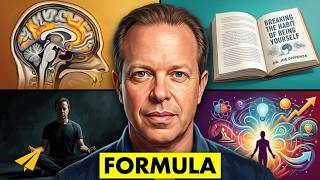
Dr. Joe Dispenza outlines ten rules for reshaping your reality through meditation, visualization, and emotional mastery. He claims that aligning your internal frequency with the quantum field creates synchronicities that draw desired experiences, and that sustained practice rewires neural networks to generate brain-heart coherence states that produce the body's own anti-inflammatory chemicals.
Chapters
How many times do we have to forget until we stop forgetting and start remembering? That's the moment of change. No one cares how many times you fell off the bicycle if you ride the bicycle now. Sometimes we look for evidence in our life and it hasn't happened, and I think it's so important we still show up. That's where you're changing the most. And when you get to that point where you could care less, you're changing the signal in the field. Then if you're able to maintain that state for an extended period of time, I say something magical is going to happen in your life. Something unusual, some unknown experience is going to occur. When a person can create the right type of energy, the right type of frequency from the field, and there's a vibrational match between their energy and whatever they want in their life, all of a sudden they start drawing experiences to them out of nowhere. It's so much easier to forget that vision than to remember it. So if you're going to remember, you got to keep it alive in your mind. Don't be thinking about what's going to happen in your day. You already know what's going to happen. Don't think what happened yesterday. You already know that. Get in the present moment and say, who do I want to be when I open my eyes? Hey, it's Evan Carmichael, and I watch these videos every day because I need them for motivation. Being around successful entrepreneurs every morning helps me believe that I can do great things too. It's like your morning coffee, but for your goals, kickstarting your day with a blast of positivity. So here is a challenge for you. Try watching one video every morning for the next 30 days, and let's find out together if they help you do great things too. If you're in, leave a hashtag #believe in the comments below so I can celebrate with you. If you keep thinking the same thoughts, if you keep making the same choices, you keep doing the same things, you keep creating the same experiences, you keep feeling the same emotions— I don't know, let's be conservative— you do that for 10 years, you would have to agree with me then that it would become more automatic, it'd be— become more unconscious. So your personality creates your personal reality. That's it. That is it. And your personality is made of how you think, how you act, and how you feel. So keep thinking the same way, keep acting the same way, keep feeling the same way. Your personality is the same, and your personality— personal reality would be the same as well. So if you wanted to change your life, if you wanted to change your personal reality, you would have to change your personality. And then you'd have to start thinking about what you've been thinking about and decide if you really want to believe that any longer. And when does the story end? It's, it's that moment that you become so conscious of that thought, you're so tired of it, you're so aware of it that you would never let it slip by your awareness ever again. You catch yourself complaining and blaming and making excuses and feeling sorry for yourself, and that's been your unconscious program. Then the moment you become conscious of those unconscious behaviors, you're out of the program. You're only in the program when you're unconscious. And so it takes an enormous amount of energy and awareness to separate from those programs. And then there's those emotions that we feel every single day that are so familiar to us that we don't even know what they are. We just feel guilty. We don't even know it's guilt. It's just how we feel. And the stronger the emotions that we have to experiences in our life, the more altered we are inside of us. When the chemistry changes inside of us, the brain narrows the focus on the cause and takes a snapshot or a series of snapshots, and that's called a long-term memory. And so then makes total sense then that a person, by every time they relive that event in their life, they're making the same chemistry in their brain and their body, and their body's literally believing it's living that experience over and over again. And now the body's so in the past that it's the mind of the past. So then the act of becoming so conscious that you don't go unconscious is a changing of consciousness. How many times do we have to forget until we stop forgetting and start remembering? That is the moment of change. Rule number 2 is master your emotions. If you're living in stress and you're living in survival and that system is switched on, then everything will be a threat, everything will be a danger, everything will be a reason to rush, to be impatient, to be frustrated, to be judgmental, because that's, that's the consciousness, that's the emotion we're living by. So now you, you have a problem with a co-worker, you have a problem with your partner, whatever it is that you used as an example, and you have to give a presentation. Now, now you really have one of two choices. Either be victimized by those conditions in your life and you stay in that emotional state. And I'll say to you, Jay, why are you that way? Well, I'm this way because of this person, the circumstance. The person or circumstance is controlling the way I feel and the way I think. Anything that controls the way I feel and the way I think, I'm victim to, right? Okay. Or I actually can be a creator now. Okay, so when it's the hardest, it matters the most. Okay, so there's going to be a story a valid story that's gonna go along with those emotions that you're gonna have to give up, that you can address at another time from a different state. If you're altered in that state and you say something, you do something, you write the email, you send the text, you'll always regret it. You'll always say, I should have never said that. I should have never done that. We gotta learn that we're in an altered state at that time. So there's only one of two choices. You either stay there the whole day and tell everybody that story, or you say, okay, let me take a moment. Remember that this is the experiment called life. Okay, let me practice getting relaxed in my heart. Let me slow the animal down. Let me practice that. It's like a few minutes now. Let me breathe. Let me get my state back. Let me change everything. Okay, let me remember who I am, who I want to be when I open my eyes, and let me practice that again. Now, even if you had to do that 10 times in one day, I would say it was a day worth living. I would say it was a day worth living. And when we do walking meditations, in our retreats, we're doing walking meditation so you can practice doing it with your eyes open. Like, if you're gonna be relaxed in your heart and awake in your brain and you can do it with your eyes closed, okay, let's take it out for a test drive. Let me open my eyes. Let me pay a little bit more attention to my inner world. Let me practice feeling this feeling. Let me practice feeling this way and let my brain do what it does. Let me get to finally change my physiology. Let me change my state. Let me walk as the healed person. Let me walk as the abundant person. Let me walk as if my prayers around. So let me walk in the state. If I keep practicing that over and over, it's going to become a habit, right? Yeah. So, so we hit it as many ways as we can. We have at least 7 or 8 different breaths that we do because we see how they all work in the brain. We have all kinds of meditations. We have sitting meditations, we have standing and walking meditation, or laying down meditations, because we want you to be able to do it with your eyes open, with your eyes closed, standing, walking, any way you can so that you don't default and return back to that person. Now, if you do default, you didn't fail. That's a program. You just went unconscious. And how many times do we have to forget until we stop forgetting and start remembering? That's the moment of change. No one cares how many times you fell off the bicycle if you ride the bicycle now. You ride the bike. So it's the constant process every single day. And I think that sometimes we look for evidence in our life and it hasn't happened. And I think it's so important that we still show up. Yeah, yeah, because that's the— that's where you're changing the most. And when you get to that point where you could care less if it happens or not because you feel so happy, so grateful for who you are, get ready because your life is going to begin to change in magical ways. Rule number 3 is create synchronicities. When a person can create the right type of energy, the right type of frequency from the field, and there's a vibrational match between their energy and whatever they want in their life, all of a sudden they start drawing experiences to them. Out of nowhere, they get the phone call. Hey, I got synchronicity. Why? Because you're synchronizing your energy to a possibility in your life. Now, in the quantum, every thought has a frequency. So when a person has the thought of their new job and they can feel the frequency of that thought, it wouldn't be lack, it wouldn't be separation, it wouldn't be frustration. The frequency of the thought of a new job would create the feeling of euphoria, excitement, bliss, gratitude. And thoughts tend to be electric in the quantum field and feelings tend to be magnetic. And now we teach people how to create a Wi-Fi signal when, when they connect to the field and they literally change their energy, the thought being the electrical charge, the feeling being the magnetic charge, and how you think and how you feel is broadcasting energy. Now there's a little bit more that has to happen because you have to have coherence in your brain. The brain's gotta be very orderly and it's emitting a field and the whole— which it can do with stress. Stress, stress is static stress. You disconnect because all of your attention is going on everything physical and material, and you're drawing from this energy that's surrounding your body and you're turning it into chemistry, and now you're isolated, you're separate. So we teach people how to get that brain coherence going and their heart coherence going, and coherence is rhythm and order. And now you have this Wi-Fi signal, and when there's a vibrational match, or you you've synchronized your energy to synchronicity, those serendipities, those coincidences, those, uh, synchronicities, those opportunities start coming to you. Now, what's the cool part about that? It seems like there's a shortening of time between the thought of what you want and the experience of what you want, between cause and effect. When we create from field instead of from matter, if we get really good at it, then the feedback that we experience in our life is letting us know that we're doing something correctly. And when you start getting the phone call or the email or the introduction to somebody and you scratch your head and you go, oh my God, I'm the creator of my life, and all of a sudden the next day you're belief in what's possible grows dramatically. So when you sit down to do it the next time, you get better at it, and all of a sudden more synchronicities start to happen. And so the side effect of it is, and this is what I'm proud of in our community, is that people do the work. They don't, they don't do it because they have to do it. They do it because they don't want the magic to end. You want it. They want the synchronicities to be happening. Now, rule number 4 is believe in yourself. If you believe in yourself, it means you have to believe in possibility. And if you believe in possibility, you're going to have to believe in yourself. And so something really cool happens when you do this that I just discovered recently, just watching people at our week-long events, um, you know, because you got to go all in. You got to go all in. And It's 7 days and it's a lot and it's super intense. And there's times where you don't want to show up because I'm pushing people across the river of change. There comes a moment where people keep showing up for themselves. They keep showing up for themselves in spite of the weather, in spite of their foot hurting, in spite of their bad dreams, in spite of the whatever, their fight with whoever, they keep showing up. They get really worthy to receive. They just know, they feel really worthy, like I am worthy to receive this gift. And the universe only gives us what we think we're worthy of receiving, right? So we got to get to that point because so many people who are in lack somehow don't feel worthy, right? So, so the abundance then becomes the sign that you finally become worthy. And for the soul, it's not about the abundance. It's about mastering your worthiness. And the reflection is the things that you accumulate. Listen, My dad used to say this to me all the time. He'd say, wait, wait, wait a second. Wait a second. Just sit down with me here. If anybody else can do it, you could do it also. Also, to make sure you're actually taking action after watching this video, I've designed a special free worksheet just for this video. The worksheet will highlight all of the lessons learned in this video, as well as pull out our 3 favorite learnings and quotes that will inspire you to actually do something. The worksheet will also give you space to write down what your key takeaways are and your specific plan of action to make sure you're getting results. If you want the worksheet designed specifically for this video, absolutely for free, there's a link in the description below. Go click on it and start building the momentum in your life and your business. I'll see you there. Rule number 5 is stay present. I would love for you to share the mission that you're on and how people can break past the memory of who they've been so they can tap into the potential of who they can be. Well, a habit is a redundant set of automatic unconscious thoughts, behaviors, and emotions that's acquired through repetition. A habit is when you've done something so many times that your body actually knows how to do it better than your conscious mind. It's a habit. So people wake up in the morning and they run through the same routine every every single day and the routine is mapped out neurologically in their brain, if they have the thought of the coffee maker, they make the choice to go over there, they do the thing to make the coffee, they have the experience of drinking it, they feel the emotion associated with it, that becomes a pattern, it becomes more automatic, it becomes second nature. So we have a series of these redundant patterns then And in time, we lose our free will to a set of programs, and the body is programmed into the predictable future based on what we've done in the past, and that's how we lose the free will to a set of programs. So that habituation is the predictable future, and that's the known. And other people wake up in the morning and they romance their memories of the past. They think about the problems that they have in their lives, and those problems are connected to certain people and certain objects and certain things at certain times and places. And since the brain is a record of the past, the moment they remember that problem, they're thinking in the past. And every one of those problems has an emotion that's associated with it. So the moment the person feels unhappy, the moment the person feels fear, the moment the person feels unworthy, the moment the person feels sad, now the body's in the past. Because thoughts are the language of the brain and feelings are the language of the body, and how we think and how we feel creates our state of being. And so it's that thought and that feeling, it's that image or that memory and the emotion, it's that stimulus and response that's conditioning the body to become the mind of that emotion. And now the body is so objective that it does not know the difference between the real-life experience that's creating the emotion and the emotion that that person person is creating by thought alone. The body is reliving the same past experience over and over again. And if we can't think greater than how we feel, or feelings have become the means of thinking, then we're thinking in the past. And if we believe that our thoughts have anything to do with our destiny, then our future is going to look a lot like our past. So that familiar past also is the known. And so what we discovered is that if you could teach a person to— when their body's sitting in a meditation, as an example, and it's off schedule, it's used to feeling angry at 8:00 in the morning because it watches the news. The person experiences traffic every day. They get 11:00, they check their emails. And they start judging other people. You know, there's a, there's a set of familiar emotions that person has been living by. We discovered that if a person can sit past that memory, that they can sit past that emotion that causes them to get aroused, to get frustrated, to get impatient, that's the emotion that causes the person to quit. And they have this conclusion that they can't meditate or they can't focus or they have ADD. It's a story they tell themselves about the past. We discovered, though, that when a person sits past those thoughts that say, I can't, it's too hard, I'll never change, I need a brain scan, there's something wrong with me, it's my mother's fault, and they're curious to see what's on the other side of that thought, when their body gets aroused and frustrated, instead of giving up and saying, I have too many things to do, that they actually learn a way to settle the body back down into the present moment. And it's David versus Goliath. And every time we can become conscious that we get emotional, we get frustrated, get impatient, and we settle the body down, we're executing a will now that's greater than the program. And the body is no longer the mind. The person is now becoming conscious of their unconscious yourself. And it takes an enormous amount of energy, it takes an enormous amount of awareness to stay present, because to stay present is to be in the unknown. That's when you can't predict the future, and that's not when you're remembering the past. And the unknown in the program that we have as biological creatures is a scary place. It's better to run from the unknown than to hang out in it. Rule number 6 is practice meditation. We teach meditation 3 ways: to become familiar with your old self and to become familiar with your new self. That's what the word meditation means— familiarization, to become familiar with. So we use that model for change. To slow your brainwaves down and get beyond your analytical mind is meditation. And you teach your body how to do that. And we've discovered a formula that simply makes it very easy for people to do it. You practice it, you'll get good at it, just like anything else you practice. So to get beyond the analytical mind is another way to reprogram ourselves. And then meditation is really about getting beyond your body or disconnecting from your body, disconnecting from your environment and forgetting about time. And that is that eye of the needle where we begin to make the most significant changes. So we're data-driven, you know, we're really looking to see what it is. And, and when we see brains respond in the same way, it helps me enormously to teach the material better. And so The more people understand what they're doing and the more they understand why they're doing it, the more naturally the how becomes easier. And nothing is left to conjecture. If nothing is left to superstition or dogma or even in spiritual traditional words, use science as the contemporary language to demystify that process. And you give people numerous times to overcome themselves and numerous times to connect, sooner or later you'll start watching transformation right before your eyes. And so one of the cool things that we've discovered is that we have so much compelling data to suggest that you're greater than you think, more powerful than you know, more unlimited than you could ever dream. We have compelling data to suggest that your nervous system is the greatest pharmacist in the world, that it makes drugs that work better than any drug in a drugstore. A drug study is about 18 to 25% cause and effect causality. Our data is between 75 and 85% cause and effect. This is a person creating their own pharmacy of anti-inflammatories, their own pharmacy of anti-carcinogenic chemicals, their own pharmacy of pain relievers. We're seeing this work over and over again. So we have this incredible data that says that this is no longer pseudoscience. This is the real— this is really science. The side effect of a person's transformation is it has changed my belief in what's possible. I have seen people stand on the stage with stage 4 cancers that were in every single organ in their body that metastasized, and they have no sign of cancer in their body. And we have data that suggests that you put the blood of an advanced meditator in a uterine cancer cell, a pancreatic cancer cell, 70% of the mitochondrial function in the cancer cell is diminished. Mitochondria is the energy packets of the cell. It's taking energy out of the cancer cell. Works perfect with what we're seeing with the testimonials that people are telling around the world. We've seen blind people see, we've seen deaf people hear, we've seen people with spinal cord injuries walk again. We've seen ALS change. We've seen all kinds of unbelievable health conditions changed by a person simply changing the way they think, the way they act, and the way they feel. Rule number 7 is serve others. I'm interested in unifying as many different branches of science in a very simplistic way that I give people tools that they have within their reach to prove to themselves that they're greater than they think, more powerful than they know, more unlimited than they could ever dream. All I offer people is my greatest understanding of the truth and numerous opportunities to experience it, nothing more. I want to free their minds and open their hearts with a simple formula leads them to a door, a door of unlimited possibilities. And I've come to learn that I can only show them the door. They're the ones that have to walk through it. I never thought coherence would be anything that I would be studying, right? I mean, I never thought that at all. But when I started really looking at the physics behind coherence, You know, there is an invisible field of energy that we are sitting in right now that, that we are unaware of, and if we're unaware of it, it doesn't exist for us. We experience separation because of that. The more we become aware of that invisible field, the more The more we're not our bodies, the more we're not aware of our environment, the more we are less aware of time. There's a door that we can pass through to the quantum field as pure consciousness. Rule number 8 is have a vision. Wake up every day. How bad do you want it? How bad do you want your dream? It's so much easier to forget that vision than to remember it. Right? So if you're gonna remember, you gotta keep it alive in your mind. How do you keep it alive in your mind? You disconnect from your environment. You close your eyes, you play music in the background. You sit your body down, and it's gotta pee, and it's gotta eat, and it's gotta roll. You just sit down for a few minutes, like training a dog, like, stay. When I say it's time to get up, we get up. Don't be thinking about what's gonna happen in your day. You already know what's gonna happen. Don't think about what happened yesterday. You already know that. Get in the present moment. Moment and say, who do I want to be when I open my eyes? Who do I want to be today? What would greatness look like? How would I, one day, one shot, one lifetime, what would an abundant person do? Let me rehearse that with my eyes closed. Let me remind myself who I don't want to be. Let me remind myself of who do I want to be. Let's not get up, Lewis. Until we get into that state. Until we are to where the tennis ball hits the sweet spot. When you go, oh, I'm ready for the day now. Now, game on. Now if you can maintain that modified state of mind and body the entire day without defaulting by seeing someone or doing something, stay in that state, the experiment still continues and you're changing your energy. Doesn't happen in 2 days, you're not that good, right? That's it. You're not that good. We keep practicing. People who show up for the 21 weeks in a row— this woman, 21 weeks in a row— the end of 21 weeks, she knew it. Boom. Her whole life changed. Boom. Was it 21 days worth it? Ask her. The experiment— she was just changing the process. Rule number 9 is develop good breathing habits. If you could learn how to rest your attention in your heart, and where you place your attention is where you place your energy, regulate your breath, start slowing your breathing down, even if you did it for 1 minute, you could actually begin to change your brainwaves, and you could actually cause your heart to start functioning more regulation and more order. If you said, okay, I'm going to work with my body and I'm going to start breathing and I'm going to start feeling emotions that I do want to feel. Yes, it may take you a few minutes to get there, but if you keep practicing it over and over again, the heart starts producing a very profound signal. It starts to produce an external magnetic field. It's, it's, it's measurable. So now you have a coherent brain, which means you can get very intentional, and you have a coherent heart, which means you can feel the emotions of your future before it happens. Somehow you have this broadcasting of this Wi-Fi signal, and the brain tends to be electrical in nature, so it sends out an electrical charge into the field. The heart is the magnetic charge. It's what draws things to us. It's the, it's the magnetic field. And now you actually, by changing the way you think and the way you feel, you're changing the signal in the field. And if you're able to maintain that state for an extended period of time, I say something magical is going to happen in your life. Something unusual, some unknown experience is going to occur. If you keep thinking the same way and feeling the same way, your life should stay the same. And rule number 10, the last one before some very special bonus clips, is sync your heart with your brain. I'd love for you to speak into how when we find coherence, when we find alignment between brain and heart, then we can steward whatever reality we want to us in record time. Yeah, so one of the things that we do is when you're agitated at someone on a Zoom call, And you know, you're doing the— you're thinking about 5 ways to throttle them, you know. I'm joking, but you get the idea. You're aroused by something that knocks you out of balance, and you're sitting there, you know, your heart's beating against the closed system. It's pumping blood, but you're not running, you're not fighting, you're not hiding. And it starts— it starts creating problems. The heart starts beating out of order, out of rhythm. And so we discovered when we started teaching people how to place their attention on their heart, where you place your attention is where you place your— and out of all the things that you feel with, you know what I'm talking about with your body, we ask people to feel with nothing but their heart. And where you place your attention is where you place your energy, and we started seeing, we started hooking up heart hooked up the ECG monitors with the brain, and every time the heart would flux into coherence, you would see this wave of alpha, just this beautiful coherent wave of alpha. The heart was telling the brain, "Create," and alpha is a creative state. And when we're in alpha, we see in pictures, we see in images, we're imagining. When we're in beta, we're thinking, we're analyzing, it's the voice in your head. So we saw that when a person dropped into their heart really well, there was this kind of wave of information that went to the brain and caused the brain to become very coherent, and it was always after the heart was in that state. And so we started realizing that the heart was the creative center. It's when we move out of these first 3 centers and we move into our heart, when we move into that center, the heart starts telling the brain, starts informing the brain. So we started building instruments with our brain scientists and our and our scientific team where we could actually see how this kind of phenomena worked. And so, when a person starts putting their attention in their heart, we start seeing this low frequency, this very low frequency in the heart that's only indigenous to the heart start to fill up like a gas tank. The person's just putting their attention on their heart and they're giving their heart the energy it needs to beat. That's what that frequency is about. We were feeding it an energy. So we see it kind of go up like a gas tank, and then we see the parasympathetic nervous system come up with it. And what does that mean? The person's relaxing, right? So now they're relaxing, but then all of a sudden we see the parasympathetic nervous system about to drop down, and here comes the sympathetic nervous system, and now the person's having a little arousal. And we started discovering that when this occurs, when a person is relaxed in their heart there's energy that moves to the brain. The person starts seeing possibilities that they never saw before. And so getting really good at relaxing in your heart and awakening your brain causes this kind of synchronization that takes place between the two. They're dancing together in this really beautiful way. And when they're in the same or similar frequency, if you're sharing the same frequency, you're sharing the same information. Now, the brain may think, but the heart knows. And I'm telling you, it is a straight shooter. It does not beat around the bush at all. And now the heart starts telling— informing the brain, giving it the information that the person needs for themselves in their lives. We can do this. We take people, we can train them to do this, and they can do it in 15 minutes. And when they start getting really good at relaxing more in their heart and more energy begins to move into their brain, we start seeing this very crazy thing happen in the brain where delta waves are now carrying theta waves, and theta waves are carrying alpha waves, and alpha waves are carrying beta waves, and beta waves are carrying high beta waves, and high beta waves are carrying gamma waves, and the whole entire brain is functioning in resonance. There are patterns within patterns within patterns within patterns. And that person is having a very profound transcendental moment. So we work with getting really relaxed in our hearts and awake in our brain. We do it so much. I want people to get so good at doing it with their eyes closed, they can do it with their eyes open. Because relaxed in the heart and awake in the brain is so much better than stressed out, unconscious, and living in a program. There's tiny little calcium carbonate crystals in the pineal gland that are stacked up on top of each other in the human being. Rhombohedrons. And they're stacked up on top of each other. And the research says that it has piezoelectric properties. What does that mean? I looked it up. When you apply a mechanical stress to these crystals, the mechanical stress begins to create an electrical charge in the crystal. And the compression begins to polarize the ends of the crystal with a positive charge and a negative charge. And when you polarize the crystal with a positive charge and a negative charge, what do you have? A magnet. And all of a sudden, as you compress those crystals, the mechanical stress creates an electrical field. And that field actually expands until the crystals can't stretch any longer. And then the field reverses. And when the field reverses, the field actually exerts a pressure against the crystals again. That causes the crystals to expand, and the next thing you know, you have a little radio receiver. How many people understand? And you switch on the brain's radio receiver, and now the brain can tune in to frequencies beyond the senses. And that is the mystical gland. And the research says it's a transducer. How do I know? I looked it up. I didn't go on social, I looked it up. Transducer, like a television antenna. That's what it said. Taking energy and information in one form and turning it into pictures and images, meaning. And that's why it's called the third eye, because you have an inner vision. That's more real than the outer world. The brain now is picking up information from the field, and it's transducing it into profound imagery, a mystical transcendental moment. And we do the breath. When you finish that breath, I'm gonna ask you to finish it right on that pineal gland. That's your target. And I'm gonna ask you to hold your breath. No, this is not torture. I'm not asking you to hold your breath to see how long you can hold your breath. If you're thinking about how long you're holding your breath, you're not doing it. I want your attention as you hold your breath. I'm gonna ask you to lift this up, pull this in, lock this down, straighten your spine, drop down, and pump and squeeze a little bit more. And I just want you to keep squeezing and pushing that fluid right up against that target. Target there. I'll say exhale, and then you feel, and we go get it again. I don't feel like it is not going to do anything. I'm too old. Nothing will happen. You got to leave that behind you. You got to get lost in the act. And when that energy moves, I have had it happen thousands of times. It is big. It's not like, "Ooh, I'm an energy worker." It's not like that. It's like, "Holy heck." It's a train that's moving. And it goes right up to the brain. And that energy is being released in the brain, and the brain goes into those gamma brainwave patterns. Very high gamma brainwave patterns. And you shared that you used to be concerned about folks who would criticize you and calling your work pseudoscience, and that at a certain point early on in your journey, you would write with the critics in mind. I've actually done that in my work too, where I can hear what people are going to say, and then so my creativity starts leaning towards those people. And then I love that you wrote at a certain point you were done with that. I wanted to know if you could talk us through that evolution in thinking. I think if you really want to be a leader, you should study great leaders. And I think all great leaders in history were uncompromising. I just don't care if they did it for a good effect or a bad effect. They just were uncompromising to their vision. And when you're young and you write your first book and you're writing that book and you're You're detailed and specific about making sure you cross all your T's and dot all your I's and your references are all in place. And you want to go a little further for that person who's in the back of the room or that person who's the critic that's going to judge your work. And I think it's a healthy place to start because it creates a little rigor. And then I just had a lot of people that hated me. I don't know what I ever did to them. And I had to really sit down with myself and say, do you think that person's ever going to like you, Joe Dispenza? They're never going to like you anyway, so forget them. There's plenty of people that do want to hear you. And then when I took my attention off those people, I started getting happier. And then we started seeing the results that were taking place. I could care less what they said about me. I could care less. The event's follow-ups were actually created by our community. Because their real passion and interest was to get together again with the community. And so we created these events, follow-ups for people to come dressed as their future selves, and then we would advance the understanding of the retreat that they had been part of that year and go a little further, to apply the formula a little bit further to see what's possible by doing it. And I want people to come that really want want to be there. I want people to come that really have been practicing something, that they're after the mystical, they're after healing, whatever it is. And then we can go a little further down that rabbit hole and see what's possible. And so they're designed for advanced students that want to deepen their understanding. And a lot of times I try out a lot of new things just to see if it's possible. We know according to the epigenetic model that the environment signals the gene without a doubt. An end product of an experience in the environment is an emotion. So by people sustaining elevated heart-centered emotions and getting really good at doing it with their eyes open, they're signaling genes ahead of their environment, and genes make proteins, and proteins are responsible for the structure and function function of the body, and the expression of proteins is the expression of life. Now, when the person understands, if I live by this emotional state every single day, and my body's so objective that it doesn't know the difference between the real-life experience that's creating this emotion and the emotion that I'm fabricating by thought alone, and they assign meaning to the act— I'm doing this because I want to signal new genes. The moment they assign meaning to the act, they switch on their prefrontal cortex and they get greater value from the act. That means then they start noticing that their pain levels start to diminish, that their range of motion starts to improve, that they're sleeping better, that they feel more calm and more present. The moment they notice those changes that are happening, now their meditation Meditation becomes even more thoughtful, even more powerful, because now they're noticing the effects of themselves that cause. They're not waiting for their healing to feel wholeness and gratitude. They understand that feeling wholeness and gratitude is actually creating their healing. Which is a quantum principle. Which, in the quantum, you gotta feel it first before you experience it. But if you don't know that, then you're waiting for your out of something, and you're out waiting for something to change in your biology in order for you to feel gratitude or feel whole. And that's just the old model of cause and effect. The quantum model is about causing an effect. The challenge is that there's a period of going from the old self to the new self that is that unknown place where you're always looking, and when the moment you're looking, you're separate from it. So it takes training, it takes practice, and we know that if a person person immerses themselves in a retreat for 3 days or 7 days, and we give them the knowledge, and we use science as that model. When we combine quantum physics with neuroscience and neuroendocrinology and psychoneuroimmunology and epigenetics, we— electromagnetism, we give them that knowledge and information. And if knowledge is power, knowledge about yourself is self-empowerment. And the mind can rest. And the mind can actually understand what it's doing and why it's doing. And when you understand the what and the why, the how gets easier. And doesn't matter how sick you are, doesn't matter how old you are, how in shape you are, how out of shape you are, if you ever meditated before, we've got the data to show that none of those things actually matter. It's just really understanding the process and giving people numerous opportunities to overcome themselves. Meditation— the actual translation of the word meditation means to become familiar with. So the first thing you have to do is you have to become conscious of your unconscious thoughts. You gotta notice your automatic habits and behaviors, and you have to become aware of your emotions that keep you anchored to the past. And if you can become so conscious of the unconscious states of mind and body that they would never slip by your conscious awareness again. You're becoming familiar with the old self so you don't return. Then if you begin to think about new ways of being, being defined by a vision, plan your behaviors, review them in your mind. Now if you keep doing that over and over again, nerve cells that fire together wire together. You begin to become familiar with a new state of mind. At the same time, if you can emotionally cultivate your inspiration, your joy, your enthusiasm ahead of the experience, by repeating that over and over again, cultivating that state, it's going to begin to become familiar to you. So then the process of change then requires unlearning and relearning, breaking the habit of the old self, reinventing a new self, pruning synaptic connections as we say in neuroscience, and sprouting new connections, unmemorizing emotions that are stored in the body, then here's the key, reconditioning the body to a new mind and to a new emotion. It's literally moving from your past to your future. It's losing your mind and creating a new one. And so then when you begin to understand that in that process, it's going to feel a little bit unfamiliar, uncomfortable. And if you can relax into that, instead of going back to the past, continuously invest in your future, sooner or later it'll begin to become easier and easier and easier. And all of a sudden, when you least expect it, something amazing is going to happen in your life. And when that event begins to occur, you're going to pay attention to what you did inside of you now to produce the effect outside of you. And that's called human empowerment. And there isn't a person in the world that's excluded from this equation. I see your passion. You're passionate about what you're doing. Your passion in your work is really tangible. And do you see it as a mission? Are you on a mission? How do you see it unfolding in the future? And what does the future of this mission look like in respect of your growing worldwide community, your scientific research? I know it's a lot. And the potential for personal transformation. For me, I, I do have a passion and I do have a mission in that I believe that in order to transform a culture, to transform a community, to transform the world, you have to start with the individual. And so my passion and my interest is human change, human potential, human transformation. And for me, that mission is I believe that if we I think if we can teach people how to heal themselves, how to heal others, if we can teach them a new way of life in terms of what is possible, I think if we can produce outcomes in seeing people that demonstrate that in some way, I think it does change consciousness. So I'm very mission-driven. And I think that the highest form of motivation is a mission-driven motivation. When you, when you have a vision that's bigger than you. And so I'm happy to say that that's what gets me up in the morning. That's what gets my team up in the morning, that when we celebrate someone's personal change or personal transformation, personal healing, I think that inspires us to want to do more of it. So that type of personal conviction that comes with that mission means that every day you have to get your behaviors to match that vision or that mission, that intention. I think it's important to navigate with a sense of ethics, a sense of morality, and, and, and to show people that you can demonstrate this work by being an example. So how do I see it affecting our growing community? I think there has to be an emergent consciousness on the planet that shows people that there's another way of living. And so I'm so proud of our community because we're doers. We do the work. We practice being creators of our lives. And I think it's important to show people in the world what love does. That if we want forgiveness in the world, we have to show people what forgiveness looks like. If we want to heal the world, then we have to heal ourselves. If we want peace in the world, we have to show the world what peace looks like. We have to demonstrate that. And I think because an emergent consciousness comes out of that, Consciousness is an awareness, and the awareness that there's another way to live and another way to thrive, I think, gives people permission to believe that it's possible. So we have this emergent community, this emergent consciousness that really is about being a cause in their life instead of being at effect. And I think that each individual in our community as a representation of the whole. So if you're working on overcoming your fear or your pain or your past or trauma that's happened to you, if you're working on overcoming a health condition and I'm working on my own thing, and if we're truly, truly on that path, what comes out of that is human goodness. For all my listeners, what's step one? So we're not going to take them from very egocentric and physically oriented to the end mystical journey overnight, but what's step 1 that you suggest and recommend that everyone gets on tomorrow when they wake up? Look, I mean, it's really simple. I don't have a problem with you putting your attention on your body. I think you should. I think you should really take care of your temple and make sure that you treat it really well. But there's a time when you have to get beyond it, and if you can't be on get beyond it, then that's your identity. So I think that people come to this work for many different reasons. Some people come for health conditions or diseases. People come because they want a new life. People come because they want answers. But I don't really care what a person comes for because ultimately when they start connecting, their values change and they start feeling differently and they change. And they still have a great body and they still have a healthy body. But in addition to that, they have a healthy mind. And, and so I think really a great start for people is to wake up in the morning and ask themselves a simple question. What is the greatest ideal of myself that I can be today? What is the greatest expression of myself? And really sit down and decide who they want to be when they open their eyes and just the act of closing your eyes and thinking about it and making choices differently than you typically do and rehearsing them and actually follow through and doing them is going to lead you to a whole new life over time. So it's not that mystical because the mystical is the side effect. It's a phenomenon of this work. The real thing is to have a more profoundly enriched life where you're in it and you love it and you want want more of it. That's, uh, that's what I want for everybody. And for some people it may be the mystical, for some people it may be a million dollars or $10 million. I don't care, I just want them to create it. Just whatever you want, just get busy creating it and prove to yourself really how powerful you are. And, and, um, we got a lot of people doing it. And in beta brainwave patterns, you tend to pay more attention to your outer world. That's healthy. So then when you're aroused though, by the hormones of stress, now you move into that high beta brainwave pattern, and now you're overly analytical. In fact, you're trying to figure things out. And when you're aroused by those stress hormones, and the emotions of those hormones are a record of the past, our research shows that when you're analyzing some problem, some condition, something about yourself within that emotion, You're making your brain worse because you're driving it further into higher beta brainwave patterns. Because as you think about the problem, you start producing more of the chemistry, and then you start analyzing, and all of a sudden you get caught in this loop. How many people understand? And people stay stuck for many, many, many years in that high beta brainwave pattern, and now they're reliant on something outside of them to change that state, whether it's a drug a drink, whatever it is, a computer game, something to help them to change their internal state. People think that they want certain things because they're experiencing lack. And so they have to go about becoming the very person. So then if we reframe it and you say, oh, I really want to be wealthy, I want all my needs met, and all And I'll say, really, why do you want to be wealthy? And they'll say, because I want freedom. I'd say, okay, let's focus on freedom. So now the person understands the sponsoring thought or the emotion. Why would you wait for your wealth to feel free? That's the Newtonian model of reality, of cause and effect, waiting for someone or something out there to take away this emptiness or lack. Hmm. And what if I'm feeling this emotion, this emotion is influencing certain thoughts and how I think and feel creates my life. If I'm living in lack, I'm not going to create anything new. But if I say to you, hey, when you become that person, once you become it, then your, your reality is going to reorganize itself. Instead of living by cause and effect, let's teach you how to cause an effect. So then the person then is no longer interested in getting something in their environment. When they realize it's about who they become. And all of a sudden now the emphasis or the interest is in becoming that person. And we have a week with those people and I want them to walk as it, sit as it, stand as it, lay down as it. I want them to get in the habit of walking from their room to the ballroom. It's become the new habit. That's why when we do our work here, we're doing sitting meditations, we're doing standing and walking meditations, we're doing lying down meditations. Meditations. I want it to become a new habit. I want them to become that person. One of my biggest problems is that I tend to react quickly to negative situations. How, how can I cope with anger? Do you have any suggestions or advice? Yeah, I'll tell you the first thing. It's not that you react. We all react. The question is how long are you going to react? That's the question. So we found out that when people react emotionally with anger, with antagonism, there's an arousal that takes place because you're turning on the sympathetic nervous system. And the sympathetic nervous system is a primitive system saying, Alex, whatever that is, is a threat to you. And if there's a threat, a good way to deal with the threat is to get aggressive. That's primitive. It's animal. It's very animal. Some people will say, oh my God, there's my ex. And instead of getting angry, they run. They flee. They're in fear. They're like, the fear is I'm better just getting away. So their fear causes them to run. So when people feel fear, when they feel anger, when they feel pain, pain. Those are the primary stimulators that switch on that sympathetic nervous system. And they used to say that it's automatic, like it's automatic, it happens automatically as part of the autonomic nervous system, and you really don't have any control of it. Turns out that's absolutely not the truth. So first thing is learning how to shorten your response to the emotional reaction. So if you have an event that happens to your life, in your life, and I say, Alex, why are you so mad today? And you say, oh, it's because of this situation and this person, this happened this way. And I would say, oh my gosh, do you mean that that person or that circumstance is controlling the way you feel and the way you think. Now, anything that's controlling the way we feel and the way we think makes us victims, whatever that is. Now, that's okay. But if you keep that emotional reaction going on for hours or days, and I say to you, Alex, it's 5 days, what's up? And you say to me, I'm upset from something that happened to me 5 days ago, I'd say you have a mood. You're in a mood. Now, some people keep that same emotional reaction going on for weeks or months, and then I would say, well, Alex has an angry temperament. It becomes a temperament if we keep it going for— now, this is true, people keep this going for years on end. If it goes on for years, now it's a personality trait. So here's the weird part about it. You ask that person who's been angry for years why they're angry, and they'll recall an event from 10 years ago, or a series of events from 10 years ago. And the research— yeah, and the research on the memory says that 50% of that story isn't even the truth. They can't even remember the truth. They embellish the story and make it sound worse than it really was to excuse themselves from changing. Now, what we tell people is forget the event. Doesn't matter. The details of the event doesn't— what matters is learning how to overcome the emotion. So when you're sitting in a meditation and all of a sudden out of nowhere, your body starts getting aroused, and it starts getting frustrated and it starts getting angry. And people say, I'm doing my meditation wrong. You know what I say to them? No, no, no, no, you're doing it right because that has to come up. So then, so when the anger and the frustration comes up and a person's in a meditation, they have one of two choices: to quit, which is what they've always done. But if you're sitting with 1,500 people and no one else is quitting, you're not going to quit. And if I teach you how to lower the volume to that emotion and I teach you a way to change that— I want to show you what it looks like when you learn something new. You have 100 billion neurons in your brain. 100 billion neurons. The number of connections you have in one neuron is between 10,000 and 40,000 connections. If you took 100 billion sheets of paper and you stacked them on top of each other, it would be 5,000 miles high. That's the distance from Los Angeles to London. If you took a scoop of gray matter the size of a grain of sand, you would have 100,000 neurons in it with over a billion connections. Now I'll stop right after this slide. Learning is making new synaptic connections. Every time you learn something new, this is what's happening in your brain, geniuses. If you learned one bit of information today, your brain did this. Boom. That's learning. Physical evidence as a result of your interaction in the environment. Every time you learn you learn something, in your brain, there's a physical change that takes place, and learning is making new connections. Are you with me? This is how fast it happens, too. That's learning. If you learn anything this week, you've made a footprint. If learning is making new synaptic connections, Then if you keep firing the same thoughts over and over again, you're going to wire them in your brain. So then if learning is making new synaptic connections, then remembering is maintaining them. And all of a sudden, they develop a long-term relationship. And just like any relationship, the more you communicate, the more they connect. And neurons are exactly the same way. Now, as you begin to learn information, neurons tend to assemble themselves into networks, or what's called neural networks. And neural networks are just gangs of neurons that have fired and wired together to form a community of neurosynaptic connections that's related to a thought, a skill, a habit, a behavior, a concept. And neural networks are automatic programs. You have a neural network to brush your teeth, to put on makeup, to speak a language, to walk. All of a sudden, those neurons then form a hardware circuitry, but if you keep repeating it, the hardware becomes a software program and it becomes automatic. Would you say it's smart to focus on one goal? I mean, if you're sick, obviously it's smart to focus on getting healthy. But if you have a regular life and you say, you know, I would like to have the classical stuff, more money, more wealth, more love, more joy, would you say in those meditations it's smart to focus on different goals? Or should it rather be the big goal, like a big vision I have for my life, that all the steps on the way are just marks I will pass at one point? Well, let's answer that on two levels too, because people come to our workshops for all different reasons. Some people come because they're sick. Some people come because they want more money. Some people want more— a new job, a new opportunity, a new career, a new relationship. Some people want the mystical. The people come for all kinds of reasons. To me, I don't care. What I care about is that they latch on to a vision and they learn how to create. Whatever drives them to that elegant moment where they're so present and so passionate about what they want and they have a clear intention, a clear vision, a coherent brain, and they have an elevated emotion combined with it that they create heart coherence. And now they're broadcasting a whole new energy. Into the field. And whatever we broadcast into the field is our experiment with destiny. So I want people to know the how, because we have plenty of people that have made millions and millions of dollars that were living in the backseat of their car or filed bankruptcy. We have plenty of people that were stage 4 cancer, serious health conditions that are healed. But really, People think they come for those reasons, but we come for wholeness. That's why we come. That when we feel so whole and so happy with ourselves, so connected to something greater. If you feel wholeness, it's impossible for you to want. How can you want when you're whole? When you're whole, you feel like you have everything. So I want people. To reach that point where they feel so whole that they no longer want. And that's when the magic happens. Teaching them that allows them to understand that when they come back to their senses, they open their eyes, they're not looking for the experience. They feel like it's already happened. And if you feel like it's already happened, why would you be looking for it? Then if your body is conditioned emotionally into that future, you're not separate from the energy of your future. You're connected to it. But the moment you get in traffic and you start getting angry, you get on the line at the bank and you start getting impatient, or you're sitting in a staff meeting, you start judging a coworker. You just disconnected from the energy of the future. And now you're back to the energy of your past. And you've done nothing wrong. You just lost your connection to the future. Now, now, the importance of that is to notice that you're disconnected. And if you say to me, well, that person made me feel this way and think this way, I'd say, oh my gosh, you're back to the unconscious program of being a victim in your life. The victim is saying that someone or something is controlling how I think and feel. But a person who's producing outcomes in their life. All of a sudden they say, wow, the way I'm thinking and feeling is creating outcomes in my life. Now I'm a creator in my life, and now I believe less that I'm a victim of my life. For 10 more amazing rules from Bruce Lipton, check the video right there next to me. I think you'll love it. Continue to believe, and I'll see you there. Your life is a printout of your programs. You just look at your life and Recognize simple fact, the things that you like that come into your life, they come in because you have a program to acknowledge those things. But the things you wish
More from Evan


How the Biggest Mistake in History Created A Trillion-Dollar Empire | Sergey Brin



9 Machiavelli Principles That Force People To Respect You | Machiavellian Philosophy



The First 10 Words That Instantly Ruin A Sales Conversation | Vanessa Van Edwards

The Top 1% Mindset Behind The First $5 Trillion Company | Jensen Huang (Nvidia)

