Eckhart Tolle's Top 10 Rules for Success
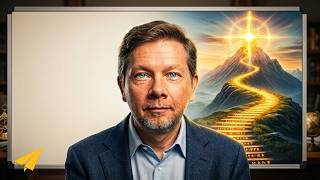
Eckhart Tolle argues that life's challenges are meant to awaken us, not satisfy us. He teaches that suffering ends when you stop believing the world should make you happy and instead become present through breath awareness and inner-body focus. Individual identity is a thought-form that traps us; the true self is the timeless consciousness beneath it.
Chapters
Something is built into life to challenge you. And why does life do that? Because the world isn't here to make you happy, it's here to awaken you.
Eckhart Tolle is the author of The Power of Now, a book published in 1997 that became a global bestseller after being recommended by Oprah Winfrey and has sold more than 10 million copies worldwide.
The Power of Now: A Guide to Spiritual Enlightenment would have to be one of the most transformative books in, in my life. I personally think that you are a prophet, Mr. Tolle.
He went from spending years in intense anxiety, suicidal thoughts, and complete lack of direction in his late 20s.
So when I'm thinking thoughts of my life situation is critical, if this is basically what your thoughts are telling you, then your body believes that this is the actual truth, that you are being threatened at this very moment. You can have shortness of breath because you're thinking fearful thoughts.
You go, ah, ah.
At night.
I had that for years.
To building a worldwide teaching platform and selling tens of millions of books.
What you need to do is take attention away from the stream of useless thinking, completely useless thinking. No great solution to any problem has ever been found by anybody who was worrying about something.
Need motivation?
Watch a top 10 with Believe Nation.
If you've been here before, drop a hashtag #believe in the comments below so I can feature you here in a future video. And if you're new, welcome to Believe Nation, the only channel that helps you believe in yourself daily, one video at a time. Okay, let's kick it off with rule number 1: embrace challenges.
Something goes wrong, uh, something, something that shouldn't be happening, an obstacle, uh, limitation in your life, one form or another. And so the— we are being— things never stay been perfect order for very long. Perfect order would mean your health is good, your finances are good, your work situation is good, you have a great family, you have a few nice possessions, everything is going smoothly in your life, and all you have nice furniture everything is arranged, relationships, finances, work, home, everything great. Now, if that is your situation at the moment, there may be one or two of you who say, yeah, well, that's what's happening to me right now, everything is fantastic. It won't stay like that, just wait a little, because life, it's something is built into life to challenge you. And why does life do that? Because the world isn't here to make you happy, it's here to awaken you.
The ultimate purpose of the world is to make you conscious, to find God within the deep, this dimension of depth.
The world is here to bring you, to frustrate you, one could say, not to satisfy you. So the whole assumption that the world is here to satisfy you creates a lot of suffering because every time you get challenged, you complain and say, oh, this shouldn't be happening. And of course, and then the delusion that the world could possibly satisfy you is perpetuated by the technology that we've come up with. Because when you go on Facebook and other similar platforms, you see all these humans who have achieved total satisfaction.
In their photos, you can see it because you can 'Look at their photos.' And they eat one great meal after another because there are photos of them. 'Look what I'm eating now. It's wonderful. Look where I am.' And, but of course, and that's not enough.
Another deception comes in because there are filters you use for the photos. So these, and these filters, you make everybody beautiful. And if you, and then you look at them, say, look at these people's lives, they're so great.
What about my life? And then you think, hmm, oh, I could do the same. I can, I can, then you start taking pictures of your meals and use the filters.
So that is deception that the world can satisfy you. No, what the world can do is to awaken you. That's the potential the world has, and it awakens you through the challenges of life. It does not awaken you when it gives you a moment of— you're in a temporary comfort zone.
Ah, Ah, some people think, if I had enough, if I had enough means to live in a place where everything is done for me, where I didn't have to worry about anything, where beautiful meals are cooked for me, all the best, purest food, I get at least one massage a day, and beautiful surroundings, the weather is great, And if I could, then I could really dedicate my life to meditation and spiritual awakening. Now you would find it might work for a week or two.
You say you're really getting somewhere with your meditation, maybe 3 weeks, 4 weeks, and then something else sets in. Unhappiness arises again.
And, or you fall asleep, so to speak.
You become less and less alert because nothing challenges you.
And when nothing challenges you, the level of alertness tends to go down.
Let's have another beer. Let's watch another movie.
It's comfortable, couch, sofa.
I have nothing to worry about. I get my regular income every month, every—
and my wife is giving me massages. I'm— everything is great.
You fall—
go to sleep, so to speak. You're not being challenged. The same applies to the animal realm. Animals have a high degree of alertness.
Look at birds, for example.
I love observing birds or any animal.
If—
why are they so alert? If you watch a bird, you see enormous Why is the bird so— because it wouldn't be alive anymore if it weren't.
And any animal has this, or deer.
We have in Canada often, we have deer come up to the house.
And yes, they are more trusting than in other places, but they're still incredibly alert.
More than visually.
The hearing, the ears are enormous, and at the slightest sound, the ears move towards the sound. The slightest could be a mile away, 2 miles. And when there is some possible danger, the deer remains totally motionless for several minutes. So you can't see any animal cannot distinguish between the deer and a trunk of a tree or something, just totally Alert, alert.
Why are they so alert?
Because they need to be. They don't—
they're not in a comfort zone. They need to survive. So they are being challenged.
Every life form is continuously being challenged, and through the challenges, there is an evolution of consciousness.
And humans experience the same on another level. So Remember, the world is here. It is perfectly— it is fulfilling its function perfectly.
Next time you get challenged, the world is fulfilling its function perfectly.
It's here to awaken you. Oh, that is how. And the strange thing is Up to a point, the fact that you are continuously being challenged— until you reach a certain point where awakening becomes a possibility or is beginning to happen, the challenges of life produce unhappiness.
They produce an unhappy person.
And then you reach— when the awakening process begins, the challenges that continue to arise then also can turn into its opposite. Instead of creating unhappiness, an unhappy person, they contribute, or they intensify, or accelerate, or deepen the awakening process.
And so you, instead of reacting in the old unconscious way when you're confronted, let's say you're confronted with a difficult human, you become, you enter this state that we entered here and that perhaps you're still in to some extent even while you're listening.
Just as I talk from being, although I am doing, The words arise from a deeper dimension of being. I could not give a talk like this just if I were disconnected from being.
Would be, what am I going to talk?
I don't know what to say. So there's a connectedness. So you're connected to that, and then things unfold.
And so when a challenge comes You become more alert. A difficult person perhaps, and so instead of reacting you go, "Oh." Or a health challenge, good. I was challenged 2 years ago. I had some trouble with part of my body and then I went to a medical exam and the man said after the examination, "You have cancer." 'Oh, well, that's a challenge.' So I went, 'Oh.' Of course, nobody knows the outcome because— and that's— it was strange because I thought I could never have cancer because I'm mostly at peace.
But of course, there may be other reasons. The world is full of toxic stuff.
So, and for a long time in my life, I did not have good nutrition, couldn't afford it. But So there was a moment, disconcerted for a few minutes.
That's strange, I didn't expect.
And then my usual state of— I'm fairly present, I don't do a lot of useless thinking, but that state of presence suddenly intensified enormously, and it went on for days and days and days. It just incredible states of— because you never know with cancer, you could be dead within 6 months or you could be alive longer, who knows, nobody knows.
And it was just—
there was nothing left of me except an alert presence. I could sit in my room just, ah, wonderful, wonderful. And I was ready to go at any time and I was also ready to be healed. and then 10 days later a phone call came: they will operate on you. They had to, because there was something physical had to be removed.
And they did operate, and I could—
after the operation, still in hospital, and continued in that state of—
and then I had another exam, and they said after the operation that 'Well, you seem to be free now of cancer.' Okay, so that seems to be the case at the moment. Nothing is guaranteed in this world, uh, and whatever it is, I have met people who have had a diagnosis, similar diagnosis, and they had already began the awakening process and they were able to virtually become just totally awakened because the person went away completely and there was just consciousness, the being left, the depths of the deep I emerged more and more.
Rule number 2 is become present.
To be awake, that's the most important thing that could happen to a human being here. In fact, it's the only thing of absolute importance in their incarnation here. The only thing of absolute importance is the awake— whether you represent or embody the awakening of consciousness, that is the evolution of consciousness on this planet through you. And on a larger scale, it is the evolution of consciousness throughout the universe. It is an awakening universe. And you are an essential part of the awakening universe. In fact, you are inseparable from the awakening universe. You look like a person, but you are the universe in the process of awakening. Disguised temporarily as a little person with its problems and so much going on in my life. I have no time for presence. Maybe when things are going better, I'll be present, but not now. Got too much on my plate, as the expression goes, English expression. I have a lot on my plate, they say, which means a lot of problems. Of course, there's no end to the problems. But so there's only one thing of absolute importance, and that is whether you embody the awakening of consciousness. All the rest is secondary, I call it. It may be relatively important. All the things that make up your life, what people call my life, this very problematic thing that you call my life, that is all maybe important. Yes, there are things that are important. Your health is important. Your relationships are, of course, situationally important. Your home situation, your professional work situation, important. All those things, whether you have money or not, not enough money, all these things are important, relatively important, but not absolutely important.
So you have the two levels.
I don't deny the relative importance of all these things that make up your so-called life, but what humans neglect and do not realize that there is a more— there is a transcendent dimension to your life. And to encounter that, to consciously awaken to the transcendent dimension of your life, that is the only thing that is of absolute importance. Then everything else falls into place. It doesn't mean So if you focus on the awakening, whether you are conscious at any moment, the important thing in any situation that you encounter in your life is the state of consciousness with which you meet that situation. What is the state of consciousness in which you face whatever situation arises in the present moment? That determines the next thing, how it's going to go on in the next, next moment, and the next. How do you perceive, react to this, whatever is arising in this moment? So whatever is arising in this moment, the situation that arises, they come and go, different situations arise, is always maybe important, but it's of secondary importance. More important is your state of consciousness now. If you could remember only that and live that, that's really all you need. So whenever you encounter any situation, realize, what's my state of consciousness right now? And there's a situation that perhaps you need to deal with, perhaps you need to take action right now. Perhaps you— there's nothing you can do and you have to leave it alone. We don't know. But what is your state of consciousness in the present moment? The vital question. And in order to answer that question, and it doesn't really have a conceptual answer because you immediately know whether you are present or not, that question can help you become present. What is my state of consciousness right now? Maybe are there certain thoughts that are happening that are telling you that something is very wrong? Emotions that are telling you that something is wrong? There are certain thoughts that are telling you you'd rather be somewhere else? A very common thing. It's so common people don't realize it. Some people live almost continuously as if They were longing to be somewhere else, but not here and now, to get away from here and now. This isn't right, there's something not right. Never. And occasionally it seems right, 'Ah, I have arrived, it's right.' Whatever it is that makes it right for a moment, it's an illusion. I'm in love. This is the completion of my life. I've fallen in love. There's a person who's going to complete me. When you go to a restaurant and observe other people sitting at various tables. You can tell with a couple sitting at a table, you can tell whether their relationship is relatively recent, they haven't known each other for very long, they're in that state that they call falling in love. The way they interact is very different from those who have been in a relationship for longer or are married. The ones that have just just met, they fall in love, they are in a kind of state of delusion. You can see it in their eyes. Everybody's playing their part in it. It's a theatrical performance, but they don't know it. And that comes to an end at the latest when they start living So this, then the essence of all this is awakening, the awakened state of consciousness. And as I mentioned earlier, the Not surprisingly, this term awakening has been used over thousands of years since the time of the Buddha and before. The essence of the teaching of the Buddha is to awaken. The word Buddha itself means to be awake, the one who is awake. This is a Sanskrit root of the word, is to be awake. Buddha is not a name of a person, it describes a state of consciousness. And then go to Jesus, and there are quite a few parables that talk about not going to sleep, about staying awake. And these are not, he's not, these are parables They're not to be taken literally, obviously. Literally, you cannot tell a person, "Stay awake," because eventually, of course, you'll go to sleep. So we are just using this analogy of awake and asleep in order to point to something that most humans are not yet familiar with. To quote Jesus again from one of the Gospels, he said— and this is— Quite a bit of what we read about Jesus' teaching may not be quite what he said or distorted, but a few things I can sense are absolutely literally what he said, a few things here and there. For example, he said, 'And what I say to you, I say to all: Stay awake.' 'Oh, was that the Buddha or Jesus?' 'No, it was Jesus.' 'Oh.' No, he's not talking about the normal state of wakefulness. Nobody could stay awake for that long because there's something that pulls you into sleep. So we are not talking about that. We are using that as an analogy. Everybody knows what it means to awaken in the morning when you've been asleep. Which is a particular state of consciousness. You're asleep, and in sleep you have dream state and you have dreamless sleep. You have those two. And then you wake up, you awaken in the morning, and there's a huge difference between the state of sleep and the state of being awake. Everybody experience that every morning, and you go, suddenly you open your eyes and go,— oh, completely different world. You've just awakened. It's a different state of consciousness. And so this analogy is used because there is something in ordinary consciousness, normal human consciousness, which really should be called unconsciousness. Normal human consciousness could also be described as a kind of sleep because it's totally conditioned by the past. And the past makes up the content of your mind. The mental-emotional field is determined by the conditioning from your past. And most humans are completely identified with that conditioned entity, which is a mental-emotional entity and energy field. And so they are so identified that that's all they know. In other words, the conditioned thought processes never stop. They go continuously. There's a voice talking to you, or you're talking to yourself, or you're having a monologue, or you're having a dialogue. Some people argue with themselves. It is all the voice in the head, never stops. For most people. And that is, spiritually speaking, that is a state of unconsciousness, completely identified with the conditioned mental-emotional patterns which make up the so-called person, personality, the ego. So if you are completely identified with it, you are— every thought has you in its grasp. Every emotion that arises has you completely in its grasp. And you're thinking, you think you're thinking, but you're not thinking. Thinking happens to you. There's no, there's no, you don't have a choice if you're unconscious. There's no choice. All your thought process is happening happen to you. You're at the mercy of your thoughts, the conditioned thoughts in your head, and all the reactions that come with it. Every situation you encounter, there comes a conditioned reaction to the situation. It's the person or the personality that reacts, and you don't even have a choice. Why don't you have a choice? Because you're asleep, spiritually speaking. This thing is taking you over. It's a dream-like state also. And you can see often people are completely up there. They're never really—
they're not really here.
You can see sometimes the complete absence in a person's eyes. They're not really here, they're asleep. But they're thinking very hard, so there is— And even at night when there's nobody around to talk to, you still— this voice is going on. And it's telling you, "I have these problems, oh, what's going to happen to me next? Oh, awful thing, my God." I can't take any more of this. What's my life come to? I imagined something different when I was 20 years old. I imagined something very different. Why did it all go so wrong? Well, that's a— well, many people actually have that feeling. There's something that has gone drastically wrong in my life. And with others, it's a mixed bag. Some things went okay. And others didn't. It depends what their mind— and your mind tends to focus more on the negative than the positive. Much more memorable, the negative.
Rule number 3, stop overthinking.
You realize that you're in a dysfunctional state because you begin to suffer one way or another. And that's already a gain in consciousness to realize that you're suffering. Let's use a generic term. You're unhappy about something. That's a very generic— you're unhappy. Unhappiness comes in many degrees. Slight form of unhappiness, even a slight irritation is a form, beginning form of unhappiness. And then you're—
then stronger forms of unhappiness.
From despondency and guilt and all kinds of unpleasant emotions. And then you notice it, or you wake up in the middle of the night with anxiety and you worry about your life. Oh, very unpleasant. It's 2:30 in the morning. The mind is racing about problems that probably will arise tomorrow or next week. What if that happens? Ah! Or yesterday, why did I— when I had this discussion, what I should have said is— this is what I should have said. Then that would have shut him up. Why didn't I say that? Why can't I never think of the right thing to say? And then the entire conversation replays in your mind again. And then the next, the future comes in again. And at some point you realize you are trapped in a dysfunctional state. And then how do you get out of it? Okay, the great gain in consciousness is already you have realized that you are in a dysfunctional state and it's not pleasant. And you also realize that it serves— this kind of thinking serves no purpose whatsoever except to strengthen the fictitious ego image of me as a problematic person. It serves no purpose and it makes you unhappy. That's a wonderful record. But even then, how do I get out of it? Because even after realizing it has no purpose except to make me unhappy, The next moment it pulls you back in. But once you realize it, okay, there are a few things you can do, so to speak. It's not so much a doing, it's just redirecting attention. What you need to do is take attention away from the stream of useless thinking, completely useless thinking. No, great solution to any problem has ever been found by anybody who was worrying about something. True solutions arise out of a different state of consciousness. Worry does not— worry creates fictitious problems, but no solutions. And again, the mind is deceptive. It tries to convince you that you need to worry about this because otherwise you're not taking responsibility for your life. The opposite is true. So you realize the futility of worry. But how do you get out of it? Because the next moment you may be drawn back in and you're completely lost again. Easy thing to do is, first of all, I recommend, ask yourself, am I breathing? Most likely you are breathing, but of course it's an unconscious process. You don't know you're breathing, but now you make it conscious. Am I breathing?
Let me check.
And in order to check whether you're breathing or not, you need to take some attention or consciousness away from thinking, and then it moves into— the attention moves into the inflow, the breath flows in. And so to speak, you follow the breath with your attention.
This, as you probably know, it's a very ancient meditation method, but you don't—
you can use it as a formal meditation or in a more casual way like prescribing now. You just take attention away from thinking and you become aware of your breath moving into the body. Ah, and it— your attention follows it into— this is very beautiful. It follows it into as low as the abdomen. The abdomen is a place of power. You can feel an energy there suddenly, and certain— in the first, very subtle. Then you follow the breath back out and follow the breath back in. You don't even need to regulate your breath for this particular practice, you just observe. By the simple fact of observing, usually the breath becomes a little longer just by itself. You're observing as the breath and it moves out again. And each time the breath reaches— well, the breath doesn't, but your attention reaches the abdomen. Which rises slightly at the end of the in-breath, you feel an energy there.
The Japanese call it the hara.
And then you can see that energy spreading out into your limbs, arms and legs. And it's quite beautiful. And then, because, and then you begin to notice the benefit of it, because suddenly life feels good, whereas 2 minutes ago life was awful because you were trapped in your mind. Suddenly energy flows, breathing in, abdomen rises, and you feel a certain energy here. Ah, then you can also feel the energy in your legs and arms. And I call that the inner body awareness. Now, you're not aware of the physical body. You're aware of that which animates the physical body. There's an organizing energy that coordinates the countless functions of all the organs in your body. Unbelievably complex. So there's a vast intelligence that inhabits your body, that animates your body. But usually humans are not aware of that because they live in the upper story only. You live in the loft of your house, but you have never visited the other floors of your house. So inner body awareness— so the breathing and the inner body awareness come together. And then you feel, and I hope I'm not just talking about it, because as I'm speaking about it, I'm directing your attention also as you sit there into feeling this inner body awareness. Every cell, in a very subtle way, every cell of the body is alive. You feel the body is coming to life. Now, what has it done to your thinking? Your thinking has been reduced to almost nothing because you cannot both think and be aware of your breath and your inner bodies, either one or the other. And so you rest in this beautiful— if you're in bed at night, I recommend that you lie on your back, not on the side, on your back, your arms there, and you continue the breathing and feeling the inner body.
Ah.
And now you may notice while you are sensing the inner body, you are not thinking. Occasionally a fragment of thought may drift in and out, but very little. Because you can't— both cannot happen at the same time.
So what has happened?
You have taken consciousness away from the thoughts, thought processes, because in the unconscious state, your entire consciousness is continuously being absorbed by the thought-making mechanism of the mind. It takes consciousness, which ultimately is the essence of who or what you are. It takes consciousness and transforms it into thought. Thought forms continuously. So you, as the underlying consciousness, are basically in that state, you're asleep or unconscious. You're not even there. There's just your mind, the conditioned mind, continuously absorbs your consciousness and transforms it into thought. It does not mean that thought and consciousness are separate. Thought is consciousness that has taken on a form, whereas there's a vast consciousness beyond that, that is connected and is not your consciousness. Once you connect, you sense that vastness beyond thought you're connecting with something far deeper than who or what you are as a person. There is a vastness that you connect to, which is— it emanates from the source of all life, which we may call God. It emanates just as light emanates from the sun. The consciousness emanates from the source that you cannot name, that you cannot understand, that is not part of this dimension. It's in the transcendent realm, but it emanates consciousness into this dimension, so to speak, and that you then you liberate consciousness from where it had been trapped, which was in useless thinking, thought forms.
Rule number 4 is shift your mindset.
No matter what you achieve, No matter where you are, there's always something missing.
So this is—
we come to the limitations of what people call their identity, their self. You can never be fulfilled for very long when you're trapped in your egoic sense of self, because ultimately It is a story in your mind that you tell yourself. It's a narrative.
Me and my life, my life.
But it's not your life, because the only place where your life happens is in this moment. This moment, this is your life, but not all the memories and the accumulated conditionings your mind. That's— I call that sometimes your life situation. You have a life situation in time. Everybody has a past. So you have a past that you identify with, certain things from the past you identify with, good and bad. I forgot to mention that sometimes the ego cannot— does not find enough things to identify with. So it's— let's say, for example, you don't have many possessions. Certainly you don't have more possessions than others, so you can't identify with that. Maybe your body doesn't look particularly great. So it's— you know that your body isn't superior to most people's bodies. That was the case with me, and it still is, obviously. So, and then other things that people invest— knowledge. I know more than you. That's another big thing. And perhaps you don't have that either. You don't know that much. You don't have much. Your body isn't great. What do I do now? The ego says, I need something to— it doesn't say that, it's an unconscious process. But if it could speak, the ego would say, what can I identify with? Oh my God. Oh, I got it.
I got some—
you create a thought form because ultimately they're all thought forms. If you go down to the root of all identification, is thought, because even your possessions, you experience them as thought forms. My car, my house, my this. And even the body becomes— it's a thought form of body. You have a body image, a thought form. So ultimately, all identifications, although they maybe seem to be external, But if you go to the root of it, identification is always with thought. And so let's come back to this person who doesn't have anything to make him or her feel superior, because that's what the ego is looking for. You need to find some superiority so to give me a sense, to give me a sense that I exist. And so then what it can easily do, it creates a thought form in which it perceives itself as unfairly treated by life. And this thought form— I'm not denying that there are many people who, looked at it from a certain viewpoint, one could say, well, they have been unfairly treated by life. Of course, there are many people in this world where you could say that happened to them. But the question is, are you transforming that into an identity? There's a fact that may be true or not true, but are you transforming this? And then you create a thought form as you, as somebody who has been unfairly treated by life. And that thought form can get very big and can be as powerful and even more strong, even stronger than a thought form that is perhaps usually associated with ego that says, "I'm the greatest, I'm the best, nobody is better than me, look at me." Some well-known politicians may be like that, not mentioning any names. So you have a thought form, it says, ultimately the term we could use to describe this ego identification is victim identity.
And this is a very— many people have that.
It's become almost fashionable these days to have a victim, that you see yourself or the group of people that you belong to as a victim of others, other groups of people, not denying that people have been treated badly, groups of people by others. All these are facts. But the important question is, are you transforming that into an identity for yourself?
And then it becomes a—
a huge prison for yourself. And it, you have built your own prison. And then the question may arise, if the ego seeks superiority, how can it be superior if you've been treated unfairly, if you're a victim of others? Obviously, if you are a victim of others, you are automatically morally superior to the others as a victim. That's how that identity works. It's an unconscious process, so people may not be conscious of that, but it makes— immediately it makes you morally superior to all the others, no matter what they have achieved. It becomes irrelevant. You are superior. And that we have— that is another ego strategy that operates in many people. I'm— again, I do not deny that people and groups of people have become victims of other people and other groups. People do bad things to each other, and collectives do dreadful things to each other. Millions, millions have been killed, enslaved, all kinds of things. So you can see these as facts, but the danger is facing the facts is good. To recognize facts is good. But the danger is that you transform that into an identity, which means it becomes a thought form. This is who or what I am. That's the— that is the prison. And so This is where we are at in our evolutionary development. Most humans are trapped in the egoic sense of self, and the egoic sense of self operates both on an individual level, where it tends to create a lot of suffering that ultimately is unnecessary, and on a collective level, where it creates a lot of conflict between nations and so on. The, the, the collective ego in its more extreme forms is even more dysfunctional and more insane than the individual ego. If you are trapped in a collective ego, people have done the most dreadful things to each other. People who were trapped in a collective ego image. That's us against them, us against them. So you dehumanize other humans, a whole group of humans mentally, because you construct a conceptual reality for them. That is who or what you— you attach certain labels or names to groups of people. Whether it's religious or political, but they are the enemy, they are the others. So you create a collective, a conceptual identity for others and for yourself also. You have to— you belong to this group, and then you no longer can sense their inherent humanity, that they are human beings. So And then the next step is physical violence. And that's how, um, in Germany, National Socialism had millions killed, other groups dehumanizing a certain group. In communist Russia, Soviet Union, also millions killed internally. China under Mao Zedong, Cultural Revolution, millions killed. Internally by dehumanizing others and simply attaching a label. Class enemies in communism. These are the class enemies. They are the traitors, the class enemies. Let's eliminate them. They are less than humans. They're class enemies. Okay.
Total craziness.
If you read history, I don't know if I would recommend that you should read a book on just 20th century history. You would go crazy if you read what did they do to each other. There was not only the warfare, there was genocide, there was within nations, nation against nation, genocide within nations. And I don't know whether you would get very depressed if you read that, you would say, or it might suddenly enlighten you and say, yes, there is a huge streak of insanity in the human mind. There can be no doubt about that. Yes, humans have created great things also, but undoubtedly There is something not right in the human mind. There is a dysfunction there, Aidan. Perhaps it's manifesting even more strongly now than ever before. There's something not right in the human mind, and that's an important recognition. But you don't only recognize it by reading a history book. You can also recognize it on a collective level just by listening watching the news tonight, not the oilers, the other news, watching the news tonight, and most of that shows the deep dysfunction in the collective human mind that's happening. And you can also see it perhaps if you look at your own life, maybe not right now because you're already awakening, at least, if you're not awakened, But if you look back in your own life, how very often your suffering was created completely unnecessary, unnecessarily. And that's quite a realization when you see how suffering is created simply by misuse of the mind.
Also, if you want to take real action after this video, I made a free worksheet just for you. It covers the top lessons from today, gives you space to write your biggest takeaways. It helps you to create a simple action plan. It's 100% free. Just click the link in description below to go grab it, and I'll see you there. Rule number 5, stop being a victim.
So awakening, everybody knows what it means to be awake in the conventional sense. But in the term, to awaken has been used in a spiritual sense for thousands of years, most strongly associated probably with Buddhism, where the word Buddha itself means the one who is awake. Buddha is not a name. It is a term that perhaps the Buddha used himself when people asked him, who are you? And he said, I am awake. The Buddha, the root of the word Buddha is from Sanskrit, is to be to be awake. To be awake is also very common in Hinduism in India, not always immediately associated with Christianity, but that's because a lot of the teaching of Jesus is not really understood very well in most churches. There are quite a few parables in the Gospels where Jesus talks about the importance of staying awake. To just quote one little— to give you just one little quote of Jesus, he said, "And what I say to you, I say to all: Stay awake." So perhaps in the churches not many people understand the deeper meaning of that, or maybe some do.
I don't want to offend anybody.
So all of you, most of you, are going through the awakening process, which is the arising of a, one could say, deeper or higher state of consciousness. Could be described as the next step in the evolution of human consciousness on this planet. And already all the ancient teachers have pointed to that possibility. That's been the essence of all spiritual teachings, the awakening of consciousness. In ancient India spiritual philosophy, you have the term turiya, which translates as the fourth— first, second, third, fourth. They divide human consciousness into four stages. There is the dreamless state when you are asleep at night.
That's number one.
Second state of consciousness is a dream state. The third state of consciousness is the normal wakeful mindfulness state. And the fourth state, Turiya, is the state of presence or awareness. And this state is just arising in a growing number of people on the planet. Still a minority, of course, but a growing number of humans are going through this awakening process. That is what has drawn you here.
Otherwise, why would you come?
The speaker is not that interesting. You've come here because something in you drew you here. It is not conceptual. It is not— nothing to do with interesting ideas. The speaker doesn't really have any interesting ideas. It goes deeper than that. So you've come here because the awakening is already happening. What is the awakening? It's the arising of a deeper or higher state of consciousness that is— that transcends means thinking. It does not mean, as you awaken, that you are no longer able to think, but you're no longer at the mercy of your thinking, your mind. And that's an important term. Most humans were— all those humans were are not awakening yet, those humans in whom the awakening is only a potential that is there in every human being.
Every—
the potential for awakening is in every human being, like a seed that is in every human being. In many humans, the seed does not yet sprout in this lifetime, or not yet in this, at this moment. If it's not sprouting yet, it usually means you need more time. You need more time. And that means you need more suffering. And eventually Suffering fulfills its function of awakening you. The pressure of suffering brings the seed— causes the seed to sprout, and that is the beginning of the awakening process. As suffering is is very important, an essential part of spiritual awakening, until you reach a point where the awakening begins, the awakening process begins, and then you experience a transition where suffering has fulfilled its purpose and you no longer need further suffering to deepen the awakening process. What you may need, however, is more challenges to deepen. But the challenges of life, the difficulties, the problems that you encounter as you begin to awaken, the tendency is for the challenges of life no longer causing you unhappiness in whatever form. They make you more conscious rather than less conscious. That is an important transition. You experience life completely differently when the challenges of life no longer make you unconscious and unhappy, an unhappy person. So that is the function of suffering, is to awaken, as all the spiritual traditions have said it. The Buddha has summarized his teaching in one sentence, which is, "I teach suffering and the end of suffering," which means I show you how suffering arises through your unconsciousness, and by realizing that, I show you how to transcend suffering. The central image of Christianity— what is the central image of Christianity? A suffering human being, a human being experiencing extreme form of suffering on the cross. It's an archetypal image. Whether you are Christian or not doesn't matter. You can understand that there is an archetypal image that contains a teaching. No matter what your belief structure around that is, you can see there is an archetypal image there. There's the suffering, and then there's transcendence, the resurrection or ascension. And as this happens, the torture instrument, which is the cross, becomes a symbol of of the divine transformed. Quite amazing if you look at that. So there is embedded in this is a deep teaching which you can recognize whether or not you consider yourself a Christian or not. There's an archetypal image there, an archetypal teaching. And of course, in modern Psychology, psychologists like Carl Jung recognized, often talked about the importance of suffering. Carl Jung said, "There is no coming to consciousness without pain." There's no— oh dear, isn't the speaker so very negative? And everybody has their share of suffering. You have had yours, or to some extent you still have some. You've had your share of suffering.
I had mine.
If it hadn't been for the suffering that I've gone through, I would not be here speaking to you.
I would not.
What would I be doing? I don't know, perhaps binge-watching Netflix or something like that. No need to awaken, life is okay. Let's have another drink. The pressure of suffering is this let's use another term, to encounter hindrances or obstacles on your path, things that stand in the way, things that seem to prevent your flourishing, your flowering, things that seem to prevent you from enjoying life, being fully yourself. Those things which are usually regarded as bad, the obstacles, that which is in the way, the things that seem to stop you from becoming conscious, difficulties in your life, your life situation, people you're with, physical state or whatever is part of your problematic life situation. And I don't know any life situation that is not problematic in one way or another. Things that you say, oh, why is this happening to me? But the miracle is the very things that seem to prevent The awakening— this is the secret of love. I'm saying secret because not many people know it for some reason. The very thing that seems to prevent a human from becoming conscious or awakening are the— those things are the driving force behind the awakening.
Rule number 6 is transform your life.
Meditation, if it works as it should, ultimately the purpose is, the aim is to be present while you meditate, not to seek some future condition. This is the fundamental mistake that meditators make. Is they imagine a future condition that they want to arrive at or achieve, and they think, "If I just practice more and harder, I will eventually achieve that awakened state." And that belief is actually a hindrance. So, because then you are doing a meditation, and if you're doing a meditation, you miss the one thing that is the awakened state. And we could call that being, the realization of being. There needs to be a cessation of doing, an end of doing, in order to realize being. You have the two dimensions in your life: doing, it requires time, and being, that requires no time. Now, most humans are unaware of being. They are lost in doing. Oh, and the primordial doing is thinking, and then you miss the now, which is inseparable from being. So I invite you as we speak, or I speak, or the speaking happens. I don't know who is speaking, something is speaking. And invite you here and now to become aware of being here and now. Now, how does— some of you may just, as I say these words, which are only pointers, like signposts, as I say these words, some of you may be able to sense their own beingness. You sense that you are. And if you cannot, if you have no idea what I'm talking about yet, you're still trying to understand it mentally, let me take you then gradually into being. Let's become aware of this moment. And the first thing you become aware of in this moment is sense perceptions—visual, auditory, and then some of the others too, tactile and so on. But the most predominant sense perceptions are the visual and the auditory, you hear and you see. So this is the— you're becoming aware of the present moment, which has taken the form of sensory perception, here and now. And you look around the room, or you see this person, so-called person, sitting on a chair, And you can take in the totality of the room. Question that arises is, are you able to take in the totality of your sense perceptions at this moment without any mental commentary? Just be like a— maybe like a 1-year-old child hasn't learned language yet and just looks in wonder and amazement at the world. You don't have to look like that, I'm just proving. So you look around at the innocent perception without— is it possible for you? Only you can answer that for yourself, but not through words, through just knowing. Are you able to be here in this moment, allow your sense perceptions to be there, being aware of all these things without commenting mentally, without interpretation, just let it be. Like the Beatles song, 'Let it be.' Now, that's— there's a shift in consciousness that's already happened, because when you interpret your sense perceptions, that's the conditioning of your mind. It's a person perceiving things. When you don't interpret, there's still a knowing there, but not conceptual. There's a deeper knowing, but the person isn't there really at that moment when you're not commenting, not interpreting, not imposing some kind of interpretation on the world. Then the person that was there before when you were commenting has been replaced by awareness, presence. So there was a person, but then the person comes to an end temporarily, and there's simply— who or what is perceiving this room when you are not commenting according to the conditioning of your past?
Who or what is perceiving this?
Awareness itself. So something has receded, the person, and something else has arisen to replace it, so to speak. Shh! Awareness. That awareness is very still. Stillness is sometimes— in spiritual discourse, stillness is another important term. It's just another pointer. It's stillness. So, and that stillness is not a sleepy stillness, it's an alert stillness. And so a shift has taken place from being a conditioned entity, conditioned by the past, and now the shift has happened and suddenly just you are that space of awareness. And so the next step in presence, you're not just— yes, you are aware of your sense perceptions and you're not labeling, But you're also aware of the awareness itself through which you are able to be aware of sense perceptions. You're aware of your— let's say, words are very limited, but we have to use them— you're aware of the being of yourself, the presence that makes sense perceptions possible. The presence of consciousness that makes sense perceptions possible. And you can sense that not as a subject-object relationship, although when we talk about it, it sounds like a subject-object relationship because language operates in that way. Language has a subject and an object, so as you use language, you say, "I am aware of awareness." That creates a duality that's not really there. When you talk about it, there's an I that is aware of awareness, so there's two of you, but there isn't. It's only when you start talking about it. It's you become aware of yourself as awareness itself.
Awareness becomes self-aware, whatever you want to call it.
But that is an amazing thing. That you are able to enter the— even if it's just for brief moments, for brief moments, you can become free of the person. Oh my God, that heaviness, that burden that people carry around, that they are so identified with that they are that heaviness. And that's why many persons Their identity is intimately bound up with this burden of problems, that they have to figure out how to solve my life problems. So for many people, their identity is, I am a problem to be solved, that's seeking a solution. And then you go to a therapist. However, if this— if it's the therapist is present that makes makes a huge difference. I don't know, I'm sure there are some therapists here, and some of you are probably doing fantastic work because you're able to, even though the, your client or patient is talking, perhaps you are able to be present while you listen instead of interpreting everything, but be the consciousness. Oh, and then perhaps some awakening can happen if you embody presence. So you— so the, the little, the the big secret— it's not a secret, but it seems to be a secret— to be aware that you're conscious, to be aware of yourself as consciousness, as awareness, as presence, to sense the beingness of you, which is not the you, the limited you, it's actually the beingness of the universe in you. That's an amazing— the awakening of this transcendent dimension to who you are. So in English, we don't have a word that applies to both men and women. I don't know if in Swedish, in German you have the word Mensch, which means it could be— it's man and woman. But the English language doesn't have that, so you have to say human being, human being. And that's great, I like that, because I realized that that points to the two dimensions that constitute your reality. You are a human, undoubtedly, which means you have a past, you have mental-emotional conditioning that makes up the person or the ego, the personality. You have a life situation, just you are a human and you have your desires as a human, you have your goals and so on, all the things that you experience as a human. Right, okay. But what about being? The being dimension is overlooked by most humans. They are lost in their human nature. They are completely unaware of that transcendent dimension of consciousness that actually is the essential reality to who or what they are. I sometimes call it your essence identity. The essence, your essence identity is the being of you, and the being is timeless. The being is consciousness itself. And then there's the human, and the two are together. And if you can awaken to the beingness of you, then of course you continue to be a human until you are no longer, until the body dissolves. In the meantime, your task, your mission, your purpose is to, as a human, to also embody the being. Then you have both dimensions in your life: the limited dimension of here that is temporal, inseparable from time, and you have the transcendent dimension to who you are in the timeless realm of consciousness itself. And that is a continuous realization. At first, it may only come to you as glimpses in brief moments. And you feel suddenly a sense of lightness and very peaceful but very intensely alive. And you go, "Oh." And you may realize you're not thinking in those moments. Thinking has subsided, but you haven't fallen asleep. You're awake. And then you may remember those moments, "This was so wonderful." Sometimes it happens when you go into nature. If you can really be there, nature can help you in the awakening. If you can really be there with all the senses and be aware of the awareness itself when you're out there in nature. And sometimes it can happen to some humans almost accidentally. They're out and they're climbing a mountain or they're swimming or somewhere in nature and suddenly the person subsides and just an awareness arises and they go, 'Oh, oh,' and they think it's been caused by the beauty that they see, but it's not really that. It's been caused by the cessation of thinking. And you can have that in the middle of a city. And that's a— this is your continuous practice, is Are you able to, as much as possible, let go of habitual, especially habitual, useless, self-serving thinking? Thinking that only feeds the fictitious self, the ego, the entity that loves, actually loves its problems. Whether it says, "No, I don't love my problems." Yes, you do, because you talk and think about them continuously. In fact, you create them continuously. Through unconscious thinking, you create them. "No, no, I don't." Yes, you do. And that this entity then becomes, as first you have glimpses, sometimes accidental. They may only be a few seconds and then perhaps a little bit longer. And then the two gradually, the being and the human kind of merge. The being seeps into the human and so the human the conditioned entity, the human, becomes less and less obnoxious and less and less dysfunctional and less and less creating completely unnecessary and absurd suffering for yourself and others. Completely unnecessary and absurd suffering created unconsciously by the ego, this entity, in its attempt to strengthen itself. It loves its problems and its enemies. "Huh, duh, huh, huh, oh, I feel much bigger." Anger is great, really, and you can revive, talk about it all the time. This is completely asleep. Completely asleep. And so as the awakening happens, the presence begins to sometimes completely replace the person, and at other times it kind of shines through the person in the same way that a light shines through the lampshade. The light shines through the lampshade, and the person still, yes, the person still has its conditioning to some extent and can never be totally free of the conditioning. There's always certain ways in which you behave that's part to do with how you were brought up, your environment, all the conditioning, the country, even the language that you speak is the form of mental conditioning. All those things they are still there, but the most dysfunctional and unhappiness-creating patterns, they subside more and more. Certain patterns remain as long as you are a person, a human. Certain patterns remain, but not the heavy, unhappy, deeply unhappy and obnoxious patterns, they gradually dissolve, and all is left would be certain idiosyncrasies in your personality and so on. That's okay. So that, the person remains, but it undergoes a substantial transformation. Eh, it no longer creates suffering.
Rule number 7 is discover your true self.
If you rise above thinking, it doesn't mean you'll never think again, but it means you're no longer in the grip of thinking. And most importantly, You no longer derive your sense of identity, your sense of who you are, from thought, the narrative of you, your life, me and my life. So where does your sense of identity then come from? Where does it arise? Let's do another little experiment. For a moment, let's say there is no past and future. You might have noticed I said, "Let's say," or "assume," there is no past and future.
The truth is there is no past or future, but I don't want to go that far.
You might not believe me anymore. Let's assume that right now in this moment that you don't have a past and you don't have a future. You're just here, you're perceiving everything, but you don't remember your name. Well, you didn't remember it until this moment when I mentioned it, and you don't remember the stuff that happened in your past. But we don't need it right now. You know, if you need to go there, you can retrieve the files, the memory files. And let's say for a moment that you don't have a future, or that the future doesn't exist, or that you're going to die in 5 minutes. Oh my God. Okay, you don't have a future and you don't have a past.
You don't remember your email address or your name.
All your problems right now, because right now you're just here, perceiving. You're perceiving, a perceiving. What or who are you when you don't remember your past and think about your future, and there's just this left, just this? In fact, there's nothing to think about right now. You don't need to think. And yet what's left of you when you're not thinking, when you're just here, now you cannot name it. There's only a sense, an abstract sense of beingness or presence. And that is most essentially you. That is a deep I. That is more truly you than any memory, because you're not your memories, that is more truly you than the historical person. But what is that? That strange sense of there's a presence there, there is a beingness, but it doesn't have any content. There's just a space. There's just a still space. To the mind, it's insignificant. It says, okay, that's enough. I have too many problems to think about. I don't want to go there now. I don't have time. Maybe when I feel a little better, when I've solved my problems, then I can do this. No, you will never solve your problems. If you solve 2 problems, 3 more will creep up behind you. That's how life is. It's not meant to be free of challenges. It's meant to awaken you. And this is the possibility of awakening, is to realize this beingness. Now, beingness comes from the verb to be, to be the most fundamental thing. To be.
Now, what's the first person singular of to be?
It is not I be. Strangely, you say I am. I am.
Now, all you know when you're not thinking is that you are.
That's beyond doubt. You can sense the presence that you are. And that is the realization of yourself, not as a person or as a form identity, but the realization of yourself as consciousness. The in essence, who or what you are, is consciousness, and it's not yours. You are a manifestation of universal, 'cause only one consciousness that manifests in countless forms briefly. And if you can go there and be rooted in that and realize That is who you are beyond form. The analogy that works quite well that I usually use for this is if you imagine yourself to be a ripple on the surface of the ocean. Let's say every human being here is a ripple on the surface of the ocean. Now, ripples are short-lived, but so are humans. A little bit longer than a ripple, but from a more universal perspective, a human life is a brief thing. It's a flicker.
Goes chh, chh.
Birth, old age, and death.
Boom!
So everywhere on the planet there are these flickers of consciousness, but— it's the same consciousness continuously manifesting form. I am is the word. All you can say is I am, but you don't need, you don't add anything, not this or that. I am. In the Old Testament, God is asked, who are you? And that's perhaps the most profound sentence in the Old Testament, is "I am that I am," where God defines him, her, itself as the I am, as the essence identity of all forms. And also another beautiful sentence in the Old Testament. As you know, the Old Testament is a mixed—
the New Testament, the Bible is a mixed bag of fantastic things and other things.
But I like to look for the jewels that are there.
Another beautiful statement that points to all this is, "Be still and know that I am God." Be still and know that I am God. Now, these words are all synonymous. Be refers to being. Still is a state of consciousness without thought, stillness. Being and stillness the same thing, and know there is a deep knowing in that. In fact, it's— that is because that is the source of all intelligence. There's a deep knowing, but from the point of view of the conceptual mind, it looks like unknowing, it looks like ignorance. Because it's not knowing through concepts anymore. There's a deeper knowing. And this is where what we call wisdom arises, which is very different from intelligence, the IQ kind of intelligence. The wisdom that the world needs, not more intelligence, please no, but wisdom, the yes. Be still and know that I am. It is the I am of the I am of being God. Oh, here we come to a difficult word, but they're all synonymous. What is God then? I rarely talk about God because you can't really— it's so transcendent that whatever you say would be very limited. As you know, human language and human thought is relatively limited.
Rule number 8 is live truly. This shift comes when you align yourself with life, which is now, and that now has a depth to it, and that now is more than what's happening in the now. That now is the essence of who you are. That now is consciousness. That now is the space in which everything happens. It's the underlying intelligence behind the manifestation of phenomenal existence. There's an underlying field of intelligence that connects everything, and you are only an aspect of that. And so it is much more likely that helpful circumstances will arise and solve your problems, then if you are resisting what is, then you really have to struggle.
And if it is an external problem, not just mind—
an external challenge, not mind-created, a true external challenge also has the capacity of jolting you into awakening. It can give you a shock. It can destroy huge chunks of ego that had been there before, and suddenly you're faced with this huge challenge. And People have gone through spiritual awakening only sometimes even without ever having come into contact with any spiritual teaching, purely because the ego got burned up through enormous suffering in the face of challenge. And then the next state was suffering drove them into surrender, total acceptance. No more complaining. No complaining entity. It burned up the ego in them. Suffering, intense suffering can burn up the ego. There are some people in prisons, a few, I don't know how many, who have— of course there are some people who are in prison falsely accused and condemned, but— and others have done very bad things in states of complete unconsciousness. And there are some people in prison who are in for life or even on death row. And through the suffering, ultimately self-inflicted, the karmic retribution that came to them, the suffering of either knowing, "I'm never going to get out of here," or death is awaiting. That suffering, for example, imagine, "I'm never going to get out of this prison. That's what they tell me. I'm never going to never." So you project yourself into this unending dreadful future, and it's dreadful suffering. Your entire life is total, a total failure. "I'm totally messed up, and I'm messed up." 'Completely, I did that. It's so painful, and every day I have to think about that.' What could be more awful? And then, after dreadful suffering, something inside happens, and— aah! And suddenly, There's just intense presence. You don't even go to the future anymore because it's been taken away from you. And there you are, the egoic identity completely burned away through suffering. Soul suffering is one way, and voluntary— entering presence voluntarily is a little easier. But you're only ready to do that now because you've had the suffering that you have had. It has taken you to this point where you are, you realize the possibility of voluntarily entering by choice a different state of consciousness. This possibility has arisen in you, which is an enormous thing in human evolution, where you are, you're, in the past evolution has happened very, very slowly, a gradual, increase in consciousness through multiple life forms over millions of years. And now for the first time, a life form can consciously cooperate in entering a new stage, a new evolutionary stage, a new state of consciousness. But the suffering— you needed the suffering, it has had a function. And many of you know that. You would not be here if you had not gone through states of unhappiness and varying degrees of suffering. So let's be really thankful. You need suffering until you don't. And you have reached a point of realization where you don't need more suffering for your further— the evolution of your consciousness. But in case you do, life will give it to you.
You will continue.
I'm not promising, I'm not telling you, you will not experience further challenges in life. The difference, however, is as presence arises more and more, you're not transforming the challenges of life into unhappiness and into an unhappy identity. You're not transforming the challenges of life into an unhappy self, a victim self, an angry self, a complaining self, a heavy self, a very dense self, a self that if you were conscious you would never want to live with. Unawakened people in many cases live with an entity, this mind-made self, that is so unpleasant they would have left it long ago if that were a person that they live with. They would have said, "No way, I'm out of here. I'm not living with you. I don't want to live with you. You make me unhappy all the time." And in a way, many of you have reached that point where you realized something else is possible. There is another way. And so that was the beginning of your awakening. So in your— before we break for a little break, in the afternoon, as your practice, choose— they don't have to be long. Brief moments of either when you're contemplating or when you're doing things, pure aware presence.
Number 9 is break the cycle of suffering.
Literally, as you know, unconscious means you're completely out of it. So the, the original conventional meaning of unconsciousness is you're Yeah, I'm unconscious. Now, when you talk about spiritually unconscious, that is something else.
It means you have not awakened, not even began to awaken.
In other words, spiritually unconscious means 100% or 99% or 95% identified with the mind plus the emotions. Identified means there is a sense of self in every thought that arises, every opinion, every like and dislike and reaction.
And it's—
you are at the mercy of your conditioning.
You're at the mercy of the way in which you've been conditioned by the past. The personality that is unconscious is at the mercy of their conditioning and also at the mercy of whatever happens outside them. Any disagreeable person will make you feel the same way. And immediately you're at the— something goes wrong in the world and you immediately react. You're at the mercy of what's happening or not happening.
It's the conditioned reactions come up.
And so sometimes it's when you look back on, let's say, your parents, they all probably meant well, but they didn't necessarily— some did, they tried to, the best they could considering their state of consciousness. They did their best, maybe, or you might say, no, they didn't do their best. Okay, whatever.
They did their best. And you look back on your parents, they—
many things, all the dysfunctions that happened during your childhood in their marriage, which perhaps broke up and all the suffering that came with it for you as a child. I'm talking from my own experience as a child, the unhappiness, the continuous dysfunction in the family, in the relationship with my parents, the shouting, the anger, the continuous fighting was horrible. So I could have said, I, Why could these parents inflict this on me? It wasn't mostly even directed towards me. They were just fighting each other. But how could they create such a home environment for their child? Well, they couldn't help it.
I can't demand that a human being should act beyond their level of consciousness. It's just not possible.
Whatever behavior they manifest, whatever they say or do is a reflection of their level of consciousness.
You cannot demand that a human being should act beyond their level of consciousness.
It is impossible. So I later realized when I— the awakening happened, I realized they couldn't help it at all. They were completely at the mercy of their conditioning, their acting out this.
So they were totally unsuited to each other.
And so you had a continuous personality clash, and there was nothing beyond the personality. There was no awareness of anything transcendent. So there was just a personality clash.
But The realization came to me then, they couldn't help it.
They themselves were the victims of their own conditioning. Oh, okay. And with that comes, with that realization comes a kind of compassion and also forgiveness.
'You can forgive them because they do.' Oh, didn't somebody talk about that? So they did horrible things to him.
He was hanging on a cross and he said, 'Forgive them, for they know not what they do.' Oh, okay.
Translated this into the modern terminology that we use here, forgive them, for they are completely unconscious. Spiritually speaking, they're completely unconscious. And when that recognition comes, oh, nice, okay, they themselves are victims of their conditioning. So you don't hold the conditioning against them and whatever they do.
Question may arise in one or two minds, I can hear it, They are, they are.
So is nobody responsible for what they do? Is nobody responsible for what they do? If that's the case, if they are the victims of their own conditioning, then does it mean they have no responsibility for what they do?
Can you not hold them responsible?
Well, the strange thing is, it is the destiny of humans, of every human, to awaken out of their conditioning, because that is part of the evolution where we are going. That is part of the evolution of human consciousness.
We are not finished yet. By the way, humanity is not a finished product.
Imagine if humanity as it is now were a finished product.
Horrible.
So there is an evolution happening. Humans are involved in a vast evolutionary movement. The movement of the awakening of consciousness gradually. And so there are many setbacks, but gradually there's an evolutionary movement that is throughout the universe, which is the awakening of consciousness. We are destined to awaken here to a deeper, higher dimension of consciousness. That's why we are actually here. This is part of it. This looks like an evening of people sitting together listening to somebody, but there's more to that. We are here, this is a manifestation of the evolution of human consciousness, which goes far beyond the persons that sit here, or the person, the person, the shell that sits here that is the person. With something deeper. So it is our function and our purpose to evolve and to awaken out of the egoic consciousness.
And if you do not awaken while you are unconscious, you create suffering. And number 10, the last one before a very special bonus clip, is find real happiness. If you are not awakening yet. And that is, you can verify that in your, perhaps in your own experience. When things go wrong, there is a reactive entity there that works itself up. Either you become angry or despondent or whatever the reactivity is. People like in professions such as lawyers often encounter people in their most unconscious states because they tend to go to lawyers when things go wrong, they're being sued or the divorce is happening. Divorce lawyers, to be a divorce lawyer potentially could be a very enlightening job because you encounter deep human unconsciousness, which in most people, when they in a conflict situation like that, become more unconscious than they are normally, deeply unconscious. And so that's, When you're being challenged by life, the challenge will create a reaction, and the reaction will— you become completely identified with the reaction, and you become even more unconscious than your normal state, which is unconscious enough, but now it's more unconscious. Oh, oh, oh, oh, can't stop thinking about it. Oh no, no, no. And now as you're awakening, challenge comes again, and then you suddenly see the possibility of actually being more intensely present when a challenge comes. And you go, it's like a, you know what a dimmer switch is on an electric, an electrical switch? You can turn up the light, a dimmer switch. So when a challenge comes, something goes wrong, so to speak, a difficult person arises, a difficult situation arises, some kind of loss arises, whatever kind of loss it may be, and instead of reacting and becoming more unconscious, you suddenly sense you're becoming more present in the face of a challenge. And that is when the challenges of the world are becoming helpful to you rather than make you unconscious, they can intensify the awakening process. And that is the ultimate purpose, really, of all the challenges that humans encounter here. There is a fundamental misconception an unconscious misconception in human beings, and that misconception is this: they believe that the world has the ability to make them happy, but this is being withheld from them. And they regard that as a personal insult by life, is doing what Why is life withholding happiness from me? Why all the things always happen to me? Because it's not happening to others. You read their Facebook posts, and they're all happy. They're eating meals, you see pictures of meals. Look, I'm eating this. Oh, okay. And then you see their happy faces. And not only are they happy, they're also so good-looking. Everybody's good-looking. It's the technology of filters and stuff. Everyone can look beautiful. Even I, they did it to me too. So people watch that and say, "Wow, these people's lives are so great. What— mine is so awful." And then you maybe— then you also pretend because everybody else is pretending. Okay, let's go to a restaurant, take a picture of a meal. I mean, this is what I'm eating right now. Oh. So the misconception is the world is here to make me happy, but it's not doing it. And this is a very serious misconception because it makes your whole life miserable because that really means that something that should be happening is not happening in my life. Something should— it's just not happening. But of course, that misconception is that the world is here to make you happy, and it can't do that. It's not here to make you happy. It's here to make you conscious, to awaken you. Oh, 'I see. I was wrong all along. I've been complaining uselessly for 40 years,' or whatever your age is, 'I've been complaining uselessly for 40 years that there's something wrong with the world and my so-called life, but there wasn't anything wrong at all because the world is here, to awaken me. You know, if humans are not challenged— or not just humans, any life form only grows through being challenged, which means encounter obstacles and difficulties in their process of growth. Even plants and Animals, they all encounter— every life form is precarious. Its existence is precarious, and it encounters obstacles to its unfoldment. And that ultimately is how evolution happens, through encountering difficulties, obstacles, challenges, because as you encounter the obstacles and challenges, they seem to block you, and you think, "Life would be much better if I did not have these challenges." But it wouldn't, because you would go to sleep even more. So you have the challenges, and that brings about an influx of energy on whatever level, even if it's physical. Every organism already encounters challenges on a physical level, and then it grows, it gains new strength by attempting to overcome these limitations. I sometimes mention, example, if you want it— because it operates on every level. If you want to become physically stronger, you have to exercise, unless you have a job that is already physically hardworking, forces you to exert yourself physically. Otherwise, You have to exercise, and you have to start doing, if you want to grow stronger, you have to lift weights. Uh, I'm not doing it anymore, but I'm just demonstrating. You lift weights. Uh, uh. Now, how does that feel at first? What are you doing? The way I put it is this: you are making life difficult for your body, because your body is not going to grow stronger unless you make the body's life difficult. The same with jogging. Oh, the body doesn't really want to do it, but says, "No, no, you have to do it." Why are you making life difficult for your body? Your body would be so relaxed sitting on the sofa and watching Netflix. But it's not growing stronger, it's actually getting weaker because it's not being challenged. But challenge it, and then there is a demand for added energy. And this is just operate on the physical level. And this demand for added, there's a moment when there's a gap, you're exerting yourself and the energy isn't there yet, so it's very hard. But at some point, the energy comes flooding in because there was a demand for it. And at that point, you may actually begin to enjoy the physical movement. This added energy, and suddenly, ah, strength is increasing. And this is just on the physical level. There's a demand, and it comes. Also on a psychological level, it can operate, and on a spiritual level. When you become very unhappy in your life, then there is a possibility that the unhappiness causes you to awaken because at some point you realize, either because you've had a spiritual teacher or teaching, or even to some people it happens spontaneously, the suffering, the psychological suffering that humans undergo can at some point bring about an awakening when you just just can't stand it anymore. And something snaps and suddenly you, whoosh, it dissolves and you're, oh. Suddenly an awakening has happened, but it would not have happened if you hadn't gone through those sometimes years of suffering. Quite often I have encountered people who tell me, I would never have come to you or understood the books or been open to anything spiritual, if I had not experienced, in some cases it's a serious, very serious illness or an accident or some deep loss in their personal lives, and they come and perhaps some of you, with some of you that is also the case, there would not have been an opening if you had not gone through that suffering. And at some point, the suffering awakens you. And that is really the ultimate purpose of suffering, is to awaken. And then you realize that most suffering is actually unnecessary. It's actually created by the conditioned entity. I'm talking about real psych— You— there's physical pain. Physical pain isn't suffering. Suffering is a psychological phenomenon. So, and this suffering can be transcended. If you awaken, you transcend that suffering. In other words, you transcend unhappiness. You are no longer unhappy. The mind loses its power to make you unhappy because most of your unhappiness is created by unconscious thought processes, not situations. Most unhappiness is created not by situations, difficult situations that you encounter, but what your mind is telling you about the difficult situations. Mm, mm, mm. The situation itself is as it is. Then you impose an interpretation on it. The interpretation says this should not be happening, this is awful, why always to me, why did he do that, etc., etc., the interpretations. What causes the unhappiness and strengthens the fictitious self is the commentary, the interpretation. And that is an amazing realization that most of your unhappiness is created by your mind. And that's an amazing thing. And then as you become more present, unhappiness disappears from your life. Now, am I saying that you will then always be happy?
Ah, ah, ah, ah, ah.
No, it's not. Happiness is a little bit superficial, the way I use the term happiness, because it usually means, yeah, ah, it's so great, it's wonderful. It feels a bit superficial, although there are some spiritual teachers who use the term happiness and pointing to something deeper. For example, Ramana Maharshi says, "Happiness is your true nature," but he's using it in a different sense.
There's a word or topic that I have mostly tried to avoid in previous years. But a word, let's say, there's a word that I haven't used much and actually for many years tried to avoid. It's a 3-letter word: God. But it may be helpful To address that, not falling into the belief that you could possibly understand what that word means or what it points to, because a conceptual understanding of God would be impossible, absurd to even try. And yet You can approach it a little bit. You can perhaps use analogies. It's a bit like that, a bit like that. There can be a deeper knowing, not comprehending, but a deeper attunement to that which the word points to, that is possible, a deeper knowing, but it's non-conceptual. There's an ancient word, gnosis, G-N-O-S-I-S, that is used was used 2,000 years ago, very early Christian sects, they're called the Gnostics, who were interested in— gnosis is a Greek word and it means knowledge, but it is not conceptual knowledge. So perhaps a better translation of gnosis would be knowing, a non-conceptual way of knowing. And gnosis, used in a spiritual sense, then refers to the deeper realization of the reality, not just the reality of life itself, but the deeper reality of who or what you are. That is the deep knowing that is non-conceptual. That is referred to in the ancient— and again, here we go back to ancient Greece, the famous dictum of ancient Greek philosophy that is inscribed at the Oracle at Delphi, the famous Oracle, ancient building, the inscription on it, this sacred place was one of the most important dictums of Greek philosophy, which in ancient Greek is gnōthi seauton. I apologize for my deficient ancient Greek. I haven't spoken ancient Greek in 2,500 years, so— Gnoti seauton. Gnoti, G-N-O-T-H-I. So that's the word from gnosis, and that word are related, same. It's the knowing. Gnoti seauton means know thyself. That is the primary dictum if you wanted to summarize the deepest statement of Greek philosophy. Is the dictum, "Know thyself," and that was inscribed in the temple, the Oracle at Delphi. And again, also misunderstood, to a large extent misunderstood. It does not point to knowing your the makeup of your personality, although there's nothing wrong with that, because that is the realm of psychoanalysis and psycho— so investigating all the makeup, the hidden facets of your personality and so on. It's interesting, it's fine, there may be a place for that, but that's not what knowing, that's know thyself refers to. Know thyself refers to a deeper knowing, not the surface self that I just mentioned, the surface self that is all the thinking and the emotional field.
There is a deeper self.
I call it the deep I as opposed to the surface I. The surface I is the personality, the person. The person has a history. The person has a past. The kind of person that you are is determined by your history, your personal history, whether you just look at your personal since birth in this lifetime, or if you like, you can include in your personal history all your incarnations, if you believe in incarnation.
I don't want to convince anybody of anything.
You're free to believe that you did not start when you, this physical form, came into this dimension. But no matter what you believe, the fact remains that who or what you are as a person is determined by the past, by what happened to you in the past or what you did in the past. So it's a conditioned entity, conditioned by the past. So you are a historical person, and everybody is a different person because you have had different things happening to you, and you did different things in this lifetime and perhaps many other lifetimes before. And so all that constitutes a person. And knowing thyself does not refer to— although some people believe that it does— does not refer to knowing all your past lifetimes either. That certainly would be interesting. I mean, you could—
let's say you've—
maybe you've had 100 lifetimes, 200, who knows, 500, 1,000. Well, if you go far enough back, you started as a mineral.
And then you became a fish.
And then you tried to crawl on land. Well, that was a terrible trauma.
Are you still carrying that trauma in your energy field?
That was horrible. It was such hard work. It's not fair that I had to do that. And then gradually you started to live on land. Or maybe before you were a fish, no, you were a plant, simple plant life. Ferns. So for a few million years, you were a fern. And so on.
And then you became a human.
And that was when it really got difficult.
Now, if you start— if you think knowing yourself means trying to explore, perhaps by through hypnosis or other ways of regression, then of course that will keep you busy.
For a long, long time exploring past lifetimes. And you could easily lose yourself in that. It's like reading a novella from a soap opera, or the soap operas, I don't know if they still exist, They're still popular in Latin America. You have the typical soap operas where you have certain characters, set characters. It's the evil rich woman and the good poor maid and the good-looking son, and then he's seduced by this and that. It's basically always the same. So knowing yourself does not refer to the surface 'I' because even your past incarnation would be part of the surface 'I.' Know thyself means know thyself deeply, know who you are or what you are in the depths of your being. So there's a deeper knowing that can refer to yourself. That's the most important knowing. And the only way you can know God in a non-conceptual way is going deep enough within. You cannot know God by exploring the out there. Traditionally, people have always looked up when they talked of God. Oh God, he must be there. But then we began to realize that there is no up. It's just a limited way of perceiving things because you're on this planet, you're held down by gravity, and then what's up to you, up is there, but the person in Australia says, no, up is there. There's up. And the moment you go into outer space, up and down disappear completely.
There is no up and down anymore.
And so a Russian astronaut, one of the first who went out into outer space, returned.
And of course, at that time, the Soviet Union was an atheist state.
So the official position of the state was, "There is no God.
The party is God." Well, they didn't say that, but that was the implication.
So he returned from outer space and said, "I didn't find any God there." So, and that was proof that was then printed in Pravda, the newspaper. That's— Pravda means truth.
And there is no God. He didn't see any God out up there.
And congratulations, you're one video closer to who you're meant to be.
Meant to be. Believe.
To know the only 3 rules humans need to awaken, check the video right there next to me. I think you'll love it.
Continue to believe, and I'll see you there. Free will ultimately does not come in until there's some awareness in you. That's where free will comes from. Until you have some awareness, you are run by the conditioning of your mind, and so you have no choice.
More from Evan


How the Biggest Mistake in History Created A Trillion-Dollar Empire | Sergey Brin



9 Machiavelli Principles That Force People To Respect You | Machiavellian Philosophy



The First 10 Words That Instantly Ruin A Sales Conversation | Vanessa Van Edwards

The Top 1% Mindset Behind The First $5 Trillion Company | Jensen Huang (Nvidia)

