ENTHUSIASM: Make It Your Superpower in Life
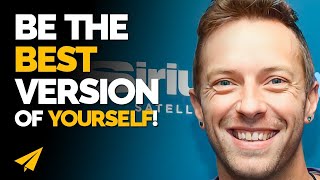
Evan Carmichael compiles advice from Chris Martin, Pitbull, Gary Vaynerchuk, Lady Gaga, and others on enthusiasm as a superpower. Chris Martin does everything with enthusiasm. Gary Vaynerchuk says passion matters more than money. Stephen King writes despite uncertainty.
Chapters
Hello, Believe Nation! We're gonna continue the experiment of my favorite top 10 rules to success. Basically all the videos that we've had from the past month, the top 10s, pulling out what my favorite rule was and mashing them together just for you. Let me know what you think, and as always, if you hear something that really resonates with you, please leave it in the comments below. Put quotes around it so other people can be inspired as well. Enjoy!
London, just before Christmas. The soaring melodies, the thumping beat of the music, and the quirky charisma of lead singer Chris Martin had the crowd on its feet.
We rely more on enthusiasm than actual skill. Whatever you do, do it enthusiastically and people will like it more. I can't dance like Usher, I can't sing like Beyoncé, I can't write songs like Elton John. But we can do the best we can with what we've got. So that's what we do, we just go for it.
But I really get motivated when people tell me it'll never happen. It's like, you know, this— I mean, it happens to me all the time in my business. You gotta understand, guys, I gotta reinvent myself every record. So that means every 3 to 6 months, I got to find myself again. Because the last record or the new record is not as big as the last record. Siempre. Siempre la misma muela, mismo cuento. ¿Cómo entienden? You're not going to believe it. But you guys got to understand, I got a guy that's sitting in an office that hasn't been to a club. Sabe Dios en cuántos años. No entiende lo que es disfrutarse, bailar, locura. He don't understand none of that. Telling me what a hit record is. You know? So you got to be able to stick to your gut. Stick to what you believe in, understand your worth, and go, okay, well, this is where you build an infrastructure. At least in my business, we built our own team, our own one-stop shop where if someone says, no, we don't think it is, you say, don't worry, we'll check back in in a month and we'll see who, you know, and we just happen. They'll go, oh, that'll never work. And in a month, a deep within, they say, you know, this is really starting to sound like a hit.
Like I'm going to say to my abuela, da la casualidad.
So that motivates me. That to me is what makes me get up in the morning and go, "What's next?" What were you like as a child?
Um, I was a combination of reclusive and obsessed with what I wanted to do. When I was 2, I was sitting in front of the TV drawing Fred Flintstones and Woody Woodpeckers. And at age 7, I'm running around like a crazy person doing voices. But at the same time, I would try to make animated films and try to figure out exactly how that art form worked.
When did you do your first cartoon? How old were you and what was it?
I was in 7th grade. It was called Space Pirates. It was terrible.
As you know, I was a bouncer for many years. I remember coming home one night after a big fight and I run up to the kitchen, I get ice, and I'm— my hand's swollen and just another day at work. And, uh, I was feeling like just bummed about the fact that I was still doing this job after all this time. And at that one moment I was like, why are people— what's up? Why do people have so much anger? Why do I have to— you know, why is this my daily life to suppress everybody's anger or check everybody's anger? That comes into the giant 3,000-person nightclub. And my father, it was so simple, but my father said, you know, Vin, I've traveled around the world. I've been to India, I've been to Russia, I've been to China. I've been all— I've been to South— all through South America. And I've realized something. I said, what? He said, "People by and large are good people." Sounded pretty simple, and yet it meant so much. And if you look at my Facebook page, or if you look at the way that all that positive energy— I don't think there's a page in the world in history that harbors as much positive energy as one would see on this Facebook page.
And it's what you put out too.
And it's really that, right? And I say that because— I say that because if you believe that in your heart, and not everybody watching this can say that, or is ready to say that, or is comfortable with themselves enough to say that. But if you really believe in your heart that people, by and large, are good people, it affects the way that you address the world. As you see, post in and post out, I address a world that in my soul I feel is comprised of good people.
I've always been driven, you know, even at a young age. All I ever wanted to do was become a footballer, a soccer star, and that was my only ambition, you know. I know it's different these days with kids, you know, there's obviously this fame, this fortune, and it might be easy for me to say that because obviously I've done very well out of the game, but you know, I'd still be playing this game even if I wasn't being paid for it. Not that I don't want to be paid for it, but I still would be playing this sport.
The notion that we are not enough is a lie. And I think more young people need to know that, that like when you have that thought that you're not enough, that that's based on a lie that somebody said to you or a lie that somebody did to you. Like somebody said or did something to you to make you feel like you're not enough, and that's not true. That you are everything that you need to be, that you have everything that you need to have to be the person that you're meant to be and to be the best version of who you're meant to be. It may mean that you have to work really hard, and it may mean that you have to ask for ask for help, but you are perfectly blessed. You know, you are exactly who you're supposed to be to be joyful in this life. So don't be afraid to work hard and don't be afraid to ask for help so you can get there, 'cause that's your truth.
You have to be authentic. I mean, you've got no hope if you try to pretend to be Reed Hastings or Mark Zuckerberg or Bill Gates or whoever you wanna think your CEOs are that you've met. You know, that is crazy. And you got to really get comfortable with yourself, your strengths and weaknesses. People are inspired by authenticity, and I'm just surprised how many people feel like they're acting and/or try to act. And you may be a really quiet person, and that's fine. But if you have that fierce will, that desire, for the institution, the company, to be great, and your own role in that is secondary, and you authentically express that in whatever ways you do, then you'll be greatly accepted, okay? And so that's all it takes is to be authentic and not try to be something else and to fundamentally care at your core about what's good for the company. And if everybody knows and you act in the notion of what's good as best as your judgment can tell, what's good for the company, they will see that and people will follow you and they won't be cynical. It's when you hide things, it's when you pretend.
Everybody has their own kind of sense of accomplishment. What, you know, some opening weekend box office or winning Academy Awards. To me, it is being in an audience anonymously and watching people watch my movies and seeing how we're entertaining people. The first true experience I ever had of that was about 5 days after Toy Story came out. Took 4 years for me to make Toy Story, all of us at Pixar. And I was flying with my family. We were changing planes in the Dallas-Fort Worth Airport. I got off the plane and there was a little boy, about 4 years old, with his mother. And he was holding a Woody the Cowboy doll. And it's the first time I'd seen one of my characters outside of Pixar. And I was so stunned, my boys, "Dad, look, look, look!" The look on his face, he couldn't wait to show his father who was getting off the plane his toy. And I realized at that moment that that character that I, with the help of everybody at Pixar, created over 4 years, no longer belonged to me, it belonged to him. And I, to be honest, it's so much in my memory And the look on that little boy's face, I think about that little boy every single day working at Pixar, and that's why we do what we do.
Well, certainly every product we do is absolutely as capable as it can possibly be. There's no holding back. We are— the people at Microsoft come into work every day building the best products they can. And they're very proud. You go out, go into schools and see how kids are using this stuff. Ask people about how their jobs have changed because the personal computer. You know, we're sitting there listening to our customers saying how they'd like to make things better. So we're— we do absolutely our best job. And in fact, that's why we've been successful. You know, anybody who holds back in this business isn't gonna be around for long because this is a business where you always have to be moving at a very rapid pace.
Ask yourself What if no one ever bought any of my work? What if I'm never gonna sell a book or publish a book or a short story? Are you gonna continue to write? And if the answer is yes, because I have to, then yeah, then you are a writer. And whether you'll sell or not, I can't know, but, uh, the, the, if there are stories in you that have to get out, you wanna put them down on the paper, whether, whether you ever get the affirmation of, uh, a contract or a book in your hand or being on the bestseller list, if you still have to tell your stories, then, then you're a writer. Uh, If you can give it up, then it probably would be an act of sanity to learn accounting or something like that.
In the long history of the world, only a few generations have been granted the role of defending freedom in its hour of maximum danger. I do not shrink from this responsibility. I welcome it. I do not believe I do not believe that any of us would exchange places with any other people or any other generation. The energy, the faith, the devotion which we bring to this endeavor will light our country and all who serve it. And the glow from that fire can truly light the world. And so, my fellow Americans, Americans, ask not what your country can do for you, ask what you can do for your country. My fellow citizens of the world, ask not what America will do for you, but what together we can do for the freedom of man. Finally, whether you are citizens of America or citizens of the world, ask of us here the same high standards of strength and sacrifice which we ask of you. With a good conscience our only sure reward, with history the final judge of our deeds, let us go forth to lead the land we love, asking his blessing and his help, but knowing that here on earth, God's work must truly be our own.
I see myself as a pioneer. In the game. I see Drake as a pioneer in the game, and people like Lil Wayne. And there's only certain people who, who really come and define their generation other than being a part of their generation. And it's cool to be a part of it as well, but this is how I see myself, as a leader and somebody who changes things and doesn't just follow.
So you've sort of arrived at these different approaches to writing, what was the first, to your mind, like the first writing piece that you did that kind of put you on the map? Where not like, I've arrived, but you're like, okay, I actually could make this work. I could actually really be good at this. Or wow, I just got recognition for this piece. I mean, were there any sort of defining moments in your career as a writer?
Yeah, I think, I mean, I don't know, yeah, the things that I remember, I remember like I was like, by the way, the best way to get started in anything is to be willing to work for free. Internships, like to me, are the path to, anything, and I mean, I really think being— there's definitely a lot of people who are entitled. Basically, I have so much to say, but anyway, if you want to live in your passion, whatever your passion is, you have to be willing to not make money at it. You want to do what you love, you got to do— you have a choice. You can choose money or you can choose what you love. Joseph Campbell has a great quote that I always use. I don't know if you guys know this.
Joseph Campbell, so the hero with a thousand faces.
Yeah, the great kind of professor of mythology. Mythology, but he said the insecure— have you guys heard this? The insecure way is the secure way. You guys have heard that quote? And what it means basically is, you know, my parents, and I'm sure like most people's parents say, get a good job, try and make some money, make a good living. And because they think that's secure if you make— go and make money. But if you do a job and you make money and lose that job, then you lose the money and you have nothing. What he says is if you choose your passion, it actually doesn't matter whether you make money or you lose money because you're always gonna have your passion to be happy. So it doesn't actually matter. And that's your safety net.
Right.
But the challenge of that is that it might be 8 years or 4 years before you're actually making a living at it versus something else.
What about the business of being what you are now, the musician, the songwriter?
I mean, did you display an early talent for singing or for—
I didn't, actually. I got thrown out of the choir.
Did you?
I was thrown out of the choir for, I think, As far as I know, it was for talking. And I always remember my dad used to say to me— you know, because I used to say, Dad— that when I was like 16, 17, 18, and my dad was threatening to throw me out of the house if I didn't get a job within a certain amount of time— so obviously I went out and got jobs. But I was saying, I want to be a singer. You know, I think I'm going to be rich and famous. And he would say, you know, everybody wants to be a pop singer. Everybody wants— and I would say, no, Dad. Everybody wants to be a pop singer. When they're 12, you know, when they're 12. I, I, this is my whole life, this is what I want to do. But, um, but, but, uh, I've lost my train of thought.
But was it to be rich and famous, your ambition? I mean, was that—
No, I think I had two very, very strong ambitions, and they've always fought against one another, always. And one was a passion for music and an ability to, um, communicate through music, and really a sense of purpose through music. And two was this desire to be— and rich and famous is not right because actually rich never came into it. I actually realized about 6 months ago, someone put a question to me and actually realized that at no point during my early life when I was in all my ambitions, or even when I started to realize my ambitions, at no point did it ever occur to me that one of the byproducts of this would be that I could buy whatever I wanted, or, you know, live in a big house, have a flashy car, all the things that are very pleasant, you know. But it really hadn't occurred to me. It never occurred to me. So I didn't want to be rich. I wanted to— just wanted to be filthily famous.
There's a lot of work that we're responsible for that other people can't do, you know. There's a saying that says you can lead a horse to the water, but you can't But you can't make them drink. In the presence of common sense and rational thinking, when even in the throes of your despair, it is your responsibility if you are willing to still commit to saving your own life, to hear that and to walk towards that voice, you know? So, you know, I want to recognize personal responsibility, you know? And in what we try to do here today, one of the things that make, you know, bodybuilding a significant vehicle for therapy and maybe even a tool, you know, towards personal development is just that. You know, in order to be able to do this effectively, you have to recognize your personal responsibility. So with that said, you know, I want to submit to you that the word believe, believe is work. You can substitute work for believe, you know, because when I'm working, what are you working for? If you're working without a belief in the idea that you're going to get paid, then what is your work for? What is the purpose? So I believe that, you know, to talk about believing is to talk about being willing to do the work.
Whatever you gonna do, just do it for a reason, you know what I'm saying? Don't be the fool to just sit back and do it because somebody else is doing it, because the only thing you're going to do is following somebody else's footsteps, you're just gonna be a shadow. Who would be a shadow for the rest of their life, you know what I'm saying? If you got a little something that you know how to do, progress at it, keep trying. I mean, God knows what could happen, you know what I'm saying? That's what I did. Just kept on rapping. Just happened to get to the right ears, you know what I'm saying?
Martin Luther King tried to commit suicide twice. You guys see what I'm saying here? JFK went through periods of deep illness, deeply, deeply ill, where people thought he would die. These types of things, right? Winston Churchill went through deep, deep depressions. So you can become one of those people. It doesn't mean you're gonna become one of them, 'cause that's, I mean, those guys are in their own fucking universe, but you know, you can become somebody of great power if you've gone through that, because you've been hardened. Do you guys see what I mean here? If you've been through that kind of bullshit, then if you've conditioned yourself to pull yourself out of something like that, if the world gets all fucked up, while all the other people, they're used to happiness, they're like, whoa, happy, and they're like, my happy world's falling apart! My happy world is falling apart. Shit gets all fucked up, you're just like, it's all good, baby. Yeah, yeah, you know? You don't care because you're adjusted to it. So you've taken conscious control. Do you guys see what I mean? Okay, so there's benefits. Being a hard case newbie means that you can be better than any of the guys that had it easily. It'll be harder to get, but you can excel to a higher level than all the people that were naturally good, if you choose to. But for you, it will be a life of commitment. In the same way that a guy that wants to get kind of big in the gym, if he's gonna be big in the gym and he's a hard gainer, little skinny dude, he's gonna have a higher commitment level. To get to that level, you're gonna have a higher commitment level. You're not gonna get to average as easily. And sometimes even striving to stay at average won't work for you because you slip back. So you have to, you have to really commit. You have to You have to take your foot off the fucking parking brake, man. You have to burn the boats, as they say, and just go for it. As a hard case newbie, if you do that, you can slowly build those willpower muscles, slowly reacclimate your body to positivity, build up friends, build up abundance, build an amazing situation for yourself. You do amazing, amazing things.
I continually learn from my mistakes and other people's mistakes. See, entrepreneurs think that, hey, to create that billion-dollar company or $100 million company or even million-dollar company, you have to be really smart. And sure, brains is part of it. Luck is a huge component. But what I've learned over the years is everyone, no matter how smart you are, you're going to fail many times and you're going to make mistakes. Just look at Mark Zuckerberg. Facebook worked out. His version of Snapchat that was a copycat did not work out, right? So there's other areas in which Facebook failed, but Facebook overall as a company has done great. Just because you're smart doesn't mean you're always gonna succeed with everything you try or touch. But every time you do something, you will learn new things, you'll make mistakes, and if you learn from these mistakes and avoid making them over and over again, you'll actually increase your odds of succeeding as time goes on. And the best way to do this is not just to learn from your mistakes, but it's also to learn from the mistakes of others. Rockefeller, Carnegie, all these people who were entrepreneurs years ago in the 1800s, 1900s, they themselves used business principles and concepts that are still applicable in today's world. Sure, we have the internet, but the same strategies and concepts that they use are still applicable, right? So learn from their mistakes, learn what worked for them, what didn't work for them, why, and bring that into what you're doing today.
In the very beginning of me getting into the industry, I would, you know, be out and about, and I would hear girls or actresses or musicians or whatever, you know, they would say, "Oh no, I don't want to be in a relationship because I don't want to have to choose between being in a relationship and having a career." And I thought to myself, "When I get to know that, when I find that person, that's going to be my, you know, life partner, I won't ever have to choose because they'll be accepting of me completely for who I am. Not me being able to just, like, do whatever I want necessarily, but they won't be threatened or have weird motives or whatever. They will be accepting of me, the things I love, the ambition, what I aspire to. Be what I want to create, they'll be accepting and supportive. And then I started to realize, oh my God, that's not true. That's not like that fairy tale that I had is not true for me right now.
Yeah, but you still miss it.
Yeah, I want that. Okay, again, everyone, this is the closed rehearsal of "Close." I'll tell you the truth is that, I mean, I'm a romantic and I don't— I kind of believe in this fairy tale. I mean, and in some ways I think that's always been to my advantage because like if you If you can believe in something great, I feel like you can achieve something great. I have that same belief system with everything, from career to my life, my personal life, everything. And I will do everything it takes to not fail. And I did everything it took, but it still failed. The bad that comes along with the good is a journey, and I learned so much from that journey.
I mean, you are unforgivingly who you are. Have you always been like that?
No.
What happened?
Like, when I was in college—
What were you like? Like, were you ever insecure?
I still am insecure. Like, I mean, there's probably people snickering backstage right now at that question, like, "Haha." When I was in college, I didn't want to come out as a progressive because I would eliminate like half of of my future employers in Washington, D.C. I was like, look, I got to look neutral here so I can get a fucking job someday. I found progressively, you know, and some of these lessons were foisted upon me. I mean, I mentioned earlier, so not to repeat a story, but it's at Google, I am working on this team on this wireless stuff. It was an incredible amount of responsibility. Larry had given me, Larry Page had given me billions of dollars to go take on the wireless carriers. And I was in over my head. I didn't have a background on this stuff, and I was learning fast, and I was pretty good at it, but one day a decision came up, and I didn't know what to do, and my work partner wrote in the notes, "Chris doesn't know what to do about this." And at Google, the notes are published to the whole company. So I see the notes get published, and I'm like, what'd you do? You just ruined my career. Everyone's going to know, like, I'm smoking mirrors. And I was like, I thought it was over for me. And then the next meeting, some new engineers who didn't report to me and Larry Page himself showed up with ideas on what to do to solve this problem. And I was like, oh my God, I just became more powerful. I now have influence. I have more bodies working for me who don't even report to me. And it was— I mean, I wish I could say I was like, it was an enlightened choice I'd made. It was totally foisted upon me and I was angry about it, but it worked. And so along the way, I realized that The candor, the authenticity, the vulnerability is what actually attracts the other people to you.
It's—
it's the insecurity roots you in this place of showing you're impervious, that you've got all the answers. But what that does is it renders everyone around you helpless. They're just like, fuck, I'm not valued here, right? And so when you start to admit, like, I don't know what I'm doing, I need some help, then people start attracting you and working with you. I mean, I, I I have a principle that I guide my life by and I try and teach this to our entrepreneurs called bold humility. There are all these business books that say like, hey, be humble, be humble, be humble. But humility is not a natural state for a kick-ass human being, right? Like if you're here, you probably kick a lot of ass at something. You are probably the best at something. You have ambition, you're a risk taker, you have learned to hack, you are a good talker. You have, through the gift of gab, wound your way into an amazing situation. You hustle, hustle, hustle. And I feel like it's unnatural to apologize for that. But where we get into trouble is when we feel like we have to extend that to the shit we don't know. And we have to feel like we've got it all covered. And so I think I have had such a great, like, I don't know if I would have learned this authenticity if I didn't have Twitter. And the replies being like, "That means a lot to me. Go for it." You know? And that's why I kind of live a lot of my life in public, is I feel I draw a lot of strength and reassurance from the public being like, "Look, that moment of fucking failure meant a lot to me, and I identify with it." Tyler, for you, you've got a deal on Cartoon Network.
That's Time Warner. You've got a deal with Sony. You've used this apparatus, even though you're only 23, you've used this apparatus this existing system to build up your profile. Do you think you could start literally without any of this support system and create yourself?
Yeah, of course, because that's how I started. Like, the way that I got famous was me going on Tumblr and creating my own website and just putting things out like that with the strategic, you know, it had a strategy to it, but putting out music for free, and that's how it got known, and the next thing I know Sony's like, hey, we'll give you a bunch of money to do X and O, and we just eat a little bit. And I've used them to my advantage in the same way that I've used other things, you know, to my advantage.
They didn't make you?
No, not at all, you know. So I know how to— I know how to do this without, you know, those platforms. And, and another thing is, the fun thing about this is I'm not— we in our squad, we're not afraid to fail. Like, we're not scared of failing or whatever. So we're learning as we go. So maybe this, maybe this doesn't work out, but it'll be a learning experience and that'll help other people look at the mistakes we made and figure out what they're trying to do.
Thank you guys so much for watching. I hope you enjoyed. I'd love to know, what did you think of the video? Did you enjoy it? Are you motivated? Did you learn something from it? What was your favorite clip? Leave it down in the comments below. I'm going to join in the discussion. I'm also curious to figure out, should this series continue or not? It's one of our bubble series right now. Maybe we'll keep going, maybe we won't. We'll see. So your comments will make a difference. Leave it down and let me know. Either way, if you hate it, that's good too. Let me know, leave in the comments. Finally, I want to give a quick shout out to Rebecca Coleman. Rebecca, thank you so much for picking up the ebook version of Your One Word. I really appreciate you buying it and also tweeting it out with that picture. I hope you enjoy that glass of wine as well as you read. Thank you guys again for watching. I believe in you. I hope you continue to believe in yourself and whatever your one word is. Much love.
I'll see you soon.
More from Evan


How the Biggest Mistake in History Created A Trillion-Dollar Empire | Sergey Brin



9 Machiavelli Principles That Force People To Respect You | Machiavellian Philosophy



The First 10 Words That Instantly Ruin A Sales Conversation | Vanessa Van Edwards

The Top 1% Mindset Behind The First $5 Trillion Company | Jensen Huang (Nvidia)

