FAST Results: 10-Minute Success Tips from Tony Hawk
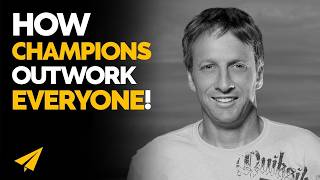
Tony Hawk shares his success formula: never quit skating, practice constantly, and master every technique. Evan Carmichael connects this to innovation, arguing breakthrough ideas come from blending unrelated interests, like Steve Jobs mixing typography into computers.
Good morning, Believe Nation. Today's message is Learn It All. Over to you, Tony Hawk. What is it that makes you real special?
I just, I never, well, for one, I never quit. I never stopped skating. I never took a hiatus, say 5 years, and came back, oh, skating's hot now, I'm gonna get back into it. So I have that, you know, that consistency, but I think that for me, I really like learning new techniques, you know, and a lot of people, like, if they're skating, they stick with this one style of skating, this one, you know, set of tricks, and don't want to branch out because they're afraid they won't look cool doing it or whatever. I always wanted to try the different techniques, even if I stumbled on them. I knew that in the end it would help me be more well-rounded, and I think that's probably what it is, is that I just, you know, I wanted to try to learn, learn it all.
I think it's really important to understand where innovation comes from. If you're an entrepreneur, you want to come up with these new innovative ideas, you want to break through in your market, have something that's really different, understand where innovation comes from. Because most of the time, innovation just comes from connecting the dots that other people haven't seen before. By looking at different industries, different businesses, different cultures, and seeing how things work there, or way over here that nobody's thought of before, not even on camera, and bringing it back to what you're doing. Steve Jobs famously came up with fonts in the personal computing industry, and that's what helped sell his first line of computers. But Steve Jobs wasn't the first person to think about fonts and the importance of writing. And writing style and the impact that that has. He just took a well-known science that people acknowledged the importance and relevancy of it and just brought it to this new field of computers over here. He just lined up those two things that nobody had connected those dots before. That's what you need to do. This is where you have the ability to really stand out from everybody else around you by connecting the dots of the things that you love. That nobody else has those combinations of love. I love business. I love YouTube. I love League of Legends. I love the Toronto Blue Jays and baseball. I love salsa dancing. I combine all of these things into a business that nobody else can replicate. It's why you can't out Evan Evan. It's why when people just copy me for exactly what I'm doing, they're never going to win. They're not going to innovate. They're just copycats. I don't care about the copycats. I don't look behind. I don't care about blocking the copycat people. I'm looking forward, and you need to do the same. All of your interests, all of your passions, everything that you've ever liked, you can combine all those ideas to make an amazing, unique, different, special, valuable business. When I took over Turn It Up Dance Salsa at the beginning of this year as the owner, I brought a whole bunch of things to the salsa industry that has never been seen before. I'm bringing aspects of YouTube and entrepreneurship and baseball and League of Legends and all the things that I care about into this business that nobody else can replicate because they don't have the same passions. And if they're just trying to copy me, they're going to fail. The way for them to win is to go more in on their strengths, into things that they care about. And find a way to integrate that into their business. This is how you are going to win as an entrepreneur. Stop trying to copy everybody else. Find the connective tissue between seemingly unrelated industries, hobbies, passions, and find a way to make it work. Combine the genius of the and. That's where you're going to have success. Do it now. Think about what you love to do, what your hobbies are, what your passions are, that people might think is weird or different or odd? How you spend your, your spare time? Where you like to go on vacation? What can you pull from all of those things to instantly make your business better? Figure that out. You've got some magic ingredients for an amazing business. So the question of the day today is, I'm curious, what have you learned from a different industry that seemed totally irrelevant, but then you applied it to your business and it worked? Super curious to find out. Leave it in the comments below. I'm gonna join in the discussion. I also wanna give a quick shout out to Brittany Robinson from TreehouseDreamPublishing.com. Brittany, thank you so much for picking up a copy of my book, Your One Word. It really, really, really, really means a lot to me. So thank you guys again for watching. I believe in you. I hope you continue to believe in yourself and whatever your one word is. Much love, and I'll see you again tomorrow morning for another shot of espresso. Hey, Believe Nation. We're also looking at making a top 10 of Tony Hawk. Here's a quick sneak peek of some of the clips we're thinking of including. I hope you enjoy. Let me know what you think.
When I started our company, Birdhouse, in the first 3 years in, we were ready to give in. You know, the sales just weren't there. The interest wasn't there. And same with my skating, like I was, I was still improving my skills, but for no audience. So it was definitely difficult, but, but we embrace those challenges too, especially as athletes. I mean, you, someone, someone poses a challenge to you and you have to figure out how to get over it. And so in, in doing that in my skating and also in the business, it was like, well, these are what's, this is what's coming at us. We've got to figure out how to navigate this and how to succeed. And a lot of people just give up. And especially in skating, I mean, that's the first sign of someone that's going to be successful is no matter how far, no matter how successful they get, especially in competition, they continue to challenge themselves because they want to improve. Those are the guys that make it way further than anyone else. When you're coming up with a new idea in sport, what is it that you do? How do you get into the zone? Then translate that into the business world. And how do you come up with that next step, the next innovation that's going to put you once again out in front of everybody else? I think it's having the confidence. When I approach something, say just a new trick, I know I have the skills, the inherent skills to do it. I know that I visualize it. I know I can do it. Same goes for business. I know, like we did a tour. It's called Boom Baccino. Carl Harris, who was a big part of that, is here in the audience. We did a tour which was skate, BMX, motocross. I visualized the whole thing. I said, you know, we have— our sports are popular enough that we don't have to be a sideshow to the Warped Tour anymore. We don't have to be the halftime show to the football game. We can get our own crowd. We can be the headliner of an arena tour. And I designed a ramp system. Stupid me on napkin. Cost a million bucks. And it was, it filled the arena floor. It included motocross, skateboarding, BMX. I just knew that that would work. I knew that there were enough kids out there that would love to come see a show. It was our sports as entertainment. It wasn't about competition. It was actually my transition from being a competitor to being a performer. And I never thought 'What if this doesn't work? What if it sucks? What if no one comes?' Like, that's, that's what kills you, because you live in that world of doubt, and it comes to fruition. And you can't, you can't think that way. You just, if you know, if you know something you love and you instinctually think it's going to work, then you have to go at it and say it will work and see it through. And sometimes it takes years. I get so busy I forget to stop and say, 'Wow, I'm actually living the dream.' And, and I think that For all you guys, you know, going to college and aspiring to do something, you'll find yourself completely busy and overwhelmed at times. And if you just stop and look around and go, "Wow, I'm actually doing this." You know, this is kind of what I had in mind. It's just that you get so caught up in the whirlwind of it, you don't realize that you got to just stop and think, "Wow, this is it. I appreciate it." I wanted to figure out how I could remove myself from competition and still be a pro skater. And that had not been done yet. Because if you're not going to compete, the magazines aren't going to cover you. Your sponsors are likely to drop you. And the kids who are buying your products are going to forget about you. And there was no such thing as a video skater back then. That hadn't really come into play yet. There was no YouTube. The skate videos were— usually based on the best guys in the competitions. And so I went and talked to Stacy. Who was your boss at the time? Stacy Peralta was my coach. And I actually had my brother come with me as backup. And he approached Stacy and said, look, Tony's really having a problem with the competitions. It's kind of wrecking him. It's ruining the fun of skating. And I told him that, and so he said, well, I understand. Maybe you might want to take a break, but don't give it up completely because you may want to come back. You may enjoy it. And I don't know if we're going to be able to sustain your career if you're not competing. And I did take a break. I stopped competing for a while, almost a year, maybe a little less. And when I came back to it, I came back with sort of a fresh perspective that I don't really care how it lays out. I'm going to go and do my best, and I'm going to take chances that I maybe hadn't taken before. And if that puts me in last place, then like, so be it. But if, if it's— if I succeed, I'm going to be on this whole other level of skating. And that's what happened. I mean, and the contest that I won then, I won by a long shot, you know, because I was doing stuff that was experimental and stuff that I wasn't really confident with, but I could pull it through somehow. And if it didn't happen, then I didn't do well at all, and I stopped caring about the end result so much.
More from Evan


How the Biggest Mistake in History Created A Trillion-Dollar Empire | Sergey Brin



9 Machiavelli Principles That Force People To Respect You | Machiavellian Philosophy



The First 10 Words That Instantly Ruin A Sales Conversation | Vanessa Van Edwards

The Top 1% Mindset Behind The First $5 Trillion Company | Jensen Huang (Nvidia)

