Gary Vaynerchuk's Top 10 Skills for Achieving Financial Success and Wealth
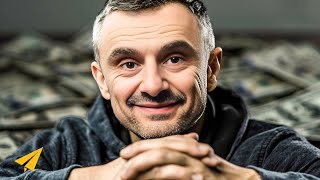
Gary Vaynerchuk shares ten rules for financial success: double down on your strengths, master storytelling to scale products, obsess over data and conversion metrics, and audit every expense and employee. He delivered a $45 case of wine in a snowstorm to show how customer-centric acts build culture, and argues that emotional EQ will dominate business in the next decade.
Chapters
You need to bet on your strengths and don't give a fuck about what you suck at. If you want this, if you want bling-bling, if you want to buy the Jets, if you want to do shit, work. Entrepreneurship sucks. I mean, it's lonely, it's high risk. I'm a humongous believer that ideas are shit and that execution's the game. And so the reason I think that people are missing why things succeed is because of storytelling. I love black and white data. I'm obsessed with it. I would never take a fucking note. Like, that scares the piss out of me what these 3 people are doing right now. Just do that. Nope, this thing matters to me. My friends, there are a million reasons why not, but there's one great reason why. Nothing in life is free. Nothing happens overnight. He's an entrepreneur, investor, author, public speaker, and internet personality. After graduating college in 1998, he assumed control of his father's liquor store business. Through e-commerce and email marketing, he grew his father's business from $3 million to $50 million in revenue. He's Gary Vaynerchuk, and here are his top 10 rules for success. You need to bet on your strengths, and don't give a fuck about what you suck at. You're gonna, way too many people in this room are gonna spend the next 30, 40 years of their lives trying to check the boxes of the things that they're not as good at, and that you're gonna waste a fuckload of time and lose. I highly recommend auditing yourself, or if you have no fucking empathy, or EQ, or self-awareness, then find somebody in your family or friendship that does, and let them tell you who you are, and once you believe If you believe that, either for yourself or someone else told you, go directly all chips all into that because that is the only possible way, in my opinion, watching from the outside, that is, let me rephrase, that is a very highly likely way of over-indexing because the truth is if you want to be an anomaly, you've got to act like one. You know, like, and so that's it, that's what I got. So thanks for having me. How do you get money to do what you love? You don't. Right? I lost a shitload of money when I started doing what I loved. What you do is you position yourself to succeed. So for example, if you're doing something else and you want to do this thing you love, you do it after hours. You work 9 to 6, you get home, you kiss the dog, and you go to town. Right? I mean, you start building your equity and your brand and whatever you're trying to accomplish after hours. Everybody has time. Stop watching fucking Lost. That's a good overheard, right? That was a good overheard. So, you know what I mean? I mean, if you want this, if you want bling-bling, if you want to buy the Jets, if you want to do shit, work. That's how you get it. My question is, I'm an entrepreneur, it's very great, but not all days are great in a company, so what are your tips and tricks for, you know, tough days? I think there's massive confusion around entrepreneurship. Entrepreneurship sucks. I mean, it's lonely, it's high risk. I mean, I can't live without it, but it's like a bad boyfriend, right, or girlfriend, right? Like, there's a ton of bad days being an entrepreneur, not to mention 98% of entrepreneurial ventures are gonna fail, so there's gonna be a really bad fucking day in your future. You know, hopefully not for you. For any of you. You know, for me, I don't, you know, I think this is a very personal question. I think it's how you're wired. I'm so all-in entrepreneur. I prefer the pain. I think one of the reasons I love the Jets so much is 'cause they bring me so much pain. You know, I, I love the climb. To me, the setback is exciting. I love when something goes wrong. It's where I shine the most. But that's not for everybody, right? I mean, it could be very difficult, and when you start affecting your life and your loved ones and all the other things, it can get real nasty. To me, The way I handle things, even in the few rare days when I really struggle, I take a real step back and make pretend that somebody called me and told me that my mother or daughter were killed. And I know that's very dark, and I apologize, but it's really what I do. I literally am able to, at my deepest, most struggling moment within business, take a step back and remind myself that I could make a trillion dollars tomorrow on Bitcoin and and if something bad happened to the people I love the most, that it would mean nothing, and it very consistently rewires me very quickly. I just put business in perspective. At the end of the day, you know, it's money. For me, it's not really money, it's my legacy, so I get hurt by it a little bit more, but yeah, I mean, it's, you know, I put it in perspective. It's money, and you know what? Up until I had a daughter, even while I was married, up until when I had Misha, 4 years ago, I secretly wanted to lose all my money. I had this weird, twisted, dark fantasy of losing everything just to rise again like a phoenix and remind you motherfuckers. My assistant's got a great thing now in this. Once in every 4 months, somebody sends an email saying, "I've got a huge startup that I want you to invest in, but you've gotta sign this NDA." Right? Which literally every time gets an email back that says, "Fuck you." Right? And the reason is, I'm a humongous believer that ideas are shit, and that execution's the game. Right? We've all got ideas. Everybody's got ideas. Do you know how many fucking ideas we all have here? We could probably sit here for the next 2 hours, draw them all out, record 'em, and predict the next 78 great startups over the next 9 years. And? So, I think, The thing that is another theme in entrepreneurship is there is way too much fodder brought to the idea. Uber was Magic Cab 3 years earlier. Uber is not an idea. Uber existed. It was called Magic Cab. But the guys that executed it sucked. So they lost. So I think, you know, if there's any level of romance left in this room about your idea, I'd like to suffocate it. Because I think the actual situation is what you actually do with it. You know, the reason I feel storytelling is the most underrated skill in business is because it doesn't get talked about a whole lot, and I don't think that people realize it's happening when it's happening, and most of all, I don't think that many people are really good at it. So like, when I watch a Steve Jobs keynote about a new product, I don't care about the new tech. I don't care about the iPad or the iPhone. I cared about the way he was presenting it. You know, when I see David Blaine, this is a magician. If you ever pay attention to what he's doing, he's storytelling you the whole way, and then it's the big kick. So if you understand what the consumer wants, then you backtrack and you tell the story to get them emotionally there, that's how things sell. That's marketing. There's a very big difference between marketing and sales. And so the reason I think that people are missing why things succeed is because of storytelling. I think it's overlooked. I think people look at the X's and O's and the black and white, but I think storytelling, when done right, takes a product that should have sold $100 million worth of stuff and sells $1 billion worth of stuff. In 19— in 2001, it snowed in New Jersey on December 23rd, which was one of the busiest days of the year. Typically, December 23rd is the busiest day of the year in a liquor store. And a woman called us, we just started shipping, and her case of Behringer White Zinfandel wasn't delivered. First of all, I appreciate the people that know what Behringer White Zin is, good job. The entire case, by the way, 15-pack, the entire 15-pack case cost $45. We're doing about $40,000 an hour in the store. She calls. I find out about it somehow. It was buzzing because I was on the floor selling. I am the premier salesman on the floor, as you can imagine. I find out about it and we're debating what to do. She needs it for her Christmas dinner. I grab the case, throw it in my car, and drive to Bergen County to deliver it. It takes me 2.5 hours to complete the whole thing. The woman was 194 years old. We didn't have a lot of lifetime value on the back end there. She looked like fucking Yoda. And the best part was I delivered it all pumped with myself and she said, "Great," and closed the door. Awesome. Everybody, especially my dad, who was pissed that I left because all the customers that came in asking for me or that I could have sold, everybody was baffled. I can't tell you what the ROI of driving through the snow in my car to deliver a case of $45 pink shit to a woman that looked like Yoda was. But I can tell you this, over the next 2 to 3 years, that story became the foundation of how we treated every single customer. It became our competitive edge. And those are the things that matter to me. I love black and white data. I'm obsessed with it. The day when the nerd beat me, I fucking understood that the nerds beat me. And I respect the living fuck out of data, conversion funnels, all that shit. But I'm telling you right now, that there are way too many fuckers running businesses today with this and not enough people running businesses with this. And again, I swear on my life, I am not Mother Teresa and I far from run my business just on this, but I'm telling you right now, the reason I amassed my following, the reason why I continue to retain it is because my percentage of this far outweighs every fucker in this room. I mean it. That's how I feel and that's how I try to roll every day. And I promise you, if you are able to figure out how to afford, how to afford the allocation of this in your business more, your long-term value will be dramatically higher. Your long-term business success will be dramatically higher. Your grandparents, Your great-grandparents built businesses based on this. It's how we built the whole thing. We got really lean and mean when we went to the suburbs and big box stores and all we cared about was dollars and it's great and the data matters and continue to use it and use this tool and understand it. But I'm asking you one final thing. When you go home, if this talk meant anything, and by the way, I fundamentally believe only 3 of you are gonna act on this talk, I do. Because what I talk about is ridiculously hard and massively frustrating and takes forever. You know, like everything that's good in fucking life. If you do anything because of this keynote, there's only one thing I ask you to do because as zany as I got, I'm a practical motherfucker. Here's what I want from you. When you go home, look yourself in the mirror and audit everything you and your business do. I promise you that if you audit from top to bottom of expenses and effort and time and energy and payroll and all that shit, If you audit all of it, even the best of us, even the InBevs, which is the company that bought Budweiser, they built their whole business on printing on both sides of the paper and all that horseshit. Even the most efficient ones of us are doing 20% dumb shit. If you take that 8%, that 13%, that 16% of dumb shit that you're doing, paying that person that's not bringing any cultural value to your business, having that contract that you've just been in and you just renewed 'cause you're busy as fuck, Whatever the fuck you're doing, if you take any piece of that percentage and you apply it to giving a fuck about your customer, it will be better for your business going forward because for the first time since we all lived in small towns where your reputation was the complete backbone of how you did business, for the first time because technology is bringing us back together in a small town, for the first time being good and caring and following up Matters. It fucking matters. How about doing something random act of kindness for a current customer, not the ones that unsubscribed or left? You know how you always do nice shit when they're going? How about while you've got them? Reallocate your thought process, I'm telling you, because the tools that is the umbrella of this event are getting so good. So good. You know what that means? All that shit's about to become a commodity. Emotional EQ is going to dominate business over the next decade and I implore you to start paying attention and oh, by the way, I'll leave you with this. You know what the best fucking part is? It feels good. Thank you. The ability to adjust is the entire game. I'm so proud that I change my mind every day. My dad used to get so pissed when I was building Wine Library. He would always be like, Fuck, he's like, he would say like, "3 months ago you said Ricky was gonna be the best employee." I'm like, "I changed my mind, he's shit, fire him." Or he's like, "You said sparkling wine was important, now you just eliminated it from the key spot." I'm like, "I changed my mind." Like, my ability to only be comfortable in massive chaos has been my biggest asset as an entrepreneur. Like, I would never take a fucking note. Like, that scares the piss out of me what these 3 people are doing right now, right? And so, Now, now, now, that may work for them, and I'm not, like, back to the opening statement, like, you need to do you. Like, some, plenty of people that make a fuckload more money than me and have won bigger take fucking notes. The key, the key though, the key is way too many people are doing, like, here's a good one. You know what really pissed me the fuck off? I'm completely driven by, like, happiness, and, like, I'm crippled by, like, chaos, like, You know, VaynerMedia, which is now 500 people, update your shit. VaynerMedia is like completely dictated by, like I'm a dictator of HR. Like all I care about is the atmosphere, all I care about is how people, intern, all I care about is like how people roll. Like I think I've fired the 4 most talented, smartest people that have worked for me because if you don't know how to play with the other boys and girls, you're out. Because I suffocate under conflict and negativity and nobody's better than me, so you gotta go. So what really pissed me off in tech world was when Steve Jobs' book came out when he was dying, when it was all about Steve 3 or 4 years ago, I literally watched a lot of my tech startup friends start being like a dick to their staff because Jobs was tough, everybody fell into the romance of like, I have this big vision and I'm gonna be a dick like Steve, right? And I thought that was really interesting for me to watch that half decade of like literally watching people I know and then watching them act differently because the status or the icon of the moment, and you see a lot of that. And so like that is probably the energy I'm trying to bring to this class today, which is you can look at like how people roll and like it's great to admire and things of that nature, but it's so damn important to stick to like your DNA, right? And like what you're good at. And to recognize that you need to surround yourself, whether it's your co-founder or whether it's the people that work for you, like all I do is hire the people that are the opposite of me, that bring the other value, that bring me the ability to remember what the fuck that meeting was about and go make sure it happens. You know, like whatever it may be, right? And so I think that's another thing that I would highly recognize. I delegate everything that I think is not the single most important things in the world, and then I micromanage the things that I, think are the most important things in the world. Luckily for me, hence why I've been able to build big companies, I don't think most things matter. So I don't think I'm any different than anybody else. I actually think everybody is a delegator and a micromanager. I just think that my radar of what's important is different. Ooh-hoo-hoo-hoo. Yes, we need to do something with that. That's the shit, guys. That's it right there. I'm just like you. We're all the same. We all delegate, we all micromanage. The difference is, I don't think most things matter. And what do I mean by that, as I'm trying to think about somebody watching this for the first time, instead of alluding to people that have watched forever. Most things don't matter. Like, I don't know, like, just, I don't know, that's what it means. Like, you know, like, if I was like, I don't know, I don't think lighting matters as much as DRock. Like, I just don't think things matter. Like, I don't think one client that's gonna put us out of business, like, I don't think one employee's gonna kill our atmosphere. Like, I don't think a lot of things matter. I don't think like, A misspelling in a deck is something that really matters to a lot of people in my company. It just doesn't matter to me. I just don't think so. Guys, guys, I don't think we're gonna lose a fucking account because we put the I before the E. And if we do, fuck them. Idiots. I don't think not being, I don't think not wearing shoes in an establishment is the biggest thing in the world. Clearly, if you've watched DailyVee 1, some people do, and guess what? I do not judge. Do not judge. Everybody's allowed to do their thing. It's just like parenting. I will never spew my parenting. I talk about it, but it's very holistic. Like, this is what I do, not what I'm telling you to do. This is me. But fuck it. So ultimately, I think that I'm both. Like everybody in the world, I just think that I deem what's most important at a very, very high level. On things that most people, you know what, a lot of you are commenting about my 5-minute meetings. Most of you, 'cause you're part of my community, think it's great. A lot of comments in YouTube and Facebook of like, "Oh, I like DailyVee 'cause Gary spends 5," that's nice. One comment, "I work in a small," and by the way, whoever said this is gonna see this and be like, "Holy crap, he reads everything." "I've worked at small companies where the boss didn't even know my name," you know what I mean? Like, this is cool, but do you know how many people think it's stupid? I have a lot of people in my life that think that I'm very busy and I have a lot of things to do and why in the world, Gary, it's not scalable. It's not sustainable. Yeah, you're making that face 'cause you're so in our cocoon, but like, boy, just like, you know? They're like, don't do that. It's not bad, nobody expects you to do it, not at this scale, and you have a great culture and you have great intent, just do that. I'm like, nope. This thing matters to me. So I'm micromanaging a hello into my company 3 to 6 months in that a lot of people outsource to an HR person or the leadership. So I do unscalable things all the time, micromanaging, if I deem them the most important. Pitching new business, I like to micromanage that, 'cause it's important to win business. Like money helps me keep doing everything. Cool. Roberto asks, "What do you feel is a bigger obstacle to success, a lack of time or lack of capital?" Roberto, this is a tremendous question. I think the biggest obstacle to success is a lack of optimism. That question in itself is the problem, my friend, right? You're looking at two things that are both negatives, and guess what? Both of them are obstacles. When I started WineLibrary.com, transformation for my business, I had time, I worked my face off every minute, but we didn't have a whole lot of money in our profit center, so it took more time, right? It's just the way it is. Today I have more money, but boy don't I have time. But neither, ever, ever will be an excuse for me, and so, just to drill this through the throat of the VaynerNation, that's right, I went that graphic, don't smile, DRock. Here's the bottom line, I refuse to allow you to get an answer to that question because both of them are firmly square in the excuse column, and I have no patience for that. There will always be problems. Let's talk about a million other things that are a way to stop success. The health and well-being of your family members, so it takes your mind away from execution. The country you live in's government and political, you know, concepts at these moments, à la startups in China that I've invested in that got traction, but then people that were wired into the, Government decided to not allow it to happen, and then the startup disappeared. Not as easy to be an entrepreneur there. It's still a communist country. Sorry, it just is. And so all these things can be problems, right? There's a competitor with a billion dollars who's also skilled and punches you in the mouth and knocks you out in the first round, right? The world changing. I mean, there's just a million obstacles, right? The media, one bad coverage of you. A moment in time. You know what I think about a lot? You know what I think about a lot? Let's get really real. This is why we did this show. I always, I'm a human being, and I always think about a moment in time. What if I just say the wrong thing at the wrong time, right? What if I call out China for being a communist country in an episode while I'm on a rant, and somebody who's watching doesn't like the way that tastes, and it takes away a business opportunity for me in China in 7 years, even though I'm not trying to zing, it's just things that I saw. What if, what if, you know, what if, what if I look down on my phone while I'm driving, even though I've really not done that, and I hit somebody and I kill them, and that becomes the story, and they're like, forget about the story about what you think of me, I will never recover from that because I killed somebody because I needed to check a tweet. These are moments in time. So there are so many things that can keep you from being successful, right? The people that you invested in, having something bad happen to them, so it slows you down. My friends, there are a million reasons why not, but there's one great reason why, which is you've just gotta persevere no matter what it is. It's just the way it is. It's hard being an entrepreneur. It's hard building a business. Everybody thinks it's so easy that there's an entitlement. There's a disaster. Zinging China, here comes my US zing right now. There is an insane generation of 18 to 25-year-olds right now that think they're entitled to having a business because they saw The Social Network movie and everybody's decided if you're a kid and you know what tech is, because you used Instagram early on, you're entitled to actually build a business. Building a business is hard. And you know what makes it really hard? Everything that happens every day of every moment. So, you can pick time, you can pick money as the one or two things that you think stop you from winning your game, but the truth is there's a million reasons. 99% of businesses go out of business for a reason, and that reason is It's hard. And so, if you're watching this show, I've got a sense of who you are, and you need to start creating layers and layers and layers and layers of skin to be able to get through, because the glamour of being an entrepreneur, the goodness, you know, you get very confused by my optimism, 'cause it's my optimism. I can't help it, it's just how I roll. It's probably one of the variable 1% reasons why I'm successful, but please, Don't get it twisted. This is hard. Every day is hard. And if you don't have the stomach to weather the storm, you will not be successful. And by the way, let me throw you a real weird curveball, and that's okay. People have to look themselves in the mirror and understand if they're number 2, 3, 4, 5, 6, 7 in an organization that has differences of being a number 1, but maybe that's where your skill set sits. Maybe that's how you make your fortunes and happiness and all the things that you're looking for, and so That question got me going a little bit, Steve, because it's under the context of excuses, and I will never make an excuse. Everything that's a problem with me, everything I don't achieve, everything that's a problem at VaynerMedia, and everything is my fault, and I succumb to that, and I respect that, and I actually think that's the way it should be, and so, no excuses, my friends. Nothing in life is free. Nothing happens overnight. It all takes tons and tons of work and tons and tons of talent and tons and tons of serendipity. But my friends, luck, serendipity, there's a forced culture within that. You know, you don't just sit in your room hoping and then something lucky happens. Nobody just knocks on your house's door and says, "Congratulations, you've been awarded this." Luck comes from being in the right spot. I've been really lucky because I fucking bleed out of my eyes every day of my life and work my face off. You get really lucky when you have that 11:30 PM meeting where the lucky thing happened. Pretty cool, since all you were fucking sleeping, I was pretty lucky. Weird that I scheduled that meeting 'cause I did a ton of things for 30 years that allowed me to even have that meeting in the first place that gave me the leverage to have that lucky thing to happen. There's no overnight successes, period. They don't exist. Show me. Leave a comment on YouTube, leave the name, explain to me, tell me, show me, let me know. Show me the overnight success because I'll show you you justifying in your brain something that is just not true. Period. Thank you so much for watching. We made this video because Cameron Blackwell asked us to. If you have another entrepreneur you want us to profile, leave it in the comments. In the comments below. We'd also love to know which of Gary Vaynerchuk's top 10 rules meant the most to you, what you're gonna take home from this video. Leave it in the comments and we'll join the discussion. Thank you so much for watching. Continue to believe, and we'll see you soon.
More from Evan


How the Biggest Mistake in History Created A Trillion-Dollar Empire | Sergey Brin



9 Machiavelli Principles That Force People To Respect You | Machiavellian Philosophy



The First 10 Words That Instantly Ruin A Sales Conversation | Vanessa Van Edwards

The Top 1% Mindset Behind The First $5 Trillion Company | Jensen Huang (Nvidia)

