Get PEOPLE Who Can HELP You GROW! | Tony Robbins | #Entspresso
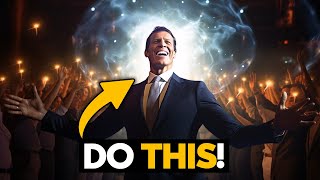
Tony Robbins breaks down three types of mentors—in-person, aspirational, and online—and how to learn from each. He argues that fear and anger are physical states you can rewire through cold plunges and breathwork, and that labor becomes love when you balance psychology with skill.
Chapters
I always tell people anticipation is power. If you ever play a video game against a child, it's pretty disastrous, right? Maybe not for you. For me, it's not the kid is faster and smarter. If they played this game before 8 million times, so they know the first shot's here, the second shot's here, third shot there, and you're like reacting. When you're reacting to things, you fail. My mentors have been people over the year, different people. My earliest mentor was a man named Jim Rohn. He was a personal development speaker, just touched my life. Then I was involved in neuro-linguistic programming, NLP, when I was 21, 22, 23 years old. I became partners with a man named John Grinder, brilliant man, co-founder of that. But in my last couple decades, it's been people like Peter Guber, who's Owns the LA Dodgers and owns the Golden State Warriors NBA team and 52 Academy Award nominations. So he's a mentor for me. Paul Tudor Jones, I coach but also I'm coached by him because we get to pitch and catch. And then I've got some people in my life that, you know, Steve Wynn is a dear friend of mine. And these guys are all 18 years my senior. So they know the road ahead. And I'm able to learn from them in advance and kind of anticipate things. And that to me is incredibly valuable.
The fastest way to accomplish anything is to model someone who has already had the same success that you are after. You can go around trying to figure out everything by yourself, trying to come up with every new idea yourself, and you will slowly, slowly make progress towards your ideas. But until you recognize that success leaves clues, that whatever the thing is that you're trying to accomplish has already been solved by thousands and thousands of thousands of people, that all you need to do is model their success— until you realize that, you're going to constantly stay struggling, making slow progress, knowing that you're capable of more. So I first learned the power of my own success with my first business where I was struggling. I was, I was 19, 20, not making any money, $300 a month, low confidence, filled with self-doubt, not getting results. You know, I turned down high-paying jobs to do this thing and own 30% of a company that seemed to be going nowhere. And I told my partner that I quit. And the thing that saved me when I hit my lowest point was I am not I'm not the first person to try to solve this problem before. Maybe my specific scenario, yes. Biotech software, you know, from Toronto, who's done that before? Nobody. But a software company getting to $1 million? Somebody's done that before. How about I just look at their success and try to emulate it? And so the only person I could think of off the top of my head was Bill Gates. So I looked at Bill Gates and how he got started, and it was through partnerships, and I applied that lesson to my business and in a short amount of time had my first deal for $13,500. I felt like a rich man. I felt like, holy cow, to go from $300 a month and saying I quit to now having a deal in place for $13,500. And more important, the strategy that I could use again and again and again was life-changing for me. All because I modeled success. And that was, again, when I was 19, 20. So now what have I done for the past 20 years is just model success. What is my YouTube channel about? What is this video about? Modeling success. Why have these people behind me? It's not for you, it's for me. I want to model success. They're constantly pulling me up to a greater spot. Whatever problem you have has been solved, not exactly the specific minutia, but by modeling Bill Gates, it took me 80% of the way. You still have to figure out that final 20%, but most people are trying to figure out the whole 100. That's the problem. I was struggling when I was trying to figure out the whole 100% all by myself. I was just coming up with new ideas, new ways, new innovation, but nothing worked. All you have to do is figure out that last 20%. And so look to your heroes, look to potential mentors, whether you know them in person or not. They've done it before. They can teach you. Success leaves clues. You don't have to go through this alone, and you can ramp up your success really quickly. Now, how do you get a mentor? There's 3 different kinds. I want to break them down and teach you how to get them. Let's go. The first mentors are in-person mentors. These are people who you meet for coffee, people who you can hang out with, people you can sit, you know, face to face with and ask them questions. They may not have had as big a success, right? As much as, you know, I love Kanye West. I haven't met him yet. Howard Schultz, I haven't met him yet. These two I'm never going to meet. Steve Jobs, Apu Janhini. But I haven't met those two yet. And even if I do or when I do, you know, I'm not hanging with Kanye every day over coffee asking him some questions. So there's people who have some success, but they may not be the top of the top. That's okay. They're further ahead than you are. And so you look to people who are local, look to people who you can make time to connect with and ask some questions. Show your hunger, show your drive. Mentors love giving back and helping out, but they hate wasting their time. And they feel like it's a waste of time often because mentees suck. Most mentees suck. Most mentees don't do the work. Most mentees don't do the work because it's hard. And so you need to show to the mentor that you will do the work, that you will follow through, that you will, you will do it. And then they'll feel great because they'll see a younger version of themselves in you. That's what you want. I had a guy named Carlos who wanted to do an interview with me in Toronto, and he was from New York. I said, okay, you know what, if you get here from New York on this day, I'll do the interview with you. And so he took a bus overnight to get here. So it's a 9-hour bus to do the interview with me. And then he asked afterwards, I still have a couple hours before I have to go back home and catch my overnight bus again, right? Overnight bus for half an hour in Toronto and then overnight bus, right? That was his plan. Can I hang out with you? Can I just see what you're doing? Can I ask you more questions? And I said, you know what, yeah. And anybody else, typically I would have said no to and move on with my day, but I said yes. And I brought him back to my place and we filmed some more content. I asked answered some more questions from him because he showed that he was willing to work. And this is a guy who's going to win. He doesn't let the fact that somebody is in Toronto and he's in New York stop him. Even though he doesn't have a car, even though he couldn't afford the flight, right? Buys a bus ticket overnight there and back. Even though, you know, he's got a wife at home and he's got responsibilities and a full-time job and all of it, he made it work. And so I want to help him. I want to help him. I gave him extra time that day. I'm talking about him now here, you know, on this video. Carlos, shout out. I love you, man. You're going to crush it. That's the process. So you can reach out to people who have done what you want to do and then share your story and show your willingness to work, show your willingness to take their advice and apply it, and you'll get far more yeses. Step number 2 are what I call aspirational mentors. These are actually my favorite. These are people who I love learning from that I may never meet or can't meet, right? These two I can't meet. I'm never going to meet Steve Jobs. A.P. Giannini is the founder of Bank of America. He's my favorite entrepreneur of all time. I'm never going to meet him either. They passed. I've still learned a lot from Kanye and Howard even though I haven't met them yet. You can learn from people, you can dissect their success and learn from them even if you never meet them. So if you're saying, well, I'm in the middle of nowhere and I can't get somewhere, I don't know anybody in my family, I have no connection, zero, how do I get started? Don't let that defeat you. You could learn from aspirational mentors. That's what this channel is all about. Find the people, two types. One who are in your industry who've done it. I learned from Bill Gates because he was in software and I was in software. So look at the people who've done it. Anybody who's big, even though I was in biotech software and Bill Gates was in productivity software, that's 80% of the rules are the same, right? How he did it, I can apply 80% to my success. Then you only have to figure out that final 20%. So look at people in your industry and then look at people who you just love. Look at people you look up to and respect. I love E.P. Giannini, who was the founder of Bank of America, because he was the believe banker. Even though I'm not in banking. I love Steve Jobs even though I'm not making tech gear. I love Howard Schultz even though I'm not, you know, creating coffee, right? Whoa, almost spilled it. I love Kanye even though I'm not rapping. I can learn from all these people, and so can you. If you love somebody for some reason, you can still learn from their success because success leaves clues. And so you should definitely ramp up the aspirational mentors that are building your head. And the third kind of mentors are a hybrid that I would call online mentors. And these are people who could be aspirational mentors, and you may never meet them, and you may never be able to afford to hire, you know, one-on-one with them, but they're going live online, they're creating content. If they're just creating content and they're just, you know, posting videos on YouTube or posting videos on Instagram, I would call that an aspirational mentor. If Tony Robbins creates a video for YouTube, you're learning from him. It's amazing. Right? It's great. I love it. But Tony Robbins may go live on Instagram. Lewis Howes may go live on Instagram. Evan Carmichael goes live on Instagram multiple times per week, every week. You can come in and ask questions. And so for all these people who you look up to and respect, go to Instagram, turn on notifications, go to YouTube, look for when they go live, and when they're there, be the first. I can't tell you how many times I go live on Instagram and people are afraid or shy to ask questions at the beginning, I love bringing people in live where we're both in there picture-in-picture. But at the beginning, people are always afraid. They're afraid to ask the first question. They're afraid to put up their hand and potentially be picked to come in live. But after we get started, after the first few questions come in, then it's a flood of questions. And then I can't answer all of them. So take your shot, follow your mentors online. You don't even need to be active on Instagram to follow people on Instagram. And when they go live and you have one burning question for Tony Robbins, for Lewis Howes, for Evan Carmichael, get in there first. Raise your hand and say, "Me, here's my question." And hopefully you get the advice that you need. And then your next job is do the work. Whenever a mentor gives you advice and says, "Here's what you need to do," go and do it. Don't come back with a different question 10 minutes later or a week later. Go back and do the work and do the work and do the work. Show that you respect them and you're willing to put the work in. Also, to make sure you're actually taking action after watching this video, I've designed a special free worksheet just for this video. The worksheet will highlight all of the lessons learned in this video, as well as pull out our 3 favorite learnings and quotes that will inspire you to actually do something. The worksheet will also give you space to write down what your key takeaways are and your specific plan of action to make sure you're getting results. If you want the worksheet designed specifically for this video, absolutely for free, There's a link in the description below. Go click on it and start building the momentum in your life and your business. I'll see you there.
You gotta every day feed and strengthen your body, and you gotta do something even in the middle of COVID if it's still there, even if it's lockdown, because if you don't take care of your body, it affects your mind, doesn't it? I mean, think about this. What is it that screws up everybody's life? Fear is the number one thing that keeps people from doing what's necessary. And anger and rage, well, it can mobilize us. If it becomes part of your life on a regular basis, it destroys it. So how do you balance that out? Well, fear, anger, they're both physical, aren't they? Think about what do you feel like if you're really— if you've ever been so afraid that your throat got really dry, you feel this feeling in your gut, right? That's physical. Courage is also physical. Again, courage does not mean you're not afraid. Courage means you're afraid but you do it anyway, right? It's a way of being in your body. So one of the things that I started doing early on is understanding— and those of you who spent 4 days with me, you know day and night because we did it, and it's in your body still— how change the way you feel instantly by a radical change in your body. And so I really want to recommend you do something at least 5 days a week, first thing when you wake up in the morning. I don't— it doesn't have to be an hour workout, even 30 minutes. It can be something as little as 5 or 10 minutes. There is not a day when I wake up— I've shared with some of you this already— first thing I do, I go outside. And if I'm lucky enough to be at one of my homes anyway— I have homes in different parts of the world because I've traveled the world and done this, I'm very fortunate— but I have a cold plunge I've installed in every one, 56 degrees. In my home in Sun Valley, Idaho, I don't have a cold plunge. I don't need it. I walk through the snow in the winter, or in the summer I walk through the grass, and I get in the river. And then literally, the river is usually about 39 to 42 degrees, to give you an idea. Every cell in your body is moved, the blood rushes through everything, right? And I do it for two reasons. There's never a day I look forward to doing it. I don't go, oh, I can't wait to go in there. I do it, number one, because it transforms your body. The blood flow, the lymph flow is unbelievable from a health perspective. You just go in for a minute. Pop out, it's like a different world, right? I don't care what it is. Or you could take a freezing shower, would be the minimum way you could do this if you couldn't do this. But it's about changing your body so radically, and it's also about developing a simple daily discipline. It's like I don't negotiate with myself. I tell my brain, I don't go, oh wait, I'm not ready, or let me, let me count to 10, or maybe I'll do it tomorrow. That pattern of thinking is what destroys most people's lives and their dreams. You can settle for a life like most people have, or you can create your dreams. But to do it, you need to be able to push yourself. So you need to train yourself in little ways. Or it could be just going and lifting weights, and you're going to do like 10 minutes of pushing yourself, or a sprint, or really fast walk, anything. Because when you get your blood pushing, when you push beyond what's comfortable, it develops this determination inside you, this sense of will that you will then use everywhere else. I always say if you discipline yourself in one area of your life, you're going to be able to do even more in other areas. You get momentum. Momentum is everything. So if you train your mind, great, but you got to train your body as well in some way. And I don't care, again, if it's 5 or 10 minutes where you really push yourself, or a full-blown workout, it's got to get there. Because when you do that regularly, you're going to find yourself having a better mind. The mind and body can't be separated, they're completely connected. You work on both of them, you're going to have a different world, and you're not going to be shut down. And when other people like, oh, it can't be done, just move, I'll handle it. It's a different way of being, isn't it? Lifestyle is not about money. It's about two things: creativity and caring. It doesn't take money. It just takes a little creativity to think about those you love and think what would light them up. It will light you up more than anything else, I promise you. To surprise them, to do beautiful, special things, little things. It makes people feel important, needed, loved, appreciated. What better way to invest than invest in your relationships with those you love? And you can't give joy to everybody else that you love without giving joy to yourself. And then there's another kind. The other kind is where you invest in those you don't even know. Not for stars on your fucking chart, because you know it's right. It can be done with such a small amount of money. It's not money, it's creativity and caring. Maybe it's animals that are abused. Maybe it's old folks that people don't pay attention to anymore. Maybe it's providing one surgery for someone who has lost sight and can see again. Provide water for a family. Great ideas are never going to interrupt you. They have to be pursued. And if you don't pursue them, you're going to get what everybody else has, which is all this fear, all this uncertainty, all this stuff that won't work, because everybody's focused on what won't work, what can't happen. Why? Because they're afraid. They're afraid to fail. They're afraid to try and feel like they're not enough. So you got to stand guard of that mind by feeding your mind. You know, Jim Rohn used to say to me, success leaves clues. If you want things to get better, you got to get better. If you want things to change, you got to change. But you got to do it deliberately and consciously. And he used to say to me constantly, he said, Tony, you've got to constantly find a way to feed that mind, something that's got strategy in it, philosophy, something that's going to improve the quality of your life. And if you really learn it, you can help the people you love with the things you learn. And so I got hooked. And so I decided I'm going to read a book a day. I took a speed reading course and I didn't read a book a day, but I read 700 books over the period of 7 years, all in the area of philosophy, physiology, emotion, the things to me that mattered most. And what I really try to do is each day try to use something I learned, not just read, not just let my learning lead to knowledge. Jim used to say, if you let your learning lead to knowledge, you become a fool. If you let your learning lead to action, that's when your life changes. So I started being aware of who was saying what, what I was taking in. Jim used to say, success leaves clues. If someone's successful, they're not lucky, they're doing something different than you. Figure out what they're doing different. And he said, the first thing is find out what they're reading. He said, because— I remember he said to me something funny. He said, find out what poor people read and don't read it. And when he said poor, he didn't just mean financially poor, he meant people that were unhappy. People that were— had no sense of meaning in their life, people that were financially strapped because they weren't managing to add value to other people, people that found themselves not taking care of their relationships, their body. Poor isn't just money. Wealth isn't just money. It's emotional, spiritual, everything. He said, so find out what successful people do, what wealthy people read, what happy people read, and read that. The difference between making it or not is psychology and skill. You need them both. And honestly, skill is the smaller of the two. I'm gonna give you a ton of strategies this week. I'm gonna do psychology first, and you're gonna see why as this day goes by, 'cause you're gonna discover when people stand up and we figure out what's the chokehold on their business, 80% of the time it's gonna be their psychology. The chokehold on the growth of your business is the psychology and skills of the leader. Period. That's it. And if we change those two things, skills too, marketing skills, Financial intelligence, recruiting, training, all those things. We train those too, don't get me wrong, we gotta do the skills also. But I could give you every skill. How many of you have learned before that was invaluable from some source, a mentor, a coach, an event, a university, I don't know what, and you were excited about it and then you never actually followed through? Who's done this before? Say, "I." Listen, knowledge is not power. Execution trumps knowledge every day of the week. My goal is to make you execute. I can't make you, but I can get you where you tap into that part of yourself. And that shift is the most important shift of these few days. Most of us in life, we work so hard for things. We think life's going to be a certain way, but as you're going to discover, life is never a straight line. You know, we're taught that. We think line is just, I'm going to go from here to there. But if you look in nature, you never see a straight line in real nature. If it's a straight line, a human built it. And so it's a process of evolving, of growing, dropping back, growing, dropping back. And challenges are what really grow us. You know, your life is a great story. You know, every person's life is a story. And the question is, some people's story is a warning, some people's story is an example. Right now, you're an example that's growing and expanding, and you have a chance to have this be the most incredible life, but it won't be a life without challenge. And the challenges we're facing right now give you an opportunity to grow like very few generations. You know, I'm sure you've heard of the Great Generation, the World War II generation, If you watch a great movie, if you read a great book, you know, the size and the power of the hero, how much you become as a hero is defined by how tough an obstacle you face, how difficult is the villain, the opponent. And so sometimes when I've been through the toughest times in my life, one of the questions I've had to ask myself or note to myself is, ah, I finally have a really worthy opponent. This is scaring the hell out of me, or this is challenging me, or this is making me crazy. But I also know in my gut and in my soul that if I can push through this, just like you've done in these years, You've pushed through tough times, I'm sure many of them, but as you push through those, you become more. And as you become more, something magical happens. You don't just grow, you expand in your spirit and your soul and your capacity and your skill. And all of a sudden, fear becomes less and less a part of you. It's about growing and giving. I mean, I know that's overly simplistic, but that's what I want for her. It's like, you know, it's about laughing, loving, growing, giving, you know, and giving passionately and generously and graciously. It doesn't— I don't mean just money, I mean of your presence. You know, it's very easy to say hello and not be there. It's very easy to say I love you and, you know, it's just a habit. You know, about, you know, depending on which studies you read, about 47 to 52% of things we do are just habit. The cool thing about habit is it allows you to do other things. Like, you know, trying to drive a stick shift car in the beginning is way— it's overwhelming. Now it's one thing, I can do 20 other things, right? But the problem with it is technology has made us become more and more habitual. And less and less connected. And so for my daughter, I want her to experience love. That's what life is to me. And when you are loving, you have to grow to keep loving. And you, when you're growing and you're loving, you're going to give. And to me, if that's all she does, if she learns that life is not what you're here to get, it's what you're here to give, that you're being called to find what you're called for. And I don't know what you'll be called for. She, you know, she might sing, she might draw art, she might just be a mom. It's not just, you know, the most important things in life She might— I don't know what she'll do, and I have no frame of reference about how she's going to do it. I have only one frame of reference: she's going to be a person that's earned it, and she's going to be a person who's proud of herself. Because the earned part to me is where the pride comes. It's like, I have this amazing life. You could take away all the toys and things that I have, you couldn't change who I've become as a man. Yeah. And, and also, because I never had those things and I earned those things, there's, there's the stories and the examples. And you know what it's like, right, to conquer all the challenges to get there. I want my daughter to have all those experiences. But to me, life is love and life is growing and giving. It's really— that's what the whole game is about as far as I'm concerned. All of us, we could take our work and think of work as being like a gift. I personally believe that one of the greatest gifts outside my love that I can give another human being is my labor. But there's 3 gifts of labor you might have within your nature, meaning you can master anything. But under stress, people tend to go back to their true nature. And there are 3 gifts of labor that you can give. One of those gifts we might call the gift of being an artist or a talent, or another word for it would be a truly skilled producer. Some people, the reason you know this is your gift is what you love to do is to create a product or service and deliver it to people, and you're enamored by that. The woman over here who is doing the work, if you recall, you know, in hospice, she would be a perfect example of an artist. She's not in it— she wants to make money, don't get me wrong, but she would never trade the money for the impact. So when someone is in it as an artist— and by the way, most businesses are started by artists— there's somebody who was an amazing negotiator, an amazing fashion designer, amazing code writer, And they said, "I work for this fucking company and they don't do a good job for customers and I can do a better job. I don't work for them." And they start their own company thinking that the company is all driven just by the sales or the negotiation or the code or the fashion. But a company is much more complex than that, especially as it grows. So an artist is in it for the impact. And yes, they want to make money, don't get me wrong, but it's not the first thing and they won't trade it. When I talk to artists about selling their business, they look at me like I'm trying to sell their child. The second gift you might have is the gift of being a manager-leader. A manager-leader is someone who lives to manage people and processes. They love to figure out how to maximize a business by changing the gears, creating a new process, working with people, and those people love it. Now, they are not artists in that their talent or skill, they're not there delivering it directly to the client. They want to work on the people that are directly involved. They want to work on the system that makes this business work. And so they think differently, they're inspired by different things, they make different decisions. Is one better or worse than the other? Yes or no? No, they're just different. And by the way, you might say I have both those skills. I bet you do, but they're not equal because they're different types of skills. So you might have them both, but there's one that is your true nature, that when things are going well, you're going to go back to it. When things are really fucked up, you're going to go back to it. Under stress and under excitement, we return to our nature. By the way, A great company can't be great without great artists, talent who really deliver extraordinary products or services. A company cannot maintain greatness and grow unless they have some great manager leaders who can run the process and the people. They're both critical components. The third choice of service, the third gift you can give, is that of an entrepreneur. And while most of you in this room would call yourself an entrepreneur and you would be entrepreneurial, by this definition, it's a little different. Most people think of an entrepreneur as anybody who starts multiple businesses. No, that's not true. Some artists are in multiple businesses because they want to get all kinds of things for all kinds of people. Some managers want to do multiple businesses so they feel like they have multiple systems. But entrepreneurs are in it for one thing: the juice of risk. They want to make fucking money. And by the way, an entrepreneur, will they sell this business? Yes or no? For the right price, they'll sell anything. And their mindset is, fuck it, sell it, I'll start another one. Sell it, I'll buy another one. They are not attached. They might enjoy the product or service, they might be proud of the product or service, but they're in it it for the risk. And they're the kind of person that when they lose massively, they jump up, dust themselves off, and want to do it again. Ultimately, I really believe that the— probably the most, I don't know, the most sacred thing in our lives that we can give another human being besides our love is our labor. You think about it, your labor is your energy, it's your time, it's your emotion, it's your intellect, it's your spirit to some extent. And if you can find a way where what you what you do for a living activates that sense of what you're made for, then work is not work whether you be in Fiji or whether you be in an environment that might seem less exciting and promising in the moment. Trust me, I worked in plenty of those too, but with the same level of excitement and passion, 'cause I found what turns me on, that makes me feel alive, makes me feel like I'm doing something that's worthwhile. And on Labor Day, I think a lot of people, it's just a holiday to get away and take time off of labor. And my hope is to trigger you to think about how could you turn your labor into your love? I think it was Mark Twain who said, "When your vocation becomes your vacation, that's when life becomes truly magnificent." And I'm privileged enough to have that, but I pursued it. And one of the secrets that I found, and I know you know this in your soul, is that we all know if you're gonna be masterful at something, you don't show up, you know, as the best in the world at something. You don't show up in environments that you want to be in. You get there because you did things for thousands and thousands of hours. Most of you know the concept of mastery taking 10,000 hours. It's an arbitrary number, but I'm sure you've heard about it. You want to get really good at something, it's 10,000 hours. Because when you do something enough with enough intensity, enough intention to constantly get better, when your labor is your love and where your labor is something you have to always get better at, then usually what happens is you get these insights that allow you to serve more. But I also think that labor You know, we're talking about this weekend. What makes people fulfilled by their labor is, is their motives for it. If your motive is just to make money or just to pay your bills or, or just to get rich or whatever you think that's going to be, those people never really are fulfilled even if they make the money. The most fulfilled human beings in my experience, and I've had the privilege of working with literally 4 million people from 125 countries now around the world, the people that are most alive regardless of the economics are people that have found something that they really feel the motive is more than just themselves. You know, we all know what it feels like when you're trying to do something for someone you love and you're not doing it as a trade, you're not trying to get something back, you're just doing it because it's what you're made for. And I always tell people motive does matter, that if you're just doing something for yourself, there's nothing wrong with that because life supports whatever else supports life. If you're part of life and you're trying to do something that's gonna make your life better, I think the universe, God, whatever proper term for you, whatever your belief system is, infinite intelligence gets connected to you and it gives you insights. But I think if you're trying to serve more than yourself, more life than just you, when things support more of life, more of life shows up to support you. And that might sound kind of airy-fairy, but it's my experience. When you're trying to support your family, when suddenly I had 4 kids, 3 of them overnight, my life changed, my intellect changed, my abilities changed, 'cause I was trying to serve something more than just me. When I started really focusing on how to serve a community and then a country and then humanity, as corny as it may sound, you get insights you won't get when you're just trying to somehow, you know, make your labor happen or get the job done. So labor could be love, and it isn't for most people. Most people, I think, are unhappy in their life because they look at labor as work. They look at it as, why should I have to effort so much? And in my experience, effort is the reward. If you are doing something you love, it's there. So if you don't have it, you might say, Tony, that's all wonderful. You're in Fiji and you do what you love and I don't have that. Thanks so much for giving me the lecture. I'm not coming from that place. I'm coming from the place of saying you can discover something that you're really passionate about, but in order to do it, you got to get out of the story of what you can't do and you got to put yourself on the line. It's a purpose larger than yourself that keeps you going. If it's only to meet your own needs, you will drop back into your comfort zone. But again, for example, you know, one of the great things that came out of COVID is I've spent most of my life as a vagabond, right? Because I travel all over the earth. So most years I travel to, you know, 115 cities. And as you know, most my seminars are multi-day seminars, and I go to 12 to 16 countries, you know, like Australia 3 times. And so all of a sudden COVID hits and I had to adapt. I found this way to adapt and now I'm reaching 10 times, I mean, my largest seminar's now 900,000 people versus 15,000. I was trying, I did one football stadium in 2019 with 38,000 people, 40,000 people. It was incredible. But now that's a tiny seminar, you know, 'cause I couldn't put 900,000 people in any stadium, right? So all this good comes from that adaptation, right? Figuring out what to do. But I think the other part of it is, you know, during that same time, one of the great gifts was I could find a way to be home and still touch people's lives so deeply and do it in a way that was impactful. I could see it and feel it. I'm in their home, I could see their children. I mean, it's been amazing. And now I do both. I do hybrid. I got 1,000 people in front of me and 197 countries all around me. But one of the other benefits was, is we'd want to have a daughter, and I told my wife, I'm not having a kid after 50. I don't wanna show up at high school reunion and be 70 years old. But now I've got a 48-year-old daughter and a 9-month-old daughter, to give you an idea. I got 5 kids and 5 grandkids. But my daughter, like all the things I've ever done for myself, biohacking and health and all that stuff, like, shit, now I'll be 80 at her high school reunion. So like, I gotta use these things for a different reason. And so that doesn't let me get to a certain level and stand there. It's like, man, you know, I gotta be 92 to 102 range in order to do that. I gotta know every tool in the tool book to turn it around. So gave me even more drive. And then what comes out of that now is I can help anybody. I mean, you know, this is my new book, by the way. It's called Life Force. It's coming out February 8th, but you can pre-order it now on Amazon or go to TonyRobbins.com. But the point is, it's like, I wanna know every single tool. Like, I got totally obsessed even more than I normally am, 'cause it's like, okay, I got a higher purpose. I got all my grandkids, all my children, but then I got my daughter, So right now, you know, out of COVID so many people have been shut down, terrible place. And, you know, I'm sure you've seen that drug overdoses are the largest they've ever been in history. It was over 100,000 people last year. Suicides, 1 out of 4 kids under the age of 30, according to the CDC, whether they're accurate or not, I don't know, have considered suicide sometime in the last 2 years. 'Cause we all need a compelling future. We need something to look forward to. So Stanford came to me and their genetics lab has been doing research on depression. And what they found was that by doing meta studies is only 40% of the people who go in for therapy, who they get drugs and therapy together usually, only 40% make any improvement. 60% don't improve at all. That's not a lot more than what you can get on some placebos. And so they approached me and said, a couple of people went through one of your programs. One was clinically depressed, they're not anymore, but we don't have any science on this. Would you be willing to let us do a science test? I said, sure. So they came out to the State of Destiny seminar I do, which helps people to change their values and belief structures. I don't tell them what they need to be, but they figure out what it needs to be. And it changes the way you perceive life, the way you experience life, how you feel, what you do. It's a rewiring of your model of the world, basically, in 6 days. And so they said, we're going to model this after the greatest breakthrough they found in science that no one was able to follow up on. About 2 years ago, Johns Hopkins The Netherlands did a study on depression, and they gave people psilocybin, right, which comes from magic mushrooms, and they did therapy for 30 days. And at the end of it, 53% of the people were depression-free 30 days later. Never happened. Like, when we say 40% are helped, the average amount of help is 50% less depressed, right? That's what the average is. Some people completely turn around, some people don't at all. In this one, 53% of the people, so it was 4 times the result of any drug that'd ever been done, But unfortunately psilocybin is not legal, so they're still working on that. And they said, we're going to copy that exact study and we're going to have a group that they compared to, which is, didn't go to the seminar, the comparison group is going to do gratitude journaling and so forth because positive psychology talks about that. And they said, that's probably what this seminar does, is just positive thinking. Well, the cool thing was when they came out, the results were so amazing at Stanford that they went and had two new additional double-blind people do the research because it just seemed so ridiculous. At the end of the first week, 63% of people had no depression symptoms. At the end of 6 weeks, it increased through time, 100% of the people had no depression symptoms. 19% of the people had suicidal ideation, zero had suicidal ideation. It blows away any study. It just came out, it's coming out next week in the Psychiatric Journal, which is Journal of the American Medical Association Psychiatric Journal, The two top journals in the field, they can't even believe it, so they're going to do more. And there's— the actual scientific article says this is more powerful than any drug therapy or any forms of normal therapy combined. And what are we doing? We're getting people to change basically those three questions to some extent, because your values control what you focus on. If you're security-driven and you're here down in my basement right now, you're like, where's the exit, right? You came down a slide, like, how do I get out of here, right? If you're adventure-driven, you don't care. You don't even know where it is. So your focus is controlled by your values and your belief systems, right? The meaning of things is controlled by your belief systems. So those 3 decision-making things, you know, what I'm going to focus on, what does it mean, what I'm going to do, shift. And one good example of this, Jay, is maybe your audience can relate to this, is that we just took 3 patterns. So let's say focus— most people have a focus either on what they have or what's missing. We both— we all do both. But what do you think most people focus on more often, what they have or what's missing? What's missing. That's right. Now, even achievers do that. Like, it's not like somebody who's not successful. It's one of the reasons you see these achievers that no matter what they do, it's never enough. Because think about it, if you're always focusing what's missing from your life, how can you sustain happiness? It's software that will not allow that. You'll feel happy for a little moment, then you'll notice it's missing again. Um, what do you think is more often people focus on, what they can control or can't control? What they can't control. Yeah, in my seminars it's can control. That's why they go. I want to learn how to take control of my body or my finances or my business, whatever it is. So it's the opposite. But the average person, it's what they can't control. And with COVID there's so much you can't control around you that people really sunk in that. Well, how's someone going to feel? Just everyone think about it. If you're constantly focused on what's missing from your life and what you can't control— and then we'll add one more. Do you focus more on the past, the present, or the future? We all do all three, but we tend to have one we focus more on. Where do you think more people focus? That's right. And achievers focus on the future, and happy people on the present.
Why is identity so important for us to shape a positive, powerful identity?
Well, first of all, so everybody understands what I mean by identity, is we all have a way of identifying ourselves. We have a way of labeling ourselves. So most of us came up with our labels based on how we behaved. But really smart people can do stupid things. Really nice people can be mean. Mean people can be nice. And so if you judge yourself too soon, and most people's identity, their labels for themselves, who they think they are, has been based on their past and often many years ago. And so they don't update it. So the metaphor I'd give for identity is like, it's your comfort zone. It's not your goals. So if you, like, if you took a temperature in the room and said 68 degrees is my comfort zone physically, emotionally, financially— I want more in my relationship, I want more physically energy-wise, I want more financially in my career, but this is what I'm used to. And so what happens? People stay in their comfort zone for the most part. And then let's say something happens and you dip. You're a 68-degree— or that's your mentality, and you drop down to 62. 61, 60, somewhere around 60 or 59, the heaters kick on and go, whoa, whoa, whoa, you're a 68 degree, or what the hell are you doing? We've all experienced that. All of a sudden you go, I'm not going to live like this anymore, I'm not going to be in this relationship, I'm not going to be fat like this. Boom! And you get this drive and you start to change. But what most people don't understand is it happens on the upper end too. Meaning, let's say you got momentum, you start crushing, you start doing even better than you think, you go from 68 to 78, you're 98 degrees. Financially, emotionally, spiritually, whatever the metaphor is. And then what happens? You're going to say, hey, hey, hey, you're bringing us— who the hell do you think you are? You're not a 98-degree here, right? Get back to 68. And if nothing else, the heaters stop, you lose your drive, and that'll drift you back. And not enough, the air conditioner's gonna kick on, you start to kind of sabotage yourself till you get back to your comfort zone. So unless you expand your identity, change is temporary. It's like when someone says to me, I've stopped smoking, it's been 8 days. I go, why are you counting? And I say, why are you counting? So you can tell people how long you lasted this time? Like if I went to somebody and I said to you, hey, you know, Lewis, you want a cigarette? You're not gonna say, what brand is it? You're gonna go, no, I'm not a smoker. Notice how people, I'm not one of those. That's not my identity. Identity is the strongest force in the human personality. If you look at Lance Armstrong, who has a mixed identity now in the culture. This is a guy that had to win and found a way to win. So when he was told he had cancer in his lungs, in his brain, and in his testicles, and he rides a bike and he's gonna die, his answer was, no, I'm a champion. I find the way. I will find the answer. And he did. Now unfortunately, he bent the rules around the sport, and it kind of ruined his reputation, obviously. But that mentality, his identity, is why he survived. Other people told they have cancer and they're like, it's over, they give up, they start arranging their affairs. And so that psychological difference is the number one thing I work with people on, because unless you expand your identity, you're gonna basically keep where you are. You might improve a little or not, you might go up and down a bit, but you're gonna stay within a realm. If you're gonna have an explosive breakthrough to another level physically, mentally, physically, mentally, financially, spiritually, then we gotta not only give you the tools, we gotta shift that internal sense of who you really are and have you find that you are more than anything that's ever happened to you, that you can handle whatever shows up even if it's incredibly scary or uncomfortable. When I was growing up, I grew up very poor and I'm the oldest of 3 and I had to do all the shopping, all the grocery shopping on my bicycle, come home, make the meal, and I was happy with all that, but then right when you wanted to be done with your work and go watch sports or do something great, I had to wash the dishes. So I swore someday I will never do the labor of washing dishes. I will afford a dishwasher. I will find some way to not have to do dishes. I tell you this background because when I told him I couldn't be a furniture mover, he looks down and goes, "Oh, only one other job left, dishwashing." Now dishwashing in India is a different labor than you might picture in your kitchen. You're in this ashram and I report and there's these milk solids and yogurts on the floor and you're standing in your bare feet and you're taking these filthy dishes coming across and it's 4 hours a day for 6 or 7 days. I'm telling you, I was so angry. I was so mad. I was mad at myself that I was there. I was mad I was— and I was washing these dishes and upset. And plus I was a vegan and, you know, I didn't like the fact there was milk on the floor. I was judgmental about everything. In the middle of all this stuff, after about an hour of being angry, I got tired of being angry and some part of me kicked in and goes, Dan, whatever you do, you're the best at it. Why don't you be the best damn dishwasher? So I start washing these dishes with a frenzy. I'm like, come on guys, speed this thing up. And something magical happened. The thing that I thought was most disgusting and filled with labor and work became play. And I started to laugh at myself and I thought, what an ego jerk you are to think that you're below washing some dishes. And then I got beyond my ego and jerk into, why not just enjoy whatever you do? And then when you do, all of a sudden it's not work anymore. And that was my great spiritual breakthrough. I eventually did meet with this guru and try to straighten him out, but he didn't think very much of an 18-year-old kid straightening him out. He laughed quite a bit. He did talk to my partners and said, I think you guys should just, you know, keep teaching what you're teaching. And Fit for Life went on to be one of the most successful books in history, but I can't claim I have credit for that. I was a part of that little piece. But I will tell you that if you can get over what, if you can get yourself to love to do the stuff you hate to do, then there's no limit to the success you can have in your life. If you can take the things that you're afraid you'd have to do to succeed in your business or to succeed in your life or to succeed in your relationship, there are things everybody doesn't wanna do. And the more focused you are on how you're not gonna do that, the more life seems to bring those things up for you and makes them barriers. My original teacher was Jim Rohn. I met him when I was 17, and I wanted to know why all my fathers were broke, because they were good men, you know. I loved all 4 of my fathers. And, um, and I remember him saying, Tony, we're all equal as souls, but we're not equal in the marketplace. I was like, what does that mean? And he said, well, think about it. He goes, You need to become more valuable if you want to have economic freedom. He said you have to work on yourself more than anything else, and you have to work on it in a way where there's something you can do for others better than anyone else, or at least more, a better quality. And he gave me an example of like working at McDonald's, and he said, you know, if you work at McDonald's, you know, you make whatever it was in those days, $5 an hour, whatever it was. And he said, you know, I go, yeah, but that seems so unfair. And he goes, yeah, and teachers— I give the example of teachers, and there's these billionaires, you know, that A billion dollars in a year, hedge fund guy, you know. And he said, Tony, the guy you just mentioned, he provided a 40% return last year. And that went to nonprofits and everything else. He said, that means those organizations double their money almost every 2 years. He is adding massive value, hundreds of billion dollars. So he made a billion. He goes, this person is doing a job that anyone can learn in 20 minutes or half a day. So it's a beginning job. He said, you got to think of it as one thing. It's all about adding value. How can you do more for others than anybody else in the world? And that stuck with me. I mean, I was like, I decided I wanted to do more for this than anybody in the world. In order to do that, I had certain skills, and I went after those skills, and I still do. Like, it's a never-ending thing. If you think you're a master, you're full of it, right? Yeah. So I think that's probably some of the best advice I've received, at least on life and business and direction, and it affected my mission. For most of my life, like, help people achieve, accomplish everything, achieve, make it happen. And if you ask me, I was fulfilled. I'd say of course I was, and I was. I loved it. But but there's different levels of fulfillment, right? If you've never smelled a rose and someone's telling you what a rose is like, you think you know, to experience it. Yeah. So I had this experience in India. I go about every 2 years, and there's a friend of mine there who's built this amazing facility, and he had like a quarter million people showing up for his event. They expected they would have, you know, I think they had 100,000 people, and a quarter million people showed up, and then a million too by the next morning. And the guy that was there is a really smart guy, and so I had a conversation with his son and he was thanking me for all this work I've done. He goes, Tony, of all the things you've taught me, he said, I think maybe the most important thing is all the ways I can change my state. I can get unstuck. I can, I can get myself to follow through. He goes, it is priceless. And he really thanked me. And I said, well, I really appreciate it. And more importantly, I'm glad you're using it, right? He goes, but I just have one little thing I'd like to ask you. He goes, you know, you talk about if you're in a peak state, you get peak performance, or if you're an energy-rich state, a high-energy state, you're going to produce differently than a low-energy state or a lousy state. I said, yeah. He goes, "Well, what if you called those high-energy states beautiful states?" I said, "That's great because it's not just happiness. A beautiful state could be excitement, it could be gratitude, it could be love, it could be kindness, it could be warmth." I mean, there's a million beautiful states. It's any high-energy state where no one has to tell you what to do, you'll do the right thing. So he goes, "Okay." I said, "So yeah, beautiful state's great." And then he goes, "What if we took all those lousy states, those low-energy states, those types of states, and what we call those suffering?" 'And Ed, when he said that, probably kind of like what you experienced, it gnawed at me a little bit. I was like, suffering? I don't like suffering. I don't suffer. But I do have times when I'm frustrated or stressed or overwhelmed. So I couldn't deny it. So I was like, okay, yeah, those would be suffering states.' I felt this little trap going on in me. And I said, 'Why do you say this?' He goes, 'Tony, because I think it's the most important distinction you've made, but I like to use some other words around it.' He goes, 'Because I've set a spiritual vision for myself.' I said, what's that? He said, my goal is to live in a beautiful state every day, no matter what. He goes, to me, that would be the most gorgeous life, because, you know, people have everything and they're miserable, they're pissed off, they're frustrated, and so forth. He goes, you deal with them all the time. I said, that is brilliant. I change it slightly for me. I'd say life is too short to suffer. To me, that's where it starts. Life's too short. So how could I possibly suffer when I've been able to live this magnificent life? It's just the mind. If you don't direct this thing, it directs you. It's like you use the mind or it uses you. You use stress or stress uses you. And so I said, you know, okay, so how am I going to do that? Because it's one thing to say it. Yeah, if you want to develop the habits. Yeah, right. And when I found myself like getting on a plane, and you know, I have my own plane now obviously, but the time I used to go to Australia 4 times a year and I'd fly on Qantas, and when I moved to Florida, it became 20 hours each way, like a 40-hour trip for one little visit. And I remember getting on the plane and being so stressed. And I thought to myself, "Tony, how can you be stressed? You're flying in a plane, you can fall asleep, you can—" It's not my size bed, obviously, but I'm in first class and I'm very lucky. It's like, "Come on, what are you whining about in your head?" And I realized what it was, was that they had no internet. So now I'm flying for 40 hours and what's happening? All my Slacks, all my emails, all my texts, it's all growing. Fortunately, I got this resolved in my head before I got lucky enough to have my own plane. And I remember when I got it worked out, I got on a plane, I flew from here to LA, I got on a plane in LA, and the captain comes on and goes, "This is Captain Stubbelbine, it's going to be a beautiful flight to Sydney." And then he said something I never heard before. He said, "Today I have a special announcement, and it's this. We have for the first time in the history of Qantas, international internet." Literally, people stood up on the plane and cheered and clapped. I want to stand up too, but everybody would see me, right? So I stayed there and clapped in my seat. Chair. So we all open up our iPads, our phones, our everything we got, right? We're all typing, doing our stuff on social media. And 9 minutes later, what do you think happened? It breaks down, it crashes. And when do you think it turned on again? Never. Never. And the thing that struck me, Ed, and it's changed my life, is I looked around me and people were angry. They were cursing. What the hell's wrong with this airline? They can't get this shit right. And I looked around, I was like, I'm like, this is amazing. 9 minutes ago, this was a miracle. Now it's already an expectation. Oh gosh. And then I realized all the unhappiness comes from all those expectations. You can't help to have the mind expect, but you can direct it. And when you expect something that's not met, you get upset. And it's like, if the only time I'm happy is when everybody meets my expectations, I got 105 companies, I got 3,800 employees on 4 continents. What are the chances someone's screwing up right now, meaning doing something different than I think they should? 100%. So it's like, I need to make it so that other people don't have to behave a certain way for me to be happy. The secret to living is giving, because you're never going to be happy by what you get. You'll get it, you'll be excited for a while. For how long? But if you keep giving, you'll become something unique that whether other people know it or not, you will know who you are. People can take away all your things, they can't take away who you become as a man or as a woman, as a soul. So business is a spiritual game. How can I do more for others than anybody else? How can I do it consistently? How can I do it better? How can I fall in love with my clients and to over-deliver levels they can't even imagine and develop this beautiful relationship of such joy? It isn't a transaction. There are transactions involved, but you're not doing it for the transaction. You're doing it to make that difference in their their business or their life. When you're driven by a mission more than yourself, you get a level of energy that people just trying to take it themselves will never have. So my heartfelt wish for you, my dear friends, is remember what business is. It's a spiritual game. It's about what can you give, not what can you get. You'll get plenty if you'll give much more than you expect to receive. If you do that, you'll have more than money. You have a life of incredible meaning, and your life will be blessed. Dealing with the loss of someone you care about is probably the most difficult thing of all. I would say maybe, uh, as a child, seeing the level of frustration between my parents— you know, I had 4 different fathers— and watching them kind of, um, you know, accept whatever life gave them. As a— it's why a lot of my drive came about, is seeing my father's be berated by my mother, who I love dearly. And just watching them break down, like, you know, probably the single most painful event of my life, but also shaped me in such a beautiful way, was when I was 11 years old, we had no money for food and it was Thanksgiving, which in America is a, you know, big holiday feast. And so we'd been without food before, we'd have crackers and butter and, you know, we survived, but we weren't gonna have a Thanksgiving feast. And there's a knock at the door and I go to the door and there's this giant guy there with groceries in each hand and he had a pot beside him on the ground uncooked turkey. And I just like, I said, uh, who are you here for? He goes, I'd like to speak to your father. And my mom and dad were yelling at each other, saying things that you can never take back. And I'm trying to make sure my younger brother and sister— they're 5 and 7 years younger— wouldn't hear any of this. And that day changed my life because I thought it was gonna be the most exciting day. Dad, Dad, go to the front. What is it? I said, it's for you. You answer it. No, it's for you. And I remember they opened the door, and I was just so excited to see my father be happy, like, we're gonna have a feast, this is going to be incredible. And he got angry and he's like, "We don't accept charity." He went to slam the door in the man's face and the man's foot was there, so it bounced off his foot. He still opened the groceries and he's like, "Sir, I'm just the delivery guy." He said, "It's not charity. Everybody has a tough time. Someone bought this and they're sending it to you as a gift." And my father said, "We don't take charity." Goes to close the door again. This time the guy's shoulder was there also, so it bounced off again. And then I was standing right there and there's this moment I'll never forget where this man looked at my father And he looked at me and he said, "Sir, don't let your ego make your family suffer." And the veins on my dad's face on the side of his neck, I'll never forget, they bulged. Like, his face turned red. I thought I was gonna punch him in the face. And then there's this moment my dad's shoulders dropped. He took the groceries, slammed the door, didn't say thank you, and stormed off. And I always remember thinking, like, how come he's not happy? You know, you talk about pain. It's like, I love my father so much. And he— there's basically 3 decisions I think everybody makes in their life, that whether they're aware of it or not, moment to moment. I figured this out afterwards because I was so obsessed with what's wrong, because he eventually left our family, and that was the most painful thing ever happened. So it's like feeling like I failed, you know, I blame myself, like why couldn't I get through to my father? You know, I was 11 years old. But later on it helped me understand the 3 decisions are: first, you're going to decide what to focus on. Every moment of your life there's something grabbing your focus, and you don't experience life, you experience the part of life you focus on. What's wrong is always available, so is what's right, right? And there are different kinds of focus. And my dad's focus that day was really on what he hadn't done. And I know that because he kept muttering it. You know, he hadn't taken care of his family, there's no funny food Thanksgiving, somebody had to give us charity. And then the second decision you make about once you focus on something is what does it mean? Is this the end or the beginning? If you think it's the end of a relationship, you're going to behave different than if it's the beginning, right? My dad's meaning was that he was worthless. And so then the third decision is, what do I do? Which, whatever meaning you come up with creates the emotions, which affects what you do. And what he decided to do was leave our family. But for me, it was like, this is amazing. I mean, you know, we haven't had Thanksgiving, you know, this is, this is incredible. We have food. What a concept. And then the meaning, though, is what changed my whole life, which was, wow, strangers care. That completely changed my life. That painful experience I couldn't deny that somebody who wanted no credit delivered this food to my family. And so what I decided to do is say, someday I'm going to do this for another family. So when I was 17, I had 2 families, and it was a euphoric experience. I went in jeans and a t-shirt. I didn't go like the delivery guy, but I wanted to see the face of the people. And then next year was 4 people, and then it was 8. I literally— my thing was doubling. I had a little company, and then I got to a million people a year, and I got to 4 million people a year. Then I was doing money Master the Game, I'm interviewing these billionaires, Jay, and I'm watching Congress cut food stamps, it's now called the SNAP program, by I think it was $6 billion. So every family that actually needs food, and my family was one of those back then, they all have to come up with a week's worth of food out of every month. So I was like, I called my team and I said, how many people have I fed in my lifetime? I didn't know that, it was 42 million meals. I was like, this is pretty cool. And I was like, what if I fed 50 million people, like my entire lifetime in one year? And there's like, what if I did 100 million? What if I fed a billion people in 10 years? So that was 7 years ago. We're at 850 million meals, right? And I'm gonna hit the billion earlier than what my promise and targeted. And then I've got a sustainable approach. But I tell you that because my worst day was my best day. My— the most painful day, the day where I felt like I'd do the least, where I felt impotent, led me to have new understandings, new skills, new capacities, new drives, new hunger. I mean, would I really be feeding 100 million people a year 100 million meals a year if I was well fed as a child? Probably not. And I'd love to believe I'm such a perfect person, but no, I'm just— I just know what suffering feels like, so I don't want anybody else to suffer, you know? Yeah. So I think sometimes the suffering experiences of our life, if we don't let them crush us, we let them drive us, they, they actually become the best day in your life. And taking your worst day and making your best day, it's a beautiful target for anybody.
And if you want more FIRE and espresso videos, check out the one that we recently did. The link is right there next to I think you'll enjoy it. Continue to believe, and I'll see you there.
More from Evan


How the Biggest Mistake in History Created A Trillion-Dollar Empire | Sergey Brin



9 Machiavelli Principles That Force People To Respect You | Machiavellian Philosophy



The First 10 Words That Instantly Ruin A Sales Conversation | Vanessa Van Edwards

The Top 1% Mindset Behind The First $5 Trillion Company | Jensen Huang (Nvidia)

