GIVE first - #EvansBook ep. 51
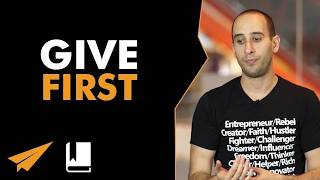
Evan Carmichael explains his "give first" approach to building business relationships: offer value before asking for anything. He walks through publishing his book from pitch to audio version, then answers questions about his early YMCA talk, managing decision fatigue, and YouTube growth tactics like consistency and collaborating with creators you admire.
Chapters
Give first. So in last week's book video, I was talking about the importance of making connections to help grow your business. The fastest way to grow a company is to make alliances with people who already have your target audience and find a way to work together. Today I want to talk about how to go about making those introductions and forming alliances. It starts with giving. It starts with not asking for something, but giving them something first to help build the relationship. You're speaking to their self-interest as a way that you can help them without asking for anything in return. And some people you may never ask anything in return, and some people they may not reciprocate when you do ask, but it's the easiest way in where you have an opportunity to help them. You're not just going looking for advice or just looking for help or saying, hey, can you please introduce me to all your customers? Well, I don't even know who you are, so why would I do that? Give first. And so how I'm applying this to my book— Ryan Holiday is somebody who I, I flew to New York recently to meet. We just did a video on him, top 10 series, you can check it out. It really helped me, by the way, if you can, uh, comment on it or share it on Twitter or, uh, you know, promote it in any way. It really helped me a lot. Thank you, guys. And Ryan's in the middle of promoting his new book, and I said, hey, why don't we have you on the channel? Let's do a video together. We'll help promote the book, we'll do an interview, give you some exposure. And of course he's going to say yes. When I went down to meet him he was asking what I was up to. And one of the things that was, hey, I'm working on a book too. And his natural reaction was to want to help me and say, hey, well, let me see it. I'd love to help. I'd love to give you some ideas. Why don't we go for breakfast and talk about it some more? Hey, I'm also connected to Tony Robbins and James Altucher and these other authors, and maybe there's a way that I can connect you to them for your channel and to help you with the marketing when your book comes out. And it's all great. And it may seem like this just fell on my lap, but it happened because I gave first. I was willing to fly to New York to meet him, to put a video up on my channel to showcase his book and what he's all about and give him some exposure. And so that's a start. If there's somebody that you want to build a relationship with, find a way to give first. I did a video with Michael Gerber, I did a video with Brian Tracy, I'm working on projects in the works with Lewis Howes and Gary Vaynerchuk and a couple other people, and I'm always giving first. Like, let's have you on my channel, let's talk about what you're up to, let's talk about your books and your programs and what you're trying to do, and let's give some value to my entrepreneurs who are watching my audience and let them learn a little bit about you, and then when it comes time for my book to come out, it's easy for me to tap these guys again and say, hey, I'm in book launch mode, are you guys able to help me out? And again, not everybody's going to say yes, and that's totally okay, but it's way easier going to somebody that I've already helped and they've seen value than me going in cold to say, hey, I've got a new book, can you guys help me promote it? It's a big difference. So when you're approaching these partners, look for ways to give first, and a lot of times the follow-up just happens naturally because they will want to reciprocate and find ways to help you too. Let's get to the questions. First one comes from Matt. How did you start, Evan? How did you decide to do what you do? What's your solution when you've got decision fatigue? There are 3 or 4 things to do, but you can't seem to focus on one thing. I know there's a book called One Thing, but it's easier said than done. Love your channel. Like an inspirational guru without ego and sports cars and look totally normal. Keep spreading your good stuff. All right. Well, thanks for that last part. I'm glad I look normal. That's great. How did I decide what I— what to do? I decided what I wanted to do with entrepreneurship. I'd sold my first company. I started I got to be asked to speak at a bunch of events. And I guess I haven't told this story in a while, so it's a good chance. The YMCA, local YMCA asked me to come and speak to their audience. They had an entrepreneur program and said, hey, can I share some of my success as a 22-year-old entrepreneur who just sold his business? And I said, happy to. And I spent all this time, I spent like weeks preparing for it. I promoted it to people that I knew, they promoted it to their program. And I put a lot of effort into it, making it like, I want to change the lives of the people who show up. And getting ready for the first day, I remember like I'm showing up and my palms are sweating and my heartbeat's going really fast. And I get to the elevator and like, have to calm myself down, like doing this public speaking thing. And I showed up and we booked this huge room, lots of people anticipated to come, and I walked into the room and there were 3 people who were there. And my heart sank and I felt like a failure. I felt like, you know, I spent all this time marketing, promoting this thing, and they had a set audience and nobody showed up to the first thing. Like 3 people, right? Big failure. How was I ever gonna make money from this? How would this ever be a career? How would I ever build something off of this if only 3 people will show up to a free thing And I just said to myself after that initial disappointment, you know what, 3 people showed up, I'm gonna do my thing, I prepared, let's go and try to help these 3 people. And I left feeling amazing. I left feeling like I had an impact on the people who did show up and that that time spent was important to them. And I didn't know if I would ever make a business out of it. I didn't know if I would ever be able to make money out of it, but I knew that I had to keep going because of the way that it made me feel. And that's why I encourage entrepreneurs to explore, explore, explore, explore, explore until you find the thing that makes you come alive. That made me come alive. I knew I had to keep finding ways to do it, whether it was speaking. I didn't know where to go with speaking, books. I didn't have a YouTube channel, you know, none of this stuff existed. It was my first gig here in Canada, and I just knew I had to keep going. And I think in terms of finding what to focus on, the two bits of advice for you I'd give is one, I would try to combine them. I would try to not just do one or the other, but try to find a way to do both of them in a way that's never been done before, in a way that's unique to you that somebody else can't just copy and rip off because you are genuinely passionate about these multiple things. Or two, if you're just okay about a lot of different ideas, then quit those and go explore until you find the thing that you love. I didn't know that speaking was going to be my thing. I didn't know that helping entrepreneurs was going to be my thing. Up until then, I hadn't done a lot of helping entrepreneurs, but just the feeling that it gave me made me feel like I had to— I had to find a way to keep going. I would do this as my volunteer time because I loved it so much. And so between those two ideas, hopefully there's something there that helps you. Next up is Vin. Do you send your whole work/novel to the publisher? So when you work with a publisher, there's a couple phases that you go through. The first phase for me was they need to know what the book is all about, but it's just a pitch deck. So it's, uh, it's about the topic of the book. And more important for them is your audience. They almost don't care about what the book is about until they know who you are. So they want to know who I was, what my track record was, who my audience was. More and more the publishing houses want to see that the authors can promote and sell the books themselves and not have to rely on the publisher doing a lot of work. That's the first step, just a quick overview of what the book is going to be about attached to it. Then they want to see a sample chapter. So then they want to see, okay, well, what's chapter 1 or chapter 3 or chapter 5 look like in your book? They want to see that it's meaningful, it's impactful, that you can write. They're not just putting all their ideas and money behind some person who looks good on camera but can't actually you know, put words on paper. And then from there is when you sign an agreement, and from there you get an advance. Ideally, it's not always possible, but I got an advance, and you know, it's usually spaced out, and then you start writing the whole book. Now I'm at the point where the book has gone in, that we're in the final copy edits. We're going to get permissions and approval and all this kind of back and forth. I just got it back yesterday, so I need to go through it and look at it, and then that's basically the final stage, and then we could start marketing. Very exciting. Ricardo, hey Evan, will the book be available in audio? Yes, I've answered a couple times, yes, it's going to be in audio. I'm insisting on reading it. I don't know how the process is going to work out, but we've been approved for audio and deluxe ebook, which will include 30 minutes of video attached to the book as well. So I got to figure out what I'm going to do with that video time, but definitely going to have an ebook available. And as soon as I know the details about all that stuff, I will let you guys know. Danielle, very inspiring. There's no difference if you're helping 3 people one day or 3 million the next. Just do it. The numbers will take care of themselves. My husband and I can now see why you are our 50-year-old son's idol. Keep up the great work. We can't wait to read your book. Wow, that's, uh, that's, that's pretty powerful and, and meaningful to me. Thank you for sharing that. I kind of wish that when I was— I'm really jealous of, of this generation. Like, I, I wish that if I was 15 and I had people on YouTube that I could look up to and learn all this stuff. I wish I could learn it a lot younger than what I'm learning it now. I'm still going through the process, but I really— that's massively humbling and super appreciate you letting me know. Kind of made my day. So thank you, Kevin. Start my day with this. Thank you, Evan. One question. I just started my business and I feel audience sharing is a bit weird. Why would the other person want to help me? I know I can add value to their audience, but how do you present your idea to them in the first place? So that's back to the topic at the start. Give first. Look for ways that you can give to them, help them out and improve their business somehow. If you have some kind of audience, can they come on your show or your channel or your newsletter list or write an article for your website? Something to give them value first, form the relationship. And then again, almost always they'll look for ways to reciprocate immediately. But if you have a specific ask for them, like if they have a podcast or they have YouTube interviews, something that's not super outside the norm for them, then it's pretty easy for them to usually say yes. But give first, add value to them first before you worry about what they can do for you. Paul, looking forward for the book, ebook plus videos, and all the other exciting authors. Thanks. I appreciate it, Paul. Feeling the love. And again, as soon as it's ready, I'll let you guys know so you can check it out. You know, Cho, great advice and tips. I was wondering, when first starting out on YouTube, what kind of tips do you have as far as getting on people's radar and finding those creators similar to your style that you'd really like to collaborate with. So for somebody first getting out on YouTube, one, I would make sure that I was being consistent. That really helped me. It still helps me now, but it helped me when I was getting started in that I kept putting out content, I kept working on it even though nobody was really watching it. It was more for me to get better. People talk about quality or quantity, which is more important. At the end of the day, you need to have quality videos because just pumping out quantity of crap won't help you get anywhere. But the quantity helps get you to the quality. Me doing it over and over and over and over over and over again how many times made me better. So you need to put in the work to continue to put out content even if nobody's watching it, because it's your growth, your development, your message gets refined, and slowly you start building like the hardcore audience that they stick with you. I've had some people who've been with me for years, and a lot of you guys are a lot newer, and then you build yourself up. I think in terms of finding collaborations, the ones that I found most easiest were people who I already looked I looked at their channel, I was already a fan of their channel, I liked what they were doing, and I could speak to them. So it's not just from a business point of view, like, oh, they have my audience, I'm going to go see if I can work with them. You want to make sure that you know about their audience, right? You are a fan, you are leaving comments, you are subscribing, you're sharing their stuff. And the people who share my stuff the most, people leave comments every day, I know who they are, I recognize them. And so if they were to ask me for something, it'd be a lot easier for me to say yes. So it's first start with the people who you already are subscribed to. You already are fans of and see if there's a way that you might be able to do something together because you, you already share some similar kind of values because you like watching their stuff. Orest2103: Hey Evan, you should contact a guy named Aaron Anastasi. He's the founder of a super successful online singing program and has written a book on personal growth that is really awesome. Plus he's a super nice guy. Great video as always, Evan. Keep up the good work. I appreciate that connection. Never heard of him, but I haven't heard of a lot of people. So if you can facilitate that or if anybody else can, let me know. I'm, uh, I'm curious to know more. Super successful people who are also nice guys, that's like, that's, that's good, good checkmarks in my book. So if there's a way you think we can work together, you can introduce me somehow, I'd really appreciate that. Simeon: I regularly watch your videos, keep in track with the new ones. I'm extremely enjoying every one of them. I love your work, really give me inspiration that every other young person needs to jump in cold water and do what he loves. I love it, man, feeling the energy. As a first-year student studying computer science, I was thinking of starting a career as an entrepreneur because I'm totally sure this is the thing I want to do in my life. My question is the following: as I have a couple of ideas I will start working on them. Something appeared in my mind. How can we know if an idea is worth trying or spending time on? I know you say that we need to take risks, but we can't be sure of anything and working hard and wisely. I'm quite passionate about starting working on my ideas, but I want to first figure out whether they'd be helpful to society or would benefit someone and grab people's attention. Moreover, I want to know how we can distinguish a good idea from a bad idea. Continue with the great work. This is a really interesting question. In my view, When you are starting a business, you want to connect two things. One is the thing that you love doing and you're really passionate about with what adds value to people's lives. And it's not just listen to the customer and give them what they want, because you may not like that. If you are doing work just for the customer and you don't enjoy the process of doing that work, you're not going to have a really successful business. It's got to be something that you love doing as well, and combining those two things together that's where you're going to find a real business opportunity. You can make money in any industry. There's a lack of creativity in every industry. There's opportunities in every industry. So the idea itself is not about is it a good idea or a bad idea? It's much more about the execution. Like, do you love this thing? People would— if I go back to my story about walking into the YMCA, people would look at that and say, that's a bad idea. It was a total failure of a first event that 3 people show up to a free thing after tons of promotion. That's a failure. Right? How are you— you're never gonna be a successful speaker. You're not gonna be successful helping entrepreneurs. Look what happened the first time you tried to do it. So on paper, it sucks. But when you're starting a business, you need to have the heart. The heart is much more important than the head. You don't want to be making those important— any important decisions in your life with your head. It has to come from the heart. And so I loved doing it. And so I would find a way to create my own opportunity and around it. And so all these ideas that you have, you don't want to just be thinking, well, does a customer want this? It's definitely a good conversation to have. I would be looking at the ideas and think, what are you most excited about creating? Because being a programmer, you're gonna slave away, spend days and days and weeks and months creating code. And if you are only looking for a customer payout, you're not gonna put in the work. Like, you gotta love the coding process and feel like what you're making is important. It's important for the world, is important to you. And so I'll be examining my list of ideas and seeing which one makes you come alive the most. And that's where I'd probably spend most of my time. Doesn't hurt to talk to customers and get them involved and see what they need to see in it to make it be successful. You're not just creating in a vacuum, in a bubble, but if you only listen to them, then you're not going to end up with a product that you genuinely love and gets you excited. And that's, that's dangerous if you're trying to build a successful company. Last comment comes in from Paul. Dude, enjoying watching your growth. Thanks, Paul. Really appreciate that. And for me, I love watching watching you guys in your growth. I love seeing in the comments the things that you're working on and how the videos that we've made helps you grow and the new things that you've tackled. That's, that's, you know, impact is what drives me, motivates me. So if something has helped change your life, leave in the comments below because that's what fuels me every day to want to go and keep making videos for you guys. So thank you so much for watching. I'd love to know what you think of the topic about giving first. If you have questions about that or if you want to share how you're doing it, Leave in the comments below. If you have a question about my book or the book writing process, you can leave the question below too, and I'll answer it in next week's video. Thank you guys so much for watching. I really appreciate it. Continue to believe, and I'll see you soon.
More from Evan


How the Biggest Mistake in History Created A Trillion-Dollar Empire | Sergey Brin



9 Machiavelli Principles That Force People To Respect You | Machiavellian Philosophy



The First 10 Words That Instantly Ruin A Sales Conversation | Vanessa Van Edwards

The Top 1% Mindset Behind The First $5 Trillion Company | Jensen Huang (Nvidia)

