How BILL GATES Made His First Billion | Lessons You Need NOW
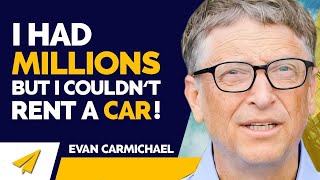
Bill Gates kept a year's payroll in reserve and chose partners like Paul Allen and Steve Ballmer carefully. He used Think Weeks for uninterrupted reading, played bridge to sharpen strategy, and relied on his wife Melinda and close friends to catch his blind spots.
Chapters
He consistently ranks in the Forbes list of the world's wealthiest people. He's one of the best-known entrepreneurs of the personal computer revolution. He's the second most generous philanthropist in America, having given over $28 billion to charity. He's Bill Gates, and here are his top 10 rules for success.
When I started Microsoft, I didn't think of it as all that risky. I mean, I was so excited about what we were doing. It's true I could have gone bankrupt, But, you know, I had a set of skills that were highly employable. And, in fact, my parents were still willing to let me go back to Harvard and finish my education if I wanted to. You've always got a job with me, Bill. And the only— the thing that was scary to me wasn't quitting and starting the company. It was when I started hiring my friends and they expected to be paid. And then we had customers who went bankrupt, customers that I'd counted on to to come through. And so then I got this incredibly conservative approach that I wanted to have enough money in the bank to pay a year's worth of payroll even if we didn't get any payments coming in. And I'm almost true to that the whole time. We have about $10 billion now, which is pretty much enough for the next year. Anyway, you know, I— if you're going to start a company, it takes so much energy that, you know, you better overcome your feeling of risk. I don't think that you necessarily, if you're going to start a company, should do it at the start of your career. I think there's a lot to be said for working for a company, learning how they do things. You know, if you're young, it's hard to go lease premises. They made that hard for me. You couldn't rent a car when you were under 25 at the time, so I was always taking taxis to go see customers. And people would, you know, people would say, well, we're going to go have a discussion in the bar. Well, I couldn't go to the bar. And, but, you know, that's fun because I'll tell you, when people are first skeptical and they go, this kid doesn't know anything, then when you show them you've really got a good product and you know something, they actually tend to go overboard and they think, whoa, They know a lot. Let's really do an incredible amount with these people. So our youth, at least in this country, was a huge asset for us once we reached a certain threshold. It is hard. It's hard to hire older people because they'll be a little bit conservative about whether they should come and take the risk. And it took 3 or 4 years before we could go out into the normal employment pool. But those problems that come with starting a firm, you better think of those as part of the pleasure, part of the challenge that is part of the excitement.
I want to thank Harvard for this honor. I'll be changing my job next year, and it will be nice to finally have a college degree on my resume. I applaud the graduates for taking a much more direct route to your degrees. For my part, I'm just happy that The Crimson called me Harvard's most successful dropout. I guess that makes me valedictorian of my own special class. I did the best of everyone who failed. But I also want to be recognized as the guy who got Steve Ballmer to drop out of business school. I'm a bad influence. That's why I was invited to speak at your graduation. If I'd spoken at your orientation, fewer of you might be here today.
I'm in meetings a lot. My calendar gets very full with those. And then at night, after the kids have gone to bed, I'm on email a great deal. I get messages during the day, that's my chance to give long responses. And then over the weekend, I send a lot of mail as well. I take 2 weeks a year to just go off and read and think, where I'm not interrupted by work or anything else. I'm just solidly trying to think about the future and People get to send me things to read as part of that so-called Think Week. So it's a nice mix of things. About 25% of the time then I'm out traveling around meeting with customers—Europe, Asia—and that sort of helps me think, okay, do we have the right priorities? What are people responding well to and what would they like to see us do better?
Hello, I'm Bill Gates, chairman of Microsoft. In this video, you're going to see the future: Windows. Microsoft first came up with the Windows concept back in 1983, and today the leading software users have switched into the Windows environment. It's really incredible how quickly our powerful applications like Word and Excel and PowerPoint have been adopted It's not just Microsoft applications. Even companies like WordPerfect and Lotus have now come out with Windows applications. And every week we see new innovative work. It's really attracting all the innovation in the industry. We predicted this a long time ago, and now it's the future.
The key point there is you've got to enjoy what you do every day. And for me, that's working with very smart people. It's working on new problems. You know, every time we think, hey, we've had a little bit of success, we're pretty careful not to dwell on it too much because the bar gets raised. I love bridge. Bridge helps you think. It's a game you can play your entire life and keep getting better and better. I think anybody who's good at bridge is going to be great at a lot of things. So I And really encourage people to get involved, and I want to thank the people who put things together for juniors. They'll be thanking you the rest of their life because bridge is such a great sport. I talked to my dad, I talked to Warren, I talked to my wife Melinda. So I have enough people that know me and actually know where my judgment isn't its strongest, where I might get overexcited about something or forget to think about something. And so they're good at correcting— particularly Melinda— good at correcting whatever those blind spots are. And I think it's good to encourage your friends and advisors to really give them that license. I can go to a party and forget to say hello to various people or something. That's a very minor example of my blind spots. Not to the hostess. Melinda would help me do that. She would, yeah. So a small number of people that you can turn to on certain key things is a great, great asset. My best business decisions really have to do with picking people. Deciding to go into partnership with Paul Allen is probably at the top of the list. And then subsequently hiring a friend, Steve Ballmer. And having somebody who you totally trust who's totally committed, who shares your vision and yet has a little bit different set of skills and also acts as a check on you. You know, some of the ideas you come up with, you run by them because you know they're going to say, "Hey, wait a minute. Have you thought about this and that?" And just, you know, the benefit of sparking off of somebody who's got that kind of brilliance, it's not only made it fun, but it's really led to a lot of success. So picking a partner is is crucial. I had one habit that I developed when I was at college that was actually a very bad habit, which was I like to show people that I didn't do any work and that I didn't go to classes and I didn't care. And then at the very last minute, like 2 days before the test, I'd get serious about it. And people thought that was funny. That was my positioning, the guy who did nothing until the last minute. Then when I went into business, that was a really bad habit, and it took me a couple years to get over that. Nobody praised me because I would do things at the last minute, and I tried to reverse to students I actually didn't think that highly of who were always organized and had things done on time. I'm still working on it, but procrastination is not a good, good habit. Bill can change clothes in the car. So I'm going to challenge Bill Gates my partner at Facebook, Sheryl Sandberg, and Netflix's founder and CEO, Reed Hastings. I'm glad to give to ALS. It's a great cause, but I want to accept this challenge. I want to do it better than it's been done. Been working on this, you know, got this design. There we go. Yeah. It's gonna be great. I'm here to join the people bringing attention to Lou Gehrig's disease by taking the ALS Ice Bucket Challenge. I'm gonna challenge 3 more people: Elon Musk, Ryan Seacrest, And Chris Anderson of TED, consider yourself challenged. You have 24 hours. Good luck.
Me till the end. Now people, let me tell you about my best friend. He's the one boy cuddly toy, my up, my down, my pride and joy. Let me tell you about him, he's so much fun. Whether we're walking man to man or whether we're walking sun to sun, cuz he's my best friend. Yeah, he's my best friend.
Is it true that you can leap over a chair from a standing position?
It depends on the size of the chair. I'll cheat a little bit. Yeah!
By the way, I believe in winners and losers, and especially the freedom to fail.
Who? Who? Him? Who? Him?
Who? Him? Him? Who? Me? No way! What is love? Baby, don't hurt me.
Don't hurt me. Obey.
Thank you so much for watching. I made this video because a bunch of you guys were asking me to. So if there's a famous entrepreneur that you want me to profile next, leave it in the comments below and I'll see what I can do. I'm also curious to know what you think of Bill Gates as an entrepreneur and which of the 10 rules most resonates with you. Leave it below in the comments and I'm going to join in the discussion. Thank you so much for watching. Continue to believe and I'll see you soon.
More from Evan


How the Biggest Mistake in History Created A Trillion-Dollar Empire | Sergey Brin



9 Machiavelli Principles That Force People To Respect You | Machiavellian Philosophy



The First 10 Words That Instantly Ruin A Sales Conversation | Vanessa Van Edwards

The Top 1% Mindset Behind The First $5 Trillion Company | Jensen Huang (Nvidia)

