How Determination and Hard Work Will Make You Soar! | Tony Hawk | Top 10 Rules for Success
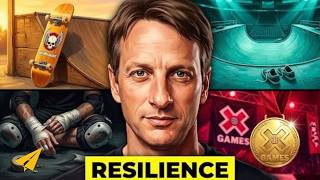
Tony Hawk explains why talent alone fails: Matt Beach had natural ability but no drive, while Andrew Reynolds succeeded through relentless effort. Hawk describes sleeping on couches during Birdhouse's broke early years, visualizing the 900 before landing it, and building a career on passion over profit.
Chapters
There are people with incredible talent and no motivation, and then there are other people that are willing to work their ass off. It's above winning a contest. It's about like that one time, just like, "Yeah, I did that!" This is what I love doing more than anything, and I would do it for free, like any day of the week. There were times when I started our company, Birdhouse, in the first 3 years in, we were ready to give in.
He's an American professional skateboarder, actor, and owner of the skateboard company Birdhouse. He's widely considered to be one of the pioneers and most successful influencers of modern vertical skateboarding. Throughout his career, he's made a number of appearances in films, other media, and his own line of video games. He's Tony Hawk, and here's my take on his top 10 rules of success. Rule number 3 is my personal favorite, and make sure to stick around all the way to the end for some special bonus clips. Also, as Tony's talking, if he says something that really resonates with you, Please leave it in the comments below and put quotes around it so other people can be inspired as well.
Enjoy! Um, it wasn't until I started my own team when I realized that there are people with incredible talent and no motivation. And then there are other people that are willing to work their ass off who don't have a natural ability, but will become successful because they're so determined. And I saw it, I mean, I saw it especially in a couple of guys that I first put on the Birdhouse team, namely Andrew Reynolds and Matt Beach. Matt Beach was, in my eyes, the most naturally talented skateboarder that I've ever seen. Everything came easy to him. And I, you know, when I would request these guys to go on tour, all I ask of them is that they skate for exhibitions and whatnot. Matt wouldn't skate half the time. I flew him to Europe. I didn't have any money then, you know, in our company, but I was flying these guys to Europe for competitions. He would go to the contest and not feel like skating. And I was like, "How can you do that?" You know, I was just thinking, not just to me, but to yourself. Like, you have this incredible talent and you just don't care. And then I saw Andrew Reynolds, who was the scrappy little guy taking, not very clean, but in terms of his style, but trying some of the hardest stuff, taking the heaviest hits, but always skating his ass off and always trying. And he has become probably the most well-respected street skater today. Andrew Reynolds, I mean, he formed Baker brand, Deathwish Skateboards. The community of the most hardcore skaters these days call him the boss. Because he developed his style, because he worked his ass off. And he's the shining example of hard work.
Tony Hawk is a number one recognizable sports figure over Shaq, over Iverson, over MJ even.
I just focus on something and I have to do it. I'll either get hurt, taken to the hospital trying it, or I'm gonna make it. And that was the same for doing 900 at the X Games. It was my time to finally do it or to be carted off and try it another day.
Last try right here, Tony Hawk.
At some point you just tune everything out and you say, this is it, you got to do it.
Literally, Pier 30 shook. We felt the ground swell.
I wasn't sure if it was an earthquake or somebody out there doing something special. That moment was probably burned in most of our minds forever. I knew I wanted to be in the skate industry. I love skating too much. I wanted, I wanted to be in it. I didn't know if I would make a living as a professional, but I was going to I was devoted to skateboarding. So I refinanced my house and took all the money and started a skateboard company, which seems like the stupidest thing in the world to do when skating is dying. But it was exactly what I wanted to do. I wanted to be a company owner and be behind the scenes. I quit my sponsor and started. And for about 3 years, struggled very, very hard with My partner and I, we had pooled our money together. He was an ex-pro skater as well. And we just did Birdhouse and did whatever we could to get by. And all the team was staying on my couch. I'm literally like, while I'm changing diapers, I'm driving guys to these spots that they're going to get arrested at because there's no skate parks. So they're going to go ride schoolyards. And it was such a strange existence. But I loved it because it was skateboarding and it was exactly what I wanted to do. And so we really hunkered down, you know, like I was living on Taco Bell and peanut butter and jelly and Top Ramen. Mmm. Probably 3 years for sure. But I didn't care because it was like I still got to do what I love. That's the thing is that people think, "Was it a struggle?" And it's like, "Well, no, because, you know, I loved it too much. I still got to go skate." And I had time to skate. I didn't have to go sit behind a computer for 8 hours and then hope I get time to skate.
Okay, ready and action! 3, 2, 1, go!
[FOREIGN LANGUAGE] Let's not do that again.
Oh, that's—
I know there are so many kids out there that feel the way that I did when I was a kid, just awkward and not excelling at one thing in particular and not cool. And, um, Skateboarding was my way out of that. And I hope that if not with skateboarding, they find it in something else they do. But I hope that they're not afraid to try something different, because you can't listen to the haters. That's my best advice to anyone. If I had listened to the haters, I would have quit a long time ago. I would have quit when I was 11 years old. Like, I used to get bashed by professional skaters because my style was, was dorky or It was all circus. It was, you know. But you can't. You've got to believe in yourself. As far as I know, no one's done anything like this. And so people keep asking me questions like, well, how do you approach it? How do you— I don't know. I'm just going to find out the hard way, I guess. It feels like the first time I tried the loop. Like, I just walked up to it and was like, holy shit, what have I done? But I'm up for the challenge. Woo!
Second turn. I can't figure that out. Ah! I think Tony's gonna do it.
I think it's just gonna be hanging that angle. That was like a half headslide knee slide. But hey, I didn't hit my hip, so success. Okay, get these pads out of here. It's coming down.
He's got it.
He's got it.
Is anybody even driving this thing? Is anybody even driving this thing?
Here we go.
Does anybody really know anymore where we're going at all? Where we're all headed for? Does anybody even try? Does anybody even try? Does anybody even try?
I'm so excited. I can't believe it works.
Just ride, ride, ride, ride.
Does running the Tony Hawk Empire give you the same sense satisfaction as the 9 golds at the X Games?
You know, yeah, I love, I love the challenge of the business aspects of it, but I, but I love that it's still fun. I mean, the stuff that I choose to do is only stuff that I really am passionate about and stuff that I will enjoy seeing through. Um, to be honest, the, the, the high that, that I go for that is, is what's always striving me is, is when I land something new, when I'm, when I'm trying to learn a new trick and I make it for the first time. Even if it's something someone else has already done, for me, like, that push and that adrenaline and the confidence of thinking, "I can do this," and then finally doing it, you know, seeing it through, and when I land it, that's the buzz, that's the high for me, like, above all else, above winning a contest. It's about, like, that one time, just like, "Yeah, I did that!" [Speaker:JASON] Yeah. And I'm older now, and now when I get that feeling, it's, I guess, further between when I feel it. And so when I do, it's way more intense.
It's like landing your first kickflip.
Yeah, that's what it feels like every time. It doesn't look as intimidating when it's not sitting on top of a building structure. The jump is always scary. Because you want all your skin anywhere on your legs. You sure it's covered? You sure it's just not for fashion? Well, that too. This is my mega board. Mega.
Yeah!
I wanted to figure out how I could remove myself from competition and still be a pro skater, and that had not been done yet. Because if you're not going to compete, the magazines aren't going to cover you, your sponsors are likely to drop you, and the kids who are buying your products are going to forget about you. And there was no such thing as a video skater back then. That hadn't really come into play yet. There was no YouTube. You know, the skate videos were usually based on the best guys in the competitions. And so I went and talked to Stacy. Who was your boss at the time? Stacy Peralta was my coach, and I actually had my brother come with me as backup. And he, you know, he approached Stacy and said, look, Tony's really having a problem with the competitions. It's kind of wrecking him. It's ruining the fun of skating. And I told him that. And so he said, well, I understand. Maybe you might want to take a break. But don't give it up completely, because you may want to come back. You may enjoy it. And I don't know if we're going to be able to sustain your career if you're not competing. And I did take a break. I stopped competing for a while, almost a year, maybe a little less. And when I came back to it, I came back with sort of a fresh perspective that I don't really care how it lays out. I'm gonna go and do my best, and I'm gonna take chances that I maybe hadn't taken before. And if that puts me in last place, then like, so be it. But if I succeed, I'm gonna be on this whole other level of skating. And that's what happened. I mean, and the contest that I won then, I won by a long shot, you know, because I was doing stuff that was experimental and stuff that I wasn't really confident with, but I could pull it through somehow. And if it didn't happen, then I didn't do well at all, and I stopped caring about the end result so much.
What is it that makes you real special, John?
I just, I never, well for one, I never quit it, I never stopped skating, you know what I mean? So I never took a hiatus, say 5 years, and then came back, "Oh, skating's hot now, I'm gonna get back into it." So I have that, you know, that consistency, but I think that for me, I really like learning new techniques, you know, and a lot of people, like, if they're skating, they stick with this one style of skating, or this one you know, set of tricks and don't want to branch out because they're afraid they won't look cool doing it or whatever. I always wanted to try the different techniques, even if I stumbled on them. I knew that in the end it would help me be more well-rounded, and I think that's probably what it is, is that I just, you know, I wanted to try to learn it all.
Going for something big. Is he going for a flip? Is he going for something new? Crowd seems to be anticipating something good. We've seen that he can fly high. Here he goes, scooting across. There's Tony, he's in the water! Hawk takes a swim and the crowd love that. That skateboard's gone. Actually, there'll be a few people diving in there trying to fetch that one. Tony Hawk, what the heck kind of move was that? Oh no, it's the big gap to the, uh, Snake Canyon. A brand new move by Tony Hawk into the water. Tony Hawk always crowd pleaser, and no exception there. And Tony Hawk set off at a blistering pace. He had to clear the dock. He cleared it by a mile.
What a performer!
See it from behind again. Scooted his way across the arena, off that ramp, hit it at the diagonal.
Wonderful stuff. What an end!
You're convinced that you're going to fail or fall or get hurt, that will come to fruition because that's what you're visualizing. I never, you know, I was willing to get hurt along the way, but I didn't visualize myself getting hurt along the way. And I think that's what stops a lot of people, and that's really what separates a lot of people from being world champions or from being as good as they can because they they stop at some point saying, "Oh no, I am not capable of this," or, "I'll probably get hurt doing this." And if you approach anything with that hesitation, you're gonna fail. I always approached it like, "This is going to work. I'm going to figure this out, even if it takes me hundreds of attempts." And I wasn't, you know, the idea of falling and getting back up again, that didn't really bother me at all. I don't really need the money. Like, I don't need the money anymore. I made dream money from video games, like stuff that I— things I would never imagine. You know, when people say like, "Is this what you dreamt?" I didn't dream any of this. None of this was possible or even considered a reality when I was a kid. You know, when I started skating, like the best you could hope for was your picture in a magazine, maybe a pro board, maybe, and free gear. That's it. And then once you reach an age of responsibility— and this is, I'm talking about when I was like 12— once you reach an age of responsibility, say 18, your career is over because you're not— you can't make money doing it. You can't do it into your adult life. Obviously, I'm hugely thankful to still be able to do this for a living. Like, this is, this is what I love doing more than anything, and I would do it for free, like any day of the week, you know, at any given time. I'd happily just go skate. Skate. It just happens to be the thing that I'm successful at, so I get to do what I love for a living, and that, that's living the dream. I mean, and living the dream, I don't— I'm not talking about financial success. I'm talking about loving what you do, you know. If, if you love art and you do art and maybe you get a little bit of success at it, you're living the dream.
¡Vamos! ¡Vamos!
There were times when I started our company, Birdhouse, in the first 3 years in, we were ready to give in. You know, the sales just weren't there, the interest wasn't there. And same with my skating, like, I was still improving my skills, but for no audience. So it was definitely difficult, But we embrace those challenges too, especially as athletes. I mean, someone poses a challenge to you, and you have to figure out how to get over it. And so in doing that in my skating and also in the business, it was like, well, this is what's coming at us. We've got to figure out how to navigate this and how to succeed. And a lot of people just give up. And especially in skating, I mean, that's the first sign of someone that's going to be successful is no matter how far no matter how successful they get, especially in competition, they continue to challenge themselves because they want to improve. Those are the guys that, that make it way further than anyone else.
Your Honor, I'm here on behalf of the great state of Alabama to prove once and for all that skateboarding is, was, and always has been a crime. And that this man, Anthony Francis Haywood "Beaufort" Hawk, should be found guilty of perpetrating the most gnarly of offenses.
Mr. Hawk, would you like to make an opening remark?
Mr. Hawk?
Um, yeah, I guess that I think skateboarding is not a crime.
Red bin talk!
There is no half pipe that can launch you out of hell!
And what was Mr. Hawk doing at the time?
He's riding one of those planks with wheels.
Objection. Skateboarding is allowed in public areas.
Well, I just thought that doesn't seem like something you should do.
Uh, Mr. Hawk, how long have you How long have you been, uh, riding these devil mobiles?
Pretty much my whole life.
Ah, let the record show that, uh, Mr. Hawk was carving a pentagram into his chest as he answered.
No, I wasn't!
Well, let me ask you something, boy.
I'm in my mid-40s.
If God had intended us to skateboard, why wouldn't he have blessed us with wheels instead of feet?
I don't know.
Yeah, why did he give us legs instead of trucks? Or why did he not put little decals of skulls on our bellies piece of tape on our back.
I get it.
As the Bible says, "Lo, a man shall not step on a wheeled plank." Revelation 20:13. Now, I personally can't think of anything more sinful than somebody launching off a vert ramp into a kickflip McTwist. But for those who need, uh, convincing, maybe you could enlighten us, Professor.
I've discovered several eyewitness accounts of skateboarders at some of history's greatest crimes. This is a picture of Tony Hawk high-fiving Adolf Hitler.
That's obviously doctored.
This is Tony doing what appears to be an ollie off the balcony moments after Lincoln was shot.
This is insane!
And this is Tony grinding down the tail of a dinosaur moments before the meteor hit that exterminated all dinosaur life on the planet Earth.
Oh, that one's kind of true.
Well, I invented the railing to provide a stable grabbing surface for God-fearing stair-climbing men and women, not to be grinded on by some immoral beast trying to pull off a frontside boardslide. Nothing human uses a railing like that.
You have disgraced my work, sir!
You have disgraced the work of Phineas Q. Railing!
I rest my case.
I find you guilty, Mr. Hawk, and declare skateboarding a crime.
You can't!
Would you like to say anything before I pass sentence?
There's nothing else you could do to me, sir.
I hereby sentence you to change to a respectable mode of transportation.
What's that?
Bring in the scooter!
Waaah! ¡Bien!
Alright, today is June 27th, 2016, and it is 17 years to the date that I landed my first 900 at the X Games in San Francisco. A lot has happened since then in my life. I mean, it's been the craziest roller coaster ride, and it really was the apex of my competitive career. So I'm gonna try a 900 today because I feel like I can, and I never thought I'd be doing this at my age. When I was I really didn't think that was a possibility, but I'm still going and keep going till the wheels fall off, I guess.
That's good.
Spencer was there on my first one. Yeah, you know, he was on my last. Bye!
Thank you guys so much for watching. I made this video because Venom Leon asked me to. So if there's a famous entrepreneur that you want me to profile next, you want to see next, leave it down in the comments below and I'll see what I can do. I'd also love to know what did Tony say that had the biggest impact on you? What lesson did you learn that you're going to immediately apply to your life or to your business? Leave it in the comments and I'm gonna join in the discussion. Finally, I wanted to give a quick shout out to Hugo Bayer. Hugo, thank you so much for picking up a copy of my book, Your One Word, and taking that awesome picture and posting it on Twitter. I'm really curious to understand what you were looking at in that picture. I love it, bro, and I really appreciate it. Appreciate the support. So thank you guys again for watching. I believe in you. I hope you continue to believe in yourself and whatever your one word is. Much love. I'll see you soon.
The moment when I knew I wanted to skate and not do other sports was the first time I went to a skate park and saw people flying out of pools. All my life I was trying to find I wanted to find a buzz and I didn't really get it from team sports. I was okay at baseball and basketball, but I didn't, I wasn't improving at a rate I could see. And then when I went to the skate park for the first time, I literally saw these guys going into a pool and flying and I was like, that's it. And then I started trying to figure out how to do that. I did it in the little pools. I saw a picture of Steve Caballero, who was about my size but just a little bit older, and he was doing air in Winchester, like 3 or 4 feet out. I saw these guys, they were older and more experienced doing these things, and it looked intimidating, but it looked awesome. When I saw Steve Caballero, he was my size, near my age, and he was literally flying. And I was like, if he can do it, I can do that. I know I may not do it as well as him or with much— as much style, but I'm gonna learn how to do that.
That.
And that, that was the moment. That was the moment when I decided I was going to do that, because I did like that it was— made me different, and then it was something that I identify myself with. And I— it's made me stand apart from everyone else I went to school with, all the— most other kids my age, you know. I, I did appreciate that. But at the same time, I always wondered, why don't they like this? You know, this is, this is amazing. Like, this is— it's, it's super difficult, it's adrenaline-filled, it's dangerous, This, um, there's a sense of accomplishment, you know. What are they missing about this? And it was always just— it just never really hit in those days. And so, yeah, I guess I would be the one to either blame or credit for doing mainstream stuff and hopefully making it acceptable or making it authentic. You ever scared out there? I mean, some of this stuff is just insane. Are you ever kind of like at the top of something, we're about to do something, you go, geez, I could break my neck here. Uh, yeah, for sure. But, but that is, you know, that's, that's the best gauge of, of should you be doing it or not. It's more about— for me, it's about approaching things with confidence. If I'm going to set out to do something, I've already convinced myself that I can do it, that it is possible. If I go at it and I think, I don't know if this is going to work, that's when I get hurt. That's when you get hurt, you know what I mean? It's— you can't just throw caution in the wind and go, oh, let's see it happens.
Yeah.
And, you know, especially at my age and, and having this much experience and having so many injuries along the way, I'm way more methodical about learning things, you know what I mean? It takes me way more tries, and, and I have to know that it's gonna work before I go out and try to make it.
As a new dad who loves sports and wants one day to inspire my new son, I'm wondering what advice you have that either your dad Frank gave you or that you have given your kids?
Um, to, to do what you love doing. Um, you know, don't, don't succumb to peer pressure or adult pressure. Um, find your voice. Find, find what you really enjoy. And even if it's something different and it's something that's not considered cool, if you love doing it, you will thrive in it. And, uh, and eventually you'll be happy because you continued to do it.
Is that what Frank would have—
uh, my dad, you know, I was the, I was the youngest of four. And by the time I came around, he had seen it all. And so he's just like, "Go, just do it, whatever it is," you know? And I chose to do the most sort of offbeat thing that all— of my siblings. But he was really supportive in it, and I was lucky in that. And I— that's the same kind of approach I have to my kids, you know? If they love doing it, I don't care if it's not considered the cool thing or, you know, if it doesn't mean that they're gonna get a varsity letter. I want them to be happy, and I want them to enjoy themselves.
More from Evan


How the Biggest Mistake in History Created A Trillion-Dollar Empire | Sergey Brin



9 Machiavelli Principles That Force People To Respect You | Machiavellian Philosophy



The First 10 Words That Instantly Ruin A Sales Conversation | Vanessa Van Edwards

The Top 1% Mindset Behind The First $5 Trillion Company | Jensen Huang (Nvidia)

