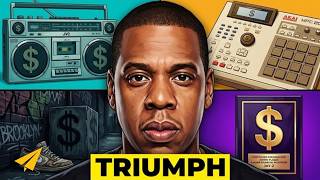
Evan Carmichael traces Jay-Z's choice to pursue music over drug dealing in 1980s Brooklyn, weighing the immediate money against the risk of prison or death. Jay-Z later said every person has genius-level talent; the key is finding yours and betting on it instead of taking the safer short-term path.
Chapters
Life Coaching from Jay-Z. Before he was the billionaire entertainer known as Jay-Z, Sean Carter was a drug dealer who worked the public housing projects of Brooklyn. Looking back at his early years, even he seems incredulous about his almost unbelievable rise. The streets of Brooklyn in 1986 were a lot different than the gentrified neighborhoods there today. Hip-hop was on the rise, but the environment was rough, with addicts lining the streets and crime wars being waged throughout neighboring buildings. At age 15, Sean Carter had two primary activities. One was writing rap lyrics in his kitchen. The other was selling crack in the stairwells of the Marcy Housing Projects. When he looked at his future, with role models and success stories few and far between, the only real options he saw were two clearly opposing career tracks. Option 1: professional drug dealer. Option 2: professional entertainer. Both of these careers were long shots, with success not guaranteed either way. Notwithstanding the legal and moral issues of selling cocaine, perhaps the better short-term choice would have been to continue with drugs. There was an immediate payoff, in cash and tax-free. Status was also higher. In Brooklyn in the 1980s, drug dealers were some of the most powerful and feared, if not always respected, people in the community. Lastly, being a drug dealer was relatively easy. The young Sean Carter knew how to sell drugs. It was a market with virtually limitless demand, and he had a client base that kept coming back again and again. The status quo decision, and perhaps the most likely one, was to continue selling drugs. But as we know, he didn't. Sean Carter didn't become a famous drug dealer. And that's a good thing, since most famous drug dealers are dead. In the music industry, there's no guarantee of stardom. The consequences of failure are usually much lower. If you fail, you have to get a day job. If you fail in drug dealing, however, you go to prison or die. But even with morality risks aside, chances are that none of us would know Jay-Z's name if he hadn't chosen the life of rhyme above the life of crime. He wouldn't be worth $1 billion. He probably wouldn't have won Beyoncé's heart. And the odds are high that he'd be incarcerated, if not dead. Here's how Jay-Z described his success years later: The reach that this music had for me was unbelievable. Of course, luck plays a part in it, but every human being has genius-level talent. There are no chosen ones. You have to find what you're great at and tap into it. Pursuing a career in music wasn't just about making a better ethical and lifestyle choice. It was also about making the right career choice. The choice to do something he loved, something he could get paid well for, and something he was skilled at. You might not be facing the same dilemma between drug dealing and superstardom, but you can use a similar method of analysis to make your own career choices.