How John Williams Transformed the Golden Age Sound for Star Wars
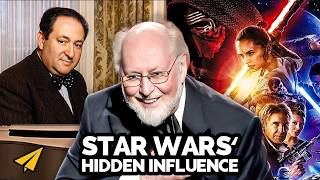
John Williams borrowed Erich Wolfgang Korngold's lush 1930s-40s Hollywood sound for Star Wars after George Lucas used King's Row as a temp track. Williams calls Korngold his "musical grandfather." The video traces how studying past masters and adapting their ideas to new contexts drives innovation in both art and business.
Chapters
Imagine bridging two worlds: the swashbuckling adventures of Old Hollywood and the epic space saga of Star Wars. Believe it or not, they share a musical lineage. In the 1930s, composer Erich Wolfgang Korngold helped invent the lush symphonic style that defined the Golden Age of Hollywood. Decades later, John Williams drew on that same tradition to give Star Wars its iconic sound. And yes, John Williams was absolutely inspired by Korngold. In fact, this whole video was sparked by one of you asking, Was he inspired by Korngold? Shout out to our subscriber Gallery 25 R9U for that question. Today I want to show you how one man's genius sparked another's and why that matters to you as an entrepreneur. So let's dive in. If you've been here before, drop a hashtag #believe in the comments so I can feature you here in a future video. And if you're new, welcome to Believe Nation, the only channel that helps you believe in yourself daily, one video at a time. The secret behind Star Wars' iconic score. When you hear the opening fanfare of Star Wars, it gives you goosebumps. It feels completely original, like nothing that came before. But here's the secret: that music has DNA from a 1942 film. Director George Lucas actually told his friend Steven Spielberg early on that he wanted an old-fashioned classical score for Star Wars. I want the Korngold kind of feel, that grand soundtrack they used to have. Spielberg immediately replied, the guy you've got to talk to is John Williams, and the rest is history. Williams was hired to bring that Korngold sound to life. Quick lesson there: opportunities often come from relationships. Spielberg's referral was crucial. John's own career advice includes nurture great friendships and And he clearly did. So who is this Korngold guy? Erich Wolfgang Korngold was a legendary composer who scored classic Hollywood adventures like The Adventures of Robin Hood from 1938. One of his most famous scores was for the film King's Row in 1942, and if you listen to it, you'll hear something astonishing. From the opening notes of King's Row, there's no doubting the resemblance to the main theme of Star Wars. It's like hearing a musical ancestor of Star Wars, and that's no accident. Lucas even used Korngold's King's Row music as a temp track while editing Star Wars, so Williams heard it as a reference. Williams created something new with it, adding his own flourishes, but the inspiration is unmistakable. He's openly cited Korngold as his main inspiration when composing the Star Wars score. John Williams admits that he's part of a musical tradition. He once said that he's been particularly fascinated with those European emigrant composers of the 1930s, people like Max Steiner and Erich Korngold, and that he and his colleagues are basically the artistic grandchildren of these men. They've been the beneficiaries of a rich tradition from the 1930s and '40s. In other words, Korngold is like John Williams' musical grandfather. And if John Williams is the artistic grandchild of Korngold, then the Star Wars theme is the grandchild of Korngold's King's Row theme. Pretty amazing, right? Williams took that old-school Hollywood sound and resurrected it for a 1970s space fantasy, creating something that felt both fresh and timeless. So yes, John Williams was definitely inspired by Erich Korngold. But here's the bigger idea: being inspired by a predecessor is not only normal, it can lead to groundbreaking results. Inspiration versus imitation, the creativity factor. Now, some of you might be thinking, wait, is that just copying? Let's address that. There's a huge difference between imitation and inspiration. John Williams didn't plagiarize Korngold's music, he built on top of it. He took the feeling, the style, the techniques, and then created his own original score. This is how creativity often works. Mark Twain put it best: there's no such thing as a new idea. Heck, Aristotle said that 2,000 years before Mark Twain. We live in a world of constant reinvention. Most so-called new ideas are really rediscoveries or remixes of what already exists. What matters isn't whether an idea is brand new, but whether it's newly meaningful. Think about it. John Williams made Star Wars meaningful by giving it a soulful classical score where most 1970s films had modern or pop soundtracks. That was a bold creative choice, and it worked because he borrowed the best from the past in service of a new vision. This is a pattern you see in every creative field, including business. Steve Jobs famously said, Picasso had a saying, good artists copy, great artists steal. And we have always been shameless about stealing great ideas. Now, Jobs didn't mean theft in a bad way. He meant that great innovators learn from existing ideas and then make them their own. He exposed himself to the best things that humans have done, from art to music to history, and brought those into Apple's products. That's one reason Apple's ideas felt so revolutionary. They were crafted from the greatest hits of human innovation. So rather than fearing that you're not original, recognize that originality comes from remixing. Every great entrepreneur, artist, or composer stands on the shoulders of giants. As the saying goes, the secret to creativity is knowing how to hide your sources. That's a tongue-in-cheek quote often pinned to Einstein, pointing out that everyone has sources of inspiration. John Williams' genius was not that he pulled a symphony out of thin air. It's that he knew which masters to learn from and how to weave those influences into something uniquely his. From Vienna to Hollywood: Korngold's Journey of Reinvention. Let's flip the script for a second, talk about Korngold himself, because his story is fascinating and full of lessons. Erich Wolfgang Korngold was a child prodigy from Vienna. By age 11, he had written a ballet that became a sensation. He was conducting orchestras in his teens and composing acclaimed operas in Europe. This guy was basically the Mozart of his time. But history had other plans. In the 1930s, as Nazism spread in Europe, Korngold, who was Jewish, got an invitation from Hollywood. Famed producer Max Reinhardt asked him to come to California to adapt Mendelssohn's A Midsummer Night's Dream music for film. Korngold took the gig, not knowing it would change his life. In 1938, Korngold was in Hollywood working on The Adventures of Robin Hood when Austria was invaded by Nazi Germany. His home was confiscated by the Nazis. Had he stayed in Europe, who knows what terrible fate he might have met. Korngold later said that getting to compose Robin Hood and thus staying in America likely saved his life. Life. Talk about a twist of fate. He went on to win an Oscar for that score, his second Academy Award by the age of 41, and became one of the founding fathers of the epic Hollywood adventure score. Korngold approached film scoring with a sophisticated mindset. He treated films like opera, giving characters their own musical themes and evolving those themes throughout the story. So for example, in Robin Hood, he had specific melodies for each character that would play and transform a bit whenever they appear. This was revolutionary in the 1930s. It made film music an integral part of storytelling. It He also made the music memorable on its own. Audiences left the theater humming Korngold's themes. In fact, his King's Row score became so popular that the studio had to send out form letters responding to all the fan mail about it. By bringing the grand techniques of European classical music into movies, Korngold set the template for what we now call the Hollywood sound. He proved that film scores could be as rich and complex as symphonies. After World War II, Korngold tried to return to writing concert music. He even wrote a violin concerto to prove the Hollywood composer could do high art. But the world had moved on, and sadly, he didn't get the same recognition in classical circles anymore. Yet decades later, when Star Wars came out in 1977, critics and fans immediately heard that Golden Age spirit. That symphonic adventure style was back, thanks to John Williams channeling Korngold and others. It's a beautiful example of how great ideas, they never truly die. They just wait for someone passionate enough to revive them in a new form. Now, Think like an entrepreneur here. Korngold's career was one of reinvention. He had to pivot from opera to film due to world events beyond his control, and in doing so, he made a lasting impact on a new industry. He took his existing expertise, which was grand orchestral composition, and applied it to a different medium, which was movies. Doesn't that sound like what innovative businesses do? You take a skill or an idea from one context and apply in another, often with outstanding results. Koh-I-Noor's resilience and willingness to adapt are traits every entrepreneur can appreciate. As an entrepreneur, you might start in one field and end up excelling in another. The key is to carry over your core genius and let it shine in new places. If you want to take real action after this video, I made a free worksheet just for you. It covers the top lessons from today, gives you space to write your biggest takeaways, and helps you build a simple action plan. It's 100% free. Just click the link in the description to go grab it. Let's start building real momentum in your life and business. I'll see you there. Modeling success lessons for entrepreneurs. By now you might be thinking, okay, cool story, but what does this mean for me and my business? Great question. The answer is that inspiration is a tool you can actively use. John Williams didn't succeed in this vacuum. He modeled success from past masters. You can do the same in your entrepreneurial journey. In fact, one of the fastest ways to achieve anything is to learn from those who came before you. As Tony Robbins says, success leaves clues. Go figure out what someone who was successful did and model it, improve it, but learn their steps. The idea is simple. Find the best in your field or even in a different field. Study what made them great and build on it. This principle is everywhere once you start looking. Think about mentorship in business. Having a mentor is basically leveraging someone else's experience. Their successes and their failures to guide you. And it works. One survey found that 70% of small businesses that received mentoring survived more than 5 years, which is double the survival rate of businesses who didn't have mentors. That's a massive difference. Why reinvent the wheel if you can learn from a seasoned entrepreneur who's already been down that road? Inspiration and modeling are like getting a head start. John Williams effectively had Korngold and others like him as unofficial mentors through their music. By studying Korngold's techniques, the soaring melodies, the leitmotifs, the rich orchestration, Williams accelerated his own mastery. He took those elements and said, all right, how can I use these to serve the story that I'm telling right now? And as an entrepreneur, you can ask a similar question. What ideas or strategies from the greats can I use to take my business up to the next level? Maybe you admire Steve Jobs's marketing genius or Sara Blakely's product innovation, or Elon Musk's bold risk-taking. You can draw inspiration from any of them, study their playbooks, then apply those plays to your game. On my channel, I've spent years sharing the top 10 rules of success from legends in all fields—business, music, sports, you name it—precisely because there's so much to learn from them. In fact, when I compiled John Williams' own top 10 rules, one was inspire others, another was practice every day. Clearly, his habits and mindset were as important as his talent. The point here is you don't have to figure everything out alone. You have access to a wealth of wisdom from those who came before you. So use it. As the great Isaac Newton humbly said, if I have seen further, it is by standing on the shoulders of giants. So leverage the giants who came before you. But here's the crucial part. Don't just copy, translate and transform. Williams didn't just copy Korngold's melodies note for note. Had he done that, Star Wars would have felt like a ripoff or just nostalgia. Instead, he translated the essence of Korngold's style into something that fit a 1970s science fiction epic. Likewise, if you're modeling a successful entrepreneur, don't copy their every move blindly. Take the essence of what they do— maybe it's their focus on customer experience or their ability for storytelling— and adapt it to your business, your industry, your personal style. That's where the innovation happens. It's the mix and match, the adaptation, that you create something original. Create your own legacy. Here's what I want you to take away: being inspired by others doesn't make you less original, it makes you part of a lineage of greatness. John Williams crafted a legendary score by openly embracing the influence of Erich Korngold. He took something old and made it new again. In doing so, he inspired an entire generation of film composers and thrilled millions of us in the audience. You have the same opportunity in whatever you are doing. Whether you are building a company, you're writing a book, you're pursuing any dream, you can draw strength and ideas from the giants who came before you and then push the ball a little further down the field. So ask yourself, who or what inspires me? Who is my Korngold? Identify those key inspirations and study them. Absorb how they think, how they work, the principles that guided them. Then look at your own goals and say, how can I use these insights to create something amazing my way? Maybe you'll combine ideas from multiple different mentors. Maybe you'll put a twist on a proven, existed model. That's where true innovation often comes from, the intersection of existing ideas with your personal spin. Remember, new ideas leave the fingerprints on old ones. Embrace that. Don't shy away from learning because you think you must be 100% original. Originality will come naturally once you put in the work, copying, learning, and experimenting, just like a master chef learns classic recipes before inventing a dish. So to circle back to our musical story, Eric Korngold never met John Williams, but through his art, he mentored him across time. Now, John Williams's work in turn has inspired countless young composers. That's the chain of inspiration, and you can be a part of it in your arena. Innovation is a relay race, not a solo sprint. So take the baton from someone you admire and run with it. And who knows, someday you might become the inspiration that a future innovator points to. Awesome would that be? But it starts with giving yourself permission to learn from the best. So go ahead, find your heroes, learn from their successes and their failures, apply those lessons, and build something even greater. That's how you can create your own legacy. So now it's your turn. You have all the knowledge available to you and a burning idea inside you. Mix them, mold them, and make something incredible. Do it with your unique flair and your passion. The world needs new innovations and solutions. but they often start as remixes of past ideas, and that's okay. As long as you execute with your heart and your integrity, you're not a copycat, you're a creator in the grand tradition of creators. So was John Williams inspired by Eric Korngold? Absolutely yes, and thank goodness he was, because it gave us some of the greatest film music of all time. Use that as a reminder that your inspirations can fuel your greatness too. The heroes who came before you have laid the groundwork. It's up to you to go build on it. Get out there and create something awesome, and when you do make sure you inspire others along the way. That's how you pay it forward. You've got this. I believe in you. Now go make your own music, figuratively or literally, and write your name in the stars. And congratulations, you're one video closer to who you're meant to be. To see John Williams' top 10 rules of success, check the video right there next to me. I think you'll love it. Continue to believe, and I'll see you there.
I still use a pencil and paper. I don't have a computer. You're old school. I've been so busy, fortunately. Yeah, you know that I haven't been able to go back and retool. Because when I was studying music, there were no computers. First of all, life is a great gift.
More from Evan


How the Biggest Mistake in History Created A Trillion-Dollar Empire | Sergey Brin



9 Machiavelli Principles That Force People To Respect You | Machiavellian Philosophy



The First 10 Words That Instantly Ruin A Sales Conversation | Vanessa Van Edwards

The Top 1% Mindset Behind The First $5 Trillion Company | Jensen Huang (Nvidia)

