How Misty Copeland Found Confidence in Ballet Despite Setbacks
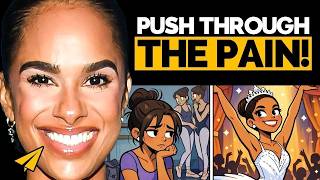
Misty Copeland became principal ballerina at American Ballet Theatre after discovering ballet at 13, despite body-type stereotypes and injuries. She danced Firebird at 29 while managing six tibial stress fractures, driven by the weight of being one of few Black women in the role and wanting to inspire young Black girls watching her.
Chapters
You kind of have to just dive into every day like this is the last time I'm going to do this. I think that's how you become the best. I just worked so hard to prove that my talent was enough, that I didn't have to fit into this box and this mold of what everyone thinks of, which is— You can do anything you want, even if you're being told negative things, just to stay strong and find motivation.
She's an American ballet dancer. She rose to stardom despite not starting ballet until the age of 13. In addition to her dance career, she's become a public speaker and stage performer. She's Misty Copeland, and here's my take on her top 10 rules for success. Rule number 1 is my personal favorite, and I'd love to know which one you guys like the best. And as always, as you're watching, if you hear something that really resonates with you, please leave it in the comments below, put quotes around it so other people can be inspired as well, and when you write it down, it's much more likely to stick with you as well. Enjoy!
I haven't had the typical path of most dancers, and especially as a professional dancer. To be in the Corps de Ballet and to be a soloist and for as long as I as I was, and to then get my first big break doing a principal role, that's not typical. Usually if that doesn't happen early on in your career, that path is kind of shut down for you to ever become a principal dancer. So I knew that when Alexei Ratmansky, the choreographer, choreographer in residence at ABT and the choreographer of Firebird, When he gave me the opportunity to learn the role, I knew that this was kind of my last opportunity to prove at 29 years old that I'm capable of still being able to develop into an artist that can carry an entire company on my shoulders as a principal dancer. And so I just kind of went into it like headfirst and worked so incredibly hard Didn't take any days off, which I wouldn't recommend to anyone. Right, no days off, right. And during that process of having Firebird created for me, I developed 6 stress fractures in my tibia.
Let's say that again, 6 fractures.
Yes.
In your tibia.
Yes.
That you still danced on and did that the night of the performance.
Yeah, I didn't know the severity of the injury and I think that was kind of a way of protecting myself that I didn't want to know. How badly I was injured. And so I pushed through for as long as I could. I knew that I had to get a couple of shows under my belt and prove that I was capable.
You talk about this confidence, this perseverance. You didn't want to let people down. But still, most of us feel that way, but may not have the, you know, the whatever it takes to get through it.
Um, I think a lot of it is being African American. And having the struggles and the experiences that I've had and seeing all of the people that, seeing me on the stage, how it's affected them. That's what kept me going on those days when I couldn't physically walk, when I had doubts and thought like, why am I fighting so hard? I might not ever be able to jump again. Why am I doing this? And It was those little brown girls, it was those girls in the audience that were there the night of Firebird that made me feel that I was gonna do it no matter what physical obstacles I felt, I was gonna find a way around it because what was possible for me to create could change the future for so many young dancers and It just makes you superhuman when you feel that.
The weight of that.
When you feel that. But I didn't feel it as weight. It felt like this amazing support and energy from, you know, all of these people that were there to support me and that were watching me because I was creating a path for them. I think that when I was younger, I was, you know, you get so like antsy and you just want the good things to come and it's hard to enjoy the process. And I think that's something that I really understand and appreciate now. I mean, my life is so chaotic with just being busy all the time that I literally just take everything one step at a time. Like, even when I'm on the stage and I'm like, I can't think about third act, I'm in second act now, and I'm going to think about the Piqué arabesque I'm about to do, not about the, you know, the pirouettes I'm gonna do in two seconds. So it's literally just like Taking everything, you know, just pacing yourself and one thing at a time. So when I, for some reason, felt that I had this small bit of confidence to audition for the drill team, and I made sure I was auditioning for captain, not just to be a part of the team, which was not— that was not something that I normally did in my life, like step outside of my comfort zone and do something where I was being put out in front of people. But I auditioned and they made me captain. And the drill team coach, Elizabeth Cantine, saw something in me immediately. She saw an ability that I had, my body proportions, and she thought, "You are a ballerina. And I wanna introduce you to someone who's giving a free ballet class at the Boys and Girls Club that you already attend." So, I was not at all interested in ballet. But after about a week of hiding out in the back of this ballet class on the basketball court, the teacher, Cynthia Bradley, pulled me on, and I took my first class in socks and shorts and a t-shirt. I think that if we woke up every morning and we looked at our day or our careers as though something was going to go wrong or something could happen, we couldn't reach our fullest potential. You kind of have to just dive into every day like this is the last time I'm going to do this. I think that's how you become the best. That's how you become your best self. And, you know, I don't step onto the stage thinking I might fall tonight. It's like I'm gonna go for it, and if I fall, how am I gonna recover? And, you know, that's kind of the approach that you have to have, especially when you're at this level, that you can't think about, you know, what if. What if this— yeah, goes wrong? And just keep striving. I think it's important to be passionate about what you do, but know that it doesn't come without hard work. Success doesn't come without sacrifice. And it's a beautiful thing when you put all that work into what you're passionate about and you can sit back and enjoy the fruits of your labor. You know, I can't say where I will go next, but I know that ballet will take me everywhere that I can imagine dreaming of going, and it's pretty awesome. And there were other issues too, right, with your body type because you're very athletic. Okay, she's so tiny sitting next to me, but you're incredibly athletic, and that also created some problems, right? Yeah, they're just the, the, I guess you could call them setbacks, but I overcame them. They just continued to come, you know, once I became a professional, I all of a sudden matured into this curvy woman with a bust and with more muscle and all of those things also are not thought of as a ballerina. And, um, I just worked so hard to prove that my talent was enough, that I didn't have to fit into this box and this mold of what everyone thinks of, which is a white woman with no chest and no muscle. And I was everything that that wasn't. Being a Black ballerina, uh, definitely is everything, uh, in my life. And my path as a ballerina would be completely different if I wasn't an African-American woman. It has It's provided more obstacles than I think I knew when I discovered ballet at 13 years old. But at the same time, it's made me want to persevere even more, and I think it's made me a stronger person because of it. And I have so many more obstacles to overcome, but I absolutely love classical ballet. You've accomplished so much. At this point in your career, what is your driving force, and what is it that's keeping you going every single day? [Speaker:JESSICA] Well, the thing is, I have so much more I want to accomplish. So I think that, as a ballet dancer, you're constantly being pushed to kind of stay on top of your game. And with so many younger dancers that continue to come into the company, it's like you have to keep up with them. I mean, every generation gets better. And so that's constantly pushing me. And I just love what I do, and I think as dancers, we're constantly striving for perfection, and that's never gonna happen. So it's just gonna keep us going and going. But, you know, I have so many new roles coming up that I'm excited about, so that's keeping me motivated. And of course, being a principal dancer, that's my number one goal. I understand the importance of me having a voice and exposing people beyond, you know, the typical ballet world to this art form. I think it saved my life, and I want to introduce it to more people. And, you know, coming full circle, that's something that I'm trying to do now is to give back to those communities through Boys and Girls Clubs, being an alum. To invite people into my world as it's happening, I think is really amazing. To have grown men that, you know, who never have seen a ballet in their life look at me and see a woman that they can relate to, someone who looks like their sister, their daughter, their mother, and to say, "Well, I'm gonna put my child in that," because they can see themselves through you. I think it's creating a completely different path for these people that never saw themselves in this world, and to watch me still growing and on my path, I think is really powerful. I was very open to accepting guidance, and I think that that's something that you really have to be vulnerable and open to, or these people will just kind of pass by and they don't enter your life when they should be. And Prince came into my life, I think I was around 27. I'm 31 now. And he thought I was extremely talented and wanted me to dance in one of his music videos, which I thought was odd. So when I met him, I saw this incredible human. I didn't know him as Prince, this big star. I met him and I spent a lot of time with him as an individual, and I learned so much about myself and about, again, just being even more vulnerable, I think, to— in order to grow as a As an artist, you really have to have that side of yourself be open. You can do anything you want, even if you're being told negative things, just to stay strong and find motivation. I'm 5'2", I started when I was 13, I'm Black, there's so many things, but I've made it happen. I'm very lucky to be where I am, but it's, it's, uh, It's possible.
Thank you guys so much for watching. I made this video because Tiger Lily asked me to. Also, if you want to nominate someone for the next top 10 video, please check the description for a link to a video where you can vote for people and put in your suggestions as well. I'd love to know what did you take from this video? What was the most important lesson that you learned that blew your mind that you're going to immediately apply apply to your life or your business somehow, please leave it down in the comments below. I'm super curious to find out. I also wanna give a quick shout out to William and Tim from projectauthenticity.org. Thank you guys so much for picking up a copy of my book, Your One Word, taking the picture, making the blog post. I really appreciate the support and I'm glad you enjoyed the read. So thank you guys again for watching. I believe in you. I hope you continue to believe in yourself and whatever your one word is. Much love. I'll see you soon.
I think there's no real way of preparing for something that seems scary. I think it's really important for a young person to not set limits on what their dreams are. If they have something in their mind and they feel strongly about it, give it your all. Before I danced, I was extremely shy and I literally wouldn't speak, um, and I was terrified to. And my way of communicating started out by writing in journals. With the opportunity of writing Life in Motion and Firebird, um, it's kind of taken me to the next level and I'm just getting better and better about feeling confident about how I communicate things. And it's extremely different writing, but it all kind of ties in into the same thing, I think that this experience has made me a better performer. It took a while to really find myself and to find the right, I don't know, just way of taking care of your body. I'm sure every professional dancer goes through that. Right. You know, becoming, going from being a teenager to an adult and your body changes. And also I think that my body type is very different from a lot of the dancers that I dance with. With. So like I was saying, it just took me, um, just accepting that I am beautiful and that I have this body and, um, just accepting me for me. And I think that's when I really found this confidence that I could go on stage. And I mean, I think Kevin, the director, saw that as well, and I think that's when he promoted me, and I think that's when I started getting more opportunities.
More from Evan


How the Biggest Mistake in History Created A Trillion-Dollar Empire | Sergey Brin



9 Machiavelli Principles That Force People To Respect You | Machiavellian Philosophy



The First 10 Words That Instantly Ruin A Sales Conversation | Vanessa Van Edwards

The Top 1% Mindset Behind The First $5 Trillion Company | Jensen Huang (Nvidia)

