How Neil Pasricha Turned Small Moments into Bestselling Books | Daily Positivity Tips
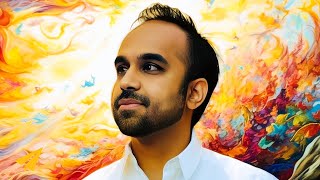
Neil Pasricha built his Book of Awesome series from personal crises: a divorce and a friend's suicide led him to start a viral blog, then seven books. He uses a 2-Minute Mornings journal with three prompts: "I will let go of," "I am grateful for," and "I will focus on."
Chapters
One thing I guess I realized a long time ago was that self-help is not written by people who know how to do the thing, but people who need the thing. We're all writing stuff that we need. The Book of Awesome was written because it was the book I needed. I lost 40 pounds of distress. I moved downtown for the first time. I live alone for the first time. I think I'm ugly. I think I'm undateable. I have no confidence. I take a year to go online and start dating again. I take another year to go on my first ever second date. That's a whole year of first dates with a person that wants to see me again. Okay? Not everybody likes this energy, brother. The first time in a decade, I'm like, we live in crazy overwhelming times. We need to talk about carrying the ice cube tray from the sink to the freezer without spilling anything. So what I'm trying to say is by doing the reps, you just develop the skill yourself and the market tells you what works. I don't trust the algorithm, the market. There's no good news newspaper, man. You know what I'm saying?
Neil Press Kitchen has an amazing author, sold over a million books of his. How many books have you done?
10, including the journal.
But how many are in the Awesome series? Is there 10 books in the Awesome series?
Well, there's The Book of Awesome, there's The Book of Even More Awesome, there's The Book of Holiday Awesome, there's The Journal of Awesome. Then I switched to the Happiness series, and that's where we hung out live together, and you did a ton of awesome stuff for your channel, and I love all you guys, you know, for reaching out to me after that. I still get emails from this stuff we did like 5 years ago, the power of your YouTube channel. And then I did a book on resilience, which is, I now regret the title. It's called "You Are Awesome." I kind of wish we called it "The Resilience Equation" to kind of be clear. And then I did a picture book called "Awesome Is Everywhere." And now I have a brand new book called "Our Book of Awesome," which is—
[Speaker:JEFF] Right, so I have the soft cover, like uncorrected proofs version of it. You're holding up the hardcover there, which is great. So this is the more valuable one because this is, you know, this is impossible to get except for a few friends. And you sent me this note. I won't hold the whole thing up because it has some of your personal contact info on it, so I won't share that. But you got another book, another book felt like a dose of positivity was needed. And then I saw in the notes that this is the last book in the Awesome series and there will be no more. Tell us why this book now and why is the whole series ending?
Yeah, sure. So for people that don't have the background, I wrote the Book of Awesome 12 years ago. Through a time in my life where, you know, my wife left me, my best friend took his own life, I started a blog called 1000 Awesome Things. I was like viral on the internet in the like Dig and Fark days, okay? Like early Reddit world, you know? I'm talking like cake wrecks, fail blogs, stuff like people like. Like if you know that vintage, that was me, okay? So that blog got 100 million hits. It turned into a book called The Book of Awesome. And honestly, Evan, after writing 3 of them and like, you know, calendars, journals, I just thought I got two choices in life. I can either do the same thing over and over again, like Chicken Soup for the Soul sort of thing, or I can try my best to figure out what else I'm interested in. And so for the past 8 years, I did that. I did the second. I took— and none of those books has ever sold as much as much as— when you talk at the beginning, you sold a million copies, what you're really talking about is the first few books, you know what I'm saying? And so I just, as an artist, as a writer, as a creator, as a maker, I always want to be evolving. I always want to be challenging myself. I have been working on a book about trust for 4 years. And I needed to take a break from that book to write something that just filled me back up because I've been drained, I've been tired, I've been overwhelmed. The pandemic has just slapped me in the face. And so I decided to return to the original book. For the first time in a decade, I'm like, we live in crazy overwhelming times. We need to talk about carrying the ice cube tray from the sink to the freezer without spilling anything.
And I love it. Well, for the YouTube audience, check out the description. We're going to link up The new book, they can go check it out on Amazon. What I love about your books and one of the advice you gave me, so any aspiring authors, you said, and I remember this from years ago, is make sure your book is breathable. So make sure that you can easily pick it up and put it down and you don't have to read like 80 pages of like tiny text before, 'cause I'm the kind of guy, if there's like 5 pages in a row and like, what happened? And I gotta go back and read those 5 pages again. And it's like super tiny font. And your books are always just a masterpiece in breathability. And your book, I mean, so the awesome books are interesting because every page basically is its own little dose of awesome. And it's things that, at least my interpretation of it, is things that are happening in day-to-day life that you don't even think to appreciate or have gratitude for. It's like, that is actually pretty awesome. Like my life is actually pretty awesome, even if all sorts of chaos has happened around you. So, you know, one here is, Getting dressed out of the laundry basket, awesome. Redoing a high five with a friend to get a better smack, you know, awesome. Tearing off a piece of plastic wrap. It's just like, it's these little moments that make you reflect like, man, how many of these little things have we done every day that we could be grateful for, but we don't even think of because it just naturally happens?
Absolutely, and you know, here's the thing. You know, Stephen King wrote a great memoir called On Writing, and for anyone who's watching who is an aspiring writer, I would really recommend that. The funny thing is, and I wouldn't say this Stephen King, I would chop the book in half and I would chuck the first half, which is his life story. The second half is how to be a better writer. That's the masterpiece, man. That is the stuff that's in the second half. So that's why, heads up, start in the middle, you know, if you just want the writing stuff. And he says when you flip through a book in a bookstore, what you're really checking for is the air, the space. Do you, your brain, the way you are in your life fit into that? And there's times in my life I'm up for reading, you know, a book like Infinite Jest.
Holy cow, dude, that is insane.
997 pages. Of this kind.
I'm having PTSD just looking at that book.
Or, you know, a Bonfire of the Vanities, right? Like, if you feel like Bonfire of the Vanities, you can go hard. And you know what? Some of these books, if they're written well, they propel you through them. But for me, with my attention span growing up on Archie Comics and Mad magazines with bolded words and lots of exclamation marks, I was like, I don't want a table of contents. I don't want an index. I don't want an acknowledgments. I don't want an about the author. I don't want a dedication. I don't want any of that. Mental shrapnel to interfere with what I want to be a connection point with me and the reader. I'm well aware that this book is a toilet book, OK? I'm well aware that for most people, it's a back of the toilet, you pick up, you feel good, you move on. Or one before bed every night or something like that. It's called the Book of Awesome, Our Book of Awesome, partly because there is a biblical connotation. I don't push that too hard. But just like the idea that you can open it up anywhere Ideally, you could feel some form of what you felt, gratitude and appreciation for what we have, as opposed to what we're taught to feel by the endless streams on news media and social media, which is you don't have enough. We typically are left feeling with lack. Okay? The purpose of this book, our Book of Awesome, is to help you feel—
Does this book pair with the journal that you had before?
Yeah, with Two in the Mornings? The one that's like right underneath here as a prop to hold this thing up? Uh, 2 Minute Mornings pairs well with it because what you do is you wake up every morning. If you're like me, you got to get yourself up out of the bedroom. I got it. 95% of people right now are sleeping with their phones, okay? And, and I'm talking like check it before bed, sleep beside it, check when you wake up. And, and I don't know when the last time you drank a bottle of wine before bed was, or slept within 5 feet of a bottle of wine, or drank a bottle of wine when you woke up every morning, but if you did any of those things, we'd probably call you an alcoholic. Everyone's a phoneaholic now. I'm saying get the phone out of the bedroom. Start your day with 2-minute mornings. This journal is: I will let go of, I am grateful for, and I will focus on. So you prime your brain for positivity with those 3 prompts. And I could talk about—
what were the 3 again?
What were the 3 research studies supporting each one? Uh, I will let go of— okay, like, like, you know, you think Catholic confession chamber, you know, bless me, Father, for I have sinned. It's not just Catholicism. People don't realize this. Judaism, Mormonism, Buddhism, Islam, almost all world religions have a form of repentance, of confession built into the practice. But we're throwing the baby out with the bathwater here because our, our percentage of people who are religious in society is dramatically decreasing. OK, so Canada, United States, France, UK, Australia, New Zealand, these countries are all crossing over to more than 50% secular majorities. There's research that says when you confess to something, get it off your chest, journal, get it out of you, and you feel better. I will let go of how many subscribers I have on YouTube compared to Evan Carmichael. All right, he's got 3.5 million, I've got 3.
For now, for now, he's coming, he's coming on strong, you know. Wait, just wait for it.
Then I am grateful for— and this is where our Book of Awesome comes in. This is— look at the back. The back of the hardcover is $200.
Wow, I'm jealous of your back. My back looks different. I got like, uh, What This Book Is For.
I know. I—
let me look at both.
Yeah, let's go send a couple copies to get— well, and for giveaways for your people, man. Like, I'm happy to sign and mail some out to people, just spreading the awesome. I want, I want the, I want the idea of focusing on the positive to get out there. There's no good news newspaper, man, you know what I'm saying? Other than like, you know, Tank's Good News or whatever. There's not a good news newspaper. And so I want this book to fill a spot in our lives where our brains need it. I'm grateful for number 2. And the last one, by the way, is I will focus on, because you got, we got decision fatigue, brother. You know this. We got to carve away all the things we could do, should do, would do, and make one thing you will do. Today it's hanging out with Evan Carmichael, and tomorrow I might be cleaning up my dirty home office. Or it might be, you know, spending special time with the 5-year-old kid who I haven't really hung out with one-on-one in a week or whatever. You know, what relationship fuel might I need in my, in my life as a father? And so those 3 prompts one more time: I will let go of, I'm grateful for, I will focus on, help prime your brain for positivity for the day. The middle one, gratitude, this book can help, but ultimately you can also think of anything good that happened in your own life. The book is meant to be a lever, a tool, a prompt. Some slick grease to get your wheels going.
I like the mental shrapnel from before.
That's great. By the way, I'm drooling the whole time talking to you because of the—
Oh, there's a whole story behind the Doritos.
Doritos.
We can get into that if you want, but I want to focus on you because there's a lot of knowledge in your brain that I want to get out to my audience. This is not a book that you read like a book, right? And so that's like where most people— you see a book and you see like, oh my God, it's so thick too. Like, that's going to take me forever to get through. But you, I don't know, I mean, you've been doing this for so long, you probably have a ton of case studies and testimonials. And looking at the book, usually for me, I'm a slow reader. The goal is 10 minutes a day and I read it before I go to bed and I read a book and then I pick up yours and it's like, I'm done a page in a minute. And then I kind of like, I kind of want more, but I also kind of want to save the next page for tomorrow. And I want to kind of reflect on what you said to maybe that one example doesn't apply, but I can think of something else that is also awesome. So if somebody were to, instead of it just being like you mentioned being a toilet book, okay, you go to the bathroom and it happens to be there and you pick it up and read it. Like if somebody wanted to set a daily intention or practice around, I want to have more positivity and awesome in my life. And there are how many in here? This is—
Yeah.
So like, if you do one a day, you got almost 2 years worth of stuff in here. What does a daily—
Yeah.
Maybe it's with the 2-minute journal. Like, what does a daily practice look like to learn something awesome and then apply it to your life?
Yeah. Okay, well, I already said get the phones out of the bedroom, but I didn't give you much research supporting that. There's research from Australia, Evan, that shows if you look at a bright screen within 2 hours of bedtime, and I hate to tell you that number because it almost sounds unrealistic, Let me just tell you the research. If you look at a bright screen within 2 hours of bedtime, your pineal gland in your brain does not produce or secrete enough melatonin for you to get into a deep restful sleep overnight. So what I'm advocating is I don't care what time you go to bed. You go to bed at 8, turn the phone off at 6. You go to bed at midnight, turn the phone off at 10. You go to bed at 4 in the morning, turn the phone off at 2 in the morning. Have a gap between when you turn your phone off and when you go to bed. In that gap, I want you to play a game. You know what? I brought my cue cards with me here today. So I'm going to grab a cue card. Got my cue card here. It's blank, nothing on it.
I like it.
This is great. It's like a magic show here. I'm going to write rose, rose, thorn, bud, OK? And instead of this marker that doesn't work, I'm going to get a new marker that does. And if you were to type in those 4 words into Google, anybody watching this, rose, rose, thorn, bud, what comes up right away is a viral article I wrote a few years ago on a whim. I was like, oh, you know, I should tell people about this silly game that my wife taught me from her camp days or whatever. Well, no one else has written about this thing. It's a simple game. Every night before you go to bed, you know what you do? You say— and I don't— you can be sleeping beside your partner, you might be tucking in your 6-year-old, you might be FaceTime— you know, not FaceTime and get off the screens— you might be talking to your grandma. You say, hey Grandma, what was your rose from your day? What was your highlight? What was your— is there a new flavor of donut at the coffee shop? Did you get an assist in hockey practice? Did you get a compliment from the boss? Did you Did a truck go by and the slush didn't land on your pants? What is it? Give me one thing. Okay, the book is a tool to use when you can't think of one. Okay, it's a helpful prompt because it's like, you know, finally unsubscribing from that email you've been getting forever that's super annoying. When your kids don't hear you opening a bag of potato chips. When the cake flops flawlessly out of the pan. Sending a private message during this Zoom call and seeing your coworker look down and silently smirk. Okay, so you just say a couple of these things, right? They say one back, then you do a thorn. You know what, in all relationships, you got to have venting space. You got to have venting space. Doesn't matter what it is. Your job, despite us trying to solve all the world's problems, you just say, "Oh honey, that sucks." Then shut your mouth. No more talking. Okay. And then finally, a bud. B-U-D. B-U-D, a BUD is something you're looking forward to. It could be this, I can't wait to make pancakes on the weekend, or it could be like, I wanna go skydiving on my 100th year old birthday, whatever. It doesn't matter if it's tomorrow or 100 years from now. Rose Restore BUD is a simple gratitude practice to put into your end of night routine, off the phone, gratitude using the book.
[Speaker] You have so many examples in here, you just listed a whole bunch. Just you? Are these crowdsourced? Are these coming from your kids? Like, how are you coming up with all these, like, seemingly random but amazing things that we go through in our lives?
Okay, so this is a good takeaway for artists, makers, creatives out there. No matter what it is you're starting— I told you, I started this after my wife left me when my best friend took us on life. Well, I started a blog called 1000awesomethings.wordpress.com. Okay, like, I, you know, I got like the $10 one, right? And then, you know, I wrote my first post. It sucked. Broccoli flower, the strange mutant hybrid child of nature's ugliest vegetables. OK? Then I write the next one. It sucked. You know, locking people out of the car and pretending to drive away at the gas station. Right? OK, it just did— I was figuring myself out. You know? Then I wrote the next one. Fat baseball players. Then I wrote the next one. And then I started to get on a— I was like, finding money in your old coat pocket. Wearing warm underwear from out of the dryer, playing on old dangerous playground equipment. So what I'm trying to say is by doing the reps, you just develop the skill yourself. And the market tells you what works. I don't trust the algorithm, the market. Like, does your mom forward it to your dad and double your traffic? Okay, that's what happened to me. She sends that one to my dad, blah, blah, blah. That post, old dangerous playground equipment, went viral. Guess what happens, Ev? Now I'm starting to get comments. When you start to get comments from strangers, as any kind of creator online will tell you, That's another indicator. That's another indicator. Comments from strangers, people you don't know. OK? That's a sign. You're like, how did this person get here? Well, they start leaving you suggestions. The other side of the pillow. Well, wouldn't you know it, I write that one up into an essay. It gets really popular. I open my first book with it. The first entry in the Book of Awesome is the other side of the pillow. Now, for this book, I reviewed over 15,000 submissions that were sent to me. In the back of the Book of Awesome, the first book from 2010, I said, if you have an idea, email me, you know, 1000AwesomeThingsSubmissions@gmail.com. Well, I went back and logged into that email, which took forever to figure out the password. And guess what? Over 10,000 people had emailed me. And they didn't just email me like, I have an idea. They emailed me like an essay. Like, here's my awesome thing. You know, when the Roomba goes around my house and doesn't suck up all my bras, like somebody sent me. Right? They send me random things. Well, I went through those things. I curated them. I edited them. And I worked into this book about 20% of material from other people. And look, I wanted it to be more. I wanted it to be 50%. But my publisher said, I want it to be less. My publisher said, I want it to be 0%. Like, you know, when you're making anything with editors and publishers, you have to come up with the vision together. It's Lennon and McCartney, you know? It's not Wings here, you know what I'm saying? So they said, we want it to be less. We came up with a happy medium. And so as the book progresses, It starts off with entries from just me. And then as it gets going, there's comments. Then there's letters. Then there's submissions. And the end of the book ends in a cacophony of awesome from voices around the world, culminating eventually in this endless sprawl, which again, I took out all that— remember I took out all the other stuff? And then it ends on the back page with two— at the end, it's bam, 200 more awesome things you've just never seen anywhere before. It says they've never been written down anywhere else. Just brand new. And the very last one, the very last thing, maybe I should leave this as a surprise. Okay, I won't tell you, but I can tell you, it's at the very last one is reading every single item in a really long list. I mean, you know, just trying to have fun with it, playing it forward. And then I hit a QR code in the back. So it's like, you know, I took out all that shrapnel, but I still want to have a way to continue the relationship with the reader. 'Cause one thing most authors don't have is a relationship with the reader. They have relationships maybe with the publisher, maybe with the bookstore if they're lucky, but not with the reader. And so that goes to a website where I have all kinds of books of awesome, walls of awesome, my wife wrote a teaching guide for the book, like all kinds of stuff. And then I just say, here, give me your email and I'll email it all to you. And that way the email allows me to keep connected with them. And then I send them every month a list of book recommendations, which of course They can unsubscribe for any time, which I understand unsubscribing from emails 'cause I also get too many. But it's just a way for people who wanna keep in touch to do so.
To me, the Roomba One is my iPhone charger. It's always eating up my iPhone charger. So like any day where it doesn't, like, awesome, now I'm gonna think of that. I see my iPhone charger, it hasn't been destroyed by the Roomba. It's like, it is, but like it's here, but it's on the, when it's not plugged into my phone, the cable goes on the floor. And then either it pulls it out of the wall or the Roomba gets stuck here 'cause it can't move anymore. And so yes, yeah, I mean, I really should just move it somewhere else. That would be like the smart thing to do. But now instead, I can just say awesome anytime that it's not all chewed up. That's great. I love it, dude. Listen, one of the things I admire about you is you're known as the positivity guy and let's spread hope and let's spread optimism and let's spread awesome. And yet you then acknowledge that like, hey, struggling through COVID and like, we need something more. So how do you have the courage, I guess, to say, hey, I'm supposed to be this guy, but I also struggle too. And I'm sharing my journey to try to help other people.
Well, one thing I guess I realized a long time ago was that self-help is not written by people who know how to do the thing, but people who need the thing, okay? So Mark Manson cares a lot about stuff, right? So he writes about The Subtle Art of Not Caring About Stuff. James Clear requires to create good habits, so he writes a book to teach himself how to create good habits, Atomic Habits. And I don't mean to paint a blanket over the whole industry like that. Perhaps there are some enlightened folks amongst us. I just have never met them. OK, so what I'm trying to say is The reason I think Tim Ferriss advocates writing The 4-Hour Workweek is because he's a workaholic. And I know I shouldn't apply labels, but I just mean because he works a lot. Of course you can see that. Look at the stuff he's making. He's putting out pockets left, right, and center. I'm just saying you can see the work right in front of you. So of course he writes a book about how to chill out a little bit. We're all writing stuff that we need. The Book of Awesome was written because it was the book I needed. I lost 40 pounds of distress. I moved downtown for the first time. I live alone for the first time. I think I'm ugly. I think I'm undateable. I have no confidence. I take a year to go online and start dating again. I take another year to go on my first ever second date. That's a, that's a whole year of first dates with a person that wants to see me again. Okay. Not everybody likes this energy, brother. This is my true self, right? And, you know, so I'm just saying, like, then I read another book about awesome things. What am I looking for?
Awesome things.
I need them. Okay? I wrote The Happiness Equation after my wife tells me that she's pregnant on the flight home from our honeymoon. Well, I needed to figure out a way to sort of codify the stuff I'd learned about living an intentional life. I wrote about resilience because I have thin skin. If I get a nasty email or a nasty— look, people are like, you know, our mutual friend, you know, Shane Parrish was like, well, don't you always get all positive stuff? I'm like, the only Amazon reviews I read are the 1-star ones, you know? The only ones I see. Are the negative ones. And, you know, Casey Neistat always says, the ones that sting are the ones that are true. And so like, you know, the top review on Amazon for The Happiness Quake, which is a book that came out 7 years ago, I will say, just a heads up, it's like, for privileged white males, you know, with fancy degrees. And I'm like, that's the top review in all of Amazon. Privileged white males. And I'm like—
Did they look at the name on the book?
No, no, no.
Oh, sweet chat, it's Barry White is the name. OK, keep going.
Well, I'm not white, but I will admit when I read my own book now through the lens of 7 years of more learning, I'm like, yeah, there's a ton of stuff in that book that's super privileged that I didn't even see at the time. And so what I'm saying is the reason that stings is because it's true. And the reason I look at it is because it stings. And so what I'm trying to say is zooming up a level, it's like, I'm not the positivity guy. I'm not the happiest guy. I'm a guy who has spent 12 years of my life trying to wade through the science and the research, following channels like your amazing stuff and millions of others, like all the people we both know, trying to figure out who is gleaning, discerning, simplifying, straightening out, and communicating clear, positive content that I can work and distill into simple habits that I can use in my life. And the reason I advocate 2 Minute Mornings and made it into a book is because I needed it. I needed it. I was waking up going on Twitter, man. So I needed, I needed it. I can't go on Twitter. I can't be looking at a loud, jangly Spanx ad at 6 AM. Like, what's going on with my brain? It's not healthy. So I write this thing. So that's what I talk about. I talk about stuff I need. I need a Book of Awesome. I need another Book of Awesome.
When does a Neil Pasricha awesome movie come out, and who plays you in it?
First of all, the Book of Awesome has been optioned for a movie 3 times. And the TV show. So it's been optioned by like big producers like Reveille that did The Office. And, you know, and every time the way it works is you get a, a small amount of money, like a 4-figure sum of money to get the option, and then they have 1 year to turn it into a script. If they turn into script, you get 6 figures. If that script gets greenlit into a pilot that gets greenlit, then, you know, now we're talking like a jackpot. The problem is that funnel, that 3-step funnel is almost impossible. It's like, you know, 1 in 1,000 books gets optioned. And then of the books that gets optioned, which mine has had 3 times, 1 in 1,000 gets into a script. Mine has not done that any of the 3 times. And then of the ones that get into a script, 1 in 1,000 get greenlit into something. And so these days, because the entire method of all communication has been massively disrupted by the Evan Carmichaels of the world, the truth of the matter is optioning things into movies is not what it meant. Anymore. And what we actually need to think about as creators, if you want your work to get out there, if you want your work to spread, is where are the places people are talking about the thing I'm making? And how do I talk in those places?
And who plays you in the movie?
I mean, Hasan Minhaj is a lot better looking than me, so not him. You know, I think Kumail Nanjiani. I mean, he got all buff for the superhero one. So I don't— you know, I think he needs to be a little noodlier to play me. And you know, the guy who was in— you know, who's that other guy? Who's the other— man, for a while there just was not that many, OK? So I'm like trying to pick up. But you know, I think everything's gotten in the way of Hamilton now. So you know, any race can play any race. You know what I mean? And so who plays me in the movie? I'll give you a couple actors who I really like, who I think are totally underrated. Remember Topher Grace from That '70s Show? I was always like, that guy was like a similarly kind of nerdy, quirky character that I think I could identify with. What happened to Topher Grace? Ashton Kutcher, huge. Mila Kunis, huge. What happened to Fez?
He's playing Neil in the next movie. I love it. That's his rebound. I can't let you get away without talking about content, because I know we've talked a a little bit about YouTube and getting you out there. And you do a lot of work with corporations. And I'm sure that kind of dried up a little bit over COVID, but hopefully it's coming back now. We're going in and speaking. You spoke at some of the biggest companies in the world and helping them with their happiness and all that. And I mean, you're great with long-form content, which crushes on YouTube, but also with the evolution of TikTok, Instagram Reels, YouTube Shorts, this feels like it's a perfect 20-second-at-a-time video clip, no?
Yeah, I know, you're right.
I think I'm 42.
I'm 40.
You're not that much, it's only 1 year.
Nice. I know, I know, I know. Well, Kevin Kelly is a, is a smart sage in our world, you know. For those that don't know, kk.org, uh, his really impactful formative essays like 1000 True Fans, you know, he's a really, really kind of sage. And he's the founder of Wired magazine and of course was involved with the Whole Earth Catalog as the editor before that. So the Whole Earth Catalog, was Google before the internet. OK, so he says that social media goes through revolutions, and even our earliest incantations are only 5,000 days old. And so what I'm trying to say is that, you know, I was huge on the blogging world. My blog had 100 million hits. OK, and then the next thing was Facebook. Well, I have 100,000 followers on Facebook because, again, I just started at the right time. Then the next thing was Twitter, and I have 35,000 followers on Twitter because I just started it like relatively early, but not really enough. And then on TikTok, I'm telling you, I got 2 followers, like literally 2. 2. I got 2. 2 followers. 2. The number 2 on TikTok. Well, that's because I opened my account 3 days ago. So you see what I'm saying? I think a lot of it comes down to timing. If you listen to a lot of the— I ask a lot of the big podcasters, you know, I have a podcast called Free Books. And you're going to come on it and we're going to talk about your 3 most formative books. And, you know, I've been really lucky. I've had huge guests on that show, right? Like I've had Quentin Tarantino and I've had Brené Brown and Malcolm Gladwell. And yet my show's not huge. My show is very, very niche. It's very, very niche. It's very big in the book community and there's not that big a book community. So it's pretty small. And then I talked to a lot of friends of mine with podcasts that are like 5x, 10x, 20x my show. And whenever I talk to them, a big part they say is the when. The when is a hugely underestimated aspect of content creation. The when. The when did you start? When did you get in? And then I'll add a third one, which is when do you publish? Okay? So on my blog, I was publishing every single night at midnight, a daily post. You think on TikTok I'm doing a daily video? No. But you see, you see what I'm saying? The when did you start? When did you get going? And when do you publish? Those are questions that I got one TikTok video, right? Right. So I haven't, whereas Twitter, I was posting 4 quotes a day for 5 years. So that'll naturally build up your organic followers.
Yeah, yeah. Well, let me throw something at you and whatever, see if it lands. I'm always, I just want to see more nail press reach in the world. You know, I can't help it. It's still super early for short-form content, right? Like YouTube Shorts, hasn't even announced monetization, and that's coming next year. So like, it is the game right now. It's super red hot, and into next year will be the thing. But I don't think you even have to be the guy. Like, just like you crowdsourced a lot of this book and you wanted to do 50% more, but your publisher wouldn't let you. Well, you could create the Book of Awesome or our Book of Awesome TikTok account and crowdsource the content creation to either the 500 whatever daily things are in here, or their own things that then can be posted. Because you had 10,000 entries or whatever to the book. Like, hey, submit your awesome thing and we'll post it on our— so it doesn't even have to be you sitting in front of the camera dancing or doing something. It could be completely crowdsourced with just one person kind of managing it for you. Um, I think it really helped sell a lot more books too.
It's funny you say that because I was just approached by a guy who has a really viral and big Bookstagram account And he said, how come you don't have a BookTok account or a TikTok account for books? And I said, because I haven't done it. And here's my excuse I gave, and you tell me if this is fear talking, OK? I said, you know, Paul Graham has a famous essay called Maker Schedule, Manager Schedule. Well, I've always wanted to have a maker schedule. I don't want to have employees. I don't want to have meetings. I don't want to have, you know, matrix teams talking about what my goals should be. When you hear the large podcasters talk, they often talk about their team, their meetings. There, you know, I don't want teams, I don't want meetings, I want a maker's schedule, which is a schedule for somebody that has nothing on any day. You know what else I have on today, Evan? Nothing. This is it. I have nothing else on all day. No meetings before, I have no meetings after, and that's the way I want it. And so my fear— and you could tell me this is fear, this is legit— I was like, I don't want to have to be managing people to create videos and blah blah blah blah blah. He said, I'll fly up to Toronto, I'll sit down with you. I've got this huge fancy rig. I'll film you 100 videos in one day, and that's enough content for a year. And I thought, that's interesting. But also I'm like, now you got to investigate what you're doing it for and why you're doing it. And if I can get behind mission and purpose and spreading gratitude and positivity, I usually can get there. But if I get around like working, working, working really, really hard to make, make, make more, more stuff, I lose myself in it. Because truthfully, where I'm happiest is with my wife, with my kids, walking, going for a walk, birdwatching. I got into birdwatching in the pandemic like a lot of people. Um, going exercising, going to the gym, reading a book, reading fiction. It's all the stuff I tell people to do. So if I was not going to take my own advice and instead I was going to be managing a team of 12 people making content for me, well, I'm not really doing my thing, you know. And, and I also will say I started this game, or I started into this world when I was 27. I'm 43, so I am tired. I've been doing this for 16 years, and, you know, I have young kids, and they're not going to be young forever. And any graph you look at says your kids grow up, they leave the house, and you miss them for the rest of your life, you know. And so I don't want to— I don't want to miss those years. If I had no kids, or I had grown-up kids, or I had kids out of the house, or whatever, I might be different, but right now when I've got 4 boys under 8 years old, any extra minute I have should be lying on the carpet. You know, it should be, it should be hanging out with them. And that's the place I always get to is how hard can I go in every direction? I need to focus on what matters and I get back to— if I have extra time, it's reading fiction, going for a walk, exercising, spending time with my wife, spending time with my kids. And I don't want to hire a team of people. And I've tried it before and I don't like it because then I feel like I'm managing.
Yeah. I mean, that's first, it's amazing self-awareness. But two, I love the maker part. Your making is writing, you know? Like, your making is writing books and you're gonna write your truth book and you're gonna write another, and like, you're probably gonna write books forever. And it's amazing. I think with it—
Yeah, yeah, whether they—
You managing a giant team is not the answer. You being responsible and telling people what to do to post on TikTok or YouTube Shorts is like, forget it, 'cause now you have to learn the algorithm and understand how those platforms work and like, that's over. You even being the face is, I don't think is the answer. Like having the guy fly to you and then you got to make all these videos and now we need daily content. Like that just creates more work. I think it's just like you have an agent who's finding book deals for you and you've figured out a partnership where they're taking 15% or whatever they're taking, right? Let's go Adam.
Thanks Adam.
You find the Adam for this and monetization is coming to YouTube. You can even give them all the revenue or you split half the revenue from the channel and they're in charge of crowdsourcing the content, they're in charge of filming the videos, or you take your audience who bought this book or all of your other awesome books and say, hey, if you have a 20-second video about awesome that you want us to share to our account, submit it to jesse@awesome.com, right? It's just finding that one person.
Sure, or it goes to hello@awesome.com.
And like, you don't touch any of it and you don't even have to be the face, you're not recording any videos, it's one person. Who loves the mission. You're already doing user-generated content just in written form, and I turn the videos.
Hi, Konaty. Hi, Blunt. Yeah, yeah, no, I, I, I, I hear you, and maybe I should— you know, this is the thing, this is the dangerous thing that happens when we get together is that I walk away and I'm like, I got so many good ideas, I'm gonna do it all, I'm gonna do it. And then here's the thing, I I interviewed a guy named Dave Eggers for my podcast, Three Books, and Dave Eggers is the author of a number of books. He puts out almost a novel a year. And he says to me, I object to having a long-term relationship with any piece of technology. Like he has a 15-year-old MacBook, you know, that he writes on. And when I find myself getting deeper and deeper in bed with the tech conglomerates and spending more time myself on social media, and even if I didn't have to do anything, you know, I'd still check comments, I'd still reply, I'd still check DMs or whatever. I noticed that I personally, this is Neil, I feel more anxious. I feel more anxious the more time I spend on any form of social. And I don't know what that says about my physiology. I don't know what that says about me personally. I just notice that. And the things that make me feel less anxious are getting out into nature, breathing in phytoncides, which is a chemical trees release to lower your cortisol and stress. So every time you go in nature, you're actually getting a physiological boost right just from going outside. Listen to Andrew Huberman, you'll be looking at the sunrise every morning, right? Am I right, people? So I'm saying I get a boost from that. I get a boost from strangers. That's a big one for me. I get a boost from like riding the bus, taking the subway, walking down the street, wandering around bookshops, talking to strangers. Those 5 and 10 minute interactions where you're so open and trusting because you know you're not going to see the people again, those fill me up. And I find that on the social media, I notice I become performative. I perform even today. Yes, I'm still in my hoodie and sweatpants, but I'm like, oh, I gotta shave, I gotta shave, I shaved for you, man.
It doesn't look like you shaved, dude. Did you shave today?
I shaved. Oh, okay. Look at this crisp neckline here.
I like it.
But, but, but, you know, I, I don't want to be— I don't want to— I don't want to keep my grip on my view too strongly so that I don't be introspective and sit on it. So I really appreciate because, you know, I am envious and awed by what you've built and created. I remember the very first time I saw you years and years ago, you even looked at me, you said, I can't— you said something like, I shouldn't be winning in this game. Or, you know, it was something like around the spirit of what you were trying to do, creating for you a love and a community that I could see was touching you in really deep and profound ways. And I was like, Wow, what he's getting from his community is love. And I said, I said, YouTube comments, Evan, I said, that's just like trash. I said, YouTube comments are like just people like nasty. And you were like, not on my channel. I remember you saying that. And then when you posted that first video of us together, I was like amazed. All the comments were like, Evan, it's, you know, it's, you know, it's Jose from Chile. And I just want to say like, this is up there with these other 3 videos. Like what I took away from was this. And I'm like, who are these people? Like, If this was the YouTube community I was familiar with, maybe I'd like YouTube more. But I go on YouTube, it's just like hate and vitriol, you know. That's what I see because I'm not logged in and I just look at the comments under anything, you know, and it's garbage.
Well, if you ever want to dive in, there are ways to make it easy and not a lot of needlework. And I'm always happy to brainstorm with you, man, to make it happen. But last question, you've done so much to help people and pour so much joy and energy Into Others, and, you know, all of the books. If people were to hold you in their prayers or their thoughts tonight, what would you have them pray for for you?
Wow, what a big question. You know, I hope and pray for this for everybody watching. I hope we all live lives where we feel tethered. It's a destabilizing time for reality right now where we feel tethered and connected to those that are closest to us, whether that is our parents, whether that is our children, whether that is our brothers or sisters or sons or daughters or boyfriends or girlfriends or husbands or wives. Where we feel tethered and we feel safe. And if we feel tethered and if we feel safe, then I believe that our best selves, our souls, our, our wisdom, our truest voices can be heard by us. And we could give out to the world that we could radiate the positivity that the world so desperately needs in those smiles on the bus, in those conversations on the sidewalk, in those places and in all those situations and places where we have to remember it's us, we're humans, we're in charge, not all the stuff in between us, it's us. And we got this and we're gonna be okay. And let's give all of us a prayer for just living.
I love it. Well, the man is Neil Pastricia, the book here, it's called "Our Book of Awesome." We'll link it up YouTube in the description below. Neil, thank you for the time, man, the wisdom, the blessing as always, and can't wait to see you soon.
Thank you so much, Evan, and this amazing community for having me. It is a real, real, real treat, and I really appreciate the honor of being able to talk about our Book of Awesome with all of you guys. And Evan, much love.
Thank you, man. Thank you. Cheers. To see my last one-on-one with Neil where we talked about how you can sell a million books, check the video right there next to me.
I think you'll love it.
Continue to believe, and I'll see you there. I sit down with Neil Pasricha, the New York Times bestselling author of 6 books which have sold over 1 million copies and spent over 200 weeks on bestseller lists.
More from Evan


How the Biggest Mistake in History Created A Trillion-Dollar Empire | Sergey Brin



9 Machiavelli Principles That Force People To Respect You | Machiavellian Philosophy



The First 10 Words That Instantly Ruin A Sales Conversation | Vanessa Van Edwards

The Top 1% Mindset Behind The First $5 Trillion Company | Jensen Huang (Nvidia)

