How One Simple Hand Gesture Destroys Your Self-Doubt | Mel Robbins
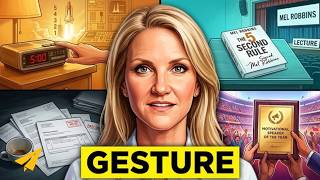
Mel Robbins explains how a daily high-five to yourself in the mirror rewires self-criticism and boosts dopamine. She shares stories of people using the habit to stay sober and regain confidence, and offers a free five-day challenge on Growth Day with video lessons and a community of over 120,000 members.
Chapters
I hate you, Evan. I hope you lose, Evan. I hope your business goes bankrupt, Evan. Evan, you're a terrible person. I spent the first 40-some years of my life trying to be somebody else. I'll give you guys a secret way to fast lane your way into being more authentic.
And there she is!
Hi, what's up?
It's Mel Robbins, everybody!
I thought you froze for a minute. I was like, do I have connectivity problems? He's like frozen like this.
Oh, well, I'm just— I'm doing the double high five. I'm too excited. Where are you? That is beautiful.
I am in my screened-in porch at my house here in Boston. There's this bed that hangs from the ceiling there with our little lights from Target. Yeah, that's where I am.
That is amazing. I'm jealous. It looks beautiful. Mel Robbins, everybody, author of the New York Times bestselling book, The High Five Habit. Here it is. What, what, um, I mean, it's had such an impact. You see so many people sharing all of the, all of the work inside Growth Day as well. People sharing. Is there, is there a favorite story? I know you had so many and you're still kind of, you're still in it, but is there something you can share of just just blew you away?
Well, I can't read the reviews, everybody, without crying. So first of all, for all of you that have read the book or been following along, I don't know if you know this, Evan, but I am actually reading the book cover to cover for free on social media every day.
YouTube?
You know, because I know that there's— yeah, YouTube, Facebook, Instagram, LinkedIn. We read a little bit every day and answer questions. And I think the thing that's blowing me away the most is how universal it is to be hard on yourself, to hate yourself, to— it goes even deeper than doubt, Evan. Like, the critical voice in people's minds is just relentless. And so a couple stories. I've had a bunch of people write and say that they're sober because of The High Five Habit and that they first heard about it because people were sharing it in AA meetings. And, you know, if you struggle with addiction or a lot of things that you regret, shame can be something that keeps you from ever feeling motivated or worthy of changing. And when you go to high five yourself every morning without saying a word, it starts to demonstrate to your brain that despite despite what you've survived and despite what you may have done, that you still believe you are worthy of love and support. Those stories bring me to my knees. People that literally— there was one line that somebody wrote that said, you know, at the beginning of the book, it felt really good to know that you, Mel, believed in me and my ability to change. By the end of it, nothing will stop me again from believing in my own ability. To change my life. And so just story after story after story of people having revelation after revelation about how just profoundly they have been hating on themselves and rejecting themselves and talking themselves out of all the things that they want and deserve in life, and how quickly the switch flips using science when you start to high-five yourself in the mirror and use the other tools in the book.
I love it. Well, you mentioned your YouTube channel quickly, and in the middle of all this, Mel also crossed 1 million subscribers on YouTube.
That's right. That's right.
You're going to get one of these in the mail soon.
Oh, yeah. Does it come soon?
It takes a little bit of time, but make sure you—
Do I have to apply for anything? You are the expert at YouTube.
They'll send you an email, and just put in what you want to show up on there, and they'll send it to you.
Oh, wow.
I love it. Just, just the impact that you're having around the world with the book, with your content. One of the things that I love about you and your brand is you don't pretend like you've always got it all figured out, you know, like in the nicest way. Yeah, it's like so many people come on, it's like, well, here's what you do to be a success, and you're like, I'm still trying to figure all this out myself. And a lot of your breakthroughs seem to come as a result of you feeling really low, and then you find something that after all these experiments kind of works, and then you dive into the science, and then you share it and aren't afraid, or maybe you are, but still the willingness to come out and share what you're going through. How did that— like people say be vulnerable and be authentic, you just kind of seem to live it. How did that come to fruition for you?
Well, like everything, uh, Evan, in my life, it came the hard way. Like, I kind of wish that I could just read this stuff in a book and apply it like that, but I don't know if I'm just stubborn or it— I'm an experiential learner. But as you already said, I kind of have to either fall in a hole or dig one for myself, and then I got to build a ladder in order to get out of that hole. And so that's, that's how I come on to this stuff. And I think the other reason why— I apologize if there's a— I don't know what that is, some sort of airplane flying around. But I don't know why this is my learning style, but it is. But I'll tell you what, everybody. I spent the first 40-some years of my life trying to be somebody else. Like, I struggled with people pleasing and insecurity just like everybody else does. And I don't care who you are. Everybody feels the desire to fit in, the need to be liked. And, you know, when you're really a professional people pleaser, which I was, it typically also goes back to some form of childhood trauma, Evan, where you think that making sure everybody's okay, making sure mom's happy, making sure dad's not upset, making sure, you know, everybody's safe, like whatever that sort of hypervigilance is, that that gets wired into your way of being. And that was me for a long time. Like, if I were— if you were talking to the old Mel Robbins 12, 15 years ago, you— I would have been sitting here having a conversation with you, assessing your facial, you know, expressions, your reactions. And instead of just saying what comes to mind naturally, I'd be thinking in my head, what do I need to say to make Evan like me? What do I need to say to make Evan think that I'm smart? And it's exhausting. If you are somebody that struggles with anxiety, I guarantee you there's a gigantic aspect of making sure other people like you and people pleasing, which is all about your own insecurity with yourself. That's a part of your day-to-day existence. And so back to your question about how do you How did you become so vulnerable? How is it that you can just throw all this stuff out there and it's real? It's not a gimmick. You're not doing it because you think you're going to get more likes, and you're not doing it because everybody says that people that are authentic or, you know, have bigger brands or whatever the hell it is. You just do it because that's who you are. I spent so long trying to be somebody else that I finally had a freaking breakthrough at like the age of 45 that it is so much easier to just be yourself. It's so much easier and freeing. I'll give you guys a secret way to fast lane your way into being more authentic. Start saying these 3 words more often: I don't know. If you're in a meeting at work and somebody asks you a question and you say, I don't know, something incredible happens. Your credibility goes through the roof because people in that nanosecond realize, holy cow, if I'm talking to Evan and he's willing to say in front of 10 other people, I don't know, I can try to figure it out for you, but I don't know the answer to that, people go, I can trust him because he's telling me the truth. He's admitting something I don't even want to admit. And so if you were to start to look for opportunities every day to either say I don't know or to say, I don't know how many words are in this sentence, something like, I'm sorry, Evan, I don't understand what you're talking about. Could you explain NFTs to me again? Like, that literally is the magic formula for beginning to be more authentic. Admit what you don't know.
There's this great clip on a major news network, it's CNN or CNBC, one of those, and Elon Musk is on it. And he's basically saying that robots are going to kill us all and take over the world. Right? It's like this big, bold statement. And then they ask him, well, how's it going to happen? And he says, I don't know. And then they ask him a couple more questions, the same thing. He's like, I don't know. And I remember watching that, to your point, like, man, I don't know that I would have the courage to go on some major platform, make some bold claim, and then not know the answer to any of the follow-up questions, I think our human nature would be like, oh, let me try to stumble to find an answer, as opposed to just flat out saying, I don't know.
It's actually a power move, everybody, to say I don't know, or hey, excuse me, I'm not following what you guys are talking about. Can you explain what XYZ means? Or I don't know how to pronounce this word. That happens to me all the time with my dyslexia. Just no idea how to pronounce words. And so I I think when you're willing to say, I don't know, it's a way to put your toe in the water and realize you're not going to die. People actually don't laugh at you. They respect the fact that you're saying something like that. Most people, if they know something that you don't know, love being smarter than you. So they're not going to penalize you. They're going to feel better around you. And the other thing that I've learned through experience— and you can read this, everybody, and you can listen to Evan and I say this. But until you experience it yourself firsthand, you will not believe what I'm talking about is true. Research shows when you screw up or stumble or mispronounce something or forget what you were supposed to say, or you start to look a little panic-stricken, if you're speaking in class or you're giving a presentation or you're doing a livestream like Evan and I are right now, when you screw up, the people watching immediately flip into feeling bad for you and then rooting for you. So that— I can't remember what the study is, you may know this, Evan, about how, like, if you've ever seen somebody trip up the stairs to get an award, like at the Oscars or something, when that happens, we all go, oh no, Or if you've ever been in the audience when somebody's slides aren't working and you start to feel the shared experience of anxiety, people trust you more. They root for you because you're stirring a shared experience with them in your own humanity. Like, something interesting happened to me yesterday, Evan, if you'll allow me to explain this. As I mentioned, I've been reading The High Five Habit for free on all of my social media platforms a little bit every day and answering people's questions because I know a lot of people are really hurting and they can't even afford to buy the book. And so I'm, you know, basically saying to people, I'm going to show up here to make this accessible because I know that the work in this book, the tools, the research, it's transformational. Yesterday, I had so many things go wrong. I was 20 minutes late to getting our tech set up right. Unlike Evan, I'm not a genius at this stuff. I'm not as organized as Evan. I'm not as smart as Evan. I have not studied this stuff the way that Evan has. And so I sort of am like the Bad News Bears with the livestream. I thought I would do it on the screened-in porch. We couldn't get Wi-Fi. I couldn't get one of the phones to work. I couldn't find the right tripod. I'm running late. My team is texting me, so now I'm amped up. I'm now running into the office and I can't get it quite set up. We start going and we're 20 minutes late with an advertised livestream. I've got 3 team members on remote trying to organize, getting it to LinkedIn, getting it to Facebook. So guys, I'm performing on camera, I'm live, I'm late. We've had tech breakdowns. I'm 53 years old. The kind of adrenaline is going through the roof. You know this, Evan. You've experienced these things before. The freaking guy who I love, who comes once every 2 weeks to mow the lawn, shows up. And he has now got a leaf blower outside the window as I'm going live. The computer crashes, and we lose the livestream. And just the people on Instagram— are now watching as I'm trying to talk to the team in real time going, do we just kill this? What are we doing? I'm totally alone. There's a guy out here. I'm turning the thing and showing everybody. I'm kind of in this breakdown mode. You see it happen in real time. And you know what I wanted to do? I wanted to go exit, exit, exit, exit. Get me out of here. Get me out of here. But I all of a sudden closed the book and I literally allowed the real experience. I just started crying on Instagram yesterday. This is yesterday, everybody. You're looking at the woman who had the number 2 selling book on all of Amazon last week, hit the New York Times, uh, The High Five Habit. We are literally an instant bestseller because of everybody's support, because I know this is the book the world needs right now, and because of the support of, of so many amazing friends like Evan But here I am crying on Instagram yesterday, just completely overwhelmed by my life. I look up the camera, I've got my glasses off, I'm wiping my eyes. I'm like, does anybody else feel overwhelmed by their life right now? You know, I know that it looks like I have it all going on. I know it looks like my life is perfect. It is not. Like, I, like, I'm just overwhelmed. Let me, let me show you a tool in the book. Let's use it right now. Do you know we posted that, and typically, whatever it is that when we're posting free chapters of the book have been getting for views, this thing like 8x'd the other views. And let me tell you why, because it's not about the views. You and I think about views the same way. Those are human beings, and you and I both want to make an impact in people's lives. And so the more people that watch it, the more lives you have a chance to impact. And the reason why everybody is going back to Evan Carmichael's original question, nobody wants to be told what to freaking do. We all want to feel something, and we don't want to be talked down to. And so I think in that moment when, you know, here I am having just launched the most successful thing I've ever done in my entire career And here I am crying because I'm alone and I'm overwhelmed and I'm screwing up left and right and I've got no ability to control all these things that are breaking down. Everybody can relate to that feeling. Everybody. And so my advice on being authentic and being vulnerable is give yourself permission to be you. All of you. It's so much easier, everyone, than pretending.
I love how you wrapped it up because I don't remember even what my question was. I was so listening to your story, like, oh yeah, I did ask that question. Um, I— we're in this group together that our mutual friend Brendan Burchard put together of pretty much all the big names in personal development and marketing, and we had a great chance to meet up in Napa recently with which was tons of fun. One of the questions I keep getting asked when people see all of those pictures is, what's it like hanging out with Mel Robbins? Yeah, what's she really like behind the scenes? And what's it like being with Brendon Burchard? It's like, they all have their own issues too. Nobody's perfect. Like, I remember sitting here talking about this and you're worried that it wouldn't sell well, you know, around the table. So the question, first off, people don't believe that, but then the next question becomes, okay, so you have all of the same insecurities and fears and doubts, like wants the projects to work and are afraid that it's not going to work out. So that is super relatable. But what then makes the difference? Like, if Mel Robbins struggles with all the things that average human struggles with, how do you then go on to achieve extraordinary success when most people don't?
Um, so there is probably a multi-layered answer, so I'll number it as I go along. Um, I think that number one, work ethic. I'll outwork anybody. I know that the secret to success is not getting it right. It's actually getting after it until you get it done. And so work ethic, work ethic, work ethic. Anything is possible if you are willing to give up your timeline and you're willing to put your head down and put the work in. The second thing is I know that failure and screw-ups are a massive part of paving the road to success. Like, you know, I'm not a lucky person that can just study stuff and implement it and then it all works out. I have this deeply personal process that everybody shares, by the way, of studying everybody who does it really well and then implementing their best practices and then tweaking it so that it feels right. And so failures, screw-ups, detours, all of it is part of the road to success. The third thing is, and you know, I write about actually all of this stuff in The High Five Habit. There is this mindset trick that I created that is an entire chapter in The High Five Habit that I created when I was launching The 5 Second Rule book, which the hardcover book was a huge failure, believe it or not. And when we launched the hardcover, it originally— we had— the bottom line is that when I launched the hardcover, Evan Carmichael, the hardcover was not available for sale when my marketing kicked off. Like, there was a screw-up with Amazon. I started marketing. I told everybody to go buy it, and it I read is out of stock. Couldn't even preorder it. It was like out of stock. Huge mix-up on my part. I was a self-published author. And as my attitude was going down the drain, I literally started saying this thing to myself on repeat. And everybody, you should just steal this. It's like chapter 13 in the book. This moment is preparing me. This moment is preparing me. This moment is preparing me for something amazing that hasn't happened yet. And every single thing in my life that has been a struggle or a hardship or a heartbreak or anything, even losing people I love to the disease of hopelessness and addiction, those moments of going through tremendous grief and heartache prepared me to help other people to do it. And so when you can start to ground yourself in this idea that— I never really liked, by the way, Evan, that whole phrase, "Life is happening for me," because there's a lot of that I didn't— I don't want it. I don't believe it's for me. But there's something about tweaking it like, "This is preparing me." It allows me to take control of a situation I don't like, I didn't want, I didn't plan for, it's not what I deserve. But if it's preparing me for something, it flips my mindset into this attitude that allows me to endure it and allows me to have perspective that someday I will look back on it and understand the wisdom that I gained from it. And so, you know, the failure of the hardcover with The Five Second Rule prepared me for something. All right. It introduced me to my business model that has a huge partnership with Audible. Like, The Five Second Rule, because of the failure of the hardcover, became the most sold and listened to audiobook of the year of all of 2017 and opened up a whole new business model. And, you know, which by the way is still bearing out, everybody, because as the book sells out around the world, it's the audiobook— like, we were the number one selling audiobook in the world last week, number 2 selling title on Amazon because of the audiobook. And so there's a whole new business model I learned. And so you need to understand that every failure that you have, everybody, it is actually preparing you for something else. That's number 3, that sort of attitude. Um, the other thing, honestly, is I've been successful in spite of myself, Evan. Because it's only since learning the high-five habit that I have been able to truly reset my default thinking and become a person whose default is to cheer for herself. Do I have insecurities? Yes. Do I have self-doubts? Yes. But the one thing I don't do anymore is I do not beat the hell out of myself anymore. You see, even all those years, everybody, when my speaking career was taking off, I was literally my biggest critic. It was never enough. It was, well, I kind of, you know, even though the audience is giving me a standing ovation and the clients just hired me to do 7 more events, Evan, I'm like, well, God, I really screwed up minute 43. I really blew it that time. Like, I was relentless with myself. And there's a difference, everybody, between having a level of excellence in what you do and high standards, which I know Evan has a level of excellence in what he does. And he also marries his process with excellence. But that's very different than relentless self-criticism. You know what I mean? And, and what happens with relentless self-criticism, self-hatred, self-doubt, all of that beatdown, is that number one, you slow down your progress. Number two, you miss opportunities. Number three, you, uh, lose inspiration and motivation because everything is a grind. Number four, you have no joy in what you're doing because you are singularly focused on finding stuff that's not going right. And number 5, you literally will never be happy and content because you're not allowing yourself to celebrate and empower yourself for all the things you're doing right, which only creates more positive momentum. And it was the High Five Habit, something I created by mistake in April of 2020 that completely changed my habits, my attitude. The reason why this is the most successful thing I've ever done is because I'm different. Using the High Five Habit, I've asked for help. I've gotten out of the insecurity of needing to do it all myself. I'm enjoying the process of it, even though it's kind of a shit show behind the scenes. Like, this is just the greatest gift in the world because it changes how I experience experience my life. And that's the biggest thing, everybody. That's the final takeaway in terms of success and why most of you don't have the success you deserve, because you're too hard on yourself. You are focused on what's not working instead of celebrating what is. You're beating the hell out of yourself every day, which is demotivating. If you want to be more successful than you could ever imagine, you must read The High Five Habit. You must start to put these practices in place, you must start to see the good. You must start to flip your attitude when it's going down. And you must, must, must be able to use the tools in here to become somebody that is supportive, encouraging of yourself.
I love it. And just to speak to your willingness to ask for help, as well as just the work ethic, back in Napa, one of our field trips was to go hot air ballooning. And you and I are both afraid of heights. It's like, okay, we're in the same balloon together. And it was like a half hour, 45-minute ride to get there. And Mel's sitting next to me and we're in this little van and she pulls out her notebook. She's like, okay, Evan, tell me everything that's wrong with my YouTube channel. I don't have the answers, but I'm gonna take notes. I'm gonna make sure that this happens. So be honest and tell me, like rip it apart. It's like, okay. And we did a jam session all the way up. And so I love how you, you know, are constantly trying to learn and maximize the time. And even if it's something that is, you know, you're not gonna be the one updating thumbnails and tweaking titles. And even though you don't fully understand it—
We work today.
There we go.
I love it. Yep. No, I think that's it too, Evan. And you're like this. Thank you for the compliment. You're the exact same. That's why you see it in me. We are both learners. Like, I think this is the greatest thing in the world, everybody. To, like, of course I want to update thumbnails and obsess over titles because that's the art of this. And unless you're willing to be a student of what you're doing, you'll never be able to teach the things that you've learned. And so, you know, I think that, you know, Evan is such a student of his craft. It's why he has so much success. And he's having a lot of fun because he brings a student mindset to what he's doing. I love it.
Well, listen, everybody, you got to pick up The High Five Habit. One of the things that I loved in here was it seems very basic, but one of the chapters, I think it's chapter 3, you lead people into how do you do a high five.
I got a train going by, so I'm going to go in the house while they blow their horn. Go ahead.
It's great. It's great ambiance. It feels like, uh, very— it's something very basic, but I remember, like, hey, I'm gonna do the High Five Habit. I'm gonna do this with Mel. She's challenged us all to do this. So, you know, I get to my mirror, like, oh, what, what do I do? Just do that. That's it. And I think the, the moment of, of calm and just a moment of, of clarity and the moment of, like, just take a pause before you do it is, is everything. Like, the 5 seconds before you do the high five, at least for me, feels like everything because it just allows you to be more present with what you're doing. And I love how basic you make it. I mean, I think you sometimes use the word like, it's so stupid, which I'm not a huge—
Well, I do that on purpose, by the way, because I'm speaking into the objection that people have. And so, you know, a couple of things that's been really interesting about the process, everybody, of writing this book, I learned— so for those of you that are interested in writing a book, and, you know, for you, Evan, I think you'll appreciate this sort of insight, and that is that I'm kind of bummed that I published the book and then did all these podcasts because it's in the speaking through it, everyone, and answering questions that I've gone even a layer deeper into understanding all of this. And so the book doesn't even contain half of the really deep, amazing things. Like, it doesn't pound it into you Like, for example, I didn't know until after I published the book and I was on the podcast tour talking to our friend, Dr. Daniel Amen, that the reason why the high-five habit feels so good is because your brain gives you a drip of dopamine when you do it. It's not even in the book. I mean, it's because your brain has neural association that's triggered by this physical movement. And so there's some really exciting things that I've since learned. And here's the simplicity of it. I don't even want anybody— when you stand in front of the mirror, first of all, put your toothbrush down. We're gonna do it right after you brush your teeth, get the gunk out of your mouth, and let's get the gunk out of your mind, body, and spirit. That's number one. Secondly, we know when you pair this new high-five habit with brushing your teeth, you're more likely to remember to do it based on science. We're gonna stack the habits. 3, you're right, just take a second. The power of it is twofold. It's in breaking the habit of self-rejection that everybody has that is part of their morning routine. And I don't even expand on this enough in the book, in my opinion. You know, we talk about meditation, gratitude, all these things that should be part of your morning routine. Nobody has really revealed that every human being has an ugly habit every morning in the mirror of self-rejection. 50% of men and women can't even look at themselves in the mirror. That's how bad it is. That's how common it is to reject yourself. If you can't even look at yourself in the mirror, and how many of you feel that way. Put it in the comments if you actually cannot, if you're one of the 50% of men and women who just don't even look at yourself in the mirror. You're disgusted with your weight. You're disgusted with what you've done in your life. You're disgusted that you haven't, you're not where you thought you should be. You have such a negative dialogue. You hide in the back of photos with friends. Like, you know if I'm talking to you. That, by the way, the inability to look at yourself in the mirror Evan Carmichael is a habit of rejecting self. Boom. That's part of everybody's morning routine. If you can look in the mirror, what the rest of us do is we focus on the things we want to fix. That's another habit of self-rejection. And so I believe that the reason why people are chasing external validation And why everybody struggles with so much anxiety and people pleasing is because we are insecure with ourselves because we're constantly rejecting ourself. And so I want you to understand I'm out to do something more than teaching you to high five. I'm out to break this freaking habit. I'm out to break the habit of self-rejection and replace it in your morning routine with a habit of self-acceptance, a habit of self-worth, a habit of self-respect, and ultimately and eventually a habit of self-love. And so as you stare at yourself, which for many people is super uncomfortable, it's going to feel weird because it's the opposite of what you currently do. So if it feels weird when you look at yourself, Evan, That's good news 'cause it means it's working. You're plowing a new neural pathway in your brain. Good job. When you go to raise your hand, I don't even want you to say anything. No mantras, nothing, because the gesture alone is so powerful. It's unlocking programming and neural association in your brain and your nervous system and in your physiology to work for you. So you literally go up and you go to raise your hand and your brain doesn't know the difference between me high-fiving myself me high-fiving Evan. It's a fact because it's such a physical motion that you've done forever. Your brain's like, oh, here we go, high five, give her some dopamine. And the nervous system's like, oh, a high five, let's do some celebratory energy, little jolt. The reason why people laugh or cry but you feel a little bit better as you leave the bathroom, that literally it's because of the dopamine in the nervous system. And you can stand in front of the mirror and be like, I hate myself, "Look at my freaking stomach. Look at how ugly and old and look at these lines." But the second you raise your hand, the physical movement, that beatdown silences because you've never high-fived somebody else, Evan, and thought, "I hate you, Evan. I hope you lose, Evan. I hope your business goes bankrupt, Evan. Evan, you're a terrible person." You know what I mean? You've never done that. It's neurologically impossible for your brain to think anything but, "Oh, I believe in you." I support you. I see you. I love you. All of it. And it's because of the programming that's already in your mind. So the way you do it is simple. Stand with yourself, break the habit of self-rejection, look past your face and into your eyes. That's not your reflection. That's another human being. Be with that human being because that human being needs you and they're trying hard and they're tired of you beating them up. And then you're just going to raise your hand. And high-five that person. And you don't have to think anything, just let the physical motion, do it for 5 lousy days. In fact, growthdaydeal.com, 5 lousy days, there's a free high-five challenge that I've created with Brendan. Evan's partnered with us, everybody listen to me right now, 121,000 people have gone through it, 45,000 comments. It's not on Facebook, it is on a tech platform called Growth Day so that you don't have to do ads and cross-posting and all this stuff. And you don't have to buy anything. You get this thing for 5 days, use it, love it, interact with people. Every day we send you an email, you get a video training from me, you get a journal prompt that is grounded in science. Once you're done with the journal prompt, we're asking you to share what you learned in the comments with 121,000 people around the world who are trying to break through self-doubt and learn how to take control of their lives. Just like you, just like you are. And by the end of the 5 days, you will feel like a different human being, period.
So we've linked that up here on Instagram, growthdaydeal.com. YouTube will put it in the description below. Can you quickly talk to us about jealousy? Because your version of it is very different than most people, and I love it, and I'd love for you to expand on it.
Yeah, um, you know, we miss— none of us understand what jealousy actually is, and that's why it consumes you and paralyzes you. Um, jealousy is a good thing because jealousy is a directional signal. Jealousy is a signal that there is something that you desire that you're not working on getting in your own life. And I'm going to unpack this for a second because it's so powerful when you understand jealousy. When you don't understand jealousy and you think jealousy makes you a bad person or jealousy or— and look, I get a lot of people like, if that's not jealousy, that's envy. I don't care what you call it. You know that feeling where you kind of like somebody has something and then you either don't like them, or you want it and then you feel bad and guilty about wanting it, or then you feel defeated because you have it. All of that is what I'm talking about, whether you call it envy or jealousy or whatever it may be, desire that paralyzes you. I used to be consumed by jealousy, Evan, 'cause I was insecure and I did not like myself. And I did not treat myself with respect, so I did not believe I was worthy of having good things. And so I would look around and I would see what everybody else has, whether they had a nicer house or they could go on big vacations or they had a bigger bank account or they, uh, had a loving marriage or whatever it may be. And I would feel this wave of envy and jealousy consume me. And the interesting thing about jealousy is that, couple things. Number 1, if you are prone to feeling jealous, jealousy is not motivating. Jealousy makes you feel worse about yourself and it paralyzes you. But here's the thing I want you to start to flip your mind. I call this flipping it from a jealousy mindset into a high-five attitude. If jealousy is just trying to signal you towards something that you desire, then all that jealousy is, is it is blocked desire. That's it. It's just blocked inspiration, blocked desire. It is blocked by your insecurity. It is blocked by your self-loathing. It is blocked by your fear. It is blocked by your mindset. And so this is why the high five is so important, because that high five every morning clears away the blocks and allows you to connect back with what you really want. And who you really are. And so fact number 1 about jealousy, everybody, it's not a bad thing. It is a good thing because it is a marker on the map of your life trying to get you to pay attention and turn your life in a certain direction. Number 2, jealousy is just blocked desire and inspiration. Number 3, jealousy is deeply personal because you can only be jealous of something you actually want. So I'm not the least bit jealous right now. I'm using this example. I'm not the least bit jealous our friend Dean, for example, has this unbelievable mansion, uh, in this unbelievable town. And I'm not jealous at all because I don't want to live where he lives, right? So jealousy is personal for you. And so I can tell you, for example, I'm super jealous of all of our friends that have podcasts because I've been thinking about launching a podcast for 7 years. And when I didn't understand jealousy, I would make my jealousy, uh, make me feel worse. I would say, oh, Lewis started 8 years ago, I should have started 8 years ago. Now I would just be a copycat. There's all 2 million podcasts. I'm I'm too late, I'm too this. And so instead of leaning toward what I wanted and doing the work, I would use that jealousy to keep me feeling paralyzed and angry. Okay, that's number 1. Number 2, I'm jealous of Evan. I'm jealous of Evan because he is the YouTube master. He understands the platform better than anybody. And so I would look at Evan's channel and I would cross my arms and I'd be like, I'm so jealous of Evan. And then I go, he must have a team of 50,000 people. And like, if now that I understand what jealousy is, jealousy is not a sickness of the heart, as somebody's saying. Jealousy is just literally something blocking your heart. That's it. It's not a sickness. It is literally something's blocked. That's it. It's not good or bad. It just is blocked by insecurity. That's all that it is. And your heart is trying to tell you what you want. I want to understand YouTube. I want to put out more content. There's not enough women. On YouTube in the personal development space, putting out tons and tons of how-to content and coaching content, and we're about to roll into that space. So get ready in a major way, thanks to Evan's help. But when you're blocked by insecurity, you sit in your corner and you talk yourself out of reaching out to Evan. When you realize this is something you desire, you become more empowered and curious and a student of it, and you feel equipped And Evan doesn't become somebody that I look at with envy. Evan becomes a light on the path ahead of me, a co-creator in this marvelous life of mine and yours. And so that is the opportunity of jealousy. Honor it. Back in the day, Evan, when, you know, jealousy would consume me when Chris and I were struggling financially, We had liens on the house. He was out of the restaurant business. I was just starting in the speaking business. We were barely making the ends meet. I would go into somebody's house where they were renovating their kitchen, and I would literally want to self-destruct. Literally. And then we would get back in the car, and my husband, you know, would be in the seat next to me. And instead of— since I didn't understand jealousy, and it feels so awful to feel it when you don't understand it, I would literally turn on me like, why can't you be more successful? Why did you have to— like, I would literally aim it all at— so toxic, my behavior, 'cause I just didn't know. And what I realize now is that I was jealous of like people going on vacations and people renovating their houses, not because I necessarily wanted those things, but because I had so much ambition to go build something of my own. And I was not allowing myself to lean into that because of my insecurity and fear. And that jealousy was like a bell going, wake up, wake up. This is, you know, it's not the kitchen, Mel. You want to build something, Mel. It's not the fancy vacations. You want freedom to be able to take your family places. You want to— you have ambition, Mel. Lean into that. Don't make yourself wrong. Like, unpack the things that you're jealous of everybody, because it is an invaluable, invaluable directional signal. You're meant for something, and you need to unpack what it is about that jealousy. What is it about what Evan's doing that makes me jealous? Well, it's that I feel like he understands it and he's got this mission and he's got a cadence about it. And I'm— I could be further from the truth, is slapping it all together and trying to figure it out. And I realize that there is an excellence and a methodology with which Evan operates that I'm jealous of because I have not slowed down long enough to flip into becoming a student and experimenting and turning toward it. But now I am.
You cornered me in the vein, you know, on our hot air balloon ride, and we're gonna make it happen. We're gonna, we're gonna get Mel to 10 million, the first person in thought leadership to hit 10 million. Let's go. Um, yeah, Mel, I mean, your story, your time is always much appreciated. Now before we go, I know you partnered with Growth Day, Brendan, all of this stuff having a huge impact. The link is growthdaydeal.com. For people who go there, what are they going to get?
So you go straight to a landing page. You need a first name and an email. That's it. And then log into Growth Day. You can take it anywhere you have internet access. You can log into a URL. You can log in and download the app if that's what you wanna do. If you're getting a sign that you've gotta pay for the app, you do not need to. Go back to growthdaydeal.com. We have arranged, Evan and I, to get you access to Growth Day for free for the 5 days of this challenge. And so on day 1, it's the same. You get, you literally will, step into the challenge with 121,000 people. There's already 45,000 comments, selfies of people from around the world doing it with their kids, their colleagues, their— it's incredible. And day 1, you're going to get a video. And the videos are anywhere from 15 minutes to a half an hour of me teaching you the concepts in the book. Then right after the video, you do a journal prompt. And then right after you do the journal prompt, you're taken to the comments. It's all just like we breadcrumb you. It's so easy. And in the comments you share what you're learning and that inspires other people. And then other people high-five you back and comment back and you realize, oh my gosh, I literally have been feeling so alone. I literally needed this. This is exactly what you need. If you want a boost of energy, if you want to start believing in yourself again, if you want more confidence, if you feel like these last 18 months have just punched you in the face and It is time to feel good again. It is time to take control of your life. This 5-day free challenge is exactly what you need. Exactly what you need.
There it is, growthdaydeal.com. Go check it out. Mel Robbins, we love you.
I love you, Evan. You're awesome. You're the best. Thank you for having me. Bye, everybody.
We'll talk to you soon. Much love.
Absolutely.
If you want to see the one-on-one I did with Marie Forleo, Orleo recently. Check it out right there next to me. I think you'll love it. Continue to believe, and I'll see you there.
Most of us exist in this space of endless comparison, the compare and despair, right? So we have either these idealized versions of ourselves that we're constantly comparing ourselves to
More from Evan


How the Biggest Mistake in History Created A Trillion-Dollar Empire | Sergey Brin



9 Machiavelli Principles That Force People To Respect You | Machiavellian Philosophy



The First 10 Words That Instantly Ruin A Sales Conversation | Vanessa Van Edwards

The Top 1% Mindset Behind The First $5 Trillion Company | Jensen Huang (Nvidia)

