How Steve Jobs & Bill Gates Reinvented Partnerships | 24 Minutes of Insight
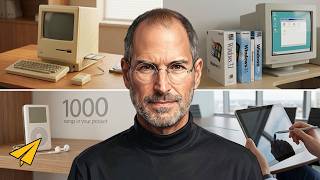
Steve Jobs and Bill Gates discuss how Apple and Microsoft went from rivals to partners. Gates recalls Microsoft's early work on the Mac and a $31,000 BASIC deal for the Apple II. Jobs announces a renewed partnership covering Office, Internet Explorer, and Java, arguing both companies must cooperate to keep the industry healthy.
Chapters
It's Steve Jobs versus Bill Gates.
I have invited here today 3 industry experts to have a panel discussion on software. And now, ladies and gentlemen, the Macintosh Software Dating Game. Welcome to the Macintosh Software Dating Game. Software CEOs, could I please ask you to introduce yourselves? Hi, I'm Fred Gibbons, president of Software Publishing Corporation. Hi, I'm Mitch I'm Steve Kapoor, president of Lotus.
We do a product called 1-2-3. My name is Bill Gates. I'm chairman of Microsoft. And during 1984, Microsoft expects to get half of its revenues from Macintosh software.
Software magnate number 3, when was your first date with Macintosh?
We've been working with the Mac for almost 2 years now, and we put some of our really good people on it.
Software CEO number 3, will Macintosh be the third industry standard?
Well, to create a new standard, it takes something that's not just a little bit different. It takes something that's really new and really captures people's imagination. And the Macintosh, of all the machines I've ever seen, is the only one that meets that standard.
Software CEO number 3, describe your ideal relationship with Apple.
Well, we'll be selling our software independently. So the key thing is that Apple gets a lot of consistent standard machines out there quickly.
Well, sorry Steve, time's up.
We'd like to give Steve a few moments to decide today's winner.
Okay Steve, who's the winner? Apples are red. IBM's blue. If Mac's gonna be the third milestone, I need all of you. Now I'd like to talk about meaningful partners. Apple lives in an ecosystem and It needs help from other partners. It needs to help other partners. And relationships that, that are destructive don't help anybody in this industry as it is today. So during the last several weeks, we have looked at some of the relationships, and one has stood out as a relationship that hasn't been going so well but had the potential, I think, to be great for both companies. And I'd like to announce one of our first partnerships today, a very, very meaningful one, and that is one with Microsoft. I'd like to take you through this. The discussions actually began because there were some patent disputes. And rather than— I know— rather than repeating history, I'm extremely proud of both companies that they have resolved these differences in a very, very professional way. We're going to be working together on Microsoft Office, on Internet Explorer, on Java, and I think that it's going to lead to a very healthy relationship. So it's a package announcement today. We're very, very happy about it. We're very, very excited about it. And I happen to have a special guest with me today via satellite downlink. And if we could get him up on the stage right now.
[APPLAUSE] Some of the most exciting work that I've done in my career has been the work that I've done with Steve on the Macintosh. Whether it's the first introduction or doing products like Mac Excel, these have been major milestones. And it's very exciting to renew our commitment to the Macintosh. We think Apple makes a huge contribution to the computer industry. We think it's going to be a lot of fun helping out, and we look forward to the feedback from all of you as we move forward doing more Macintosh software.
Thanks. Thank you, Bill. You know, where we are right now is we're shepherding some of the greatest assets in the computer industry. And if we want to move forward and see Apple healthy and prospering again, we have to let go of a few things here. We have to let go of this notion that for Apple to win, Microsoft has to lose. Okay, we have to embrace a notion that for Apple to win, Apple has to do to do a really good job. And if others— and if others are going to help us, that's great, because we need all the help we can get. And if we screw up and we don't do a good job, it's not somebody else's fault, it's our fault. So I think that's a very important perspective. I think if we want Microsoft Office on the Mac, we better treat the company that puts it out with a little bit of gratitude. We'd like their software. So The era, the era of, of setting this up as a competition between Apple and Microsoft is over as far as I'm concerned. This is about getting Apple healthy, and this is about Apple being able to make incredibly great contributions to the industry to get healthy and prosper again. You know, sometimes points of view can really make you look at things differently. When you hear a new point of view, like for me, when I was looking at the statistics and it, it, it hit me that Apple is the largest education company in the world. That was like a bolt of lightning. That's huge. What an incredible base to build off of. Another bolt of lightning is that Apple plus Microsoft equals 100% of the desktop computer market. And so whatever Apple and Microsoft agree to do It's a standard. And I think that you'll be seeing us work with Microsoft more because they're the only other player in the desktop industry. And I think you'll be seeing Microsoft want to work with Apple more because Apple is the only other player in the desktop industry. So I hope we have even more cooperation in the future because the industry wants it.
What you think each has contributed to the computer and technology industry, starting with you, Steve, for Bill, and vice versa.
Well, you know, Bill built the first software company in the industry, and I think he built the first software company before anybody really in our industry knew what a software company was. Except for these guys. And that was huge. That was really huge. And the business model that they ended up pursuing turned out to be the one that worked really well, you know, for the industry. So I think— but the biggest thing was Bill was really focused on software before almost anybody else had a clue that it was really the software. That's what I see. I mean, a lot of other things you could say, but that's the high-order bit. And I think building a company is really hard, and it requires your greatest persuasive abilities to hire the best people you can and keep them at your company and keep them working, doing the best work of their lives, hopefully. And Bill's been able to stay with it for all these years.
Bill, how about the contribution of Steve and Apple?
Well, first I want to clarify, I'm not fake Steve Jobs. You know, what Steve's done is quite phenomenal. You know, if you look back to 1977, that Apple II computer, the idea that it would be a mass market machine, you know, the bet that was made there by Apple uniquely— there were other people with products, but the idea that that this could be an incredible empowering phenomenon, Apple pursued that dream. You know, then one of the most fun things we did together was the Macintosh. And that was so risky. You know, people may not remember that Apple really bet the company. Lisa hadn't done that well, and, you know, some people were saying, okay, that general approach wasn't good. But the team that Steve built, even within the company, to pursue that, even some days it felt a little ahead of its time. I don't remember that Twiggy disk drive.
128K. Yeah.
And—
Ah, the Twiggy disk drive, yes.
Steve gave a speech once, which is one of my favorites, where he talked about, in a certain sense, we build the products that we want to use ourselves. You know, so he's really pursued that with incredible taste and elegance that has had a huge impact on the industry. And his ability to always come around and figure out where that next bet should be has been phenomenal. You know, Apple literally was failing when Steve went back and reinfused the innovation and risk-taking that have been phenomenal. So the industry has benefited immensely from his work. We've both been lucky to be part of it, but I'd say he's contributed as much as anyone.
Most people— some people here, but I don't think most people know that there was actually some Microsoft software in that Apple II computer. Do you want to talk about what happened there, how that how that occurred?
Yeah, there had been the Altair and a few other companies, actually about 24, that had done various machines, but the '77 group included the PET, TRS-80—
Commodore.
Yeah, Commodore PET, TRS-80, and the Apple II. The original Apple II BASIC, the integer BASIC, we had nothing to do with, but then there was a floating point one where— and I mostly worked with Woz on that. I made—
Let me tell this story. So Woz— Woz— my partner we started out with, this guy named Steve Wozniak, brilliant, brilliant guy. He writes this BASIC that is, like, the best BASIC on the planet. It does stuff that no other BASIC's ever done. You don't have to run it to find your error messages. It finds them when you type it in and stuff. It's perfect in every way. Except for one thing, which is it's just fixed point, right? It's not floating point. And so we're getting a lot of input that people want this BASIC to be floating point. And, like, we're begging Woz, please, please make this floating point. Who's we?
How many people are in Apple?
Well, me. We're begging Woz to make this floating point, and he just never does it. And he wrote it by hand on paper. I mean, he didn't have an assembler or anything to write it with. It was all just written on paper, and he'd type it in, And he just never got around to making a floating point. Well, this is one of the mysteries of life. I don't know. But he never did. And so Microsoft had this very popular, really good floating point BASIC that we ended up going to them and saying, help.
And how much was the— I think you were telling us earlier.
Oh, it was $31,000.
That Apple paid you for that.
For the floating point BASIC. And I flew out to Apple. I spent 2 days there getting the cassette. The cassette tapes were the main ways that people stored things at the time. And, you know, that was fun. After the 512K Mac was done, the product line just didn't evolve as fast— Steve wasn't there— as it needed to. And we were actually negotiating a deal to invest and make some commitments and things with Gil Amelio. No, seriously. Don't be mean.
Don't be mean to him.
I'm sorry?
Just saying the word Gil Amelio, you can see him just—
And so I was calling him up on the weekend and all this stuff, and next thing I knew, Steve called me up and said, "Don't worry about that negotiation with Gil Amelio. You can just talk to me now." And I said, "Wow." Gil was a nice guy, but he had a saying.
He said, The world is like a ship with a hole in the bottom leaking water, and my job is to get the ship pointed in the right direction.
You approach the same opportunity so very differently. What did you learn about running your own business that you wish you had thought of sooner or thought of first by watching the other guy? Oh, I'd give a lot to have Steve's taste. He has natural— not a joke at all. I think in terms of intuitive taste, both for people and products, you know, we sat in Mac product reviews where there were questions about software choices, how things would be done that I viewed as engineering question, you know, and that's just how my mind works. And I'd see Steve make the decision based on a sense of people and product that, you know, it's even hard for me to explain. The way he does things, it's just different. And, you know, I think it's magical. And in that case, wow.
You know, because Woz and I I started the company based on doing the whole banana. We weren't so good at partnering with people. And, you know, actually, the funny thing is Microsoft's one of the few companies we were able to partner with that actually worked for both companies. And we weren't so good at that, as where Bill and Microsoft were really good at it because they didn't make the whole thing in the early days, and they learned how to partner with people really well. And I think if Apple could have had that, a little more of that in its DNA, it would have served it extremely well. And I don't think Apple learned that until, you know, several, a few decades later.
But you, in that video we all saw, you said you had decided to, that it was destructive to have this competition with Microsoft. Now, obviously, Apple was in a lot of trouble and I presume that there was some a tactical or strategic reason for that as well as just wanting to be a nice guy, right?
You know, Apple was in very serious trouble, and what was really clear was that if the game was a zero-sum game where for Apple to win, Microsoft had to lose, then Apple was going to lose. But that's— a lot of people's heads were still in that place.
Why was that from your perspective?
Well, a lot of people's heads were in that place at Apple and even in the customer base because, you know, Apple had invented a lot of this stuff and Microsoft was being successful and Apple wasn't and there was jealousy and this and that. There was just a lot of reasons for it that don't matter. But the net result of it was there were too many people at Apple and in the Apple ecosystem playing the game of for Apple to win, Microsoft has to lose. And it was clear that you didn't have to play that game because Apple wasn't going to beat Microsoft. Apple didn't have to beat Microsoft. Apple had to remember who Apple was because it had forgotten who Apple was. And so, to me, it was pretty essential to break that paradigm. And it was also important that, you know, Microsoft was the biggest software developer outside of Apple developing for the Mac. And so, you know, it was just crazy what was happening at that time. And Apple was very weak. And so I called Bill up and we talked try to patch things up.
Yeah, and since that time, we've had a team that's fairly dedicated to doing the Mac applications, and they've always been treated kind of in a unique way so that they can have a pretty special relationship with Apple. And that's worked out very well. In fact, every couple years or so, there's been something new that we've been able to do on the Mac. It's a great business for us.
And it's actually— the relationship between the Mac development team at Microsoft and Apple is a great relationship. It's one of our best developer relationships. So your question was about whether I wish I didn't have to go into Apple every day?
No, if you envy Bill a bit, this second act that he has—
Oh, no, I think it's great.
I don't want to do anything else.
I think the world's a better place because Bill Bill realized that his goal isn't to be the richest guy in the cemetery, right? That's a good thing. And so he's doing a lot of good with the money that he made. You know, I'm sure Bill was like me in this way. I mean, I grew up fairly middle class, lower middle class, and I never really cared much about money. And Apple was so successful early on in life that I was very lucky that I didn't have to care about money then. And so I've been able to focus on work and then later on my family. And I sort of look at us as two of the luckiest guys on the planet because we found what we loved to do and we were at the right place at the right time. And we've gotten to go to work every day with super bright people for 30 years. And do what we love doing. And so it's hard to be happier than that. You know, your family and that, what more can you ask for? And so I don't think about legacy much. I just think about being able to get up every day and go in and hang around these great people and hopefully create something that other people will love as much as we do. And if we can do that, that's great.
I mean, you're obviously going to go down in history as history books already said, kind of thing. But what's the greatest misunderstanding between you and your relationship and about each other? What would you say would be this idea of catfight, this idea of what— which one of the many?
We've kept our marriage secret for over a decade now.
That trip to Canada.
I don't think either of us have anything to complain about in general, and I know that the projects like the Mac project, you know, was just an incredible thing, a fun thing where we were taking a risk. We did look a lot younger in that video. We did.
You looked 12 in the first one.
That's how I try and look.
I was 12.
But, you know, it's been fun to work together. I actually kind of miss some of the people who aren't around anymore. You know, people come and go in this industry. It's nice when somebody sticks around and, you know, they have some context. Of all the things that have worked and not worked. The industry gets all crazy about some new thing, you know, like, you know, there's always this paradigm of the company that's successful is going to go away and stuff like that. It's nice to have people who've seen the waves and waves of that and yet been willing, when it counted, to take the risk to bring in something new.
One last question and then we'll—
We'll go to the audience.
He didn't answer us because he just said this.
I haven't answered the audience yet.
He only talked about his secret game marriage.
I thought that was your answer.
No, that wasn't my answer. You know, when Bill and I first met each other and worked together in the early days, generally, we were both the youngest guys in the room, individually or together. I'm about 6 months older than he is, but roughly the same age. And now, when we're working at our respective companies, I don't know about you, but I'm the oldest guy in the room most of the time. And that's why I love being here.
Happy to oblige. Happy to oblige.
And, you know, I think of most things in life as either a Bob Dylan or a Beatles song. But there's that one line in that one Beatles song You and I have memories longer than the road that stretches out ahead, and that's clearly true here.
Well, you know what? I think we should end it there. Let's just end it there.
I'm going to have a little tear right here.
Thank you.
Thank you very much.
Thank you so much.
Thank you. Thank you.
Thank you so much for watching.
Let us know what you think in the comments below and continue to believe!
More from Evan


How the Biggest Mistake in History Created A Trillion-Dollar Empire | Sergey Brin



9 Machiavelli Principles That Force People To Respect You | Machiavellian Philosophy



The First 10 Words That Instantly Ruin A Sales Conversation | Vanessa Van Edwards

The Top 1% Mindset Behind The First $5 Trillion Company | Jensen Huang (Nvidia)

