How The Secret Coca-Cola Recipe Made Billions (And Why You Need One)
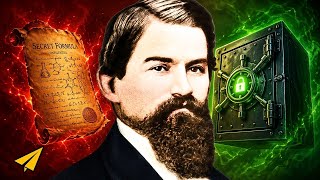
Evan Carmichael breaks down how Coca-Cola, KFC, and McDonald's built billion-dollar empires on secret recipes and systems. Coca-Cola turned its formula into a marketing asset through mystery and extreme security. Colonel Sanders faced 1,009 rejections before franchising his pressure-cooked chicken recipe. Ray Kroc scaled McDonald's by standardizing operations and using real estate strategy, not just the food.
Chapters
Did you know Coca-Cola's secret formula is locked away in a vault? Coca-Cola's recipe is one of the best-kept secrets in the world. The formula for Coca-Cola may be the most closely guarded secret in the history of American commerce. Stored in a vault in Atlanta, Georgia, and only a few people at the company have access to it.
There's only one written copy of the secret formula, and it's locked in the vault of an Atlanta bank.
The original recipe for Coca-Cola actually had cocaine in it.
If you look carefully at the statements, as they say, cocaine was never part of the formula for Coca-Cola, which is perfectly accurate, but the extract of coca leaves was part of the original formula, and that is cocaine.
But don't worry, it was removed in the early 1900s.
Even though the formula has changed, it remains a closely guarded secret to this day. John Pemberton, the creator of Coca-Cola, knew how important it was to protect what he built.
It's not as if Pemberton had created a new kind of cola. There were no colas, period.
He created something special and made sure it was kept safe.
1886 was a good year for cultural icons. The Statue of Liberty was unveiled to great fanfare in New York Harbor. And in the basement of a house in Atlanta, Georgia, an unsuccessful pharmacist was brewing up something that started out as a soft drink but ended up an icon of its own. His name was John Pemberton.
Today, the exact recipe is one of the most closely guarded trade secrets, and only those who need to know have access to it. You've got your own formula for creating success. Protect it like John Pemberton protected Coca-Cola's recipe.
If you've been here before, drop a hashtag #Believe in the comments below so I can feature you here in a future video.
And if you're new, welcome to Believe Nation, the only channel that helps you believe in yourself daily, one video at a time. The most guarded secret on Earth. There is a highly secure vault in Atlanta, Georgia. It is heavily guarded. It has thick metal doors, keypads, and security cameras monitor every single inch of the room. This vault does not hold gold. It does not hold diamonds. It does not hold millions of dollars in cash. It holds a single piece of paper, and on that piece of paper is a recipe. It is a secret formula for Coca-Cola. This recipe is one of the best-kept secrets in the entire world. According to the official Coca-Cola website, the secret formula has been locked away for over a century. Only a very small group of special people at the company know what is actually on that paper. They keep their identities hidden. They are not even allowed to fly on the same airplane together. If the plane crashes, the company does not want to lose the only people who know how to their product. This level of security sounds crazy for a soft drink, but this is not just a drink. It is a multibillion-dollar empire. And it all started with one man, a kettle, and a very controversial ingredient. John Pemberton created something incredibly special. He knew how important it was to protect what he built. He made sure his creation was kept safe. And today we're going deep into the story of John Pemberton, the creation of his famous syrup, and the extreme lengths the company goes to in order to protect it. You're going to learn how to find your own winning formula and more importantly, you're going to learn how to protect it. The pharmacist and his kettle. Okay, so the year was 1886. The place was Atlanta, Georgia. John Pemberton was a pharmacist. He was always mixing things together. He wanted to invent medicines that would help people feel better. So he spent hours in his backyard working over a three-legged brass kettle. He tested different roots, different herbs, and different spices. According to the historical records from the Coca-Cola archives, Pemberton finally created a a fragrant caramel-colored liquid in May of 1886. He carried a jug of this new syrup down the street to Jacob's Pharmacy. He convinced the man working behind the counter to mix his syrup with carbonated water. They tasted it. They agreed it was excellent. They put it on sale for 5 cents a glass. Pemberton knew he had a great product. People loved the taste. They felt energized after drinking it. He did not just stumble into the success. He tested his ingredients over and over again. He gathered feedback from his customers. He paid attention to what people it. He kept tweaking the exact amount of each ingredient until the flavor was perfectly balanced. He realized that this specific combination of flavors was his most valuable asset. If anyone else figured out exactly what was in his kettle, they could easily make it themselves. They could steal his customers. They could ruin his business. So Pemberton kept the recipe entirely in his head. He refused to write it down. He only told a few trusted partners how to make the syrup. He understood the fundamental rule of business, that your unique creation is your power. If you give away your power, you lose your business. The controversial ingredient. Pemberton had a massive hit on his hands, but there was a major secret hiding inside that dark syrup. It is a fact that still shocks many people today. The original recipe for Coca-Cola actually contained cocaine. This is not a myth. According to the National Institute on Drug Abuse, early versions of the drink included trace amounts of cocaine extract from the coca leaf.
This is actually where the first half of the name Coca-Cola Cola comes from.
The second half, cola, comes from the kola nut. The kola nut is a seed from a tree in Africa, and it contains high amounts of caffeine. Pemberton mixed the coca leaves and the kola nut together to create a powerful energy drink. In the late 1800s, people did not understand the severe dangers of cocaine. It was legal. It was used in many common medicines. People thought it was a safe way to cure headaches and give people energy. Pemberton used the science of his day to create a product that delivered a specific result for his customers. The drink made people feel alert and awake. However, science and society started to change. Doctors began to realize that cocaine was highly addictive and very dangerous. The public started to demand safer products. The leaders of the Coca-Cola Company realized they had a huge problem. Their magic formula contained a dangerous drug now. They had to make a choice. They could keep the original recipe and risk destroying the company, or they could change the formula. They chose to adapt. By the early 1900s, the company completely removed the cocaine from the recipe. They figured out a way to keep the great taste while using coca leaves that had all the active cocaine removed. They protected the core flavor of the drink, but they eliminated the toxic part. This was a critical moment for Coca-Cola. If they had stubbornly refused to change Pemberton's original exact recipe, the company would have been shut down by the government. They survived because they protected the brand while adapting the product to fit the modern world. Locking down the legacy. After Pemberton died, a businessman named Asa Candler bought the rights to the formula. Candler was a marketing genius. He realized that the secrecy of the formula was actually a massive marketing tool. The more he hid the recipe, the more people wanted to talk about it. For decades, the recipe was still mostly kept in the minds of a few executives, but eventually the company needed to borrow a large amount of money from a bank. The bank demanded collateral. The company did not have enough physical assets to cover the loan, so they used the secret formula itself as collateral. In 1919, the recipe was finally written down on a piece of paper and locked in a bank vault in New York. The recipe became a literal physical asset. The document was later moved to a bank vault in Atlanta, where it sat untouched for 86 years. Then in 2011, the company decided to turn their secret into a massive public event. They built a custom high-tech vault inside the World of Coca-Cola museum in Atlanta. They moved the piece of paper to this new vault. Millions of tourists visit this museum every year. They walk up to the giant metal door of the vault, they take pictures with it, they stand inches away from the most famous secret in the world, but they can never look inside. The company turned their security measures into a physical monument. They proved to the world that John Pemberton's original creation is still the most valuable thing that they own. The exact recipe remains a closely guarded trade secret. Only those who absolutely need to know have access to it. The formula, it's changed over the years. The cocaine is gone, but the core essence of what Pemberton built in his backyard kettle is still protected behind inches of solid steel. Also, if you want to take real action after this video, I made a free worksheet just for you. It covers the top lessons from today, gives you space to write your biggest takeaways, and helps you build a simple action plan. It's 100% free. Just check the link in the description below to go grab it. I'll see you there. Lesson 1: Discover your unique advantage. You have your own formula for creating success. Every successful entrepreneur has one. Now, you might not be mixing syrup in a brass kettle in your backyard, but you are creating something special. You are building a specific set of skills. You are developing a unique way of solving problems for your customers. This is your formula. You need to identify exactly what makes you different from everyone else in your industry. For John Pemberton, it was the exact ratio of the sweet and the bitter flavors. For you, it might be the way you write software code. It might be your specific step-by-step step coaching program. It might be the way that you edit videos. It might be your personal network of contacts. You have to sit down and figure out what your unfair advantage is. And once you find it, you have to refine it. Pemberton did not just mix things once and then he stopped. He tested his products. You must test your skills. You must ask for feedback. You must keep practicing until your service or your product is so good that people cannot easily copy it. If anyone can do what you do, you do not have a formula yet. You just— you have a hobby. And that's a great starting point, but it's still just a hobby. Find the thing that only you can do in your specific way That is your Coca-Cola syrup. Lesson 2: The Power of Mystery. The Coca-Cola Company proved that keeping a secret is powerful. You do not have to share every single detail of your business with the public. In fact, holding some things back can make you more attractive to your customers. When you share everything, you remove the mystery. People love a little bit of mystery. If you're a consultant, you can share your general strategies online. You can give away helpful advice, but you should protect your specific step-by-step step frameworks and how you specifically do it. Keep those locked in your own personal vault. Only share them with your paying clients. If you own a bakery, share beautiful pictures of your cakes, talk about how much you love baking, but never give away the exact ingredient list that makes your cake perfectly moist. The mystery makes the product more valuable. Customers will come to you because they know they cannot get that exact same result anywhere else. They want the magic that happens behind closed doors. So use mystery as a marketing tool. Let people know you have a special process, but make them pay to experience the results of that process. Lesson 3: Adapting your formula. So Pemberton's original formula contained cocaine, right? It was a massive mistake by modern standards, but the company survived because they were willing to change. So you must be willing to change your formula too. Sometimes you will build a product or service that works great in the beginning, But the market changes, technology changes, customers' demands change. You might realize that part of your business is actually toxic. Maybe you have a management style that drives good employees away. You know, maybe you are using outdated software that slows your clients down. Maybe your marketing strategy is annoying people instead of attracting the right people to you. You cannot be stubborn on the how. You're stubborn on the why, but not the how. Do not cling to your original ideas if the evidence shows that they're hurting you. You have to remove the bad ingredients from your business, and it can be hard to change something that you work so hard to build. It can take courage to admit that your original idea had some flaws. But true entrepreneurs know that the core mission is to serve the customer. You must protect the core value of your brand while constantly upgrading the parts that no longer work. So remove the toxic elements quickly and move forward. Lesson 4: Protect what you built. John Pemberton knew the value of his creation. The Coca-Cola Company built a literal steel vault to protect protect it. You must protect your business with the same level of focus. Now, you might not need a bank vault with cameras and keypads, but you do need to protect your intellectual property. You do need contracts. You do need non-disclosure agreements when you hire contractors. If you invent a new physical product, you should apply for a patent. If you create a unique brand name, you can apply for a trademark. Many new entrepreneurs are too trusting. They share their best ideas with their competitors. They do not protect their website with strong passwords. They do not secure their customer data. You are working too hard to let someone else steal your success. So treat your core business assets like they are priceless because to your future, they, they are priceless. They actually are. So set up your legal protections early. Build your own digital vault. Make sure that the only people who absolutely need to know your secrets have access to them. You have greatness inside of you. You have a unique combination of talents and ideas that nobody else has. That is your secret formula. Formula. Respect it, develop it, and guard it fiercely. And congratulations, you're one video closer to who you're meant to be. Believe. Now let's learn how Colonel Sanders built KFC after 1,009 rejections. At 65 years old, Colonel Sanders had nothing. He'd lost his restaurant, was living off a tiny Social Security check, and felt like a failure. Most people would have given up, but not him. He hit the road a pressure cooker and his secret fried chicken recipe. He knocked on doors pitching his chicken to restaurant owners. 1,009 times they said no. 1,009 rejections. Would you keep going? Finally, someone said yes. That single yes grew into Kentucky Fried Chicken, and at an age when most people retire, Sanders built a global empire. Today, KFC has over 25,000 restaurants worldwide.
Why?
Because Colonel Sanders believed it's never too late to start again. Your dreams don't have an expiration date. If Colonel Sanders could build an empire at 65, what's stopping you?
From setback to success at 65. So picture this: a 65-year-old man, broke and seemingly beaten by life, driving around with a pressure cooker and a secret fried chicken recipe. He's living on a $105 monthly monthly Social Security check and sleeping in the back of his car. Now, most people his age would have retired or just given up, but Colonel Harland Sanders was not most people. In his mid-60s, an age when many slow down, Sanders was hitting the road, knocking on doors, and pitching his fried chicken to any restaurant owner who would listen. He racked up rejection after rejection. According to the legend, over 1,000 nos before a single yes. Yes, yet that one yes changed the course of fast food history, turning Sanders' dream into the global empire we know as Kentucky Fried Chicken. So in this video, I'm going to explore the incredible true story of Colonel Sanders, a story of perseverance and passion and persistence. You'll see how a man who faced countless failures and setbacks never gave up, how he built an intentional brand at an age when others would have thought it was too late. It's a journey that proves never too old, never too late isn't just a saying. Sanders lived it. So let's dive into the legendary life of Colonel Sanders and discover how he went from a string of odd jobs and failures to the face of a fried chicken empire. Early struggles and many hats worn. Colonel Sanders wasn't born a colonel. In fact, he wasn't even born in Kentucky. Harlan David Sanders entered the world in 1890 on a farm in Indianapolis. Life didn't wait to throw challenges at him. When Harlan was just 5 years old, his father died, forcing his mother to work and leaving young Harlan to cook and care for his younger siblings. By age 12, he dropped out of 7th grade, finding algebra unbearable, and soon he was out in the world on his own. Now, over the next few decades, Sanders would work one job after another in a struggle to find his calling. Harlan Sanders wore many hats in his youth. He was a farmhand, a streetcar conductor, a railroad fireman, an Army private stationed in Cuba, a blacksmith helper, an insurance salesman, even a would-be lawyer for a short stint.
It seemed that he tried everything. Some jobs he lost.
He was fired from more than a few for fighting or insubordination. Other ventures he started failed, and some he quit in search of something better. In his 20s, Sanders started a ferryboat company that actually succeeded, only to see his next business, a lamp manufacturing venture, fail due to a new electric competitor. In his early 40s, Harland Sanders had lived the life of hard knocks and hard work with very little to show for it. As one biographer put it, he encountered repeated failure due to a mix of stubbornness and plain bad luck. But along the way, there was one thing that he could do really well—cook. Finding a calling in fried chicken. In 1930, at age 40, Harland Sanders opened a service station in Corbin, Kentucky, where he also started serving food to travelers—fried chicken, steaks, country ham, classic Southern cooking. He had no formal training as a chef, but years of feeding his family and working in cafes had taught him a thing or two about cooking delicious meals. His food became popular with road travelers, and soon Sanders opened a small restaurant he called Sanders Court and Cafe next to his gas station. His wife Josephine and children helped out, and the business grew. In the mid-1930s, Harlan's cooking gained such a reputation that the governor of Kentucky awarded him the honorary title of Kentucky Colonel for his contributions to state cuisine. Harlan embraced the title fully, later dressing in a crisp white suit, growing a goatee, and adopting the persona of the Colonel. Sanders was obsessed with making the perfect fried chicken. He knew that customers loved homestyle fried chicken, but it typically took nearly half an hour to prepare in an iron skillet—too slow for a roadside cafe. So in 1939, he found the solution by using a pressure cooker—it was a new invention at the time—to fry chicken quickly under pressure. By 1940, at age 50, Harland Sanders had perfected the now famous secret recipe of 11 herbs and spices and the method of pressure frying chicken to golden crispy perfection. This was the origin of what he proudly called Kentucky Fried Chicken. Little did he know this recipe would eventually become a worldwide sensation, but not just yet. Throughout the 1940s, Sanders' restaurant and motel, the Sanders Court, expanded to offer lodging too, became a popular stop in Corbin. It was even featured in travel guides as a must-stop eatery for travels in the region. Everything seemed to be on track.
The Colonel had finally found his niche after so many years.
However, just as his local fame through, fate threw another curveball at Harland Sanders. Setback at the crossroads. By the early 1950s, change was coming to America's highways. A new interstate highway, Interstate 75, was planned that would bypass Corbin, Kentucky, diverting traffic away from Sanders' restaurant. This was a devastating blow. The lifeblood of his business was the travelers passing through. In 1955, at the age of 65, Colonel Sanders saw his restaurant business collapse. Collapsed as traffic dried up. He auctioned off his motel and cafe at a loss, paying off his debts and essentially starting over from scratch at a point in life where most people are settling into retirement. Imagine the situation. Sanders was 65 years old with his business gone and little money in the bank. All he had left was his confidence in his fried chicken recipe and a meager Social Security check of $105 a month. That's about $1,200 in today's dollars. It would have been easy for him to feel hopeless. Hopeless. One popular but false legend even claimed Sanders was so despondent he contemplated suicide, though in reality he did not sink into despair. Instead, the ever feisty Colonel asked himself a simple question: what could he do next? The answer he came up with would change the fast food industry forever. Sanders knew he had one asset of real value— that secret chicken recipe and cooking method. He had spent years perfecting it and knew people loved the It was a problem of what to do next. Sanders later said, "Why not sell the recipe itself?" He could franchise the concept to other restaurants, earning the commission on each piece of chicken they sold. It was a bold and unconventional idea at the time. Franchising was not yet common in the restaurant industry, but Colonel Sanders was convinced it could work. So at an age when most of his contemporaries were fully retired, Harland set out on the road to begin the second act of his life. Hitting the road. 1,009 rejections and one big break. In 1955, the 65-year-old Colonel took his pressure cooker, a sash of spice mix, and hit the highway in his car. His plan was simple, if not easy: go door to door to restaurants, cook them his fried chicken on the spot, and propose a partnership. The deal he offered was a handshake agreement. The restaurant would use his recipe and his method, and in return give him a few cents per chicken sold. Sold, initially a nickel a chicken. Sanders wasn't asking for a salary or a big upfront fee. He only wanted a small royalty and a chance to prove how good his chicken could be for their business.
It was a tough sell. Restaurant owners were skeptical.
After all, who was this old man in a white suit claiming his fried chicken recipe was something special? As the story goes, Sanders's idea was rejected 1,009 times as he traveled from town to town pitching to diner owners, cafe managers, and anyone who would listen him. Think about that. 1,009 doors slammed in his face. 1,009 no thanks. It's hard to even imagine enduring that level of repeated rejection. Would you have kept going even after a dozen rejections, let alone a few hundred? Many people would have quit, but not the Colonel. Persistence was his superpower. He kept driving, kept cooking, and kept persisting, convinced that eventually, eventually, one yes would make all the difference. Finally, someone said yes. In 1952, Sanders had found his first true franchise partner, Pete Harman, who ran a restaurant in Salt Lake City, Utah. Harman believed in the idea, and when he put Kentucky Fried Chicken on his menu, sales skyrocketed. In fact, it was Harman's restaurant that helped coin the name Kentucky Fried Chicken. A sign painter hired by Harman came up with a moniker to make it sound unique and special. Within weeks, Harman's restaurant saw a huge increase in business from selling the Colonel's chicken. This validation must have been incredibly encouraging for Sanders. Armed with this success story, he continued his journey to sign up more restaurants. One by one, small eateries and diners across the country agreed to add Colonel Sanders' fried chicken to their menu. Sanders often slept in his car to save money and maximize time on the road. He would show up at a restaurant, knock on the kitchen door, and basically say, I'll cook you the best fried chicken you've ever tasted. Taste it.
If your customers like it, let's make a deal.
His charisma and unwavering belief in his chicken were as important as the recipe itself. Eventually, the tide started to turn. The nos started turning into yeses. By 1960, just 4 years after he started, Colonel Sanders had franchised his chicken to 400 restaurants across the United States and Canada. The concept of Kentucky Fried Chicken was gaining momentum. Harland Sanders, once a penniless retiree, was now on his way to becoming a nationally known businessman in his 70s. The birth of Kentucky Fried Chicken. As a number of franchisees grew, Sanders incorporated his business and formally named it Kentucky Fried Chicken. He and his wife Claudia even opened a new base of operations in Shelbyville, Kentucky, in 1959 to handle the franchise business. Claudia mixed the secret herbs and spices in bulk and shipped seasoning packets to the restaurant. Restaurants, so the owners themselves never learned the Colonel's full secret recipe. This ensured that only Sanders and his confidants knew the exact blend of 11 herbs and spices. Kentucky Fried Chicken became one of the first fast food chains to expand internationally, opening outlets in Canada, and by the mid-1960s reaching out as far as the UK, Mexico, and Japan. The pressure-cooked fried chicken with a finger-licking good taste was a hit far and wide. By 1963, Colonel Sanders had over 600 franchise outlets selling his chicken, and KFC was becoming a household name. The rapid growth was exciting, but it was also overwhelming for Sanders, who was now in his 70s. He was a one-man franchise salesman and quality controller, and the sheer volume of restaurants was a lot for an elderly gentleman to manage. In 1964, at 73 years old, Harland Sanders made a pivotal decision. He sold Kentucky Fried Chicken to a group of investors for $2 million, about $20 million in today's money. This deal made Sanders a wealthy man at Importantly, the sale terms kept Sanders on as the face of the brand, a salaried goodwill ambassador, and he retained certain rights like ownership of the Canadian KFC operations and some domestic franchise rights. KFC was no longer Sanders's personal business, but he was forever its founder and figurehead. Sanders had mixed feelings about selling KFC. It was his baby, but the new owners promised to honor the quality and expand the brand, and expand it. They did. Over the late 1960s and 1970s, KFC exploded in growth, adding thousands of new locations across the globe. Colonel Sanders, meanwhile, remained deeply involved in the company's public image. He donned his white suit and black string tie, which he famously never took off in public in his later years, and traveled around doing commercial appearances, grand opening events, and quality checks. He reportedly traveled over 200,000 miles per year, even in his 70s and 80s, visiting KFC restaurants worldwide as a one-man quality inspector and goodwill ambassador. For years, he literally carried the secret recipe in his head and a stash of spice mix in his car trunk as he crisscrossed the country, a testament to how hands-on he remained.
The original KFC franchise in South Salt Lake, Utah, opened by Pete Harman in 1952, proudly displays its status as the world's first KFC.
The Colonel's blend of spices and his insistence on quality sometimes led to friction with the company owners. Sanders was known to burst into franchise kitchens unannounced if the gravy or chicken didn't meet his standards. Standards, he'd let the staff have an earful, once describing a new gravy recipe as "pure wallpaper paste and sludge" in an interview. He was fiercely protective of the brand's reputation for good food. Despite any behind-the-scenes squabbles, in the public eye, Colonel Sanders was hugely popular. He became a living mascot for KFC, with his kindly Southern gentleman image and delicious chicken captivating the public. Legacy of a legend. Colonel Harland Sanders passed away in 1980 at the age of 90, having lived an extraordinary life. In his final years, he had achieved a level of fame few even attained. In fact, an independent survey in 1976 ranked Colonel Sanders as the second most recognizable celebrity in the world, just behind boxing champion and fellow Kentucky icon Muhammad Ali. Think about that. A man who didn't achieve global success until his managed to become more recognizable worldwide than most actors, politicians, or rock stars. His face with the white hair, the mustache, the goatee, the glasses beamed down from KFC signs on street corners across America and beyond. Today, Colonel Sanders' legacy lives on every time you pass a KFC or see a red and white bucket of fried chicken. What started as one determined old man with a recipe grew into one of the largest restaurant chains in the world. From that first franchise in Utah, KFC expanded to hundreds of locations by the 1960s and kept on growing. As of 2024, KFC has over 29,000 restaurants in 147 countries and territories worldwide. Over 29,000!
The image of the Colonel still smiles from its logo, reminding us of the brand's heritage.
It's a heritage of Southern comfort food, a secret recipe that hasn't changed since 1940, and one man's relentless pursuit of a dream. And what a dream it was. Colonel Sanders became rich and famous, but he never forgot his humble origins. He often said that his life was an example of what a person can do if they simply refuse to give up. His oft-quoted mantra was that your dreams have no expiration date. Sanders proved that by starting a global business at 65, an age when conventional wisdom suggests it's too late to start new. He once said that he was glad he didn't know how old he was supposed to be when starting over because it might have made him doubt he could do it at all. It's never too late to start again. Colonel Sanders' story is more than just a tale of a fried chicken magnet. It's a story about one's faith in oneself and perseverance against the odds.
He faced poverty, family troubles, business failures, and countless rejections.
He started and lost multiple careers. He was truly starting from zero in his mid-60s when many people would simply resign to quiet retirement. Instead, he mustered the courage to try try one more time, to drive around the country and literally knock on doors to pursue his dream. That level of determination is rare, and it's why his story has inspired millions. So the next time you see a KFC, remember that it stands as a monument to not giving up. Colonel Sanders often said that he got rich by accident, but the truth is that it was his grit and his refusal to quit that made that accident possible. In our own lives, we can take a page from the Colonel's book: believe in your idea, work tirelessly, and don't let age or past failures stop you. As Sanders himself showed, your next success might just be one more try away, even if you've been rejected a thousand times before. So whatever goal or dream you have, whether you're 25 or 65 or 85, keep Colonel Sanders in mind. Your dreams don't have an expiration date. It's never too late to start again or try something new. Colonel Harland Sanders built a finger-lookin'-good empire from nothing but a recipe a pressure cooker, and an unshakable belief in himself. If he could do that starting at 65 years old, ask yourself, what's stopping you? Believe in yourself, stay persistent, and who knows, you just might cook up something amazing.
He went from being broke at 52 to being a billionaire. Let's learn the Ray Kroc story. Ray Kroc's story proves that it's never too late to start chasing your entrepreneurial dreams. At 52 years old, Ray Kroc was a struggling salesman peddling milkshake mixers door to door. Most people at his age, especially being broke and facing constant rejection, would have given up on a grand ambition. But not Ray. He refused to believe that his time had passed or that success had a deadline. His belief in action at an age many considered too late led to the creation of one of the world's largest business empires. So if you think you've missed your window to succeed, think again. Ray's journey might change your mind. It's It's never too late to start. You might feel that age is holding you back, but Ray Kroc is living and now legendary proof that entrepreneurship has no age limit. He found his life-defining opportunity at a time when most people start planning for retirement. In 1954, at an age when his peers were slowing down, Ray stumbled upon a small hamburger stand in San Bernardino, California, run by the McDonald brothers. He was 52 years old, broke, and already had worked a bunch of odd jobs. From paper cup salesman to piano player without major success. Yet instead of seeing himself as too old, Ray saw this as the beginning of something new. In fact, research backs up the idea that success isn't just a young person's game. Harvard Business Review found that the average age of a successful startup founder is actually 45, not 25. And for the fastest growing new ventures, the founder's average age was 45 as well. You are never too old to start your dream. Ray Kroc started started at 52 and changed the world. So what's stopping you from starting now? The science of older entrepreneurs. Those extra years of experience can be a huge asset. A study showed founders with at least 3 years of work experience before starting the company were 85% more likely to succeed. By age 52, Ray had seen it all— economic ups and downs, countless kitchens and businesses— and he used that knowledge to his advantage. So don't let anyone tell you your age is a weakness. If anything, it gave Ray a competitive edge in wisdom and resilience. Maybe your life experience is exactly what your venture needs to thrive. Ray Kroc isn't alone. Quick side note: Colonel Sanders franchised KFC in his 60s, and an HBR study found peak entrepreneurial success often happens for founders in their 40s and 50s. The entrepreneurial landscape is full of late bloomers. So if you've been telling yourself it's too late to start, consider this a friendly challenge. Your timeline is just getting started. Started. Ray Kroc's massive success after 50 can be the rule, not the exception, when you bring experience, passion, and perseverance into your venture. Spot opportunities where others see none. One of Ray Kroc's greatest strengths was vision and the ability to see game-changing opportunity where everyone else just saw a tiny burger stand. So picture this: it's 1954 and you walk into a small Speedee Service hamburger joint in California California. Most people would think, nice place for a quick bite. But Ray, he thought, this could be huge. The McDonald's brothers had perfected a system to deliver burgers in 30 seconds, and Ray immediately recognized the power of this efficiency. Where others saw a mom-and-pop restaurant, he saw the blueprint for a global franchise. Having vision means spotting value that's hidden in plain sight. As an entrepreneur, you need to train yourself to see what others overlook. Ray had been in 1,000 restaurant kitchens as a mixer salesman. So when he saw the McDonald's operation— the cleanliness, the speed, the simplicity— he knew it was something special. In his own words, traditional hamburger joints were often dirty and rowdy. In my experience, hamburger joints are nothing but jukeboxes, payphones, smoking rooms, and guys in leather jackets. I wouldn't take my wife to such a place, Ray said. McDonald's was different, and he caught that difference immediately. The lesson is train your entrepreneurial eye. Just as Ray noticed the efficient, speedy service system on that tennis court blueprint the brothers showed him, you should look for innovations or unmet needs in your industry. Is there something working in a small corner that could scale up big? Is there a customer pain point no one has solved? Opportunities often come dressed in overalls and look like work, or like a small, unproven venture. Ray's breakthrough came from noticing a better system for fast food service. What tiny gold mine might be hiding in your day-to-day observations right now? Be open-minded. Ray's story also teaches the value of open-mindedness. He was selling mixers, not looking to buy a restaurant. He could have taken the McDonald brothers' order for 8 multi mixers and moved on, but instead he stayed curious and asked questions about why they needed so many milkshake machines. That curiosity led him to the opportunity of a lifetime. You never know where your big break will come from. Keep your mind open and ask questions. Questions. Opportunities often knock softly. Bet on yourself and take the risk. Opportunities mean nothing if you're not willing to bet on yourself. Ray Kroc did exactly that. He went all in on his vision when he decided to franchise McDonald's nationally. Hardly anyone believed in the idea as passionately as he did. Banks were skeptical, potential investors were lukewarm at best, and even the McDonald's brothers themselves themselves were content with their small operation. But Ray had unwavering conviction. He put his own skin in the game, literally his own house on the line. In the early days, Ray was so determined to expand that he took out second mortgages on his home to raise capital. So think about that. He was willing to risk his home and personal finances because he believed McDonald's could be something far greater. That kind of bold risk- It's scary, but also sends a powerful message to others and to yourself that you truly believe in your mission. Big risks can yield big rewards. Entrepreneurs often face moments where they have to decide, do I play it safe or do I bet big on my dream? Ray's decision to mortgage his home and even reportedly borrow against his life insurance, as depicted in stories and films about him, it shows the adage that big payoffs require big risks. Now, this doesn't mean be reckless for no reason. Ray's risk was calculated. He wasn't gambling on some idea. He had spent time validating the McDonald's concept, opening a successful first franchise in Des Plaines, Illinois in 1955. He did his homework and knew the potential, which gave him the courage to bet on himself. If you've done your due diligence and truly believe in what you're building, sometimes you have to take that leap. It might be quitting your steady job. It might be investing your savings or signing a personal guarantee bravery, moves that feel scary but can unlock the next level of growth. Silence the naysayers. When Ray was pitching the idea of franchising McDonald's across the country, he heard a lot of no. No one believed him at first. But here's the entrepreneurial truth: if you believe in yourself enough, you don't need everyone else to believe right away. You just need to get started and show the results. Ray's confidence was contagious over time. As he opened more restaurants and proved the model, skeptics turned into supporters. By betting on himself initially, he eventually won others' bets on him too. So the next time someone doubts your bold idea, remember that Ray Kroc faced doubters too. What matters is he didn't doubt himself, and by taking the risk they wouldn't, he achieved what they couldn't. Persevere through rejection and adversity. Entrepreneurship is a roller coaster of highs and lows. Rejection, setbacks, and adversity are all part of the game, and Ray Kroc had plenty of them. Early on, as he tried to grow McDonald's, he struggled financially and emotionally. The franchise model he set up gave a small royalty to the McDonald's brothers, which meant Ray was often cash poor and struggling to pay bills despite having a brisk business. He expanded rapidly, sometimes outpacing his capital. More than once, he was on the brink of failure. He even had a falling out with the McDonald's brothers, who were resistant to some of his expansion ideas changes. Imagine pouring your heart into building a business only to have the original founders second-guess your move at every turn. It was frustrating enough that by 1961, Ray decided to buy them out entirely to have a free hand, for a hefty price of $2.7 million. That was another risky move loaded with challenges. He had to scrap together financing while essentially negotiating with his last bit of leverage. Through all these struggles, Ray's persistence never never wavered. He had a mantra: keep going, keep pushing, find a way. When one door shut, he looked for a window. Learn from setbacks. Ray's difficulties taught him and his team to innovate around problems. For instance, when he was cash-strapped, his financial advisor Harry Sonborn devised a brilliant strategy. McDonald's wouldn't just be a burger business, it would be a real estate business. The company would own or control the land and leases under the new restaurants. This strategy, focusing on franchising through real estate gave McDonald's a steady revenue stream and more control, digging the company out of a financial hole and setting it up for massive scalability. That innovation was born directly from hardship. The takeaway for you is that every challenge contains an opportunity if you look hard enough. So the next time you face a big setback, a deal falls through, your funding dries up, a partner backs out, ask yourself, what is this obstacle teaching me? How can I turn this problem into a new solution? Ray Kroc did this repeatedly. Stay persistent. This is a simple reason McDonald's became a global empire. Ray just didn't quit. It sounds obvious, but think of how many times you've heard of entrepreneurs give up after a couple of failures or a few years of struggle. Ray spent decades hustling into his late 50s, 60s, and beyond. He faced rejection from investors, pushback from the McDonald's brothers, and even his own health issues. He had diabetes and arthritis while working crazy hours. Hours, yet he kept showing up day after day. That kind of grit is science-backed too. Psychologists call it grit, a mix of passion and perseverance, and it's often a better predictor of success than talent or IQ. Ray's life embodied grit. So when you hit a rough patch, remember, the entrepreneurs who make it big aren't the ones who had it easy. They're the ones who refuse to give up. Build a great team and culture. While we often celebrate Ray Kroc as a visionary visionary, he didn't build McDonald's alone. One of his core beliefs was the power of a great team. Ray famously said, "None of us is as good as all of us." In other words, individual talent matters, but teamwork wins in the end. Ray understood that to scale McDonald's, he needed not just franchise owners with money, but partners who shared his obsession with quality and service. He handpicked franchisees who were hungry to succeed and maintained high standards rather than just selling franchises to anybody with a checkbook. This was actually a revolutionary approach at the time. Instead of granting big multi-region franchise rights to investors, which could make super quick money, he insisted on one store at a time per franchisee. It allowed him to vet and control the quality of each new owner. It might have slowed the initial pace, but it paid off in consistent consistency. Ray also knew he needed top-notch people in his company, so he brought on talented individuals like Fred Turner, who started as a grill cook and became McDonald's longstanding CEO, and Sonborn, the finance wizard. His philosophy: you're only as good as the people you hire. And he meant it. Empower and trust your team. Once he had the right people, Ray empowered them. He created a culture of ownership and pride among franchisees and employees. Each franchise owner wasn't just a manager. Manager. They were a business owner with skin in the game and motivation to uphold the brand's reputation. Ray organized franchise conferences. He shared best practices and built what he called a three-legged stool of McDonald's franchise system. So one leg is the company, one leg is the suppliers, and one leg is the franchisees, all mutually supporting each other. So for you, the lesson is invest in your team and treat your partners and employees as critical pillars of your your business. Give them reason to care as much as you do. When your team feels ownership, they'll go the extra mile to make sure the business succeeds even when you're not in the room. Cultivate a strong company culture. Ray Kroc was almost fanatic about the McDonald's culture. He fostered an environment of excellence down to the smallest details. He wanted McDonald's to stand for quality, service, and cleanliness. Those are his three watchwords. He dropped in unannounced restaurants to inspect standards. He set up Hamburger University in 1961 to train franchisees and managers on the McDonald's way. This culture of high standards and continuous training created a unified team spirit across thousands of locations. As an entrepreneur, your business's culture is your foundation. So ask yourself, what values do I want every team member to embody? How do we treat our customers and each other? Define it early and reinforce it often, like A strong culture not only improves performance, it also attracts people who believe what you believe. And when everyone is rowing in the same direction, there's no limit to how far you can go. Build systems and emphasize consistency. If there's one business lesson to learn from Ray Kroc, it's this: scale comes from systems. Ray wasn't just selling burgers. He was building a system, a repeatable process that could deliver to deliver the same McDonald's experience in every city, every country, every time. This focus on systems is what allowed McDonald's to explode from a single stand to an international behemoth. Ray took the assembly line concept from manufacturing and applied it to fast food. The McDonald brothers already had the Speedee Service System, and Ray doubled down on it, ensuring every step of burger making and service was standardized. He famously insisted that a McDonald's french fry must taste the same in New York as it does in Tokyo. That meant detailed operation manuals, strict training, and constant audits for consistency. It might sound rigid, but customers loved it. They knew exactly what they were getting, and that reliability built trust and a powerful brand. Quality, service, cleanliness became Ray's holy trinity for McDonald's. McDonald's, and he measured everything against those metrics. For example, he set rules that fries had to be precisely 0.28 inches thick to get the perfect crisp and cook for exactly X minutes at Y temperature. No improvising. Burgers had uniform weights and build. Even the amount of ketchup was proportioned by a dispenser to ensure consistency. Ray would nix any cost-cutting ideas that compromised quality, like when someone suggested using cheaper cheaper soy filler in the meat. He refused because it wasn't the real beef taste that customers expected. This relentless consistency was the magic. It turned McDonald's into a well-oiled machine. So as an entrepreneur, ask yourself, what are the core activities of your business and how can you turn them into scalable systems? Whether that's a service process, a manufacturing method, a marketing funnel you're doing, document it, refine it, and replicate it. It's not as sexy as improvising on the fly, apply, but consistency is key if you want to build big. Work on your business, not just in it. Ray Kroc epitomized the role of the entrepreneur working on the business. He wasn't in the back flipping burgers after the very early days. He was designing better kitchen layouts. He was improving the training programs. He was finding smarter ways to do everything. He was the architect and the engineer of the McDonald's system. So take a page Ray. Step back from the day-to-day grunt work whenever you can and focus on creating systems that enable others to deliver great results. Now, that might mean creating standard operating procedures. It might mean investing in a good CRM or software, or simply teaching your method to your team. The more your business can run like a system, the more it can grow beyond you. Ray's franchise model worked because any new location could plug into the proven McDonald's the system and hit the ground running, maintaining the same standards that made the original store successful. Innovate your systems continuously. Note that Ray didn't set the system in stone and forget it. He was always looking for ways to make it better. For example, Ray tested new menu items and processes constantly. He encouraged innovation as long as it didn't break the consistency. The Filet-O-Fish sandwich, for example, that was introduced by a franchisee, and Ray approved it because it to Catholic customers who didn't eat meat on Fridays. It became a hit. The lesson is to keep improving your systems even as you standardize. Stay agile and open to tweaks that can enhance quality or your efficiency. Ray sat in his jacuzzi brainstorming how to make McDonald's more efficient. Even in his relaxation, he was thinking of improvements. That's the mindset of a systems-focused entrepreneur. Work hard and create your own luck. Ray Kroc often said, "Luck is a dividend of sweat. The more you sweat, the luckier you get." So let that sink in. Your luck in business is mostly the result of your hard work. From the outside, some might say Ray Kroc got lucky in meeting the McDonald's brothers or being in the right place at the right time. But was it luck or was it decades of hustling that positioned him for that opportunity? Remember when Ray drove across the country selling milkshake mixers, enduring rejection after rejection, he was effectively outworking others and putting himself in the path of opportunities. If he hadn't been grinding it out on the road, he would never have found that little burger stand in San Bernardino. His intense work ethic continued throughout the McDonald's journey. In his 50s and 60s, Ray was known to work long hours, visit multiple cities in a week, and personally ensure that new franchisees were were up to snuff. While many people his age were winding down, Ray was accelerating. That sweat equity translated into lucky breaks like finding key franchisees and investors at just the right time. Hustle smartly every day. As an entrepreneur, you have to put in the work. There's no way around it. But Ray Kroc's story adds a twist. It's not just about working hard, but also working smart and being persistent. He kept knocking on doors and pitching his Even when 100 people said no, eventually someone said yes. It's a numbers game sometimes. The more at-bats you have, the greater the chance you hit a home run. If you're sitting around waiting for success to fall into your lap, you could be waiting forever. Instead, maximize your chances for luck by staying active and engaged. Meet more people, make more calls, create more prototypes, whatever it takes in your favor. Field. Each effort is like buying another lottery ticket, except in business you influence the odds by how hard and smart you work. Ray's sweat quote is a reminder that you make your own luck through relentless effort. Embrace the grind. There's a certain grind to building something big. Ray loved the process. He was known for his enthusiasm and his hands-on approach. A 1977 Success magazine profile described how even in his mid-70s, Ray would get excited talking about new menu items like a little kid. His boyish delight had the audience unconsciously smacking their lips, the writer said. That kind of passion for the grind is contagious. If you show up energized and ready to work every day, your team feeds off that energy. Hard work doesn't have to be miserable if you're fired up by your mission. Ray definitely had tiring days and stressful days. He once even had scolded his baseball team over the PA system, saying, I've never seen such stupid ball playing in my life, when they were losing. Clearly a man who demands effort, but fundamentally he enjoyed the building, the solving of problems, the game of business. Try to find that joy in your hustle. It will keep you going when things are tough, and when others see you grinding happily, they'll believe in your vision even more. Love what you do and put customers first. Ray Kroc didn't start McDonald's just to make a quick buck. He genuinely loved the business of serving a great burger efficiently and was obsessed with customer satisfaction. One of Ray Kroc's most famous quotes is, "If you work just for money, you'll never make it. But if you love what you're doing and you always put the customer first, success will be yours." This is pure gold advice for any entrepreneur. Passion for your work fuels you through the hard times, and focusing on your customers' needs ensures that you're always delivering value, which is the only sustainable way to succeed in business. Ray demonstrated this philosophy throughout his life. He wasn't from a food background initially, but he fell in love with the McDonald's concept and that joy of serving people. He famously would pick up trash from the parking lot when visiting franchisees, even as chairman of the company, because he believed in a clean environment for customers. He was fanatical about things like friendly service, clean bathrooms, hot fast food— not because some spreadsheet told him to be, but because he truly cared about the customer experience. Mission over money. Ray became very wealthy, hundreds of millions by the end of his life. But interestingly, he didn't start off chasing money. In fact, in the early years of expansion, he drew a very modest salary and plowed everything back into the business. His first wife noted that Ray was more married to McDonald's than to her. That shows you the level of passion he had, to the detriment of his personal life, perhaps. The lesson here isn't to sacrifice your relationships, your marriage, but to align your with something that you truly care about. If you love the problem that you're solving or you love the product that you're making, that genuine enthusiasm will show in how you treat your customers and how much effort you pour into the quality. Customers can tell when a business is just trying to squeeze dollars out of them versus when they sincerely want to serve. Ray wanted every McDonald's visit to be a delightful experience, and that intention translated into policies and actions that made McDonald's beloved by millions. Customer obsession as strategy. In the early days, Ray would personally field customer complaints and use them to improve his operations. He instituted this policy: if an order was wrong or took too long, the customer got their money back. This might have cost a little in the short run, but it paid back tenfold in loyalty and reputation. Under Ray's leadership, McDonald's focus was the customer is king. So for your business, listen to your customers, closely. Treat their feedback as an ultimate guide. If you delight them, they will not only come back, they'll also bring their friends. Ray understood the lifetime value of a happy customer long before it was a buzzword in business. And by empowering every franchise owner and employee to put customer satisfaction above all, even profits in the moment, he built a brand that people trusted. So as you grow, never get lost in the spreadsheets or the tech or whatever that you forget the human being using your product or service. Put them first, as Ray Kroc did, and success will follow. Think big and long-term. Perhaps the most inspiring part of Ray Kroc's journey is how big his vision ultimately became. Remember, he started with one small restaurant in Illinois in 1955. By the time of his death in 1984, McDonald's had grown to 7,500 outlets in 32 countries— a, a mind-blowing expansion in under 30 years. And he wasn't even done. Today, McDonald's has over 40,000 locations worldwide and serves approximately 69 million customers every day. Ray didn't live to see the full extent of it, but he set the company on a trajectory for that massive scale by always thinking long-term. He was never just looking at next month or next year. He was envisioning decades ahead, a McDonald's in every town, in every country. That long-term thinking influenced how he structured the business, franchising for rapid expansion, owning the land for stability. Ability and how he maintained standards to protect the brand for generations. For example, when Ray negotiated buying out the McDonald's brothers in 1961, $2.7 million was an enormous sum and a huge gamble for him. But Ray wasn't thinking about the cost that year. He was thinking about owning the future of the company. He was investing in a vision of a worldwide McDonald's. As an entrepreneur, cultivating that big picture, long-term mindset is crucial if you aim to build something that lasts. Resilience for the long haul. Thinking long term also helps you endure these short-term setbacks. Ray had many opportunities to get discouraged. Even after the bio, growth was not this straight line up. New competitors emerged—think Burger King, Wendy's, etc.—economic recessions hit, tastes continued to change. But Ray kept the faith that if McDonald's stuck to its principles and kept expanding carefully, the brand would outlast the challenges. And it did. This is a marathon, not a sprint. Sprint. If you're only chasing quick wins, you might flame out fast. But if you're building with a vision of being around in 10, 20, 50 years, you'll make different and hopefully better decisions. You'll prioritize customer trust over quick profit. You'll invest in relationships and reputation, and you won't be thrown off course by every little minor hiccup. Ray Kroc didn't see immediate millionaire status. It took years before McDonald's really exploded, but when it did, it was unstoppable. Available. So keep your eyes on the horizon and your feet moving forward. Legacy and impact. Finally, think about what impact you want to have. Ray wasn't just building a company. He was, in his eyes, changing how people eat and how businesses operate. He has been called the father of modern franchising. His impact is felt not only in those golden arches of McDonald's, ubiquitous across the globe, but in millions of jobs created. McDonald's is the second largest private employer in the world with 1.7 employees, second only to Walmart. And even in culture, at one point it was estimated 1 in 8 Americans had worked at a McDonald's at some point in their life. That's an entry-level opportunity legacy. Ray also poured his success into philanthropy. He and his wife helped start the Ronald McDonald House charities, and Joan Kroc donated billions to causes later. When you start something, you never know how big it might get or how many lives that you might touch. Ray Kroc likely didn't predict all of that when he first envisioned more McDonald's restaurants. But he dreamed big and aimed for maximum impact. So why not you? Why not think about your business in terms of serving the world, not just serving your neighborhood? Why not aim to leave a legacy that makes you proud? Dreaming big costs nothing, and even if you achieve a fraction of your audacious vision, it could be extraordinary. One video closer to your best self. By now you can probably see the pieces of your own journey in Ray Kroc's Kroc story. Maybe you're at a point where you feel it's too late, or you're battling through the doubters and difficulties. Maybe you're still fine-tuning your systems, or you're trying to find the right team. Wherever you are, keep going. Ray Kroc built a hamburger empire starting at 52 through vision, grit, and an unshakable belief in his dream. And you can build your dream too. Remember to believe in yourself when no one else does, to focus on serving your customers exceptionally well and to never shy away from the hard work. You being here learning and investing time in yourself shows that you're serious about growth. It shows that you understand the power of surrounding yourself with positive inspiration and knowledge. Every day you feed your mind with success stories and strategies, you are crafting an environment of greatness for yourself. To learn the simple reading system that made Warren Buffett worth $160 $50 billion. Check the video right there next to me. I think you'll love it. Continue to believe and I'll see you there. Law number 1: Money follows value. Money isn't random. It's the reward for solving problems.
Wealth is built not on what just excites you, but on what you create
More from Evan


How the Biggest Mistake in History Created A Trillion-Dollar Empire | Sergey Brin



9 Machiavelli Principles That Force People To Respect You | Machiavellian Philosophy



The First 10 Words That Instantly Ruin A Sales Conversation | Vanessa Van Edwards

The Top 1% Mindset Behind The First $5 Trillion Company | Jensen Huang (Nvidia)

