How Thomas Keller Achieved GREATNESS Through Consistency!
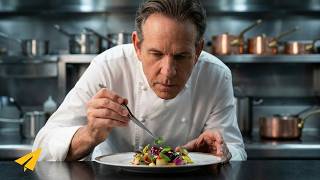
Chef Thomas Keller explains how he built his restaurants through consistency and desire over passion. He credits six disciplines learned as a dishwasher—organization, efficiency, feedback, repetition, ritual, teamwork—and describes leading through a tripod of kitchen, dining room, and finances. His first restaurant Raquel closed, but he defines success as the lasting memories guests take home.
Chapters
What's up, Believe Nation? It's Evan. My one word is believe, and I believe in you. I believe in your potential, and I want to see that thing that you've got inside you explode out into the world to have a big impact for you, your family, and the world. So to help you on your journey today, we're going to learn from chef and restaurateur Thomas Keller and my take on his top 10 rules for success. Rule number 2 is my personal favorite, and I'd love to know which one you guys like the best. And as always, guys, as you're watching, if you hear something that really, really resonates with you, Please leave it down in the comments below and put quotes around it so other people can be inspired. And when you write it down, it's much more likely to stick for yourself as well. Enjoy!
What are the top 3 qualities that you look for when hiring new talent for one of your restaurants?
Desire, desire, and desire.
You were quoted saying that it's desire that really matters. It's not passion, because passion is fleeting.
People talk about passion. Sometimes it drives me crazy, some of the vocabulary that we use in people's— a young cook will come to me and say, so why do you want to work here? Oh, chef, I'm so passionate about what I do. You just don't believe the passion I have. I mean, every morning I wake up, I'm so passionate about this. I'm thinking, OK, whatever. This kid just doesn't understand. It's wonderful to think like that, right? Think that you're going to be passionate about your job all the time. But we all know, I mean, passion ebbs and flows. I mean, if you've ever had a relationship with somebody, I mean, there lies the perfect example of how passion goes. I mean, we're passionate about somebody. For a while and then it kind of subsides and then it reignites for some reason. It's all over the place, right? And if you relate that to food, I mean, the first asparagus of the spring, which we saw 3 weeks ago, it's like, "Wow, this is amazing. I haven't seen it all year long." It's like, "I love it. I'm passionate about doing something with asparagus." But what happens 3 weeks later when you've seen asparagus every day for the past 3 weeks? It's like, "Okay, whatever. It's just another bundle of asparagus.
I gotta do something with it." So, what keeps you going?
It's the desire. It's the desire to do something with the asparagus. It's the desire to be with that person that keeps you with that person. Because if it was all based on passion, we'd have a different partner every other year, right? It's the desire to do something that really drives us. So that's what I look for, is I look for that desire. I know that there are levels of skill that some people are born with, and some people will be stars and some people won't. And it breaks my heart to see those young individuals that are in our restaurants, whether they're in the kitchen or the dining room, who have this strong desire to do a good job, and they just don't have the skills to do it. That's really heartbreaking. And we try to find places for them where they're going to succeed. Maybe it's not at the French Laundry. Maybe it's at Bouchon. Maybe it's at a colleague's restaurant. And then there are those ones who have amazing skill, and they could be a star, but they just don't have the desire. And that breaks your heart, because you just want to slap them in the face. You are so good. How come you don't apply yourself more? Um, so it is. It's about desire. And great restaurants have to be consistent. We can all cook. You know, there's a lot of great chefs out there who can do a lot of great things, but to be consistent 300 days a year, you know, lunch and dinner, over and over and over and over again, is really, for me, what defines greatness. It's the one— one-hit wonders are one-hit wonders. To be there for a long time, to be impactful for a long time, to have a team that continues to evolve, to have guests that continue to come to your restaurant, to have that relationship with your partners who are your suppliers. Those are really, really important things for me in a restaurant. I always knew that at some point in my career I was gonna have to transition to another level. In other words, I couldn't be the shift to cuisine at the restaurant forever. So I had to prepare myself to let go, which is a very, very difficult thing to me. And you know, every day I walk into my kitchen, I want to be there. I want to be that young cook. I want to be on the line. I still want to be cooking. I mean, it breaks my heart, but I know that if I was there, I wouldn't be able to do the job that needed to get done. You have to really understand, as you're planning for that transition, what you're going to be doing next, and then who's going to take your place. Jonathan Benno here. Some of you may know Jonathan Benno. He began at the French Laundry in 1995— I'm sorry, 1996. Later became chef of Per Se. Today he has his own restaurant. Jonathan came to me as a young chef de partie. A chef de partie is an individual who works on a specific station. In this case, Jonathan was the fish cook. He came to me one day, and Jonathan does this. He said, "Chef." He does that when he's making a point. He points at you with all 4 fingers and his thumb underneath. "Chef." You know he's serious. I'm not going to have a cutting board on my station tonight. And I'm working. I mean, I'm busy. It's back in the old days when everybody had a lot to do. And not that we don't today, but I was more immersed in it. And I'm thinking, OK, whatever. That's interesting. You're not going to have a cutting board on your station.
Yes.
I'm going to be so prepared. I'm going to be so prepared. I have so much confidence in my ability to have my mise en place done that I'm not gonna need a cutting board. Now every chef de partie in every restaurant has a cutting board on their station. Some of them need a cutting board. The butcher needs a cutting board to carve the steak. Jonathan was doing fish. Everything's in place. Everything's ready to go. All he has to do is cook and serve it. I said, "Okay. That's fine. Don't have a cutting board." At the end of the service, flawless. It's become the new standard for that station because Jonathan Benno had the confidence and courage to step outside of what was the norm in any restaurant and say, "I'm gonna do better. I'm gonna create a new standard." I thought I knew how to run a restaurant, but I realized that I was a really good chef. I was a really good cook. I had no idea about finances. I knew nothing about— I couldn't read a P&L. And I didn't know how to run a dining room. And those are a big part of a restaurant. Certainly a big part of any business in terms of financial. So when I was able to buy Raquel, I was able to buy French Laundry, I realized that I needed somebody in the dining room that could focus on the dining room, that was an expert on the dining room, and I needed somebody who could take care of our financial. And so it became a tripod. There was me in the kitchen focused on the food, which was really my expertise. I realized that was my expertise, that was my strength, and I needed to play to my strength and find those individuals who could compensate for my weaknesses. And so, Laura Cunningham became the general manager of the restaurant. We had a young bookkeeper named Pat McCarthy, and she took care of all of our financials. And that's what the basis and the foundation of the success of the French Laundry was. It's interesting, 'cause I'll tell you about— So, I'd been cooking for quite some time. When I say quite some time, I went to move to Paris in 1983, so I'd been cooking now for almost a decade. I'd committed myself since 1977 to make this my career. So, I'd been focused on working in— and I've chosen French cuisine and haute cuisine as my métier, so I was focused on that. The best restaurants were the restaurants that you were aware of, right? If you picked up a Michelin Guide, if you picked up the New York Times, you know, you— even New York Magazine, or any magazine that was either a travel or food magazine, and/or had a food section in the newspaper, at that time was always talking about the great restaurants in France and the great chefs. So where else would you aspire to go if it wasn't the best? I mean, if you're gonna go to France, which was arguably the best country, had the best food, the best products, the best chefs, the best restaurants, that's what you wanted to do. And so I set my sights high. It took me quite a while to get there. It was about 3.5 years of trying to find somebody in France that was actually gonna commit to giving me a job before I actually left America. Many times the advice was, "Oh, just go. You'll find a job. Just go. Just go over there. Somebody will hire you." I wanted to make sure that I had somewhere to go to. I wasn't convinced that I was just gonna travel to France and knock on somebody's door. But in reality, that's actually what happened. Where I ended up having the commitment from was a 1-star Michelin restaurant in Arbois, which is in the Jura, which is in eastern France, just below Alsace. A place I'd never heard about before, a restaurant I'd never heard about, but someone suggested I write them and I did. I arrived at the front door and a large matronly woman met me and she was very harsh and she took me up to my room, which was this small cubicle with a window, but the window was covered with dust, which I thought was dust. That was my room, it was poorly lit. I had to arrive at work the next morning in the kitchen downstairs at 5:30. And they would show me what to do. And the kitchen downstairs at 5:30, my first job was to shovel coal into the ovens. And I realized that my window wasn't covered with dust— well, it was covered with dust, but it was covered with soot, with coal dust. And the kitchen that I was in was nothing like any kitchens I had been in in America. And I realized that that's not why I came to France. And 3 days later, I packed my bag early in the morning, I snuck out the door, caught the train, and went to Paris. And ended up staying at a friend's apartment for almost 2 years and literally knocking on people's doors for a job. And fortunately, you know, my persistence paid off, and I had 8 stages, 8 different— a stage is an observation, you know, permission to have an observation in a restaurant. I was a stagiaire, and I was doing a stage, which is, you know, you go into somebody's It's almost like it's an apprenticeship, if you will. It's an externship, if you will. It's going into someone else's kitchen and actually becoming part of that kitchen. And it's up to that organization or that chef to define what you'll do. So, you know, I did different things in different kitchens because each chef needed a stagiaire in a different way. It was a normal thing, and it still is today. That period of my life in my— that period of my career in France, um, was so, so important to who I am today and really helped me understand, um, a lot of things about running a restaurant, um, that have supported my career and my success. You all know that there are so many details involved in what we do and so many individuals involved in what we do. So, a great chef is really supported by so many others. So I think what makes a great chef is surrounding yourself with those of like-mindedness, with a common vision, common goals, and in many ways are much smarter than you are. Remember that. Always work with people that are much smarter than you are. The only way to really get better is to play with those who can teach you and be better. So what I've tried to do with my entire career is surround myself with talented people.
So oftentimes at school we discuss how to respond to setbacks. And the first restaurant that you opened, Raquel, in New York closed when the stock market bottomed out in the end of the 1980s. What was the hardest part of that experience for you?
I think the hardest part of that experience is realize that your ultimate dream and your ultimate goal, which was so, so close and in many ways was in your grasp, was something that could just disappear. Without something that you had no control over it. As hard as you worked, as dedicated as you were, as great a job as you did, at that point, there was nothing that I could do outside of changing the format of the restaurant to make myself happier, to make the restaurant successful. So it was a choice. And I had a great partner. Serge Raul, and he had a very successful restaurant not too far away across town in SoHo. And we had the choice to either establish more of a casual restaurant— Like a bistro? Yeah, like a bistro. This was when fine dining became something that was unapproachable anymore. People weren't willing to pay for it. And so everything was becoming— casual. And so we could casualize Raquel. I could stay there as partner and as the chef, or I could give it up and pursue my goals. And I was so determined that fine dining was going to be my venue that I separated myself from the restaurant that— believe me, I mean, when we were building the restaurant, the contractors would come in in the morning and they would They would do their work, and the place would be a mess. And every night, I would clean the restaurant, knowing that the contractors would come back the next morning and make it a mess again. There were nights I would sleep in the restaurant. This was my life. This was going to be my restaurant. This was my future. And 5 years later, realize that it wasn't going to be anymore, and that New York City, which again was my life and the center of the universe for me, wasn't going to be the place that I was going to be. Was devastating. But what are your choices? I mean, at the end of the day, you're faced with a choice. Either you can do something, you can compromise on what your goals are. I could have casualized the restaurant and been there and been miserable. Or I could have left and pursued my true goals of fine dining and hopefully finding that avenue that would lead me to to success. And that was in 1990 when I left Rockwell and moved to Southern California. People ask me a lot of times about success, and I thought about it for years, and I realized that success is not about fame. It's certainly not about fortune, recognition, awards. It's about memories. It's about the memories that we collect throughout our lives. And I'm sure each one of you have wonderful memories about things that you've done in your life, and a lot of that was about success. That defines success for me. And certainly one of those memories, or one of the biggest compliments I can receive, is when a guest comes to our restaurant, has dinner, and then comes back to the kitchen, or I meet them in the courtyard, and they say, "Chef, this reminds me of..." and they go into this wonderful tale about an experience they had, I don't know, in the South of France, in Paris, in Italy, in Spain, or even in America. A great experience they had in another restaurant. And I can only hope that that individual goes on and has another great experience and says, "This reminds me..." of the French Laundry, because therein lies the true meaning of success.
I'm gonna prepare one of my favorite dishes, which is a simple roasted chicken. And one of the important things that we tend to neglect is bringing our protein up to temperature. What I mean by that is tempering it so that the product is at room temperature before you start to roast. If it's cold when it goes in the oven, obviously the temperature is going to drop in the oven, so it doesn't cook evenly, it takes longer to cook. One of the first things we're gonna do is we like to remove the wishbone, which allows us to take the entire breast off of the carcass. And we're just gonna scrape a little bit of the flesh till we start to feel that wishbone. And then I'm gonna take my knife and on the outside of the wishbone, just cut it down toward the joint where it meets the wing blade.
Okay?
Very simple. And then run my fingers up that wishbone to where it meets the breast and just Pull it out.
Okay.
We're going to take our wings and we're going to slide them underneath the body of the bird. That'll help support it when it's in our roasting pan, or in this case, in our sauté pan. We're going to season the inside with salt and pepper. You can do other things with the bird as well. You can put herbs in there, thyme, rosemary, bay leaf. Next, we're going to truss our chicken or tie it with butcher's twine. We do that so we can create the same density in the bird, see, that you can compact it all together and helps it cook more evenly. Take a piece of butcher's twine, slide it underneath the tail, and then we're gonna do a figure 8, if you will. Very simple. Take on top of the leg and then underneath the legs, and you can see that 8 right there. Then we're going to bring our legs into the breast, take our string underneath the neck, which is right there, and we're just gonna do a simple slip knot. And we have our trussed chicken ready to go in the oven. And then we're gonna liberally, liberally salt it. I like a lot of salt, creates a nice crust. We like to season from up above so that as the salt falls through the air, it separates. Then you get a nice dusting. Some pepper if you like. This also works well if you wanna use a roasting pan and add vegetables to it. I'm gonna put just a little bit A little bit of thyme leaf, chopped thyme on top. And there it's ready to go in the oven. I like to have it at a high temperature, 450°F. And of course, timing is different for each bird. This is about a 3.5-pound bird. It may take up to 45 minutes, 50 minutes. A smaller bird may take less. I'm not putting any fat on this. I'm just gonna roast it as it is. There'll be some natural fats that come off of the bird. I don't baste it in the oven. Again, it's a very, very simple roasted chicken. For me, this technique, evolved from really cooking a family meal at the restaurant and having to cook 6 or 8 chickens at a time in an organized way. So we're gonna go ahead and put this in our oven. So here we have our beautifully roasted chicken. You can see the nice uniform, the color of it. So now, as I said, the carving the bird is relatively easy. Just remove the twine and you'll be able to cut right down. I've taken that wishbone out of there So there's nothing to stop me from taking that entire half a chicken right off of the carcass there. How simple can that be?
Thank you guys so much for watching. I made this video because Danny K asked me to. If there's someone you'd like me to cover in a future top 10, check out the link in the description and go and cast your vote. I'd also love to know what did you learn from this video? What lesson really hit home the hardest? What are you going to immediately apply somehow to your life or to your business? Leave it down in the comments below. I'm really curious to find out. I also want to give a quick shout out to Mike Markham from restauranthr.com. Mike, thank you so much for picking up a copy of my book, Your One Word, and doing the review and posting it online. I really, really appreciate the support, and I'm so glad that you enjoyed the read.
And I just wanted to do a review on Evan Carmichael's Your One Word.
Thank you guys again for watching. I believe in you. I hope you continue to believe in yourself and whatever your one word is. Much love.
I'll see you soon. I studied philosophy, actually. Yeah, I think it's helped me understand and start and analyze what I do and try to attach other examples of other professions to what I do and trying to understand it and elevate it. Elevate our profession. Our job as chefs and as restaurant owners today is not just about our restaurants. Of course, we want to make our restaurants better, but our overarching goal is to elevate the standards of our profession. And we do that by training, by mentoring, by giving the skills, knowledge to those next generations so that they can can not only help us in our restaurants, but then go out and be impactful in other restaurants, and of course, hopefully one day open their own restaurants. That man on the left, Roland Hennen, taught me why I cook. He was my mentor. He's my mentor today. Mentorship is such an important part of success. We continue to mentor. Our staff. We assign mentors. We ask you who you want your mentor to be. It's a process that we embrace wholeheartedly. I began my humble, humble career as a dishwasher. Um, oh, and I'm not sure why my mother allowed— I guess because of age difference— my brother Joseph was allowed to handle a knife, therefore he was allowed to work with the cooks. I was a year and a half younger, therefore I had to be set in front of the dishwasher. I guess it was a much safer position for me. But, you know, around the dishwasher, whether it was at that early age or more importantly when I began to realize that I wanted to cook, was at the Palm Beach Yacht Club. And I learned 6 disciplines at the dishwasher which have, I think, become, you know, a foundation for my career, and I think for many people who aspire to have success in their careers. Not just, not just in the culinary profession, not just in the hospitality profession, but in anything. I learned that organization was really important. And organization as a dishwasher really meant that you had to set up a template for the servers to, you know, where to put their dishes. So you always had a bread and butter plate in one spot, a service plate in one spot, a bowl, or whatever, whatever, whatever the serviceware was, you had a piece set up on the counter, on the drain board where they were supposed to put it. You had your different areas for your knives, your forks, your spoons, things like that. Of course you had your glass racks for specific racks. So that organizational aspect allowed you to be more efficient, which was kind of the, the second discipline that I learned is efficiency was really, really key into doing things well. If you could be more efficient than the person next to you, then you could have more time to learn what you wanted to learn, to continue to grow and continue to evolve, continue to progress. So efficiency became important. You know, how you lined up the racks, you know, how you put the plates in the racks, or when was the time to wash the glasses, when was the time to wash the silverware, so that everything became seamless for everybody. Feedback was the third discipline. You know, if you didn't properly rinse or stack or sort, the silverware or the dishes correctly and you put them in the dishwasher, a minute and a half later when the machine opened, they would still be dirty. And so that was immediate critical feedback. You know, you knew when you did a bad job and you knew when you did a good job. And you know what, it was okay either one. You learned from the mistake of doing the bad job that you learned that, that you needed to either stack your, your, your dishes differently, rinse them differently, sort the silverware differently, or whatever it was that critical feedback taught you, that's what you needed to do. So you modified your behavior to be successful. You know, of course, if you were successful, then it was positive feedback and you knew that you did a good job. And no one told you those things. You realized them on your own. And that was really important as well. Of the fourth, the fourth discipline I learned was the repetition, right? The, I don't wanna say the art of repetition, but the ability to respect repetition, and embrace it. We're cooks. We do the same thing over and over and over and over again. So if you don't want to be repetitive in what you're doing, you probably don't want to really be a cook. You know, learn how to cut brunoise, learn how to peel an onion, learn how to slice. I mean, all these things that are, you know, part of that repetition was what I learned at the dishwasher. Because the dishwasher, you do the same thing over and over and over and over again. I learned the importance of ritual, doing things at specific times of the day and having them— having— leading up to those times and being prepared for those times. You had to change the water in the dish machine every 2 hours. You had to check the soap every 3 hours. You had to empty the garbage can 3 times a day. You had to sweep the floor at these specific times. You had to do different things at different times of day, which began, which were part of the ritual of your job. And rituals are very, very, very important. And the last, not any more important than the others, was the idea of teamwork and embracing that. You as a dishwasher, even though you may have been perceived as the lowliest position in a kitchen, you touched everybody and your job was critical in their ability to be successful. You had to deliver the dishes back to the chefs, right? So they could plate the food. You had to have the silverware to the servers so they could set the tables. You had the glassware to the bartenders so they could do their job. So everybody, relied on your ability to be organized, to be efficient, to have your job done thoroughly, to understand repetition, rituals, and give them what they needed to do the job. And those 6 disciplines are what we do every day as cooks. And I embraced that. I understood it. I didn't recognize it until much later in my career, but I realized it, and, and I understand that was a part of the foundation of why I became a good cook and ultimately was able to become a good chef. So let me give you the one word secret to happiness. One word. This is all you need to be happy.
The most important word ever.
If you had to think of one word that's most important to you or that sums you up or that would be kind of like a little beacon.
Hey, Believe Nation, if you want to know what the most important one word is for Tony Robbins, Gary Vaynerchuk, Oprah Winfrey, Will.i.am, and Howard Schultz I have a very special secret video for you. Check the description for details.
More from Evan


How the Biggest Mistake in History Created A Trillion-Dollar Empire | Sergey Brin



9 Machiavelli Principles That Force People To Respect You | Machiavellian Philosophy



The First 10 Words That Instantly Ruin A Sales Conversation | Vanessa Van Edwards

The Top 1% Mindset Behind The First $5 Trillion Company | Jensen Huang (Nvidia)

