How to ACTUALLY Get Rich From Nothing
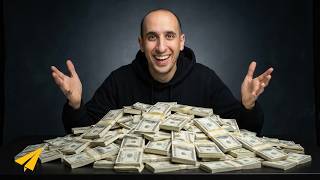
Evan Carmichael shares how to build wealth from nothing through belief, resilience, and rapid action. He hit rock bottom at 19, landed a $13,500 contract after months of struggle, and uses Colonel Sanders, Walt Disney, and J.K. Rowling to show that age and failure are assets, not obstacles.
Chapters
Getting rich from nothing is 100% possible. Most people think you need money to make money, but that's a lie. The only thing you truly need is resourcefulness and belief. If you sit around waiting for a lucky break or more capital, you will be stuck forever. Do nothing now and a year from now you'll still have nothing. The cost of not acting is staying broke, frustrated, and watching others live your dreams while you stand on the sidelines. Look at Colonel Harland Sanders at 65 years old. He was broke. He was sleeping in his car. He was surviving on a $105 monthly Social Security check. Yet he had a chicken recipe he believed in. He was rejected 1,009 times by restaurants who told him no. 1,000 rejections! But he didn't quit. Finally, one restaurant in Salt Lake City gave him a chance, and Kentucky Fried Chicken was born. By the time he was 74, Colonel Sanders sold KFC for $2 million and became an entrepreneur legend.
Why?
Because he refused to accept that having nothing meant he was nothing. He turned nothing into a global brand through sheer perseverance. And this isn't just about famous people.
It's personal.
I remember being a 19-year-old entrepreneur and hitting rock bottom. I struggled a lot in my early days of entrepreneurship. I felt worthless. I felt useless as a human being. It was the worst moment of my life for my self-confidence. I was making $300 a month at my startup and actually told my business partner that I was quitting. I broke down crying at my family gathering, you know, full-on ugly sobbing, because I just couldn't see a way forward. But you know what happened? The very next morning, I woke up and something clicked. I thought, okay, I can handle failing, but I can't handle not knowing what could have been. So I decided that I'd rather give it my all and flop than live with this regret of not knowing. A few weeks later, we landed our first big deal, an exclusive partnership in Europe. We went from scraping by on $300 a month to signing that $13,500 contract. And in my head, I felt like a millionaire in that moment. I was literally jumping around and yelling, I'm rich.
It wasn't true riches yet, but it was proof, proof that we could do it.
And that one deal changed my life because it proved that you can start with nothing and create something huge. Now, you might be watching this thinking, yeah, Evan, that's great for you or Colonel Sanders, but can I do it? I have no money, no special connections. Is it really possible for me to get rich from nothing? And let's look at that doubt and try to flip it. The fact that you have nothing can actually become your advantage. When you have zero, you have nothing to lose and everything to gain, which makes you incredibly dangerous. Remember, every self-made millionaire that you look up to, that you admire, they started with a first step when they had nothing. Everyone starts at zero. The only difference between you and those success stories is that they started and they kept going when most people would just quit. So don't buy into those excuses that are in your head. You can do this. I'm not any smarter or more special than you are. The Colonel wasn't a spring chicken. He was a senior citizen. If you can start at 65 and win, why not you at your age right now? So stick with me and I'll show you how to actually build wealth from nothing. Just some real strategies and some mindset shifts that you can use starting today. Are you ready?
Let's do it.
And if you've been here before, drop a hashtag #believe in the comments below so I can feature you here in a future video. And if you're new, welcome to Believe Nation, the only channel that helps you believe in yourself daily, one video at a time.
Let's see.
Belief and identity. The first and most important step to building wealth from nothing is belief, specifically the belief in yourself and adopting the identity of a winner. If you don't believe you can become rich, you've already killed your chances. Your mindset is the foundation everything else is built on top of. Henry Ford famously said, whether you think you can or think you can't, You're right, and science backs this up. Studies have shown that people with an internal locus of control, basically people who believe their actions determine their life, they tend to have higher income and net worth.
If you believe you have the power to change your situation, you're statistically more likely to do it.
Belief is psychology and it's real. So ask yourself, what identity are you carrying? If you see yourself as a poor person who will never catch a break, that will become your reality. If instead you start to see yourself as an entrepreneur on the rise, as someone who deserves success and is willing to grind for it, you'll start to act that way too. Your identity drives your behavior. High achievers visualize their success and own it mentally long before it actually happens. It's not about faking it until you make it. It's about believe it until you become it. I built my entire brand around one word, belief. Right?
Why? Because it all starts there.
If I could go back and give my younger self one piece of advice, I keep it simple. Believe more. Believe in yourself more. Believe that it's going to work out. Believe in the work that you're doing. Every great thing that will happen in your life is on the other side of even more belief in yourself. That's a direct quote from me to me and now to you. Because when you can cultivate belief, you become more unstoppable. You stop saying, I can't, and start asking, how can I? You stop seeing obstacles as roadblocks and start seeing them as just puzzle to solve. So surround yourself with belief. I call it borrowing belief from others. So when I was struggling and full of negative self-talk in my head, I flooded my environment with successful voices. It's why I started this channel. I listened to guys like Steve Jobs and Elon Musk every single day. I'd watch their interviews, I'd read their biographies, I'd play their talks on repeat. I watched as many YouTube videos as I could, and their confidence and vision started rubbing off on me. The more that I had Steve Jobs in my ear and Musk in my ear and all these people in my ear, the more I wanted to do bigger things and believe in myself that it was possible to go off and do it. Now, you might not have a mentor in real life, but you have books, YouTube, podcasts, a virtual board of advisors. Feed your brain with possibility, and over time you'll start to believe, hey, if they can do it, so can I. And that identity shift becomes everything. Resilience through struggle. So you're going to fail. You will face pain and setbacks and rejection on the road to your wealth.
And that's okay.
That is normal. Getting rich from nothing isn't a straight line upwards. It is full of ups and downs over the course. The difference between people who eventually build wealth and those who stay broke forever is resilience. The ability to keep going after you fail. Failure is not the opposite of success. It becomes part of your success. So think of it like this. When you start from nothing, Failure, that becomes your tuition to pay for the lessons to get better. In fact, the average entrepreneur fails 3.8 times before their first major success kicks in. On average, almost 4 failures for every big win. And 92% of people give up after their first failure. They try things once, things go south, and they say, well, I guess it wasn't meant to be for me. Meanwhile, the 8% who don't quit after one failure are the ones who become the success stories. Be in that 8%. Every successful person you know has a trail of failures behind them. J.K. Rowling was rejected by 12 publishers before Harry Potter became a global sensation. Thomas Edison failed 1,000 times trying to invent the light bulb. When a reporter asked him how he kept going after so many failures, he famously said, I didn't fail 1,000 times. The light bulb was an invention with 1,000 steps. That's the mindset of resilience. Seeing each failure not as proof that you suck and you're not good enough, but is one step closer to the result you're going for. Research shows that 60% of the most successful companies were founded by entrepreneurs right after a failure. They didn't quit, they learned, and they launched their next thing. And my life is proof of this. Remember the story I told you of me crying and wanting to quit? I was this close to becoming another statistic, another guy who gave up on his dream at 19, at 20, because it got too hard. If I had stayed down, you wouldn't be watching this video and I wouldn't be living my mission right now. Resilience is what saved me, the willingness to get back up one more time. And when that $13,500 deal came through after all those rejections, it wasn't just money, it was a result of every failure and retry leading up to it. I learned that every no, every setback can be motivation if you choose to make it so. So use those setbacks as your stepping stones. As painful as they are in the moment, they are forging you into someone capable of success. I think your purpose comes from your pain. That's one of my core beliefs. The lowest points in your life can create the highest value because they give you a mission. In my case, feeling worthless and struggling so much lit a fire under me to help other entrepreneurs never feel that low too. So whatever you're going through right now, the debt, the doubters, the failures can become your drive and your story. So when life knocks you down, you look it in the eye and say, that all you got? Then you get back up Even if you're limping, because resilience is your superpower when you have nothing, because it means nothing will stop you. Strategic partnerships and modeling success. So wealth building is a team sport, especially when you're starting with nothing. One of the fastest ways to go from zero to one is through strategic partnerships and modeling people who've already done it. You don't have money?
Fine.
Use what you do have. You have hustle, you have time, you have energy, skills, and the humility to learn from others. When I started my first business, right, it was 19-year-old kid, zero experience, zero money, zero connections. How did I get in the game? I found partners. I joined forces with two other entrepreneurs who had strengths that I didn't have. And in that biotech software startup, my partners were the coding geniuses, right? And me, I was a guy willing to hustle for $300 a month and 30% equity to build the business. While all my college friends were off getting corporate jobs paying six figures, I basically said, I have nothing except my work ethic. I'll work practically for free if you gimme a shot. And that's how we launched. And sometimes a strategic partnership means you contribute sweat equity, while someone else contributes capital or expertise. Don't be too proud to be the small fish in a bigger pond if it helps you learn and helps you grow. Another partnership that saved my company was bringing on mentors and advisors. In the beginning, I tried to do everything myself and made mistakes everywhere. Finally, I sucked up my pride and started asking for help.
I reached out to people who had been there, and guess what?
When we started asking for help, and getting advisors, that's when I started to turbocharge my success. The simple act of getting a mentor that's 10 steps ahead of you can collapse your learning curve and open doors that you never even knew existed. Even recently, I found myself at a high-level mastermind with people who were way more successful than I was— billionaires, YouTubers with tons of subscribers— and I felt like I didn't belong. Imposter syndrome was creeping in. But one of my mentors there basically pulled me aside and said, get out of your head and go ask for help or advice on something. And I did, and it was transformative. And so the lesson for me and for you, whatever you lack, someone else has knowledge, connections, resources, and many are willing to share or partner if you bring value and a learning attitude. You cannot be too proud to learn. Strategic partnerships also mean modeling success. So find a blueprint instead of reinventing the wheel.
When my business was struggling, I asked, who has solved a problem like this before?
That led me to study Bill Gates and how he grew Microsoft through partnerships. I literally modeled my next steps after what Bill Gates did. We formed an exclusive distribution partnership in another country, just like Microsoft partnered with IBM back in the day, and that move became our first big win. And we copied success. And you can do this in any industry. If you're starting with nothing, identify people who started in similar circumstances and then made it big.
Study their path. What strategies did they use?
What mindsets did they have? We cover a lot of them here on this channel. If you want to start a business online but have no money, go research stories of people who bootstrapped who bootstrapped a successful startup from zero. Emulate their tactics. This isn't about just being a copycat, it's about learning the principles of success from others and applying them in your own unique way. And most importantly, put yourself in proximity to greatness. So you are the average of the 5 people that you spend the most time with, right? As the famous Jim Rohn saying goes. If you currently hang around naysayers or people with small goals, find ways to get around bigger thinkers. That might mean attending networking events or joining online communities, or even just consuming content from high achievers every day like we do here. I kind of hacked this through YouTube, right? Profiling and virtually hanging out with mentors like Steve Jobs in his videos. And it filled me with belief and strategies I never would have had on my own. So when you model the success habits of others and build win-win partnerships, you're essentially standing on shoulders of giants. They give you a boost to see further and move faster than you could do alone. Also, if you want to take real action after this video, I made a free worksheet just for you. It outlines the top lessons from today, gives you space to write your biggest takeaways, and helps you build a simple action plan. It's 100% free. Just click the link in the description to go grab it and start turning these ideas into reality. I'll see you there. Momentum and decision speed. Money loves speed. When you have nothing, Your greatest asset is not money. It's time and agility, speed. You can move fast because you're small. You can pivot quickly because you're not weighed down by anything. To actually get rich from nothing, you need to build momentum and make decisions quickly rather than overthinking and waiting for perfect conditions. One thing I've learned from both my experience and by studying other successful entrepreneurs is this: imperfect action beats perfect inaction. Every time. The longer you wait to make a move, the more likely someone else will swoop in or your motivation will fade. Opportunities, they have a shelf life. A lot of people start to waste years getting ready, writing 50 business plans, researching to death, waiting for the stars to align. Don't do that. Launch now, improve later. As LinkedIn founder Reid Hoffman said, if you're not embarrassed by the first version of your product, you launched too late. So get version 1.0 out there and course correct with real feedback. I used to struggle with this and probably still do. My nature is to be cautious. I hated failing. It sucked. And early on, I'd overthink decisions out of fear. What if it doesn't work? What if I look stupid? It kept me stuck. I had to train myself to speed up my decision-making. And one trick that helped was adopting Jeff Bezos's regret minimization framework. So when I was 19, I had to decide between taking a high-paying job or betting on my struggling business. I asked myself, when I'm 40, what will I regret more? And the answer was clear. I'd regret not knowing if my business could succeed. Bezos' idea is to project yourself forward and ask which choice avoids the bigger regret. For me, that meant leaping into the business. I told myself when I'm an old man, I'd rather know and fail than not know. And that perspective pushes you to act faster on your dreams because the pain of potential regret outweighs the fear of failure right now. And so now I use an even faster mental hack. I've learned just to trust my gut and just do it. I believe great ideas don't randomly pop into your head. They come to you for a reason. Adopted this mindset of if I have an idea come to me, I have to go and do it. I don't overthink, I don't overplan like I used to. I get an idea and start immediately. Great ideas flow through me even if I have no clue how it's all going to work out. And I found that when you move on inspiration quickly, amazing things happen before the doubt creeps in. It's almost like the universe is rewarding your momentum. You'll figure out the details on the way instead of trying to have a perfect map from the start. And this applies to building wealth too. You don't need to know every step of your 5-year plan. You need to take that first step right now. So you want to start a business but have no funding? Start one that doesn't require money, a service business, freelancing, selling something that you already own.
Just start.
Want to invest but only have $50? Begin with micro-investing platforms or saving $5 a day. The key is to build momentum because small wins lead to bigger wins and momentum creates confidence. It becomes this flywheel. At first you're pushing really hard and nothing's moving, but Once it starts spinning, it gets easier and faster. So make decisions with speed and courage, and you'll gather momentum that carries you through obstacles that stops slower movers. Remember, it's easier to steer a car that's moving than one that's parked. So get moving now. Not next week, not when you feel ready. Ready is an illusion. Act before you're ready and you'll be surprised at how far you can go. Discipline and consistency. If you want to get rich from nothing, you must master discipline and consistency. This is the not-so-sexy part of success that most people ignore, and that's why most people never reach their goals. It's way easier to talk about big dreams than to show up every single day and do the boring, hard work.
But guess what?
That daily grind is where the fortunes are actually built. Wealth isn't one big lucky strike. It's the compound effect of small actions repeated consistently over time.
Discipline.
Means doing what needs to be done, even when you don't feel like it. Especially when you don't feel like it. It's building the habits that move you forward and sticking to them day in, day out. It can start with something as simple as how do you start your day? So many people sabotage themselves every morning by hitting the snooze button a dozen times. And I've said this before, I'll say it again. The first thing you do every day is tell yourself it's okay not to hit your goals when you hit snooze.
Think about that.
You had a goal to wake up at a certain time, and the first action you took was to break that commitment. That mentality bleeds into everything. So discipline might start with getting up when you said you would and using that extra time to work on you. Read something inspiring, watch a video, exercise, plan your day. For me, I start every day by feeding my mind belief. I go on my believe walk where I'm walking outside and watching an inspiring video for myself that gets me set up for the day. That routine sets the tone for me for a productive day. So figure out a routine that primes you for success and then stick to it religiously. Consistency is closely related but slightly different. It's about showing up consistently and putting in the reps even when progress seems really slow. So when I started on YouTube, trust me, I was not an overnight success. In fact, I sucked on camera. I'm naturally an introvert.
I was awkward, I was stiff.
It took me 350 videos before I even liked my own content a little bit. 350 videos before I wasn't completely embarrassed by what I was making. I would watch my early videos and cringe, literally hit pause and say, oh, this is so bad, I can't watch this. But I kept posting, I kept practicing, I kept improving tiny bit by tiny bit. It took around 700 videos before I created one that actually inspired me when I watched it back. 700 tries to hit one that I'm proud of. Can you imagine most people doing that? No, because most people would've quit at video number 10 where they still weren't getting views and sales still felt extremely awkward. By video 50, they say, I guess I'm just not cut out for this YouTube thing. That's why most people never break through.
They give up way too soon.
So I just happened to persevere through hundreds of mediocre videos because I knew consistency was the only way I would eventually get good.
And it paid off.
Today the channel is over 4 million subscribers, but it took years of consistent effort. And Alfred and I, my community, you very rarely see people who win in any aspect of life who aren't passionate about the thing that they're doing. Passion gives you the motivation to stay consistent, and consistency eventually brings results. Discipline also means sacrificing short-term pleasure for long-term gain. It might mean saving money diligently, even when it's hard, so you have capital to invest or to start a business. It might mean saying no to nights out or Netflix binges so you can work on your side hustle. For me, discipline is sometimes literally staring at a bag of Doritos, right? It's, it's behind me here on my desk and not eating it. And a fun fact, I do keep that behind me.
It's just as a test of willpower.
You can go look up damnedoderitos.com. Just thinking about Doritos or seeing the word Doritos, I have this Pavlovian response. I'm drooling right now. I just want to eat it. So my strategy is called Damn It, Doritos. I remind myself that I'm stronger than a Doritos, and that bag has been there for so long it's probably expired. And my mouth still waters when I look at it. But not eating from it every day is a small victory that builds my self-control muscle. It's symbolic. If I can resist that temptation, I can resist others. The point is, you need to train your self-discipline like a muscle. Maybe not with junk food like me, but in your own ways. Set up little challenges that make you mentally strong. Because if you can conquer yourself, external obstacles become a lot easier. At the end of the day, consistency and discipline create momentum that money can't buy. They turn ordinary people into extraordinary success stories. If you stay consistent working on your craft, learning, improving, hustling, the results will compound. It's like putting money in an investment account every day. At first it's small, but over years it grows into a fortune. Your work ethic is the same. Those tiny daily gains, those hours put in when others are sleeping, those blogs or videos or sales calls made every single day, they pile up into something huge and people will start calling you an overnight success. Because they won't see the years of quiet, disciplined effort that built the foundation. But you'll know, and you'll be damn proud of it. So the bottom line is you can get rich from nothing, but you have to believe big, bounce back from your setbacks, learn from other people, move fast on opportunities, and show up with consistency. It's not easy, but it's simple. The formula is right there. Now it's on you to go take action. So go make your move, no matter how small. Today, your future rich self is waiting. And congratulations, you're one video closer to who you're meant to be.
Believe.
Now let's learn the 7 traits every successful person shares.
All successful people have the exact same 7 traits. Most people will ignore this and stay average. If you ignore it, chances are 5 years from now you'll still feel stuck, or worse, you'll be looking back with regret, wondering what went wrong. I don't want that for you. And I know you don't either. Look at Walt Disney, the man who created Mickey Mouse. He was fired from his first newspaper job because they said he lacked imagination. Then his first animation company went bankrupt. He was told over and over that his ideas were too risky, too expensive, or just plain silly. At one point, he couldn't even afford food and survived by eating beans from a can. But he refused to quit.
He kept creating.
He kept believing. When he pitched Disneyland, more than 300 investors investors turned him down, yet he kept going until one finally said yes. Today, Disney is one of the biggest brands on Earth. He succeeded because he never gave up. So ask yourself, if a man who got fired for no imagination could build a world of imagination, what could you build if you refuse to stop? I almost gave up on my dream too. At 19, I quit on my first business. I had left a high-paying job opportunity to own a part of a startup and ended up making $300 a month. Nothing was working. I was grinding every day and feeling like a total failure. I was so embarrassed by how broke I was that I stopped hanging out with my friends, and I couldn't even afford pizza. One night, I hit rock bottom and told my business partner, I'm done, I quit. And then a new kind of pain hit me. I pictured myself years later haunted by the fact that I gave up on my dream. That vision of regret was worse than the failure, and I couldn't accept that. So the very next day I crawled back into the office, which was my, my, uh, business partner's condo. I had no idea how I was going to fix things, but I made a decision. I would find someone who did know and learn from them. And I picked the best model I could think of, Bill Gates. Since I had a software company, he had the largest software company in the world, and study how he built Microsoft and made his first million. And guess what? Within a few weeks, we closed our first major deal for $13,500. I went from making $300 a month to bringing in a $13,500 check in a single deal. That blew my mind and it changed who I was. I realized I could have stayed a quitter and missed out on everything, but instead I proved to myself that if you push one more day, if you're resourceful and you model success, you can turn things around. I learned a lot about the value of resilience and belief and finding mentors in your darkest moment. Now you might be thinking, okay, great story, Evan, but I'm not Walt Disney. I don't have a ton of imagination. I'm just a normal person with normal problems. Listen to me. Every successful person you admire started as a normal person with normal problems. None of them began with special powers. The difference is when things got hard, they didn't settle for normal. They made different choices, choices that built those 7 traits into them. You can make those choices too. This isn't about born talent or luck or money. It's about what you decide to believe and how you act when the pressure is on. And the fact that you're watching this tells me something, that there's a fire in you. Maybe it's small right now, but it's in there. And my job in this video is to pour gasoline on that fire. So here's the good news. These 7 traits can be learned. They can be practiced. They can become your traits at an identity level. Starting today, you can decide to develop each one and completely change the trajectory of your life. So let's break them down one by one and get specific on how you can build them. Trait number 1, self-belief. All successful people believe in themselves unapologetically. They believe in their vision even when it's just a crazy idea and everyone else doubts them. There's a famous saying: whether you believe you can or you can't, you are right. And it's true. If you don't believe in your ability, you won't even try, or you'll quit as soon as it gets tough. On the other hand, when you do believe in yourself, you'll move mountains to prove yourself right. In psychology, this is called a growth mindset— the belief that you can improve and adapt. Stanford research has shown that The view you adopt of yourself literally shapes your life. If you believe you're capable of growth, you will grow. Successful people act like they're capable of amazing things long before it's evident, and that belief becomes a self-fulfilling prophecy. Think of Oprah Winfrey. Early in her career, she was fired and told she wasn't fit for television. She could have said, maybe they're right, and she faded away. But she didn't. She held on to her belief that she was meant for more. And now she's Oprah, one of the most influential media figures of all time. She believed in herself when no one else did. Do you? Ask yourself honestly, do you believe you can do great things? If your immediate answer is no, then let's change that right now. You might say, but I've never done anything great before.
So what?
Every success story starts with someone believing before they have evidence. I learned this from my mom. She used to tell me, if you have the ability, you have the responsibility. If you can, then you must. Whenever I failed or fell down, she'd look me in the eyes and say, 'You're Evan Carmichael. You can do anything you believe you can.' And I didn't buy it at first. I was a B and C student while my sisters got straight A's. But after hearing it enough times, I finally thought, 'Huh, what if she's right?' And that little seed of belief— what if it's true— changed my life. I started behaving like I could achieve something, and eventually I did. Trait number 2: passion. Successful people love what they do. They are obsessed with it. They would do it for free just for the joy because it's part of who they are. I've spent over 20 years studying entrepreneurs, artists, innovators, leaders, and one of the most consistent pieces of advice is follow your passion. You have to find the thing that makes you feel alive, the thing that you would do even if you never got paid.
Why?
Because doing anything great is hard. It takes years of hard work. If you don't love the process, you'll quit. If it's just a paycheck or a casual interest, you'll give up when it stops being fun. But if you're truly passionate, you'll keep going even when it sucks, even when everyone calls you crazy, even when it doesn't make logical sense anymore. You keep going because you need to. It's who you are. You don't get to be the best by doing what you hate or what you think you should do. You become the best by loving what you do more than anyone else loves what they do. Think about the greats. Kobe Bryant shooting baskets at 4 AM because he loved the game, not just because someone forced him. Or Steve Jobs, who famously said, the only way to do great work is to love what you do. He was right. If you haven't found something you can pour your heart into, you need to keep looking. Don't settle for a life of lukewarm interest. It's a recipe for mediocrity. So what do you love so much that you do it no matter what? What would you regret not doing? It might be a career, a project, an art, a cause, anything. Identify it and give yourself permission to pursue it. Yes, you might have responsibilities and bills, and I'm not saying be reckless, but you owe it to yourself to incorporate your passion into your life and ultimately into your work. Because when you operate from passion, work doesn't feel like work. It feels like honor, like service, like play. And that's where the magic happens. You'll put in more effort, you'll put in more hours, you'll be a lot more creative and happy because it feeds you. That's how winners pull ahead of the pack. They're not straining themselves to compete. They're playing their own game that they love. So they naturally practice more, they learn more, they persist more. If you haven't found that thing yet, keep exploring. Follow your curiosity. Think about what pain you've overcome in your life. Often your purpose lies in helping others with the struggle that you went through. I always say your purpose comes from your pain. In my case, I struggled so much as an entrepreneur that I became passionate about making entrepreneurship easier for other people. Find your why. Trait number 3: action. Successful people do something. They have a bias for action. They execute fast, even before they feel ready. This is where so many people fail. They get paralyzed trying to plan the perfect approach or waiting for the right time, and they never actually start. Newsflash: there is no perfect plan, and there is no perfect time.
At some point, you have to pull the trigger and go.
And I learned this the hard way in my first business. I was a perfectionist. I'm, I'm still a recovering perfectionist. I spent an entire summer drafting the ultimate business plan— dozens of pages of research, projections that look beautiful. And while I was planning, a competitor in my industry was acting. They got out there, they got customers, they got attention. A large competitor came along looking to acquire a business like ours, and guess who was already ready and wasn't? Not us. Our competitor got bought for $40 million and we got nothing. I missed out on a $40 million deal because I was stuck in planning mode, and that one hurt, but it taught me a pretty valuable lesson. A half-assed plan you start now is better than a perfect plan that you never execute. Most of your precious plan is going to be wrong anyway once it meets reality. You can't think your way to success, you have to do your way to success. So ask yourself, what's one important thing that you've been putting off because you don't feel ready? And decide to take one small step today. Make that call, publish the post, start the channel, make the video, reach out to that person, whatever it is, just start. You won't have all the answers, and that's okay. You figure it out by doing. Start before you feel ready. Trust that you'll learn along the way. The simple trait, being an action taker, already puts you miles ahead of most people. Remember, you can't steer a parked car, so get moving and you'll find your direction. Trait number 4: Embrace failure. Every successful person has a healthy relationship with failure. In fact, they fail more than the average person. The difference is they're not afraid of it. Most people are so terrified of failure that they don't even try, and that's the biggest failure of all. Successful people understand that failure isn't the end of the road. It's just a data point on the path to success. It's feedback, it's education, it's a necessary stepping stone. They don't take failure personally. They don't make it mean, I'm a failure. They just say, okay, that didn't work, good to know. What can I learn from this? Let's try again. They failed their way to success. In fact, they failed at more things than most people have ever attempted. Think about that. The average person might try a dozen things in their life and give up when something doesn't immediately work out. Successful people might try 100 things, fail at 90 of them, but the 10 that hit more than make up for it. Failure is the price of admission for success. Michael Jordan, one of the greatest basketball players of all time. I put it as number 1. He put it this way: I missed over 9,000 shots in my career. I've lost almost 300 games. 26 times I was trusted to take the game-winning shot and missed. I failed over and over and over in my life, and that is why I succeed. Failure is not the opposite of success, it's part of success. Thomas Edison made 1,000 unsuccessful light bulb prototypes. When a reporter asked him how it felt to fail 1,000 times, he said, I didn't fail 1,000 times. The light bulb was an invention with 1,000 steps, and that's the mindset you need to adopt. Trait number 5, perseverance. Never giving up. If one trait separates the winners from the losers, it's the sheer grit to keep going no matter what. Life will test you. Business will test you. Do you get back up one more time or do you stay down? Successful people always get back up long after other people have thrown in the towel. Remember Walt Disney with his 300+ rejections? That's perseverance. Or look at J.K. Rowling. She was rejected by 12 publishers. 12 publishers said Harry Potter wasn't worth publishing. She could have stopped at rejection number 12 and we'd never have known Hogwarts, right? But she persisted until a small publisher took a chance on her. Now she's one of the best-selling authors in history. Stories like that aren't the exception, they're the rule. Virtually every success is built on a mountain of persistence. They say it takes 10 years to become an overnight success, and it's true. The problem is most people never make it to year 10 at whatever they're doing. They quit at year 2 or 3 because they're not seeing results yet. Don't let that be you. Perseverance is a choice. It's a quiet, daily choice that I will not quit. Decide that for yourself. Decide that no matter how long it takes, you're going to see your vision through. There are no expiry dates on your dream. I don't care if it takes you until you're 30 or 40 or 65. Time is going to pass anyway, so you might as well keep pushing towards something that you care about. Keep going. Trait number 6: Positive environment. All successful people raise their standards for their environment. They purposefully shape who and what they surround themselves with. So you've probably heard the saying, you are the average of the 5 people that you spend the most time with. It's true. Environment is everything. If you hang around 5 pessimistic, lazy, 3 excuse-making people, you will become the 6. If you hang around 5 ambitious, optimistic, high-performing people, you'll also become the 6. We as human beings are contagious to each other, so winners curate their environment ruthlessly. So this means 2 things: cutting out the negative influences and adding in positive influences. First, the negative. You must distance yourself from chronic negativity, naysayers, people who hold you back. Sometimes that's friends, Friends, even family. Sometimes it's the content that you consume. Pay attention to how the people around you make you feel. Do they make you feel energized, inspired, capable, or do they make you feel drained, discouraged, and small? If it's the latter, you need to start spending less time with them. This can be hard, but it's necessary. Successful people from tough backgrounds often had to be the ones who said, enough. I love you, but I can't have you around my dreams if you're going to tear them down. They raise their standards and refuse to tolerate constant negativity around them. They stop blaming their circumstances, and they started demanding more of themselves. That's how you break free from a limiting environment. You declare to yourself, I will not accept this anymore, and you change it. Now, cutting negativity alone isn't enough. You have to add in positivity too. If you don't have supportive, inspiring people in your life immediately around you, seek them out. Find a community of people who are also pushing for more and believing more. That might mean joining groups or clubs or online forums. Even here in the comment section here in Believe Nation on this video, put it down below. Fill your ears with the words of great mentors from videos and books and podcasts. I still do this constantly. As a shy introvert starting my business, I didn't have any entrepreneurial friends to turn to, so I turned to my heroes. I called them aspirational mentors. Through their biographies and their talks, their mindset became my mindset. You can do the same. There's no excuse to not have positive influences. You have YouTube, you have audiobooks, you have virtual mentors at your fingertips 24/7. Make use of it. Every day, consume something that elevates you, ideally earlier in the morning. It's like healthy food for your brain. Trait number 7: a strong purpose. The final trait that all successful people share is that they're driven by a deep sense of purpose. They know why they do what they do, and that why is everything. It gives meaning to their work and fuel to their fire. Purpose is what turns a job into a mission. It's the difference between someone who is just making a living and someone who is making a difference. Now, if you study the greats, you'll see this over and over again. They weren't just chasing money. They're usually chasing a mission to change something in the world or to reach a personal vision. When you have a purpose, setbacks don't defeat you as easily because you know what you're fighting for. Like Viktor Frankl said, he who has a why to live can bear almost any how. Successful people have a powerful why. I like to say your purpose comes from your pain. Whatever you struggled with in life is what you want to help other people through. Now here's another thing: having a purpose also attracts other people to you. People want to be a part of something meaningful. Your team, your customers, your audience— they will rally around you if you have a genuine mission. It's inspiring. It's also a compass for your decisions. When you're lost or you're facing a tough call, you can ask, does this align with my mission or not? That clarity becomes gold. The world needs what you have. Successful people internalize this. They carry a sense of duty about their purpose. It's not just about personal gains, it's about using your gifts to make an impact. When you approach your life like that, as a mission, you become someone a lot more powerful. You won't give up easily because it's not just your own comfort that's on the line, it's your calling. And that is identity-level motivation. That's what creates your legacy. So those are the 7 traits, and I'll list them out one more time. And as I do it, I want you to imagine who you could become come if you committed to all 7. So, self-belief: trusting that you can figure things out and win even when no one else believes in you. Passion: doing work that lights you up so you have endless fuel to devote to it. Action: moving quickly and decisively rather than overthinking and hesitating. Embracing failure: learning from every misstep rather than never trying because you're afraid. Perseverance: getting back up every time, outlasting everyone who gave up. Environment: surrounding yourself with inspiration and cutting out the negativity. And purpose: knowing exactly why you're doing all of this and letting that why drive you forward. Notice something important here. None of these traits are genetic. None are privileges given only to the lucky. They are all choices. They are habits of mind and behavior that anyone can cultivate, including you, especially you. Success is not this mystical thing that is handed out to a select few. It's the result of building these day by day until they become who you are. Don't be intimidated by the entire list. You don't have to master all 7 overnight. Just start with one. Which one of these do you need the most right now? Pick that one trait and focus on it this week. Write a sticky note reminder. Do one small action each day and practice it. Keep it simple. If you chose action, for example, then every day this week, identify one important step and do it before your head hits the pillow. If you chose self-belief, Start each morning with a video, an affirmation, a visualization of you accomplishing your goal. Bit by bit, you'll feel that trait growing stronger inside you. And here's the secret: these traits reinforce each other. When you act, you gain confidence. Your self-belief grows. When you persist through failure, you discover new passion and purpose. When you surround yourself with positive people around you, you'll find it easier to keep going, and your belief gets stronger. It's all interconnected. You're basically upgrading your identity piece by piece, and momentum will build. Now it's your turn. No more waiting, no more excuses. You have the blueprint. You have the same 24 hours in a day as everyone else. You have gifts inside you that the world needs. Yes, needs. It's time to unleash them. So the moment this video ends, I want you to take one concrete step toward your dream using one of these traits, even if it's tiny, especially if it's tiny. Money. Just do it now, and then do it again tomorrow, and then again the next day, and let those little steps compound. Remember, the only thing that can stop you is you. And you're done standing in your own way, aren't you?
Now let's learn how to reinvent yourself.
56 is the perfect age to start your next chapter. Most people think that by 56 your life path is set in stone, and they're wrong.
The only thing that gets set in stone is your headstone.
Own, and you are far from that. And if you buy into the lie that it's too late, you will live the rest of your days haunted by what if. So don't you dare do that. Think of the 80-year-old you looking back. Do you want them mourning the chances that you never took? No, you want them thanking you for being brave right now. Look at this story. Colonel Harlan Sanders had a busted restaurant at 62. A new highway wiped out his business, and he was sleeping in his car at 62. He could have seen that as his end. Instead, He hit the road with nothing but a chicken recipe and a dream. He got rejected over 1,000 times, 1,000+ nos by some accounts. But finally, at 73 years old, Colonel Sanders sold his Kentucky Fried Chicken company for $2 million. That's over $20 million in today's dollars.
Late bloomer? Sure.
Too late? Never. His story shows us that persistence has no age limit. Now, in my own journey, I've had to reinvent myself too. I built a huge website, I had 100,000 pages of content, had 6,000 people contributing and sharing their stories. And on paper was successful, but I grew to hate it. It turned into a soulless content factory and I no longer enjoyed it. So I walked away and despite all that momentum, I shut it down and started over on YouTube. People said I was crazy, that it was risky to abandon such a sure thing. But listen, I don't see it as risky to walk away from something that you don't like and move towards something that you do. The real risk is waiting up until you're 60, 70, 80, stuck in a life that you can't stand. I wasn't willing to pay that price, and I hope you're not too. But you're too old to start again. And maybe that little doubt is whispering in your ear right now. Let's crush that nonsense. At 56, you have something a 26-year-old can't buy: experience. Decades of failures, of victories, of lessons learned. You have paid your dues, and that is power. Now, you might be thinking, but Evan, I'm not Colonel Sanders or some genius. I don't have the energy. I don't have the tech skills. I'm just an average person. You know who else was average? Colonel Sanders. He was a gas station operator in his 40s. Vera Wang was a journalist before she became a designer at age 40. They were average people until they decided not to be. Experience beats youthful exuberance when you leverage it. In fact, research actually backs this up. Among the fastest growing startups, the average founder was 45 years old, not 25, 45. Entrepreneurs in their 50s actually succeed at higher rates than those in their 20s. Why? Because experience is a superpower. So if you are 56, congratulations, you are statistically primed time to win. And that doubt in your head is lying to you, and I just slapped it with some truth. All of this is why when Zimmix Productions asked me, is there a chance to start all over at 56? My answer was a big bold yes. I knew I had to make this video just for you. So we're going to destroy the excuses, spark that fire in your belly, and get you moving. And hopefully by the end of this video, I want you itching to start that business, launch the idea, reinvent your life. Sound said, let's do it. Your age is your edge. 56 is not a liability, it's an asset. You are not past your prime, you are in it. Think about it, by 56 you have logged tens of thousands of hours solving problems, dealing with people, navigating life's punches. That's like having a PhD in real-world experience, so use it. Ray Kroc was 52, a milkshake machine salesman, when he first saw a humble burger stand run by the McDonald brothers. He wasn't some whiz kid. He was a middle-aged guy who'd done a bit of everything, but he had a vision and grit. He franchised that little burger stand and turned it into the McDonald's, the world's largest fast food empire. At a time when others at his age were easing into retirement, Ray Kroc, he was just warming up. He made his age his edge. Now you have wisdom young entrepreneurs lack. You know patterns. You can spot BS from a mile away. Use that. Maybe you've managed people. Maybe you've worked in an industry for 30 years. That gives you insight and connects a 20-something can't match. Your network, your knowledge, your scars, they are all assets for you. Colonel Sanders' decades of odd jobs and failures meant that by the time he was pitching his chicken recipe in his 60s, he had developed an unshakable hustle and a killer taste for what people actually liked. Those life experiences helped fuel his success at 62. Let me tell you about Bernie Marcus. This is one of my favorite late bloomer stories. Bernie was fired from his own job at age 50. Can you imagine you give your life to a company and they kick you out at 50? Most people, they would have been crushed, but Bernie, he didn't pack it in. At 50, he teamed up with Arthur Blank, who was also no spring chicken, and decided to create a new kind of home improvement store. People thought, who starts a huge retail business at that age? Bernie did. That company became Home Depot, which today is a $300+ billion empire. Fired at 50, billionaire at 60. How is that for a turnaround? Bernie often said that getting fired was the best thing that ever happened to him. It lit a fire and freed it led him to build something huge. So your setbacks can also light a fire for you. And don't think it's just men. Arianna Huffington launched the Huffington Post at 55 years old, when many assume you can't learn new tech or break in the media. She'd never run a major tech company. She wasn't an internet guru, but she saw an opportunity in online media, went all in, and built one of the most influential news sites of our time. People were skeptical. Who starts an internet company at 55? Arianna did. And 6 years later, she sold HuffPost for $315 million.
Boom!
She became a first-time tech entrepreneur at 55 and made it huge. That can be you in your own arena. The door isn't closed.
It's wide open if you have the courage to walk through it.
And maybe you're thinking, but Evan, those folks had big ideas or fame or money. I'm just an ordinary person. Okay, let's talk ordinary. Grandma Moses was a farmer wife who loved to embroider. She wasn't a business mogul or celebrity. In her late 70s, arthritis made embroidery hard. So at 78, she picked up a paintbrush for the first time. Just a hobby, right? Well, her paintings of rural America caught someone's eye. By her 80s, Grandma Moses's art was being displayed in museums worldwide. She became an American art icon in her 80s. That's as ordinary as it gets. An elderly grandma who just loved painting, and she reinvented herself into a celebrated artist when most people are long retired. It is never too late to create a new success. Never. So what do all these stories tell us? Your age can be your unfair advantage. You've seen trends come and go. You know timeless truths, so use them. Do a quick inventory of your life. What skills have you mastered?
Mastered?
What do people always ask you for help with? What industry knowledge do you have that a newcomer wouldn't have? That could be the cornerstone of your new business venture. Maybe you spent 30 years in marketing. Now you want to start a consulting agency. Great! You have 30 years of insights to offer clients. Maybe you raised a family and now your kids are grown and you want to launch that bakery that you always dreamed of.
Guess what?
Decades of managing a household means that you're a budgeting, a scheduling, a multitasking ninja. Ninja skills that will make you a savvy business owner. So you have to reframe your narrative. You're not a 56-year-old starting from zero. You're a 56-year-old powerhouse bringing a lifetime of an experience to a fresh new arena. Burn the excuses and light the fire. Let's address the fear because I know it's there.
What if I fail?
Listen, at 56, you failed before, and you know what? You survived every one of those failures and you learn something each time. Failure is not fatal. Inaction is. I'll take failure at 56 over regret at 90 any day. When I was 19, I had to decide whether to quit on my first business.
I felt like a total failure.
Months of effort and zero results. I actually told my partner I was done, and that night I couldn't sleep. I imagined myself as an old man looking back. I realized I'd rather know for sure, even if I failed, than wonder what if forever. I use what Amazon's Jeff Bezos calls the regret minimization action framework without even knowing it. Project yourself to age 80 and ask, what will I regret more, trying and failing, or not trying at all? And the answer was obvious. I'd regret not trying. So I unquit the very next day, and I sought out a new strategy. Ended up modeling Bill Gates's tactics from Microsoft, and that turned my business around. I almost flushed my dream because of fear. Don't you do the same. At 56, use that regret test for yourself. When you're 80, looking back at today, will you regret taking a shot and maybe stumbling, or will you regret not taking the shot at all? I think we both know the answer. Here's another excuse that pops up. I'm not tech savvy. The world has passed me by. Stop that. Technology is a tool and tools can be learned. You don't have to become a coding genius or a TikTok star overnight. You can partner with younger talent for the technical stuff while you provide the vision and the leadership, or you can learn what you need step by step. You've been learning new things your entire life. The key is to not psych yourself out. When Arianna Huffington started Huffington Post in 2005, she wasn't some tech wizard. She was a writer and political commentator. She brought in people who knew the tech, and she focused on her strengths—content and strategy. So team up, hire help, find mentors. Just because you didn't grow up with smartphones doesn't mean that you can't leverage them right now. Your willingness to learn is far more important than your starting knowledge. And guess What? Learning keeps you young. Every new skill is brain fuel, so embrace it and you'll find yourself energized, not intimidated by the new tools at your disposal. How about, I have responsibilities, Evan? Kids, mortgage, aging parents. I can't just risk everything at 56. True, you have responsibilities and you're going to meet them. Starting over doesn't mean blowing up your whole life. You can start small, you can start on the side, you can carve out an hour before or after work to build your dream, wake up an hour earlier, go to bed an hour late. You can find the time. The beauty of being 56 is you likely have better discipline and focus than you did at 26. So use that and involve your family in your dreams if you can. Show your kids or your grandkids what it looks like to not give up on dreams. That's a legacy in itself. Will it be easy? No, it's hard juggling a reboot with daily life. You might feel selfish at times or focusing on your things, but remember, if you're not happy and fulfilled, you can't give your best to those you love. By pursuing this, you're ultimately going to be a better parent, a better partner, a better friend, because you'll be alive, on fire, and leading by example. There's emotional consequence if you don't act. You'll grow bitter, and that will seep into all your relationships. So really, you can't afford not to do this. Action turns doubt into power. So we've tackled the mindset. Now let's get you moving. Dreaming is nice. Doing it is necessary. It's time to take that first step, however small. Do you have an idea in mind already? Good. If not, think about what pain you've overcome that you could help others with. Like I always say, your purpose comes from your pain. The challenges you've conquered in 56 years are not just your scars. They're guideposts. Maybe you went through a really tough divorce and you came out stronger. This is a business or mission in helping others through that. Maybe you struggled with a health issue and you found a way to heal. Can you turn that into a product or a service? Whatever you struggled with the most, there are people out there right now who needs someone exactly like you to help them through it. That could be your new business idea, born from your own life experience. Once you have a direction, take one concrete step today. Not tomorrow, not next week, today. Sign up for that course, write the business plan draft, call a potential supplier or partner, register the domain name. Any forward motion, no matter how small, begins to prove your doubt wrong. Doubt Doubt hates action. The moment you start doing something, even something tiny, you build momentum and shrink that doubt. When I committed to YouTube after leaving my website, I had no clue how to build a big channel. It was slow. In my first year, I got 25 subscribers. In my first 6 years on YouTube, I hit 9,000 subscribers. It was discouraging, but I kept making videos. I kept taking action, and eventually momentum kicked in. The next 6 years, that 9,000 grew to 2 million. $1 million, and now I have over $4 million. If I had stopped after year 1 thinking, ah, this isn't working, I'm too late to this platform, I would have lost out on my dream. But because I stayed in motion, I won. Stay in motion, even if it feels like you're moving at a crawl. A crawl is better than standing still. And a funny thing happens—crawls turn into walks, walks into sprints when you keep at it. Embrace the identity of a learner and a doer. At 56, you might feel like you should be a master, not a cleaner. Ego can get in the way. Don't let it. Be 56 years young, not 56 years old. Approach new challenges with curiosity. It's okay to be a newbie in some aspects. I'm an introvert, and for years I avoided putting myself on camera because I thought people only cared about the famous entrepreneurs I profiled. I had to shift my identity from just a curator of others' advice to someone who has advice to give too. My team actually went behind my back once and they made an Evan top 10 rules video because I refused to do it myself. I didn't see myself as a teacher. I was comfortable being the student. When that video took off, I I had to accept that I am a teacher too. You may need to step into a bigger identity as well. You are not set in your ways. You are dynamic. You're capable of growth. You're ready to contribute at a higher level. So start telling yourself that daily. Look in the mirror and see an entrepreneur with 56 years of training gearing up for their magnum opus. See a leader who's exactly who they need to be to make this dream happen, because if you can see it, you can be it. Borrow belief if you have to from me, from these I believe in you, but at the end of the day, you need to believe in you. All the inspiration in the world means nothing if you don't back yourself up. So decide right now that you are going to trust the calling in your gut, that little voice saying, maybe I can do this. Listen to it, nourish it, surround yourself with people, with content, with mentors that reinforce it. Join communities of entrepreneurs, especially older entrepreneurs for support. Protect that budding belief like a a flame in the wind and keep feeding it with more fuel.
From doubt to identity shift.
Let's revisit our initial question: is there a chance to start all over at 56? Not only is there a chance, but this can be the greatest chapter of your life. Everything up to now was your prologue. All the struggles, the false starts, the experiences— they were training for right now. The doubt you felt? That's just the border of your comfort zone. And guess what? Your new life starts at the edge of that comfort zone. So feel that excitement that mixed with fear in your chest. That means you're alive. That means your story isn't done. You're about to do something most people never have the guts to do. Bet on yourself when it would be easier to play safe. And that choice to act, to reinvent, to believe— that's what makes you an entrepreneur. Not age. Entrepreneurs aren't defined by being 22 or 32 or 100 and into. They're defined by the heart and hunger to create something new, to solve a problem, to leave the world better than they found it. And you have that heart and hunger, or you wouldn't still be watching this. So wear that identity now. You are an entrepreneur, not, uh, aspiring. Are. Own it every day. Tell yourself that you're building something that matters, because you are. And when setbacks come, and they will, remember you have been through worse. You've got decades of resilience in your veins. When doubt creeps in, remember these stories. Remember that Colonel Sanders, Arianna Huffington, Bernie Marcus— they all had dark days too. They had people laughing at them. They had deals falling through. They had nights of intense worry, but they kept going. They stayed stubborn on their vision and flexible on the how. You do the same. Stay locked on the vision of your success, but flexible in your approach. And maybe your first idea doesn't fly. So what? You know what? You adjust and try the next. Sanders had to pitch over 1,000 restaurants before one said yes. Ariana's early venture into politics flopped before she found her groove online. It's all just course correction on the way to your destination. And here's the beautiful thing: your journey will also inspire others. You starting over at 56 is going to become a lighthouse for so many people behind you. There are 10 other people in your circle or community right right now who secretly feel too old too, who have given up inside. And when they see you rise, you will give them hope. You'll be the example that flips a switch in their head too. And that's an incredible journey. That's a legacy. It doesn't just change your life, it creates a ripple effect of permission for others to change their lives too. Every time you push through a doubt, imagine someone 10 years younger saying, wow, if they can do it at 56, I can at 46. You become the proof of possibility. That's purpose. That's impact. And that impact will give you the fuel you need on days that you're tired. On those days, remember, it's not just about you. It's about everyone who's watching you for inspiration, your kids, your friends, your community. You are carrying the torch for them. So now is your time. Not yesterday, not tomorrow, right now. You're 56 years young and the world needs what you have. It needs your experience. Your perspective, your passion. So get pumped, get focused, and most importantly, get moving. The best investment you can make is the next action you take right after this video, even if it's small, especially if it's small, because it starts your momentum. Your story is not over. You are the author, and the next chapter is going to be fire. I want you to promise me— actually, promise yourself— that you will take the next step, that you won't let the 20-somethings have all the fun and all the impact. Your time is now. Make the next years the best years. You're not starting over from scratch, you're starting over from experience. Everything you need is already inside you. The courage that got you through 56 years of life is the same courage you'll use to build something new. The resilience that you earned through the hardships you faced is your foundation. The wisdom you gained is the compass that you're going to use to guide others. Trust it. So here's the final push for you. No more waiting. No more someday. Someday is Hey, you've got this one life and it's way too precious to waste living small. The only time you run out of chances is when you stop taking them. At 56, you've got plenty of runway left if you commit to lifting off. So it's time to stop looking back at what could have been and start looking forward to what will be. You see that vision of the life you want? Good. Now go make it real, brick by brick, day by day. Be patient with yourself on the journey, but be relentless too. Hold yourself to a high standard because you can meet it. Remember why you're you're doing this for you, for the people you'll help, for the legacy that you're going to leave. Your best days are ahead of you, not behind you. The only person who can decide that is you. So decide it. Choose to believe that it's possible, because it is. And when you believe, you behave differently. You take action, you persist, you find solutions. That's the magic formula. Now go get out there and do it, because I'm rooting for you.
To learn how to stop sabotaging your success, check the video right next to me. I think you'll love it. Continue to believe, and I'll see you there.
You are sabotaging your own business without even realizing it. Do you feel like you're working hard but not getting results? It's time to find out if you're making one of the 5 huge mistakes that self-taught entrepreneurs often make.
More from Evan


How the Biggest Mistake in History Created A Trillion-Dollar Empire | Sergey Brin



9 Machiavelli Principles That Force People To Respect You | Machiavellian Philosophy



The First 10 Words That Instantly Ruin A Sales Conversation | Vanessa Van Edwards

The Top 1% Mindset Behind The First $5 Trillion Company | Jensen Huang (Nvidia)

