How to Avoid These INVESTMENT Mistakes | Warren Buffett's Advice in 14 Minutes
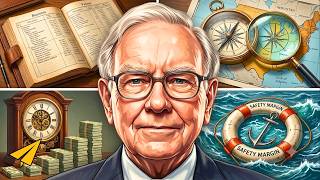
Warren Buffett and Charlie Munger explain how to value a business: understand it deeply, estimate its intrinsic worth, then buy only when the price is far below that number. They warn that holding cash long-term is like oxygen in excess, harmful, and that productive assets like businesses and farmland beat gold because they generate returns.
Chapters
He's the chairman, CEO, and largest shareholder of Berkshire Hathaway. He's considered to be one of the world's most successful investors. If you want to learn about investment strategies, you want to learn from Warren Buffett. Mentor me, Warren.
When you look at the future, there is also the argument made that, that this is something that goes with your philosophy today. Get out of cash and get into assets because we don't know what's going to happen to the dollar.
Well, cash is always a bad investment.
I mean, when people said cash is king a year ago, I mean, that's crazy.
I mean, cash wasn't producing anything, and it was sure to go down in value over time. And then you always want to be sure you have enough. I mean, it's like oxygen. You want to be sure it's around, you know, but you don't need to have— you don't need to have excessive amounts of it around. And cash, uh, we will always have enough cash around, but anytime we have surplus cash around, I'm unhappy. I mean, I would much rather have good businesses than cash.
And, and, uh, We found a chance in the last year or thereabouts to deploy.
We came in with something over $40 billion in cash, and we've got about $20 billion now, and we've had some earnings. So we put a lot of cash to work, and I like that. No, I'd much rather own a good business, uh, than have cash.
Uh, and it is a hedge against the dollar.
Well, you can say all assets are a hedge against the dollar.
I mean, all you know is that the dollar is going to be worthless 10, 20, 30 years from now. I say worth less, not worthless, right?
You want to watch that.
But it will be, you know, and that's true of almost every currency that I can think of.
The question is how much it depreciates in value. But cash, cash is not a place to, you know, that—
why is that?
Well, because the dollar is going to be worth less because we'll, we'll print more of them in relation to the amount of goods that are moving.
You know, if we, if we dropped the If we dropped a million dollars of cash into every household in the United States today, everybody would feel very good except the people that invested in things that were denominated in dollars.
Exactly.
There will be no tendency toward deflation in this country over time or virtually any—
A tendency toward inflation.
Absolutely. The important thing is to decide, is to be able to define which ones you you can come to an intelligent decision on and which ones are beyond your capacity to evaluate. You don't have to be right about thousands and thousands and thousands of companies. You only have to be right about a couple. I met Bill Gates on July 5th, 1991. We were out in Seattle, and Bill said, "You've gotta have a computer." And I said, "Why?" And he said, "Well," he said, "you can do your income tax on it." I said, "I don't have any income. Berkshire doesn't pay a dividend." He said, "Well, you can keep track of your portfolio." And I said, I only have one stock. I said, I mean, and he says, it's gonna change everything. And I said, well, will it change whether people chew gum? And he said, well, probably not. And I said, well, will it change what kind of gum they chew? And I said, well, then I'll stick to chewing gum and you stick to computers, you know? I don't have to understand all kinds of business. There's all kinds of business I don't understand, but there's, There's thousands of opportunities there. I did understand the Bank of America, you know, and I'll be able, I'm able to do that. I'm able to understand some given percentage, but Ted Williams wrote a book called The Science of Hitting, and in The Science of Hitting, he's got a diagram, shows him at the plate, and he's got the strike zone divided into 77 squares, each the size of a baseball. And he says, if I only swing at pitches in my sweet zone, which he shows there, and he has what his batting average would be, which is.400. If he had to swing at low outside pitches, but still in the strike zone, his average would be.230. He said the most important thing in hitting is waiting for the right pitch. Now he was at a disadvantage because if the count was 0-2 or 1-2 or so on, even if that ball was down where he was only gonna bat.230, he had to swing at it. In investing, there's no called strikes. People can throw Microsoft at me and, you know, you name it, any stock, General Motors, and I don't have to swing. Nobody's gonna call me out on called strikes. I only get a strike called if I swing at a pitch and miss. So I can wait there and look at thousands of companies day after day, and only when I see something I understand, and when I like the price at which it's selling, Then if I swing, if I hit it, fine. If I miss it, it's a strike. But it's an enormously advantageous game, and it's a terrible mistake to think you have to have an opinion on everything. You only have to have an opinion on a few things. In fact, I've told students if when they got out of school they got a punch card with 20 punches on it, and that's all the investment decisions they got to make in their entire life, they would get very rich because they would think very hard about each one. and you don't need 20 right decisions to get very rich. You know, 4 or 5 will probably do it over time. So I don't worry too much about the things I don't understand. If you understand some of these businesses that are coming along and can spot things on, if you can spot on Amazon for example, I mean, it's a tremendous accomplishment what Jeff Bezos has done, and I tip my hat to him. He's a wonderful businessman, he's a good guy too. But could I have anticipated that he would be the success and 10 others wouldn't be? I'm not good enough to do that. But fortunately I don't have to. I don't have to form an opinion on Amazon. And I did form an opinion on the Bank of America, and I formed an opinion on Coca-Cola. I mean, Coca-Cola's been around since 1886. There's 1.8 billion, 1.8 billion 8-ounce servings of Coca-Cola products sold every day. Now if you take 1 penny and get 1 penny extra, that's $18 million a day. And $18 million times 365 is $7 billion, 3 less $730 billion, or $6,570 million. So annually, $6,570 million from 1 penny. Do you think Coca-Cola's worth a penny more than, you know, Joe's Cola? I think so. So, you know, and I've got about 127 years of history that would indicate it. So those are the kind of decisions I like to make. And you may have an entirely different field of expertise than I would have, and probably much more up to date in terms of the kind of businesses that we're seeing evolve. And you can get very rich if you just understand a few of them and understand their future.
The real test of whether you would like it as an investment is whether you would be happy if it never got quoted again and just in in terms of what the asset did for you.
But that doesn't—
I will say this about gold. If you took all of the gold in the world, it would roughly make a cube 67 feet on a side. So if you took all the gold in the world, we could have a cube that went down there 67 feet, 67 feet high, and that would be the whole thing. Now for that same cube of gold, it would be worth at today's market prices about $7 trillion. That's probably about a third of the value of all the stocks in the United States. So you can have a choice of owning a third of all the stocks in the United States, or you can have a choice of owning that little block of gold, which can't do anything but kind of shine there and make you feel like Midas or Croesus or something of the sort. Now, for $7 trillion, there are roughly A billion acres of farmland in the United States. They're valued at about $2.5 trillion.
It's about half the continental United States is farmland.
You could have all of the farmland in the United States. You could have about 7 ExxonMobbils and you could have $1 trillion of walking around money. And if you offered me the choice of looking at some 67-foot a cube of gold and looking at it all day, you know, and maybe touching it, fondling it occasionally, you know, and then saying, you know, do something for me. And it says, I don't do anything, I just stand here and look pretty. And the alternative to that was to have all the farmland in the country, everything, cotton, corn, soybeans, 7 ExxonMobil, just think of that, add a trillion dollars of walking around money. I, you know, Maybe call me crazy, but I'll take the farmland and the ExxonMobil.
What's your advice about that? You can't constantly sit there and wait and say, oh, it's going to go higher, it's going to go higher.
We don't even think about that. What we think about is how much is it selling for? How much do we think it's worth? When we bought it at $35 billion, effectively, I felt the company was probably worth at least $100 billion.
How did it come to your attention? How do you find a stock like PetroChina?
I sit there in my office and I read an annual report, which fortunately was in English, and it described a very good company. And told about the oil reserves, told about the refining, told about the chemicals, everything else. And I sat there and read it and I thought to myself, this company is worth about $100 billion. Now, I didn't look at the price first. I look at the business first and try and figure out what it's worth, because if I look at the price first, I'll get influenced by that. So I look at the— I look at the company first. I try to value it, and then I look at the price. And if the price is way less than what I've just valued it at, I'm going to buy it.
And how do you value it?
Well, that's— that's the trick. But it's It's essentially what I would pay for the whole business if I could buy it.
How do you know when to throw in the towel on an investment or business? When you throw in the towel on an investment or business or business? Yeah. Well, you know what you know is you do it too late. I've done— I went in the textile business by accident in 1965 and I threw in the towel about 20 years later. And that was about 20 years too late. The There's a great tendency to want to hold on, justify old decisions. I mean, that's a human trait. And when you really know you've got a bad business is when you have a good manager and you're getting bad results. I mean, when you're getting bad results with a bad manager, you still have to examine the question of whether you can get better results if you get a better manager. Usually you can't. I've said in the past, You know, when a management with a reputation for excellence encounters a business with a reputation for bad economics, it's the reputation of the business that remains intact. And I've proved that many times. There are businesses that are just plain tough. You know, and there's the— there may be too many competitors, but there's reasons why they don't drop out. There's reasons— Well, we started out in textiles, and we made over half of the linings for men's suits in the country, and we went through World War II and got awards, and Sears Roebuck named us their Supplier of the Year, and all of that sort of thing, and then we'd say, well, we'd like to increase the price of these linings a quarter of a cent a yard, and Sears would say, you must be out of your mind, there's 10 other guys that'll sell it to us at the old price. Nobody ever went into a Sears store and said, I'd like a blue serge suit with a halfway lining. It didn't exist. We had no connection to the consumer. And there are lots of lousy businesses, you know, and there's lots of wonderful businesses. And my job over the years has been to try and figure out which is which, and I've made plenty of mistakes. I bought a company called Dexter Shoes, In the early '90s I paid $400+ million for it, and it made a lot of money before I bought it. But you know, as soon as I bought it they pulled some switch or something, and it immediately started losing money. And it was because of foreign competition and so on, or maybe it was because I owned it, I don't know. And it went to zero. And the worst thing was that I'd paid for it in stock, so that $400 million in stock I gave, at the time, is now worth about $5 billion. So every time Berkshire stock goes down, I feel a little bit better because of my opportunity loss on this business. But you know, when I looked at Dexter Shoe, they had a good position in retailers, they turned out good shoes, they had a great workforce, all kinds of things. But I just forgot one thing, that they weren't gonna make shoes in the United States anymore. You make mistakes, and it does pay to recognize quickly when you've made them. If you've got a good person running a business and it isn't making any money, you're in the wrong business, and you've got to face up to that. Generally speaking, investing in yourself is the best thing you can do.
Anything that improves your own talents. Nobody can take it away from you. They can run up huge deficits, and the dollar can become worth far less.
You can have all kinds of things happen. But if you've got talent yourself and you've maximized your talent, you've got a terrific asset. And so that doesn't mean everybody should go to college, but it does mean that any way you find to improve— communication skills are enormously important. I mean, I took a Dale Carnegie course that I paid $100 for and it was worth a college degree. At least I thought it was.
Maybe this interview will convince people otherwise.
Thank you guys so much for watching. I made the Mentor Me series because I I wanted to spend a little bit more time with super successful people and I hope some of their magic pixie dust rubs off on us. So I'd love to know what you thought of this video and what lessons you learned that you're gonna apply to your life and how. I'm really curious to find out. Leave in the comments below, I'll join in the discussion. Thank you so much for watching. Continue to believe and I'll see you soon.
More from Evan


How the Biggest Mistake in History Created A Trillion-Dollar Empire | Sergey Brin



9 Machiavelli Principles That Force People To Respect You | Machiavellian Philosophy



The First 10 Words That Instantly Ruin A Sales Conversation | Vanessa Van Edwards

The Top 1% Mindset Behind The First $5 Trillion Company | Jensen Huang (Nvidia)

