How to Be Brutally Honest in 10 Minutes
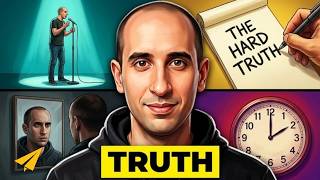
Mark Cuban, Ellen DeGeneres, Jordan Belfort, and others explain why brutal honesty about yourself matters for business and creative work. Cuban warns against self-deception in startups. Belfort says you need to assess your real starting point. Seinfeld talks about the honesty required in comedy.
Chapters
Be brutally honest.
Being honest.
You gotta get honest.
Honestly.
The most honest.
Honest.
Really honest.
Be honest.
Be honest.
Brutal honesty.
Hello, Believe Nation! Today we're going to talk about how you can be brutally honest.
One of the big things that all startups do is they lie to themselves over and over and over. Mine's faster, mine's cheaper, mine's better, mine's this, mine's that. No, it's not. And the reason it's not is because whoever it is you're competing with, it's not like they're ignoring you. It's not like, oh my goodness, this guy just started on Shopify in the startup competition. He's doing $1 million this year. Woe is me, I might as well close up the doors. What are they doing? I'm gonna copy what they're doing. And now you've gotta stay ahead. And so, you know, you've gotta be very careful as an entrepreneur to be brutally honest with yourself. And those are some of the things that you'll hear from me as a mentor. That, you know, know what you know, know what you don't know, but you've got to know your business better than anybody.
You know, you did a very successful sitcom, you then came out, and then it was cancelled. Has this show sort of saved you, do you think, in a way?
I think what saved me is me being honest, and I think I somehow had the courage to do something and say something that I knew would possibly end my career, and, um, Instead of making business more important, I made my soul and my life more important. And I think by being truthful and by being honest, that saved me. And then I was given the opportunity to do something where I could actually just be myself and people could see who I am. And if they respond to it, great. And if they don't, great. And they've responded.
The only thing that stops you from getting what you want in life is the bullshit story you tell yourself of why you can't have it. You get that? What stops you back is the story, because the story stops you from getting honest. And if you can't get honest with yourself, there's no way you can go. Imagine like this: success in sales, in life, it's like a roadmap, right? You know where you want to go, and you have this perfect strategy, the straight line to get there. It's a perfect strategy. It's gonna get you there every single time. But if you don't know your starting point, if you're not getting honest with where you actually are, it doesn't matter how powerful the strategy is and it doesn't matter how powerful your goal is. I'm gonna ask you to set a goal today, right? A 60-day goal. And let's say you really set this goal and I'll show you how to do it in a brilliant way so it's visceral, so it makes you really feel it and you see it, you sense it, you smell the goal. That's step 1. I'm gonna teach you the straight line which is your strategy to get to your goal. But if you're not honest with where you are right now, your starting point, the map is worthless. There's 3 things that you need to know: where you are, where you want to go, and how you're going to get there. Those are the 3 things you must have to take advantage of any opportunity. I'm gonna give you the strategy. I'm gonna ask you to tell me exactly where you wanna go for yourself. You gotta get honest. Don't blame the boss, don't blame the leads, don't blame your job, don't blame the industry you're in. Just get honest. If you don't like your industry, find another one. Man in the Mirror.
Oh yeah, I like that a lot.
That's my favorite song.
I tend to hold a feeling that no matter what you do in the world, it really has to start with you.
It is my philosophy too. If you wanna make the world a better place, take a look at yourself and then make a change. Um, is it hard to do? Yeah, well, people don't look at themselves honestly. They don't look at themselves and point the finger at them. It's always the other guy's fault or somebody else. You should change yourself. Look at yourself, make better of yourself, you know.
Why are comedians such complex people?
I think that's just that weird thing of what drives you to do it, you know. It's that weird thing of why would you get out on stage and talk about things and My favorite comedians that I've ever seen were always the most honest, like Pryor. You know, Pryor would be talking about dying and making it funny. The recent kind of embodiment of that is Chris Rock does it, Louis C.K. does it. Talks about really painful things, but he's just talking about his life. And the idea of going on stage and going, "I'm gonna talk about really painful things, but let's see if you relate to it." And they're complex because I think it's a survival mechanism. You know, sometimes they did it because it's one way to get laid. Sometimes they did it because it's an outlet, it's, you know, cheaper than therapy. And in a weird way, they said it's the things that these things that are spinning inside them that they have to talk about. And it depends on which way you do it, you know, what drives you.
An honest intention is always at the core, usually at the core of a worldly business success. I mean, it's the, I want to give people something they need. Hopefully you're giving something they need that you approve of. If you're vegan, don't have a steakhouse, something like that. But it's the idea of going to work and giving people something that you believe in and make it an honest intention, more so that you give without so much, it's not about the expectation of receiving so much. There's faith in this idea that if you, You put your energy into something, it will give you a return. But there's something greater about loving something enough to just want to share it. And I think that that's a major motivation that we all should have if we want happiness and success.
I think customers want to be talked to and not talked at. And I think a lot of companies talk at a customer, and it's very sort of glossy speak, and it doesn't seem real. And from day one, I just, I never tried to hide that I was the girl in my apartment with the red backpack. It's like, this is who I am. And I find that people end up rooting for you and opening more doors if you're really honest early on. Some people start businesses and try to come across that they're much bigger than they are because they feel like that's the only way they're gonna be taken seriously. But if you know your product's great and you know why you made it, you don't have to apologize for being out of your home or your apartment or being small.
There's this air of transparency, right? It's like the great entrepreneurs that I love the most is like, there's not, There's not a— they'll be honest about everything and they'll tell you exactly how it is, good or bad, and will just put a stake in the ground on an opinion but not drive it home. And it's like, that's the stuff I respect the most.
Then what's your advice to these small business founders today?
Work hard. You're going to need some luck, but the harder you work, the luckier you get. And if it doesn't work out, that's not the end of the world. I just don't have anything in common with people that sit there and say, oh my God, it was terrible. It's over, it's water over the dam, under the bridge. Get on with it and start another business the next day or another career. And be honest, look in the mirror and say, why didn't it work out? Well, it wasn't the skill set, or it wasn't— I didn't have the temperament for it, or I was in the wrong place, wrong time. Maybe I can afford to do it again, maybe I can't. But people aren't honest with themselves. They— what I've always done is I've taken a yellow pad, I draw a line down the middle, write out the pros on one side, the cons on another. In a sense that if I let you see it, you wouldn't laugh at me. And then when I get done, I just rip it up and throw it away because I've worked out in my mind what is real and what isn't and what I can present to people and what I can't.
We put this sort of slogan, "I prefer brutal honesty to hypocritical politeness," on our website because it's a real disservice to people. You don't have to be offensive to be honest. When I don't like somebody, I can get offensive too, but generally you can be constructive and very honest. And I prefer that brutal honesty because it serves a purpose. The receiver can do something about it if it's a constructive criticism. If you get hypocritical politeness, you might lose A lot. So again, it's about having enough confidence to say the other person will eventually appreciate it. And that slogan came after I was working on a company with another major venture firm, and I didn't believe their plan would work. They had $45, $50 million in the bank account, so everybody was comfortable, too comfortable in my view. I talked to the founders why it wouldn't work, what my concerns were. The other VCs agreed with me. In the board meeting, said all these polite things, you know. So 40 engineers wasted 3 or 4 years of their life because nobody was willing to tell them the honest truth about what they really thought. And I swore I would never let anybody waste their life. At least give them the best advice I had to give and tell them I may be wrong, but I'm not going to say something I don't believe in. I just won't. And that's extremely valuable to the other thing. But to be honest, look, there are situations it offends people, and I offend people often. But it helps them if they're really introspective. That founder, by the way, in that company called me 4 years later after this company— this company got sold for $3 million, 3.5, 4 years later. Sad story. And he called me a year after that, said, I only want to work with you on my next venture because I wish somebody had told me.
Thank you guys so much for watching. I'd love to know which of the clips meant the most to you, what impact it's gonna have on your business and why. Leave it in the comments below and I'll join in the discussion. I also wanna give a quick shout out to Zaino Niewenhouse.
Zaino Niewenhouse. Niewenhouse. Niewenhouse.
Zaino, thank you so much for picking up a copy of my book. It really means a lot to me. For you guys, if you want your chance at a shout out in a future video, make sure to pick up a copy of the book and send in your receipts so we can keep track. Thank you guys so much for watching. Continue to believe whatever your one word is, and I'll see you soon.
More from Evan


How the Biggest Mistake in History Created A Trillion-Dollar Empire | Sergey Brin



9 Machiavelli Principles That Force People To Respect You | Machiavellian Philosophy



The First 10 Words That Instantly Ruin A Sales Conversation | Vanessa Van Edwards

The Top 1% Mindset Behind The First $5 Trillion Company | Jensen Huang (Nvidia)

