How to be the GREATEST You ft. @LewisHowes
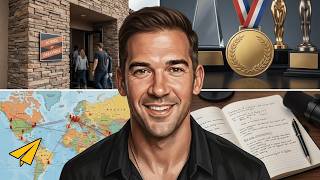
Lewis Howes built the School of Greatness podcast from a childhood dream derailed by a football injury and years on his sister's couch. He distilled eight principles from hundreds of interviews into a book, using tactics like targeting 50 key influencers and podcast tours to launch it. His three personal truths: love, dream pursuit, and living in service.
Chapters
And we're live. Welcome everybody to another YouTube Hangout. I'm super excited to have a very special guest on with me, Lewis Howes. He runs the School of Greatness. It's a podcast, it's a book, it's a YouTube channel, it's a phenomenon. It's one of the 2.5 YouTube entrepreneur channels that I watch every video of that comes out. And we're here for the next little bit talking about greatness, Louis, welcome aboard.
Thanks, brother. Appreciate it, man. You're one of the channels that shows up after every one of my videos because you post so many great videos of all the great leaders in the world. And anyone that I interview, you seem to have a video with like 2 million views of them.
So I love it. We're tackling the same audience.
It's great.
That's it.
That's it. And what are the other 1.5 shows?
Right. So I watch yours. I have to have a dedicated time because yours are usually about an hour long. And so I don't like getting interrupted because if I have, it's hard to catch the flow. Like if you come back the next day and you're halfway through, so I got to make sure I have the dedicated time. The other is Gary Vaynerchuk. Actually, I learned about you through Gary. You posted a video question to him in the car one day.
About books, yeah.
Yeah, about your book that was coming out and it's out. Here it is right here, School of Greatness. Um, and then I started checking out your channel, following there. Uh, the other is Chase Jarvis. He's the half. He's great. Uh, I love Chase's 30 Days of Genius. That was fantastic. His photography stuff, I'm like, I'm in and out of. I love when you go into the business lessons. I don't care so much as a photographer. So he's the half.
There you go. I like it, man. Very cool. I'm glad I made it to the list.
Yeah, you have some amazing content. Um, for people who don't know the backstory, don't know why you're doing all this, what Like, give us the— not the intro to like who you are, but like, why did you do this? Why is it so important to you? What's the genesis of Lewis Howes starting this business?
Hmm, it all comes back to dreams. It all comes back to dreams. And as a kid, I had big dreams to be a professional athlete and to, you know, perform my art in front of large audiences, which was sports. That was the dream and I always wanted to be the best that I could be and be a champion in sports. And then when that dream ended, I played professional football for a little bit in America. That dream ended from an injury. I was 23, 24 years old and remember just thinking, you know, what's next? You know, what's a new dream of mine? What am I supposed to do for the next, you know, hopefully 70+ years of my life? And what's the purpose? What's the meaning of my life now? Since I didn't know what it was anymore. And a couple years in that time where I was sleeping on my sister's couch, just trying to figure out why, what, what am I supposed to do? You know, who am I? What do I want to represent? What do I want to be doing in the future? And there was a moment when I was 16 years old that my dad got myself and my mom 2 tickets to go watch a live event that forever changed my life. This event, and I'd never been to an event like this before, never really been to any events before 16, and it was in St. Louis, Missouri. I was going to a private boarding school then. It was in St. Louis, Missouri, and it was like a 2-day event with Tony Robbins. And it was an event that he had all these other big speakers come and talk. There was like Super Bowl champions and Donald Trump was actually there and Larry King and like all these other great athletes and coaches, things like that. And I remember one point I wasn't really sure what was happening in this event. It was kind of cool, inspiring, but I wasn't really sure until one moment I was on the floor of this big arena. It's probably like a 15,000-person arena. I was on the floor. If there's a hockey rink, I was in the middle of the hockey rink, let's say. And Tony gets off stage and he walks down the aisle, and I'm right next to the aisle, and he walks down the aisle. For whatever reason, he stops literally right next to me. He doesn't look at me in the eyes, he doesn't even acknowledge me, but he just stops and stood there and like looked out into the audience and said something. I don't remember what he said, but I remember the way he made me feel and the way he moved people from that experience. And his energy was so passionate that I said, that's what I want to have. I want to have that passion, that certainty, that clarity, that vision, that connection with millions of people around the world. And he was connected to 15,000 people in that moment and many moments. And I was like, I want to be able to connect and inspire just like I did with connecting and inspire people to my art, which was athletics and sports. And, um, Little did I know that that would be, you know, a— that 15 years later I would meet him and interview him and get to tell him that story and talk about, wow, you know, my life has transitioned in ways where I'm, you know, connecting with millions of people around the world, whether through my podcast, my book, online stuff, speaking, whatever it may be. And I'm trying to inspire and perform my art for the world. And along the way, I've learned how to monetize it and build a business and help a lot of people along the way. Way, and it's just, uh, I'm still figuring it out, you know. Who knows what's to come in the future and what may happen, but, uh, this is the vision right now, and I'm very excited about it.
Cool. So, so how do you go from, you know, you're on the fast track in the, in the athletic career, and then you get the injury and you're on your sister's couch? How do you then decide, hey, I'm gonna, I'm gonna do a podcast on greatness and start interviewing people? Like, What, how did that happen?
For a few years after playing sports, I had got on LinkedIn. A mentor said to get on LinkedIn to check it out to see if there was any job opportunities because I was looking for like a job or work or figuring out how to make money after I was done playing sports and getting injured. And I was on my sister's couch for a couple years in this transition after sports. And so I started to, in long story short, make money teaching people LinkedIn. I wrote books about it. I did courses. I spoke about it. And then people would say, hey, can you teach me Facebook? Can you teach me YouTube? Can you teach me these other social media platforms that I have no clue how to, how to use? And so I started to learn and master these other social media platforms and then teach, create courses, and then figure out how can I generate more sales, more leads. And just every day, just learn new skills about online marketing, copywriting, branding, design, networking, building relationships. Systems, processes, whatever, maybe softwares on how to generate more sales for the products and the courses that I was creating. That's for about 3.5, 4 years what I did. And I sold that off a few years ago because it really wasn't what I wanted to do. I didn't want to create social media courses. I wasn't that inspired by it. It wasn't moving me, um, that much. It did for a while, and then it kind of had its time and its place. And I sold this company to my business partner, and I was in like a transition phase. I moved to LA from New York City for a girl that actually didn't work out. It went really bad, really south fast. But it was all great lessons in the end, right? I'm grateful for it now. And I remember just kind of being in a funk again. I was like, what am I doing? What's my purpose? You know, I made some good money, but like, am I really making an impact that I want to make in the world? Is it fulfilling? You know, I just started asking these same questions. It was like 4 years later, it was a new season of my life. Like, what do I want to do? And as I was driving in LA traffic around here, I was sitting in traffic one day, just like, why do I— I was kind of like, why don't I have my groove back? You know, where was my moxie? Where's like my energy? Like I wasn't my fullest self and I didn't know how to get it back. And I remember thinking in LA traffic, I was just really angry one day and sitting there in traffic and this came to me. I was like, man, there's probably a lot of people that are miserable sitting in traffic all around the world. That are going from place to place every single day and are frustrated. They feel like they don't have their groove back, they don't have their moxie, they're not fully fulfilled doing what they want to do. And so this was like a quest, it was a journey of like, okay, how can I get it back? How can I discover and find it but also serve other people in the process? And at the time, 2012, podcasting was making a comeback, and a couple of friends of mine were doing it and seeing great results. And, uh, so I asked them some questions and they were like, you know, it's helping build my business more than anything else. It's The engagement's incredible. Like, they were telling me all the benefits of podcasting, and I said, okay, I think I'm supposed to do this. Maybe I'll try this out and see how it does. I'll just try for a year and do it once a week. And, um, but I want to do something that's not focused on business solely. I don't want to do like a marketing podcast, which everyone's asked me to do. I don't want to do this business entrepreneur thing. Like, that doesn't seem exciting to me. I was like, I want to do something around that's like about greatness, that's about like principles that they don't teach in school, but is actually the things that makes people the greatest in the world at what they do in sports, business, philanthropy, science, whatever it may be. What are those intangible things? The things that aren't in books. And, um, as a horrible student in school, I hated school, but I loved learning. And it was the way in which I learned, which was challenging for me in school, which made me hate it. But I love to learn through sports and being active. So I said, let's call this the School of Greatness. It's a new type of school. I want to interview people who are at the top of their game and ask them the questions about really how they got there, um, and share that with myself, but also with the world and see what happens. And it just kind of took off, man. I mean, I had no clue it would take off the way it did. I mean, I wanted it to, but I had no clue it would. And it's still growing, so I'm just very grateful and blessed.
That's a cool story. I'm just trying to think back, you know, there's a lot of people watching now who— and we've called this How to Be the Greatest You, this session. There's a lot of people who are frustrated, and I know LA traffic is just insane. Yes. There's a lot of people who get frustrated, who then say, you know, enough is enough, I'm gonna do something. And then the next day they wake up and it's— they're like back to their old life. Like they had this moment of boldness, a moment of greatness, and then fall back into repeated patterns and habits. And, you know, life just gets them down again and they go back to their job or their regular life. Like, how did you break that cycle? And this is actually the day I'm going to go and do something bigger.
I think it was just a moment of like, enough is enough. Like I was sleeping on my sister's couch for a couple of years originally and she had told me, you know, are you gonna start paying rent? At about a year and a half mark, like, when are you gonna start paying rent? Because I was just eating her food for free. I was like a slob. I didn't like clean up. I was just taking advantage of the situation. And I was 24 years old or something. I remember just being like, like, it's time for me to grow up and do something with my life. Like, I've sat here for a year and a half, almost 2 years now, like, depressed, miserable, whatever I was doing. Making excuses. Like, this isn't who I want to be. I aspire to be something greater. You know, my parents didn't raise me to be this way. I wanted to make myself proud. I want to make my last name proud. I wanted to make, you know, my family proud. And I wanted to be a symbol. I think, you know, I've always wanted to be a symbol of inspiration, of possibilities, from my sports days, like I remember the feeling after the games when parents or fans or parents of other players from other teams would come up to me and say, thank you for showing me what's possible. Like, I had no— you know, there was no way you were able to catch that ball, but somehow you did that. It was like, it blew my mind. There was no way you guys should have come back after how much you were down. And what you did, like, blew me away. Like, I loved hearing that. And seeing in other people like this spark of passion, excitement, a possibility for what they could create in their life. And I, and I wanted to be that symbol of passion and vision and focus and commitment towards my dream to show others what's possible. And I've never been the best at anything I've done, you know. In sports, I was like always the underdog. I was never the biggest, fastest, or strongest. Dog. And I think it's just wanting to show people what's possible. So that's what I'm still doing. It's like I'm just a kid from a small town in Delaware, Ohio, who had a, you know, a lot of emotional turmoil inside growing up. And I'm trying to show people what's possible no matter where you come from.
Do you miss the football days?
Yeah, man, I miss it. I mean, I was just in Argentina last week playing. I play with the USA handball team for a sport called Team Handball. And and I'm still trying to go after the Olympics, which is a dream of mine. And I'm still trying to show people what's possible in athletics, even at 33. And for 2 weeks, it was like I was back in my football days. Just my teammates don't really know what I do. They're all like younger, they're just athletes. So no one cares about, you know, my business success or my podcast or my book. It's funny, I was in the airport and like someone stopped me and was like, oh my God, I read your book and I love your stuff. And my teammates are like, What, you know, it's like, and I love just being able to be an athlete and just focus on performing and coming together as a team and, and, you know, trying to win and all those things. It's just, it's a great experience.
Interesting. What was it like since, since Tony had such an impact on you that first day when you're 16, and then you, you delivered one of the greatest interviews with Tony I've ever seen, like you're on Tony's private jet and talked about his book and just an amazing interview. And for those of you who haven't seen it, you should go check it out. What was that?
Are you jealous that it ranks above yours? It's number 1 on YouTube.
It's all love, man. It's all love.
I'm teasing. I'm teasing.
But I'm just curious, like, what is it like? This guy had such an impact on you, and here you are now interviewing him. You know, he didn't speak right to you when you were 16. He was next to— now it's like one-on-one attention on his private jet. What was that?
That was crazy for you. Here's the thing that was crazy. My podcast was only audio until about a year and a half ago, where I had an opportunity to interview Tony for the first time. And I said, wow, I've got this opportunity to interview Tony. I've got to bring a film crew. Like, I've got to videotape this. I don't care how much it's going to cost. I just got to figure it out. Even though I never did a video interview, maybe I did a couple, but I really didn't do any. So after that point, I started like doing more and more video for bigger names that I was bringing on. And then, so that first time about a year and a half ago, I was a little nervous. I mean, I spent 6 weeks researching, read his whole book. Like, I never read books cover to cover. I read his whole book, which is like 1,000 pages. And, you know, I just did— I watched so many interviews that he did and so many TED Talks that he did and all these other things. And to be honest, I wasn't impressed with all the interviews he was doing. Like, they all said the same thing. He had his talking points, he went to them every time. And I was a little like disappointed that no one really took him to a different place. No one got him really to open up and be vulnerable or just different. And so my vision going into this, I was like, I'm committed to getting him off script. I'm committed to being courageous and sticking with these questions and really listening and following and being connected to this conversation. And the first time I interviewed him, people said, this is the, you know, I've been following Tony for 20 years, I've watched every interview. This was the best one I've ever seen. I've never seen him go off script like this, like unbelievable. And so then they reached out to me a year later and said, hey, can you interview him again? And so this was like a big deal that they reached out to me, and they were supposed to come here to my studio. And then the day before, they emailed me and say, hey, listen, we can still come to your studio, but he's got to leave right afterwards. It'd be a big help if you could come do it like on his private jet. And I was like, all right, I'll come do it on his jet. But, um, you know, they reached out to me, they wanted me to do it again because they did a good job before and it got a lot of sales for them. So the second time, I felt even more comfortable me. He goes, you know, thanks for what you did last time. It's great to see you again. You know, we had a little more connection, but it was just, um, again, another moment to experience and say thank you for, you know, that inspiration 16 years ago or whatever it was now. And, um, it's really cool. Got to kind of deepen the relationship and really learn more. And I felt like that interview was even better than the one before. So cool.
You know, like a little sidebar, part of what I do with my clips is we mash up a whole bunch of stuff together. And one of the things that bothers me so much is the interviewers often really suck. Like, they have their 5 questions and they want to get through it, and whoever they're interviewing may drop some crazy knowledge, and then instead of taking that the next, you know, 2 or 3 levels deeper, they just ignore it and go on to the next question. It's like, that person just dropped some gold there, man. Why don't you You know, dive deeper on there. And it's one of the things that you are really, really great at. You know, I'd put you— thank you— put you in the top 10 for sure. The people, you know, up there with Oprah and Larry King, like all the guys who are asking the questions, like you really care. And thank you. The one that really hit me hardest was Chris Guilbeault, who had— he had a new book coming out and he was on your show. He came to my studio in Toronto. And I was researching just like you, I'm researching like, hey, what if people asked him? And he spent an hour with you and it was totally different than every other interview. And you got him to talk about his brother committing suicide and just— and he called it a therapy session and just totally off script. And, and yeah, just amazing. And one of the reasons why you're part of the 2.5 that I look forward to watching every week, every day.
You wanna know the secret to getting people to open up?
Yeah.
Here's the golden nugget. It's, I mean, a lot of it is being present and listening, but it starts before the interview. Starts before the interview in your preparation. And in a question you ask the person that you're about to interview, Right before you go on. So every time I interview someone, I ask them all the same question. Do I have permission, you know, to make this the best interview possible? And if they say yes, I say, okay, well, do I have permission then to take it anywhere and everywhere I need to go? Great. Or is there anything off limits that we cannot talk about? And I think in that positioning, you know, Chris said in that moment, he said, we can talk about anything. I just don't talk about my marriage or my brother's death. I said, okay, I just want to let you know, and I'm completely cool to respect that. We don't have to, we don't want to, but I just want to let you know that I can guarantee you if we do talk about those things or some of those things, that this will probably be more impactful than if we don't. So if your goal is to make this the best possible we can make it and more impactful and, you know, get this message out there and sell more books, then I think we should go there. And so he said, you know what, I think you're right. Okay. So I think it's, it's the setting up, it's the staging beforehand to really let people know, hey, we're going to go there and get ready. And you gave me permission to ask whatever I want. Remember this. So I'm gonna go there, and that's what a lot of people miss out on, like really setting people up and preparing them.
I think too what comes across in your content is that you actually care about the questions, like care about the answer, you care about taking to the next level, not just about, hey, how can I make great video or great audio? Like, I, Lewis Howes, actually care about you as a human being and and what you're saying might impact me. And it's just out of genuine curiosity and interest where most people are asking interviews, it's just you have your questions and that's it, you're popping out.
It all starts with me out of curiosity. And I think if I'm not interested and excited about it, then other people are gonna notice that and they're not gonna share it, so. Cool.
Well, let's talk about the book. I got it here. You've got it in your background. I notice you always have great product placement. I should put it like, Let's see, we put it there, we'll pop it right there, there you go. Why the book? What's in the book? How can people learn to be great?
Yeah, you know, as I was doing the School of Greatness podcast for the first couple years, I did it once a year, or once a week for the first year, and people said, we want more. I listen to you every Monday, and then I have to go listen to some other crappy podcast the rest, every other day. And so I started doing two a week the second year. And then at the end of the second year, they said, "I listen to you every Monday and Tuesday, then I have to listen to everyone else the rest of the week, and I can't wait." So I said, "Okay, this is a lot of work, people. I'll do 3 times a week, but it's a lot of work. I don't know if I can do more than that." But I've been doing that, and people just kept saying, "We want more. Like, we love these interviews, we love the information we're getting, but can you break it down? Can you like package it together and give us more like steps and things like that?" So essentially, I created an online program called the School of Greatness Academy, which is like my trial, was my trial like online program for the podcast. And I started to design a curriculum around what I learned from the podcast, but also my sports background and just getting results in life. And as I was doing this, I noticed like some incredible results for people and they just wanted more. So I said, you know what? Some people can't afford this $500 program. Why don't I package it and put it into a book and really share my story, give some great examples from people who've been on, and then give exercises and details of how I've created the results in my life in sports at the top level in two sports. And then, well, actually, I was world-class in two sports, football and decathlon in college, and then professional football, and then USA handball, played against the Olympians. How did I achieve those results in sports? How did I achieve it in business in a quick time? Relationships, you know, all these different things. How did I generate those things from the beginning to the end? And then how is everyone else generating incredible results that I've interviewed? So I decided to package it together and found that there were 8 common themes of how to achieve greatness in your life. In any area of your life, there's 8 common principles that all these guests had in common. And I reverse engineered them, just made it as simple as possible. For me, I need things to be so simple that I can understand them. That's why I package the way I do, because I could never understand from books growing up. And that's what it is. It's about how to be great in your life in any area, and there's 8 key principles and exercises at the end of each chapter to help you follow through on those principles.
Sure. And each chapter is its own principle, basically. Uh, and it's super easy to read and go through. For people watching and trying to make a change in their life, can you give like a quick high level what the 8 points are?
Um, yeah, you know, I'll give you the, I'll give you the top 2 in my opinion that are— I'll give you 3, how about that? The, the first one is to create a vision. You know, the greatest leaders, everyone that you've posted on your YouTube channel, all the greatest leaders, Steve Jobs, Tony Robbins, Oprah, they all have a very clear vision of what they want. The people that aren't generating results don't have that vision. It's hard to generate incredible results with a vision— without a vision. So that's number one, is create a vision that inspires you and inspires other people. The second thing, the second principle is with a big vision and any big dream comes huge obstacles. It's just gonna happen. You want to walk, it's a big dream to be able to walk when you don't know how to walk. So you're going to fall over and over and over for the first year and a half until you finally figure it out. Learn how to talk and you don't know how to talk because you don't understand, you haven't mastered the skill. So you're just going to blur out blah, blah, blah, blah, blah until you understand and figure it out. There's going to be a challenge every step of the way to achieve any vision as being a human being. So The greatest leaders in the world learn how to turn any adversity into their advantage. They use it as a strength. They embrace it. It's like Batman, you know, he was afraid of the bat. So he said, screw it. I'm going to become a bat and embrace the bat essence and do everything that a bat does. So I don't have this fear in my life anymore. So you turn the adversity into your advantage. Then you develop a champion's mindset. I get more than 3. Then you develop a champion's mindset. And this is really the principle that is, is just huge because we don't believe in ourselves. We don't have the confidence and the belief that we can create the vision we want. There's no chance it's going to happen either. So we've got to develop this confidence, this mindset of a champion. I break down what that is and how to develop it. I was actually gonna call this next principle is developing hustle. And this is actually gonna be the title of the book was gonna be Hustle because essentially everything I've done up until this point has been based on hustle and just wanting it bad enough and diving for the loose balls in life and doing whatever it takes. And my agent said, I won't publish a book that has the word hustle on the COVID as the title.
Wow.
But that was like, I was like, this is the book though. This is the essence. It's hustle. This is what it is. And he goes, I just, he's like old school and he's just like, no, I won't publish that. It's got a bad connotation with that word, blah, blah, blah. I was like, I understand. Okay, fine. I'm actually glad it's The School of Greatness now and not Hustle. And it's funny, my publisher is publishing a book called Hustle here in the next few months, which is kind of funny. So those are the first 4. Hustle is, you know, diving for the loose balls of life. So many people that are analytical, so many people that are paralyzed by options and analyze everything. It's got to be perfect and right. Really, you just got to be willing to put yourself out there and hustle. Those are the first— that's the first half of the book. I'll finish with the last principle, and that is to live a life of service. I think vision, having a very clear vision and living a life of service are two things that all great leaders, um, the most inspiring great leaders, I would say. And none of this matters. We create results for ourselves. None of it matters if we're not living to serve other people as well. We were born for whatever reason we were born, whatever you want to believe in. We were born, we're here. We have this incredible world as our playground that was given to us. It was just for whatever reason, it's here for us to experience, explore. All the people in the world are here. And I feel like it's our duty to give back to the people that are here and to the world that was here before us.
I love that mindset. You know, totally on board with it. I'm wondering, how do you— how do you go from the guy who's broke on the couch, not paying rent to now believing that he can make a contribution and believing that it's important to go out and make the world a better place and give back to the people around? Was it just a switch, or just as you hung around these people, it grew within you and realized that this thing that didn't exist? How did that come about?
You know, I think there are a number of lessons I learned growing up in sports. You know, playing on a team, you, you learn to sacrifice for the team. You learn to give and work your butt off to give to the rest of your teammates because they give to you. When I was 5 through 12, my dad, every year we had a foreign exchange student from another country stay with us for 6 months. And, you know, he paid for that individual. He didn't get paid for this. He paid for their food, their clothes, you know, travel, whatever it was, because he wanted to give back. And he knew the importance of giving back to the community, to the exchange students that came to our community. He gave back. So I witnessed that. My dad always had us do community service. He was always giving. And I think it's really hard to be depressed and giving at the same time. When we are like in a bad mood, but we just go and give to other people and make someone else's day. Like, it's hard to stay depressed or angry or frustrated when you're in a giving mindset. So when we come from a place of contribution, service, giving, it's actually the most rewarding feelings. It's actually like the best feeling in the world when you give to someone. So I just started saying, okay, how can I give more? Because I was in this funk. I was like, how can I get out of myself and give more? When I did that, I was like, man, this feels really good. It's almost like the most selfish thing you can do is give to other people. Because it's the best feeling in the world. So just give, like, keep giving when you feel angry or upset or ungrateful or frustrated. Just like, go give, and it's going to shift everything around for you.
I love it. Well, people are loving what you're saying. The chat is blowing up. I want to get to a couple questions from, from the live chat, but first one for me selfishly, um, just about the book. So I have a— I have my first book coming out in December, and I'm curious as to what What was the biggest thing that helped you when you were launching your— I know you tried a whole bunch of different things. I know you had your major hustle on.
Yeah, big time.
What was like the one or two things that really helped move the needle for you when launching your book? So advice for a first-time author to get some greatness out.
I would say get a game plan of the 50 biggest influencers you know. Who have, you know, really targeted audiences around your topic and figure out a way to get on their YouTube show, their podcast, do a guest post for them, whatever it may be, and find those top 50 that are like, if you could get on these top 50 shows or blogs, it would be like a game changer. Focus on those 50 first. I would say don't say yes to everything. Like when I did it, I was like, okay, I'm gonna try everything 'cause I'm just going for it. And I said yes to so many interviews that had like a couple thousand followers or whatever that just wasted hours and hours and hours of my time that I wish I would've just put into like the top 50. Like create a list of 50 names that are like, wow, if I got on all these, that would be the game changer. And then figure out every way possible to get on those. That'd be the first thing. The podcast tour for me sold a ton of books. So, you know, whether that's YouTube or podcast, I think that's the same thing, and the blog. And then the big thing for me was bulk orders, like for getting, for getting the New York Times list, like getting a lot of bulk orders up front from people, figuring out partnerships and deals to do that. I would say those are the top things. And then one more would be doing a bonus page. So you know, for 100 books you'll get this, 1,000 books, 10 books, 20 books. Because if someone's going to buy 1 book, they'll buy 2. If someone's going to buy 5, they'll buy 10. So incentivize people to buy more to give away and show them the meaning of buying a few more books and what it could do when they give it away to other friends. So, um, that's what I look for.
Cool. I love it. I asked Lewis for 1 or 2 things, he gives me 3, you know, providing that extra value.
I love it, man. Hey, I got a book coming out next year too, so that's why I continue to add value.
Cool, I love it. Um, okay, well, let's get some questions. So, uh, Rishi is asking, Lewis, if you had to simplify tapping into your personal greatness with one single action, what would that action be? Thank you so much.
One single action to tap into my greatness? Huh, one single action. I think it would be service. I mean, just giving.
I like it. I like it. I like it. Luke is asking how to start a business with little or no money. I mean, you did it. So advice?
I mean, it's hard to give a blank, a simple answer to this. Find a way to sell something, create something that you can generate a sale from, whether it be a service or a product, and then sell that as much as you can. I mean, it's hard to give an answer to this unless you really— unless I have more context, but you need to generate sales. You don't have a business unless you generate sales. So you need to have something that people want that you can sell to over and over and over again. That's how you get started.
Cool. Louis, so far, everyone you've interviewed, who has had the greatest lasting impact on you and why?
The lasting impact, I mean, Tony Robbins was great, obviously, it was probably one of my favorite, but I've got a wall of greatness over here, I'll show you some of the people I've had on. It's like a little greatness sign.
Ah, nice, behind the scenes.
Yeah, behind the scenes, so. I would say, you know, I really liked— there's so many, it's really tough. I really liked Rob Bell. Um, he kind of came on at a time when I was— when I really enjoyed like his information, his conversation about spirituality and things like that. I've had him on a couple times, so I would say one with Rob Bell. Well, Alanis Morissette was actually really powerful, one that I had on.
Um, fellow Canadian.
Yeah, Canadian there. I mean, I don't know, everyone is so amazing to me. That's why I have them on. I have them on for a reason because I'm excited about it.
So how many people have you had on?
I don't know, I'm at 300-something, 330-something episodes. I've probably had— but some, a lot of those are 5 Minute Fridays and solo rounds by me, so I would say at least 150, I think.
And how do you go about picking them? Because they seem to be— I mean, the interviews are always great Thank you. Some of the people I recognized.
Yeah.
There was entrepreneurs or actors or whatever. A lot of people, no idea who they are, and it's like, wow, I didn't know they did all this stuff. How do you, you know, the person from The Matrix, I forget her name now, Carrie-Anne Moss.
Carrie-Anne Moss.
She came on. I'm like, wow, Carrie-Anne Moss. Haven't heard that name for a long time. And it just seems so random, but then she had such great, such a great story, such great stuff.
She's amazing, wasn't she? Yeah, she's amazing.
So, like, how do you pick? Is it just— it's people you're interested by, or what?
It's people that inspire me, man. It's people that I'm interested by. Some of these people take, you know, years to get them on. Um, sometimes I get pitched an idea by a publicist or whatever, and I'm like, yeah, I really like this topic or this idea. I get pitched every day though, so I'm saying no constantly. But sure, a lot of it's just reaching out and asking for introductions for friends that I know who know these people, and making it happen.
Sure, well, I assume like if they have a book or something to promote, you know, Lewis is on the tour, a must-have stop on the tour to get the name out. But I'm wondering too, there's people that, like those might be the easy ones that are coming to you now, but there's people, is there anybody on your list now that like, I really wanna get to him or her?
Oh yeah, I mean, it's still not easy. I mean, a lot of people don't even know what podcasts are. So I really want Will Smith, I want Jim Carrey, I know you've put both of those on your show for your stuff. Um, who else do I want? I want The Rock really bad, man. I want The Rock. So if you can make those happen, let me know.
You never know. The intention is out there now. Everybody watching too. I love it. Um, Supreme Team, can you recommend us 5 books Besides your own, uh, the must-have book is The Alchemist.
The Alchemist, everyone should read. Um, I would say I'm looking at my wall of books right now. I really like Influence by Robert Cialdini. Oh, The Champion's Mind is a good one. I really like The Champion's Mind. It's like a sports psychology book, but it's kind of developing that champion's mindset, just by Jim Aframo. Um, what am I thinking up here? I think, uh, Awaken the Giant Within, Tony Robbins' book, is great.
Classic. Yeah.
And number 5, I would say For the men watching, The Way of the Superior Man, and for the women watching, If the Buddha Dated.
Wow, I haven't heard of either of those two.
Powerful books.
Cool. This is a specific one, but I think you'll know it. James is asking, Lewis, I listen to your Power of Clarity episode every day. And have instituted what you say to do in that episode, and I'm seeing my channel grow. Anything you can add to those 5 steps, if you remember what they were?
Let me remember. Power of clarity. Let me just see really quick if I have it down. 5 steps to achieve any goal. Power of clarity.
You got a super fan in James here.
And this has 77 comments, this post. Let me just look at this really quickly. 1,100 shares. All right, let me see. Yeah, this did really well.
Um, he listens to it every day, man, every day.
This is an older episode too. I don't even know what they are. Um, ask him to post down what the 5 things are and I'll add to it if he follows up.
Okay, James, there's your challenge. Well, what would the, uh, 2016 Redux version?
Achieve any goal?
Oh yeah, like clarity. Clarity and achieving goals. What would Lewis House say in 2016?
Um, what I would say is it all comes down to what symbol you want to represent. It comes down to the symbol you want to represent. I want to do an episode on this. Soon about what's your symbol. Maybe I'll even write a book about this. I think, um, we should think about, you know, we all have symbols that we're putting out every single day. And a lot of people put out, um, you know, frustration, anger, confused, distracted, overwhelmed, stressed. They put up this symbol of stressed every day. They're just a symbol of stress. When you think of that person, you think, man, they're always stressed. Or there's some people that you think about them, man, he's just so clear, he's so— she's so honest, she's so positive, she's so joyful, she's so passionate. Like, that's a symbol that they have as well. So I think it comes down to what symbol do you want to be in the world? Do you want to become the Batman symbol, which symbolizes something? Do you want to become a symbol of joy, of peace, of giving, of service? Like, what is your symbol? And figure that out first, and then every day you should be focusing on being that symbol. That's a good step to getting clear, I think, is what's the symbol? How— what do I want to symbolize as my legacy? When people say my name and think about my name, what symbol is attached to that?
Do you think, like, what, what's a word that comes to mind when it— when I think of Lewitt Howes? You know, they think of greatness Yeah, it could be that.
I mean, I don't even know if that's like my— the word that I want to be symbolized as, uh, necessarily, even though I kind of like attach myself to that word. But it's more— it could be multiple symbols, you know. I want to be known as a guy that like went for his dreams, like makes anything happen, that creates abundance wherever he goes, that generates wealth in everyone that comes around him. That is like so passionate and joyful and always chases his dreams. Like, these are the symbols that I want to represent, that is just inspiring to be around. Like, I just want to hang out with the guy, you know, whatever it is. I just want to have that symbol. So I think that's, that's what we need to think about. Like, what do we want other people to really think about us and how can we show up that way every single day?
I love it. So, so is this going to be a Lewis Howes monologue rant video?
It might be. Yeah, it might be. It might be a podcast. Yeah, coming here soon.
You got to put it on the YouTube channel too, man.
I know, right?
We all want to see it.
All right, we'll see.
Rant on symbols. I love it. Perfect. Um, Vinay is asking, who should read The School of Greatness?
Who should read The School of Greatness? Um, that's a great question. Anyone who wants to get to the next level in their life, their business, their relationships, or their spirituality. If you feel like you've achieved something great already, but you haven't figured out how to get to that next vision, this is going to guide you. If you feel like you're completely stuck and have no clue what the next step is, this is going to guide you. So any one of those positions. It's great for both. Cool.
B.F. Williams Jr., if you had to live your playing days over again, what would you do differently knowing what you know now to be more impactful both on and off the field?
Oh man, you know, it's interesting. You know, I always had a dream of like going to play at Ohio State. Like every year in college, I thought I was going to transfer to go play because I was like a big dream of mine. But the funny thing is, like, I wouldn't have been a two-sport All-American. I wouldn't have broke this world record. I wouldn't have gotten injured and, like, had this path that I'm on now. So I probably, like, who knows, I'd be in jail or something. So I don't know if I would change anything in terms of what I did. I think maybe my energy would have been different. I think I was a pretty, like, sore loser. Like, I hated to lose because for me in life everything was if, you know, it was all win-lose. There was no win-win. There was no win-win situation. It was all, if you lose, you're a loser. If you win, you're a winner. And I never wanted to feel like a loser, so I had to make every situation an opportunity for me to win. And I think I just wasn't that good of a loser, you know, where now I've learned a lot more. You know, we, we just played a bunch of games in Argentina against Olympic teams and teams better than us. We lost a bunch. We only won 2 out of 7, and it was very frustrating. Like, I still hate losing, right? I'm a very competitive American, right? This is who a lot of us are, and I hate it. But I've learned to just be like, okay, where are the lessons? I've learned to really say, you know what, that's in the past. There's nothing I can do. We just lost. There's nothing I can change. So let me move forward and focus on the next moment. Um, and I think I would like, days after a loss, it would like suffocate me and paralyze me, and I would just be the nasty mood and this and that. And I think I would have shifted that, you know, if I could have, um, because it wasn't helping me or anyone around me.
Interesting. I just saw a clip from Mike Tyson recently, uh, where he's talking about the secret to life is losing. And it's like, double take, the secret to life is losing.
I'd like to interview him, actually. I think it'd be a great interview.
He's, he's doing a lot more stuff.
He is.
I don't think he'd be talking to me.
The Undisputed Truth is, uh, pretty cool. Have you seen it?
No.
It's his— he's a one-man Broadway show called The Undisputed Truth, and he's actually really funny and a great performer. Um, so I got to figure out who his publicist is.
If you can—
if you know anyone who knows his publicist, let me know. I'll reach out to him.
Cool, I'll look into it. I might. Yeah, we'll see. Um, Violet is asking, are you happy and what makes you happy?
Yeah, I'm happy. I think, uh, uh, what makes me happy is growth and contribution. And so, so there are moments where I'm frustrated and pissed off and, uh, you know, I was maybe unhappy, but I think overall as long as I'm growing and contributing to people, then I'm happy. And again, it's not perfect roses every single moment of every single day. And I think that if it was always happy and perfect, then I wouldn't be happy either. So, but I think as long as 90% of the time I'm feeling happy, then that's pretty good.
Well, how do you make sure that that's consistent, right? I mean, so you're interviewing 3 people a week. I'm sure you get a lot of that. You feel like you're growing and learning by having those conversations. But the down days in between, you got 4 other days during the week, you're not interviewing somebody, you might just be doing the grunt work of running a business. How do you set yourself up for growth on a daily basis so that you are happy?
I mean, I, you know, the interviews aren't all in one day. Sometimes it's 2 in one day, sometimes it's one every day to get ahead. You know, it all depends, but It would be— even interviewing people can be exhausting. You know, if I do 2 interviews in a day back to back, it's exhausting. Like, because I am so present and so focused and all my energy and attention to that hour and a half to be with that person and be prepared. If you do a couple of those, then I've got 100 emails and I've got my whole team that needs things from me. Like, it can be a lot of energy in a day. So I manage it from making sure I take care of myself every day. And by working out, by eating good foods, by meditating, by taking time for me. I think if I give all my time to everyone else, then I'm going to be unhappy. But it's— I've learned to really make sure to take time for me in the morning or at night. That's just like my time. And that's just personally what I need. Some people maybe don't need that, but I need a couple hours to just goof off or play or go outside, do whatever. And that helps me balance it.
You mentioned meditating, and I'm glad you brought it up because I actually started using the MindSpace app, or Headspace, Headspace, after your guest came on. And I do the same, my wife and I do the same thing as you, where like at night now to fall asleep, we do our 10-minute session and then pass out. So Lewis Howes changing lives in more ways than one. I love it. It's cool. And that was another great interview you did with him. That was awesome. I want to be conscious of the time, and I wanted to flip the script on you. So for those of you who aren't super familiar with Lewis's channel, he ends his interviews the same way pretty much every single time, at least all the ones I've seen, with like 3 common exits. And so I thought, you know what, let's give it to Lewis since he's over here. He starts off with the 3 truths. And the 3 truths— he knows what's coming, so he has a little bit of time to think about it. The 3 truths are: imagine everything you've created, right? Like, this book doesn't exist, and his YouTube channel and podcasts are gone, and he's about to die, and he has to write 3 things on a piece of paper that will be his symbol, his legacy, you know, the thing that people remember him by, the things that he knows to be true forever that he wants people to share. I gave you some time to think about it, Louie. Yeah, yeah. Pumping it up there. So what are the 3 truths that you want people to know?
Oh man, do you like that question that I ask? Do you like this question?
I like it. I'm always curious. It's interesting how self-aware some people are where they just bang, they know it, and others really struggle with thinking about what they're going to say.
You know, all these questions I ask, I never think about myself. I've said this a couple of times though, because people ask me. So let me, let me think. The first thing is 3 truths that come from love in every situation, and you'll always win. The second thing is your dreams are the most important thing in the world. So make sure you follow them. And the third thing is to Live fully in service. I think those are good three truths.
I love it. It's good. It's good. Okay. So that's the first tradition, the three truths. The second thing is, it's something I love that I haven't seen any other interviewer do. He acknowledges every guest that he has on to like something deeply meaningful to him. And so, Lewis, I want to acknowledge you. For the awesome interviews that you do and the consistent content. And just, you know, from an entrepreneurial world, I know it's not entrepreneurial content, but it really serves and inspires a lot of people. I'm sure you get the comments, you get the emails every day, but it really has an impact. You look at James, is watching every single day. You know, I look forward to the next interview you're gonna do. I make time, an hour to like chunk out to make sure I can watch Lewis's content. So I just wanted to acknowledge you and thank you for the great impact that you're having on people's lives.
Thanks, Evan, appreciate that, man. It means a lot to me.
And then the last thing that he always does is he asks his guests, you know it's coming, he asks his guests, what is your definition of greatness, right? School of Greatness, so he asks everybody, your definition of, now I know you've answered this before, but just to keep with that tradition, what is your definition of greatness?
You know, and this definition changes for people sometimes, so the reason I ask is we all have a different definition, and, You know, in high school it was different than it is now for me, right? So my definition right now of greatness is discovering and pursuing your dreams while making a full-time income to support yourself and impacting, impacting the maximum number of people in the world in pursuit of that dream.
I love it. I also love how you're open to changing the definition over time and not being boxed into like, this is what I said 2 years ago, so I gotta keep with that, even though it may not represent what you're thinking anymore. It's cool. Yeah, it takes, it takes courage to do it. Yeah, you may not realize it, but like, a lot of people do get stuck in those, those chains of habits.
So, um, you know, we're different people than we were than 10 years ago, you know.
Yeah.
In high school, it was greatness is making a lot of money and, you know, having a girlfriend. I don't know, like it was different then, or being an athlete and being an All-American. It was like a different vibe, energy. So I think it depends on what the season of our life.
Love it. Lewis, thank you so much for joining. Guys, I've linked up his website in the description below. Go check him out, check out the YouTube channel, go buy, School of Greatness. Really appreciate the time. Thank you guys all for watching as well. Continue to believe, and we'll see you soon.
Thanks, Evan.
More from Evan


How the Biggest Mistake in History Created A Trillion-Dollar Empire | Sergey Brin



9 Machiavelli Principles That Force People To Respect You | Machiavellian Philosophy



The First 10 Words That Instantly Ruin A Sales Conversation | Vanessa Van Edwards

The Top 1% Mindset Behind The First $5 Trillion Company | Jensen Huang (Nvidia)

