How to BEAT Life's Hurdles | 20 Tips
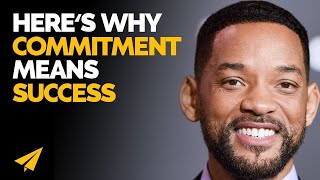
Evan Carmichael compiles 20 tips from Obama, Ayrton Senna, Ed Sheeran, CT Fletcher, and others on beating obstacles. The core message: commitment is everything. Sheeran pivoted his career, Bannatyne went from selling ice cream to building a fortune, and they all share one thing in common: they refused to make excuses.
Chapters
Commitment.
Commitment.
Commitment.
Commitment.
Commitment.
Commitment.
Hello, Believe Nation. Today we're going to talk about how you can commit to one thing fully, and that is success.
The road to success is through commitment and through the strength to drive through that commitment when it gets hard. And it is going to get hard, and you're going to want to quit sometimes, but it'll be colored by who you are. And more who you want to be. I definitely found that wanting to be an actor stems from wanting to be somebody and wanting to say something to people.
Commitment plays heavily in everything. If you've made a commitment, when you hit the rough spots— not if, when you hit the rough spots— your immediate thought is, how can I solve the problem? If you've not made the commitment, when you hit the rough spot, whether it's in marriage marriage or education or career or whatever, your first thought is, "Man, how can I get out of this deal?" And so that commitment plays a huge role. And as you know, some people are about as committed as a kamikaze pilot on his 39th mission. I mean, they don't really take it that seriously.
I think in order to be an artist, you have to be committed beyond reasonable doubt. If you're to be a writer, you have to be committed beyond reasonable doubt. That'll be the subtext to the subtitle to the talk today. Committed beyond a reasonable doubt. And I think that when you take the road less traveled, you have to have that commitment. And I think that, you know, people may go to some shows for a party. I think people come to our shows for something else entirely.
Motherfuck your excuses. Be committed. If you can't commit to this shit, fuck you. If you don't know what total commitment is, if you don't want it that bad yet, If you haven't made up in your mind yet enough that you're totally committed to let me kick your fucking ass, then stay at home. Do us both a motherfucking favor. Just stay your fucking ass at home, sitting on the couch, eating bonbon with your fucking little fuzzy little house shoes on. This is my job. This is what I like to do. This is what I do. I motivate motherfuckers who want to be motivated. You don't want to be motivated? Leave me the fuck alone.
I'd rather fucking die.
Die doing what I love to do than sitting at home talking about what I should be doing. Oh damn, one of these days I'm gonna get up and do this. Oh, I should go do that. You know, I will get up one of these days, I'm gonna go to the gym, I'm gonna work out. Fuck that. I would rather fucking die on the bench press or curling or squatting doing what I love to do than fucking talking about what I might do or what I should do. That's the difference between me and you. I'm a doer. You're a fucking talker.
I want to highlight two main problems with that old tired me-first approach to life. First of all, it distracts you from what's truly important, and it may lead you to compromise your values and your principles and your commitments. Think about it. It's in chasing titles and status, in worrying about the next election rather than the national interest and the interests of those who you're supposed to represent, that politicians so often lose their ways in Washington. They spend time thinking about polls, but not about principle. It was in pursuit of gaudy short-term profits and the bonuses that came with them It's no wonder that so many folks lost their way on Wall Street, engaging in extraordinary risks with other people's money. In contrast, the leaders we revere— the businesses and institutions that last— they are not generally the result of a narrow pursuit of popularity or personal advancement, but of devotion to some bigger purpose. Preservation of the union, or the determination to lift a country out of a depression. The creation of a quality product, a commitment to your customers, your workers, your shareholders, and your community. A commitment to make sure that an institution like ASU is inclusive and diverse and giving opportunity to all. That's the hallmark of real success.
Basically, I was an actor before I was a musician. Like, I was in— you look like an actor when you say that. Did you see that? You actually went, basically, I was an actor before I was a— that, that was my main thing. I loved acting. I was in loads of theater groups. I like did that at school all the time. And then I quickly realized, like, the weird thing is, like, I can show you in 30 seconds how talented I am with music, but I can't show you in 30 seconds how talented I'm acting. And I I realized, like, I can't actually have a successful acting career without having a good part first, and I just don't like auditions. So, um, yeah, for me, uh, I— that there was a point where I auditioned for this, uh, ITV show, and it was, uh, music and acting. And I thought, oh, this will be fun. And I got down to, like, the final 6, and I said to myself, if I get this, no more music, just acting. And if I don't, no more acting, just music. And I didn't and then just did music, and then it kind of all went well. But I've always wanted to act, but I didn't want to do something for the sake of it.
Ayrton, it has been a quite incredible season for you. You are the youngest ever 3 times world champion, 3 times in 4 years. I have to ask you on behalf of your despairing rivals, is your motivation still as high as ever?
I think so. I am, as you said, young and healthy. I am as Committed as ever to my passion, to our passion, and to my profession. And the main thing is to find ways time after time to stimulate myself in my own world, in my own funny ways. To dedicate a lot of my time and a lot of my thinking and keep up with the commitment that is quite high to continue to be successful.
If you think you can make a difference, it requires commitment. It requires a thick skin. It requires an inner compass that I would recommend it. You also, as a scientist, one would have to be able to explain things at any level and not sound like you're being condescending. That doesn't work. But having done that, some of the best scientists I know can explain the science truthfully and accurately at any level, from the deepest experts to people who are not really scientists or may not even have an interest in science, but to show them that, you know, why do we think what we think, how can that be useful to society.
I mean, to say this is your third book, I mean, the first one was Anyone Can Do It, the second one was Wake Up and Change Your Life, How to Be Smart with Your Money. It kind of makes it sound easy, but it's It's not that easy, is it? Or everyone would be doing it.
It is that easy. Everybody could do it. There's not many people who don't do it anyway. Anyone can go and start a business.
I mean, you know, a successful business.
Yeah, but you know, I was not educated. I left school at 15. I joined the Royal Navy. I got thrown out when I was 19 years old. I spent 6 months in clink. I spent a few days in Borrolinia later on, a few years later.
I couldn't get a job.
I started in business because I couldn't get a job. And I was 29 when I started. I know this at the age of 29, and I started business.
You see, I mean, your story is well documented, and you've, you know, summarized it very well there, and it fascinates me. I mean, basically up till 30, you were a bit of a bum, and I say that in the nicest possible way. We're both Scottish, I know what I mean. We know what we mean here. And then within 7 years, you were a multi-millionaire. What did you start doing differently? You must have started doing something differently.
Well, I started in business by selling ice cream, and then I bought the opposition van, and I bought a few more vans, and it went from there. And then I decided I was going to be in the nursing home business. I was going to buy a plot of land to build a brand new nursing home with single bedrooms. And so I sold everything. I sold my house, my color television, my ice cream business, my car, everything. I mortgaged a lot, borrowed money and credit cards. I knew when the nursing home was open, it'd be worth more than what it cost, and it was, and it paid off all my debts. That was it.
I still think something must have clicked in your head. Does it help having nothing to lose?
Yeah, absolutely.
Yeah, because you said, you know, you sold this, you sold that, and But if you've got a family already and you've got— and you're one of these people who's been brought up to scrimp and save and you've got lots of dependents, then you've got too much to lose to take the risk.
Yeah.
If you read the autobiographies of a lot of entrepreneurs, successful entrepreneurs, you'll see that most of them had no education, no best school, so they couldn't get jobs as accountants or bank managers on £300,000 a year, or bankers and things like that. So they had no choice. Either they start in business or they get a job sweeping the streets or ¡Gracias!
Thank you guys so much for watching. I hope you enjoyed. I'd love to know what you thought of the video. I'd love to know what your favorite clip is from the video. Leave it in the comments below and I will join in the discussion. I also wanted to give a quick shout out today to Lily Ma. Thank you so much, Lily. She's an instructor also at Toronto Dance Salsa. Lily bought 2 copies of my book. For your chance to get a shout out in a future video, make sure to pick up a copy and email in your receipt so we can keep track of you. Thank you guys so much for watching. Continue to believe, or whatever your one word is, and I'll see you soon.
More from Evan


How the Biggest Mistake in History Created A Trillion-Dollar Empire | Sergey Brin



9 Machiavelli Principles That Force People To Respect You | Machiavellian Philosophy



The First 10 Words That Instantly Ruin A Sales Conversation | Vanessa Van Edwards

The Top 1% Mindset Behind The First $5 Trillion Company | Jensen Huang (Nvidia)

