HOW TO BECOME A WRITER – J.K. Rowling & Stephen King's BEST Advice!
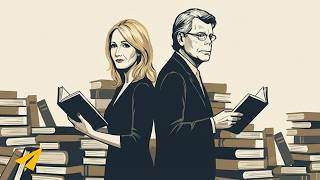
Stephen King, J.K. Rowling, Paulo Coelho, and others share how to become a writer. King says read constantly and write through the rubbish phase. James Altucher argues self-publishing beats traditional gatekeepers. Neil Gaiman: ideas come from daydreaming and paying attention to ordinary things.
Chapters
Hello, Believe Nation. I started the Making It series to try to look at people who've had a lot of success in a particular field or industry and try to learn from them so that if you have the same aspirations, the same goals to be successful in that market, you will be able to learn from some of the best. So today we're gonna learn about making it as a writer. Tip number 10 is my personal favorite, and make sure to stick around all the way to the end for some special bonus clips. And as always, if you hear something that is motivational, inspirational, leaves an impact on you, please leave it in the comments below and put quotes around it so other people can enjoy as well.
I often get asked by, by, um, younger readers what I would advise if you want to be a writer. This is the way I did it, so that's the only advice I can give. You've got to read as much as you possibly can, because that's the best way to recognize good writing and to learn what makes bad writing, and those are very good things. You'll probably go through a phase where you imitate your favorite writers. That's perfectly okay. That's another learning process. You resign yourself to writing lots and lots of rubbish. You've just got to write that out of your system, and sooner or later you'll hit what, you know, you really should be doing and what is your genre. And perseverance. You've got to persevere, 'cause it is a career with a lot of knockbacks, but the rewards are huge. I don't mean in the sense that if that's what you really want to do, to be able to do it lifelong is the best thing in the world. Very rewarding. But it's not a career for people who are easily discouraged, that's for sure. And to their parents, don't tell them it's unrealistic. Never, never say that. Because even if they're not published writing— well, writing is the passion of my life, so It's an important thing to do.
The best description of writing a novel that I ever heard is actually in Thomas Williams' book The Hare of Harold Rue, which is about a novelist trying to write a novel, and it just covers like 1 or 2 days in this process, and a lot of things happen to him. It's a fabulous book. But he says that writing a novel is like building a little campfire on an empty, dark plain, and one by one these characters come out of the dark and each one has a little pile of wood and they put it on the fire. And if you're very lucky, before the fire goes out, it's this big bonfire and all the characters stand around it and warm themselves. And that's the way it's always been for me. I have a good friend over in Vermont, uh, John Irving, and John says that He always begins a novel by writing the last line. And to me, that's like eating your dessert before you eat the meal. And I don't— everybody works a different way, and God bless John, and he's done some wonderful work in his lifetime, and he'll probably do some more, but I could never write a book that way. The way that I think of it, you know, is that fire. I love that particular image, but I've also always thought of it in terms of there's a little thread a little red thread that goes into a hole in the baseboard and you just start to pull it out and you see what's on the other end of it and sooner or later you get there. For me, the fun of writing novels isn't in the finished product, which I don't care about that much. There's a guy who's looking at my shelf over there, all the books are on the shelf and to me those are like dead skin, the things that are done. But I love the process.
My personal legend was always to be a writer, and finding your personal legend does not mean fulfilling your personal legend because being a writer means writing books. I cannot just sit and say, "Okay, I'm a writer." So you write your first book. It may or not be successful. Then there's the next one. There is a third one. All of a sudden you realize that, yeah, your books are doing very well and you fear success. You have this moment that you think, "Oh my God, should I write the next book? Do I need to be judged again by the critics, etc.?" And then you realize that your personal legend is about moving on. Go, if you had a dream of becoming a writer, write books. Don't be paralyzed by either success or failure. I'm in the process, I'm on the journey of my personal legend, not to fulfill it, but to live it as full, as intensely as I can.
My strategy has always been you can't— you have to very consciously differentiate yourself from where you think your professional peer group is going. So to the extent that people are— to the extent that people migrate to things that are accessible online, I feel I should migrate to things that are inaccessible online. So the value— or to the extent that people stop reading books and read, I feel I need to read more books. So what I've been trying to do is to kind of— it's why I spend a lot of time in actual physical libraries reading things in hard copy, because there is a kind of a serendipity that you get when you— this is not in any way meant as a criticism, by the way, of search engines, for example, which are incredibly useful. But they also have limitations. They reward a certain kind of serendipity, and they punish another kind of serendipity. And if you really want to— if you're interested in serendipitous learning, as I am— much of what I uncover is uncovered serendipitously— you have to be a student of all of the different mechanisms of chance encounters with the unusual and the insightful. And so that means that not only do I spend a lot of time screwing around online on databases, but I also very, very consciously make sure that I go to physical libraries and walk through the stacks. And even something as simple as you're interested in one book, and then you go and you just look at all of the books that surround it. And the connections are not always— the connections are— there are connections between them, but it's a different kind of connection than they would be connected online. It's not a keyword connection. It's a thematic connection, or it's a— so there's all these sorts of— you have to be a student of these kinds of the different ways in which ideas cluster. And so that— and I've thought a lot about that in recent years as a way of distinguishing myself from— other journalists.
I had done the Fantastic Four and the X-Men, and my publisher said, "Hey, they're doing well, do another one." So I came up with Spider-Man, and I said to him, "I got this great idea, I want to call him Spider-Man and he's a teenager." So I gave him the idea and he said, "Stan, that is the worst idea I have ever heard." He said, "First of all, people hate spiders. You can't call a hero Spider-Man." Secondly, he said, "He can't be a teenager. Teenagers are only sidekicks." And finally, "He can't have personal problems. Don't you know what a superhero is?" So he wouldn't let me do it. One day we had a book we were gonna kill called Amazing Fantasy. When you're gonna do the last issue, nobody cares what you put in it. Just to get it out of my system, I put Spider-Man in the book and we sold it. And it was a bestseller. So my publisher called me in a couple weeks later, he said, "Stan, you remember that book Amazing Fantasy?" that character Spider-Man that you and I liked so much, why don't you do a series of it? And that's how Spidey was born.
With creativity, even my failures, the stakes are so low, you know? I mean, this is the thing that I'm always trying to tell people about artistic endeavor. The stakes are so low. The stakes are so low. Like, very rarely is somebody going to die or have their heart broken or have their life upturned because a poem that you wrote didn't work, you know, or an essay that you tried to write didn't work. If I write a book and people don't like it, they're not gonna come to my house and shoot me. You know what I mean?
I mean, it's—
I'm exaggerating, but it's— I think sometimes we, in the realm of creativity, blow the stakes up to something so much higher than they possibly are. I've heard a lot of comics say that the fantastic thing about doing stand-up, which I think is the scariest of all art forms, is to bomb and then to walk off stage and you're like, "Oh, oh, that didn't work and I'm still here. That's amazing. The worst possible thing that could happen happened and nothing happened. I'm still intact. I'm still in one piece." So my creative failures have that feeling to them where it's like, "Wow, that totally didn't work and I'm totally fine." We're all gonna live. It's totally fine.
First, even though I'm not a fiction writer at this point, who knows, maybe I'll try that and make a mess of things, but Bird by Bird, for all the psychological trials and tribulations, Bird by Bird is the book that I read when I feel like I'm going into the abyss or having a complete meltdown. It's a wonderful book for getting out of that. But I also would say, like, when you're stuck, when you're not sure what to write, tell a story. So like show— don't describe it, show it. So if you're like, "Oh, how should I describe this point? Do this, do that, like bullet point this, bullet point that." Give an example. Give a story.
So what's an example of how you did that in The 4-Hour Workweek?
Well, anytime I hit a sticking point, which was very, very, very often, I would There were a couple of things that I would ask myself. Whose story can I tell? Who embodies this point or this principle? I mean, Jack obviously is a master of this style of storytelling. Secondly, Po Bronson is a great writer and has written many, many good books. At one point I heard him on a panel and somebody in the crowd asked him about writer's block and he said, "Well, when I get writer's block—" I think about what makes me really, really angry, and I write about that. It's actually fantastic advice. If you write about what most frustrates you, why it frustrates you, and then what you did about it, you usually come up with something good. I would also emphasize— sorry, I have a lot of thoughts on this— but the book is the most important thing. You need to bake the product, the marketing, into a good book. For me, that is almost all of it, and then the rest, a lot of it takes care of itself. What I would say is make your quota really small. So 2 crappy pages a day, that's your quota. For me, that's the only way I can slog through a book. 2 crappy pages a day. This idea of 2 is— I think we're hitting the number 2. Yeah, all right. I cannot think of a book or I'll just want to cry into my pillow and go to sleep. I can't do it.
For many years before I wrote The Power of Now and it became successful, I was basically a failure. In the eyes of the world. So he's already almost 50, and what has he achieved? My mom said, "You have thrown away your life. You had so many possibilities in your life. You walked out of graduate school in Cambridge. Why did you walk out of there?" My mom and many other people said, "This person has failed in life. He has no job, he has no insurance policy, No policies, nothing, no pension plan, just almost nothing in the bank, failure. And then a few years later, people bought "The Power of Now" and became a bestseller, oh, a big success. Okay, if I had derived my identity at that time from what the world was telling me or my mind would have told me If I had been listening to my mind, I would have been very unhappy and I didn't, so I was fine because my identity wasn't derived from that anymore. And fortunately, even when in the eyes of the world I suddenly became a success, I don't want to derive my identity from that. It's a cheap substitute for who I really am, so I'm not I don't see, I don't derive, but the satisfaction that comes is the satisfaction that the work that's happening, the teaching that's happening is transforming people's lives. That's very satisfying. I don't get any personal satisfaction though because it's not, I don't feel it as this separate me produced it.
[Speaker:EVAN CARMICHAEL] I want you to get over this notion that I find so annoying that so many people have, that success and power in life is dependent on something like genetics. Like, some people are born with a larger brain, or they have wealthy parents who are able to send them to the right school, or, or it's all a matter of luck. What really makes people successful and powerful in life— and it's not just me saying this, I read hundreds of books on the subject— what makes people successful is their degree of motivation. I could repeat it 100 times, but it's true every time I say it. When you are motivated, when you feel yourself emotionally engaged in the subject, you learn faster. You learn what could take somebody 10 years to learn, you can learn in 2 years. When you feel emotionally engaged with something, you're able to push past all the obstacles. The sense that it's genetics or the size of our brain or our parents' money— you can't control any of that, obviously, and they can become kind of crutches for some people. But the amount of motivation you feel, the emotional connection you have to what you're studying or doing, that is something within within your control, that is something you can choose to take. And it is— you're going to find people giving you all kinds of great advice about your careers, about where you should go, you know, for your MBA, et cetera. But if there's one piece of advice that I think is more important than that, it is this idea of following these natural inclinations and creating your own career path and finding a way to engage the deepest motivating parts of of your psyche.
If you're feeling particularly at a creative low point, where do you get your inspiration from to come up with such amazing tales and amazing subject matter to write your stories about?
Um, what you've actually done there is ask the question that must not be asked of writers. You've rephrased it ever so slightly, but what you've fundamentally done is say, where do you get your ideas? Writers are awful to people who ask us where we get the ideas. We get mean. We don't just get mean, we get mean in a writer-y way, which means we'll make fun of you. And we do that.
I'm not afraid.
And the reason we do that is because we don't really know. And we're terrified the ideas will go away. So every writer I know has a funny answer, and, you know, Harlan Ellison used to say that he got them from a little idea shop in Schenectady. I knew a writer who, when asked, would say he gets them from the Idea of the Month Club, and people go, "Really?" He goes, "Oh yeah, every month they send you an idea." The truth is, I think For me, inspiration comes from a bunch of places. Desperation, deadlines. A lot of times ideas will turn up while you're doing something else. And most of all, I think ideas come from confluence. They come from two things flowing together. They come from essentially from daydreaming. It's that point, and I suspect it's something that every human being does. Writers tend to train themselves to notice when they've had an idea. It's not that they have any more ideas or get inspired more than anything else. We just notice. When it happens a little bit more. But you're just thinking, you go, "Well, you know, everybody knows that if you get bitten by a werewolf when the moon is full, you will turn into a wolf. You know that?" There's that moment where you're sitting thinking, So what happens if a werewolf bites a goldfish? And— or that moment where you start thinking, "Well, actually, what happens if a werewolf sinks its fangs into a chair?" And what if you're sitting in that chair and the moonlight touches it and slowly it starts feeling more and more wolfish, and then it growls, and, and, you know, and then what about the— oh my God, then, then you'd have to set it in the winter because you'd need the snow for people to try and figure out why you've got chair leg marks in the snow by the body that's had its throat ripped out, and suddenly you have a story. So that's So a lot of it is daydreaming. I wish there was something— I always feel I'm in some ways disappointing people when they ask, "Where do you get your inspiration?" Because what they really always want is the answer. They want you to be able to say, "Well, what you do is 11:58 at night—" You go down to the cellar, you roll the goat bones, there'll be a banging on the door, it will open, this thing will fly in, it will explode, you'll have a, a, something like a chocolate, you eat it, you have an idea. I don't know, you make them up out of your head.
Thank you guys so much for watching. I'd love to know what did you think of the video? Do you like this series, this Making It series? Should we continue it? Is there another field that we should do next? I'd love to get your feedback. And from this video in particular, which clip did you love the most, that resonate with you the most? What did you take from it that you're gonna apply to your business, to your life somehow? Leave all of that in the comments below. I'm gonna join in the discussion. Thank you again for watching. I believe in you. I hope you continue to believe in yourself and whatever your one word is. Much love. I'll see you soon.
I'm a firm believer that everyone should write and self-publish their own books. And there are many reasons. I'll give a few of the reasons. First off, I've written 18 books. I published with traditional publishers on 6 or 7 of them, and I published, self-published through Amazon, uh, the rest, about 12 of them, 11 or 12 of them. My self-published books have made me a lot more money than my traditionally published books. Why is that? For one thing, I can write and upload them much more quickly. When you work with a traditional publisher, takes a year and a half from beginning to end to write and publish your book. But I can write a book, you know, over the next few months, upload it to Amazon, and once you upload it to Amazon, it's published. And then you get 70% of the revenues as opposed to, let's say, 10 to 12% of the revenues with a traditional publisher. So just in general, you make more money with a self-published book. And by the way, one of my books, Choose Yourself, which I encourage you to read, self-promoting here, but Choose Yourself probably has sold and made me more money than all of my other books combined, and that was a self-published book. The other thing is, for finally in our society, the gatekeepers are going away, and I think the publishing industry is the best example of that. I mean, I've been writing and trying to publish books since probably the mid-'90s, and I wasn't very good at first. I published my first book with a traditional publisher in 2004, and then I started self-publishing when the stigma started to remove itself from self-publishing around, let's say, 2009 and 2010, around the same time that Amazon launched their self-publishing program. And by the way, I have nothing to do with Amazon. I'm not trying to sell any self-publishing services, but I just love this so much, and I love writing, and I also think now's the first time in history that you can publish a book and actually, you know, not— you don't have to wait for some publishing company to say yes or no to you. Which publishing companies have many reasons why they say no. Very few of those reasons have anything to do with the quality of your writing or what you're saying. So by all means, if you have something to say, a story to tell, values you want to express, then write a book and self-publish it. All it takes is writing the book, of course, and hopefully you write a good book, making the COVID getting the book edited, and then you upload to Amazon and it's done. What's another reason why you might want to self-publish? Well, for better or for worse, it's one thing if you have a business card to show people, but if you hand people, oh, and here's my book on the topic, people are going to say, oh my gosh, this guy sat down and wrote an entire book on this topic. That's incredible. So it gives you this air of more validity, more legitimacy, and that can lead to speaking engagements, consulting, other opportunities, other career opportunities. I can tell you it's led to all these things for me. It can lead to other books that you might want to write on the topic once you see how readers respond to you. I also want to add, a lot of books and stories that went on to become— so I've been talking about nonfiction primarily, but a lot of books and stories that have been very successful in the fiction world started out as self-published books. The Martian, it's an Oscar-nominated movie, and originally Andy Weir, the author, who's been on my podcast, he self-published it. And then I forgot which publisher picked it up, but then it became picked up by a major publisher, but only after he had sold several hundred thousand copies of it while self-published. Another example, Whether you like the book or not, it was one of the most successful books in the past 50 years. Fifty Shades of Grey was originally a self-published book. Uh, after it sold several hundred thousand copies, I think Random House picked it up and it became published. A lot of books that you read now that are very important for entrepreneurs or personal improvement and personal development originally started as self-published books or still are self-published books. Many successful authors have moved into the self-publishing arena because they get to be in charge now of marketing, they get to be in charge of design, packaging, they get to be in charge of how they price the book, they have more control over when the book's released. So a lot of professional authors have moved from mainstream publishing to self-publishing just because they're simp— it's easier and they're more successful at it and they make more money at it. So again, If you have something to say, and for me, I've always wanted to write and publish a book, but many people have, and sometimes it's not always the most commercial thing, so publishers are not going to agree to it, but by all means, self-publish. Now you have it in your hand, you can hand it to business associates, you can hand it to friends, you can share it with your family, and who knows, it might become a huge bestselling book as well, which we've seen in many cases. So by all means, Finally, the opportunity is here to self-publish. I write a lot about this. Please check out what I've written about. Please check out my podcast on the topic. I have no, I'm not trying to sell you anything with this. I have no affiliation with Amazon or any self-publisher, but I know it's worked for me and I really wanna share this success with you guys.
Every pursuit, no matter how glamorous it may seem, no matter how exciting you are, it feels to you, no matter how much you feel like you were born to do it, comes with a shit sandwich. And so the question is not, "What do I love?" The question is, "What do I love so much that I don't mind eating the shit sandwich that comes along with that thing?" So for me in my life, writing is the thing that I love, and the shit sandwich was the 7 years that I was not getting published and that I was coming home from my job as a diner waitress, as a bartender, as an au pair, as somebody who worked in flea markets, as a cook, and I was coming home tired and smelling like other people's french fries. And sitting down and doing my real job, which was to write, and then to go to the mailbox the next day and get another rejection letter, and then say, "Do I still wanna do this? 'Cause this shit sandwich sucks." Like, "Am I ready to take another bite?" You know? And I did still wanna do it. And now even as somebody who makes their living as a writer, there's no end to the shit sandwiches. It's like, "Oh, hello, horrible review in prominent newspaper. That's your shit sandwich today, Liz. You still wanna do this work?" Yep. Yeah, I still do. Still worth it. Like, hello, awful comment on social media from somebody who thinks you're a pile of dog shit, you know, and just has, like, chosen every possible way that they can just cannot get it out of their system fast enough how much disregard they have for your entire life. Still wanna do this thing? Yeah, I still wanna do it. You know, so that's the question because if the first time you encounter the shit sandwich you're like, well, this— this isn't worth it, then that's not the thing you're supposed to be doing. Yes. And there are plenty of things in life that I have run into the shit sandwich and I've been like, "So not worth it. So not worth it. Like, this is not— I don't wanna do this. Like, whatever the alleged benefits of this thing might be, no." Not down for this. SoulCycle, no. You know? Like, I know it's probably really good for me, but I feel like throwing up right now because this is too hard. I'm out. You'll not be seeing me here again. You know, like, and I love my sisters at SoulCycle, I just don't like feeling like I'm gonna throw up when I exercise. So it's not for me. You know?
And so that's the question.
So if you go into this thing thinking, "If I follow my bliss and I live my dream and I stand in my truth, then everything will be great," it doesn't mean everything will be great. It just means at the end of the day when you check in with yourself and you go, "Am in the end, on the balance, is this still better than not doing it? And the answer is still, yeah, this thing is still better than not doing it, then you're on the right path.
When you start out on a career in the arts, you have no idea what you're doing. This is great. People who know what they're doing know the rules, and they know what is possible and what is impossible. You do not. And you should not. The rules on what is possible and impossible in the arts were made by people who had not tested the bounds of the possible by going beyond them. And you can. If you don't know it's impossible, it's easier to do. And because nobody's done it before, they haven't made up rules to stop anyone doing that particular thing again.
More from Evan


How the Biggest Mistake in History Created A Trillion-Dollar Empire | Sergey Brin



9 Machiavelli Principles That Force People To Respect You | Machiavellian Philosophy



The First 10 Words That Instantly Ruin A Sales Conversation | Vanessa Van Edwards

The Top 1% Mindset Behind The First $5 Trillion Company | Jensen Huang (Nvidia)

