How to Build a Dream With No Money, No Help & No Plan B | Ed Sheeran Story in 57 Minutes
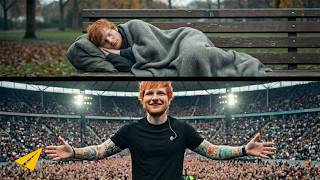
Ed Sheeran built his music career with almost nothing: no money, no connections, no backup plan. The story of how he went from broke and unknown to one of the world's biggest artists in 57 minutes.
Chapters
Ed Sheeran had no record deal, no money, and no backup plan. He played on the streets, in tiny pubs, even on the subway, and some nights he had nowhere to sleep but a train station. But he refused to quit. Now he's one of the biggest artists in the world. Growing up, Ed was bullied for his stutter, his red hair, and his thick glasses. He didn't fit in. Music became his escape. At 16, he dropped out of school, packed his guitar, and moved to London alone. No money, no record deal, no safety net— just a dream. Every night he played tiny pubs, street corners, and open mics, sometimes to only 3 people in the audience. When the gigs paid nothing, he slept on sofas, on trains, even outside Buckingham Palace. Some nights he played his heart out and still went to bed hungry. Record labels ignored him. People told him to quit. But he kept writing, kept performing, kept believing. Then in 2010, Everything changed. He took a one-way ticket to LA, played an open mic, and Jamie Foxx saw his talent, inviting him to record in his studio and sleep at his house. That moment led to his big break. His independent music blew up online. Soon he signed a record deal, dropped Plus, and the world finally saw what he always believed. He was meant for this. Now, 100 million records sold, Grammy Awards, stadiums packed worldwide. Ed had no money, no support, no excuses, just belief, hustle, and a guitar. What about you? Are you making excuses or making it happen? If you've been here before, drop a hashtag #believe in the comments below so I can feature you here in a future video. And if you're new, welcome to Believe Nation, the only channel that helps you believe in yourself daily, one video at a time. Believe. A rough start, bullied and different. Ed Sheeran grew up feeling like an outsider. He was a shy, weird kid with thick glasses, bright red hair, and a bad stutter. Classmates picked on him relentlessly for how he talked, how he looked, everything. He once said, I wore big glasses, had hearing problems, had a stutter, and I had ginger hair. Not exactly a recipe for popularity at school. To escape the bullying, young Ed found solace in music. He started singing in the church choir at just 4 years old and learned guitar by 11. In his early teens, music had become his safe space, a place to express himself when words failed. In fact, music literally helped cure Ed's stutter. At age 9, he memorized Eminem's fast rap album, The Marshall Mathers LP front to back, and rapping along helped him stop stuttering. The very things that made him different—his voice, his creativity, his quirks—would one day become his superpowers. But back then, Edges knew that music was his passion. He wrote songs in high school and performed wherever he could. At 11, he nervously played his first real gig, singing Eric Clapton's Layla at a youth show. That little taste at performing lit a fire inside him. He didn't fit in at school, but But on stage with a guitar, Ed felt at home. He dreamed of making it big as a musician, even when almost no one else believed in him. No Plan B, All In on a Dream. At 16, Ed made a bold decision that shaped his future. He dropped out of school and moved to London alone to pursue music full-time. No college, no day job, just gig after gig in the big city. This is a huge leap of faith for him. He had no record deal, no connections, no safety net to catch him if he fell. But that was exactly how Ed wanted it. He never had a Plan B. In his mind, if you have a backup plan, you'll use it when things get tough. So he didn't give himself that option. There's no Plan B, this has to work, was his mindset. By removing the safety net, Ed forced himself to give 100% to Plan A: making it in music. It was a do-or-die gamble on himself. Now, London was intimidating for a teenager from a small town. Ed arrived with basically nothing, just his guitar, a few songs, and a head full of dreams. He crashed on couches of any friends or acquaintances who'd have him. And when he ran out of couches, he got creative. He knew which late-night subway lines he could ride to stay warm until morning, and he discovered an archway near Buckingham Palace with a warm air vent where he could curl up for a night. He later admitted he was technically homeless for about 2 and a half years, from 2008 through 2010. But Ed tried not to see it that way. He was just home less than I'd like to be, as he wrote in one song. He kept reminding himself that it was all temporary. A part of the journey. Now, during this period, Ed had to grow up fast. By day, he would scribble lyrics in his notebook or record rough demos, and by night, he'd haul his little acoustic guitar to any pub, club, or street corner that would let him play. He often performed multiple gigs a day, hustling across London with his guitar on his back. The audiences were usually pretty tiny, sometimes just a handful of indifferent drinkers in a pub or a few passersby on the street. Once, Ed played an open mic where literally only one person was in the crowd, but he played his heart out for that one person as if it was a packed arena. And and every single day was an opportunity to get better. Rejection? He faced it constantly. Most record labels and industry people completely ignored him in those early days. Now, many artists would have gotten discouraged, but Ed used that as motivation to improve. He set crazy work goals for himself. So for example, in 2009, he played over 300 live shows. Almost every day of the year he did a gig. He read that singer James Morrison got a record deal after doing 200 shows in a year, so Ed thought I'll do 300. No was not an acceptable answer. He was determined to outwork everyone. Practice makes progress, and Ed was essentially living the 10,000-hour rule, performing nonstop to hone his craft. My songs are terrible, but I got it out of me. The more you write, the better they'll get, Ed has said, comparing songwriting to letting dirty water flow from a faucet until it runs clear. Every rough gig and every bad song he wrote was bringing him closer to the hit songs that were inside of him. Also, if you wanna take real action after this video, I made a free worksheet just for you. It covers the top lessons from today, gives you space to write your biggest takeaways, and helps you build a simple action plan. It's 100% free. Just click the link in the description below to go grab it. I'll see you there. Playing for peanuts, gigs, grit, and growth. So Ed's life in his late teens was anything but glamorous. He'd lug his gear to open mics where he might get paid in beer or not paid at all. He slept on floors and sofas of kind strangers or fellow musicians when he could. But when he couldn't, it was the train or the outdoors. He went without regular meals or showers. I didn't have the best personal hygiene at that point, he admitted, because it was basically play, sweat, crash, and repeat each day. Yet through all this, Ed never saw himself as a failure. He truly believed he was paying his dues and that his big break would come if he just kept going. And importantly, Ed kept writing new music constantly. In between gigs, he recorded homemade EPs and sold them independently. He wasn't waiting for record label to hand him an opportunity, he was creating his own. And in 2010, he released an EP called Loose Change, which featured a song, The A-Team, that he wrote after performing at a homeless shelter. He had been struck by the struggles of a young woman that he met there. Ed would later say that many of his first performances were at homeless shelters, and those experiences inspired some of his most heartfelt songs. Even as he was living through his own hardships, Ed was turning pain into art. Storytelling and empathy became part of his signature songwriting. Qualities that would set him apart from the pack. Slowly but surely, Ed Sheeran was improving. His vocals got stronger, his guitar skills sharper, and his stage presence a little more confident. He was also developing a unique style, using a loop pedal to layer his voice and guitar live, effectively becoming a one-man band. So crowds of 5 turned into 10, then 50. He built a tiny fan base, listener by listener. These few fans were fiercely supportive, buying his self-made CDs and spreading the word about this red-haired kid who could sing and rap and hold audiences spellbound with just an acoustic guitar. Ed's hustle was beginning to pay off in little ways, but the big breakthrough still felt elusive and far away. By the end of 2010, after years of grinding, he was still an unsigned artist living on scraps. Most people, they would have given up. Ed almost did, but he didn't. The turning point: one shot in LA. So in early 2010, frustrated with his stagnation in England, Ed took a huge risk. He spent basically the last of his savings on a one-way ticket to Los Angeles. It sounds crazy. He had no contacts in L.A., no shows booked, nothing. But Ed had heard that open mic nights in L.A. could lead to big opportunities. So he went entirely alone, sleeping on couches in L.A., just like he had in London. Night after night, he lugged his trusty guitar to any club or cafe that held an open mic, signing up to perform among dozens of other hopefuls. He was just another unknown ginger-haired kid strumming for a distracted crowd. Until one fateful night. That night, Ed played at a popular open mic event in the city. Little did he know Hollywood actor and music lover Jamie Foxx was in the audience. Jamie Foxx had a keen eye and ear for talent, and Ed's raw musical fire caught his attention immediately. He was this pale British kid pouring his soul into original songs, rapping and singing with incredible skill. After Ed's set, Jamie Foxx approached him. Imagine Ed's shock. Foxx invited Ed to his radio show, The Foxxhole, and had him perform live on air. which introduced Ed to a whole new audience. Even more amazingly, Jamie Foxx was so impressed that he offered Ed the use of his personal recording studio to cut some tracks and let Ed crash at his house during that time. For the first time, someone with industry clout was saying, you've got this, let me help you. Ed's long night of struggle was finally seeing a dawn. Ed returned to London with renewed confidence and a small but crucial foothold in the industry. In January 2011, he independently released one more EP, Number 5 Collaborations Project, featuring guest spots from underground rappers that he admired. To everyone's surprise, that EP blew up online. It reached number 2 on the iTunes chart with no label backing at all, selling thousands of copies in its first week. The music industry took notice, big notice. Ed had built a following on his own, and now the labels were calling him. And in a poetic twist, after years of rejection, Ed Sheeran suddenly had a bidding war on his hands. He signed a record deal with Atlantic Records in 2011. The scrappy kid who had been ignored by every label finally had the machine behind him to amplify what he'd been doing doing all along. Ed was ready for the world, and now the world was ready for Ed. Breakout success. The world listens. Ed wasted no time. In September 2011, at age 20, he released his debut studio album, Plus, under a major label. It was an album full of songs reflecting his journey—heartfelt ballads, up-tempo tracks blending pop, folk, and hip-hop influences. The lead single, The A-Team, a gentle song about a homeless girl's struggle, showcased Ed's songwriting and soulful voice. It struck a chord globally. The 18 became a top 10 hit in many countries and earned Ed his first Grammy nomination for Song of the Year. Not bad for a song he wrote while couch surfing. The Plus album itself shot to number 1 in the UK and broke into the top 5 in the US, eventually selling millions of copies. Songs like Lego House and Gimme Love turned casual listeners into diehard fans. After so many years of playing for tiny crowds, Ed suddenly found thousands of people singing along to his lyrics. He had gone from sleeping outside Buckingham Palace to performing for the Queen of England, literally. In 2012, Ed was invited to perform at the Queen's Diamond Jubilee concert. And at the 2013 Grammy Awards, Elton John, one of Ed's early heroes, joined him on stage to duet "The A-Team" in front of a worldwide audience. Try to picture that moment. Out from Ed's eyes. Just 2 years prior, he was unknown and unsigned, and now he's trading lines with Sir Elton John at the Grammys. It was a powerful validation that all those lonely nights and all those gritty days, they'd been worth it. But Ed was just getting started. Instead of resting after his first taste of success, he worked even harder. In 2012 to 2013, he toured constantly, including getting coveted spots as the opening act for Taylor Swift's Arena Tour. Night after night, Ed walked on stage with just his guitar in front of massive crowds who mostly didn't know him, and by the end of his set, he had won them over completely. He built his audience the same way he did in pubs, only now on a bigger scale. In 2014, Ed released his second album, Multiply, which exploded even bigger. It featured Thinking Out Loud, the love ballad that earned him 2 Grammy Awards and became a wedding playlist staple worldwide. By the mid-2010s, Ed Sheeran was a bona fide superstar, selling out arenas and stadiums everywhere that he went. Ed's third album, Divide, in 2017 broke streaming records and led to the highest-grossing concert tour of all time. Think about that. The kid who played 300 small gigs in a year ended up staging a single tour that sold over 8 million tickets and earned more money than any tour in history. He was selling out London's Wembley Stadium for 3 nights in a row, the very same city where he once slept on the Circle Line train because he had nowhere else to go. Ed had transformed every setback into a stepping stone forward, and as he puts But I have come out the other end and blossomed. Lessons from Ed's journey: grit, heart, and belief. So Ed Sheeran's rise from struggling busker to global icon is more than just a music success. It's a lesson that we can all learn from. He wasn't handed anything on a silver platter. He wasn't an overnight sensation. He was an over-a-decade sensation. His story proves that hard work beats talent when talent doesn't work hard. And research actually shows that What we accomplish depends more on our passion and perseverance than about our innate talent for that thing. Passion and perseverance. Ed had both in abundance. He poured thousands of hours into writing songs, performing nonstop to empty rooms, and improving his craft. And every time life said no, Ed's answer was, try me tomorrow. So what kept him going? First, love of the craft, right? Ed genuinely loves making music, and that sustained him more than fame or money ever could. A second, it was his belief. Like he had a belief that he was meant to do this. Even when others doubted him, and many people did, Ed believed in his own vision. He turned insults and rejections into motivation. Remember how he was bullied as a kid? He took that pain and vowed to succeed in his own way. He once advised, embrace your quirks. The moment you stop trying to fit in, things will fit around you. So being yourself is your greatest strength. Ed's weirdness became his uniqueness. The very traits that bullies mocked him for, his voice, his appearance, his emotional openness, became what millions of fans now we now adore about him. Ed's journey also shows just the power of being resilient. He faced homelessness and hunger and loneliness and industry rejection for years. Any one of those could make people give up, but Ed kept writing another song, kept booking another gig, kept knocking on the next door. Psychologists have a word for this kind of perseverance: grit. And Ed's grit was off the charts. He didn't wait for opportunities, he created them, whether by playing 300 shows in a year or flying to LA on a whim to play open likes. He trusted the process. And most importantly, Ed never made excuses for why he couldn't succeed. He could have blamed the bullies or his lack of money or the record labels that all turned him down. Instead, he focused on what he could control: writing better songs, performing better on stage, and working harder than anyone else. No money? He played on street corners. No stage? He built his own audience online. No support? He leaned on his own drive. Ed once said in an interview that having a Plan B can hold you back, because if you have an escape root. You'll take it when things get tough. So he made music his only plan. It was a risky strategy, but that focus helped turn his dream into reality. And look at him now. Ed Sheeran's success isn't just measured in album sales or awards. It's in the millions of lives that he's touched with his music and his story. So he's proof that you can start with nothing but a dream and end up living that dream, as long as you're willing to work for it and believe in it. His journey from sleeping in subway stations to performing on the world's biggest stages inspires entrepreneurs, artists, or really anyone with a big goal. So the takeaway: if you want something badly enough, put in the work and never quit. As Ed's story shows, perseverance and passion are a winning combination. Make it happen. Your turn. Ed Sheeran had no money, no privilege, no secret shortcut to success. What he had was his hustle, his heart, and his belief. He made his own opportunities through through just sheer effort and refused to let his circumstances define him. So now what about you? Think of your own dreams while you consider Ed's journey. Are you making excuses? Are you making it happen? And the next time you're feeling discouraged or thinking about giving up, remember Ed Sheeran, busking for coins in the cold, sleeping on a train, hearing no 100 times. And remember how he kept going. That persistence built the foundation of an empire, and your persistence can do the same for your dream. And congratulations, you're one video closer to who you're meant to be. Believe. Now let's learn from the 9 celebrities like Lady Gaga who risked it all to chase their dream. Nobody ever achieved their dreams by playing it safe. I've seen it again and again. The people who reach the top are the ones who are willing to leap when everyone else clung to the edge. If you never dare to pursue what you love, you'll spend the rest of your life haunted by regret, knowing you let fear stop you from becoming the person you were meant to be. Lady Gaga was no overnight sensation. She bet everything on herself long before the world knew her name. At 19, she dropped out of a top university to chase a music career, working 3-day jobs just to survive. Soon, her gamble seemed to pay off. She landed a record deal, but 3 months later, the label dropped her. Gaga was devastated. That Christmas, she moved back into her childhood home in tears. Everything in her screamed that she'd failed. But instead of giving up, she doubled down on her dream. She hit the grimy New York clubs and burlesque shows that finally let her unleash her authentic self. There, amid the dive bars and drag queens, she honed the fearless persona that we now know. And it was in one of those clubs that she got her next big break. R&B star Akon saw her perform and signed her to an Interscope imprint. By 2008, Lady Gaga's His debut album was a global smash, and the world recognized a star had been born. But remember this: when she was dropped by that first label, Gaga felt the same crushing doubt you feel when your dreams get rejected. She faced the same pressure to quit that you might be facing right now. The only difference is she didn't quit. She felt the fear and kept going anyway, and that made all the difference. When I was 19, I had to make the hard decision of my life. I had dream job offers waiting, jobs I'd wanted all through college, and I turned them all down. Instead, I agreed to take 30% of a struggling startup and pay myself just $300 a month. I was supposed to be a banker, not an entrepreneur living on ramen and hope. I was terrified, but I said yes to the startup, and it absolutely did not go as planned. We sucked at the start. We failed over and over, and those failures drove me into the lowest point of my life. After continuing to look at my empty bank account, I finally broke. One day I told my business partner, I'm done. I quit. I felt like I'd wasted a year of my life and had nothing to show but fear and shame. The next night was the worst of my life, but the next morning, something in me flipped. I realized I could handle failing, but I could not handle giving up on my dream. If I quit now, I'd always wonder what might have been. So I decided to give it one more shot, but this time I'd try something different. I read how Bill Gates made his first million and discovered his strategy of partnering to sell software. So why not model it? I thought. I went back to my partner. Yes, after quitting the day before, and we refocused our approach. I started reaching out to potential partners, trying to sell through them instead of all alone. And within a few weeks, I closed my first major deal. Everything began to turn around. That tiny company I had joined at $300 a month grew to over 300 customers in 30 countries, and we got acquired. None of that would have happened if I hadn't made one gutsy decision under pressure, to press on just a little bit longer when every fiber of my being wanted to run. I was scared, I hesitated, and I acted anyway, and that made me who I am today. Now you might be thinking, sure, this all sounds great for them, but I just can't risk everything like that. I have responsibilities. I'm not Lady Gaga or Elon Musk. I'm just me. Maybe you have a family to support or mortgage to pay. Maybe you're telling yourself you're just not talented enough, you're I'm not lucky enough, not something enough to pull it off. Listen, that voice is lying to you. Every one of the people that I'll talk about here, they felt the fear. They had doubts. They had people telling them they were crazy, but they didn't let that stop them. And neither can you. In fact, the riskiest thing you can do is play it safe. Mark Zuckerberg, who built Facebook, said it best: in a world that's changing really quickly, the only strategy that is guaranteed to fail is not taking risks. If you freeze and you do nothing, you're virtually guaranteeing that nothing will change. And years from now, do you know what hurts more than failure? Regret. Psychologists have found that when people look back on their lives, they regret the chances they didn't take far more than the ones they did. So yes, you might fail if you go after your dream, but if you don't even try, you'll live with regret. Which one do you think is worse? The pressure you're feeling right now, that knot in your stomach, it's not there to hold you back. It's there to push you forward. Forward. So let's push forward together. Okay, you've seen how Lady Gaga put it all on the line for her passion. She is far from alone. Now let's dive into 9— 9 more incredible people who risked it all to chase their dreams and see what you can learn from each of them. Sylvester Stallone: Betting on himself when it mattered most. In the mid-1970s, Sylvester Stallone was a broke, struggling actor with a paralyzed slur to his voice and barely $100 in his bank account. He had to sell his dog to buy food. But Stallone had one game going for him: a script he'd written in a fever of inspiration, the story of an underdog boxer named Rocky. When Hollywood producers read Rocky, they loved it. They offered Stallone $300,000 for the script, an unheard-of sum for an unknown writer. There was just one catch: they wanted a famous actor, not Stallone, to play the lead. This moment right here, that was Stallone's crossroads. He had nothing—no money, no security, yet he refused to sell his story unless he could star in it as Rocky. The studio kept upping the offer all the way to $350,000. Stallone still said no. Imagine that, he's practically homeless, but he walks away from a small fortune on principle. He later said, you just roll the dice and fly by the seat of your pants. That's exactly what he did. Ultimately, the producers caved. They paid Stallone a fraction of their original offer $35,000 and let him play Rocky. Stallone poured every ounce of his soul into that film, and we know how the story ends. Rocky became an Oscar-winning smash hit, grossing over $225 million. It turned Sylvester Stallone, the starving actor who bet on himself, into a Hollywood legend. Now think about what you can take from this. Stallone literally had nothing to lose except his dream, and he protected that dream with everything he had. Are you protecting your dream that fiercely? Number 2: Beyoncé, daring to break all the rules. In December 2013, at the peak of her career, Beyoncé did something that shocked the entire music industry. Without a whisper of warning, no marketing, no singles on the radio, she dropped a full surprise album on iTunes overnight. The move defied every traditional rule of music promotion, and Beyoncé was terrified about it. I was so scared, she admitted. I already imagined the worst that could Release an album with zero promotion was a huge risk, even for Queen Bey. Industry experts called it career suicide. Harvard Business School even wrote a case study on what a gamble it was. Why did she do it? Because Beyoncé felt creatively suffocated by the old way of doing things. She wanted to reclaim her power on her terms. In her own words, she wanted to show other women, you don't have to go sign with someone else, you can do it yourself. So she trusted her gut and jumped. The result? Her self-titled album broke records, racing up to number 1 on the US and proving all the skeptics wrong. It was a cultural earthquake that changed how albums could be released. More importantly, it taught millions of entrepreneurs and creators that sometimes the boldest, scariest move is the one that sets you free. Beyoncé was already a superstar, but with that single-daring act, she went from superstar to icon because she owned her vision completely. Completely. So ask yourself, where are you playing by others' rules? Maybe your breakthrough lies in trusting your own. Number 3: Elon Musk going all in, literally. Elon Musk's risk-taking is the stuff of Silicon Valley legend. After selling his company PayPal in 2002, Musk personally made $180 million from the deal. He could have retired at 31. Instead, he risked every cent of it on two wild dreams: SpaceX, private rocket company, and Tesla, an electric car startup. Friends told him he was crazy. Why not just invest a little and keep a safety net? But Musk poured all of his PayPal fortune into these two ventures. By 2008, both companies were on the brink of bankruptcy. The global economy was crashing, and Musk himself was broke to boot. As he later recalled, he had to borrow money for rent that Christmas. It was the worst year of my life, he said. Think about that— a multi-multi-millionaire reduced to scrounging, all because he believed so fiercely in his dreams of space travel and sustainable transport. Musk had one rocket launch before SpaceX would run out of money. If that launch failed, it was game over. They launched, and it succeeded. SpaceX hit orbit for the first time. Just weeks later, NASA awarded SpaceX a $1.6 billion contract, saving the company. Around the same time, Tesla secured critical funding to stay alive. By the skin of his teeth, Musk's all-in bet paid off. Today, SpaceX routinely sends rockets to space, and Tesla is a household name, together worth over $1 trillion. But it all traced back to that moment when Elon Musk put everything on the line. The takeaway here isn't be reckless with your money, it's have skin in the game. Musk was so invested, literally, that failure was not an option. He worked night and day, slept under his desk, and did whatever it Book. When you treat your dream like your life depends on it, powerful things happen. Number 4: J.K. Rowling, turning rock bottom into a lunch pad. Joanne J.K. Rowling knows about risk on a very personal level. In the early 1990s, she was a single mother living on welfare, battling depression, and writing stories in Edinburgh cafes because she couldn't afford heat at home. She had no stable job, no spouse, and barely enough money to feed her baby. Chasing a fantasy of becoming a novelist seemed to outsiders utterly impractical. She spent years crafting Harry Potter under these conditions. That was her risk—devoting what little time and energy she had to a dream that no one else believed in. And initially, it looked like a pretty bad bet. 12 different publishers rejected Harry Potter and the Philosopher's Stone. 12 nos in a Any one of those could have been the moment she quit. Can you imagine? You're exhausted, living on government assistance, and a dozen publishers slam the door in your face. It would have been easy to say, I tried, it didn't work, I need to get real. But J.K. Rowling refused to give up. I never really gave up on Harry, she said, because I always had a tiny stubborn core that believed I was meant to be a writer. Finally, a small publisher, Bloomsbury, took a chance on her manuscript. Manuscript, and we all know what happens next. Harry Potter became a once-in-a-century phenomenon, making Rowling the world's first billionaire author. The key here is that she risked continued failure and hardship in the short term for a chance at a massively different future. She literally bet years of her life on a story about a boy wizard, and the bet transformed her life and millions of others. If you're hesitating because the odds look bad or people scoff at your idea, remember Rowling writing in that cafe. Remember that every single no is one step closer to yes, as long as you keep knocking on doors. Number 5: Walt Disney betting his home on his vision. Walt Disney is now synonymous with magical success, but in 1937, he was on the verge of losing everything for his dream. Disney had a bold idea to make the world's first feature-length animated film, Snow White and the Seven Dwarfs. Today that sounds cute. At the time, it sounded insane. A full-length cartoon was such a crazy gamble that Hollywood insiders called it Disney's folly. They were sure it was going to ruin him. Walt's own wife and brother tried to talk him out of it, but Disney believed in the project, so he went all in. He and his brother Roy Disney mortgaged their homes to help fund the production. The studio took out loan after loan, stretching to the brink of collapse. Midway through production, Snow White ran massively over budget. It ended up costing $1.5 million, an unheard of amount in the 1930s. There were moments when Walt couldn't make payroll and was begging bankers for one more loan. He was literally risking his family's house on this animated fairy tale. Finally, in late 1937, with Walt Disney's personal finances going to zero, Snow White premiered. What happened? It received a standing ovation from the audience and went on to become the highest-grossing film of its time. It validated Walt's crazy gamble a thousand times over, and it gave birth to the Disney empire that we know today. But imagine if it had failed. Walt Disney would have been financially ruined. He knew that, yet he was willing to take the chance because he so passionately believed in the art of animation. His risk wasn't just about about money. It was about proving that animation could move people's hearts, and it did. The lesson here for us is sometimes the world calls your dream folly until you prove them wrong. If your conviction is that strong, you might have to put everything on the line. That's sometimes what it takes to build something that outlasts you. Number 6: Oprah Winfrey Reinventing at the Pinnacle of Success. Oprah Winfrey was already a multi-millionaire billionaire media queen when she decided to take one of the biggest risks of her career. In 2011, at age 57, Oprah walked away from her phenomenally successful daytime talk show, the number one show for 25 years, to launch her own cable network, OWN. Think about that. She voluntarily gave up a sure thing. Her show was a money printing machine to start a new venture from scratch. And the launch of OWN was rough. In its first year, Oprah's network struggled so badly It lost over $100 million and was bleeding viewership. Critics called it Oprah's flop. Her reputation took a huge hit for the first time in decades. She was kept out of Time's Most Influential list that year. Oprah herself went on TV and confessed, had I known it was this difficult, I might have done something else. This is Oprah Winfrey, one of the most confident, capable people on the planet, admitting that self-doubt had crept in. That's how intense the pressure had gotten for her. She invested not just her money but her name, her legacy, into OWN, and it looked like a very public failure. But here's the thing about Oprah— she doesn't give up. Instead of folding, she doubled down too. In 2012, she took over as CEO of OWN, retooled the programming, and partnered with people who could bring fresh content, like filmmaker Tyler Perry. Slowly but surely, the network's fortunes reversed. By 2013, OWN was turning a profit and climbing in its ratings. Today, OWN is a success and an extension of Oprah's vision, but it exists only because Oprah was willing to risk her enormous success to grow even further. She could have coasted on her talk show into comfortable semi-retirement. Instead, she essentially said, I'm going to bet my empire on the chance to empower more people in a bigger way. So for us, the takeaway is that even at the top, growth requires risk. You're never too successful to challenge yourself. Oprah had everything to lose, and that's exactly why she had to try. Number 7: Dwayne 'The Rock' Johnson, from $7 to Seven Bucks Productions. Today, Dwayne 'The Rock' Johnson is a global movie star and entrepreneur, but in 1995, he was just a 22-year-old kid with a failed dream. He'd spent his youth training to be a professional football player. That dream collapsed when he got cut from the Canadian Football League. Suddenly, he had no team, no career, and only only $7 to his name, literally 7 bucks in his pocket, when he flew home to Florida. He sank into depression, living in his parents' tiny apartment, feeling like he'd let everyone down. But in that rock bottom moment, Johnson made a decision. He refused to be defined by failure. With only $7, he looked in the mirror and told himself two things: I'm broke as hell, and one day I won't be. He pivoted to a new path he knew— pro wrestling, his family's business. Even there, success wasn't instant. He started as a nobody in dingy arenas, faced the crowds jeering at him, chanting, 'Rocky sucks,' and paid his dues with countless bumps and bruises. But he poured his heart into it with a ferocious drive, motivated by that memory of having nothing. In a few years, The Rock became the biggest name in WWE. Then guess what? He risked it all again. At the peak of his wrestling fame, he decided to pursue acting, a field where so many wrestlers had failed. Hollywood was skeptical, 'He's a muscle action guy, not a real actor,' they said. Johnson had to prove himself all over from scratch. He took roles that paid a fraction of his WWE income, trained with acting coaches, and hustled. But slowly, film by film, he built a new reputation. Now he's the highest-paid actor in the world, with blockbuster franchises and his own production company called Seven Bucks Productions, in honor of that humble beginning. The Rock's story illustrates the power of reinvention and just work ethic. He risked failure twice, once when he had nothing, once when he had everything, and both times it moved him to new heights. His mantra is always be the hardest worker in the room, and he lives it. So ask yourself, are you willing to outwork everyone and risk starting over in order to live your vision? Number 8, Colonel Harland Sanders. Never too late to risk it all. Not all big dreamers are young. Harland Sanders, better known as Colonel Sanders, The founder of KFC was 65 years old when he embarked on the riskiest venture of his life. Up to that point, Sanders's life had been marked by failure and frustration. He had been a farmhand, a soldier, a railroad worker, a lawyer very briefly, a gas station operator. He kept losing jobs or businesses due to fights and fires, the Depression, you name it. In his 60s, he ran a small restaurant attached to a motel in Kentucky where he served fried chicken using a recipe that he'd perfected. But then an interstate highway opened that bypassed his restaurant, and he had to shut it down. At an age when most people retire, Sanders looked at his almost empty bank account and saw one last chance. He had a great fried chicken recipe. What if he franchised it to restaurants around the country? So he hit the road, living out of his car, going door to door to diners and cafes days to pitch them adding on his Kentucky Fried Chicken to their menu. He was rejected again and again and again. In fact, by his own count, 1,009 restaurants said no before he finally got his first yes. 1,009 rejections! Most people couldn't handle 100 rejections, let alone 10 times that. But the Colonel kept driving, kept pitching. Finally, in 1952, one restaurant in Utah agreed to sell Sanders's chicken. It was a hit. Slowly, deal by deal, Sanders built a franchise And by 1964, KFC had grown to 600 locations, and Colonel Sanders sold the company for $2 million, which is about $15 million today. Not a bad retirement fund for a guy who's been barely scraping by. And the brand kept exploding globally way long after. Colonel Sanders became an unlikely celebrity with his face still on every KFC bucket to this day. The lesson here for us is clear: it's never too late to chase your dream, and it's never too late to fail one more time if it brings that failure a little bit closer closer to your success. Sanders had every excuse to resign himself to a quiet old age. Instead, he risked his small savings and his pride on a crazy idea, and it made history. So whatever age or stage you're at, if you're still breathing, there's still time to bet on yourself. And number 9, Tyler Perry. This is 6. Number 9, Tyler Perry: Fighting Through Failure After Adventure. Tyler Perry is one of the most successful writer-producer-actors in Hollywood today, but his early journey was a trial by In 1992, a young Tyler Perry had saved up $12,000 while working odd jobs. He poured every penny of it into producing his first stage play in Atlanta, I Know I've Been Changed. Perry was sure that this play, based on his own painful experience, would resonate with his audience. He rented a small 200-seat theater, scraped together a cast, and prayed for a good turnout. Opening night, only 30 people showed up. The show bombed. Tyler Perry's entire $12,000 was gone in a flash, and he had nothing to show for it. He was devastated. That kind of failure might make you quit on your dream for good, right? Not him. Perry took odd jobs again as a waiter, a bill collector, slowly saved up money and tried again to stage the play. It flopped again. He tried again and again from 1992 until 1998. Every single time he put on the show, it failed to attract a crowd. 6 years of persistence, 6 years of losing money and sleeping in seedy motels hotels, even living out of his car when he couldn't afford to pay rent. He reached the edge of giving up. His mother pleaded with him to get a real job, but Tyler Perry says, I thought I had failed, but the truth is I never really failed because I didn't stop. Each version of the play taught him something new— a better joke here, a tighter scene there. In 1998, he tried one last time. He changed his marketing strategy, promoting the play through local churches and the community in Atlanta. This time, the word caught fire. The show sold out for 8 nights straight. Tyler Perry finally had his breakthrough. His blend of his humor and his faith and raw honesty struck a chord, and it launched an entertainment empire for him. Within a few years, he was making moves, writing best-selling books, eventually building his own 330-acre film studio. And today, Tyler Perry is a billionaire. But he'd be the first to tell you that the foundation of his success this was failure, repeated soul-crushing failure that he refused to let crush his spirit. So if you're struggling and it feels like you're banging your head against the wall, remember Tyler in that car, homeless but unyielding. Sometimes the darkest hour really is just before your dawn. Now it's your turn. Most people never even get to this point, but you did. You showed up, you listened, and now you're ready to make a move. It's time to take all this inspiration and turn it into action. Think about the one story here that resonated with you the most, the one that made your heart beat a little bit faster. Hold onto that feeling because that's your sign. That's your inner hero saying it's go time. No more excuses. No more waiting for the right moment. You create that moment. Bet on yourself. Start today. And now let's learn the incredible story of Walt Disney. Walt Disney was fired for lacking creativity. Lost his first company to bankruptcy, and got rejected 300 times trying to fund Disneyland. But he refused to quit. At 22, Walt worked as a newspaper artist, dreaming of bigger things. But his editor fired him, saying he wasn't creative enough. Determined to prove himself, he started Laugh-O-Gram Studios, his first animation company. He hired a team, made cartoons, and poured everything into it. But back Bad business deals left him broke, in debt, and sleeping on his office floor. The company went bankrupt. With just $40 in his pocket, Walt moved to Hollywood. There, he created Mickey Mouse. But every studio told him it would fail. Then he pitched an even crazier idea: Disneyland. He went to 300 banks for funding. They all said no. But Walt never stopped believing. He finally secured funds funding, built Disneyland, and turned Disney into a multi-billion-dollar empire with movies, theme parks, and a legacy that still inspires the world today. Walt Disney was fired, broke, and rejected, but he kept going. If 300 rejections didn't stop him, what's stopping you? Early Struggles in Kansas City. Disney's story begins far from the glamour of Hollywood. Born in 1901 in Chicago and raised in Missouri, Young Walt had a tough childhood. His father, Elias Disney, was a strict and sometimes abusive man who struggled to make ends meet. Walt found escape in drawing cartoons, nurturing a vivid imagination despite the hardship at home. By his late teens, Walt was determined to turn his love of art into a career, a decision that would soon test his resolve. At only 18 years old, Walt took a job as an artist at the Kansas City Star newspaper. He dreamed of making it big as a cartoonist, cartoonist. However, that dream hit a wall when his editor fired him for not being creative enough. Imagine being told you lack imagination, the very talent you believe in. This harsh dismissal could have crushed Walt's spirit, but instead it motivated him to prove his former boss wrong. Determined to succeed on his own terms, Walt teamed up with his older brother Roy in 1920 to launch Laugh-O-Gram Studios, a small animation company in Kansas City. Walt poured his heart, soul, and savings into creating animated short films and advertisements. For a time, it seemed like his creative vision might pay off, but running a business at 21 years old was difficult. Bad deals and financial mismanagement caught up with him. Within just a couple of years, Laugh-O-Gram went bankrupt, leaving Walt with nothing. He was penniless, in debt, and even had to sleep in his office before the company finally folded. A humbling failure for the young entrepreneur. Rather than give up, though, Walt saw this failure as a lesson. In 1923, with only $40 to his name, game, he packed a small suitcase, jumped on a train, and headed for Hollywood. It was a bold move born out of desperation and hope. Walt originally went to Los Angeles thinking he might become an actor. That was another dream that didn't pan out. But in California, he noticed a new opportunity. There were no animation studios in Hollywood at the time. Sensing his moment, Walt convinced Roy to join him on the West Coast to start fresh. Together, the brothers set up a tiny cartoon studio in a borrowed garage. Walt was effectively starting over from scratch, armed with nothing but his creativity, determination, and the lessons learned from his Kansas City failures. From Oswald to Mickey: Creating an Icon. In California, Walt Disney finally tasted success, then almost lost it all again. By 1927, his fledgling studio landed a deal to produce a cartoon character named Oswald the Lucky Rabbit for a New York distributor. To To Walt's delight, Oswald became a hit, drawing nationwide audiences and giving Walt his first major success in animation. For a moment, it looked like Walt's bad luck had finally turned around. However, another crushing setback was on the horizon. In 1928, when Walt traveled to New York to negotiate a better contract, he was blindsided. He discovered that his distributor not only took the rights to Oswald but had even poached Walt's team of animators out from under him. Him. Overnight, Walt lost his most popular character and most of his staff. It was a devastating betrayal. Many people would have become bitter or given up right there, but Walt refused to quit. Instead of fighting over Oswald or falling into despair, he chose to walk away and start over yet again, a pattern that would define his career. On the long train ride back to California, Walt's resilience kicked in. He began sketching a new cartoon character, a cheerful mouse inspired in part by a pet mouse he had back in Kansas City. Walt originally named him Mortimer, but his wife Lillian thought Mickey sounded better. Thus, Mickey Mouse was born on that train in 1928. Back in Los Angeles, Walt and his small team, including legendary animator Ub Iwerks, worked tirelessly to bring Mickey to life. Mickey's first two cartoons had trouble finding distributors, but Walt struck on a groundbreaking idea: making animated cartoons cartoon with synchronized sound. The result was Steamboat Willie. Mickey's debut was sound in late 1928, and it became an overnight sensation. Yet even Mickey Mouse's road to fame faced doubt and rejection. Walt struggled to find financiers and distributors willing to back his talking cartoon idea. In fact, bankers rejected the concept of Mickey Mouse over 300 times before one said yes. It's almost unbelievable. Walt pitched his cartoon cartoon hundreds of times to skeptical investors who told him a talking mouse would never, ever work. Finally, one distributor took a chance, and Mickey Mouse quickly skyrocketed in popularity, proving all the naysayers wrong. By the early 1930s, Mickey had made Walt Disney a rising star in Hollywood. At just 27 years old, Walt had gone from bankrupt artist to the proud owner of a successful cartoon studio on the strength of a little mouse with big round ears. Years. However, success brought its own stresses. Walt was a relentless worker, constantly pushing for better animation quality and new ideas. He poured all the Mickey profits into expanding his studio and creating new cartoons. Before long, Walt became overworked and deeply in debt again as he developed more ambitious projects. The pressure caught up to him in the early 1930s. Walt's top animator and close friend, Ub Iwerks, the one who helped design Mickey Walt Disney was lured away by another company. Facing that loss and exhaustion from nonstop work, Walt suffered a nervous breakdown. His doctors advised him to take a break, so Walt and his wife took a much-needed vacation. For the first time in years, he stepped back from work to recuperate and reflect on what to do next. Little did he know, his biggest breakthrough was on the horizon. Rested and recharged, Walt came home with an audacious new dream, one that many would call crazy. Disney Folly: Snow White and the First Golden Age. By the mid-1930s, Walt Disney had a successful studio thanks to Mickey Mouse and a series of cartoon shorts. But he wasn't content to just make short, funny cartoons. Walt had a grand vision. He wanted to create the world's first full-length animated feature film. This idea became Snow White and the Seven Dwarfs. When Walt announced he was going to spend an unheard-of sum, over $1 million in the 1930s, to make a feature-length cartoon, Hollywood insiders mocked the project as Disney's Folly, believing no audience would sit through an 80-minute cartoon. Even Walt's wife Lillian and brother Roy were worried this gamble would ruin the company, but Walt's belief in the project was unshakable. Walt spent 3 years, from 1934 to 1937, and practically every dollar the studio had on Snow White's production. He even had to mortgage his house to finance the film toward the end. He invested heavily in improving animation, developing new techniques like the multiplane camera for depth, and training his artists in lifelike human animation, all to make Snow White a quality cinematic experience. The pressure was immense. Partway through production, Walt actually ran out of money, facing bankruptcy yet again. He showed an early cut of Snow White to bankers to convince them to loan him more funds. He was all in on this dream. When Snow White and the Seven Dwarves premiered in December 1937, the response proved Walt right and the skeptics very wrong. The film received a standing ovation at its Hollywood premiere. Critics and audiences were astonished by the emotional depth and artistry of the movie. Famed director Sergei Eisenstein called it the greatest film ever made. Snow White became a global smash hit and the highest-grossing film of all time up to that point, before Gone with the Wind came out. The movie earned millions, about $66 million in that era, roughly $1.3 billion today and adjusted for inflation, and gave the Disney studio a huge financial windfall. Walt had silenced his doubters. His so-called folly had revolutionized animation and made history. With the success of Snow White, Walt Disney entered a golden age of creativity. He immediately started production on more animated features: Pinocchio 1940, Fantasia 1940, Dumbo 1941, and Bambi 1942. But new challenges arose. The high cost of these films, combined with World War II cutting off international markets, meant that several of Disney's follow-up films struggled financially. Pinocchio and Fantasia, though now considered classics, failed to turn a profit by their initial release. By 1944, just a few years after the triumph of Snow White, the Disney studio was again in serious financial trouble, even nearing bankruptcy. Then in 1941, during the production of Dumbo, Walt faced a very personal setback. His animators went on strike. Feeling underpaid and seeking to unionize, many of Walt's employees walked off the job. The strike deeply upset Walt. It was a blow to his family-like vision of the studio, and it halted production for weeks. The distribution, along with the wartime economy, caused the company's debt to soar to $4 million by the mid-1940s. Walt Disney, the man who had created Mickey and wowed the world with Snow White, was once again on the brink of ruin. Yet, true to form, Walt looked for a creative solution. During the war and its aftermath, he shifted focus to new avenues. Disney produced training and propaganda films for the U.S. government, to stay afloat. After the war, Walt embraced the emerging medium of television, something other Hollywood studios avoided. In 1950, Disney launched a TV special, and soon after, the immensely popular Mickey Mouse Club television show. These ventures not only generated revenue, they also kept Disney's characters in the public eye and endeared new generations of kids to the Disney brand. Walt's willingness to innovate and diversify during hard times paid off. By the early By the 1950s, the Disney studio had regained its financial footing, and Walt was ready to pursue his next most ambitious dream of all: Disneyland. 300 rejections and one big dream. By the 1950s, Walt Disney had conquered cartoons and feature films, but he was dreaming even bigger. He envisioned a theme park like no other, a place where children and adults could experience magic firsthand, stepping into world of his films. This dream would become Disneyland. But at the time, the idea sounded outrageous. An amusement park without the dirt and seedy reputation, one that was immaculately clean and immersive. Bankers and investors were extremely skeptical. Building Disneyland would cost tens of millions of dollars, and no one had ever seen a park quite like what Walt imagined. When he pitched the concept to financiers, over 300 banks banks and investors said no, refusing to fund what they saw as a risky fantasy. Even Walt's own board of directors at Walt Disney Productions weren't fully on board initially. They thought the project could bankrupt the company. But Walt's passion for Disneyland was unshakable. He later said, I could never convince the financiers that Disneyland was feasible because dreams offer too little collateral. In other words, the bankers couldn't see the vision, but Walt could. Determined to bring his dream to life no matter what, Walt decided to finance the park in unconventional ways. He partnered with the ABC television network. In exchange for investment money to build the park, Walt agreed to produce a weekly TV show, Walt Disney's Disneyland, which also cleverly promoted the future park. He also quite literally bet on himself. He borrowed $50,000 against his own life insurance policy and even sold his vacation film to raise funds. These moves, combined with securing a few loans from more open-minded banks and investors, gave Walt just enough capital to start construction on Disneyland in Anaheim, California. After years of planning and a hectic 1-year construction schedule, Disneyland opened on July 17, 1955. The opening day, however, was anything but the fairy tale Walt had imagined. In fact, it was so disastrous that the press dubbed it Black Sunday. Huge crowds showed up with counterfeit tickets overwhelming the park. On that hot 100-degree day, the freshly paved asphalt on Main Street melted the high heels off women's shoes. Rides broke down. Water fountains weren't working. A plumber's strike meant Walt had to choose between fixing toilets or fountains. He chose toilets, leaving some drinking fountains dry. Nearly everything that could go wrong did go wrong that day. Walt was embarrassed and deflated as critics savaged the chaotic opening. But if there's one thing we've learned from Walt's It's that setbacks never stopped him for long. Walt immediately addressed Disneyland's opening problems. Within weeks, the kinks were ironed out, and the public's curiosity turned into genuine excitement. Families flocked to the park in droves. Disneyland became a colossal success, drawing over a million visitors in its first 2 months and turning Walt's multi-million dollar gamble into a thriving enterprise. The profits from Disneyland even cleared the remaining debts from his film studio's difficult 1940s period. In the end, Walt's crazy dream wasn't so crazy after all. He had created the happiest place on Earth. Standing on Main Street USA with smiling crowds around him, Walt Disney had proven once again that perseverance and imagination could overcome any obstacle. The man who had once been told he lacked creativity was now literally building worlds sprung from his imagination, and he wasn't done yet. Even as Disneyland succeeded, Walt was already dreaming up new ideas. From plans for Disney World and Epcot in Florida to exploring educational TV programming, he kept pushing boundaries until his final days. Walt Disney passed away in 1966, but by then his legacy was secure. He had changed entertainment forever. Walt Disney's legacy of perseverance. Walt Disney's life reads like a Hollywood script full of dramatic twists. Fired from his job, bankrupt by his early 20s, laughed at by critics, betrayed by partners, and rejected over and over, yet ultimately victorious. His story is a testament to the power of resilience and vision. As Walt himself once said, all the adversity I've had in my life, all the troubles and obstacles, have strengthened me. You may not realize it when it happens, but a kick in the teeth may be the best thing in the world for you. Every failure taught him something and fueled his next attempt. So let's recap some of the astonishing setbacks Walt Disney overcame on his road to success. Fired for lack of creativity. Walt's newspaper boss in Kansas City fired him, claiming Walt wasn't imaginative enough. It turns out the young artist just needed a different canvas for his creativity. First company went bankrupt. Walt's Laugh-O-Gram studio collapsed within a couple years, leaving him broke at the age of 21. This failure forced him to leave home and start anew in Hollywood, a gamble that eventually paid off. Lost his early creation. After finally achieving success with Oswald the Lucky Rabbit, Walt had the character and his staff snatched away due to a contract loophole. Rather than fight a losing battle, he let go and conjured up Mickey Mouse, an even bigger star. Hundreds of rejections. Disney struggled to find support for his ideas. His concept for Mickey Mouse was sound, was rejected by more than 300 bankers and distributors before someone agreed to help. Years later, over 300 banks rejected his plans for Disneyland as Walt simply kept pitching his vision until he found believers. Disney's Folly. Nearly everyone thought Snow White would fail and bankrupt the studio. Even Walt's wife thought he was overreaching, but Walt persisted, and Snow White's success proved it was a genius move, silencing the haters and earning him an Oscar— actually, one normal Oscar plus 7 miniature ones for his achievement. Financial Turmoil and Strikes. Walt saw his studio go deeply into debt in the 1940s. Difficulties and endured a painful strike by his employees. He navigated through by reinventing his business into television and other projects rather than giving up. Disneyland's rough start— the chaotic opening day of Disneyland could have spelled disaster. Critics are ready to write it off as a giant mistake, but Walt's tenacity turned it around, and within a short time, Disneyland became a resounding success. Each of these hurdles might have stopped a lesser person. So what was Walt Disney's secret? In part, it was his unwavering optimism and imagination. He truly believed in his dreams even when nobody else did. But he also matched that dreamer's vision with hard work, adaptability, and grit. He was willing to risk failure again and again, learning and innovating each time until he achieved his goal. Walt famously said, it's kind of fun to do the impossible. For him, impossible was just a challenge waiting to be conquered. Today, The Walt Disney Company is a multibillion-dollar empire spanning movies, merchandise, resorts, and theme parks around the world. It's easy to see the shiny surface of success and forget its rough beginnings. But Walt's story shows that every great success story may have chapters of failure. Disney's legacy isn't just Mickey Mouse or Disneyland. It's the reminder that perseverance can transform your setbacks into stepping stones for success. Walt Disney was fired, broke, and repeatedly told no, but he kept moving forward. He turned each setback into an opportunity to start something new. Because he didn't quit, the world has been enriched with his beloved films, characters, and places that have inspired joy in millions of people. So the next time you find yourself facing rejection or failure, think of Walt Disney. Remember that even the man who created Mickey Mouse had doors slammed slammed in his face hundreds of times. What kept him going was belief— belief in his ideas and in himself. If 300 rejections couldn't stop Walt Disney, what's stopping you? In Walt's own words, all our dreams can come true if we have the courage to pursue them. Believe and keep pursuing your dreams with that same persistence and creativity that Walt showed, and who knows, you might just create some magic of your own. To watch the incredible story of Spanx founder Sara Blakely, click the video right there next to me. I think you'll love it. Continue to believe, and I'll see you there. Sarah Blakely went from earning $200 as a waitress selling fax machines door-to-door and starting Spanx with just $5,000 to building a company valued at $1.2 billion, making her one of the top self-made female billionaires.
More from Evan


How the Biggest Mistake in History Created A Trillion-Dollar Empire | Sergey Brin



9 Machiavelli Principles That Force People To Respect You | Machiavellian Philosophy



The First 10 Words That Instantly Ruin A Sales Conversation | Vanessa Van Edwards

The Top 1% Mindset Behind The First $5 Trillion Company | Jensen Huang (Nvidia)

