How To Build a Filmmaking Career Without Film School | Christopher Nolan's Advice in 12 Minutes
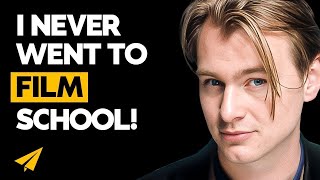
Christopher Nolan started making Super-8 films at 7 and built a filmmaking career without film school by treating every project as high-stakes work. He emphasizes sincere passion, intelligent compromise, and collaboration, blending classic techniques like miniatures with modern CG. His first feature, Following, was made with friends' resources.
Chapters
I'm a self-taught filmmaker. I never went to film school. I never studied filmmaking in any way. I am a big believer in being sincere about your passion for something. Pretty much every film I've ever worked on at every scale has had massive stakes to it one way or another. All filmmaking is intelligent compromise. That's the whole process we go through. I grew up loving Hollywood blockbusters, and for me, it's really a process of trying to recreate that magic. It's most important to just throw yourself into just— putting everything into the project you're working on. He's an English-American film director, screenwriter, and producer.
He's one of the highest-grossing directors in history and among the most successful filmmakers of the 21st century.
His 9 films have grossed over $4.2 billion worldwide.
He's Christopher Nolan, and here's my take on his top 10 rules for success.
I'm a self-taught filmmaker. I never went to film school. I never studied filmmaking in any way. I started making films when I was a kid. When I was, I think, 7 years old, making films using my dad's Super 8 camera and little action figures, doing stop-motion films, a little bit of animation, and a certain amount of live action. And I just carried on making films as I grew up. And over the years, they got bigger, hopefully better, but more elaborate. And there never really was a period in my life where I completely stopped doing that. So I was always moving up eventually from Super 8 to 16mm films. And then I think what Following represents is kind of the— the peak of what I was able to do on my own or just with friends, just using our own resources and borrowing equipment and sort of using the things around us to make a film. I am a big believer in being sincere about your passion for something, and I do love all types of cinema. But at the same time, when I come to do a project, I never want to be doing a project to just, for example, to show versatility. I wouldn't do a project for that reason. So I think all the films I've made, I like to think that they're connected in certain ways, but they're also different from each other. That's as best as I can put it. So I'd like to continue working along those lines, really with a view first and foremost to being sincere in my passion for the project, because each film you take on at whatever scale it's played out at. You know, it's a couple of years of my life, sometimes more, so you really want to be passionate about what it is that you're doing. Do you ever come up with ideas when you're writing a script that even scare you in terms of not being able to pull it off? Uh, yeah. I mean, really, that's the challenge. I mean, as a writer, I try and take my director's hat off and not be afraid and just say, "I want to write the most exciting thing," most unexpected thing I can think of for the story. And then I pick up the script again, put the director's hat back on, and go, okay, how the hell am I gonna do that? And that's when you know you're in a good place, because every film you want to be challenging yourself, you want to do something different. Well, what we were able to do is look, look back, and this is something I like doing, sort of looking back at the, the great achievements of the past and avail ourselves of those techniques. So miniature work, motion control, things like that that they pioneered, but then combining that with today's technology, which allows you to composite things in a particular way, use CG in a particular way to enhance those types of effects. So we really tried to build on what's been done before but add our own techniques to it. There are quite a few things in the film that have never been done before and may never be done again, I don't know. But certainly mixing and varying our techniques, using some old, some new, I think helps really disguise the trickery involved in the film because obviously it's all artificial at the end of the day, but it felt real to us making it, and hopefully it feels real to the audience watching it. What inspires me? More and more real life inspires me, but what inspired me to begin with was just, as so many of you are, just a huge film fan. The films of, I would say primarily Ridley Scott. Blade Runner was an enormous influence on me, and I carry that into every film I make somehow. Stanley Kubrick, Terrence Malick, Nicolas Roeg, just the extraordinary work of the body of great directors, I think primarily. And I know that almost anybody who's sat here today would have talked about seeing Star Wars for the first time, because for my generation that truly was a watershed moment and something that fed my initial enthusiasm for making films, and it's stuck with me. But I think that as I get older and as I've had the opportunity to make more films, which I feel very grateful for, more and more I find that real life and my life inspires me more, and I and work that more into the material I'm working on. Well, I, you know, it's, it's funny, there is massive pressure on a smaller film as well. Pretty much every film I've ever worked on at every scale has had massive stakes to it one way or another. I think for me, I don't think very well in terms of scale. It's all about is there a story, a set of characters that interest me. I think The process has been really the same process on every film I've done. I'd always liked film noir and crime fiction as a way of extrapolating your own life, your own neurosis or whatever, and making it accessible, making it something that people could care about. And I really gravitated towards that genre and still do, frankly, but very much at the time, I felt very young and very inexperienced, and I felt that my own life and the things I saw in the world were not going to be of interest to people, but they felt interesting to me. And so I was looking for a language, I was looking for a genre in which I could take things that I was interested in and make them accessible, make them interesting to other people. And I think that the crime genre, the film noir genre, I think that's the way it works. It's Characters are defined through action, double-cross, things they're doing to each other, your particular fears about whatever it is, your life, your relationships, or whatever those things are. The best film noir has always been very firmly founded on those relatable fears taken into the realm of, I mean, I suppose you could call it melodrama or heightened reality or whatever that is. And I felt, as a young filmmaker starting out and trying to do something with very little resources, I felt much more comfortable working in the area of heightened reality than a crime story. You know, it's like— well, because all filmmaking is intelligent compromise. That's the whole process we go through. You never have enough— I mean, Colin will be able to vouch for this. No matter what your budget is, you never have enough time, you never have enough money. That's— you're in the— it's weird. When you're doing a huge film, you're in the same position you were when you were doing a tiny film. You're always— and there's a good reason for that— you're always trying to get as much on screen as you possibly can. And so whatever the box that's built for you by the economics of the project, you're always trying to push up against those walls. And so you need help from your team in terms of how you arrange things and how you make that work. I've been very fortunate with the breadth of the audience we've managed to get for some of our films. Ultimately, really all I could say to that was I try not to separate the two things. I try not to separate my love for very sophisticated, esoteric filmmakers, people I grew up watching like Nicolas Roeg, whose films I love. I try not to separate that side of myself from the side that grew up watching Star Wars and James Bond and loving that. You try to pitch the film in the language that you think it should be made in. You try and think of what's the breadth of the audience you're making the film for. But I don't think that needs to involve dumbing it down or selling it out in any way, because I grew up loving Hollywood blockbusters. And for me, it's really a process of trying to recreate that, that magic, that sense of scale, that sense of immersion in a world that you grew up with. If you can bring that to filmmaking, I think you have the potential to reach, reach a wider audience. With all the films I've made, I felt that really trying to complement the audience's intelligence, trying to engage the audience with something that's new or different, can pay great dividends. It wasn't conscious on my part to, to have another script sort of ready to go by the time we went to film festivals with Following while we were finishing up the cut on it and doing very long, slow technical finishing, which when you have no money takes forever because you're sort of waiting for the lab to have a, you know, run the 16mm bath, you know, whatever it is. In that time, I was putting together the script for Memento, and so also in the time it took to get Following noticed on the festival circuit and sort of get out there, I had actually finished the script. And in retrospect, it was a massive advantage because I was able to say, okay, you like that film, this is what I want to do next. Because in your best-case scenario of what can happen to you with putting a film out there and getting distribution, for example, you'll then ask the question, okay, what do you want to do next? And if you have an answer, you can use that very short window of interest that you get from people in what you've done. But I will say that I think that was purely an accident, and I think that I think that if you were to try and plan to write another script while you're finishing a film, you really risk taking your focus off the project that you're doing. I think that it's most important to just throw yourself into just putting everything into the project you're working on. That's something I've always done since. If you can, then, 'Cause quite often there is a period between finishing a project and actually people seeing it, or actually people responding to it. If you can try and instead of going on holiday for 6 months, you use that period to try and figure out what you would do next if somebody gave you the opportunity, then you're gonna give yourself a huge advantage.
Thank you guys so much for watching.
We made this video because Tim Thompson asked us to. If you'd like us to profile another entrepreneur, leave a comment. Below.
I'd also love to know which of the top 10 rules had the biggest impact on you and why. Leave in the comments below and we'll join in the discussion. Thank you again for watching. Continue to believe and we'll see you soon.
I enjoy the multifaceted nature of the challenge. I enjoy having to be an expert on a lot of different things or having to pretend to be an expert a lot of different things. One of the things I love about directing is, is you don't specialize. You have to be able to really think of all the different aspects of the film at the same time. It's also important to surround yourself with collaborators who can take the pressure off certain aspects of it, and casting is a huge part of that. You know, finding actors— some of the great actors I've worked with on The Dark Knight trilogy, for example, who, you know, they would to recognize that, yes, we're also having to worry about flipping this truck or blowing this building up, you know, whatever. And so their process would be balanced against that, and working with very generous performers was a big part of that. So I really do enjoy the challenge of putting together a lot of different aspects of one project and trying to be in control of that. I mean, it's a really fun thing.
More from Evan


How the Biggest Mistake in History Created A Trillion-Dollar Empire | Sergey Brin



9 Machiavelli Principles That Force People To Respect You | Machiavellian Philosophy



The First 10 Words That Instantly Ruin A Sales Conversation | Vanessa Van Edwards

The Top 1% Mindset Behind The First $5 Trillion Company | Jensen Huang (Nvidia)

