How to Build a MILLION DOLLAR Company: Ben Horowitz's Insights
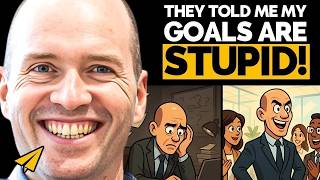
Ben Horowitz and Marc Andreessen discuss building successful companies, emphasizing that people skills matter more than technical ability. Horowitz stresses hiring A-players who outperform the founder, while Andreessen challenges the "follow your passion" advice, urging instead to "follow your contribution" by matching your strengths to what society needs.
Chapters
And I think people skills tend to be highly underestimated in terms of kind of just ability to run a company.
Guys, I'm going to major in computer science. And one of my friends said, wow, that's the stupidest thing I've ever heard. And like, come at me again, you anonymous quote me.
I can't wait to get an anonymous quote.
I'll kill you. Our goal is to be the most important venture capital firm in the world. Following your passion is a very me-centered view of the world. Work.
Is what's important. It's that effort where you learn the secrets.
I wanted to quit every day I was in that job. I felt like throwing up when I woke up in the morning.
But you only get leverage if the person that you hire can do it better than you can.
If you're a technology entrepreneur, like, you've got every opportunity to make, like, a gazillion dollars.
Like, all the VCs and everybody tells me, you know, Ben, you know what the key to a great company is? You know, hire A-players.
He's an American businessman, investor, blogger, and author. He's the co-founder of the venture capital firm that bears his name. He co-founded the enterprise software company Opsware that Hewlett-Packard acquired for $1.6 billion. He's Ben Horowitz, and here are his top 10 rules for success.
Yeah, so, you know, in the world of entrepreneurship, the big skills are kind of programming skills and people skills, like those are the big two. And I think people skills tend to be highly underestimated in terms of kind of just ability to run a company and so forth. And what I mean by people skills is the ability to understand other people's motivation and other people's motivations who you're talking to and then who you're also not talking to and how they're going to think about something and where they're coming from. And relate to that in a way that gets you to the right conclusion about how you build an organization or build a company or make a deal or any of these kinds of things is incredibly valuable and that's what I would say most of the kind of good entrepreneurs end up lacking more than the technical skills that we see now. Like being like a boss-level engineer, like that's extremely valuable. I'm not discounting that but— That's really the other big, big skill that you can learn.
And I was just so excited to tell my friends. I was like, man, they're going to be just like so fired up for me. I figured it out. I'm not going to be stressed anymore. And I'm like, guys, I'm going to major in computer science. And one of my friends said, wow, that's the stupidest thing I've ever heard. And I'm like, why? He said, like, you're at Columbia University. That's like a trade. You can learn that at DeVry. They'll teach you how to build computers, fix them, program them. You should major in something real. And I was just thinking to myself, I was like, I'm talking about a limitless machine, you're like talking about a washing machine. But I was so frustrated, I couldn't even really explain to him why. But it was at that point, at my like height of frustration, that I learned the most valuable lesson that I learned at Columbia, which is don't listen to your friends. And the more generalized case of don't listen to your friends is think for yourself. And thinking for yourself sounds both simple and trivial, but in reality, it's extremely difficult and it's profound. And here's why. As human beings, we want to be liked. It's anthropological. If people didn't like you in caveman days, they would just eat you. So you really have a natural built-in instinct to want to be liked, and the easiest way to be liked is to tell people what they want to hear. And you know what everybody wants to hear? What they already believe to be true. And so the last thing they want to hear is an original idea that contradicts their belief system. So it's very hard to even bring that kind of stuff up. But those are the things, those are the only things, things that you believe that everybody around you doesn't believe, when you're right, that create real value in the world. Everything else people already know. There's no value created. It's just business as usual. So it's so important to think for yourself.
How do you get along with other VCs?
So this is funny. So I get along with them very well. So there are VCs that I, that I really, really like. Anil Bhusri is one of them who I work with all the time on various deals. I just I just got off the phone with Ted Schlein, who I get along with very, very well. So there are a lot of— there are a lot of VCs I get along with. I'm a bad cultural fit for investing. You may have noticed. And there's a good reason for this. So investor— if you think about the investing environment, it's this weird competition thing because you compete for deals, but you work on deals together. So you're kind of partners, but you're competitors. And I don't come from that culture. I come from enterprise software, right? Like, you know who the top dog in enterprise software is? Larry Ellison, right? Like, ain't no coopetition in Larry Ellison, right? Like, all you have to do is mention, like, anybody who's close to a competitor, and it's like his head will blow off, like, and he'll go like bananas.
Like, speaking of Aneel, we saw that at Dee—
Yeah, he just went absolutely bananas. It's like, it's on, baby. It's like, you stepped on my shoes. Let's go. And so, you know, for me, and then, you know, also I listen to Lil Weezy. And so sometimes, you know, the venture capitalists will come at me, you know, being friendly, and hey, you know, with the peace sign. And, you know, to me the peace sign is just the trigger and the middle finger, you know. So that's a meme. That's from Weezy.
Does it, does it bother you when they talk shit about you? Because they don't do it to your face. They do it to people like me.
Anonymous. So yeah, so that was, that was a— and you're alluding a little bit to when I called them crybabies, which gets actually another thing. The one thing that does bother me a little bit about some VCs and some angels. So one of the things that's happened a lot since we've been in the industry is we get a lot of people calling the press anonymously. There are probably more anonymous quotes about us in the press than any other, like, entity right now. And Sarah calls me up and she goes, "Ben, I got a tip from 6 different anonymous angels saying that you're doing this." And I'm going, "If they don't like what I'm doing, why don't they just come out and say it?" You know, like, if I don't like something somebody's doing, I just come out and say it. I put my name on it. And the reason that bothers me so much is the number one thing we look for in an entrepreneur and the number one thing that I encourage —and I try and help people develop— is courage. And the reason that that's important— and it's very, very important, and it goes back to Aristotle. So Aristotle said courage is the first virtue. And the reason it's the first virtue is if you don't have it, then you don't have any virtue. Because all these other things— honesty, integrity, whatever— don't ever get activated when they're important if you don't have courage. It's easy to be honest unless it's going to cost you your job or your marriage or something you care about. Then it's hard to be honest. So without courage, like, you don't have anything. You don't have integrity. You don't have anything. You're just like the— you're a zero-character person. And so when people who are supposed to be coaching entrepreneurs, angel investors or VCs, walk around giving anonymous tips to like reporters about stuff they don't think is right? Like, and those guys are advising the people who I'm working with? Like, that really, like, you know, that's something that, like, pissed me off. So, like, I'm not having it. And, like, I'm going to call them on it. And, like, they come at me again, you anonymous quote me?
I can't wait to get an anonymous quote tomorrow. I'll kill you.
Did you imagine you'd be managing almost $5 billion? So, like, one of the things we knew from being entrepreneurs, and this is a very, very key point in entrepreneurship, entrepreneurship is that it is just as much work and just as traumatic to build a company that's trivial and nobody cares about than it is to build like a really significant important thing. Like it's the same amount of work, so you might as well try to do something important. And so that was always our thought with the firm. We were like, we are going to like— our goal is to be the most important venture capital firm in the world. And you know, like it's completely megalomaniacal and arrogant. Idiotic. But that's like, if you don't have that attitude as an entrepreneur, like, you should not be an entrepreneur. So yeah, we were always going to be the biggest. We were always going to be the best. And that was the goal. And there was no reason to exist if we weren't going to do that.
What I'd like to give is a few unconventional graduation thoughts. And I'm titling them, do not follow your passion. And the world is not going to hell in a haspah— hell in a handbasket. And the class of 2015 is not required to I told you it was gonna be unconventional. So don't follow your passion. Now you're probably thinking, that's a really dumb idea, because everybody who's successful— and if you poll 1,000 people who are successful, they'll all say that they love what they do. And so the broad conclusion of the world is that if you do what you love, then you'll be successful. But we're engineers, and we know that that might be true, but it also might be the case that if you're successful, you love what you do. You just love being successful, and everybody loves you. It's awesome. So which one is it? Well, I think to figure it out, you kind of have to go back in time. You have to back off when you were successful to like right now when you're graduating as the class of 2015. And the first tricky thing about passions are they're hard to prioritize. Which passion is it? Are you more passionate about math or engineering? Are you more passionate about history or literature? Are you more passionate about video games or K-pop? These are tough decisions. How do you even know? On the other hand, what are you good at? Are you better at math or writing? That's a much easier thing to figure out. The second thing that's tricky if you're going forward in time with this follow your passion idea is that what you're passionate about at 21 is not necessarily what you're gonna be passionate about at 40. Now this is true for boyfriends as well as career choices. The third issue with following your passion is— excuse me, a little trouble with the throat— is you're not necessarily good at your passion. And has anybody ever watched American Idol? So you know what I'm talking about. Like, just because you love singing doesn't mean you should be a professional singer. And then finally and most importantly, following your passion is a very me-centered view of the the world. And when you go through life, what you'll find is what you take out of the world over time, be it, you know, whatever— money, cars, stuff, accolades— is much less important than what you put into the world. And so my recommendation would be follow your contribution. Find the thing that you're great at, put that into the world, contribute to others, help the world be better, And that is the thing to follow.
You know, it's funny, sometimes I talk to my wife about this, but like hard work is like super important in life. And like now, like I grew up like in Berkeley, I didn't have any money. I played football for the Yellow Jackets. I was just like a kid in the neighborhood. And now like I have a lot of money. And so like with my kids, I'm like, okay, now that I'm rich, how do I teach you the value of hard work? 'Cause that's really the only important lesson that I've got. But like for all of you, I think most of you at a public university probably know a little of the value of hard work. Keep that lesson. That's the important— that work is what's important. It's that effort where you learn the secrets that are super valuable and can change people's lives and change the world.
But why did you still believe in the company? I mean, I have to think that at any point in Silicon Valley history, there's a lot of people that at that point point, they're just like, this isn't going to work. Market's changed. This isn't a viable concept anymore.
Well, you know, I, I don't know how much belief I had, but I knew that I had kind of gotten everybody into the boat with me. So it wasn't so much that I didn't want to quit. I wanted to quit every day I was in that job. I felt like throwing up when I woke up in the morning.
Do you know what it's like having a baby now?
Yeah, exactly. Like, it felt like I was pregnant. But, you know, I'd hired every employee and they all trusted me. I'd raised all the money. I talked every investor into putting their money in. I had given stock to, you know, like my friends and relatives, and they were all excited about the prospects for the company when it went public. Like, a lot of my friends from high school, like, bought the stock because I was running the company. And so I just— I felt like I could die, but I couldn't quit. And one of the horrible things about being founder CEO is it's the one job you really can't quit. Or if you do quit, you're a punk. So I didn't want to be a punk. So I just kept pedaling. But it was rough. I mean, like, that was— running LoudCloud. And it didn't stop there. That was LoudCloud. LoudCloud, by the time LoudCloud was 2 and a half years old, I had sold the LoudCloud part of the business, and I had to change it into another business. So the next thing that happened was LoudCloud was going to go bankrupt. So I raised $160 million in the IPO. But we burned through that, and we couldn't stop the burn because the customers kept going out of business. And so we were headed towards bankruptcy. So then I had to— I sold the services part of the business and all the cash burned to EDS. And then I had to lay off probably another third of the employees. And then I kept the remaining 80 employees. And we became a software company, a publicly traded software company with no customers and no revenue. Which was another trip. And that's when you became Opsware. That's when we became Opsware, yeah. So that was hard. But it was good. That kind of stuff, it makes you strong. Eventually, 5 years later, we sold it to Hewlett-Packard for $1.6 billion. Not a bad exit. Which was like, still, I'm still shocked by that whole thing. I still wake up in the middle of the night going, are we going to run out of money?
You only get leverage, and this is something that is really tricky for founding CEOs to get to, but you only get leverage if the person that you hire can do it better than you can. Because as long as you feel like you're better than them at it, then there's not, you're just going to keep second-guessing them and you're not going to get any leverage. And a lot of times, like, I'll be talking to CEOs and they'll have an executive and they'll be like, no, this person's like really good and they're working really hard and I'm like, well, but like you're always like frustrated about like, you always feel like you have to do that yourself. And it's like, yeah, because they don't understand how to do this and that. And I'm like, well, then like they're not an executive because the whole point of an executive is to get you leverage. And so on a question like that, it's like, okay, where can you find the right person and make the hire to get you leverage? And wherever that is, that's what you should give up first. And you want leverage in all spots because as CEO you can be the keeper of the vision, the quality control over the top, you can— but you can't be the lead engineer forever. Like there is no— like and it doesn't matter how good an engineer— like Larry Page, as great an engineer as he was, is not an engineer at Google. He just isn't. And he cannot work on production products. It's a full-time job, even for like somebody who can do as many things as Larry. He cannot do that and nobody can. Like if Larry can't do it, you can't do it either, I guarantee you. And so you're going to have to give them all up. And so it's just a matter of like where do you get the leverage.
All of the general partners in the firm basically agreed that we would give half of our money away to charity that we earned at the firm, basically half of everything we get. We're going to give away. And look, here's why. Here's why. Let me just say why we did it. The world— the world is complex and it's not— and it can't be entirely fair from what you contribute to what you get is very, very uneven. And even if you just look at Silicon Valley, You know, if you look at the kind of brilliant people at Stanford Hospital, or, you know, some of the people who build the buildings that we live in, or the guys who teach the kids at— like, the teachers at the schools are, like, incredibly smart and dedicated. But there really is no way that they're going to ever make anything like what I make at Andreessen Horowitz. It's just impossible. The way society is structured. There's no way it could happen. But their contribution to what I do is significant. Without them, like, I've got kids that are in those schools. I get sick, I go to those doctors. I live in that environment. And I appreciate it. I really appreciate the effort and the work and what they do. And so for me to be in a position where I can put money into the resources that I share with them and like make their life a little easier, like I just feel like it's the right thing to do. So it's nothing more than that. And I don't think there's any kind of like way I can give money to other people. Like if, if you're a technology entrepreneur, like you've got every opportunity to make like a gazillion dollars, like that, that opportunity is there whether like they invest and get a percentage of your company or not. But like, if you're a teacher, you don't have that opportunity. But man, if I can get you the resources to do your job better so that you've got like a little more space in your classroom, like that could make the difference for a kid who could do something that's really important. And so like, that's what I'm about and that's what I'm going to do. And I'm very proud that our whole firm is doing that with me. Look, the hard thing about hard things, which is just the— where did that title come from? Because that's just a way cool title. The Hard Thing About Hard Things.
Well, I actually wrote that title myself, which I understand is actually pretty rare in the book business that they let you keep your own title. But where it came from was, when I was a CEO, it was easy time. I slept like a baby. Woke up every 2 hours and cried.
[LAUGHTER] We need a drum roll on that.
And when I would be up and— this is not a joke, it's actually true, you can ask my wife— I would be up at 3 o'clock in the morning just sitting there going, why are none of the management books that I'm reading helping me? Like, they are no help at all. And I read literally every management book. And I realized that management books are generally written for like how here's how to not screw up your company. But if you start a company, that lasts like a week. And then you've screwed it up.
And then like, where's the book for that? You know? And that's what was missing.
So I would think about it. I'd be like, OK, yeah, so like all the VCs and everybody tells me, you know, Ben, you know what the key to a great company is? You know, hire A players.
And I'd be sitting there like, oh great, because I was going to hire a bunch of fucking idiots.
And now you've unlocked the secret for me.
Thank you. But you know, like that wasn't like that way and I was like, the hard thing is not to like hire the best people, right?
Like the hard thing is when your company is going like this and the great best people don't want to work for you and then like who do you hire and like how does that work and like, you know, do you hire the person who's like okay across the board or do you hire the person that's got something like horribly wrong with them but like super great about them and like how do you think about that and like what do you do with that? Horribly wrong stuff once you get them.
You know, that's a hard thing.
And then there's like, you know, I read this, the Jim Collins books, which I hate. But some of you like them, I know. It doesn't mean you're not smart if you like them because a lot of people, smart people like them. But the thing that he does is he makes you feel good about yourself like, but then when you get into it, you realize cause and effect is all like swung around and all these things. But he's like big, what great companies have is a big hairy audacious goal. And I'm like, that's great, but that's not hard. Like, it's pretty easy to write a big area like, we're going to go to the moon, you know, we're going to build the biggest company in the world, we're going to have software on every desktop, it's all going to be ours, like, that's our goal. Okay, so now you've missed your goal. And like, not only did you miss your goal, but you built up your whole company to achieve your goal and you have a cost structure that's designed to hit your goal and you missed your goal and you're running out of cash and the company's burning to the ground and all of the company, everybody who works for you thinks you're a moron a moron because you missed your goal, okay, that's hard. Like, that's a hard thing. Like, what do you do there? Well, that's not in Jim's book. Like, he didn't even talk about that. It's like, nobody ever misses their goal who's a great company. So like, why would you miss your goal? Like, you must not be great. It's like, okay, fuck Jim. So anyway, that's where the hard thing about hard things come in. Thank you so much for watching.
I made this video because FBGM247 asked me to. So if there's a famous entrepreneur that you want me to profile next, Leave it in the comments below and I'll see what I can do. I'd also love to know which of the top 10 rules is gonna have the biggest impact on your life. Leave it in the comments and I'll join in the discussion. And if you like this video, my personal goal on this channel is to help reach a million subscribers. So anything you can think of to help share the video, spread the message, I'd really truly deeply appreciate it. Thank you guys so much for watching. Continue to believe, and I'll see you soon.
More from Evan


How the Biggest Mistake in History Created A Trillion-Dollar Empire | Sergey Brin



9 Machiavelli Principles That Force People To Respect You | Machiavellian Philosophy



The First 10 Words That Instantly Ruin A Sales Conversation | Vanessa Van Edwards

The Top 1% Mindset Behind The First $5 Trillion Company | Jensen Huang (Nvidia)

