How to Build a Solid Foundation for Success | Zig Ziglar's Secret
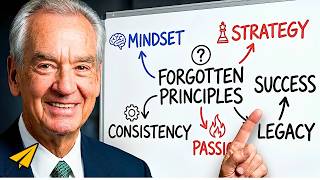
Zig Ziglar explains how to build lasting success through integrity, written goals, and daily habits. He separates "go-up" goals you share only with supporters from "give-up" goals you announce publicly for accountability. Success requires good habits that become character, physical fitness, positive input to your mind, and quiet time for reflection.
Chapters
Zig Ziglar was a master at lighting up the room with optimism, determination, and practical wisdom, and his words are timeless. But let me bring this to the forefront for you. You were born to win, but it's not just because someone else said it. You've got to believe it. And even more importantly, you've got to act on it every single day. It's not enough to say you're born to win or that you deserve greatness. Zig wasn't about vague encouragement. He gave you a roadmap. Set goals, build a foundation, and above all, keep your integrity in check. Without that, any success you achieve will crumble. If your foundation is solid, built on character and relationships, you're unshakable no matter what life throws at you. The heart of this message? Winning isn't about making millions or becoming the best at one thing. It's about balance. It's about being the best at what truly matters. Your faith, your family, your health, and yes, your goals. You can achieve greatness in your career, but if you lose your health or your relationships along the way, have you really won? That's the real measure of success. Zig's secret sauce? Action. He believed in commitment and follow-through, even when it's tough. Whether you're waking up at 5 AM 5:30 AM to run when you'd rather sleep, or pushing through rejection after rejection. It's in those moments where success is being shaped. Like Zig said, the pain is temporary, but the joy of achieving your goals, that's the real prize. So stop living small. Don't be a flea jumping in a jar, limited by your own mindset or other people's doubts. Share your big dreams only with those who will support them. Forget the critics. They've never built a statue to one anyway. And remember, you don't pay the price for success. You enjoy the price. The world is waiting for you to take what's yours. But it starts with you deciding to get after it today. Set the foundation. Stay committed. Never stop improving. You're not just born to win. You're meant to lead others to victory too. And if you follow through on this, I'll see you at the top. Special thanks to the Ziglar family for partnering with us to release this exclusive content on our YouTube channel. Enjoy the video and believe.
I believe it would be physically, mentally, psychologically, and emotionally impossible for you to listen to that song with that impact into your mind, Born to Win, over and over and over, and not believe it. It has just got to be a part of you. Well, let's take a look, and let me again warn you that you need to be taking notes, because if you write it down and are reinforced with the goal planner and the goal planner instruction manual and all of the recordings and the music, then it becomes a part of you. Want to emphatically say that if you're going to reach your goals, Whatever the goal is, you must start from a solid foundation. You must build your life on honesty and character and integrity, and on faith and on love and on loyalty. Regardless of whether you're building a life, a business, a corporation, a country, a family, doesn't make any difference what it is, you must start from a solid foundation. You can take a good engineer, lead him to downtown any city USA, he can look at the hole in the ground and tell you how high the building is going to be by the foundation they're going to erect. One of the nicest things about having a solid foundation is the fact that when you do experience some reverses in your life, and many times that does happen— you can never fall to the basement. All you can do is go back to the foundation. So you've got a stopping point. And any mountain climber will tell you that you better put some secured areas there so that if something happens, you can only fall the certain length of the rope which is attached to you. That way, you can start climbing again. Yes, you've got to have that solid foundation. As we've talked about these various goals, I wanted to make it crystal clear that if you zero in on only one goal, you will probably achieve it. But I've never seen a person who only had one goal who also was happy in the process. They might have a goal to make millions of dollars, and they might well get it, but along the way, something's happened to the stomach and to the family and a few other things. If I were to make literally millions of dollars and destroy my health in the process, I would not in my mind be a successful individual. If I were to become the very best in the whole world at what I do, I mean the very finest on the face of this earth, gain all of the accolades internationally, and in the process lose the relationship, with those who mean the most to me, then I, as far as I am concerned, would have lost it all. What a tragedy it would be if someday my son were to come to me, or one of my daughters were to come to me and say, "Gee, Dad, I sure wish you had had time to have given me some of the advice you so freely gave to other people. Folks, it would tear my heart right out of my body. I believe you got to have the right foundation. I believe you got to keep your life in perspective. I believe you've got to have a series of goals, and that certainly includes the family goals and the social goals and the spiritual goals and the career goals. That's the reason in your goal planner itself we have put those areas aside so so that you can write in clearly identifying what it is, spelling out and identifying the steps which you need to take if you're going to achieve a balanced life and reach all of the goals which are there. And as we look at these goals, a lot of times people say to me, well, Zig, or ask me, who should you share your goals with? Who should you tell about what you're going to do? Well, here's a rule of thumb which I have found to be very effective. I share my go-up goals with only those people I know who are going to support what I'm doing, who are optimistic and who are enthusiastic and who believe in what I'm doing. I share my give-up goals with virtually everyone. Now, what is the difference? A give-up goal is if I'm going to quit drinking, if I'm going to lose that weight, if I'm going to quit cussing, if I'm going to quit beating my wife, if I'm going to, you know, quit doing all of these things. Those are give-up goals. If you've got a give-up goal, then you want to share it with anybody and everybody. If you're going to quit smoking, let other people know about it. Put yourself on the spot. They will be glad to support you. Now, if it's a go-up goal, that's an entirely different thing. I'm going to make a million dollars, and people look at you and say, you are? Or if you, uh, come out, you know, and if you say, I'm going to be the number one salesman or the number one saleslady in this entire organization, and you're telling another saleslady that, she's not going to give you a whole lot of encouragement in many cases. Share those go-up goals only with people whom you know are enthusiastically behind you and who will support you in reaching that particular goal. The second thing I would say about reaching the goals, or the third thing really, is you got to make the commitment. Now, I have talked about that a little bit earlier, making the commitment, but let me emphasize another point about commitment. When I was writing this book, in the first chapter I wrote it on goals. And as I wrote in there, I put down that I weighed 165 pounds. I wrote down that I had a 34-inch waistline. Now, the minute I had that typeset, I actually weighed 202 pounds. I actually had a 41-inch waistline. Now, can you imagine how effective this book would have been if I had in there that I weighed 165 pounds and I couldn't I come waddling out, you know, at 202 pounds, you know what you would be thinking all the time? You'd be thinking to yourself, "I wonder what else that dude lied to me about." Let me tell you one of the basic truisms of life and the reason I keep getting back to the foundation. You and I are exactly alike in one respect. I catch you lying to me one time about one thing, "From that moment on, I'm going to put a question mark after everything you tell me, and you do me exactly the same way. You catch me lying to you one time about one thing, and you're going to be putting question marks after everything I say, and my effectiveness as an instructor, as a speaker, as a teacher, as an example is totally destroyed because my credibility is gone." When I put in there that I weighed 165 pounds, folks, I want you to know that was a commitment. Because the second part of the commitment was I tried to get this book published. I sent it to 3 major publishers. I just knew they were going to get all excited about publishing my book. I visualized sitting there and listening to the bidding war. This publisher bidding this much, and that one bidding this much, and that one bidding that much. And I was going to sit back and say, "Now you fellas be nice to each other." I mean, after all, I'll write you another book someday. Oh, I just knew they'd fall all over themselves to publish my book. Can you believe, though, in short order, all 3 publishers sent the book back to me and said, we don't think that thing's gonna sell? You know, I couldn't imagine 3 theoretically intelligent people arriving simultaneously at such an asinine decision. I just— it was beyond my imagination. Well, now I got to make a decision. See, do I really believe that book's going to sell, or do I just want somebody else to take all the risk? See, it's one thing if I say, "Publish my book, and if it sells, pay me the royalties. And if it doesn't sell, gee, I'm sorry about that. I really am." Now you see, I've got to either fish or cut bait, haven't I? I got to make the decision Am I willing to put my money where my mouth was? Well, I knew the book would sell because, you see, I write exactly the same way I speak. Now, I don't write as fast as I talk, so you have a better chance to assimilate, you know, what's there. But, you know, I tell folks I'm like a cross-eyed discus thrower. I don't set any records, but I do keep the crowd alert, you know. I knew that book was going to sell. I decided I was going to publish it myself. Now, a friend of mine said, "Zig, if you sell 25,000 copies, you got a bestseller." Well, that appealed to me. Enormously. So I said, well, why not 25,000 copies? Well, I don't know if you knew this about books or not, but I can say this to you, that it costs a ton of dough to publish 25,000 copies because the first copy costs more than the next 24,999 copies, and they cost a ton. I have made a commitment. I put it in print. I weigh 165, have a 34-inch waistline. I have ordered 25 1,000 books. So step number 3 literally is you gotta make that commitment. Now, step number 4 involves something which I think you need to understand. So many times when I'm making a presentation, you know, I'll finish talking about losing the weight and all, and I'll have some dude come up to me and say, now, Ziglar, tell me the truth— and lying to me up until now— boy, tell me the truth, did you really enjoy getting up at 5:30 in the morning and doing all of that running? I'm going to tell you the truth, I I hated it. That opportunity clock would sound off, you know, at 5:30 in the morning, and I'd reach over and I'd shut it off, and I'd think to myself, "Ziegler, what's a 46-year-old fat boy like you doing getting up running all over the neighborhood?" Then I'd look down at that 41-inch waistline and I'd say, "Do you want to look like you, or do you want to look like the guy in the jockey shorts?" Well, I didn't want to look like me, so I'd get up and I'd go out there running. But just because I was out there running And that doesn't necessarily mean I was enjoying it. I don't know what I'm trying to do. Acting like a teenager, my buddies are sound asleep in bed, and here I am out here running. I'm going to kill my silly self. But I said I was going to do it. And if I said I was going to do it, I'm going to do it. I mean, that's the way I am. And don't you think I didn't tell people about it either? Friends, relatives, neighbors, and complete strangers about this terrible sacrifice I was making because I was getting up in the morning to do all of that running. Oh, friends, let me tell you something. You give a motivational speaker long enough, and before he is through, he's going to get up, and with an impassioned strain in his voice and a plea in his face, he's going to say to you, "You got to pay the price!" Sounds like a dying calf in a snowstorm. Storm. Biggest bunch of baloney ever foisted on an undeserving, unsuspecting American public. Oh, don't misunderstand, I have literally run in the snow of Winnipeg, Canada. I've run in far north Norway. I've run in Hyde Park across from Buckingham Palace. I have run on safari in South Africa. As a matter of fact, I ran faster there than anywhere. I've run in the mountains of Montana, the sands of Acapulco, the orange groves of Florida, the rain of Minneapolis. I have run literally almost all over this globe. And one day I was running in Portland, Oregon. Beautiful spring day, about 78 degrees. It was high noon. I had a 4 o'clock seminar scheduled. Portland State University campus is only 2 weeks from downtown, and as I was out there running, you know, on Portland State University campus, I looked around, and a lot of the kids, the students were out there laying on blankets. Some were reading, some were studying, some were snoozing, some were courting, and here comes old Ziglar running by, sweat running down my back, sweat running down my legs, you know. And that day, for the first time, It hit me like a ton of bricks. I was no longer paying the price. I was having a ball. I was having the time of my life. And it hit me that, you see, you literally don't pay the price. You enjoy the price because you enjoy the benefits. You don't pay the price for good health. You enjoy the benefits of that good health. You don't pay the price for success. You pay the price for failure. You enjoy the benefits of success. I have never yet seen a happy failure. We've got to change our vocabulary, ladies and gentlemen, because if we look at it in the proper frame of reference, as we really understand what we are doing when we're doing something for ourselves, We also, in so many cases, are doing things for other people. You see, you can get everything in life you want if you'll just help enough other people get what they want. And as I reflect on writing the book and losing the weight, you see, one of those was a career goal and one of them was a physical goal. But let me tell you what happened along the way. Never is there an individual goal Every goal has buddies. Some of them are good if they're good goals, they're bad if they're bad goals. For example, these were both good goals. As a result of writing the book and losing the weight, it improved, for example, my career in writing the book. It improved my financial life as a result of writing the book. It improved my social life. You'd be amazed at the number of invitations I get to go places because I've written a book, you know. It's amazing how so many of these things are tied together. But the one thing I got to keep referring back to is the fact that as you think about enjoying the prize, you got to understand that effort is required. Not once will you ever hear me, not only in the Born to Win course or the How to Stay Motivated series or any book I'll ever write or any recording I'll ever make or any speech, I'll ever make. Never once will I tell you that life is easy, because I don't believe it is. I believe it's tough. But I know, to repeat myself, and I know that I know, that if you're tough on yourself, that life is going to be so much easier on you. Never will I forget, I think, one of the most important decisions I've made in the last 10 years. I came in one morning from the West Coast. I got to DFW at 2:55 AM. I had had a horrendous day. And as I got home, by the time I got in my car, got home, got dressed, ready for bed, it was straight up and down 4 o'clock. Now the opportunity clock was set to get me up at 5:30 AM, as had been my schedule during all of these months. And I looked at that watch, or the clock, and I looked at my watch, and and I very quickly drew the inescapable conclusion that just 90 minutes from that moment, that clock was going to be sounding off enthusiastically to get me up. And I thought to myself, "Now, Ziglar, you are already tired. An hour and a half of sleep is absolutely not enough. Why don't you be realistic? Why don't you forget it this one morning and sleep in? You know you're not going to be as sharp. You're not going to be as alert, and the stuff you write at 5:30 in the morning, Can't be that good if you haven't had a reasonable amount of sleep. Man, what you need to do is get yourself some shut-eye. I mean, play it smart, Ziglar. And the more I thought about it, man, the better that sounded to me. And when it dawned on me what I was doing, I literally jumped for the clock. I pulled the plug, and at 5:30 the next morning, I got up, did my running, and started my writing. No, sir, I didn't want to get up. By no stretch of imagination. Yes, I would have been better off had I slept until at least 8 o'clock or 9 o'clock or even 10 o'clock, and probably would have gotten more done. Then you say, why did you get up? Very simple. I was within 1 month of reaching my objective. I knew, ladies and gentlemen, that if I gave in when this old body of mine was as tired as it was, that another week might come along, and after 5 hours of sleep, I would decide I deserve to sleep in morning also. And then a few more days might go by, and I would decide, do I really want to get up at all? What I'm really saying is the time comes when you got to suck it up and tough it out and just hang in there. Life is not always easy, but I can say to you without batting an eyelash that I believe that that decision I made that morning has done more for me than almost any business decision I have made in in the last 10 years. As a result of hanging in there when the going was tough, I believe I've been able to get more done in the last years than I've been able to get done in the previous 46 years of my life. You got to hang in there tough is what I'm really saying. Step number 6, if you want to reach your goals, then obviously, ladies and gentlemen, you must know how to train fleas. And so my question in this, uh, live presentation here in front of all of you folks: How many of you in this audience— and all I want you to do is be honest with me— how many of you do not know how to train fleas? Can I see your hands, please? Hey, you got here just in time. I know you heard the one about the two fleas at the bottom of the hill, and one of them says, "Well, do we walk or take a dog?" But anyhow, you train fleas by putting them in a jar. And you put the top on the jar, and you watch those fleas. And they'll jump up, and they'll hit the top over and over and over and over and over and over. You watch them jump. And finally, after they've been jumping a long time, you will notice that even though they continue to jump, all of a sudden, they are no longer jumping high enough to hit the top. Then it's an absolute fact you can just take the top off of the jar, and they'll keep on jumping and jumping and jumping and jumping, but they cannot— all I repeat, cannot jump out. You see, they have conditioned themselves to jump just so high, and once they've conditioned themselves to jump just so high, that's all there is. There ain't no more. Man is the same way. He starts out in life to climb the mountain, to write the book, to break the record, to do something with his life. But along the way, he bumps his head, he stubs his toe, and he becomes what I call a snot. Now that's spelled S-N-I-O-P, and that's a person who is susceptible to the negative influence of other people. For example, the 4-minute mile. Everybody's familiar with that. For years, the athletes have said, hey, I'm going to run the 4-minute mile. But the coach would get his watch out and said, man, you can't do that. It's never been done. Nobody will ever be able to break that 4-minute barrier. The doctor would get his stethoscope out and he had put his own— put it on the athlete's heart and say, man, a 4-minute mile is out of the question. Why, your heart will come right out of your body. And for years and years and years, nobody could run a 4-minute mile until one day a fleet trainer named Roger Bannister came along and he ran the 4-minute mile. Now, when Bannister ran the 4-minute mile, it wasn't long before athletes all over the world started running the mile in less than 4 minutes. As a matter of fact, Landy of Australia ran it less than 6 weeks later. At this time, there have been 4 different occasions where as many as 8 young men in the same race ran a mile in less than 4 minutes. A 37-year-old man has rid— a 37-year-old man, I should say, has run a mile in less than 4 minutes. Over 500 different people at this time have run a mile in less than 4 minutes. Not because man has gotten that much faster, but because they understood that the 4-minute mile was not a physical barrier. It was a psychological barrier. And once that psychological barrier had been broken, one did it, then later somebody else did it, then later somebody else did it, and later somebody else did it. Now, in case you have missed the point, a flea trainer is a person who jumps out of the jar. A flea trainer is a person who is driven from within. A flea trainer is an individual not influenced by the sniops of life and the negative forces of life, but rather they decide for themselves what they're going to do. They understand that you can get everything in life you want if you will just help enough other people get what they want. Fleet trainers don't tell other people where to get off. They show them how to get on. A fleet trainer doesn't try to see through people. A fleet trainer sees people through. If you're going to reach the objectives you have in life, yes, it's absolutely true that you must be a fleet trainer. Step number 7, if you are going to reach your goals, then you've obviously got to keep a winning attitude. Now, in the Born to Win series, we talk a tremendous amount. As a matter of fact, we spend over 6 hours talking about keeping, uh, that winning attitude. We go into how do you control your habits, how do you use your mind, how do you get the things you want out of life instead of having to want the things you've got. In the How to Stay Motivated series also, we go into how to keep that winning attitude. And yet it's absolutely critical that you keep feeding your mind. You're what you are. You are where you are because of what's going into your mind. You change what you are, you change where you are by changing what goes into your mind. Yes, you absolutely must have a the right mental attitude. Step number 8: if you're going to reach your goals, you've got to get other people involved. Nobody climbs a high mountain by themselves. We spent a lot of time in the relationship segment talking about the fact that you must get along with other people. But let me ask you a question. How many of you have ever seen a flock of Canadian geese flying overhead at any time? May I see your hands, please? If you have never seen them, the next time you do see one or when you see a flock, notice them and watch them. You will observe 3 things about them. Number 1, they always are flying in a V formation. Number 2, one leg of the V is always longer than the other leg. And number 3, if you will watch them when they come into sight and stay with them about 15 minutes until they go out of sight, you will notice there is some apparent confusion in the flock. Now, as a matter of general curiosity, how many of you have ever wondered why one leg of that flock of geese, one leg of the V, is always longer than the other? How many of you have ever wondered about that? Okay. Let me clarify that for you. It's because in the longer leg, there are more geese in it. I don't know why, but that one just always strikes me as being hilarious. I can't wait till I get to that particular one. Okay. Now let me explain on a serious side, the reason that they are flying in a V formation is they've discovered in wind tunnel tests that in a V formation, the flock of geese will fly 71 or 72% further than it could fly if they were not flying in the V formation. The reason for the apparent confusion in the flock is they regularly give the leader of the flock a rest, simply because he's the one carrying the brunt of fighting the headwind, and he creates a partial vacuum for the other geese, and so they trade off like that. Isn't it a shame that the geese— you know, we're always sometimes talking about somebody, and we occasionally call somebody a goose. Well, isn't it a shame that we don't work together more carefully so that we too can get further in the game of life? That's the reason in the Born to Win series we talk so much about the segment of getting along with your family and getting along with others, because it makes the trip to the top not only easier and more certain, but it's far more fun as you go along the way. I don't know if you've ever watched kids on railroad tracks, but on an abandoned section of railroad track, if you ever watch them, you'll notice maybe one of the kids will walk a few steps and off he'll come. Another will walk a few steps and off he'll come. If those kids were to reach across the rail from each other and hold hands, they could walk around the world, literally, together. Because each would balance and support the other. To reach your objectives, then, what I'm saying is you got to work with and get along with other people. To repeat about the 90th time, you can get everything in life you want if you will just help enough other people get what they want. In order to reach your goals, you've got to get in shape. You need to get in shape physically. You need to get in shape mentally. You need to get in shape spiritually, because man is physical, he is mental, and and he is spiritual. I, you know, do a lot of talking about my own exercise program. I guess this is going to sound a little bit like it's bragging, and if you want to know the truth, I guess I could understand it if you were to think it was bragging. I'm 54 years old. I stayed on the treadmill at Cooper Clinic longer than any member of the Dallas Cowboy football team. I rate in the upper 2% of the health brackets of the world as far as men over 50 years old, and I rate in the upper 5% of the health brackets of the world regardless of their age. I can outrun 98% of the college kids in America on a 5-mile run. I can do things today I could never have dreamed of doing when I was 25 years old. Now, why am I putting so much stress on that? Simply because it gives me so much extra energy. I've extended my workday by a full 2 hours. You see, what happens when you exercise is you activate the pituitary gland. Now, I'm a jogger. You might prefer swimming or the bicycle or fast walking or whatever. But when you activate the pituitary gland, which is what you do when you exercise, your system is flooded with endorphins, which are members of the morphine family, and— but they're 200 times more powerful than morphine. And you end up on a natural chemical high as a result of it. I really urge you to get some good advice, some good counsel, as I did, but take care of your body because your body and your mind are so closely related. They are working together. You will feel better mentally, physically, and spiritually as you take care of that body. You need to be in good shape. Now, as I say, it sounds kind of like I'm bragging, and I guess I do brag a little bit, but long about then, you know, Dr. Cooper would say to me, "Zig, let me tell you about this 65-year-old lady. Started jogging when she was 59 years old." At this time, she has now run 10 marathons, and 2 of them are 50 miles long. And when I get up off the deck, you know, he said, and let me tell you about this 15-year-old girl. She stayed on the treadmill, Ziegler, nearly 3 minutes longer than you did. Now what that really means, that's kind of like running the Boston Marathon after you just finished a 10-mile marathon. That's what that really boils down to. So what am I saying? Am I really bragging on me or the 65-year-old lady or the 15-year-old girl? Not a chance. What I'm saying is that inside of you there is such an incredible amount of potential that I'd like to see you recognize your own physical and mental and spiritual and career potential, which is there. Because if you go to work to develop it, you'll be absolutely astonished at what comes out of inside of you. Step number 10: if you're going to reach your goals, you've got to literally be able to see yourself as already there. You've got to see the reaching. I kept that picture of that guy in those jockey shorts in my bathroom. Literally, I looked at that thing hundreds and even thousands of times. I saw myself, I visualized myself as already being at that weight. Over a quarter of a century ago, I dreamed my dream that I would be speaking to you here today in this presentation. Oh, now I know what you're thinking. You're thinking, now wait a minute, Ziglar, this studio wasn't even here, and some of the people in the audience were not even born. No, I was not specifically thinking about this audience at this moment, but well over a quarter of a century ago, I dreamed that I would be literally going all over the world making speeches to all kinds of people in all kinds of groups everywhere. And I want to say, in those dreams, they were some more dreams. I made literally tens of thousands of speeches in my mind before I ever made one in person. You remember earlier I simply said that you've got to understand that when will meets imagination, that imagination is going to win. That's the reason a lot of people go on a diet and then go off, because they see something which is so good. Well, the only thing that's going to whip imagination is imagination, positive imaginations. In my mind, I made those thousands of speeches all over the world. I rehearsed every word I was going to say. And one of the tragedies is that we could not film one of those presentations which I made in my mind. Folks, I'll tell you, If we could have filmed one of those, oh, you're talking about a presentation! Why, in these presentations I made in my mind, I had the audience sitting there in open-mouthed astonishment, amazed that any mere mortal could utter such incredible words of wisdom. Not once in my imagination in these speeches did I ever lay even one small egg. Everything was absolutely perfect. I mean, it was right on the button. In every sense of the word. You've heard about people having people rolling in the aisles, some speaker or some comedian, you know. Listen, I had them rolling up and down the steps in my imagination when I made those speeches. And standing ovations— listen, my average standing ovation that I made or got as a result of those magnificent speeches I was making in my mind, my average standing ovation was 11 minutes long. Oh, I wish we could have filmed some of those! But ladies and gentlemen, let me issue a little word of warning. Be very careful about what you dream, especially if you write it down and put a date on it. If you list the obstacles you got to overcome in order to get there, if you identify the people, the groups, the individuals you need to work with, if you spell out what you need to know in order to reach your objective, If you devise a game plan in order to get there, and if you list what's in it for me, be very careful when you follow those steps. Because, ladies and gentlemen, every dream I've ever dreamed until just 3 years ago of any significance at all has already come to pass. Goals absolutely work, ladies and gentlemen, but you got to take the steps. You got to do the things. You got to follow the plan. You got to write it down. You got to believe. And finally, if you're going to reach your goals, you've got to clearly and very specifically understand what I say in two stories. Many years ago, a young sailor was at sea in the days of the sailing ship, and a squall was approaching, a small storm, and they sent him aloft to trim the sails. And as he was climbing aloft, he made the mistake of looking down, and the roll of the ship and the turbulence of the sea seeing caused him to become slightly nauseated, and he started to lose his balance. And an old sailor underneath shouted up at him, "Look up, son! Look up!" And the young man looked up, and he immediately regained his balance. What the message really says is, when things don't look good in your life, you take a careful look and make absolutely certain you're not looking in the wrong direction. If the outlook isn't good, try the uplook, because it's always good. And finally, let me conclude with the story of Houdini. Houdini was the master magician. He also was the master locksmith. Made the boast he could get out of any jail cell in the world if you would let him walk in that jail cell with just his street clothes on. Well, a small town in the British Isles built a new jail. They were tremendously proud of it. They said, Houdini, we don't believe you can You can get out of this jail, come give us a try. Well, there's a lot of publicity, a lot of fanfare, and yes, Houdini was going to make a lot of money in the process too, and he liked all of those things. And the big day arrived. He strided— he strode confidently into that jail cell. He took his coat off as they closed the door behind him. Secreted in his belt was a 10-inch piece of steel, very tough, very durable. He went to work on that lock. At the end of 30 minutes, that confident expression on his face had disappeared. At the end of an hour, he was literally drenched in perspiration. At the end of 2 hours, he literally, with exhaustion, collapsed against the door, which opened. Because you see, ladies and gentlemen, the door had never been locked. Now, the truth of the matter is, there might be some people who could temporarily stop you from reaching your goals, but you're the only one who can do it permanently. You see, Houdini's door was locked in his mind. That meant it was as locked as if every locksmith in Britain had put their best lock knock on the door. The reason we deal with the complete person in the Born to Win concept, the reason we spend as much time in all of the facets of it in the goal segment as we do is because we want you to understand that you are a complete person. You were designed for accomplishment. You're engineered for success. You're endowed with the seeds of greatness. You can go anywhere you want to go. You can do what you want to do. You can be like you want to be. You can get the good things of life so long as you understand that you must not violate any spiritual or moral principles and invade or trample on the rights of others. Buy these ideas. Do the things I've been talking about, and I'll close this presentation by saying, if you will, I can absolutely guarantee it, I will see you in more ways than you can at the moment imagine at the top.
Hey there, it's Mark Timm with the Ziglar Family, and I sure hope you're enjoying the video from my mentor, the legendary Zig Ziglar. Because you're part of Evan's audience, we want to give you a special bonus. It's a cool little book called The Little Book of Big Quotes, packed with awesome content. This book is free just for you. Check out the description below and it's yours. Alrighty, let's get you back to Zig.
It was January the 23rd, 1981. It was a Friday. It had been one of those weeks. I had been literally drove hard and hung up wet, as we'd say down home. I mean, I'd been about as busy as a man can get. That particular Friday morning, we had a 4-hour recording session. Now, when you record, you got to move it up a notch because you don't have your body language and your eye contact to communicate. It's got to be all voice. So I was full speed ahead, wide open, 280 words a minute with gusts up to 550. I mean, it was all there. Well, at the end of the 4 hours, I wasn't just whipped, I was whooped. And there is, as I say, quite a difference in the two. We had a flight going back to Dallas leaving at 3 o'clock. The airlines had said to us, now because you've got all of this gear, you need to get out here at least an hour early so we can secure it. So straight up and down at 1 o'clock when I finished, my son-in-law Chad Whitmire, who works with me, uh, packed up all of the gear as quickly as possible. We caught a cab, made a mad dash to the airport, got out there, straight up and down, 2 o'clock. As I walked in the front door, there were two humongous lines, and I picked out the one which I thought was the shortest and prepared to wait. But I noticed after I'd been there just a moment or so that a little lady was walking around behind the counter. And I looked on one end and there was a sign which said, "Position closed." My experience told me that pretty soon "Position closed" was going to swing open over to "Position open." So I got ready. I wanted to be the first in that new line. And sure enough, about a minute later, down comes "Position closed," up goes "Position open." And the little lady looked out at the two long lines of people and smilingly said, said, "Those of you who have a seat on the 3 o'clock flight to Dallas, come over here." Well, quick like a bunny rabbit, I'll tell you, I was over there first in line. Little lady looked at me and grinned as she said, "The 3 o'clock flight to Dallas has been canceled." I said, "Fantastic." She said, "What'd you say?" I said, "Fantastic." She said, "Now, I've got to ask you. I've just told you your flight's been canceled, and you say it's fantastic. Now, why would you say a thing like that?" And I said, "Ma'am, it's very simple. There are only 3 reasons on the face of this earth why anybody would ever cancel a flight to Dallas, Texas." I said, "Number 1, something must be wrong with that airplane. Or number 2, something must be wrong with the man going to fly that airplane. Or number 3, something must be wrong with the weather that man's going to fly that airplane in." Now, if either one of those 3 situations exist, I don't want to be up there. I want to be right down here. Fantastic. She said, "Yeah, but the next flight doesn't leave until 6:05." I said, "Fantastic." Well, by now the other 2 long lines of people are looking over as if to say, "Who is that nut that says everything is Fantastic. So I said, "Ma'am, you know—" She responded to me, rather, by saying, "Why would you say it's fantastic when I tell you that you're going to have a 4-hour wait here in the airport in Kansas City?" I said, "Ma'am, it's very simple." I said, "I am 54 years old, and never before, not even once in my entire lifetime, have I ever had a chance to spend 4 solid hours in this airport here in Kansas City, Missouri." And I said, "Do you realize at this precise moment, There literally are tens of millions of people on the face of this earth who not only are cold but who also are hungry. And here I am in one of the most beautiful facilities in the whole world, bitterly cold outside but nice and warm on the inside. And there's a nice coffee shop right down the way. Going to go down there, get myself a cup of coffee, going to do some relaxing for just a few minutes. Then I've got some critically important writing which I must get done. And who can think of a better place than a beautiful facility like this for me to do my creative work? I say it's fantastic. Now, those of you who might have picked up just on this particular segment of the Born to Win program might be thinking to yourself, "Well, I've heard about those positive thinkers, but that's ridiculous, Ziglar." Now, you know, you might also be wondering to yourself, "I wonder if he really said that. Tell me the truth, Ziglar. Is that really what you said? Well, as we'd say down home, scouts honor folks. That is exactly what I said. Okay, you said it. Now tell me this, is that the way you felt? I mean, did you really feel that way? Tell me the truth, Ziglar. Did you feel that way? Well, of course not. At least initially I did not feel feel that way. But you see, folks, as your instructor in the Born to Win program will tell you many, many different times in many, many different ways, whether you respond or react is going to determine just how high you're going to go in the game of life. You see, to respond is positive. To react is negative. I chose to respond for very— one or two or three very simple reasons. You see, I don't have ulcers. I don't want ulcers. I don't need ulcers. I honestly don't think I will ever have ulcers because I respond instead of react. You see, you go to the doctor and you're sick and he gives you a prescription and says, "See me tomorrow." And if you go back the next day and he begins to shake his head and say, "Uh-oh, your body is reacting to the medicine," then everybody gets upset. But if he looks at you and says, "Oh boy, your body is responding to to this medicine, then you're really going to get excited because you know it's doing you some good. You see, folks, you do good when you respond, but you're not doing so good when you react. You see, I responded for that reason. Now, I had a couple of reactions I actually could have had. You know, I could have gotten pretty sarcastic when she told me that the next flight didn't leave until 6:05 or that my flight had been canceled. I could have said, "That's great. That's just great. I break my silly neck running through all this traffic trying to get out here, you know, to catch a plane as you had told me to do, expecting it to leave, and I get here and you tell me that you've canceled the flight. Well, let me tell you something. When I drove up, I noticed that you've got a dozen airplanes sitting out there not doing a cotton-picking thing. Now, why can't you let me get on one of those and go down to Dallas?" Why can't you do that? Just answer that question. I could have done that, and the next flight still leaves at 6:05. Folks, let me tell you something. There are some things you just are not going to change. If you're black, you're going to stay black. If you're white, you're going to stay white. You're not going to add one cubit, I don't care how much you think about it, to your height. You're not going to change who your parents were or where you were born. You're not going going to change a thing which has happened in the past. That is over and done with. But the question is, do you respond to situations and make them positive, or do you react, which is negative? See, I could have had another reaction. I could have ranted and raved and whooped and shouted and snorted and screamed and hollered. I could have gotten obnoxious and made a complete idiot out of myself right then and there. I could have said, that's crazy! Who's a dumb-dumb that made such an idiotic decision anyhow? I want to go to Dallas. I've been gone all week long. My family misses me, and I I miss my family. Let me see the man who made this dumb decision. I want to see him right now. I could have done that, and the next flight still leaves at 6:05. I know that many of you are very familiar with what happened when our president was shot in 1981. You know what happened at the the sound of the gunshot, and I'm absolutely convinced he is alive today because the men who had been assigned to guard his life responded in a very positive way. At the sound of the gunshot, they instantly moved him into the back seat of the limousine and they sped off to the hospital. And it's only been in the last few months that we have learned that we came within a whisper of losing our president. The way our president himself responded to me said a whole lot about the man himself. You remember the scene. He was there in excruciating pain. He was absolutely almost in shock. His wife was there, scared to death. The television cameras were on him, and he looked at her and smilingly said, "Honey, I just forgot to duck." And 200 million Americans said, "Atta boy, Ron. There's my president." I learned more about him in 2 minutes than I'd learned about him in many, many years by watching him respond. You see, I could watch you for 6 months or a year or 2 years, follow you around and watch everything you do, and I could learn a whole lot about you. But the truth of the matter is, I can watch you under adverse circumstances for 2 minutes, and I can learn as much about you when the pressure is on, when things are not going well, when things are tough. I can learn more about you in 2 minutes than I can normally by watching you for days and weeks and months. Do you respond or do you react? Suppose at the sound of the gunshot, those men assigned to protect the President's life, suppose one of them had said, "Did you hear that? Well, wonder what that was?" You know, and suppose the President, suppose he said, "Oh no, here I am, 70 years old. I've worked all of my life for this job, and now 68 days after I get it, "Everybody shoots me! It's not fair!" You see, the way you respond is important. Do you respond, or do you react? You see, the truth of the matter is, I did not know a single soul at that big old airline. I mean, not a one. Didn't know the president, or the chairman of the board, or the ticket agent, or a single stewardess, and as far as I was concerned, though it was their airline, airline. They could literally cancel my flight, but there's no way they're going to cancel my day. You see, the day is mine. As a matter of fact, God Himself gave it to me. He even told me to rejoice in this specific day. No, I'm going to let them cancel my flight because it's their airline. I'm not going to let them cancel my day because it belongs to me to use productively. You see, I don't know if you've ever been guilty of this, but I know some people, you know, maybe they're riding down the freeway on the way to their job in the morning, you know, neither thinking negative or positive. I mean, they're just kind of in neutral, and all of a sudden some idiot pulls right in front of them and they hit their brakes and the horn all at the same time, and they shake their fist, you know. I mean, they really get after them. "Why don't you watch where you're going, you dumb bunny? I could have been killed!" Not only do they proceed to give them a piece of their mind there, but when they get down to the office, they rant and they rave and they whoop and they shout and they snort and they scream and they holler and they just carry on. "Why don't they make people around here get licenses? They don't know how to drive here! I mean, this is wild!" —"Wow, this is crazy!" Hour, 2 hours, 3 hours, they're still talking about the dodo that pulled in front of them. And in the meantime, the man who committed the dastardly deed rides merrily along, completely unaware of the fact that you even exist. But he is in complete control of your life, telling you how to think and how to act and how to feel, affecting your your attitude with your fellow employees and affecting your productivity tremendously. And you see, folks, that's just not a good idea. That's one of the reasons we're going to get into a formula here in a few minutes about what you can do to build an attitude formula or foundation so solidly that when somebody does rain on your parade, when things don't go exactly like you want them to go, your attitude is still going to be good. Now, we've got lots to overcome because, you know, this started a long time ago. It really started in the Garden of Eden. You remember the scene. God had given Adam and Eve, I mean, absolutely everything, paradise. He said, "Now you can have it all except there's one tree that has some fruit on it. You can't eat it." Well, you know the story. They ate the fruit. Then the Lord came walking in the garden that evening, and as I said earlier, this conversation is not going to be verbatim. But the Lord came walking in the garden, you know, and he said, "Adam, where are you?" "Over here, Lord." "Adam, did you eat that fruit?" Simple question. He doesn't want a theological answer, just wants yes or no. But you know what Adam said? He said, "Lord, let me tell you about that woman." The Lord said, "Eve, did you eat that fruit?" Simple question. Yes or no is all He wants. But Eve said, "Lord, let me tell you about that serpent." And of course, the serpent didn't have a leg to stand on. Now, you know, what I'm going to say to you is that you don't have a leg to stand on either when you blame other things and other people for your difficulty. I want to simply say to you that you can learn to respond instead of reacting. And that really is what this segment of Born to Win is all about. I want to tell you that every action is preceded by thought, and every thought is preceded by input into your mind. So you see, when you control the input, you control the thoughts, which control your action. That's the reason it is so critical that we be careful about what our children, and for that matter, what we permit to go into our minds. I'm distressed many times when we have educators on occasion, some of them, who will say, you know, "Get an education. It's important. You know, what you put in a kid's mind is vital." Then on the other hand, they will say, "But don't worry about censorship because after all, what possible harm could come from the things you put into their minds?" Now folks, that really doesn't make any sense at all. Now I want to simply say as we go through this, again, I'm not going to tell you it's easy because I don't think life is. I think life's tough. Oh, but it's so much fun. It's so exciting. It's so rewarding. And you can prepare in advance for the difficulties you're going to encounter. You see, you lay aside money for the rainy day. You can build up an attitude reserve for those rainy days, which happens in many of our lives. You prepare in advance. I happen to be a fan of the fight ring. I've studied the life story of all the heavyweight champions from John L. Sullivan up through Joe Louis. I lost a little interest at that point, but Gene Tunney was one of my favorites. Gene Tunney was a scientific boxer. When he was scheduled to meet, uh, Jack Dempsey for the title, most people didn't think he had a chance, but Gene Tunney prepared for the fight by running backwards. Now, does that mean that he was afraid of Dempsey? No, it simply meant that he knew when he got in the ring with Dempsey, he might well get clobbered and when Dempsey hit you, you were hurt. And so he conditioned himself in sparring sessions and in training sessions and jogging, go backwards, backward, backwards. And when he was hit, then he would automatically do that. Well, you remember the famous long count when he was knocked down and they started to count. Tunney himself says that he was in complete control of his faculties, and he started to get up, but then he remembered all of the training. You see, every fighter who has has ever been in the ring when he's hurt really thinks he's all right. And so Tunney wisely stayed down, and he went on, and a lot of people don't realize this, but he knocked Jack Dempsey down in the next round, went on to defend his title successfully for the championship he had prepared in advance. You see, you are going to encounter some difficulties, and what I want to do is simply to give you a formula formula so that you can literally be ready for the negatives of life and be prepared to accept all of the good things in life, which are, in fact, going to come your way. Now, there are several steps to it. The first step which you need to follow in this formula is you need to reverse the way you get up. Now, I don't mean that you get out of bed backwards, but I simply mean that you reverse the way you get up. You know how a lot of people get up. You know, The opportunity clock sounds off, you know, and you reach over and maybe you finally find it and you shut it off. And you slap your face a time or two and you say, "Oh, honey, is it time to get up and go to work again?" You know, a lot of people start every day that way. But in the future, you're not going to start that way. You have made a commitment to yourself to take certain steps. And so when that opportunity clock sounds off tomorrow morning, you're going to reach over and you're going to shut it off. Now, I think that's important, you know. And then you're going to sit straight up in bed and you're going to slap your hands and you're going to say, "Oh, boy, it's a great day to get out there and get them!" Now, I want you to get the scene. Here you are and you're sitting on the side of your bed. Your hair is down in your eyes. Because you're slapping your hands if they hit, and you're acting like an 8-year-old child, and you're saying, "Oh, boy, it's a good day to get up and get them." Now, let me tell you something. If you live to be 1,000, you'll never tell a bigger one than that one. But 2 things. First of all, you are up, and that is where you wanted to be when you set that opportunity clock to sound all the next morning. Number 2, you are starting to take control of the day instead of letting the day take control of you. Then there's a third thought, you see. You did not decide to get up when you set that opportunity clock the night before. What you do is you decided when you set the clock, "I am going to get up." Now what you're going to do is decide how I'm going to get up at the sound of the clock. You can either get up negatively or you can get up positively. The way I'm talking about now is a very positive way to get up. Now, I don't recommend you do this for a lifetime, but I will say that if you'll do it for 21 days, you will begin to experience some rather exciting things which will be happening in your life. And I want to also say that you are digging just an awful lot deeper than you realize. You see, when you sow an action, you reap a habit. When you sow a habit, you reap a character. And when you sow a character, ladies and gentlemen, you reap a destiny. William James, the father of American psychology, long ago said that if you really want a change in your life, you got to do it flamboyantly, and you got to do it immediately. And this idea of getting up in the morning is the greatest procrastination killer you have ever seen. But the exciting thing is, if you understand anything at all about human nature and about habits, is this: every destructive habit known to man, regardless of what that habit might be, whether it's obesity, profanity, promiscuity, alcoholism, drugs, or whatever, If the habit is a destructive one, it starts very slowly and very gradually, and before you realize you've got the habit, the habit has got you. My good friend, Dr. Forrest Hunter, at UCLA, who in my mind is the number one drug authority in this country, for example, has said that when we solve the smoking problem, we will eliminate the drug problem. And he says that because, you see, 95+ percent of the kids of those who smoke pot started with cigarettes. And 99% of those people who go into heroin and into cocaine smoked pot along the way. So he says that if you eliminate the cigarettes, you eliminate the drug problem. Well, what I'm talking about there is a very similar thing. Your destructive habits start slowly, but your good habits are the If it's a good habit, you've got to grab onto it and hang onto it for dear life. Whether it's tithing or being nice to people or getting up in the morning, if you have the other habit ingrained otherwise, you need to grab it, and you need to grab it very firmly and vigorously. Now let me also say that if you've got a full-length mirror in front of you, then this one has a double benefit because there you are looking in the mirror at such a ridiculous sight as you'll ever see, and you can't look at in that mirror at yourself with your hair all down in your eyes, acting like an 8-year-old, and keep a straight face to save your life. Now, if you're married, you and your mate both do it. Now you've got a double comedy in living color. And I'll tell you, it really will do some things for you. So as you look at this, uh, idea of getting started that way, when you go in for breakfast that morning, then what you need to do, regardless of what the mate might have prepared for you, you need to smile and simply say, "Honey, do you mean to tell me that we had bacon and eggs and grits for breakfast this morning? That's what I was hoping you would have." Even if you've had that breakfast for 287 consecutive days, then you need to do that. Yes, when you sow that action, you begin to do an awful lot of things. You put the good stuff in, as Diane Morgan sang earlier, and you get the good stuff out. Now, step number 2, if you're going to build that winning attitude with this formula, is you need to establish some symbols in life. A long time ago, John Shed, a great sales manager, said, "We don't need to be told, but we do need to be reminded." And so with this in mind, on every corner, it seems to me, in every city in America, they have some signals signals. Now, some people call them red lights, some call them stoplights, some call them traffic lights, but ladies and gentlemen, you and I know what they are. They are go lights, and they're put there for the express purpose of making traffic go. And if you don't believe that, you just watch what happens when one of them is cut off, you know. Traffic backs up for blocks around, not because the stoplight is off, but because the go light is off. Then why do call them stoplights, red lights, and traffic lights? It's because they're SNIOPs. A SNIOP, S-N-I-O-P, a person who is susceptible to the negative influence of other people. Now here's what you got to keep in mind: 27 hours every year, the average American sits there in front of the go lights waiting on the right color. Now I know none of you folks in this filming would do a thing like this, or even those of you who are watching this film later phone would do it. But have you ever pulled up to one of the go-lights, you know, and you're sitting there waiting and you're going to, you know, as I say, spend 27 hours a year doing that, but you noticed out of the side of your eyes there's some dude sitting over there and he's too waiting on the go-light, but he's got a good firm grip on that steering wheel. I mean, he doesn't want that car to go anywhere. And then you notice he's got his mouth all fixed in case he has to talk to that thing. And then you watch him, he's got his foot on his accelerator, he's racing the engine engine to change the color of the light. Now folks, if you think it's juvenile to get up in the morning and slap your hands and say, oh boy, it's a great day to get up and get at them, what do you think it is to race the motor to change the color of the light? Now I got news, that's just not going to work for you. Here's what you're going to do from here on in. Every time you pull up in front of one of those go lights you're going to sit there and you're going to visualize it as being your own with your name on it. It's put there for me so I can go more smoothly, more safely, and more quickly to my destination. And, you know, when you're talking to people about directions, how do you go from one side of town to another, you're going to say to them, you go down to the first go light and you turn left. And I'll tell you what I'll bet you, I'll bet you can't say go light with a straight face to save your life. And the minute you say go light, you're going to be brought right back to this film presentation, and it's going to remind you about a whole lot of things. And that's what it's all about. As I said earlier, you don't need to be told, you do need to be reminded. Have a close friend named Bernie Lofty. He's really more like a brother, lives up in Winnipeg, Canada. Most positive man I've ever seen in my life. Bernie is so positive he's never once had a cold. Occasionally he does have a warm. He's so positive He never even talks about the weak end. He calls it the strong end. And you might, you know, you might think to yourself, now Ziglar, wait just a minute. You know, hand slapping, Goliaths, warm, strong end, is all of that necessary? No, you can be mediocre without it. You might say, mediocre? I'll have you know I'm president of my company. Mediocre? I'll have you know I'm worth over a million dollars. Mediocre? "Mediocre? I've got my PhD. Mediocre? I'll have you know I led the entire sales force." Well, bully for you. You see, success is not measured by what you do in competition with others. You might have 10 times their ability. Success is measured by what you do as compared to what you are capable of doing. The simple process of reminding yourself yourself through these little signals, these little ideas, will enable you to use the ability which you have. Step number 3, if you're going to build, uh, a winning attitude, you need to change the way you greet people. Now, whether it's in person or on the telephone, I'm going to suggest to begin with that you get out your Yellow Pages and get one of your buddies to do that. Whatever city you live in, you look up 6, your buddy I'll look up 6. Y'all swap numbers and call the numbers the other one looked up. You'll discover that you cannot identify more than 2 of the places of business based on the way the average business answers its telephone today. They snatch the telephone off the hook, "Goodman's Rotary Company," and you don't have any more idea than a goat who you've got. Tell you what you ought to do. You ought to call our office just to learn how to answer the telephone. Phone. Now, we've got a watch number, but I'm not going to give it to you. You ought to spend your own dollar and call them. It'll do you more good. The number is 214-233-9191. And you'll notice that when our lady answers the telephone, she says, "Good morning." And you flat know it's a good morning. Then she makes a motivational speech. Now, not as long as a motivational speech as I make, but she makes a motivational speech. She says, it's a It's a great day. A lot of times people say, "Ziegler, is it always a great day?" It sure is, and if you don't believe it, you just try missing one of them. It's a great day. Then she identifies the name of the company. Now, when I'm at home, and I stress this is at home, I answer the telephone deferentially. Many times I'll answer it singing, "Oh, good morning to you." Now, I'll be the first to admit, sometimes there's a long pause. And then I'll sing them another little ditty. If you don't speak up, I'm going to hang up. A lot of times they'll say, who is this? And I'll say, whoever you want. Who do you want? And you know, a lot of times they'll say, man, you sure do feel good today. And I said, yes, many years ago I decided I was going to feel good today. Most doctors will tell you that 90% of the way you feel is determined by the way you want to feel and by the way you expect to feel. Makes all the difference in the world. A lot of times I'll answer the telephone at home simply by saying, "Howdy, howdy, howdy." Or I might pick up the telephone and say, "Good morning, this is Gene Ziglar's happy husband." Never will forget one Sunday afternoon I picked up the telephone. I said, "Good afternoon, this is Tom Ziglar's dad." Little voice at the other end said, He said, "Is Tom there?" I said, "He sure is." He said, "Can I speak to him?" I said, "Of course. Tom." Youngster thought I'd laid the telephone down. He turned to his mother and he said, "Boy, they've sure got a weird way of answering the telephone." But I noticed for the next 60 to 90 days, every time I pulled my car in the driveway, about 2 minutes later the telephone was ringing. Ringing, and I loved to answer the telephone. Little Sam Wing from down the street would be at the other end, and I'd give it one of the little ditties, you know, and old Sam would say, "Is Tom there? Is Tom there?" He didn't want to talk to Tom. He wanted to hear me answer the telephone. You might say, "Okay, Ziglar, so what?" Here's the so what. I can tell you this with as much certainty as I can tell you anything about the game of life. When your child is between the ages of 9 and 15, when they're undergoing more physiological and psychological changes than at any other time in their entire lifetime, when they always change school once and oftentimes twice, when they're subjected to the morality of the media, the morality of the TV, and the morality of their peer group, and the morality of the family, and the morality of the church, often in conflict, when they so desperately need a mother and/or a daddy to put their arms around them and tell them they love them and spend time with them. The average American parent, according to the National PTA and the University of Pennsylvania, is spending 7.5 minutes a week talking to their children. Now, I'm not talking about eating with them. I'm not talking about watching television with them. I'm talking about talking to those kids. We discovered that if we created an environment of excitement and happiness and love, that the neighborhood kids would come to our house to see our son and our daughters. I'd rather have 19 of them in my den and me know everything that's going on than to have my children in somebody else's home where I did not know what was going on. And I stress this in the Born to Win program for the very simple reason that your relationship with your mate and with your children has a direct bearing on your future and on your career. They're all tied together. Man is physical and he is mental and he is spiritual. And unless we deal with the whole ball of wax, we're going to miss out on some critical parts and we're going to be hurting somewhere. The simple process of answering the telephone does make a difference. And then the way you greet people in person. Have you ever noticed the critically negative way a lot of people exchange greetings? "How you doing?" "I'm surviving." "How you doing?" "Fine, since it's Friday." "How you doing?" "Not too bad." Whatever in the world that is! "How you doing?" "Great, since I'm on vacation." "How you doing?" "Well, since I get off in 45 minutes, fantastic." Or as my friend Roy Hatton, who also does a lot of speaking, says, "When somebody asks, 'How you doing?' don't you love it when they pull themselves up to their full height and say, 'Well, under the circumstances.'" Makes you wonder what they're doing under there in the first place, doesn't it, you know? Now, the next time you greet somebody and when they say, "How you doing?" why don't you just tell them the truth? Why don't you rear back and say, "Fantastic." "but I'm improving," you know, or, "Super good, but I'll get better." You might say, "Well, now, wait a minute, Ziglar. Suppose I'm not really feeling that good. Am I telling the truth?" Why, of course you're telling the truth. You're just telling it in advance. That's all. Why wait for the good stuff? Now, you might say, "Okay, Ziglar, where do you get your information?" All right, I can validate it from 3 critically important areas. First of all, from the Bible itself, Jesus Christ said, "I thank you, Father, for what you are going to do," claiming in advance, you see. And that's the key. You might say, "Yeah, but now wait a minute, I'm not a Christian." All right, if you don't believe all of the Bible, then let me simply refer you to the psychiatrist. Dr. William James, the father of American psychology, said, You do not sing because you're happy. He says you are happy because you sing. That's right. Dale Carnegie said it, "You want to be enthusiastic? Act enthusiastic." You know, the first psychology book I studied in school, the author kept referring to, you know, things like the relationship with your mate. And he said simply, that if you've fallen out of love with your mate, if you'll go back to courting them as you did when you fell in love with them, that you will fall back in love with that mate. In other words, he's saying take the physical action and then you will have the emotional response to the action. Okay, you might say, okay, I don't believe the Bible, I don't believe those eggheads either. All right? There is still a third source, and it validates again what I'm talking about. That source is infallible, folks, because it's you, your own experience. How many of you have ever participated in team athletics? Could I see your hands in this live audience, please? Okay. How many of you ever went out for practice when you just flat didn't want to go out for practice? You ever get out there and say, "Well, the coach said he was going to can me if I miss another day." Well, I ain't going to do anything. He's not watching me, you know. And you just drag around, hoping he won't see you, you know. And then after you've been out there about 5 or 10 minutes, you finally said, "Well, as long as I'm out here, I might as well get after it." And you really start getting after it. How many of you ever went out for practice feeling awful and 10 minutes later felt fantastically good? Can I see your hands? I want to give you one sentence worth the entire Born to Win program. Program. You might think to yourself, "Well, you dirty dog, why don't you just give us that? We could have been long gone." Well, the answer is very simple. I don't believe in giving people their money's worth. I believe I've got to give them a bargain. And I believe if I do give them a bargain, if I give you more than you had expected, then I believe you're going to tell other folks about the "Boring to Win" program. You see, we literally believe I believe that you can get everything in life you want if you'll just help enough other people get what they want. Here's the sentence: Logic will not change an emotion, but action will. When you slap your hands, you are creating an action. You'll feel better. You can go into your company and literally change the attitude of every person there, change the environment, But when somebody responds or asks you, "How you doing?" for you simply to start saying, "Fantastic, but I'm improving," or "Super good, but I'll get better," it is more catching than the flu, the mumps, or the measles all put together. I mean, it really is. Change the way you greet people. And then when you part company with somebody, instead of saying, "So long," or "See you around," or "Have a good day"— that's not too bad. Said, but when you start part company, why don't you look them dead center and say, well, I'll see you at the top. Now you see, that is far, far more positive. So step number 3, change the way you greet people. Step number 4 to build a winning attitude is you need to set your gyroscope. Now I don't know how many of you were around to watch Candid Camera. This might have been 25 years ago. It was the original Candid Camera. Never will forget Dorothy Collins, I believe it was, was on this particular episode. She had been one of the hit parade singers, and she was standing out in the hallway of an office building, and she had a suitcase there, and the suitcase had a gyroscope in it, and the gyroscope was set to go straight ahead. And Dorothy would be standing there, and some dude would be walking down the hallway, you know, and she'd say, sir, would you mind taking my "Can you carry my suitcase into my office? It's a little heavy." And old Boyd would grin, you know, and he'd reach down and he'd say, "Certainly." And he'd pick it up and he'd start walking this way. And he'd try to turn left, and he can turn left all he wants to, but that gyroscope is going to resist any turn. It's going to go straight ahead. Now I mention that because, you see, in every creature on the face of this earth, there is a built-in built-in gyroscope. The young duck is going to fly south even if there is not another young duck anywhere in sight because God built into that duck the law of self-preservation. It's going to go south. The young squirrel, even if no other squirrels around, will store nuts for the winter. That law of self-preservation is there. Now man, too, has a built-in gyroscope. but we have complete control of our gyroscope. We were given minds to think with and to use. You can go to the lakeshore or the seashore, and you watch sailing boats out there. They're going in 300 different directions. But wait a minute. The wind is blowing only in one. But on the boat, there's a human being, and the human being has set the sail. And it's the set of the sail that determines changes the direction of the boat. Not the way the wind is blowing, but the way the sail is set. You see, the wind is not going to always blow in your direction, but if you set your sails right, in this case I'm calling it a gyroscope, you can keep your life in all phases of it going in the right direction. Please don't misunderstand. That's not saying that you never have your difficulties, but you already know how to get up when you have those difficulties. This is simply building of that reserve which gives you that winning attitude. You set your gyroscope by doing this. The next time the telephone rings and you get involved in a long conversation, and you know how some people doodle, they'll sit there and draw a little circle, you know, then they'll put a triangle in the circle, then a rectangle and triangle in the circle, and square in the rectangle and the triangle and circle, and then they'll start their fancy shading, you know, and some of them get pretty good at it. Why, they even sign it so that in case somebody comes along and discovers it, you know, maybe they'll get a high price for it. Let me ask you a question. What is the going price of doodles in your hometown? Now, that's what I call doodling according to Hall. Now, if you want to set your gyroscope, you've got to doodle according to Ziglar. And the doodle according to Ziglar is simply this. When you get on that long conversation, just start writing down, "I can," I can, I can, I can, I can. Over and over. I can lose 37 pounds. I can get along with my mate. I can raise positive children. I can quit smoking. I can quit drinking. I can get the promotion. I can make more sales. Write down whatever it is. Write it and write it and write it and reinforce it. You are setting your gyroscope. And down at the bottom Write the final thing, "And I will." Step number 5, if you want to build a solid attitude foundation, you need to feed your mind. Interestingly enough, I have never yet had anybody say, "You know, I'm about to starve. I just don't know what I'm going to do about it. Do you have any suggestions?" It's amazing, isn't it, that when we are hungry physically, we know that we got to go get something to eat. And yet I see people who are attitude-wise starving to death. Emotionally, they are starving to death, and they don't have any earthly idea about what to do about it. I'm going to even point this out there. Many times I have seen people, you know, and they'd say, "Well, you know, I was so busy yesterday, I didn't even have time to eat lunch." I said, "Man, pay attention. I said I didn't even have time to eat lunch." I mean, it's a big deal. And when I ask them, "When is the last time you ate a good solid mental meal. They say, huh? You see, I fervently believe that if you'll feed your mind as often as you do your stomach, then you'll never have to worry about feeding your stomach or roof over your head or clothes on your back or anything else. Now the question is, who deliberately selects the proper material to put in your mind? Who are some of the people who are doing the things I'm talking about? Well, let me give you I think's pretty impressive. Mary Kay Ash of Mary Kay Cosmetics told me that she never cranks her car until after she's cranked up her cassette recording of motivational material. W. Clement Stone, worth in excess of a half a billion dollars, told me that he listens every day to motivational recordings. H.L. Hunt, till after he was 80 years old, before his death, listened every day to motivational recordings. Wallace Johnson, Johnson, co-founder of Holiday Inns, told me he listens every day and reads at least 3 good books a month. Alan Bean, one of the astronauts who walked on the moon, told me that when they were on their way to the moon and on the space platform going around the earth those 59 days, they were listening to motivational recordings. I'm delighted to be able to say to you that at least some of the recordings they were listening to were fantastic. You need to— you need to feed your mind. Now, in your home, you probably have a kitchen and a bedroom and a bathroom to take care of your physical needs. What you need in your home is a room to take care of your mental needs. You see, nobody really is worth more than $200 a week from the neck down. Down. From the neck up, there's no limit to what you're worth. And so you need time and space to feed your mind. I'll say it again. You can change what you are, and you can change where you are by changing what goes into your mind. Be very careful. Select the good, the clean, the pure, the powerful, and the positive, because if you want the good things over here, you got to plant the good things here. Tell me what you want in the tomorrows of your life, I can almost write you a formula, a prescription, that if you'll feed these things in your mind here, you'll have an infinitely better chance of getting them later. You do need to feed your mind. You need to listen many, many times. 16 times is what we believe is required. University of Southern California says that if you drive 12,000 miles a year in a congested area, that in 3 years' time, you can acquire the equivalent of 2 years of college education. We do all of our recordings in front of live audiences because, as I mentioned, you got to hear the same message 16 times to get all of it. And the only way I'm going to get you to listen to it twice is for you to enjoy it. That's the reason every 9 minutes I have you laughing. You know, I tell folks I'm like a cross-eyed discus thrower. Don't set any records, but I do keep the crowd alert. And, you know, I think that is important. When you listen repeatedly, it goes into your subconscious mind. It becomes a part of you. In the gold segment, you recall I told you the incredible story of Tom Hartman and what it had done for him. Other people, of course, have been listening, and they get all of the benefits from it. And what I really want to say about all of the feeding of the mind, in all of the steps, is simply you're now ready for a Step number 6, and step number 6 tells me that you've got to take care of your body. Let me ask you a question here in the live audience. How many of you here have got a racehorse worth in excess of a half million dollars? Okay, I don't see any hands. Those of you watching the film, answer the same question. Do you have a racehorse worth a half million dollars? Let me ask you the next question. If you did have one worth a half million dollars, Would you keep him up half the night, let him drink coffee, smoke cigarettes, eat junk food and booze? Let me— would you do that? Or would you rightfully say, "No way!" Then why do you abuse your own body? You see, if you take care of your body, it creates energy. And when you've got the energy to be more productive, then you're going to get the raises, the promotions, better relationships, relationship with every individual because it takes energy to do it, and this step really gives it. Then step number 7 is you need to take time to be with the members of the family whom you love. I indicated earlier that you need a good relationship there because that makes you more effective doing whatever else you're doing. You need to spend that time. And step number 8, and this is going to surprise some of you, you, since I've been so noisy myself and moving around and whooping and shouting and hollering. But folks, you need to take time to be quiet. You need those silent moments if you're really going to build a winning attitude. One of the reasons I love to jog is because I have those moments of silence right by myself. I feel closer to my God when I'm jogging than at almost any other time. You need the moment of silence alone in a room by yourself, just for yourself, so that you might pray or plan or meditate or do whatever it is that you will. It's during those quiet moments, you see, at Valley Forge that Washington found the strength to lead our country to freedom. It was during those quiet moments that Martin Luther made the translation of the Bible and did other things which have had such an impact impact on mankind. It was during those quiet moments at Gethsemane that Christ found the strength for his ordeal. You need, ladies and gentlemen, that quiet time with the television set off, the radio off, the record player off, just because you need that time for thinking and reflection. I believe this last generation could aptly be called the noise generation. This generation. Noise is destructive, and it's very tiring and debilitating. Take some quiet time for yourself. Now let me warn you in advance, when you do all the things that I've been talking about, when you get up in the morning, you know, with a hand slapping, when you say, super good, but I'll get better, when you answer the telephone enthusiastically, when you feed your mind, when you speak lovingly and optimistically of other people, when you take care of your body when you are considerate of other people, you do all of these things, there are going to be some people are going to be critical of you. But let me remind you that since the beginning of time, nobody has ever erected a statue to a critic. There are going to be some people are going to laugh at you, but let me remind you that the little world laughed, but the big world gathered on the banks of the Hudson River when Fulton went steaming by. The little world laughed, but the big world gathered at Kitty Hawk when the Wright brothers made that historic flight. The little world laughed, but the big world tuned in when Alexander Graham Bell made that historic phone call which changed communications forever. The little world might laugh as you set out on this born-to-win venture, but I want to tell you that you'll be the one who'll be laughing last because because you'll be crossing a finish line as you reach a destination which many people believed you would never make. Yes, you'll get there, and what you get by reaching your destination is important, but not nearly as important as what you will become by reaching your destination. You see, you will become the winner you were born to be. And with that in mind, then you see, I can close this attitude segment of Born to Win by saying, you do these things, follow these steps and procedures, and I definitely will see you at the top.
To watch another amazing Zig Ziglar video, check it out right there next to me. I think you'll love it. Continue to believe, and I'll see you there.
I believe that success is getting a reasonable number of the things money will buy. Now, money is not everything, but it's reasonably close to oxygen. I mean, you know, you just kind of got to have some of it
More from Evan


How the Biggest Mistake in History Created A Trillion-Dollar Empire | Sergey Brin



9 Machiavelli Principles That Force People To Respect You | Machiavellian Philosophy



The First 10 Words That Instantly Ruin A Sales Conversation | Vanessa Van Edwards

The Top 1% Mindset Behind The First $5 Trillion Company | Jensen Huang (Nvidia)

