How to Build a Winning Business from Scratch | Learn Evan's Secrets
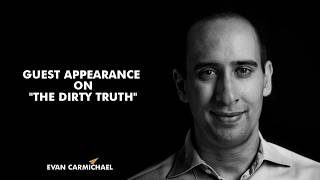
Evan Carmichael built EvanCarmichael.com from a string of early failures, including a biotech startup where he lacked technical expertise. He studied how Bill Gates and other founders got their start, then created a platform of entrepreneur guides and profiles that attracted partnerships with Twitter, Dell, Google, HP, and Home Depot.
Chapters
You're listening to The Dirty Truth with Suzanne Muchen and Rachel Bello, America's bravest business duo.
Welcome back to The Dirty Truth. I'm Suzanne and I'm here with Rachel, who's my best friend and business partner, and we've been entrepreneurs for over 20 years and we're here to help you change your life by getting you on the right path, owning your own ideas and not working for the man.
This show is all about what it takes to actually be an entrepreneur.
And in this segment, we introduce you to an entrepreneur who's really doing all that, because it's one thing for us to talk to you about it, it's another thing for you to hear firsthand from people actually doing this. So we're talking to Evan Carmichael. He's got a great story to tell. His website is evancarmichael.com. Evan, welcome to the show. I know this is a dream come true for you.
America's bravest business duo. I love it.
Yeah, so you're gonna discover why we're brave with you today.
Most people, Evan, end their presentations with a thank you. We end ours with you're welcome. So you've got a great story, and what our listeners really need to know is how did you go from being a guy who was working for literally the man and What was it like in that moment when you made the decision to start off on your own? Tell us about that.
So it was tough. My first real business I had when I was 19, I was in university and I was trying to figure out, do I keep running my business? I had started it with some, you know, some friends, but it wasn't going anywhere. I was sucking as an entrepreneur. I was making $300 a month. Not able to survive, eating beans for lunch every day. I got job opportunities with what would have been a dream scenario for me. It was Merrill Lynch and McKinsey Consulting, which a year prior would have been, "I would love to work for these guys." I went and I did the interviews with them and you know what? I just didn't put effort into it. I wasn't that interested in it anymore. I wanted to run my own thing.
Did you know— wait, but Evan, hold on. Did you know when you had that instinct, because I think a lot of people have that instinct of like, I'm done with this, but did you know what the thing was that you actually wanted to do?
Well, I'm confused because you said you were already doing it. You said you were already doing it and you were doing it sucky.
I didn't have 20 years of corporate experience. I never actually had a really full-time job before starting my company. I thought I was going to be a banker. When I graduated, I said I was going to be a banker and in 20 years I'd be the head of an investment banking company. That was my dream growing up. I didn't have an entrepreneurial family, parents, anything. There was no support network. But when I started doing this, even like a taste, it was part-time in university, something felt right. I had to keep doing this. I felt I owed it to myself. I could always go back to banking.
What was your first entrepreneurial venture? What did you actually start out doing?
Well, I had a ton of like early failures, uh, tiny small businesses like selling baseball cards, that kind of stuff. The very first thing I did was I, I was 5 and I encouraged my 3-year-old sister to drop pictures with me door-to-door selling them, and I earned my first 5 cents from my neighbor. But the first real business was, it was a biotech software company, and I didn't know anything about software. I didn't know anything about biology, but I came on and was basically the business guy and helped turn that company around.
Well, if you came— hold on a second, but if you came on, you mean somebody else had already started this company and you came on? Or this was your idea?
No, it was not my idea. There were two founders, they had started the company on their own two years prior, released a product that was great, but they just didn't know how to market themselves.
Okay, but then are you a sales guy or an entrepreneur? Because a salesman is the guy who sells and makes other people's ideas fabulous, and an entrepreneur is the guy who—
Well, they're not mutually exclusive.
No, but I want to know if Evan's— when you say you were an entrepreneur, I don't consider, you know, coming into somebody else's business and making it successful, you know.
Well, you did that.
An entrepreneur to me is somebody who builds a business. It's not just having a product. You've got to build up a business, and part of that is sales, and part of that is bringing on a team, and part of that is doing the media. Yep. They had a product that was a good product, but they didn't know anything about building the business. That's what I came into.
Got it.
How did you know how to build a business?
I didn't, and I sucked at it, but it was interesting for me, and I was passionate about it, and I almost quit multiple times. Like, this wasn't, oh, here's the answers and go ahead, and we were instant success.
So how did it change for you? So tell us the moment when things started traction and started to change for you?
The moment changed when I, I was at my absolute lowest. I was crying on the phone with my partner and told him I quit, like I'm done, this is too much stress and work, we're not going to make it. And then the next day I woke up and I realized I'm not the first guy to try to solve this problem. And that was the challenge I had, was I was trying to do everything myself, come with every idea myself. I realized I'm not the first guy. And so I looked at other software companies. I looked at how Bill Gates started Microsoft and how Intuit started and McAfee got started. I looked at how they went from zero to one, not how Bill Gates makes such a million dollars now, not interesting, but zero to one. That's what I wanted to do. I modeled his strategies and put it to work for my business and we started getting traction.
So that is— what you're talking about right now is really what Suzanne and I try to do in these interviews for our listeners, which is we're not so focused on what it all looks like when the trees are heavy with fruit, but the zero-to-one moment. The problem is that's a pretty opaque moment, and it's generally covered up and glorified the minute you hit success. So how did you find out what those people did zero-to-one? Because I have never seen anything about the zero-to-one days.
The bigger the company is, the easier it is to find, but you got to dig down. And it may be reading somebody's biography, or could be reading profiles of them. It was hard to dig down. One of my favorite books is called Radicals and Visionaries by Thaddeus Warrow that explains a lot of these early stories. But you're right, there isn't a ton of information. But again, the bigger the person is— you look at Bill Gates, read his biography, you can find out how he got started.
Evan, is this what EvanCarmichael.com now does, is uncovers that content to help entrepreneurs?
The source code for those early moments?
I like it, the source code. I might use that.
Trade mark.
Yeah, it's, it's, it right now is the largest collection of famous entrepreneur stories and profiles online. So we've built it up.
So it's stories and stories and profiles. And what's the revenue model of EvanCarmichael.com?
The revenue model right now is off of guides that I sell. So helping entrepreneurs kind of break it down A to Z of all the major challenges.
Those are the worksheets that I saw online, those worksheets.
Yeah, the worksheets. Uh, and then I partner up with brands and I do a lot of work with them helping them reach the entrepreneur market.
So why did— what brands want to reach the entrepreneur market?
Tons. Uh, I work with Twitter, I work with Dell, I work with Google, I work with HP, I work with Home Depot. Um, all of them.
And you say you work with them. What's your job when you're working with them?
Uh, usually it's creating content for them. There may be some consulting work, although I hate doing consulting because it's just time for money, but totally, yeah, yeah, understand. But it's usually— so like, I just did a Dell Twitter chat. So Dell is trying to reach out to the entrepreneur market. It's all value-add. They're not selling anything, but they're trying to be seen as a friend of entrepreneurs.
So the first thing you did was become a magnetic force for the entrepreneurial community, right? And once you got a following, then you could turn around and sell that. To partners. Is that how that worked?
Absolutely. Although I don't even do any selling. These guys are coming to me.
Right, but I mean, you needed to create that magnetic field, otherwise they wouldn't have. So, so for— if you're listening out there, the key is what community do you want to surround yourself with and what kind of compelling content are you going to create that's going to get you the numbers that then bring in the big boys? That, that sounds really—
what Evan's uncovered is a couple of things. One is He went right to his source code. He went right to his passion to figure out what it was he wanted to do so that he could do it 24/7 without getting tired. Because that's a sign that you're headed in the right direction. You don't get tired. You don't get bored. And the other thing that he did is he figured out, to Rachel's point, his market. He knew exactly who he wanted to talk to, and then it becomes a whole lot easier to have a voice in that market.
And Evan, are you doing how-to for those people? Are you giving them literally the, you know, how-to on the tools for being entrepreneurs, or are you teaching them at a basic level?
It's a mix. It's a mix. Some people need the how-tos, they need the step-by-step, and some people just need the motivation to keep going. You know, it's hard.
Yeah, I see a lot of that motivation on the site and I really like it. It can get a little self-helpy, but cheesy. But you know what, can't get cheesy enough with these guys.
I know it could be cheesy, but it works. It worked for me, and I'm just sharing what worked for me. So a lot of people like it.
We believe it.
That's cool too.
All right, well, it's been great to have you on the show, Evan.
Thank you, guys.
Absolutely. Good luck with EvanCarmichael.com.
All right, cheers.
More from Evan


How the Biggest Mistake in History Created A Trillion-Dollar Empire | Sergey Brin



9 Machiavelli Principles That Force People To Respect You | Machiavellian Philosophy



The First 10 Words That Instantly Ruin A Sales Conversation | Vanessa Van Edwards

The Top 1% Mindset Behind The First $5 Trillion Company | Jensen Huang (Nvidia)

