How to Build a Winning Mentality from Scratch | Entrepreneur's Path to Success
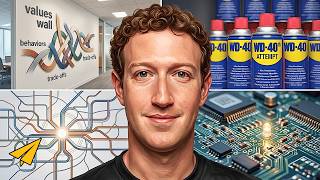
Will Smith, Elon Musk, Gary Vaynerchuk, Dwayne Johnson, and others share the mindset shifts that built their success. Musk uses physics to make decisions. Johnson talks about depression. Kiyosaki and Buffett stress financial literacy and turning failure into fuel.
Chapters
When you go to start a company, everyone kind of writes down what they would like their values to be. But values are not what you write down on the wall. It's like your lived behaviors. And you only really learn what you care about when you have to make hard trade-offs and face challenges. So yeah, you learn the most important things through facing challenges.
When I got fired, I was living with 6 guys in a 3-bedroom apartment. My time was worth this, right? And I worked as a bartender at night, and I did whatever I needed to do, and I wrote software and whatever I needed to write. But it's the same today. But the key is what are you continuing to learn? What are you continuing to get good at? Where can you sell and what can you do? In business, there's no off-season. There's no downtime. Are you kidding me? Every one of you watching out there, if you're napping, I'm kicking your ass. That's just the way it is.
We get a lot of customer contacts and one of the things that we would like to do is minimize customer contacts and in order to save money so we can offer people lower prices, but still offer great customer service. And so how do you solve that problem?
Hey, it's Evan Carmichael, and I watch these videos every day because I need them for motivation. Being around successful entrepreneurs every morning helps me believe that I can do great things too. It's like your morning coffee, but for your goals, kickstarting your day with a blast of positivity. So here is a challenge for you. Try watching one video every morning for the next 30 days, and let's find out together if they help you do great things too. If you're in, leave a hashtag #believe in the comments below so I can celebrate with you.
So today, let's get 50 years of priceless business knowledge in just 3 hours.
Believe.
One of the things that is very important at Amazon that we're constantly trying to do is reject this either-or thinking that really is at the heart one of the big impediments to innovation. Let me give you a simple example, which is in customer service. What we want to do is make the service better so that we can have the ACSI rating that you're talking about of 88, which we are very proud of. And that's a very— they have a panel of like 60,000 customers that they poll, so it's a very statistically significant kind of result and something that we do, you know, it's a metric that people have worked very hard, not specifically on that metric, but on the things that lead to it. So it's a great, uh, for us, it's something that we are very proud of. This— we get a lot of customer contacts, and one of the things that we would like to do is minimize customer contacts and in order to save money so we can offer people lower prices but still offer great customer service. And so how do you solve that problem? Well, you do it a couple of ways. One is you eliminate defects and eliminate root causes of defects, because if customers are contacting you, they probably didn't want to. I think actually the number 4 reason we get contacted is to say thank you. And so that's kind of nice. We don't need to eliminate those contacts. But most of the contacts that we get are not to say thank you. They, you know, sometimes come in all capital letters. They, you know, and So if you can eliminate the defects, you're going to save money because you're not going to have to handle the customer contact at all, and you're going to improve the customer experience. So there's no trade-off in reducing defects. And the more— the closer you reduce defects to the root, to the root cause, the more that's going to be true. You're going to both improve the experience and save money. No trade-off.
I think you learn what matters to you and what's important and kind of your place in the world through repeatedly hitting your head against different challenges. And I mean, I think that that is sort of— that's the journey, right? I mean, that's the entrepreneurial journey. It's also, I think, part of the beauty of building things. And, um, but this is something that Jensen talks a lot about too, right? It's like, I feel like you, you know, when you go to start a company, you, you know, everyone kind of writes down what they would like their values to be. But values are not what you write down on the wall. It's like your lived behaviors. And you only really learn what you care about when you have to make hard trade-offs and face challenges. So yeah, you learn the most important things through facing challenges.
My attitude is we're all free agents, you know, and you're gonna apply your time and your skill set, whatever that is, where it's almost a time arbitrage, right? Where in my personal time spectrum, if you want to get corny, Where am I gonna get paid the most? And then I'm gonna try to sell that time. And hopefully there's somebody else whose time is worth more who values me enough, right? I mean, even where I'm at, right? If there's somebody who values my time more than I value it and they're willing to pay me that much, I'm in, right? And when I was, look, when I got started, when I got fired, I was living with 6 guys in a 3-bedroom apartment. My time was worth this. And I worked as a bartender at night and I did whatever I needed to do and I wrote software and whatever I needed to write. But it's the same today. But the key is what are you continuing to learn? What are you continuing to get good at? What can, you know, where can you sell and what can you do?
You talk about being in this world of pro wrestling. It seems like it was far from pro back then.
Right.
Right. Your dad didn't want you to get into the sport. You had this yearning to become a part of this world. What do you think that was?
The yearning part of it? Yeah.
Why did you want to be part of wrestling? What was it about wrestling in particular?
Well, a few things. I think because I grew up in it. And not only did I grow up in it, but man, I loved it. I loved wrestling. I love the antics of it. I love the characters of it. And especially at that time, you know, when you grow up in the '80s, wrestling back then, late '70s, '80s, was a whole different, I think, unique experience in that a lot of people bought in. Into it and they felt like it was real. And they'd have these local stars every week and they'd be on their television sets, just their local TVs, and they would talk down the lens about what they're going to do to their opponent this Saturday night at whatever little arena they're wrestling in. I loved all that. And I had a front row seat watching my dad and my grandfather and everybody in my family live their passions. And it's what they, I believe, were all born to do.
Wow.
And so I think the yearning of it, it started to happen for me when, to be honest, when we were evicted out of Hawaii. So we were living in a little apartment. We were evicted when I was 13 or 14 years old. And I remember in that moment, I never wanted to feel that again. I was with my mom and we came home and there was a padlock or there was a notice. So you have a week to get out.
And that was it.
And that was it. And I remember just her and I, and she was standing there, she was crying. She didn't know what to do. And my dad was wrestling in Tennessee at that time. And I remember then thinking, I never want to experience this again. And what can I do to change it? What can I do? Like, what can I do with my own two hands? I'm 14, so I can't do shit.
Right.
That's a tough place to be in as a 14-year-old.
As a 14-year-old, right. So I remember at that time thinking, well, all the heroes in my life are these guys. They're these guys who are— they're big, they're strong, they're pro wrestlers. I bet you if I built my body and if I went to the gym, then I could change the scenario. So from that moment, I think that defining moment, now years later, I fell in love with the game of football.
Right.
I love playing football. My goals shifted to, well, maybe I got a shot to go to the NFL. I was at University of Miami. Great school. We were national champions, played for it on two other occasions. I mean, we were ballin' back then. Um, those Hurricanes back then, dude. I think you were in Johannesburg at that time.
Yeah, yeah.
That's way back.
Yeah.
In the '90s. But we were really ballin'. So I shifted my goals. And then when that didn't happen with the NFL, I took it as a sign. And I remember thinking, this I need to close this chapter in my life, really listen to my gut, and I want to turn my attention to something I think I am going to be so passionate about and I think I was born to do.
Also, to make sure you're actually taking action after watching this video, I've designed a special free worksheet just for this video. The worksheet will highlight our favorite lessons from the video that will inspire you to remember what you learned today and actually apply them. The worksheet will also give you space to write down what your key takeaways are and your specific plan of action to make sure you're getting results. If you want the worksheet designed specifically for this video, absolutely for free, there's a link in the description below. Go click on it and start building the momentum in your life and your business.
I'll see you there.
First of all, I don't like very much the word luxury. Because you have something attached to it which means show off, which means something of non-significance, something futile, something that is useless. And I think a better definition is combination of quality and creativity. It's how I define what we do. Obviously, these products, because of the very high quality they have, because of the high level of innovation, they are expensive. But the reality is really behind the appearance, behind the price, It's the quality and the innovation that people are looking for. So for me, it's a definition. And in the group, we are really concentrated on this. How can we create the most innovative products and the creators Or the scientists that work with us in the many laboratories we have, they have complete freedom to express new ideas. And after that, we have to transform them in reality all over the world.
Sometimes people see the problem and the problem is really annoying them, and then they invent a solution. Sometimes you can work this from the backwards direction, and, and in fact, in high-tech, I think a lot of the innovation sometimes comes from this direction. You see a new technology, or there's something out there, some new understanding in the world, and you work backwards from a solution to find the appropriate problem. Carbon dating is a little bit like this. So, you know, they'd always wanted this solution to be able to date things, But until they really understood radioactive decay, it wasn't possible to come up with that solution. So some new understanding, some new concept enters the world, and there are a lot of things like that in high-tech. Another critical ingredient for anybody who would be innovative is persistence. And there are many examples of people being persistent in the world in order to make something work. This is one of my favorites. WD-40 was a small team, a small company of 3 people got a government contract to develop some kind of coating that they could put on the skin of Atlas missiles while they sat in their silos. To keep them from rusting. And they worked on this for a long time to find this right compound that would do this job and finally did it. Now, it turned out that the Atlas missile market was a fairly small one. So the company wasn't really able to make much progress. Now, what does WD-40 stand for? It stands for Water Displacement 40th Attempt. And that's the name right out of the lab book when they did all this work to invent WD-40. So when they properly recognized the size of the Atlas missile market, they started to think about a different business plan. And the company was called the Rocket Chemical Corporation. And it was their only chemical. It was their only product. And so about 10 years later, they renamed the company the WD-40 Company. And, you know, the rest is history.
The entrepreneurial journey is very challenging, especially the early days when you're running a startup and, you know, there's the sense that what you're doing could just die at any moment. And the volatility, everything is just getting thrashed so much. And it's not you obviously look back, you have all these fond memories, but it was not the most fun part of the journey or, you know, the part of my life that I, like, wish I could go back and relive. So, I mean, I do think that there's something to what Jensen was saying that I thought was very honest and that when I heard him say it the first time, I was like, yeah, I get that, right? It's like, I think, I think there are like a lot of people for whom You know, if you knew how painful it would be along the way, you wouldn't get started. But then, you know, I think that that's one of the things that's good about human nature is you can underestimate how painful things are going to be so that way you can go and do good things.
Business is the ultimate sport. But I've said this to our players over the years, right? Game's 48 minutes. You practice even if it's 5 times a week, 3 hours a day. Maybe you work on your game another hour, 2 hours a day. And you're like all in if you do that. And business is 24 by 7 by 365 by forever, and you're competing with everybody. It is— business is the ultimate sport. There's nothing close. I've sat and told Michael Jordan, Dirk Nowitzki, Kevin Durant, all these people, like, you think you're competitive? You ain't, right?
You don't know what competition is.
You have an offseason. In business, there's no off-season. There's no downtime. Are you kidding me? Every one of you watching out there, if you're napping, I'm kicking your ass. That's just the way it is.
Straight up.
You know? I'm calling you out right here.
Seriously, because— and it's not to say, you know, there's not more to life than just working all the time, because I love what I do, you know? And so if I'm reading about technology, if I'm reading about, you know, encryption, if I'm reading about whatever, big data, if I'm reading about machine vision, machine learning, I know that I've built this base of knowledge and I can take machine vision, apply it to what I already know and come up with something new. Right? So if you don't have that layer of knowledge and things you're really into, you're way behind.
How do you market the product? I don't know if in this room you have students in marketing, but I often meet students in marketing, and in spite of the group being number one with the students in France in desirability to work in the group, I always tell them we don't do marketing because marketing is against what a company like us should do. Because marketing— what is marketing? Marketing is to analyze what the customer wants and then try to follow what the customer is looking for and test what you create following these trends and try to do it. We do completely differently. We create new products and sometimes it fails, but when it's successful, the customers follow. So the marketing is not for us part of the product creation. The marketing is after. The marketing is when we have these products, how with these products which people want maximize the desire. It was our business. You asked a question about luxury. Luxury for me is how can you create desire. So the most important word in our business is is desire, how to create desire. And when you have the product, then you have to create good environments in the shops, and you have to present it well. You have to do well, good films if it's a perfume, good advertisement either in the magazine or in the internet if it's a a product. That's the way I see and we see in my group, the way to put product in contact with the consumers.
For a fire to burn, everybody's like, who started the fire? Dude, somebody, who kept it going? You know, I think the better question is, how do you keep the fire burning? 'Cause everybody's got the spark. Everybody's got the spark. It's like, how'd you put it out? How'd you put it out? Who put it out? How do you find it again? And then once you get it again, dude, how do you add wood to it? I talked about this in a book that I wrote called "If You're Not First, You're Last." Build a fire so hot, so big, so enormous that people from all over the world, regardless of who you are, your religion, your race, your age, your sex, they're like, I gotta go sit by that damn fire. And like, you could see it from miles away. You know, so like the fact that you say I'm a catalyst to other people, that is such a store of wealth for me. It's like you just filled up this big silo of what should be wheat in it with purpose. And because that is the ultimate wealth. The ultimate wealth is, I helped other people. You know, another huge silo of wealth is my personal confidence that I can do— the idea that I can do almost anything. And not saying I can do anything. I can't do anything. But if I don't quit, dude, I could probably figure it out, you know? And I have confidence in myself not to quit today. So, and I think the catalyst that I become for other people today is not the jet and it's not the the money. The ultimate, I mean, I think some of that turns a lot of people on and off. I think the real one, the one that really like, that inspires my peers is, dude, your energy, bro, is like, like you just always relight. When I thought you were bright, you get it brighter. When I thought you were big, you make it bigger. And I don't do that for people. I'm not trying to please other people. I'm trying to please me.
It takes 3 qualities essentially to do well, and extremely well actually, in this country. It takes intelligence, it takes energy, and it takes integrity. And I say if you don't have integrity, you know, we don't want to hire somebody that's got intelligence and energy if they don't have integrity. We'd rather hire somebody that's dumb and lazy if they don't have integrity, because they probably never get around to cheating us or doing something of the sort. And integrity is absolutely an option. You know, you may not be able to throw a football 60 yards, and you know, you may not be able to run the 100 in 9.8, you know, you may not be able to sink 3-pointers from— but you can choose where you stand on the integrity scale. You weren't born wired one way or the other. That is an absolute choice you make.
The being prepared for the next thing is so wildly critical. I think life in general is rise and fall. Everything is rise and fall. And there's been a couple times in my life where I got caught holding on to the last wave while it's dying.
Oh, I have a good quote for that.
Yeah.
I have a Casey Neistat quote.
What Casey?
Which is like that Tarzan, I don't even think he, he probably didn't make this up, but Tarzan can't get to the next branch if he hasn't let go of the first one.
Yeah, absolutely.
And that's kind of that same, philosophy.
Yep, absolutely. And you've got to be— when you're grabbing that first one and you're holding it, it's going to be there, it's fantastic, but you gotta know that you're gonna have to let go at some point because the same thing that saved your life, if you hang on, it'll kill you.
Elon, you've, you've been compared to Henry Ford, Richard Branson, um, you know, Steve Jobs. Uh, who do you compare yourself to?
I don't really compare myself to anyone. I mean, it's not— I mean, there's some people that I admire from history that I think are, you know, I think are great. So certainly many of the scientists and engineers and literary figures and so forth. And like, I'm a big fan of Ben Franklin, you know, who's a scientist and sort of thinker. And I mean, he was the kind of guy, who did what needed to be done, you know. So guys like that, I wouldn't say I compare myself in any way, but I certainly admire them.
Even when I was 6 years old and wanted to sell lemonade, when I was a child in New Jersey, the thing that I spent most of my time on was not making the lemonade, though it had to be good enough to drink, not standing behind the desk, or the table that I had for my lemonade. I spent most of my time walking up and down the streets of New Jersey and trying to watch cars drive by and try to figure out which tree or what street sign to put my lemonade stand sign on that gave me a better chance to sell lemonade. I didn't understand what I was doing at 6 years old, When I was 11 years old, I sold trading cards and collectible stickers at shows. I spent so much time thinking about how I would build out my table and where I would put what cards and what stickers, and I would walk the whole show and pay attention to how people set up their tables. What I was doing at that age, and then when I turned 14 and 15 and started working for my dad's liquor store, I would watch customers walk through the front door of the liquor store, and I would pay attention to how they would walk, where they would go, what displays they looked at, what shelves they looked at. And what I was doing my whole life, and what I do for a living now, and what every single person at this conference, whether you work for a big brand or you're an entrepreneur, whether you've been doing it for 5 years or today is the first day you're going on this journey, What I was doing then and what everyone needs to be doing now is following the attention. Too many people here get comfortable with one or two platforms to make content, or one or two ways of how they sell product, and they become in love with it, and they become complacent, and they stop evolving to where the attention is. My career as a content creator started on YouTube in 2007. 2006, but it was Twitter in 2007, and it was Instagram in 2011, and it was all these other platforms along the way—Snap and TikTok and LinkedIn and YouTube Shorts and Facebook—and even ones that didn't last forever. How many people here, by show of hands, remember Vine, the app? Remember that? That didn't last forever. But in the 2 years that it was dominating, or the year and a half, a lot of attention was grown from that platform. More importantly, a lot of people learned by doing Vine how to make short videos, which is now one of the most important ways to communicate in our society. The biggest thing that I'm trying to leave this conference with is getting everyone here dramatically more accountable to focus on attention, not where you want to make content, but where your customer is.
How hard do you actually work?
What— meaning what the audience doesn't see?
How hard do you actually work, DJ? Hard.
I mean, you have to work hard. Everybody in this room knows if it's worth something to you, you got to put in the effort. And, you know, the tricky thing, as we know with social media, is You let people in a little bit. You let them in on what you want them to see, but at the end of the day, I always feel like social media may be the tip of the iceberg that you allow people to see, but it's everything underneath the water that they don't see. And I always like to say it's the work we put in when nobody's watching that really matters. It's easy, I think, when you go to work, you got a lot of people around, you galvanize everybody, you could feel the momentum and the energy start to go. It's— and not to oversimplify the work, but it leads to work begets work. So if we're all together in a room, we're going to work. But it's the stuff you do on your own away from everybody really that matters. So you got to put in the work. How hard do I work? I work hard. Like we all work hard. I like to say that.
We went on the air with the Oprah Winfrey Show in 1986 nationally. And people say, oh, but you're so comfortable in front of the camera. You can be yourself. Well, it's because I've been being myself since I was 19. And I would not have— I would not have been able to be as comfortable with myself had I not made mistakes on the air and been allowed to make mistakes on the air and understand that it doesn't matter. You know, there's no such thing to me as an embarrassing moment. No such thing. If I tripped and fell, if my bra strap showed, if my slip fell off, if I fell flat on my face, there's no such thing as an embarrassing moment because I know that there is not a moment that I could possibly experience on the air that somebody else hasn't already experienced. So when it happens, you say, "Oh, my slip fell off," and it's no big deal. I mean, like, I was on TV the other day and somebody says, "Oh, Oprah, you have a run." Have you not seen a run before in your life? Well, I get them too, let me tell you. So, I mean, I can't be embarrassed. I can't be embarrassed. Now, when I first started out, That was not true because I was under the— I was pretending to be somebody I was not. I was pretending to be Barbara Walters. So I'd go to a news conference and I was more interested in how I phrased the question and how eloquent the question sounded as opposed to listening to the answer. I was so— which always happens when you're interested in impressing people instead of doing what you're supposed to be doing. And it took me a while. It took me messing up on the air on during a live newscast. I was doing a list of foreign countries, and there was all these foreign names, and then Canada was thrown in, and I called Canada "Canada." And I got so tickled that I called Canada— I go, "That wasn't 'Canada.' That was 'Canada.' Excuse me. That wasn't Canada. That wasn't 'Canada.' That was 'Canada.'" And then I started laughing. Well, it became the first real moment I ever had. And the news director later said to me, "Well, if you do that, then you should just keep going. You shouldn't correct yourself and let people know." Well, I know, well, who's ever heard of Kanata? So that was, for me, the beginning of realizing that, oh, you can laugh at yourself and you can make a mistake and it's not the end of the world. You don't have to be perfect. And biggest lesson for me for television, because then it didn't matter.
Who works harder, the people at eBay or the people at Alibaba?
Sometimes you have not only have to work how you have to work Smart.
So would you say you work smarter than eBay? I'd have to say yes, right? Well, so far.
Yeah, so far. Okay. Because I think, you know, we are pretty lucky people. And the people see you, yeah, you work very hard. True. In this world, there's so many people work very hard, but they're not that. I told my team when we IPO'd, I asked a lot of people to sit I say, you know, all of you guys, a lot of you guys millionaires and so rich. But 15 years ago, who are we? It's so difficult for us to hire people 15 years ago. People who are not that bad. I said people can walk, still walk on the street, we hire them. Because nobody believe internet, nobody believe internet. And they join the company, those people who believe they They were smart. They were headhunted by the other company. They set up their own company. Those people, nobody go to headhunting them. They stay. Today they be successful. Very key reasons we insist, we persist, we never give up. We believe the dreams together.
Numerous people my age actually think debt is horrible. And you just showed us a perfect example of cash flow and how debt can generate income. And many entrepreneurs use this formula to make money on a day-to-day basis.
So what most people do is they have student loan debt, SL, and that debt is going out this way. You know, it doesn't put any money in your pocket. You can say, well, I have a job. Well, that's still you working for it. See, I don't work for any of this money here. I do this job once, set the deal up. Every year I add more and more and more. I'm borrowing money from here It's coming here and going this way. So the debt is putting money in my pocket and bad debt is taking money from my pocket. So the, the problem is if you're going to use debt, you've got to be much smarter than this person here. You've got to be very, very smart. That's why I took real estate classes when I was 25. I've never stopped taking real estate classes. Because you buy a piece of real estate and you make a mistake, this turns into a liability. This, if I get the renter leaves the place, this goes here that fast. And the cash flows that way. It's going out of my pocket. So it's nothing to do with real estate, it's nothing to do with the car, that there was student loan. It has to do with these these two words here. So good debt, again, is debt when I borrow for this and it puts money in my pocket. If I had a car and I borrowed money from it and somebody rented from me as an Uber driver or something and it put money in my pocket, it would be an asset.
We just sold a company out of Atlanta that went on Shark Tank, Cycloramic. They had the, the iPhone that used the buzzer, and you ran this app on it, and it just turned around and did a panoramic version of the phone— took panoramic pictures. Well, they changed the format of the iPhone, which is great. This is a great lesson for entrepreneurs, right? So this guy came in with this really cool app, worked with an iPhone 5, and it just turned around and take panoramic pictures and then stitch them together, and it was a cool picture. Well, not— so I give him $250,000, I think, for for 20% of the company or 25% of the company. Not 4 months later, Apple changes the iPhone and it's got this like rounded thing underneath and we're like, oh, what are we gonna do? But the guy was smart. And one of the things I always look for for companies coming in is what's your unique advantage? What is the one thing you have that differentiates you from other companies? And for this guy, the product was interesting, But, you know, as I said on the show, the ability to, to program video and use what became computer vision was a unique skill that was hard to find. And so we worked with him and actually brought it— worked with him to bring in another CEO, and they used that same technology to be able to scan cars. So now if you go to websites like Carvana to buy a car and you see how you can You can turn the car around just right there. That started with their software. And the guy's name is Bruno. So Bruno, we just sold his company for $22.5 million a couple weeks ago. And so I walked away with, you know, 25% of that. So I was like, yeah, Shark Tank. You can choose.
We all get to choose our life stories. And it's the choices that define us, not our gifts. Everybody in this room has many gifts. I have many gifts. You can never be proud of your gifts. Because they're gifts, they were given to you. You might be, you know, tall, or you might be really good at math, or you might be extremely beautiful or handsome, or, you know, there are many gifts, and you can only be proud really of your choices, because those are the things that you are acting on. And one of the most important choices that each of us has, and you know this just as well as I do, is you can choose a life of ease and comfort, or you can choose a life of service and adventure. And when you're 80, which one of those things do you think you're gonna be more proud of? You're gonna be more proud of having chosen a life of service and adventure.
I actually, I spent a bunch of time analyzing and reflecting on why it was that we were even able to do it, because All, like, all reasons suggest that we shouldn't have been able to do it, right? Because all these other companies had way more engineering power and servers and time and money and all this stuff. And I actually think that this is a pretty instructive thing for anything that you want to go do, because this is— the same property is going to be true for anything that you guys start, is that someone else is going to have more resources and be able to do it. The reason why I think we actually ended up being the ones doing it doing it is because we just cared way more about it than everyone else, right? So there were always projects at some of these other companies that were these hobbies, but we always thought that it was this really important thing and really just like felt in our gut, in our heart, that we wanted to do it. And, you know, early on there were always these skeptics saying that, oh, this can't be a business. We didn't actually care that much about it being a business early on, but a lot of the reason why bigger companies didn't invest in it was because it wasn't clear that there was a model that would work for it. It seemed like a bad idea. Yeah. And I actually think that that's true for a lot of the best ideas, where it is that it's not that someone else can't do it. They actually can. And the odds are stacked against you. But I think often that belief in the fact that you just care so much about what you're doing is the only thing that kind of drives you to do it. And, you know, to be honest, that kind of drives me to this day. I mean, one of the big emphasis points for the company right now is internet.org. And, you know, for a while we had this rallying cry of, can we connect a billion people? And, you know, when we started talking about that, we thought that was crazy, right? It was way bigger than any service in the world that had been built. And, you know, it was 10 digits long, right? It's like a, you know, it just, it felt crazy. We'd never get to that. But then the thing is, as we started to actually get closer to that, we took a step back and we're like, all right, well, our mission isn't actually to get 1 in 7 people in the world to be connected. It's we want to connect everyone. It's a big issue that only around a third of the people in the world have access to the internet. And that's something that we think that we can do something about. And similar to early Facebook, there's no business model around this. I mean, all the people who have all the money in the world, I mean, it's not necessarily a fair thing, are already the people who are on Facebook. It's in the first, you know, seventh of the world. But we just believe really strongly. It's like, this is what we are here to do. This is what our company cares about. I care about it. The team cares about it. Our culture cares about it, so we're just going to keep pushing on it. And I actually think a lot of the reason why great stuff gets built is because it's kind of irrational at the time, but so it kind of selects for the people who care the most about it doing it. For young people who are considering taking a leap when they have very little responsibility or think, you know, very little to lose, throwing themselves in that kind of, throwing themselves in a situation where they'll fail their way to an education, struck me as being so important and so underrated. You don't have kids or you don't have a house or a mortgage. And it seems like that's exactly what you did. You used, like, failure and risk as a way to self-educate.
Yeah. I mean, it's difficult for me to recommend it to everybody listening to this program because not everyone's going to be successful. And obviously, you and I have been fortunate that we have had success doing it that way. Some people, and I'm going to put my conservative hat on knowing that the parents may be listening as well. You know, some people will benefit from having an education, you know, degree or whatever to fall back on if they find that they just can't make a go of it in business. But anyway, for, I think for the two of us, I think the, Yeah, being out in the real world, I mean, I learned so much. And, you know, it's held me in such good stead throughout my life. You know, in running a magazine, of course, you're going out interviewing people, you're learning every time you interview somebody. You know, I think being a journalist or being an editor, you— It's not so different from being an entrepreneur. You're, you're out all the time meeting new people in different sectors, just learning, learning, learning. And, and, you know, through the magazine, a lot of people would write with problems. Young people would write with problems. So we ended up setting up a student advisory center where we would give people advice on venereal disease or the gay population or contraceptive advice, abortion advice, psychiatric advice, you know, and just meeting all these people with all these different problems, suicidal mental problems. Really opened my mind. It was just a fascinating, fascinating education. And throughout my life since then, I've spent a lot of my life trying to address some of these issues in a, first of all, in a wider sense in London and now more on a global scale. And, but that was, you know, that education was so important. Um, you know, for instance, I remember when I was 15 in London, you know, somebody who's gay came to me saying that they wanted help. And, um, maybe I just turned 16, and, um, and I thought very naively that when they said they wanted help, that, you know, they didn't want to be gay. Um, of course, you know, within a month or two, I realized that, you know, that people are born gay and, uh, and and they don't have a choice in the matter. And what they desperately needed in those days was to meet other gay people. And because if they came from some remote place in the UK where gay people weren't accepted, they would come to London desperately seeking love or seeking friendship. And so just little things like that I learned from just being out there listening and doing.
Can you listen to the excuses of your employees and salespeople? I have 100 salespeople in one city, and I'm just losing my patience to listen.
They would never talk around me with it. I mean, the environment wouldn't allow it. No. There's no way anybody would be like, I'm late because of the traffic. They know they're going to get punched in the face. I didn't make appointments because— There's no way. We have a culture. We have 92 employees or something in our office. Well, last time we spoke, you had 60. Yeah. No, we could use 200. We could use 200 right now. We, I mean, I don't think we would ever hear that, would we, Jared? I didn't hit my numbers because? Most, most, most not. Yeah, I mean, it's just not tolerated. Like, it's not, we don't even talk about don't use excuses. It's just the environment. The culture. Because they don't hear me making excuses. So. Like if I miss a deal, we do a lot of real estate deals. If I miss a deal, I'm always going to— what did I do wrong in that deal? First response for me is, what did I do wrong in that deal that they didn't pick me? What did I do wrong that I didn't get that deal? What did we do wrong that we didn't hit our number there? Like, I'm never saying— it's not blaming somebody. Well, I don't have control when I blame. I want control. So even if they are to blame, right, I want control. I'm not going to assign you blame. If you hit my car, I'm gonna say, what did I do wrong? What did I do that allowed you to hit my car? I did something. So even in the most dumb, dumb, like I ended up in a lawsuit where a guy basically found something, sued me for it. I didn't do anything to this dude. My immediate response was, what did I do to create that frivolous situation? He was a criminal, total criminal, sued me for $60 million. He just sued me because he thought he could get something from it. But I did something. And the reason I want to assume that— What? The cause, I want to be the cause point, is because if I assume that position, even though I didn't really do anything, then I can control what I did. I can't control what another person does, but I can spend time and energy controlling I'm controlling what I do. So when— if me and Elena get in an argument, you know, when I'm rational, I'm like, hey, what did I do? Did I not give or pay enough attention? What did I do to cause that situation? Did I respond wrong in the wrong fashion? And I screw up all the time.
You know, people ask me what they should take in business school, and, and, uh, or even if they don't go to business school, what they need to know before getting in business. And I tell them, you know, you have to you have to understand accounting. It's the language. I mean, it would be— it's like being in a foreign country without knowing the language if you're in business and you don't understand accounting. So it— you want to get as comfortable with that as you are with the English language. It's made me a lot of money because I listened to what Ray Dean had to say 53 or 54 years ago. And have been able to understand what I was seeing on pieces of paper, what that told me about businesses and the limitations of what it told me about businesses.
The thing is, and you know, when I started, I had, you know, all these grand ambitions of what I wanted to be and what I wanted to do. And, you know, I want to be the biggest movie star in the world. So I studied that and I worked out and I got my body crazy and I did, you know, just got my head around doing everything I could do to be the biggest movie star in the world, you know? And then I had a taste of that and I realized that even though I had achieved all those things, on the inside I was still that same insecure little boy that was trying to prove something, you know, to girls that had cheated and to my father and all of that. And that you can't achieve your way out of your, you know, childhood wounds and traumas. You can't fake it. You can't fake it, right? So then I made the shift, and what I realized is that the only sustainable mission, um, throughout your whole, uh, existence is to improve lives. And as soon as I made the shift in my mind from trying to be big and trying to have money and trying to be popular to making sure that I improved lives every step step of the way on this earth, then all of a sudden I started experiencing healing, you know. And Alfonso was one of those people that was right there with me making that transition from product and winning to love and people. We've got to try to create an electric car company.
But it wasn't as though in creating these companies that we thought that we would be successful. I thought that the most likely outcome was failure. Sure. But it was still worth doing even though the odds of success were low. In fact, even for SpaceX, originally what I started doing was not creating a rocket company, but actually was going to do a small mission to Mars, which was just a philanthropic mission where we would send a small greenhouse with seeds and dehydrated gel, and upon landing, hydrate the gel, and you'd have have this cool picture of green plants on a red background. And the public tends to respond to precedents and superlatives. So this would be the first life on Mars, furthest that life's ever traveled, and you'd have this great money shot of green plants on a red background. So, yeah, I thought that would get people's attention. So, but the expectation for that was no return. I thought we wouldn't get any, you know, we'd just spend spend the money on that and it wouldn't, wouldn't happen.
The biggest companies in the world understand the value of brand probably more than influencers and creators. They're just, they don't understand where brand is being built. They think commercials and billboards and print ads and banner ads on websites and pre-roll intrusion ads on digital and dorky posts on social is building brand. And my point is perfect social or best social or strategic social is where brand is being built. And I think to your point, a lot of people in this community of creators and influencers, they're so transactional. Like, everything is to selfish needs. How many followers can I get? How many likes am I getting? How much money can I get from this brand deal? And so it's, it's very sales-oriented. The reality is both matter, you know, like, if you build unlimited brand but you don't know how to close that equity into a sale, well, you're gonna go out of business. But if you're just a salesperson that and you're not building brand, they're gonna move on to the next creator, to the next person, to the next brand. And so, you know, they both matter a lot, but I think that sales is just people that aren't great at brand. And what I mean by that is, you know, when I look at the best personality businesses, you know, Ryan Reynolds doesn't sell. He's a brand and you just like, I just wanted Mint Mobile. I'm like, I've been on Verizon 100 years. I'm like, I want my, like, when Kevin Hart makes a funny video, funny video, like, and he's got his tequila in it. Like, I just want to support him. He's not, he's not sending me an email saying, buy my, buy a case of my tequila, you know? And so I think when you build brand, it's special.
I can trace back my, um, my work ethic to— we were evicted out of our— we had a little efficiency apartment in Hawaii, um, and we were evicted out of there. Couldn't pay the rent. The rent was $280 a month. We eventually got kicked out. When we got kicked out, I was 15 years old. I'll never forget it. I was standing there at the door. There was not the padlock, but the notice. And if any of you have had this unfortunate experience, you get evicted, they tell you in a week you gotta go. If you don't, then the Honolulu Police Department will come and they'll escort you out. In that moment, I saw my mom crying, and I just, 'cause I'm a mama's boy, and that kind of pain really impacted me. And I thought then, I want to do everything that I can to make sure we never get evicted like this again and make sure that she's never this upset again. Thank you. You know, and that then I thought, I didn't even know what that meant at 15 years old. It just meant I have to work. I have to work. I have to do something with my own two hands. So I have a philosophy these days that you got to put in the work with our own two hands because this is the stuff that you can control. We control the controllables, as we say. The other part is a competitive nature that is in my DNA and it's in my blood, just like it runs in all of our constitution and our makeup here in this room and yours included, where I love the competition, I love to win, and I also love to I love to learn. I don't say loose, I say I love to learn. So I would say it's a combination of that. For me, the work ethic comes from, I never want to be evicted again, which is probably why I need therapy. And the other side to that— You're not alone. The other side to that is a competitive nature. And that competitive nature, that never goes away.
If we've given the world a voice, look at what's happened in the last year.
You've had elections in the last years, elections manipulated, hate speech that's gone viral and turned offline. It certainly seems like this mission has been accomplished in many ways, and there's a whole new set of problems that perhaps you guys didn't foresee. And now we're in a very complicated place where there's not an easy solution.
Yeah, there's— these are complex issues that you can't fix. You manage them on an ongoing basis. But look, do you think that the world is better with everyone having a voice and having the ability to express their opinion? And being able to connect to who they want. I don't think we're going back to a world where there were just a handful of gatekeepers who got to control what ideas get expressed. And even if we could— Well, I'm trying to make it so we're not. I mean, that's why making it so that we're building these independent governance mechanisms and things like that are really important, and that's work that I really care about. But I think that the world will keep on moving in this direction. People will— more people will keep on getting a voice. I think that that's good, and I think there are certainly going to be issues that we need to work through over time. But I think that while we are doing that, we can't lose sight of all of the really positive things that are happening here as well. Not just in terms of communities and people being able to connect with groups that are really meaningful to them, whether it's around a disease or a community around veterans that they wouldn't be able to connect to otherwise. But even if you just think about the economic impact of what we're doing, we serve 80 million small businesses around the world. About half of them have told us that they're hiring people because of using our tools. And that without Facebook and the tools that we provide, that their business would be significantly smaller and they wouldn't be hiring as many people as they are. So a study came out, the US economy added about 4 million jobs 4.5 million jobs over the last year. If you just look at what people are telling us, the small businesses who use our tools, we've directly been able to contribute to creating many more jobs than that across the world. So I think that this is the power of giving people a voice, giving small businesses, giving communities, giving everyone everywhere the ability to connect with the people who they care about and get their opinion across. And giving everyday people the power that previously only big companies would have had. So that's it, the world is gonna go more in that direction, and I think by and large that's a good thing. So I'm really proud of the work that we're doing on this, and there are big issues, and I'm not trying to say that there aren't, that we need to work through. But I do think that sometimes you can get the flavor from a lot of this, from some of the coverage that that's all there is. And I don't think that that's right either. We need to make sure that we address these, these questions. These are really big and important things for the future of our society and the future of the internet. But we also need to keep pushing in the direction of empowering more people because that's good.
How do you think about innovation, change, transformation, and how do you empower the people around you to do it?
Because you're Oprah, but you couldn't have done all this by yourself.
Of course, you— the most important thing that all of you are going to find when you I want to leave here is who do you surround yourself with? How do you build your team? And as I was sharing with some folks earlier, the more successful you become, the more people you have around you who are willing just to please you. So you have to have a core team of people. You have to have your core buddies, your core— I call it my kitchen cabinet people that are going to always tell you the truth. And all of my innovation has come from the question of how can I be used? First of all, let me just say this. I do not think there is any real life without a spiritual life. There is no real life without a spiritual life. And by spiritual, I mean religion, if that's what you want or need, but I mean understanding that there is a force greater than yourself, whatever you choose to call it, whether you call it Creator or the Divine or call it Allah or call it universal energy. There is a force greater than yourself that created you, however you believe you got to be here. And true freedom comes when you align your mind with the divine. True freedom comes when you use the energy of your personality to serve the calling of your soul. And so you can line those two things up. So all of my innovation and all of my progress has come from being in alignment with what I really came to do.
The only thing is that as an entrepreneur, that never, you know, build up a good team and set the big vision, but milestones, and, you know, go on, never give up. You might have a lot of problems, right? But, you know, you can see the problem you're facing, your competitor will face it too. And you think Maybe you have a lot of tough days, but your competitor may have a much easier day. You never know, right? So you say that the competition between you is the speed of solving the problems.
The fortunate thing was I had a rich dad and I learned about money early. Mm-hmm. And you know, so I keep asking people, what does school teach you about money? Nothing. Right. So that's why so many guys aren't rich, you know, but my poor dad was a PhD in education. He had no money at all. And I didn't want to follow in his footsteps. So I started off with Rich Dad Poor Dad. And my rich dad was the one teaching me how to be successful. Like I was just saying with Patrick McDavid is I wanted to be an entrepreneur. But rich dad said to me, he says, you got to learn how to sell. Now my poor dad thought salesmen were scum. So I had that going in my head. So when my rich dad says learn to sell, I can hear my poor dad saying, well, salesmen are scum, they're crooks, they'll tell you, they're liars and all this stuff. So that was in my head. Oh my God. So finally rich dad was saying to me, he says, how can I get rich without selling? Well, sales equals income, as you know. So I find somebody who's poor because they can't sell. But a lot of it's because you have people like my poor dad saying salesmen are scum. Do you know what I mean? So that's inside your head already there. So I said to my rich dad, I said, but I don't want to sell. I don't, you know, I took real estate courses to get rich like he advised. And finally, my rich dad asked me, he just said, how's your sex life? So here I'm a Marine, I'm in shape. You're what age at this point? About 28, 27. Okay. 27. You know, I'm physically in good shape and all this, live in a nice place. Nice cars. But I said, but I don't want to sell. He says, so Rich Dad says to me, how's your sex life? It doesn't exist. Because you can't sell. Really? Yeah, it's the place you can't sell. I'm going— so with that, I said, I'd better learn how to sell. And so rather than taking— I was going to fly for the airlines because I was a pilot. I went to work for Xerox because they had the best sales training. So I was flown from Hawaii to Leesburg, Virginia, and learned how to sell and all this. And I realized then is that sales equals income. But in all areas of life, you cannot sell, you cannot communicate, cannot market.
Mm-hmm. Toast. What I advise people when I sat down to make a decision, I— my goal always was I wanted to retire by the time I was 35. Right. Period. End of story. And I sold my first company, MicroSolutions, and I was gonna be willing to live like a student. I was 20, I just turned 30, I guess, and I bought a lifetime pass on American Airlines and just partied like a rock star. I was getting fucked up with as many people as I possibly could and going to as many countries as much as I could and loving life. And that was my goal, right? And then came back and started buying and selling stocks, made another $25 million, whatever, crushing it. Then we started AudioNet. Net, and I financed it out of my pocket until we got big enough where we wanted strategics. And again, on one hand, we're doing a million people a day coming in doing multimedia in 1998, 1999. We were doing— when we sold to Yahoo, our last quarter, I think we did $23 million in revenue in 1999, right? So on the internet, on the internet, yeah, all just on the internet, right?
These are people paying you to do webcasts.
Yeah, yeah. I mean, it's shocking the things that we created back then that I— that if I would have patented, it would have been a different world. Pre-roll ads, we started that. Pop-up ads, we called them guaranteed click-through, we started that. Multicast distribution, all kinds of stuff, you know, different ways of connecting servers, writing software around all kinds of shit. But in my mind, it wasn't about I wanted to create this huge company. I remember telling our employees, we're gonna change I want to be the next Ted Turner. I want to just change— cable changed television. I want to change media. I want all media to be driven online, that it's going to be crazy to think that there aren't going to be more choices online than there are TV. People are going to upload user-generated content, and that's going to change the world. And, you know, not the world, the country. I wasn't thinking that big. But more importantly, more important to me then was my personal freedom, right? The one thing my dad has always driven me. The one thing you can't own is time, you know, and the one thing you can't get back is time. And while part of me wanted an amazing world-class company, a bigger part of me just wanted to see the world, you know, and just experience the world and just love life and just enjoy life. And that was more important to me, and that's what the money enabled. And that's why when, you know, that's why I hedged my stock. I didn't need more, I just wanted more time. 'Cause that was everything to me. So when I talk to entrepreneurs, you have to make a decision what's important to you. Time to go out and do whatever, be whoever you are, help whoever you wanna help, raise your family, whatever it is, or do you wanna create a world-class company? What is your goal? And you have to understand your goals, and there should always be a price. If it is about selling at some point, what's the price?
What motivates me when times are rough? You know, I find if I'm stressed about something, it's usually because I'm not doing anything about it. And so if I'm stressed about something, I'm trying to figure out why am I stressed. I'm listening to my body as a signal that something is awry. And then I find that the stress goes away the second I take the first step of, you know, identify the source of the stress. Why am I stressed about this? What's going on? And then, you know, talk to somebody about it. Find allies. You know, I would say that if you can find friends who are interested in similar things or want to help you solve a problem— problem solving is inspiring for me all by itself. I have— as long as I have allies, there's nothing more fun than getting in a room with a group of inventors and saying, look, here's the problem, let's invent a solution to it. And as soon as you start doing that, I find that it turns from something that might create stress into something that creates fun.
In a world that's changing so quickly, the biggest risk you can take is not taking any risk. And I really think that that's true. Right. I mean, a lot of people, I think, think that, you know, whenever it comes to— whenever you get yourself into a position where you have to make some big shift in direction or do something, you know, there are always people who are going to point to the downside risks of that decision. And locally, they may be right. Right. I mean, for any given decision that you're going to make, there's upside and downside. But in aggregate, if you are stagnant and you don't make those changes, then, then I think you're guaranteed to fail, right? And not, not catch up. So to some degree, I think it's really right that over time the biggest risk that you can take is to not take any risks.
One time when you were doing hot air ballooning, you weren't sure whether you would survive.
With the ballooning adventures, I was doing something that, that nobody had done before. I was trying to fly across the Atlantic or the Pacific or go around the world in a balloon. I was flying at 40,000 feet in the jet stream with one other person, Per Lindstrand. And the technology was completely unproven. We were the test pilots. That was more dangerous. Things could go wrong and they did go wrong.
Go wrong.
You set a number of Guinness World Records for that.
But in hindsight, do you have any regrets about taking those risks on the hot air balloon?
It's interesting. You know, my son and daughter now are setting themselves big adventures every year, dragging their dad along on some of them. You know, I think as a family, we feel, you know, live life, live life to its full. And And you know, you can, you know, you can die in a road accident, you can die on just a normal bike ride. And quite often when you're actually completely focused on an adventure, it's less likely in some way that you're going to die in an adventure because you're ready and sharp and know how to deal with it.
I am very financially motivated. I've never denied it. I say it probably one time a day. Extremely financially motivated. I love the idea of measuring things based on financial windfalls. When we did the Miami Marlins stadium, it had nothing to do with money. It was 34,000 people there. Like, dude, that's a lot of damn people. How are you going to do that? Nobody thought about it. Damn, he's going to make a bunch of money. People actually did not think about how much money I was going to make at the deal. They're thinking, how's he going to do that? How the hell you put 34,000? Marlins Stadium has never, ever had 34,000 people in it. Maybe not in an entire baseball season. So Derek Jeter, when I told the owner I was going to do this, he was like, the story goes like this. I said, I walked in, I see the place. I said, Derek, how many people What's the most people have ever been here? 26,000. Who did that? Joel Osteen. I said, fuck it then. How many people? How many people? Every seat in the house? 26,000. I said, good. How many on the field? He's like, another 6 or 7,000. He's like, we've never— we never loaded up the field. I said, bro, that field is bigger than— than— than what is it? 11 players, 10 players, whatever, 9 players, whatever. I'm like, I want the whole place. I'm going to put 34,000 people in this place. We put 35,000 people in there. He's like, what weekend you want it? I said, just give me a price. I know it's available. The weekend I want it. And he's like, but what weekend? I said, just give me a price. I said, I guarantee you it's available the weekend I want it. And then I told him Super Bowl weekend. He's like, what are you crazy? I told Steve Harvey, Steve, come speak at this deal for a couple hours. When is it, Grant? I said, you available? I said, you're gonna fly from Atlanta, 'cause I know you're at the Super Bowl. You're gonna come down to Miami. I'm gonna pay for the jet. I'm gonna send you back for the game. He's like, what? Are you crazy, dude? You cannot do this on Super Bowl weekend. And so the reason we did that, and the reason it was so important for me to pull that off is because everyone I knew that weekend, you could hate my guts, like despise me, and you had to take your hat off to me. 'Cause you can't say, You know, the haters came out and said the sound was bad. Okay. All right. You know, but every seat was packed. So, you know, some things you do because it might not have a financial return, but trust me, it made it easier to sell out every event we did after that.
I've made a lot of mistakes. Biggest mistake. Well, not the biggest, necessarily the biggest, but buying Berkshire Hathaway itself was a mistake. Because Berkshire was a lousy textile business, and I bought it very cheap. I'd been taught by Ben Graham to buy things on a quantitative basis, look around for things that are cheap. And that— I was taught that, we'll say, in 1949 or '50. Made a big impression on me. So I went around looking for what I call used cigar butts of stocks, and the cigar butt approach to buying stocks is that you walk down the street and you're looking around for cigar butts and you find this on the street, this terrible-looking, soggy, ugly-looking cigar, one puff left in it. But you pick it up and you get your one puff, disgusting, you throw it away, but it's free. I mean, it's cheap. And then you look around for another soggy, you know, one-puff cigarette. Well, that's what I did for years. It's a mistake. Although we can make money doing it, but you can't make it with big money. It's so much easier just to buy wonderful businesses. So now I would rather buy a wonderful business at a fair price than a fair business at a wonderful price. But in those days, I was buying cheap stocks, and Berkshire was selling below its working capital per share. You got the plants for nothing, you got the machinery for nothing, you got the inventory and receivables at a discount. It was cheap, so I bought it. And 20 years later, I was still running a lousy business and That money did not compound. You really want to be in a wonderful business because the time is the friend of the wonderful business. You keep compounding, it keeps doing more business, and you keep making more money. Time is the enemy of the lousy business. I could have sold Berkshire, perhaps liquidated it, and made a quick little profit, you know, one puff. But staying with those kind of businesses is a big mistake. So you might say I learned something out out of that mistake. And I would have been way better off taking what I did with Berkshire, is I kept buying better businesses. I started the insurance business, See's Candy, the Buffalo, all kinds of things. I would have been way better doing that with a brand new little entity that I'd set up rather than using Berkshire as the platform. Now I've had a lot of fun out of it. I mean, everything in life seems to turn out for the better, so I don't have any complaints about that, but it was a dumb thing thing to do. I went into US Air, I bought a preferred stock in 1989. As soon as my check cleared, the company went into the red and never got out. I mean, it was really dumb. I mean, I've got an 800 number I call now whenever I think about buying an airline stock. I call them up any hour that— fortunately I can call them at 3 in the morning and I just dial and I say, my name's Warren, I'm an aeroholic. You know, and I'm thinking about buying this thing and they talk me down. I mean, it takes, it takes hours sometimes, but it's worth it. Believe me, if you ever think about buying an airline stock, call me and I'll give you the 800 number because you don't want to do it. But we got lucky in terms of how we eventually came out on it. But it was a dumb, dumb decision. All mine.
Can you talk about advice that you're happy you didn't take at some point in your careers?
Oh man. Ooh. Yeah, this one. Yeah. Sorry, Mom. Um, uh, one of the most critical, uh, for me and, and, um, you know, it was, uh, it was 1986. Um, and Girls Ain't Nothing But Trouble came out in, in June. So I had a, I had a record out a month before I graduated from high school. Right? So first song, it was pretty much just in Philly and, you know, D.C., Jersey. It hadn't expanded yet. But it was time for me to start applying to college. And, you know, my mother is a serious, you know, educational disciplinarian. It's like education was everything for her. And she could tell that I was kind of feeling like maybe I didn't want to go to college. And, you know, she told me that, you know, if I didn't go to college, that I was throwing my life away. And it's like I understood what she was saying, but that just wasn't true for me. You know, that wasn't true for me at the time. And I wanted to take a shot at my art. I wanted to take a shot at the music. And, you know, so my father convinced my mother that I would have a year. They would give me a year where I would be able to pursue the music. And then if in a year I hadn't made anything happen, that I would go back to college. And in that year we were nominated and we won the first Grammy ever given. That's a hell of a 365.
Young people globally who want to be like Elon Musk, what's your advice to them?
I think that Probably they shouldn't want to be you. I think it sounds better than it is. Okay. Yeah, it's not as much fun being me as you'd think. I don't know. You don't think so? There's definitely— it could be worse for sure, but it's— I'm not sure I would— I'm not sure I want to be me. Okay.
But if, you know, I think advice—
I mean, if you want to make progress in things, I think that the best analytical framework for understanding the future is physics. I'd recommend studying the the thinking process around physics, like not just the equations. I mean, the equations, certainly they're helpful, but the way of thinking in physics is the best framework for understanding things that are counterintuitive. And, you know, always taking the position that you are to some degree wrong and your goal is to be less wrong over time. One of the biggest mistakes people generally make, and I'm guilty of it too, is wishful thinking. You know, like you want something to be true even if it isn't true. And so you ignore the things that— you ignore the real truth because of what you want to be true. This is a very difficult trap to avoid. And like I said, certainly one that I find myself in having problems with. But if you just take that approach of you're always to some degree wrong and your goal is to be less wrong and solicit critical feedback, particularly from friends— like friends, particularly friends. If somebody loves you, they want the best for you. They don't want to tell you the bad bad things. So you have to ask them, you know, and say, really, I really do want to know. And then they'll tell you.
What do you say to people who are scared of AI? How can they embrace it and use it for their business? By realizing they have no choice. If you're scared of AI, I have bad news: you lost. AI is not going back into some weird genie. You know, what do I say? I have no interest in confusing people. By the way, all these comments were like, when I'm putting out A-Stop, they're like, "Oh, you're getting supported by the AI." There is no AI Illuminati. I'm not getting supported by anybody in AI. This is what you all said to me a decade ago of like Facebook. You know, every time, every time, nobody's supporting me. I wanna be historically correct. You know who's supporting me? Me. I'm supporting my fucking self by being right historically. And so it's not a very tough bet to think AI is gonna be a big part of life. It's the easiest bet. Bet I've ever made. It's a profound technology. I'm a human being. I'm plenty scared like all of you are. Like, what does this mean? And deepfake videos, and it's got— I've got plenty of anxieties. I have anxieties about everything, just like any other human being. I just don't let them control me like so many people. They sit equally to my optimism. The internet scared people. Cars scared people. Tractors scared people. Everything scares people. Social media scared everyone. You know, like, so there's pros and cons to everything. You can choose to make it a con and be cynical, or you can choose to make it a pro and be optimistic. You decide, but what do I say? I say nothing. I really don't actually care. I don't talk to— I don't try to convince any individual person on this. I put out content to be historically correct, but what do I say? Nothing. Like, you don't want to use AI? Good. People didn't want to use the iPhone. They eventually did. People that told me they wouldn't use the internet, they did. People didn't want to use email, they did. Technology beats you every time. All your hot takes always lose to actual technology. AI's actual technology.
I went through bouts of depression not knowing what I was going through. Yeah. I didn't know what depression was. 20 years ago, there wasn't, oh, this is depression. Right. It's mental health. Yeah.
People back then just thought you were perpetually sad.
They thought you were sad. They thought maybe you were hungover. They thought a lot of things. They thought maybe you need to get on medication or not. But you know what they also— a lot of people thought, and people still think this today, is, yeah, but it's a choice. You'll get through it. Wake up. It's a choice to be happy. It's a choice to be sad. So come on, like, buck up, right? You got this. Move on. When a lot of times you just wake up blue and you don't have that choice. And it's not that easy. You just don't turn it on or turn it off. And I also realized as I went down the road, once I started to realize what it was, why I felt I didn't want to do anything, why I was emotional about things. At first, it happened at University of Miami when I was 18 years old. I came in, everything was great. I was on top. I get injured, complete reconstruction with my shoulder. I was done. I wasn't participating in team meetings, practice. I wasn't going to class. First time away from home. You're isolated. Isolated, brother. And it all converged. I went through my first bout of depression back then. Also back when I had $7 in my pocket and then when I got a divorce and so on and so on and so on. And then once I started to realize what it was, I started to not only— not only did it help me realize it, realize what it was, but then realize the power of talking about it and how important that is. And now I can tell young men, young women, kids, students, older people, doesn't matter. Hey, it's your superpower. It's okay. Talk about it, right? Be open. If you're feeling blue, if you're feeling up if you don't have the answers, even if you don't know why. Because a lot of times, sure, there's a thing. Yeah, that this thing happened, therefore I'm depressed. But a lot of times people just wake up and the skies are gray. Yep. And you don't know what to do. And one of the most powerful things you can do is, number one, know you're not alone. Know that if you're experiencing it, there's a lot of other people out there experiencing it too. And talk about it.
I know you all understand better than most that real progress requires authentic— an authentic way of being, honesty, and above all, empathy. I have to say that the single most important lesson I learned in 25 years talking every single day to people was that there is a common denominator in our human experience. Most of us, I tell you, we don't want to be divided. What we want, the common denominator that I found in every single interview, is we want to be validated. We want to be understood. I've done over 35,000 interviews in my career, and as soon as that camera shuts everyone always turns to me and inevitably in their own way asks this question: Was that okay?
I heard it from President Bush.
I heard it from President Obama. I've heard it from heroes and from housewives. I've heard it from victims and perpetrators of crimes. I even heard it from Beyoncé and all of her Beyoncé-ness. She finishes performing, hands me the microphone, and says, "Was that okay?" Friends and family, yours, enemies, strangers, in every argument, in every encounter, every exchange, I will tell you, they all want to know one thing: Was that okay? Did you hear me?
Do you see me?
Did what I say mean anything to you? And even though this is the college where Facebook was born, my hope is that you will try to go out and have more face-to-face conversations with people you may disagree with. That you'll have the the courage to look them in the eye and hear their point of view and help make sure that the speed and distance and anonymity of our world doesn't cause us to lose our ability to stand in somebody else's shoes and recognize all that we share as a people. This is imperative for you as an individual and for our success as a nation.
We are not a company that normally China calls. We call ourselves a company running a platform, a company that is running an ecosystem. We are almost everywhere. People say, Jack, you know, you are in the B2B and B2C and you're calling C2B on finance and online payment, logistics, cloud computing. You are everywhere. Not because we're greedy, not because we want to do it. Because we have to do it. If we cannot, if we do not do it, China e-commerce in the years will collapse. I remember 9 years ago when I started Alipay, people say, Jack, don't touch the financing sector because it's illegal, you may be in prison. And I, we told ourselves if we don't do it, the China e-commerce will always like like a chat room, everybody say it's a good thing and I don't pay, you don't get the things. So I say, well, put me in the prison. Let's make sure that Alipay, the payment solution, works. And people say the payment solution is such a stupid idea.
It's an escrow service.
I pay you, hold the money, and you get the things. You pay the money, if you don't get the things you want, return the money. They said it's a stupid product. And I say, As long as it solves the problem. I like stupid things, you know. Let's make stupid things smart. Keep on improving every day.
That's one of the problems with young people today. They're going to school with teachers who don't know what they're talking about. I remember I went to military school, the academy in New York, and I asked my calculus teacher, I said, "When will I ever use this calculus?" He says, "I don't know." I said, "Why do you teach it?" He said, "I get paid." And today my brain is still messed up taking 3 years of calculus. I had no idea what I was studying, okay? So anyway, Tom has really helped me with those things like this, but Rich Dad Poor Dad is about income, expense, assets, and liabilities. That's all it's about, and one more thing, the most important thing, most important word for those of you who are in real business. It's a statement of cash flow. That's all it is. So very simply, Rich Dad Poor Dad, the statement of cash flow says assets put money in your pocket, liabilities take money from your pocket. That's all the book's about. And so the reason people are in trouble financially is they buy houses they think are assets, but it's really taking money from your pocket, whereas I buy a piece of rental property and put money in my pocket. That's the difference. The word asset is a noun. A house is a noun, but you don't know if it's an asset or liability until you apply the verb, which is cash flow. So I can have a rental property and it's producing income one day, but it goes vacant and now it shifts into a liability the next day. And that's what happened to many people in 2008. They got hammered because their tenants moved out or lost their jobs or whatever it is. So basically, All Rich Dad was produced 1997, 21 years ago. And it's very simply about what they should teach kids about money. That's all it's about.
I went to Dallas after college because a bunch of my buddies were down there. And I got a job working as a bartender at night and was looking for a job during the day and got a job working for a retail software company. And this was in the early days of PCs and was doing okay there. And then about 9 months in, I made— let me add, I was living 6 guys in a 3-bedroom apartment and I was sleeping on the floor. It was the rattiest, nastiest shithole you've ever seen in your life. I mean, and I literally didn't have a closet, didn't have a drawer. All my shit was in a pile on the floor. I had my one towel that I stole from Motel 6 that had a hole in it. That was mine. And so I was trying to grind it out and learn tech, which I really realized that I loved. And I made the— one day I called up my boss, a guy named Michael Humecki, H-U-M-E-C-K-I. And I said, Michael, I've got this deal I'm going to close now. It's $1,500 commission to me, which meant I can move out of the store. And so I said, now, one of my responsibilities was to open up the retail store. You know, make sure the door was open, the floors were clean, and all that kind of stuff. I said, look, I've got this big deal, I want to close it. And he said, no, you need to be at the store. I'm like, I got someone to watch. He goes, no, you need to be at the store. So I made the executive decision that if I went and picked up a $15,000 check for this company, Your Business Software, he would see the light and all would be good, and I'd have my $1,500 commission. Fired my ass. Seriously, Michael Humecki.
And so I'm assuming you've spoken to him since then.
One time, one time, literally after Broadcast.com went public, he sent me a letter asking if I would invest in his company. You should bring him on Shark Tank. Anyway, so that was the only time I've talked to Michael Humecki.
And so my job, one of my jobs as the leader of Amazon, is to encourage people to be bold. And people love to focus on things that aren't yet working. And that's good. It's human nature. That kind of divine discontent can be very helpful. But you really, you know, it's incredibly hard to get people to take bold bets. And you need to encourage that. And if you're going to take bold bets, they're going to be experiments. And if they're experiments, you don't know ahead of time whether they're going to work. Experiments are by their very nature prone to failure, but big successes, a few big successes compensate for dozens and dozens of things that didn't work. So, you know, bold bets, AWS, Kindle, Amazon Prime, our third-party seller business, all of those things are examples of bold bets that, that did work and they pay for a lot of experiments. Billions of dollars of failures at Amazon.com, literally billions of dollars of failures. And you know, you might remember Pets.com or Cosmo, or you know, give myself a root canal with no anesthesia very easily. None of those things are fun, but they also, they don't matter. What really matters is companies that don't that don't continue to experiment, companies that don't embrace failure, they eventually get in a desperate position where the only thing they can do is make a kind of Hail Mary bet at the very end of their corporate existence, whereas companies that are, you know, making bets all along, even, you know, big bets, but not bet-the-company bets. I don't believe in bet-the-company bets. That's when you're desperate.
That's the last thing you can do. Larry and Sergey almost got acquired. Can you tell us a little bit about this? And I always wonder what the world—
how the world might be different if that had, in fact, happened.
Well, we had developed this technology we called PageRank, sadly not BrinRank. But anyway, it probably would have sold better that way. But we had developed this technology that we found was useful for search. It by itself, you know, wasn't really a complete search engine. What we had kind of just searched titles of web pages and ranked them quite well. But we showed it to a bunch of the existing search companies back then. Some of you might remember them, you know, Infoseek, Excite, Lycos. And probably the greatest interest came from Excite, and actually came from Vinod. You were the investor in Excite. And we spent a while talking to them and talking to you, Vinod. Yeah. You remember that. In the end, I don't think the management team there was quite as excited about it, no pun intended. But I remember we were, you know, we were just, there were 4 of us at the time, 4 grad students at Stanford. And I remember we fired off a note to Vinod. It was just like a little email. We said like, you know, we don't really want to sell, but okay, for $1.6 million, you got a deal. And a few minutes later, we got a reply that said, That's a lot of dough, but okay, we'll do it. I know, that's characteristic of an elderate. So then 10 minutes later, Scott, one of the 4 of us, comes running in laughing, huge grin on his face. He had faked the reply. And Yeah, back then, you know, the ethics around faking even weren't quite the same. Anyway, so he had that big joke and the deal obviously never came to fruition and we went our own way to build Search.
So the way I remember it, we actually agreed on a deal around $350,000.
What?
Are you trying to I had a hard time getting the management team to agree that they should acquire Google. I think he's saying that they were having a hard time going to $350 and we were having a hard time changing our number. Yeah, they felt they didn't need it. But, you know, I start here for one very simple reason. There are many, many instances where things could have gone either way, and I'm really glad they didn't acquire because the world might have been a very, very different place. Looking back in retrospect, I feel like it would have been really, really sad if, in fact, Larry and Sergey had sold the company and not pursued the vision and changed the way the world— the way they have. So I thought— it's actually kind of an interesting story because the reason we didn't sell it is not so much the money. I mean, like, I don't know, we were like grad students, you know, eating burritos or whatever. So like a million dollars was a fair amount. The reason I think we really didn't sell the company was that We talked to all the search companies at the time and they just weren't interested in what we were doing. And so, and it was obviously like, didn't want to buy like, you know, this company that didn't really have anything without the people. So they wanted us, but like, we were like, well, why are we going to work at this place that doesn't believe in search? You know, it's not gonna cause anything good to happen. Ultimately, we didn't sell for that reason. They weren't interested in it, which is the same reason they had trouble getting to $1 million, which I guess at the time was a lot of money. But I think ultimately for me, it was just about wanting to actually— search seemed pretty important. It was about actually wanting to do something in that area. And it didn't seem like that was going to happen in these organizations.
Recently, you shared in a press conference that one of Facebook's focuses for the next decade is that it is more important to be understood than be liked. Will you just share what you meant by that?
Yeah, I mean, look, it's— let's be real here, I'm not, I'm not like Communicating is not my best thing, right? Um, you know, I came out here, I've been planning for this, I'm excited about it, and then I messed up the name of our data center within 30 seconds. So, so I mean, look, when, when I got started with Facebook, I was 19. And, um, and I, there were so many parts about building a company that I didn't know, right? I didn't, I didn't know anything about hiring or managing or building a company, and I certainly didn't really know that much about, you know, how to communicate about what we were doing with the world. I mean, I'm an engineer by training, right? I love coding. I like building products. That's, that's kind of the background. And, you know, my experience, you know, kind of growing up and running the company is, you know, went out, talked about what we did, say some stupid things, get called out for it, and get like kind of go into a shell. Right, and end up being really cautious about how we communicate. So, you know, it kind of, it worked out okay for a while for the company because we built products that a lot of people really like. And, you know, we weren't winning because we were communicating well, we were winning because the products were working well, I think in spite of the fact that we were communicating quite poorly about what we were doing. But broadly speaking, I think for a long time the basic approach was, okay, let's try to not like do anything that's gonna be too offensive, right? And we'll kind of explain what we're doing in broad strokes and talk about the mission of what we're doing, which is something that I really believe in, helping to build community and bring people closer together. But I think we just shied away for a long time talking about some of the things that, some of the principles principles that we believe in that, that, um, that are increasingly controversial in the world. And I just think that we, for one, don't have that luxury anymore. Um, for two, uh, I, I think that that kind of led for a while to a sentiment towards the company that was positive but fairly shallow. Because if people do— if, if you're not kind of out there standing for things that, uh, that people care about, then, you know, it's not possible for people to feel that strongly about what you're doing. But so now, you know, I've just— I've tried to change our approach more recently. You know, I went out and I— in Georgetown last year, I gave this speech around our principles around free expression. And, you know, that's just one of the areas that I really feel like is under attack right now.
We're indoctrinated to believe all this bullshit. Save your money, pay off your house, get rid of your debt, plan for retirement, all that. Benefits Wall Street. It doesn't benefit you and your family. Yeah. We're not encouraged to take risk. Imagine if America was encouraged in school at 8th grade, take risk. Don't save money, invest it. Okay? Buy real estate that appreciates over 10-year periods. Stay broke. Do not keep money at your bank. Do not fund future emergencies. They may never happen. But what do they tell us? You need 90-day reserve. For your personal life, 90-day reserve for your wife, 90-day reserve for your parents, 90-day reserve for your business. And then people start saving money, planning on emergencies that typically never happen. And who benefits? The banks benefit. First Republic Bank, Silicon Valley Bank, okay? Signature Bank. They're all in trouble today. What I would tell people to do is stay broke. That's what I do. So I had $50 million worth of debt then. In 2012 and a couple million dollars worth of assets. Today I have $2 billion worth of debt and $4 billion worth of assets because I quit saving money and I quit playing the retirement game and quit playing the real estate or the stock market game and I quit gambling. I started trusting, build my business, number one. First of all, take care of me. Two, take care of my businesses. You know, we had— I think I had 6 employees in 2012. I have closer to 650 today.
How do you turn failure into a plus? And it's true, when I was at the University of Nebraska, one day I was reading the Daily Nebraskan and it said in room 300 or something, at 3 o'clock there will be this panel of 3 professors here at the university, and they're going to award the Nathan Gold Scholarship. I don't know whether you still— you still have that around? And at the time, uh, it said it would give you $500 to go to the graduate school of your choice. I don't know whether it's changed in amount, but, but that, that was it. So I read this, and I went there to this room at 3 o'clock that day, or whatever it was, and I walked in the room, and there were the professors And I was the only student that showed up. I mean, it really got to them. I mean, they were stuck. They kept waiting and looking at their watch and hoping there'd be more candidates, but no one came in. So I won $500 by default. And those are usually my biggest triumphs when nobody else shows up. And so here I was, I had $500 to go toward any— it wasn't The limit is any graduate school for a master's degree. So I applied to Harvard. My dad wanted me to. And I shortly heard from Harvard. And they said, go to Chicago and meet this fellow running that— who interviews applicants from the Midwest. So I got on the train. And that's what you did in those days. And I spent 10 hours on the Burlington going to Chicago. Then I transferred to another little interurban train to go up to this country day school where this fellow Evans Carmichael was the headmaster, and he was the big interviewer for Harvard. And I got there, and after about 10 minutes, he said, "Better think about something else, you know, come back later on." I was 19 at the time, and I looked about 12, you know, and I acted about 8. It was not a great combination. He said, "Forget it." So I took the little inner urban train back to Chicago, and I took the 10-hour train back to Omaha, and all the time I'm thinking, "What do I tell my parents? It's kind of embarrassing." But it was the luckiest thing that ever happened to me, because if I'd gone to Harvard, I would have gone to a 2-year business school. I instead applied to Columbia, where I could graduate in 1 year and get a master's degree. Luckily, that by the accident of it and being in the Nebraska National Guard, which did not get called up for the Korean War, I missed going in the Korean War. I, I got to meet Ben Graham, and which had an enormous effect on me subsequently, and I probably got my wife that way because she was going to Northwestern and I was able to put on sort of a full-court press because I got out in one year, and otherwise she'd have met some other guy. I mean, I got her before the competition showed up, and so it worked out wonderfully.
It couldn't have worked out better.
And that's been my life, basically. I mean, things, you know, you will get some disappointments, you know, but the future is what counts. That'd be fun. If I knew every decision I was going to make was going to be perfect, it would not be as much fun. Be like playing golf and knowing you're going to hit a hole-in-one on every hole. You wouldn't play golf if every time you got on a tee you just took a swing and the ball ended up in the hole. You know, be fun for a few days, you get on TV, but the game would not be any fun. So it's failure, you know, and I wouldn't even consider them failures, but they're mistakes or whatever you want to call it. They're part of the game. And in the end, you know, you go on and we've made plenty of mistakes in business, we'll make plenty more. And then, you know, Babe Ruth, and, you know, for a long time subsequently got eclipsed by a few fellows, but he held the record for strikeouts. And I also held the record for home runs and was the highest-paid baseball player until the modern era came along. So it's It's part of the game. If you take big swings, you know, you may—
you're going to miss sometimes. As a visionary, visionaries are more extreme than business people because a visionary would do bad business for their vision. A business person will never do bad business.
It's well put. Yeah, it's really well put.
So when you say I don't care about money, it's like, yeah, I feel you. Like, I feel that I care in a way that I need that. But I care about the vision that I have to a Steve Jobs level, to the point of putting that above my regular human existence. Meaning having to go and take all the arrows, that I become a soldier of the vision. Because someone could say, a wife could say to, like, say, like in the '60s, their husband's about to go to war. The wife may not want their husband to go to war because of their children. But he's going to war because of their children. Definitely.
Do you regret any aspect of just giving everything to your vision? I mean, you've spoken about that, saying like, I got fucked over in the business side.
I promise that I had to stop envying cool people at their current cool time. If anything, if someone's cool, and I say their name a lot, I'm gonna flash the light on them so much that it ages their coolness. It's actually a war technique. Showered in compliments. Yeah, you know, because that, that you, that to be able to stay at 45 years old to still be the bad kid in class. At 45, I'm still in the principal's office. Because if you look at, like, say, fashion, right? If you think of something fashionable, it's probably going to look like the kid in the principal's office. That's going to be the fashion. And that's part of the reason why I'm the most influential person in fashion, in fashion, because I refuse to leave the principal's office. If the substitute teacher comes in I'm going to say, you got a big butt. Yeah. I'm going to get—
and they go right back to the principal's office. And people are going to be like, yo.
And that's what you keep on saying, like, who can we talk to? Because no one can talk to me. No one. I'm out of control, bro. It's just God, then me, and then everybody. You know what I mean? That's how I— that's really how I live my life.
I grew up with violence in my home, you know, so I developed, you know, a really acute emotional sense, you know, out of defense. You know, I just needed to make sure that my father was okay. I needed to make sure things were going well. And I just became really hypersensitive to emotional movement in a room as a defense mechanism. And then as I, grew and as I started to develop that heightened sense that started out as defense, as I settled down and came into a deeper understanding of my power and my desires in the world, it was easier to connect to people in a loving way. It transferred easily from a defense mechanism to an ability to love and care for people.
Our childhood experiences form our adult desires. Absolutely. And I feel like now people are starting to hear that in the conversation where they're like, oh yeah, because this happened with my parents.
Yeah, yeah, yeah, yeah. Now I feel like this.
How do you think you were able to because we've talked about this before when you've talked about different— your mother, your father, what you learned from them. Tell us a bit about what you learned and how you were able to process it positively and engage with it rather than create a negative story from it. Because a lot of people may see violence and react differently. Yeah, yeah.
I think there's always an aspect of us that when we feel unloved, you know, in any capacity, in any relationship, when we feel unloved, when we feel mistreated, when we feel somehow disrespected, it's a natural reaction to want revenge. And I think that's what happens with most people, specifically in our most vulnerable stages when we're children, and we haven't done anything to deserve that kind of treatment, it's really hard for the ego to not click into revenge, you know? And, you know, once I discovered that mechanism, once I saw that, that grrr, like that most of us walk around with. That, you know, we want revenge against that mistreatment. It's a little piece of that with all of us. So the problem is that when you seek revenge, you destroy yourself. And that's the paradoxical conflict that we all live in. Someone has mistreated us, we want revenge, but if we take it, we hurt ourselves more.
It's crazy, I say. Right? You know? You know what I mean?
You know, so that is the, as Radhanath Swami referred to, the perplexing situation that we find ourselves in. And the only answer is loving kindness. And most of us don't want to hear that. It's like, I'll take my chances with revenge. I'm going to take my chances. With punching this dude in the face or cussing this girl out or whatever it takes. But I can't do loving kindness. And for me, I had such a beautiful example of loving kindness in my grandmother when I was growing up. I always knew I wanted to be that, the way that she loved and cared for people. I didn't realize that her giving was connected to her peace. That was something that I got a concept of later. But I always knew that that was my example. And I think that's the critical part. We need an example. Somebody has to be an example. Human beings are creatures of example. We need— you got to see it. You know, so that's really where I am in my life right now, I want to show what it looks like to be loving and kind and giving and forgiving. And I just wanna model those virtues as best I can.
One of the most difficult choices I have ever faced in life was was in 2008, and I think I had like maybe $30 million left or $30 or $40 million left in 2008. I had two choices. I could put it all into one company and then the other company would definitely die or split it between the two companies. And but if I split it between two companies, then both might die. And when you put your blood, sweat, and tears into creating something, building something, it's like a child. And so it's like, which one am I going to let one starve to death? I couldn't bring myself to do it, so I put— I split the money between the two. Fortunately, thank goodness, they both came through.
How do you foster a creative culture that needs to be responsive to results and not the Cigarette smoking, I'm an artist, creative, that from yesterday.
That is a very smart question. No question the biggest challenge. So VaynerMedia started 14 years ago. I owned a— I owned— I ran a wine retail business for my father, and then I started the agency. I knew nothing. I've never heard of anything that I now know of in this industry. I didn't even know that media and creative was separate, and in 14 years we built a company that has 2,000 employees and is a very large agency globally. And by far the biggest challenge in those 14 years is to give creatives more self-esteem. It is stunning how insecure the creative directors of ad agencies are around the world. And the lack of humility and curiosity is devastating. And the retraining of all the creatives that we hire from the most iconic shops is extremely challenging. They'd much rather believe that their subjective opinion in a boardroom is right than black and white quant and qual data. And so, you know, we do it with empathy, with a lot of training, with a lot I think a lot of, for us, what's working is 3 years ago we made a pretty substantial decision, which was every single creative globally would make creative every day. So our entire creative department globally actually makes creative every day. And as we all know, 'cause we're in the industry, most creative shops are not in the business of making actual creative. They're in the business of making decks and pitching ideas, and then you then get a company company to make the production. As we've been able to get these creatives to start making, it's been really fascinating. That has been the breakthrough for us, to answer your question. Because they are now living in a more merit-based world, they're starting to get more excited about it. Some, I mean many quit. You know, people really want to, so we've done more Super Bowl spots in America in the last 4 years than any creative agency. Which is like a brain twist for everybody 'cause we're so positioned as social. But as it's happening now, and we have a very good culture, like actually, no bullshit. So we're rolling now. We get the inbound from Wieden and Crispin and Droga, senior creative people. And they all talk that shit to me when I interview them. They're like, I'm fucking ready, I'm done with this fucking industry, it's all bullshit, I'm coming, da da da da da. And when they come, in their first creative meeting, when somebody who's 23 years old has a different opinion and they talk up, they're stunned. They're like, what the fuck are you doing talking? And I remind them, like, no, no, you just told me you were ready for this. They're not ready for this. It's much more fun when they just get to pontificate their, you know, great ideas can come from anywhere, they like to say. But they don't live that life. And so it's a real challenge. It's one of the biggest investments we make. It's enormous amounts of training, predominantly Personally, it is therapy. And we actually make that, you know, we really actually train that way. We put in a ton of time in the upfront hiring. We like really try to tell people, we're like, listen, you're not gonna like this. Your opinion does not matter more. You make, and then 6 people, and you have no idea how to make social media creative. So we're gonna train you, but like, are you really ready for this level of merit. And the answer is almost none of them are.
As we all go through this and we all lose loved ones is I think what I've realized in the past couple of weeks is it's good to explore these feelings on feeling a little guilty and I didn't get a chance to say the things that I wanted to say or I wish he would have said the things to me. Yes. As a father, now as a father of 3 daughters, the important critical things that anchor us that I didn't get from him. And it's okay to explore those feelings, but it's also very important to heal, to make sure that we come back to an anchoring foundation of gratitude. Gratitude for what I was able to have with him. Yeah. You know, and so I didn't get a chance to say the things that I wanted to say to him. Um, however, another thing that is important too is, you know, because in death that's when we can spiral and think, well, I should have done this and I should have called and I should have sent more pictures. But we got to realize that, um, the relationship that I had with my dad was a relationship that was, that was appropriate at that time.
First, I, I try to making sure that this company is a vision-driven strategy company. It's a vision-driven company. I hate that Alibaba IPO and every day we worry about next quarter, the quarter after next, and this is no good. This is— I hate about that. I'm happy to be on the board. I joined some board many years ago, some big multinational companies. I joined there, and when they make decisions, they I hate, they worry about make decision for the future. Everybody only care for next quarter and they buy company, merge company just for next quarter. So I hate that. So I say the day when we IPO'd, we have to be making sure that this company in next 84 years should always be a vision-driven company.
If you want to be an entrepreneur, you've got to study with Chris Foss. I mean, the number one skill of an entrepreneur is communication. You can call it negotiation, you can call it sales, you can call it whatever you want. But as my friend Blair Singer says to me all the time, he says, sales equals income. Do you know? And if you, when I find somebody who can't sell, it's their income is low or vice versa. But more than that, I've been, And I came up, we interviewed Chris years ago when his first book came out, "Never Split the Difference." And I hate to say I didn't read the book, but I will read the book now. I'll admit that. And all I remembered from that, which a lot of people remember from Chris, was the midnight DJ voice and all that. So I was practicing that. Didn't work. But what really worked, Chris, I'm just gonna surprise Kim on this because, you know, About 3 or 4 years ago, Kim says, "I'm outta here. I don't wanna be married to you anymore." And I went, "Qué pasa? What did I do wrong? You know, what did I do wrong?" Then I was listening to you discuss my friend Donald, the Trump, and he's a really good friend of ours. But what you said about him, it just hit me right between the eyes. I was going, "Holy mackerel, Donald plays win-lose." You know, he has to win. He wins at all costs. And I was going, "Oh my God." And then what, this is not your words, but I paraphrase the same, but if you play win-lose, pretty soon people stop playing. And then— That's exactly it. Yeah, and that's my way of saying with Kim, we're talking before the show came on, I went to military school. I mean, day one we're screamed at. There is no compassion. Then I joined the Marine Corps and I learned to adapt to that behavior. Do you know that you talk to everybody like a Marine? So for 35 years, I talked to Kim like a Marine. And one day she said, I've had enough. So when I was listening to one of your podcasts, I went, oh my God. So I wanna thank you because what your technology is more than sales, it's more than negotiations. You have the key to world peace if we could learn to speak with kindness and humanity and support. Amazon's the world's greatest startup.
Netflix is the world's greatest next—
Which makes it harder to innovate. If you were, if you were—
I think you can still kick their ass.
Starting all over again, I still think you can kick their ass, right? You do? Yes. Because I think on the margin, you can't, even at that scale, even with all the AI that they both use, there's still on the margin places to make money where they're inefficient because it's still, It's still vertical, and it still takes time to get to the edges. And so, I think there's a lot of opportunities for small companies to come in. And you're seeing a lot of that now. Like, you see growth hacks on Kickstarter. Well, I have one of my companies, a Shark Tank company, that all they do, their whole entire business now, is just releasing products on Kickstarter, delivering them, and then going on to the next product. And it's just a pure growth hack. There's other companies that they measure what's selling the best on Amazon. And then they go out and buy those products, brand them, and sell just on Amazon. And by Amazon, it's just its own little ecosystem where kids are— I tried to give this kid some money, right? Literally, because he was so good at it. Didn't need it. He was already making, you know, $1 million a year working an hour a day just by tracking Amazon. Really? Yeah. And there's just— so you can be smart because they're so big.
I think probably our most important piece of intellectual property is our brand name. And I think people— and I think this is very important. Important for anybody who's going to start a company or market an invention to understand is that brands for companies are like reputations for people. And reputations are hard-earned and easily lost. So the most important intellectual property that a company can have is, for us, it's that, it's Amazon. It's that name, but what it stands for. We've worked very hard to earn You can't ask for trust. You just have to do it the hard way, one step at a time. You make a promise and then fulfill the promise. You say, "We'll deliver this to you, you know, tomorrow," and then you actually deliver it tomorrow. And if you do that over and over again, then ultimately you can instill your company's name with a reputation. And that's, I think, you know, sometimes people I think people talk about brands in this very amorphous way, but for me, I like to think of it as a person, and what is the reputation that that person has, and how have they earned that reputation?
Here's the thing. It wasn't so long ago that I was a student, sitting in a seat in an auditorium like you guys are here today, listening to— I remember very specifically this time when Bill Gates came to talk at Harvard, and I'm just like, "Wow, how do you do that?" And— but, you know, the trick is that the media likes to sensationalize this as if you have some eureka moment or you are some singular person who can build something on your own, and that's just not how the world works. You know, when I was in school, I built a lot of stuff that I just liked building. There was not a single moment when I had some revelation that Facebook was gonna be awesome. That's not maybe how the media or movies or whatever would like to portray things. It's not— it's much less exciting. But the reality is I think most— services in the world that reach the scale that Facebook has, you start off building something that you care about. And, you know, you don't necessarily think it's gonna be that big. I didn't. You know, I built Facebook, the first version of Facebook, for my college community because I wanted to be able to connect with the people at my school. And I remember very clearly talking to my friends at the time and saying, you know, it's— how cool is it that we have built this community for our school? You know, one day it's going to be awesome when somebody else builds this for the world, because something like this needs to exist for the world. But it didn't even occur to me that, you know, my friends and I might be able to play a role in doing that, right? Because we were college students, right? I mean, we didn't have any, you know, engineers to work with or servers or resources or anything like that. And, you know, there were these huge companies that deliver products for hundreds of millions of people, right? There's— I always assumed that it was going to be like Microsoft or Google, or someone would build this for the world. And what basically just happened is, um, at each step along the way, we just kind of kept doing the next thing and growing from there. And, you know, there were teams inside these other companies that, that thought social media was important and were working on it, but, you know, there were all these different memes and and narratives in the world. You know, people would say, oh, well, you know, this is just a fad. People are going to use it, but then they're going to stop. So, you know, so a lot of the teams we were working on didn't take it that seriously, or, you know, the higher-ups in those companies didn't care, so they didn't get resources. And we just kept going and going. And then people would say, all right, well, all right, fine. So maybe people are using it, but it's never going to make any money, right? I mean, social media doesn't make any money. And we just kind of kept going. Going, and then pretty soon we had a service that was bigger than any of these other ones, and that kind of is how we are here where we are. What are the weaknesses that you've kind of observed in yourself, or the things that you tend to delegate to other people? I actually read something which said, which is a quote of yours, that said, I once did an IQ test at 8 years old. I don't think I filled in anything. Going forward 30 or so years, I was running Europe's largest private group of companies. But I didn't know the difference between gross and net profit, but it didn't matter.
Yes, I was in a board meeting when I was about 50 years old and the director said, and I think I said, is that good news or bad news? And one of the directors said, come outside, Richard, a minute. So came outside and he said, you don't know the difference between net and gross. Do you? So I said, no. He said, I thought not. Anyway, I brought a sheet of paper. So he brings out this sheet of paper and he has some color pens and he colors it in blue and then he puts a fishing net in it and then he puts a little fish in the fishing net and he says, so the fish that are in the net, that's your profit at the end of the year and the rest of the ocean, that's your loss. Gross turnover. And I went, I've got it. And I was ever, ever since then, I've been name-dropping net and gross to people who obviously know full well what it is. And, but the point of the story is it really doesn't matter. I mean, it's a good idea most likely if your chief accountant knows. But, you know, for somebody who's running a company, what matters is can you, you know, can you create the best company in its sector? You know, if you're going to create an airline, is it going to be palpably better than the rival airline? If you create a cruise company, is it going to be palpably better than the other cruise companies? If you're going to create a train company, is it going to be palpably probably better than what's gone before. And if it is, then at the end of the year, it's likely that more money that will come in than goes out. And then somebody, you know, somebody else can add up the figures. So I think, you know, to run a business, you know, yes, it helps to add up, it helps to subtract. It helps to multiply. I don't even think you need to worry about division. That's it. So, you know, so if you can, if you can do those three things, you can run a business. If you can't do those three things, I wouldn't worry too much. You find somebody else who can and just go out and create something that's going to make a positive difference to other people's lives.
I am not here to satisfy you. I am not here so you like, oh, oh, Grant, I like him. I don't care if you like me or not, man. I want to move I'm going to move a handful of people in the room to go from $400 grand a year to start thinking about how do I make $4 million. Big boy right over here popping out. What did you make last year? What did you gross last year? $2.7. How does anybody live on $2.7 million a year? You need to make it impossible, dude. I can't, my plane eats $2.7 million a year. This dude needs to think different. He's running out of time, man. You guys all in the room, man, you're running out of time. You're in a space that is so frothy with opportunity, it's unbelievable. You're making sense of less than you can get. This is my mama. My mama's saying, I love you, boy, just the way you are. Mama, I made $10 million on one deal. That's great, but son, I love you just the way you are. I'm like, I don't love me just the way I am because I'm doing deals where I know I could make 100. Okay, how many of you in the room are operating below your potential? Let me see a hand if you know you're operating below your potential. Man, please tell me you operate—
how many of you?
Let me see your hand again if you're operating Operating below your potential. Okay. Your finances should indicate that. Your finances are a way to tell the truth about who you are, your space. Like if you're an Uber driver and you're making $2.7 million a year, pat on the back. You're in this space making $2.7 million a year. Come on, man. Your company's doing what? $2 billion, $2 billion and you guys aren't getting it all. Would you say that you're not getting it all? We are. A lot of room. A lot of room. He's telling me he's in the first innings of his game. So I'm like, hey, what do I need to do? Let's say 400 is the number. Then I'm going to take this and I'm just going to 10x that and I'm going to build a business plan for $4 million. And I'm going to quit thinking. I'm going to quit thinking that I got to do a 4-minute mile. I'm going to quit thinking about the physical universe. What can I do to produce $4 million worth of income? Is it here? Is it outside of here? Is it here and outside of here? How many customers would I need? This is what— this is what my goal for you today is, to leave here and say, dude, I ain't satisfied. Okay? I want to raise the numbers on this room. So the next time there's 75 people here and everybody adds a zero to your income— oh, by the way, if you If you love yourself at $400 grand, mama, if you love your son just the way he is at $400, would you love me a little more if I add a zero? No, she couldn't love me anymore. It wasn't up to her to love me. It was up to me to love what I'm doing every day, right? You guys are showing up, you're working your ass off every day, right or wrong? How many of you making calls every day? You're like, I do not want to make this call, and you make it anyway. Good. Then get paid for it. Get paid some real money for it. For it, man. Okay, get paid some real money, just add a zero. How many calls would I have to make? Is this even possible? He's doing part of it. He told me I'm not— he's not tapped into all of it. He's hitting 70% of that number. If everybody walked out of here and said, hey, I'm gonna build a $4 million plan— I'm gonna tell you, I'm gonna tell you a little, a little game I play. I got 14 little companies. I run 14 little companies while I'm doing deals, while I'm speaking I'm still running them in my head right now. I got them all open. I got browsers open all over the place. Counselor said, you got ADD. I said, I ain't got ADD. I don't know how to add. I multiply. I'm done adding. I'm done adding a customer. I want to multiply customers. I don't want to add orders. I want to multiply my orders. Okay. I consider myself a decent salesperson, but it doesn't matter if you're a great salesperson. If you don't add business to the sale, if you don't become a business person, you can't build out zeros because you're going to hit a place where they can't pay you anymore. Right or wrong? You got to start thinking about being a business inside the business. How do I add zeros? How do I grow the top line of my business? Okay, so today I'm thinking, I'm thinking, man, I'm going to build a $10 billion business. I just go in and do it backwards. I'm going to build a $10 billion business. I'm going to take the 14 little things that I have, probably get down to 3 or 4 of them. How do I build $10 billion? I know the money's on the planet. Say yay if you agree there's $10 billion on planet Earth. Dude, you could suck $10 billion off planet Earth today and you wouldn't, they wouldn't even give you, like you wouldn't even make the paper. I just got to think different and I can't compare it to my upbringing.
You don't necessarily get it right, exactly right, the first time. I mean, the car leasing business, you know, basically you were competing on the cost of money to finance cars, and it's very hard to delight a customer when you just give them the car and tell them to send you a monthly check for 5 years and you'll be back at that time. So his talents were being wasted basically in that business, but at the age of 40 With all of that experience behind him, he found the golden key, and he took a very ordinary business and turned it into an absolutely extraordinary operation, just like Mrs. B, or Rose Bumpkin, did with furniture. He didn't worry about whether the Federal Reserve was going to tighten or ease. He didn't worry about whether the stock market was up or down yesterday. He didn't worry about the things he couldn't change, but he did worry, he did focus on the one thing he could change, and that That was the customer's experience. And I have seen the one I didn't, the one that got away, Enterprise. I went down to Florida and tried to talk him into selling to Berkshire, and he was smart enough not to do it. Probably the value of the company has quadrupled since I made that visit. But he was smart enough to see that he would find that business. Henry Ford, as you may know, failed twice before he started the Ford Motor Company in 1903. I mean, the, the test isn't whether you get the greatest business idea in the world the first time out. The test is whether you keep learning as you go along what your strengths are and what you can do for your customers, what you can bring especially to the party. And to do that, You need the education that I know you've received through 10,000 small businesses, but you need a genuine desire day in, day out to delight the customer. I've never I've never seen a business, and I've seen a lot of businesses, but I've never seen one that delights the customer that doesn't succeed. I mean, what you want is that customer the next day when they think, do I want to rent a car or do I want to buy some furniture, what goes through their mind? It's the place where they've had a great experience. I don't know what I paid for this, type, actually probably if somebody gave it to me, but for the purposes of this speech I will say I have no idea, or the shirt I'm wearing, but I do know I will remember how I was treated when I bought it. I mean, you long forget about the price, but you never forget whether you had a good experience or a poor experience. With the purchase experience?
There was a real period in my life that I had to struggle with we can win or I can be nice. Pick one. Right? And different people pick different things. Right. For the type of material world climbing, you know, that I did for a big chunk of my life, it was military-minded. You know, we're gonna get that flag to the top of that hill and you are gonna help or you're not gonna be here, right? So that's one mindset. And then after I got the flag to the hill a couple of times and kept getting the flag to the hill and realized that, you just, you don't feel good and you've scorched earth, you know, around you and you're like, nobody's really happy, you know. And then I started to have to question that mindset. You know, I had one of the greatest runs in Hollywood history, you know, that 8 number 1 movies all over 100 domestic biggest global movie star, all of that, and my family was miserable, you know? And I had equated winning with happiness, right? It's like, we're winning, what is y'all problem? You know? You know? And the transition from product focus, like military-minded, get to the top of that hill. And then I shifted into a mindset, and it was really my kids who brought me out of that, a shift into discovering like, well, damn, people really care about how they feel, right? You know? And as crazy as that sounds, Like, you know, my father wasn't concerned with how I felt, you know. He wasn't concerned with how he felt. He was military-minded. You achieve the mission. And there's two possibilities. When I give you a mission, there's two possibilities. One, you complete the mission, or two, you're dead. Right? You know, and that's what my father was saying. I grew up with that. Oh, cool, right? I actually had to discover feelings, right? And start like, I used to have to really focus on, okay, how's this person feel? How's this person feel? Not what do I need them to do? And not they're wasting our time right now and we're losing time and we're gonna not finish this mission, right? But there is a balance between the mindset of achieving and loving kindness that at this point in my life, I've actually discovered the magical balance. But it's really hard to get people to let go of the attack and defend achievement mindset and trust the care and concern for your fellow humans as a way of creating higher production.
The opportunity for you to accomplish whatever the fuck you're up to right now has never been greater than it is right now. We're— thank you. We're at full scale of Web 2.0. From TikTok to Facebook— Meta. From TikTok to Meta. That's gonna be hard. From TikTok to Meta to YouTube to podcast. You are now pretty much capable of reaching almost any person on Earth if you're good enough. My favorite other non-accountable thing: my Instagram's down because Meta wants me to just run ads and they're fucking with the algorithm, these fucking fuckers. My favorite part of that is not true, Rick. Here's what's actually happening. From Facebook to TikTok to Twitter to YouTube, they're just a blank supply and demand machine. They all start out the same way. How many people here by show of hands have been following me long enough that when I get crazy and got crazy on TikTok 3 years ago, you listened and it worked out for you? Raise your hands. Let's clap it up for them. That's awesome. So for the people that just raised their hands. For the people that just raised their hands, was that the first platform that you built a big community? Raise your hand. Perfect. So for those hands, what they realized when they went through it was, oh, what Gary's been saying consistently is right. You can start at zero when a platform has a ton of people consuming but not a ton of people making content, and the ads haven't started yet. It's just supply and supply and demand. There's people consuming, there's people making. The third variable that always happens is eventually that platform adds an advertising product, and over time more money goes into it, but there's still just one feed. It's just supply and demand. It's real estate. It's the algorithm. The algorithm isn't trying to trick you into spending ads. You're just not better than everybody else. You're not funnier. You're not better looking. You're not smarter. The algorithm is truth. Your subjective feelings are false. This is a good thing. This isn't bad. This is awesome. When you realize that's true, you realize, oh crap, there are people still exploding out of nowhere on YouTube even though it's at scale. When you realize that, you're like, oh crap, there are people crushing on Instagram right now, even though the majority of us, me included, organic reach is down. They're innovating, they're adjusting. They go from a picture looking good with lighting to making a Reels because that's how the algorithm's working. The amount of humility that I find in the business world is staggeringly low. The amount of humility that I see in the business world is staggeringly low. Why do I keep finding things like NFTs and TikTok and YouTube and Facebook and Twitter and email and dot-com? Why is my career my career? It's based on two things: curiosity and humility. Do you think I had a lot of time in December and January this last year to spend on reading about something called NFTs? You think I had those Did I put in 50, 60, 70 hours a week extra to keep digging in in January? I did not. What I had was curiosity and humility. Curiosity because my spidey senses said there's something fucking happening, and by listening and reading all your DMs and comments, all that time I put in, that's how I stumble on shit. But way more importantly than that, Humility. I have friends, when I pinged them in January and said, you need to Google this shit, you need to watch some of these YouTube videos, you need to read about this NFT, they replied with, my time's too valuable. Yeah, you know where this next line's going. I am fascinated, fascinated by the lack of humility to create innovation in the entrepreneur and business world. People value their time, and my favorite part is this has now become very clear to me. The people that tend to value their time the most in my world, when I really analyze it, are the people whose time is the least valuable.
I know you didn't grow up with a lot of money, and I read the story about when I think you were around 15 and there was an eviction notice on the door and how that would made a big impression on you, right? It did. Now, yes, now you're one of the highest-paid actors in the world.
Oh, thank you. I do all right. Thank you.
You do all right. And does, does that title, the Sexiest Man Alive, the highest-paid in the— all the— do all of those— do those— what do those titles mean, if anything? You're the greatest. You're You're the most popular, you're the most followed, you're the most, you're the most, the most, the most, the most.
It's great for the ego.
It's wonderful. Kidding. Yeah, the better question is, how do you keep your ego in check when all of that is happening around you?
Oh, sure. Yeah, very important. People I have around me and how important that is.
Do you have anybody who can tell you the truth at this point?
Yeah, she's called my wife. Yes. Okay, okay. Absolutely. Yeah, Lauren could tell me the truth. But by the way, and this is where it's the tricky thing for us too, being in this position, is we want to make sure that we have people around us who are inspired to do well and reach for and continue to share our vision, but also at times say, well, I'm not quite too sure if that's the right thing to do. So look, I've had a wonderful career, especially coming from being evicted, and those titles are nice and everything is fine, but honestly, Honestly, I'm so grateful to be in the position I'm in, and I never take anything for granted. I try not to.
Aren't you glad that you were once evicted? Because it gives you such an appreciation for what you have now.
It just gives such perspective. When we were 14 years old, we lived in Hawaii, and we lived in a small efficiency apartment. And we were— my mom and I came home, and I'll never forget the The rent was $180 a week. And there was an eviction— a week. And there was an eviction notice on the door. And it was— this was the one. It was the final eviction notice. Like, that's the one. My mom started crying, and I never forgot in that moment. It was a seminal moment for me because I felt like I never want to be in this position again. What can I do? So at 14 When I was 16 years old, I thought, well, the heroes in my life, Muhammad Ali, for example, professional wrestlers, they're all men who have worked hard with their hands and they built their body. Ah, yes, that's what I'm gonna do. I'm gonna do what my dad taught me and these other heroes. I'm gonna go build my body so we're never evicted again. But being evicted, by the way, has, as you were saying, has not only given me just great perspective, but also great gratitude, but also So, and my team and my family, we laugh at it, but I feel this way like, well, you know, we're a month away from being evicted. I got to go to work. Like, I still have that in my head. I still have that in my head, you know, where— but it keeps you grounded, by the way. Yeah. Yeah. Because I— that's why the most this and the most that, again, it's wonderful. But the alternative is what I once was.
Everybody works hard. And everybody has their own dreams. There is— there was a time where I used to spend a lot of energy wanting things, wanting things. Of course, it's easy for me to say, oh, things don't define you because I got a lot of things. Things are nice, I like them. But this is what I learned: when you can surrender to the dream, you get to live in the space of the higher power. You get to live in the space that you purposefully have come to Earth to claim for yourself. So around 1984, I was sitting in bed one morning, Sunday morning, should have been in church, but I wasn't. I was reading the New York Times review of The Color Purple. The Color Purple. And I thought, whoa, this sounds like a really great book. I got out of bed in my pajamas, put on my galoshes, and went to the store to get the copy of The Color Purple. I read The Color Purple in one afternoon, got— went back to the bookstore, bought every book of The Color Purple. I took the books to the office and I said to everybody, y'all got to read this book. Oh my God, you got to read this book, The Color Purple. I needed a book club. I didn't have one. So I pass out the book to everybody I knew. Please read The Color Purple. Read The Color Purple. Then I start to hear that somebody's gonna do a movie about The Color Purple. But I don't know anybody in the movie business. By this time I was on AM Chicago. I don't know anybody. I start praying to God. God, please help me find a way to get into Color Purple. I say, Jesus, I don't even have to have a speaking part. I will be— because I went to the movies and I saw on the movie credits at the last credit there's something called best boy. So I said, Jesus, if you just let me be best girl, that'd be all right by me. I can be best girl. I can carry the script. I can help the people with the water. I can do whatever. So I start praying for The Color Purple. As divine law would have it, Quincy Jones comes to Chicago and he is in Chicago for one half of a day because somebody has filed a suit against Michael Jackson claiming that Billie Jean was their lover and that's not his song. So Quincy had taken the red-eye to Chicago. He was in his hotel room. He was coming out of the shower, and the television in his hotel room is on AM Chicago. There sits little chubby me with my Jheri curl on AM Chicago. Quincy Jones tells Reuben Cannon the casting agent, "I think I found Sophia." So I get a call from Evan Carmichael who says, "I'm calling about a movie. It's called Moonsong. Would you be interested to come and audition?" And I say, "I have not been praying for Moonsong." I had not been playing for Moonsong. I've been praying for The Color Purple. He said, well, I think you should come and audition. So I go to audition. You know, movie people, they make everything all secret. Steven Spielberg didn't want anybody to know he was doing Color Purple. So on the outside of the script, it says Moonsong, but I know all the words by heart. So when I open the script, I know this is the The Color Purple, Jesus, this is The Color Purple. Yes. So, I auditioned for The Color Purple. I can't even believe it. They don't just want me to be the water girl or the best girl. They are asking me, do I want a part in the movie? Oh, I'm thinking prayer. Prayer works. Prayer works. But listen to this. 3 months pass. 3 months is a long time. I audition in February, March, April, May comes. I haven't heard anything. So I call Reuben Cannon. I say, Mr. Cannon, I'm sorry, sir, I haven't heard anything. I expected to hear something by now. And Reuben Cannon, African-American man, Says to me, "You don't call me, I call you, and I didn't call you. Do you understand that I have real actresses who have auditioned for this part? Real actresses." And he tells me who just left his office, and I went, "Well, okay, I'm not getting that part." So I hang up the phone and I start crying. I can't believe that God has played this trick on me. I think this is a trick. So I decide that this is because the fat has finally caught up with me. The fat has finally caught up with me, and now I must get rid of the fat in 2 weeks. I am going to go I'm going to go to a fat farm, and I'm going to lose 25 pounds. I'm gonna drink a lot of green juice. I'm gonna have some cleanses and colonics. So, I also was trying to make peace with it. I said, God, I don't understand. I thought it was for me. You ever had that talk with God? I thought it was for me. I thought it was for me. God, you let me audition with somebody named Harpo. That's my name backwards. Jesus, that was a sign, wasn't it? A sign. And then 3 months passed, and then, then Reuben Cannon says real actresses have just left his office. So, I start to pray on the track. I'm out on the track at the fat farm and I am running around at the track at the fat farm. It starts to rain. Y'all know how that is. But I don't even care because I am praying to God to help me to let it go. Help me let it go because now I've become obsessed with it and it's now controlling my life. I start praying, running around the track. And I keep hearing this noise and I can't— there's nobody on the track but me and I'm running around the track. And I look around and it is my thighs rubbing together. It's my thighs. My thighs are rubbing together, causing this thunderous sound. There's nobody on the track, so then I really start to cry. "Oh, Lord, help me. Help me let it go. Help me let it go. Help me let it go, God. Help me let it go." And you ever did this prayer where you say, "Okay, Lord, okay, I'm gonna let it go." Then you get up and you go, "Well, I think I still got a little bit of it." I did. "Help me let it go." But I am not going to be able to see the other actress in my part. I won't be able to see it. Won't be able to see Color Purple. Just can't never see it the rest of my life. I won't be able to see it. So then I started— I don't know where it came from. I surrender all. I surrender all. All to thee, my Blessed Savior, I surrender all. I sang and I cried. I sang and I cried and I prayed some more until I could reach the point where not only, not only will I be able to go to the movie, but I can bless the other actress. I can bless her. I can say, I bless you. I bless you. I bless you with this. I surrender all. I surrender all. All to thee, my blessed Savior. I surrender all. And I tell you in my greatest testimony that the instant I laid that thing down— I'm telling you, when I laid it down, when I laid it down and it didn't have me anymore, anymore. It had no control over me anymore. I didn't feel anything about it anymore. When I let it go, when I intentionally surrendered it to the power that was greater than I could ever know, the instant that happened, a woman comes running out of the cafeteria Screaming, "Oprah? Is your name Oprah?" For 10 years, nobody could pronounce my name. I said, "Yes." She says, "Somebody's on the telephone for you. He say his name Spielberg." I get to the phone. He says, "I hear you're at a fat farm." I said, "No, sir. This is a health retreat." He says, "I'd like to see you in my office in California tomorrow." This was in Wisconsin. I was like, "I'd like to see you in my office, and if you lose a pound, You could lose this part. No problem do I have. I'll have no problem not losing a pound. So honey, I packed my bags and I stopped at the Dairy Queen. I got 3 scoops just in case I'd lost half a pound. And the next day I was in Steven Spielberg's office and he said, you're hired, you're hired.
When you're an entrepreneur, get used to failure. Today, say Alibaba, you succeed. Well, our company won't last 102 years. Why 102 years? Because every Every goal we give to our team should be very accurate. We were born in 1999. Last century we had 1 year. We want to spend 100 years and plus 1 year, 1 or 2, cross 3 centuries. So very accurate. We never say we are successful because we are only 19 years old. There's 83 years to go. So we will never say we're successful. We just survive. 19 years. We are lucky. But in the past 19 years, we have made thousands of mistakes. As an entrepreneur, don't learn from other people how they succeed. Learn from how these people fail. Because a lot of MBA schools, they teach you success— successful case studies. When you read too many successful you think you can be successful?
No, there are a lot of things that you don't know.
Because, you know, some business school came to Alibaba, write case studies. They say, yeah, I know this is Alibaba. And I said, no, this is not Alibaba. They wanted me to sign after one week study. They say, this is case study Alibaba. He said, no, this is not me. They say, Jack You don't know you. And I said, all right, I signed. And next 5 years, every year there is a case study in Tsinghua University. I was invited to sitting at the back, listen to the MBA schools talk, learning about our case study. And they always put a competitor, competitor and Alibaba, who will succeed. For 5 years, all they always agree Alibaba would die, the competitor will win. But 5 years, all the competitors died. So how can you learn from the case study like that? Learn from the mistakes. Because the mistake— most of the companies I, I talk to entrepreneurs, most of the mistakes they made are the same. Most of the success reasons, you don't know, they're different reasons. So when you learn from the mistakes, not because you want to avoid mistakes, because when you see the mistakes, when you have this kind of problems, you know how to face it. An entrepreneur have a strong heart towards the difficulties, mistakes, the troubles, the failures, but should it be a warm and soft heart to your colleagues and to the customers.
Be careful for those who are not paying attention. In other words, we're about to go into what's called the Wile E. Coyote moment. Everybody's running along and says, "Oh, don't worry, the Fed's got my back. You know, the economy's fine. I love this guy Biden, you know, and we're, America's the greatest and the economy's safe." All of a sudden, and when people crash, when this thing crashes and it's coming soon, it's the people that are not prepared The people who are not watching this emergency podcast number 3, haven't watched number 2 or number 1, are the ones you're gonna have to be afraid of. Be very, very afraid of those who are sound asleep at this moment, 'cause when they wake up, they're gonna wonder what happened. So I'll just tell you a quick story. I went to flight school, you know, to fly these things in Vietnam. And they wanted to prepare us for the worst. So how did they prepare you for the worst? Well, they make it the worst. So what they did is they take us out into the Gulf of Mexico off of Pensacola Beach. They simulate a parachute crashing into the ocean. So it's freezing weather. I think the temperature was -3 degrees or something. We hang out the back, we drop into the water, we got unhooked. Then we paddle ashore, our little rubber ducks. You know, there's like 7 of us in a group and we go ashore into the swamps of Florida and our job is to survive. So it's a similar way of crashing in Vietnam or the jungles. And then we had to figure out how to survive. So everything is like a little Boy Scout camp. The first day, everybody's happy. You know, we're chugging along. This is, This is easy. This is easy. Day 2 gets a little bit more serious. Then day 3, we're hungry. And this is what I'm talking about. It took us till day 3 to turn into animals. We went primal. I was ready to kill the guy next to me. You know, we just, we're starving to death. We're hungry. These guys are chasing us with guns, you know, blanks of course. But we're running, I'm eating palmetto. I mean, just ripping palms apart trying to get a little piece of nourishment, starving to death. We finally shot a raccoon and there was 7 men, 25-year-old men and 1 little raccoon. And pretty soon we were growling. We were just like a bunch of wolves, grrr, grrr. and I— the side of me came out of me that terrified me. It's what happens when you go primal after day 3.
I focus on things that are AI-driven, artificial intelligence-driven, whether it's machine learning, deep learning, neural networks, um, medical applications. But within AI— AI is a buzzword that everybody's using right now, you know, every— and And to that point, you know, we as old guys, we go back and it's like 1995, we talk about the internet. And I would say to people back in 1995, look, if you don't understand the internet, you're not going to be able to do business. And now that's just blocking and tackling, it seems obvious. Back then it wasn't. I could even take you further back to my first company. You know, what we did was a company called MicroSolutions, and we did local area networks and wide area networks. And I used to I used to walk into companies and say, you're going to have to hook these PCs together at some point. That'll make you more productive, more effective, you know, give you a competitive advantage. And people were like, no, I just carry this floppy from this PC to that PC. Yeah, okay. But today we're at the same type of inflection point with artificial intelligence. You don't have to be an expert and be able to put together your own neural network. You know, you don't have to know what weights and biases are, but, but you have to have more than just a cursory understanding. Just like you have to know the difference between, you know, different types of websites and you have to understand e-commerce if you're in e-commerce, you have to have a cursory understanding of how apps work. You're going to have to have at least, if not more, cursory understanding of artificial intelligence because it will change everything we do. And if the internet was 10x in terms of change to business, artificial intelligence will be 100x or more. There's going to be a disruption and change in the types of jobs that's going to impact your customers, that's going to impact your businesses, that's going to impact the future of business. And so I can't— I don't want to be, you know, I want to be as clear and as forceful as I possibly can. Because as fellow entrepreneurs, we always have to look for an edge. We always have to understand how our industry is changing. We always have to understand not only how we differentiate ourselves in our companies, but you always— I always want to know who can kick my ass, right? In all my businesses, who can kick my ass, and can I kick my own ass first? Because if you can disrupt yourself first, you're the person who could otherwise do it is not going to do it, and you can compete and be successful. So pay attention to AI. It's important. I mean, look, if you go to my house, right next to my bed, there's a book, Machine Learning for Dummies. If you go into my bathroom, there's Deep Neural Networks for Dummies, right? If you go in, there's a something for dummies in every room of my house, you know. That can go two ways, I know, but I'm just telling you, put the time— I mean, I've taken, you know, I can't even tell you how many hours now I spend every week, if not daily, working. Like, I'll go on to Amazon AWS and go through their machine learning tutorials. Don't think to yourself, I'm not technical enough, or I'm not going to get this, or I don't get into this, or it's too much. Try it. Get as far as you can, because it's like doing a basic web website and a little bit of HTML, just having done that, you feel smarter and you feel a little bit more confident about this. You know, I don't want to be an alarmist, but I'm trying to scare the hell out of you because it's important.
If you're giving great customer experience, there's— the only way to do that is with happy people. You can't do it with a set of miserable people, you know, watching the clock all day. So does that include work-life balance and all those things? Yes, but I would— I use— I teach 3 leadership classes a year at Amazon. I'm a part of it. They're bigger classes, but I come in and teach a session, and I always talk about work-life balance, except I like to use the phrase work-life harmony rather than balance, because to me, balance implies a strict trade, whereas I find that when I am happy at work, I come home more energized, I'm a better husband, a better dad, and when I'm happy at home, I come in a better boss and better colleague. And so that, that, it's not, you could be out of work and be— have terrible work-life balance. You know, even though you've got all the time in the world, right, you could just feel like, oh my God, you know, I'm miserable, and you would be draining energy. And so you have to find that harmony. It's a much better word. And I think for most people, it's about meaning. People want to know that they're doing something interesting and useful. And for us, you know, because of the challenges that we have chosen for ourselves, we get to work in the future. And it's super fun to work in the future for the right kind of person.
Hey, to all of you out there that are having a hard time right now, if you bet you're getting beat up, maybe you're broke, you don't have any money, girlfriend or boyfriend left you, had a loss in your family, lost your job. I got a little message for you, okay? Here's the deal. Number one, it can get worse, okay? It can get a lot worse than it is. I know, I've not always lived up here where the view's good. I'm telling you, keep feeling sorry for yourself, it's going to get worse and worse and worse. Now, with the prevalence of Experts on the internet, including Instagram, YouTube, Facebook, Snapchat, Twitter, and the plethora of people that literally can make quotes and memes, knock off Abe Lincoln's quotes and take credit for them. There's no shortage of people out there saying it's gonna be easy for you to be successful. Look, it's not gonna be easy, okay? The advice you're getting out there is so wide open. There's so many people telling so many people garbage, like it's gonna be easy, you're gonna be able to travel all over the world, all you have to do is become an instant celebrity or star on any channel, or all you have to do is start posting pictures of you in cars or you on trips or you working out or— look, it's just, it's endless and it's driving me nuts that some of you out there that are getting your brains like handed to you and you're sitting there, you're like, whoa, it's me, what, what is wrong, why can't I make it, all these people are making it. Number one, you don't even know if they're making it. You don't really know if they're making it. You don't know what their life's like or if they're happy or if they're really successful, if the money's real, if the cars are really, if the trips are real. You don't know any of that. So number one, don't feel sorry for yourself. Nothing's gonna change because you feel sorry for yourself. I lost my first 5 jobs. I was broke at 25. The more educated I got, the more broke I seemed to be. My mom and my twin brother said, look, leave us alone, get your freaking stuff together, and then maybe, you know, earn your way back into our graces. I was the black sheep of my family. I didn't even like myself. And me blaming others, me feeling sorry for myself, didn't change things. And most importantly, and maybe a benefit to me, was there was nobody on the internet at that time saying, I became an internet star and that's how I made my millions of dollars. That just wasn't available. The only thing available back then was you got to work, okay? You got to work. You got to go out into the marketplace. You got to pick up a phone. You got to start where you are. You have to take that sucky, crummy job that you have and do whatever it takes to start putting money together. You don't need to go back to college. You don't need to go get another degree. Some of you got so many degrees, you could be a freaking thermometer. Like, you got to change the game, okay? You got to get to tools and skills, simple tools and skills, so you can start monetizing whatever your skill is. So number one, you got to knock off the excuse-making. It can get a lot worse. I promise you, it can get terrible. I thought it was bad at 23. It got worse. Okay, it got worse. So I want to help you, but you got to drop the quick get rich quick thing. It's going to be easy. I'm going to become a star. I'm just gonna start knocking off other people's quotes. I'm gonna put up pictures of cars and trips and think that that makes me successful. It's not, okay? You can't steal somebody's profile and think that's gonna make you successful. Got to work. You have to monetize, okay? If your daddy didn't leave you with a business, you have to go out and do something today, today, that adds value value to the marketplace and get you money. Okay, money. Nobody's telling you go get money. Sell a product. Okay, now you could sell a product out of your closet, but you're not gonna be able to duplicate that again tomorrow. So I strongly suggest that you get products that you can sell a second time, a third time, a fourth time, a fifth time. You got people out there just dropping F-bombs telling you don't do anything you don't want to do, don't do the stuff you're no good at, well, you're not good at anything right now. So you've got to do something right now. Everybody has to start somewhere. Starts with you taking responsibility for you and saying, hey, I got to go out and get one little skill at a time. I got to man up, woman up, I got to bone up, and I got to go into the marketplace and add value. Sell a product, sell a service, do something for the money, work Work for somebody else, become the most valuable person in your space. That's what it takes, folks. There's no shortcuts, okay? Today I'm living up here. I live on the 33rd floor of a beautiful condo. 200 panes of glass in this place. You got glass all over the place, okay? I don't even know what we spend to clean the windows. It's ridiculous. When I grew up, I had one little window, one little window. Looked at a brick wall. Okay, and that's when I was a kid. As I grew up and got more of an education, my window got smaller and smaller and smaller, and I was acting like I was a— I was acting like I was, um, like I had my shit together. Okay, so look, you got to get a good job. How do you get a good job? You get the job you're at and get good at it. I don't care what job it is. I lost 5 jobs. All 5 of them, they should— they probably shouldn't have hired me, and they did. They gave me a shot, and I lost them. I deserved to lose all 5 of them. They shouldn't have kept me there as long as I was. If you got drug problems, alcohol problems, you're gonna have to get rid of them, okay? You're gonna have to confront the beast. If you got a bunch of freaking loser friends around, you got to get rid of them. You want the great life, you want the real deal life, it's not about posting it online. It's about living it. It's about doing it. It's about paying the price. All the successful ones paid the price.
Growing up in my father's business, I saw how my dad thought about his relationship with his employees. The first time I went to the store to work, he told me to keep an eye on them because he thought some of them were trying to steal. It was an old-school mentality that he learned growing up in Russia where I was born. Today, a lot of us business owners are worried about the reverse. We're worried about our employees being too entitled, not wanting to do stuff, wanting to get paid to do little. I understand COVID created new variables. There are people that don't even want to go into an office. Literally asking someone to go to an office 5 days a week now seems like you're crazy. The world changes. I get I get that, but following and finding your balance on being a leader to your people will get so much more value out of them, you would be shocked. VaynerMedia is now 2,000 people globally, VaynerX, 'cause we have 6 or 7 companies. Every time I hire someone new that's senior and they come into the company, they are shocked by how long A lot of the employees have been in the company. The company's only 14 years old. We have dozens and dozens and dozens of people that have been there for 9, 10, 11 years. For people here in marketing, they know advertising agencies, people last 2 years, maybe 3. The reason is because I live what I believe in, but there's a business reason. Not only does it feel well, not doesn't feel good, to do right by your people, it's good for your business. When people stay at a company for a long time, they have institutional knowledge. Sports. I know this country loves its sports. Sports. Do you know what one of the biggest variables in sports besides having competition in your soul is? Speed. Speed matters. Speed matters in sports, And speed matters in business so much. You have any people here that have 3 or 4 or more employees? The number one hidden problem they have is they're in too many meetings. The number one poison for their company is meetings are too long and there's too many of them. When you have people that stay with you a long time, meetings can be 15 minutes instead of 1 hour because everyone's talk in the same fucking language. I have meetings with people on the way to the bathroom and not even talking to them. When you work with somebody for 10 years, I could leave my desk, go to the bathroom, look them in the face, head nod, and we both know exactly what the fuck we need to do next. That is how you scale. That is how you build a bigger business. I implore everyone here, implore, everybody here to get dramatically more serious of building a positive culture in this business.
For some more incredible business wisdom, check the video right there next to me. I think you'll love it. Continue to believe, and I'll see you there. People always ask, you know, what do I need to know to be successful? If you can't sell, you know, you're SOL, because you're always selling. And when I say that, you have to understand what sales means. Selling is not about convincing somebody to give you money for something they don't want.
More from Evan


How the Biggest Mistake in History Created A Trillion-Dollar Empire | Sergey Brin



9 Machiavelli Principles That Force People To Respect You | Machiavellian Philosophy



The First 10 Words That Instantly Ruin A Sales Conversation | Vanessa Van Edwards

The Top 1% Mindset Behind The First $5 Trillion Company | Jensen Huang (Nvidia)

