How to Build Unstoppable Discipline | Denzel Washington’s Proven Formula in 13 Minutes
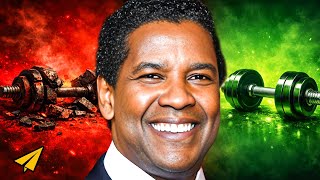
Denzel Washington shares his formula for discipline across interviews and speeches compiled by Evan Carmichael. He worked as a garbage man and postal worker, believes acting is about truth not technique, and keeps slippers under the bed as a daily reminder. Washington rejects excuses and external narratives, focusing instead on concrete goals, gratitude, and the willingness to fail big.
Chapters
Your son got shot in the face? That's difficult. Making a movie is a luxury. It's a gift. If you're looking for an excuse, you'll find one. In race. You can find it wherever you like. You know, I'm an ordinary man with an extraordinary job. Right. Not the other way around.
What's up, Believe Nation? It's Evan. My one word is believe, and I believe in you. I believe in your potential, and I want to see that thing that you've got inside you explode out into the world to have a big impact for you, your family, and the world. So to help you on your journey today, we're gonna learn from actor, director, and producer Denzel Washington and my take on his top 10 rules of success, volume 2. Rule number 5 is my personal favorite, and I'd love to know which one you guys like the best. And as always, guys, as you're watching, if you hear something that really, really resonates with you, please leave it down in the comments below and put quotes around it so other people can be inspired. And when you write it down, it's much more likely to stick for yourself as well. Enjoy.
I was a garbage man, like Troy. Huh. You get 8 hours worth of work, but you can do it in 3. So you can go home as soon as you finish. Post office, you get 3 hours worth of work and you make it last 8. I did both. I like being a garbage man better. But they weren't bad jobs. It's like, you know, people say, "Oh, the difficulty of making a movie." I'm like, "Send your son to Iraq. That's difficult. It's just a movie." It's like, relax. I don't play that precious nonsense. Oh, "Moolah." Get outta here. You know, your son got shot in the face? That's difficult. Making a movie is a luxury. It's a gift. It's an opportunity, and most importantly, it's a gift. Obviously, everybody here is talented enough to do that, but Don't get it twisted, it's just a movie. It ain't that big a deal. You can shoot me, but you can't kill me.
You hear often that Black actors, Black movies don't play well overseas. Is that the truth, or is that an excuse?
I've heard everything, and what I hear keeps changing. Because they used to say it didn't sell over here, then it does. Then they said it doesn't sell in the South, then it It does. Well, it doesn't sell in Europe, and it does. So I just keep pushing. Well, what an opportunity I have to prove them wrong. The goddamn sunglasses, man.
There is no ceiling for you, really.
I mean, there's nothing you can't do.
I don't think there's, you know, there's no ceiling, uh, because I mean, you've proven that you can, you can cover the whole waterfront in terms of all kinds of characters, whether it's a boxer or a quadriplegic or someone who's a brilliant lawyer, the whole range of stuff, right?
You know, with the training that I had, that's the way we were trained, you know, to, to play any part. There's no such thing as you can't play a part. You may not be right for a particular part. Yeah, but I don't think there's a part I can't attempt to play. I can at least analyze and try to break down and put a performance together. It may not be any good Yeah. But I was taught— one of the things that I was taught that sticks in my mind was a gentleman by the name of Bill Ball, who was the artistic director of American Conservatory Theater in San Francisco. And he always talked about failing big. He said, if you're gonna fail, fail big. I'm like, I like that philosophy.
I do too.
I do too. You know, I'm not a fall-back mentality kind of person. People would say, well, you know, you better have another career to fall back on. I'm like, I don't wanna fall back. On anything. If I fall, I want to fall forward. I want to see what I'm hitting. Or if I—
exactly right.
You know what I mean? I don't want to— I never understood that mentality.
I didn't either.
I never understood it. I'm like, I'm going that way.
I mean, if you're worried about being safe and secure and security— well, if security is your byword, then, you know, you're never going to reach out and do anything, I don't think, that's going to protect you. That's right. You know, it's going to give you any kind of genuine satisfaction. And if you're worried about that, then You know, it was an old IQ test. In other words, if you're a sailor, you would never leave port.
Right.
You only care about security.
There was an IQ question. I think it was an IQ question where they had 9 dots. Yeah. And you had to connect the dots, I think, with 5 lines without lifting the pencil. The only way you could do it was to go outside the box. Yeah. You know, people sit there within it and go, oh man, you can't do it. Well, you can't. Nobody said you can't go outside the box.
Yeah.
You know. This is no democracy. It is a dictatorship. I am the law.
Denzel did a show called When Chickens Came Home to Roost by Lawrence Holder, right? He would walk on stage and the audience would, huh, 'cause it was like he played Malcolm X and people thought Malcolm X had come back to life, right?
And then we had— At the New Federal Theater.
At the New Federal Theater. And the brother at the Schomburg said, hey man, Denzel would be in here, man, looking at these clips, man. Needed all this stuff and he had to have the right glasses on. And he got to walk down, you know, you got to walk down. And so what I discovered in those early years is no one worked harder on the stage to find his character than Denzel. And then when he transferred it to the film, it might be actors out there who claim, but no one works harder.
Now when you say that hardest working actor there, and you were researching Malcolm X, I mean you went and you studied films, you— Yeah, I looked at all the footage you could get, all of his albums. Yeah, yeah. You know, I would listen to and listen to. In fact, by the time we did the movie, I didn't— I would just— Spike would just, like, load the camera up, and I'd just start talking, 'cause I could pick— I could just pull from things I'd learned and memorized and knew. You know, you could talk about the table. He'd say, "Oh, that's a black table." You know, you could do anything. You could just improvise. So I'd just go and go and go. See, writing is a weapon. And it's more powerful than a fist can ever be.
—becoming one of Hollywood's most bankable stars. He's favored to get a 7th Oscar nomination for Fences. This is all happening at a time when the Oscars are being criticized for lack of diversity. I'm just wondering, what do you think about that?
I don't have to think about it. I've lived it. I've been the guy at the Oscars without my name being called. I've been the guy at the Oscars when my name is called. I've been the guy at the Oscars when everybody thought they was gonna call my name and they didn't. I've lived it.
What would you say to the people who are looking at this process and saying it's unfair?
Yeah, and so what? You gonna give up? If you're looking for an excuse, you'll find one. In race? You can find it wherever you like. You can't live like that. You just do the best you can do.
King Kong ain't got shit on me! And I did the scene with Denzel when he's like, I've been, you know, it's hard for me to say I've been standing in the same spot for 18 years. And I said, well, I think I've been standing with you. Do you remember that? In the rehearsal hall, and Denzel, he's very sweet, but he was looking at me like, what the hell are you doing? And I said, well, I'm just not— I'm trying not to be too big. He said, well, do what you think is too big. And so I was like, I've been standing with you. He was like, I don't think that's too big.
All actors out there, there's no such thing as film acting. Forget whoever— no disrespect to the teachers. I've done it a little while. There's no such thing as film acting. The truth is the truth. For the person way back there in the back, this is the truth. For the person right up here in the front, this is the truth. So if the camera's this close, it's still the truth. The truth is the truth. There's always, "Oh, I have to bring—" No, you don't. You have to be honest. The camera will catch you lying. Captain, I relieve you of your command of this ship. Cobb, escort the captain to his stateroom. I'm assuming command. Did you think you might do something other than acting and directing in those early days? Uh, oh, you mean other than acting and directing? Yeah, I tried everything. Yeah, I was pre-med. A proper profession or— Yeah, I was pre-med in college. Then I said I'd be a doctor. Then I was political science. I said I'd be a lawyer. Then I studied journalism. So I actually was working my way toward the arts without realizing it. That's why I told my children, a liberal arts education is okay. You don't have to know at 17— I was 17 when I started college. You don't have to know at 17 what you're gonna do the rest of your life. So I worked it out and I found my way to theater. I started with Eugene O'Neill's Emperor Jones. Wow. First role. Second role was Othello. So I was— Most important thing in business is honesty, integrity, hard work. I had a real momentum going from college on through all these roles and plays that I just mentioned, right up until doing Carbon Copy in 1980, '81, and I didn't get any work for about 6 months. And I thought, well, okay, this— wait a minute. There's always work at the post office, you know? Yeah, all right, go back. Pick up that biology. I better go back down to the city council meeting. But I got a small play, a one-act play about 2 guys, one named Malcolm, and the other named Elijah. I was even saying Elijah when I first read it. I'm like, who's this Elijah guy? I'm looking at him, I'm like, yeah, yeah, this is Malcolm, Malcolm, all right, it's a good part, big, big, big role. And that really jump-started my career again, because the play went over very well. We did it down at the New Federal Theatre, Henry Street Settlement. And that led— I went right from that play to A Soldier's Play off-Broadway, and right from A Soldier's Play to St. Elsewhere. Will you ever quit? No! You know, I'm an ordinary man with an extraordinary job, right? Not the other way around. So it's all gravy for me. You know, when I was younger, I used to coach a lot, and nothing made— you coach kids in sports— nothing made me happier than seeing other people do well. Well, that's sort of my nature, and And directing was the perfect job for that because I love seeing others do well. I mean, I'm okay. I did pretty good. I'm good. I've done all right. But to see others do what, you know, they're— what they're capable of gives me great joy. I'm the police. I run shit here. You just live here. I was in the studio with Lenny Kravitz, and he was doing something with Jay-Z. And he's, you know how he talk, ha ha ha.
He is, ha ha ha.
Yeah, D, I'm gonna play this for you, D.
That's how he is. Exactly. Yeah, that's how he is.
Yeah, you know, I'm gonna put this on for you, man. Just tell me what you think. It was probably— And it was Change Clothes. Are you serious? He played it. I was like, change clothes and go. Right. Whoa. So he's like, "So what you think, D?" I was like, "Play that again." In the nuclear world, the true enemy is war itself.
Thank you guys so much for watching. I made this video because Orion Dark Knight asked me to. If there's someone you'd like me to cover in a future top 10, check out the link in the description and go and cast your vote. I'd also love to know what did you learn from this video? What lesson really hit home the hardest? What are you going to immediately apply somehow to your life or to your business? Leave it down in the comments below. I'm really curious to find out. I also want to give a quick shout out to Best You Pro. Thank you so much for picking up a copy of my book, Your One Word, taking the picture, posting it online. I really appreciate the support and I'm so glad you enjoyed the book. Thank you guys again for watching. I believe in you. I hope you continue to believe in yourself and whatever your one word is. Much love. I'll see you soon.
You have been in so many great films, but what would you say is your hidden gem? The film that you'd like your fans to have watched, but for some reason they haven't?
I mean, you know, people ask me what's my favorite film, I always say my next one. Because I don't go— I don't look back, you know. The joy for me is the process of making it. Dreams without goals remain just dreams, and they ultimately fuel disappointment. So give yourself goals. You know, and remember that between your goals and achieving your goals, you must apply discipline and consistency. And put your slippers way under your bed at night so that when you get up in the morning, you got to get on your knees in order to reach them. And when you're down there, say thank you for all that you've been given, like the breath of life, family, friends. So let me give you the one word secret to happiness. One word. This is all you need to be happy. The most important word ever. If you had to think of one word that's most important to you or that sums you up or that would be kind of like a little beacon. Hey, Believe Nation!
If you want to know what the most important one word is for Tony Robbins, Gary Vaynerchuk, Oprah Winfrey, will.i.am, and Howard Schultz, I have a very special secret video for you. Check the description for details.
More from Evan


How the Biggest Mistake in History Created A Trillion-Dollar Empire | Sergey Brin



9 Machiavelli Principles That Force People To Respect You | Machiavellian Philosophy



The First 10 Words That Instantly Ruin A Sales Conversation | Vanessa Van Edwards

The Top 1% Mindset Behind The First $5 Trillion Company | Jensen Huang (Nvidia)

