How to Compose Iconic Scores | John Williams' Masterclass in 29 Minutes
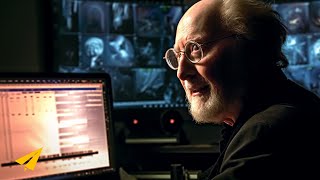
John Williams explains how he composes film scores using pencil, paper, and a Steinway piano, rejecting computers. He walks through spotting sessions and orchestration, then hands the score to a 100-person orchestra. Spielberg calls him his most important collaborator over 40 years.
Chapters
I still use a pencil and paper. I don't have a computer. You're old school. Old school. I've been so busy, fortunately, you know, that I haven't been able to go back and retool. When I was studying music, there were no computers. First of all, life is a great gift. Life itself is just that we're here and we think and we can share things.
John is the most important collaborator I've ever had in my career. He's made me look good. He's made my films look better.
I get a lot of credit, but it really should be going to John.
He's an American composer, conductor, and pianist. With a career spanning over 6 decades, he's composed some of the most recognized and popular film scores in cinematic history. With 50 Academy Award nominations, he's the second most nominated person to Walt Disney. He's John Williams, and here's my take on his top 10 rules of success. Rule number 10 is my personal favorite, and I'm curious to figure out which one you guys like the best. And as always, guys, as you're watching the videos, if you hear something that really resonates with you, please leave it down in the comments below and put quotes around it so other people can be inspired as well. Also, as you are writing something down, it's much more likely to stick in your head too. Enjoy.
The first work that I did in the Hollywood film studios was as a pianist, uh, I— in the old Columbia Studios where they had a contract Orchestra, there was an opening position for piano which I auditioned for and I was hired by the then music director, Morris Stoloff, who the young people will not remember. So that meant that every day, Monday through Friday, 4 or 5 days a week, I sat in the orchestra at Columbia Studios playing under Mr. Stoloff's direction and watching him underscore films about westerns or love stories or scary films or comedies or whatever. And had a firsthand view as an orchestra member of how this process of creating and fitting music to film went. And 2 or 3 years into my time in the orchestra there, the same gentleman asked, said, would you prepare the music for one scene for next week's recording? So I did one scene for next week's recording, and apparently it worked out well enough that he said in 2 weeks, would you do 2 scenes for us? We're a little short this week, maybe 3 a month later. Series of steps or increments, if you like to say, I progressed from the piano bench of sitting in the orchestra and playing the piano to a young man sitting not far from the music library writing the music for next Tuesday's recording. You literally are, for many of us in this room and watching, movie-wise, you are the soundtrack of our lives. So much of your stuff is obviously well known, to your point, some stuff maybe not as well known, but how do you know? Is there something inside of you? How do you know when you get it right? What's that? Do you know when you get it right? Very, very rarely. You hope that you've gotten 90% of it or as close to it as you can. But at least with me, and I think with most writers of any kind, you really don't say, "Eureka, this is it." It's working this, come back the next week and reshape it and do it like a sculpt— you know, keep honing away at it. I'm not so brilliant that I can sit down and write a melody or a theme or a whole scene or a whole work, as Mozart might have done, we're told, dashing it off like a letter and the grammar is perfect. Writing music, at least what I— it's very, very hard work, and for orchestra particularly. So it's a labor-intensive thing. I have to be in a room alone all the time, because that's the way— that's the life that it is. It's hard work and it's lonely work. It's hard work, it's lonely work, it's labor-intensive. I still use a pencil and paper. I don't have a computer. The old school. The old school. I've been so busy, fortunately, yeah, you know, that I haven't been able to go back and retool. When I was studying music, there were no computers. We didn't have it. These films do present a wide range of musical challenges. We go to great lengths to frighten the audience and use sometimes advanced orchestral techniques, uh, atonal music, which would be more akin to contemporary concert music, Bartók and others. And, uh, people, if they heard the music without the film, might be shocked by it. But for me, and for the orchestra also, it's a pretty exciting challenge to do, to be still on the right pace with what we see and hear and feel. Well, the Star Wars films, uh, 7 of them— I don't know how many films I've done, Tavis, maybe 100, I don't know, a lot of them not not really memorable and so on, as we all have done. It is probably the most popular music that I've done. And people will ask me what's your favorite score and this and that, and I've done concertos and symphonies and other things that are some good, some not so good, some are played and many are rightfully forgotten. But I think, I don't know, I think we're all the same in this sense that You look at your work or listen to your work and it's like children. You have 3 children, you love them and they're beautiful, but there's something you wish this could have been better here and that, you know. Maybe as parents we don't want to reflect that to the children, but the sense is whatever we do, it can always be better. Always. Always be better. You know what I would say to young people is really what I say to myself. I mean, if you can find the joy in music. First of all, life is a great gift. Life itself is just that we're here and we think and we can share things and see what's beautiful, hear what's beautiful, music first among all of the sounds, we think, some of us musicians do. Find the joy in music, find the joy in life, find the joy in each other, find the joy in work, Life becomes really very, very beautiful that way. I think go out and find the joy. People who have great ambitions, I guess all of us, to be, you know, design a spaceship or to become a president or a senator, and there's so much disappointment. We, you know, so few people can ever really achieve what their dreams are. I'm sometimes suspicious of these great goals that we have in mind for ourselves because we can get tripped up in become disappointed and cynical and depressed about it all. Few of us can design spaceships or become presidents or become Steven Spielberg. Maybe better to get outside of ourselves and confront with joy and pleasure and a sense of opportunity every little simple task we're given, rather than to try to do the big task, rather than to try to shoot Gone with the Wind, but do a postcard and then grow from there, even though our eye is on Gone with the Wind, maybe where it shouldn't be. Maybe that should be something that is a result of a path that leads to a goal.
I remember the first time when John called me up and he was saying to me, "Itzhak," he says, "I'm doing this music score for a film called Schindler's List." And I said, tell me a little bit about it, you know, and he just gave me a little synopsis about it. And he says, I hear a violin. That's what I hear. He says, would you play that? And I said to myself, well, I don't know. Let me think about it. I actually thought about it instead of just saying, yeah, I'll do it. You know, it took me a few hours to realize, you know, what it was that he was talking about. And then I always kind of, I said to myself, I wonder what he's going to do. Because, you know, after all, it's John Williams who wrote E.T., wrote Star Wars, you know, I mean, that's— and what would he do with the Jewish theme? And he was quite amazing, you know, and then I looked at the score and I played the music and it was such an amazing experience. And I can tell you that wherever I go around the world, it doesn't matter whether it's in the Far East whether it's in South America or whether it's in the United States, they ask me to play the theme from Schindler's List. That's, you know, that's like the only piece, and it's— and everybody gets so engrossed in this piece. And it's a, you know, it's a very simple tune, but John just did something to it that gave it this feeling of an emotional happening, and that's more power to it. To the way he composes. It's amazing.
Ladies and gentlemen, the recipient of the 23rd AFI Life Achievement Award, Steven Spielberg.
How does he do it?
The truth is, we'll, we'll never know. But after making 27 films together across 43 years. Yeah, I think I can at least try to explain what he does, and, and it goes something like this. First, everybody except John makes the movie. Thousands of people from all over the world working together for months, sometimes for years, and then finally we show our work to John. And in fact, I think that's why it's called a work print. And he doesn't begin immediately. In fact, one of the most important steps in the process often goes unnoticed, and it's called the spotting session. And it's when we decide what scenes should have music and what scenes should not have music. And it sounds simple, But great composers like John know that the power of music also lies in the absence of music. So that would be step one. Now look at a scene like this. This is the kind of shape our films are in when we finally show it to John for the first time. Now John watches the movie, and he goes back to his house, and he sits alone with a yellow pad and a pencil at his 100-year-old Steinway piano, and he begins to write. The violins play these notes exactly this time and exactly at this tempo. The flutes do this. The brass plays here. Then the percussion comes in over there. And some of these orchestrations are as complex as Debussy. And as accomplished as Stravinsky. But at last, he hands this gigantic mathematical puzzle to an orchestra of nearly 100 people. And it is during this arranged marriage of image and music that audiences fall in love with these movies. Now, this footage nobody has ever seen before. This is from 1982, the scoring session for E.T., and I'm behind the camera, a Super 8 camera, doing my best to capture John at work. So here's the man behind the curtain. He's scoring the scene where the mom, played by Dee Wallace, first sees E.T. Now, this is what I really want to show you, with rough audio and bad focus, because you will hear and you will see the very moment that John waves his baton and creates movie magic.
Don't crash, please.
Without John Williams, bikes don't really fly, nor do brooms in Quidditch matches, nor do men in red capes. There is no Force. Dinosaurs do not walk the earth. We do not wonder. We do not weep. We do not believe. John, you breathe belief into every film we have made. You take our movies, many of them about our most impossible dreams, and through your musical genius, you make them real and everlasting for billions and billions of people. So it is my honor to be up here tonight to say to you, my lifelong friend and my colleague, congratulations.
One of my great good fortunes is that work for Writing for me is fun, and it's what I do every day. I write something every day, whether it's good, bad, or indifferent. Just the habit, the practice of truly 6.5 days a week, something goes on paper.
I always tell young people that are starting up writing, either if they're writing script or music, slop it down.
Just get it down. Every day.
And then you can always go back and work on it some more.
That's right. Well, I usually play these themes for him, you know, on the piano. And he has very good reaction, a very good sense of what's musically right, and he helps me a lot too. A lot of times I think when I— you know this thing I was just playing? It used to finish— that was the end of the music, and Stephen said it needs another phrase, other kind of section, and that's what this thing— So maybe something like that. He says, yeah, yeah, go ahead with that, you know, keep it going. That kind of thing that he does, you know, with me. I think he's very special as a filmmaker and also as a person, as an interesting person. Why he's such an interesting filmmaker, I think, and tremendous insight into what makes an entertaining film and tremendously musical, if you don't mind my saying it, Steven, musical in the sense of Rhythm. I think Steven has a wonderful sense of rhythm in his films, and as a musician, it's something that I appreciate. Every film, the action has a kind of tempo or rhythm in it, or it doesn't have it, you know. And I look at the film, I'm trying to find out just exactly how fast is it or how slow is it, because the film is telling me what the tempo is. And with Steven's film, I find it all very rhythmical. And easy— in a funny way of saying it— easier to score, easier for me to make music for than a lot of other people's films, because the films themselves have a singing musical quality. I mean, particularly a thing like E.T., fabulous for music, because the picture has phrases almost, you know.
That's because I make my movies with Johnny in mind. Temple of Doom was exactly what George wanted. It was Indiana Jones, you know, sort of goes to hell and then returns to fight and love another day. And Johnny saw it, and I think he reacted appropriately. You know, dark and strange with all the choral, the dark male chorus, with all the stuff happening inside the actual Temple of Doom itself. John did an amazing score and really brought the movie up in my eyes. And, uh, I love his Trek music. I love the, the kind of Trek score where the elephants are going across Sri Lanka. I thought that was some, some of the most beautiful Trek music I'd ever heard. When it came time for John to write the music for The Last Crusade, John said, you know, this is a father-son story, so I'm going to write music that might be more appropriate for a less action-oriented picture about a father and a son. So he did very intimate, subtle themes for the Indy father relationship. Yeah, perfect time for that. I thought at first I could be a bit earlier, but that's fine.
You like that between them?
Oh, it's wonderful. It's a real statement of his It's all right, that's all right.
Yeah, it's a great score.
This, this for me is my favorite of all three Raiders. Easily my favorite of all three Raiders.
You know, the one with some—
I think it's the deepest score and it's the most evocative of a relationship.
I think there's a relationship. Good, good. 36 wins. Little tenuto tongue every eighth note. It's very sparse anyway. It's great for him. He's just great.
Well, John and I have had a 40-year relationship this year. This is our 40th anniversary of working together. We started working together in 1972 on Sugar Mountain Express, so this is year 40. And we start our next score in about 3 months. Johnny scores Lincoln in 3 months, and that'll be our— I think our— we've made together a lot. John is the most important collaborator I've ever had. I've had in my career. He's made me look good, he's made my films look better. I get a lot of credit that really should be going to John. Johnny does make a contribution that goes right to your heart. A lot of the contributions of my other collaborators are subliminal, you don't really single them out for credit, although without them the film wouldn't have the impact, some of the films wouldn't have the impact that they have, but John certainly has the most. Considerable impact because his music immediately bypasses the brain, goes right here, right? And that's the way it's always been. He's an amazing talent.
Everybody knows from Music 1, I mean, you have a minor chord and a major chord, minor being sort of unhappy and the major being happy and clear. Darth Vader's tune, you may remember, is this one. That's a sort of stately, imperial, ominous theme for a not very nice guy, done in all low brass and trombones and tubas and so on. Very different from Luke Skywalker, who is— which is all sunny and up and positive. Hero. The first little piece in this suite is called Hedwig's Flight, and people who know the book and the film will know that Hedwig is that wonderfully beautiful white owl. So Hedwig needed some music that was gossamer light. And so I thought, celeste, which is the little keyboard instrument, it's like a mini piano, and each note on it— you play it like a piano, but each note is kind of like a bell. It has a pedal like a piano, so if you play 5 quick notes and put the pedal down, you get this beautiful little blur. It's kind of like a, a bird feather that just would float. A collection of themes, musical themes, that the wonderful opportunity of the book and the film gave me to write. And at the end of the film, I was able to put several of these together in a kind of— not a suite exactly, but an orchestrated finale where all the themes from the picture, many of them were brought together in a kind of medley. At the end of the film.
John, you know, he actually written two Raiders themes.
He had written—
play that for me— which I freaked out over. I loved it so much. Then he said, and here's another possible Raiders score, Raiders main theme, and he played And, and so he had had two choices, and I think my only input was to say, can't you use both? And he did. He made the latter the bridge, and he made the former the main theme.
That's a perfect example of the kind of collaboration that we have, we have done with these things. Interesting about that, a very simple little sequence of notes, but I spend more time on those little bits of musical grammar to get them just right so that they seem inevitable, seem like they've always been there. They're so simple. And I don't know how many permutations I will go through with a 6-note motif like that— one note down, one note up— and spend a lot of time on these little simplicities, which are often the hardest things to capture, I think, for anybody.
When he finally played the music for me on the piano, he previewed the main Jaws theme, I expected to hear something kind of weird and melodic, you know, and kind of tonal but eerie and of another world, almost a bit like outer space inside, you know, inner space under the water. And what he played me instead with two fingers on the lower keys was— and at first I began to laugh. I thought he was He had a great sense of humor. I thought he was putting me on. And he said, "No, that's the theme that draws." And I said, "Play it again." He played it again. And he played it again. And it suddenly seemed right. And John found a signature for the entire movie.
One could alter the speed of this ostinato. It could be note, note, note, note. Any kind of alteration of speed to very slow, very fast, very soft, very loud. There were opportunities in the movie to advertise the shark with the music, and also opportunities when we don't have the music and the audience has a sense of an absence. They sense the absence of the shark because they don't hear the thump-thump, because we've conditioned them to do that. But then you may go one step further, and we know now the shark really is there, but we haven't advertised it with music, so his attack comes out of silence. Now, because you've been conditioned to have the music every time and you don't, when the shark arrives, it's even more terrifying. It's one of the beauties of the film medium that it's the combination of the visual and the situation— this, this being the shark or the knifing scene in Hitchcock's Psycho— combined with the notes. That combination of sound and, and image forming a memory. One of the last pieces to come into place was the music by composer John Williams. Williams' score brought a soul to the movie and a musical voice to Superman. Still today, the music remains ingrained in American culture. One of the great thrills is to go in after you've cut the movie, you've, you've done all the work, and you think it's working and stuff, and suddenly you go into the scoring stage and this composer strikes up and the orchestra starts and the movie comes alive. One of the essential things about the film to me was the fact that it was fun and didn't take itself too seriously. And the way Richard had directed it, and particularly the way Chris and Margot had played the parts, that it had an almost kind of theatrical camp, if you like, to it that was— that didn't take itself too seriously. And that if one could strike a level of, of theater and, and sleight of hand and tongue-in-cheek in the creation of the themes, that it might be the right idea. When somebody that has the command musically that he has gets with a 100-piece orchestra and starts to go, it's just so thrilling. I mean, when you have a great score for a movie, it just brings everything to life.
The day we went into a recording studio and we ran the opening credits, and as Superman came on the screen I swear to God, if you listen carefully, it literally—
the music speaks the word.
I screwed up this take because I just ran out on the floor yelling, genius, genius, fantastic! You know, the orchestra applauded him and everything. But it was—
I—
if you listen, you can actually hear the music say the word.
The hero theme, which is Superman himself, which is made up of several parts, is kind of a fanfare. Each time he opens his shirt, you get this sort of 3-note Superman musical motif that precedes the exposure of his shirt, so that if he's going through a revolving door, the music, whatever the 6 or 8 seconds preceded that, it established a kind of modus operandi that each time he revealed the shirt, there was this musical ballet athletic preparation.
Thank you guys so much for watching. I made this video because Nicholas Bennett asked me to. So if there's a famous entrepreneur that you want me to profile next, leave it down in the comments below and I'll see what I can do. I'd also love to know what did John say that had the biggest impact on you and why. What are you going to take from this video and immediately apply to your life or to your business? Leave it down in the comments below and I'm going to join in the discussion. I also want to give a quick shout out to Shin Aido Karate. Thank you so much for picking up a of my book, Your One Word. I really appreciate the support and that YouTube video you made as well. Thank you, thank you, thank you so much. So thank you guys again for watching. I believe in you. I hope you continue to believe in yourself and whatever your one word is. Much love. I'll see you soon.
More from Evan


How the Biggest Mistake in History Created A Trillion-Dollar Empire | Sergey Brin



9 Machiavelli Principles That Force People To Respect You | Machiavellian Philosophy



The First 10 Words That Instantly Ruin A Sales Conversation | Vanessa Van Edwards

The Top 1% Mindset Behind The First $5 Trillion Company | Jensen Huang (Nvidia)

