How to Discover What You Really Want In Life! Jeff Weiner | Top 10 Rules
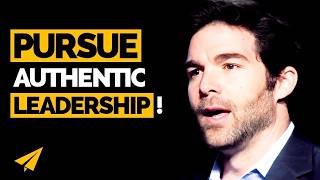
Jeff Weiner, former LinkedIn CEO, shares ten principles for discovering what you want in life. He emphasizes asking yourself what you want to accomplish in 20 to 30 years, then aligning passion, skill, and market opportunity. Weiner stresses compassionate leadership, surrounding yourself with top talent, and maintaining genuine conversation over sales pitches.
He's the CEO of LinkedIn. In 2011, he and Reid Hoffman were the Ernst Young Entrepreneurs of the Year US overall winners. In 2014, he was recognized as one of the top 10 CEOs at US tech companies. He's Jeff Weiner, and here are his top 10 rules for success.
Because if you're a true visionary, you're going to be seeing something that other people don't see or feel threatened by because it's going to potentially disrupt the way that they've always done things. You have to believe in believe in what you're doing, you have to believe in your vision with truly every fiber of your being. And that conviction provides the courage to other people to pursue the same. And if you don't feel it, if you are just going through the motions, if you're using somebody else's words, people will sense that from a mile away, right? They need and want to pursue authentic leadership. First of all, it's a very human thing to project your own perspective onto others. It's a very, I think, common thing. As a less experienced executive or a leader, or for anyone in the audience that works with other people, the tendency will be to expect people to do things the way you do them. It's very natural. It's not the right way to approach it. You need to take a moment to manage compassionately, put yourself in their shoes, understand why they're coming with what they come with. What is their background? What is their baggage? Where are their anxieties? What inspires them? Where are their strengths, their weaknesses? And that takes time, and it takes real investment. And the knee-jerk reaction is just to do things the way you would normally do them. And that's going to create a lot of dissonance. And so from that moment going forward, I kind of decided that would be a first principle of management, would be managing compassionately. First and foremost is asking yourself a pretty straightforward question that sometimes is a little more challenging to answer, which is ultimately, what is it that you want to accomplish? So look out 20 to 30 years from now. Looking back on your career, what do you want to say you did? And I think when you're graduating school, it's perfectly reasonable to not necessarily know the answer, but you'd be surprised how many people 10, 15 years into their career still don't know the answer to the question because they get swept up in the stream of opportunity. You know, a promotion here, an offer from a hot company over there, and they wake up one day and they're not happy. And they're trying to figure out why, and it's because they never stopped to ask themselves what it is that they ultimately want. And if you don't know the answer to that question, try optimizing for two things. One is passion and the other is skill. And it's not one at the exclusion of the other, because that'll lead to some pretty suboptimal outcomes. So that's one, know what it is that you want to accomplish. As simple as it sounds, it's really, really important. Two is surround yourself with great people. I used to think this was all about finding the right boss or the right mentor, but it's not just about the person above you, it's about the people you work with, your peers, and the people that work for you. It's all about talent in this day and age, and so you have to surround yourself with the best, only the best. And then third is to always be learning and to take great passion, if you can, in improving yourself and to challenge yourself. It's all about the conversation, and it's very rarely, if ever, about actually selling. And as soon as someone comes in to see me and they open up a PowerPoint presentation, they've essentially lost me. I think most effective interactions of this sort start with, you know, first of all, some icebreaking, getting to know the other person, but then a simple question, which is, "What can I help you with?" You know, "What are your objectives? What are your priorities? What are you trying to solve for?" And then determining how, in this case, if we're on the selling end, how LinkedIn can benefit your organization and really make it a conversation. And I think that makes all the difference in the world, just starting from there. Similarly, you know, I feel all too often people have a tendency— and this is kind of classic public speaking, effective public speaking— but you got to know your audience. And it's not necessarily about what you know and what you want to present. It's about what your audience wants to hear and why they're there. You know, they're taking time out of their schedule to be there. Why have they come to the meeting? What are they hoping to get out of it? And as tempted as we're all going to be to stick to the material that we've prepared, that's really for our benefit. And perhaps we're gonna end up using some of that because it's relevant for the audience, but I think it's really important to understand what it is that the folks you're trying to connect with, what, what they're trying to learn more about and, and how we can benefit them. I think one of the things that all really strong leaders have is extraordinary awareness. And what I've noticed is these individuals have the ability to read and take the pulse of a room, whether it's talking to one individual, their staffs of 10 or 12 people, or a group of 1,800, and to be able in real time while expressing themselves and while communicating and while thinking to be able to take in what's happening. Yeah. And that awareness enables them to course correct. And that is such an important part of leadership is that course correction in every moment, ideally. I don't know that people always have that luxury, but moment to moment, hour to hour, day to day, quarter to quarter, year to year, it's being able to understand your environment, the competitive landscape, the technical landscape, the talent landscape, the people you're working with, what motivates them, and to be able to course correct. And that starts with awareness. So I couldn't agree more on that.
Perfect.
Why I joined LinkedIn was the ability to make a difference in the world in a very positive way. You look at the platform, you look at the vision about creating economic opportunity. I can't think of a more worthwhile purpose than investing in tools that create economic opportunity for people. There, there's no more sustainable or profound way to change the quality of an individual's life, in my opinion, than creating economic opportunity for them. And in turn, improving the quality of the lives of their family, the lives of the people that they can create economic opportunity for, and in developing countries, you're creating role models for the next generation that didn't even know it was possible. And that's pretty appealing, to be able to make a difference. And it starts by asking yourself the question, what would it take to make that dream or that vision statement a reality? And that question, what would it take, it's incredibly powerful. And liberating. And if you set your sights too low, sometimes you'll never challenge yourself to think bigger. Sometimes you'll never challenge yourself to question conventional wisdom. But by asking the question, what would it take, it unleashes all of this creative energy. And it unleashes the sense that anything is possible. And so we started asking ourselves the question, what would it take to make the vision a reality? What would it take to not just connect the world's professionals, 780 million people, but create economic opportunity for over 3 billion people in the global world. You know, I personally believe that leadership is about the ability to inspire others to achieve shared objectives. And I think the most important word there is inspire. And I think that's what separates leaders from managers. Managers tell people what to do, and leaders inspire them to do it. And I think inspiration largely emanates from 3 dimensions. The first is the clarity of your vision and what mountain you're trying to summit and climb. And the second is the courage of your conviction, because if you have true vision and you want to try something that hasn't been done before, there's going to be a lot of naysayers, there's going to be a lot of skeptics, there's going to be a lot of people who feel threatened and try to get in your way. And you have to feel it deeply to be able to overcome those challenges and for people to want to follow you. And if you're not authentic in that belief and you don't have true conviction, they're not going to be behind you. And then lastly is the ability to effectively communicate that vision and that conviction. And I think if leaders are in a position where they can do those three things, that they can effectively inspire. And when you can inspire, it It's just a matter of what objective you're trying to achieve and then ensuring that you're surrounding yourself with the absolute best talent you can to make it a reality. When you're in the moment and someone's doing something that upsets you or frustrates you, we all have a natural tendency to become very emotional. And part of managing compassionately is having the wherewithal to be a spectator to your own thoughts, especially when you become emotional, and get a little bit of that distance. And enables you to put yourself in their shoes and ask yourself, Why are they behaving the way that they're behaving? And that there's a wisdom potentially, or a rightness to how they're behaving. It could be a wisdom. It could be, in your parlance, a rightness. It could be a wrongness, but they're not to be blamed for the wrongness. It's not a blame game. If they're angry at you, maybe they're angry by virtue of something that took place years ago that had nothing to do with you. And when that anger comes your way, the knee-jerk is going to be to become angry in response. Now they're angry and you're angry, and guess what happens? I mean, every single one of us has been in that situation probably every day. I was just— someone just wrote me an email the other day, and they were angry about something. And I knee-jerked, and I was frustrated, if not outright angry, that they were expressing themselves like that. And then I took a minute before I responded, thought to myself, I wonder why they're so emotional about this, and what can we do about it? And I ended up getting on the phone with them, and I said, "Are you trying to solve a problem, or are you just trying to vent?" He said, "Well, I'd like to solve this problem, but I think it's too late, and as a result, I'm very angry." I said, "It's never too late. Let's focus on solving the problem, and then after that, let's come back to how you expressed yourself." My advice would be don't just optimize for passion. You have to optimize for both passion and skill. And for the entrepreneur, I would add a third dimension, which is the market. And if you can find the convergence, the nexus of those three elements, your skill, and the market, and you've got the right timing, of course, uh, you know, anything's possible. And for me, it's all about knowing what it is you ultimately want to accomplish.
Thank you guys so much for watching. I made this video because Jason Bruton asked me to. So if there's a famous entrepreneur that you want me to profile next, leave it in the comments below and I'll see what I can do. I'd also love to know which of Jeff Weiner's top 10 rules you like the best. And most resonated with you? Leave it in the comments below. I'm going to join in the discussion. Thank you guys so much for watching. Continue to believe, and I'll see you soon.
More from Evan


How the Biggest Mistake in History Created A Trillion-Dollar Empire | Sergey Brin



9 Machiavelli Principles That Force People To Respect You | Machiavellian Philosophy



The First 10 Words That Instantly Ruin A Sales Conversation | Vanessa Van Edwards

The Top 1% Mindset Behind The First $5 Trillion Company | Jensen Huang (Nvidia)

