How to Embrace Improvisation | Conan O'Brien's Advice in 33 Minutes
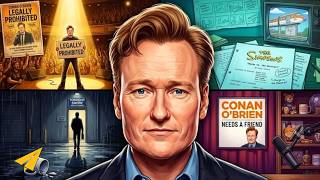
Conan O'Brien talks about turning setbacks into opportunities through improvisation. He recounts getting fired in 2010, using Twitter and a no-ad tour to rebuild, and how embracing failure led to reinvention. He urges creators to get in the arena, stay authentic, and let mistakes become fuel.
Chapters
I think the secret to my career is I don't know what I can't do.
These things happen to you and you think you've been dealt a terrible hand or you've had bad luck, and when you just go with it, there's a— you just start improvising, uh, suddenly you realize that, uh, you stumble upon some of the best things that have ever happened to you.
Or success is a little like a white tuxedo. It looks good, but you're very afraid of getting it dirty and it can inhibit you.
He's an American TV show host, comedy writer, and television producer. He's best known for hosting several late-night talk shows. Since 2010, he's hosted Conan on the cable channel TBS. He's Conan O'Brien, and here's my take on his top 10 rules for success. Rule number 2 is my personal favorite. Make sure to stick around all the way to the end for some special bonus clips. And as always, if he says something that really resonates with you, make sure to leave it in the comments below and put quotes around it so other people can be inspired as well.
I think the secret to my career is I don't know what I can't do. You know, there'd be time— there are times when I should probably sit and think, do I really want to jump, you know, jump out there with Philip Seymour—
I mean, with, uh, John C.
Reilly and, and, uh, and sing, you know, uh, The Night Chicago Died, or do I really want to play the blues with Little Ed, or You know, you just do it. You just do these things. And you become—
the audience wants you to do these things.
Yeah, I think what's—
I don't know what it is, but I think over the years people have gotten comfortable with the notion that I try things.
It's almost Krypton-esque.
And they're not worried about me.
Do you know what I mean?
I think that's the key. People aren't worried about me getting hurt because I can, you know, I'll give it 100%, and then if it completely falls on its face, I'll laugh about it and move on. And I think there's a little bit of a sense after all these years, people say, you know, all right, he tried it, uh, maybe it worked, maybe it didn't work, but he had a good time.
And for you, you can come back the next night and the next night and the next night.
Yeah, I mean, that's, you know, the, uh I don't know. There's a— over the years, I've realized that there are a lot of comedians that are very, you know, worried about keeping their dignity intact and keeping their personal space and keeping their sense of authority. And for better or worse, and it might be worse, I don't have that.
You know what I mean?
I'm not— the people that I've always liked growing up, and I'm not just talking about late-night comedians, I'm talking about anybody in movie, in film, in, you know, The people I liked, Peter Sellers, they would let it all hang out. He'd just go, you know. If you look at a lot of those old classic Carson clips, he's jumping into hot tubs with Don Rickles. He's jumping through fake walls. He's, you know, he's falling on his ass.
He's dressed as Floyd Turbo.
And, you know, so sometimes I look back to that and I remembered, well, you know, Johnny just went for it. So, you know, for better or worse, you know, I'll try. I'll get out there and I'm very physical and my wife is always horrified. I'm always coming out of the shower just covered in bruises and she'll say, "What was that?" I'll say, "Oh, I did a bit." You know, we had, you know, Jeff Garlin on the show and he and I rolled down a flight of steps, you know, and I hit a fire hydrant. What astounds me is how many young people come up to me and say, "Conan, someday I'm gonna be on your show." And I say, "What do you— oh, what is it you do?" They don't know. That's the crazy thing. Most people It's the Paris Hilton phenomenon. They just want to be famous.
Exactly.
And they've actually seen it work. They've seen a number— they've seen someone get incredibly famous for just being famous. Um, so that's a little unsettling sometimes. But mostly, uh, what, what, what I've noticed, or what I would say to people, is you've got to go to where they're making the thing that you like and then work there in any capacity. You know, if you have to get coffee for somebody, if you have to hold a cable, if you have to stand there and volunteer, go to where they're making the thing that you— that moves you, that gets you excited, and try and get close to it. Uh, and I mean, I remembered for years I was aware that I'm not doing the thing that is going to be my life's work, but I'm close. I couldn't even tell you exactly what it was, but I knew I was close.
Do you know what I mean?
I knew when I was a writer at Saturday Night Live, this isn't quite it, but I'm close. I knew when I was a writer on The Simpsons, this is further away from it than I was at Saturday Night Live. I knew that I liked being around the live performing or the, you know. So I knew when I was close. And that's what I tell them is just go there and don't have an ego about it. There's so many channels now, so many stations.
That's exactly what I tell them. And just get in the arena is the idea. I mean, if you get it, you play it. You have a 90% average getting in the arena.
Get in there and do it, and, uh, and eventually it's just the Brownian movement of molecules. Eventually you getting in there and doing—
putting yourself out there.
If you have something to offer, someone's going to see it at some point, and you're off and running.
So many people come up to me and say, now that you've made it, don't you just want to stick it to some of those people? And I think no, because They weren't wrong. We had our problems in the beginning. And, uh, you know, I had to— this had to be a long process. That's just the way it had to be. And I prefer it this way. I was raised Irish Catholic. I have a sense of wanting to earn it. And there was nothing that was more difficult than being proclaimed Letterman's successor, uh, and having everybody have this uneasy sense of, who is he?
Should he have this thing?
And what has he ever done?
And what has he ever done? And why does he get to do this? And Maybe this whole process was just necessary. This was my way of earning it. And I think a lot of the confidence I have on the air now is because I went through a very difficult period, and there's nobody out there who can say, gee, you know, he had it easy. I mean, I'm famous for having to, you know, overcome a lot of obstacles in front of people on the air. And so I'm comfortable with the way it all worked out.
When did you decide you could be professionally silly?
Did you get a glimmer of that at Harvard?
Yeah, well, the Lampoon was a big influence because I was— you don't learn to be funny. You don't learn to be silly. A lot of what you are, who you are, you're in some respects is decided, I think, early in life.
You get the basic ingredients.
To me, when I was a kid, and I think we all do this in one way or another, I ran through the list. What do I have? You know, what do I have? What are my skills that will help me, you know, A, not get picked on or beaten up, and that's in my own family, and B, that maybe get the attention of that girl I like. Those are the things that are operating on you in this very elemental, level. Those are the things that you're thinking about when you're young, when you're a kid.
Am I a good athlete?
No, I was a terrible athlete.
Was I incredibly good looking and all the girls liked me?
No.
I had this laundry list of things I would go through, and then I had this one thing, which is I could make people laugh. And so what happens, I think, is you find the thing you're good at, and in my case, it was so glaring. It's not like there were a million other things.
There was this one thing.
And if I had been a pretty good baseball player, I wouldn't be here today, you know?
The fact is I had—
and so I kept hyper-developing. You could say I was hyper-developing a defense mechanism. And then later on, and if you look at a lot of artists out there, that's probably what a lot of them are doing. My father, who is here and is a brilliant guy, once said to me, "I get it now. You're making your living off of something that should probably be treated." And he's right. And then a tear, but a wealthy tear. Not important, don't pursue wealth. But that is something that I think I think many of us do in one respect or another is we double down on the thing that we have, that we have to offer.
You're not, you don't consider yourself in the late night wars, so to speak, because you're on at 12:30 rather than at 11 or 11:30?
I don't feel that, you know, sometimes I'll bump into someone in the street and they'll say, "Hey, good luck in your war against Dave." And I'll think, "I have no problem." I'm on after Dave. He's doing a good show, and I wish him, you know, wish him well. And I don't— I'm not in competition with him. I think, you know, sometimes I'll see cartoons in the newspaper of I'm wearing boxing gloves and Dave's wearing boxing gloves and Jay's, and I think, we're not in the same place. I'm not boxing anybody. But no, I don't really feel like I'm— I don't feel like I'm in competition with anyone else. I most of all I feel like I'm in competition with myself to do the best show I can do.
The last 3.5 months has been all improvisation. Uh, the groundswell of Internet support from a lot of young people that are in this room completely took, uh, my network by surprise. They don't know what hit them.
They've—
I think there's a lot of people in broadcast television that are very, uh, um, dismissive, or have been very dismissive about the Internet. And they're also afraid of it.
They—
they—
when— and they tend to— deride what they don't understand. So when this explosion happened on the internet, when they announced that, well, okay, maybe we're gonna slide Conan over to accommodate this other gentleman who's having his difficulties in another time period, and I won't get into specifics, you'll have to look it up. And I said, you know what, that doesn't really work for me, I think in a fairly polite way. There was suddenly a huge reaction from people, you know, some of the people in this room, a lot of people like you across the country said, "Wait a minute, we like this person, and this person kind of, you know, is— we're with him." And they started reacting on the internet. And the first thing that happened at my employers, they saw this huge explosion on the internet, and they thought that I was doing it.
And they really had this attitude of, "Make him stop.
Why is he doing this?" And they just didn't understand They didn't understand what was happening. I think they still don't understand what's happening. And my feeling is, what I've learned is, I had nowhere else to go, so I started on Twitter, because I literally had no other option. I was and am legally prohibited from appearing on television, radio, and doing performances on the internet. So I was just literally like a prisoner in a 14th-century cell writing little things on a scrap of paper and throwing them out the window and hoping, you know, a peasant would go by and, "Eh, what's this? He's in the tower!" So I started to do that and send out these little things, and it exploded overnight. And at first I started to hear a little bit of stuff from the other side saying, "Well, we're not sure you should be able, allowed to, because of the—" And then they realized the absurdity of shutting down my Twitter account. So that started with that. And then I started to think about the tour, which I'm allowed to do. And so we started this idea for a tour. And then what was fascinating is by the time we launched the tour, or announced the tour, I did not do one— I didn't spend one penny on advertising. I sent out one tweet that directed people to a website where you could buy your ticket. That was it. And the show sold out in a couple of hours across the country. And that's got everybody, a lot of people, rethinking how things are marketed. And there's not one billboard. I didn't have to go to one radio station and sit with morning DJs, like, you know, and hawk my show. I didn't have to do any of that. It was one tweet. And I think people are starting to understand that the world has completely changed. And, you know, it has.
It is changing.
And I think we can do better. Sorry, I— That was great. Forgot I wasn't running for something. But I think that's what's— the biggest lesson that I've learned in the last 3 and a half months is just a good life lesson. And I'm not trying to sound corny or anything, but these things happen to you and you think you've been dealt a terrible hand or you've had bad luck. And when you just go with it, there's a— you just— start improvising, suddenly you realize that you stumble upon some of the best things that have ever happened to you. And what's interesting about Twitter is that because you're limited to— I think it's 140 characters. Someone's going to correct me right now. "Not so!" You're all gonna rush the stage, beat the crap out of me. But because you're limited, it's actually a great comedy writing tool. You're forced— there's this economy of words. So I'm constantly writing things, and then I run them past Blair, Big Blair, who's taking the pictures over there, as if he doesn't have enough photos of me. But— and he'll say, like, "Well, that's actually 3 words over," and it forces you to look back at the sentence, and it's— It forces you to crystallize your comedy idea, which is fascinating. And the other thing is I've been— this whole tour wouldn't have happened. This tour is a dream come true for me. I've always wanted to— it's half rock show, half comedy show, and then it's this fantasy to get to do this. So the last 3.5 months have been the most interesting time in my entire career, and I wouldn't have traded this for anything in the world. And so, 3.5 months ago, what looked to everybody like bad luck has become amazingly good luck. And I think that is a lot of what we're— what relates to everybody here. A lot of you are in your 20s, and you take for granted that, "Well, this is the way the world is right now." But from my perspective, it's changed dramatically in just 7 years. And I don't even know where we're gonna be 5 years from now. So I don't know what television's gonna be 5 years from now. There's a lot of people that think you're just gonna— experience it all through your server. And people don't even know how the business is going to change. There might not be really network television as we know it. Wouldn't that be sweet?
So you know what I mean? There's just— who knows? So, you know, seize the day. Carpe diem.
I hate it when people say carpe diem. I really do. I just wanted to work it in.
I'm going to keep talking to you.
Ask me another question. Expect difficulties.
Is something I think everybody in this room has gotten into Harvard. Some of you probably are here snuck in, but I don't care. Let's just say for point of argument that everybody here got into Harvard, and you feel this incredible pressure to succeed. And I gave a speech here back in 2000, and at the end I said, fame is a little like a white tuxedo. It looks good. Or success is a little like a white tuxedo. It looks good, but you're very afraid of getting it dirty. And it can inhibit you. And I think I would tell my 19-year-old self that everything you're feeling right now— I used to think that if I could look at someone like myself, I thought they had figured it all out and they were fine. And wouldn't it be magical if I could be— have my own show and be funny and everyone knew who I was and most people liked it? That would be a great life. Would be a great thing and it would solve all my problems. And I would like my future self to say, that's not the case. It's actually day by day, how you do your work, how you conduct yourself, how you treat people, you know, what the joy you get out of your work, that that is far more important.
And I'm not saying that as like to try and take away from—
I'm really proud of some of the things I've achieved. But I wish I had not put myself so low on the totem pole when I was 18 or 19 years old and thought that these other people who were sitting up on stage talking knew so much more than me and had happy, problem-free lives, because that's not true. You know? I'm not saying that to depress you. I'm actually trying to say that as a way to—
sort of liberate yourself a little bit, you know?
It's not— allow for mistakes, allow for problems. I've had my career blow up on me about 2 different times, and I'm still here and very grateful, and I learned a lot during those moments, and wouldn't really change a thing about any of it. And so I think Harvard, as great as it is, can sometimes instill— and I don't think it's— No one's telling you this, it's just subliminal. What comes— a lot of you have this— is, "I have to do great things and I need to succeed." And you just have to be willing to screw up and not freak out when you do screw up. 'Cause you will screw up. I mean, you're really gonna screw up.
It's in a week.
We'll talk later.
I think what's—
what I'm doing is I made a conscious decision, I'm not gonna try and do what they do. I'm not gonna— I didn't spend the summer going to comedy clubs. I'm a real person. I'm just gonna go out there and say things that I think are funny and, uh, and just be Conan. And I think that that's— so far, I go out there and I'll tell a few jokes or stories every night, and the audience laughs. And they're things that I think are funny, and I think I'm presenting them, uh, you know, in a way that's honest, in a way that, uh, it's, it's just Conan. It's just Conan talking.
And that's all I've ever wanted from this show.
I just want this show to be My only goal is that I get myself out there 100%. If people don't like that and don't accept that, I'll say, well, that's all I can do.
But sometimes it's even hard to do that. I mean, it's hard to make sure that you are natural and comfortable and that you are.
That's what takes time.
I mean, it took Dave a while. It's going to take me a while to— it's a very strange thing to say, what we'd like you to do is go out there and just be yourself. Completely uninhibited on a set in front of cameras, 200 people in the audience, and will critique you every night, and critics will watch for when you rub your fingers together or touch your nose or anything like that. And I think that that's— it takes a little while to become completely unself-conscious in that environment.
How is it different today and doing your show? Late night than it was 10 years ago? Are you more instinctive? Are you more—
do you think less about it and just do it? It's muscle memory. It is used to it. You crunch down, you're— and you're constantly trying to learn. You're, you're constantly— you're still thinking, but your ratio of thinking to acting is very different. You know, you're— at the beginning, I was thinking about it this much, you know. In my cognitive brain, and then there was this much, just whatever thin reed of talent you have is there, and then you're thinking about the rest. And then over the years, I think, you know, they always say the reptile brain, the reptile portion of your brain is where you, you know, respiration, heartbeat, right? That's the stuff that even if you're knocked unconscious, it's still working. I really believe a lot of my talk show or comedy instincts are now in my reptile brain, that you could knock me out and my heart would still beat, I'd still breathe, and I'd still be asking Lindsay Lohan, you know, some stupid question. You have become some way, as you—
part of your DNA, it's become part of your DNA.
Yeah, I mean, I think a lot of it is you have to have some ability, but then it's just how much will. I really do think there's just a— I think people underestimate. It doesn't sound sexy, it doesn't sound cool. How much do you want it? Work ethic, you know, and just how badly do you want it. And there have been, you know, many times in the, you know, throughout the years of doing my show where I've thought you could shoot me in the chest before I walk out there and I'll still walk out there and do that show, and then I'll come backstage and die. But we're doing that show.
It's been a lifelong dream of mine to touch your hair, so Yeah, about you working here.
I solved that problem.
Guys, no more touching questions, please. What are you talking about?
Yes, let's touch it up. All right. You know, I'm sorry, I feel really, uh, crass.
I don't even know your name.
Can I just know your name? 'Cause later on my wife's gonna be like, "What happened?" "I don't know, I don't even know her name." "What did you do?" "We rubbed our heads together." "What is your name?" "My name's Kelly." "Hi, Kelly. We should have done this before we rubbed up against each other." Hey there, internet. Conan O'Brien here. Now a lot of people have been calling me out on this ALS ice bucket challenge. I just want to say I accept. This sounds like a really sweet deal. Apparently, if I get ice water poured on my head, ALS will then pay me $100. That's a pretty sweet deal. I could use that cash.
Let's do it. All right. Whoa. Wow, that was cold. OK, ALS.
Yes, send the check to Conan O'Brien, care of the accountancy firm, very—
Oh, hello, you don't get paid. You get dunked and pay. I pay? Yes, it's a charity. Why would I do both? Why would anyone be giving you $100? Because I got a lot of ice cold water poured on me. But it's a charity. They're not going to give you money. So I don't get paid anything? Do you need $100? That's ridiculous. You really need $100? That's stupid.
Hey, well, guess what? Psych. ALS? Check this out.
Plastic ice. Plastic ice.
That water was a balmy 92 degrees.
I felt nothing. In your fa— Oh! Oh! That was real! Ow! Ow! Oh, wow! Ah! OK. OK, you got to challenge people.
Oh, yeah.
I challenge the— I challenge Jimmy Carter. Pele, Hailey Joel Osment. Oh!
Thank you guys so much for watching. I made this video because David Mares asked me to. So if there's a famous entrepreneur you want me to profile next, leave it down in the comments below and I'll see what I can do. I'd also love to know what did Conan say that really inspired you or motivated you or had an impact on you? What was the most important message you got from this video. Leave it down in the comments below. I'm gonna join in the discussion. Thank you guys so much for watching. I believe in you. I hope you believe in yourself and whatever your one word is. I'll see you soon.
Well, the lowest moment you were actually part of. I was on the air for about, yeah, 2 months, I think. And Chevy Chase had just been canceled, and my staff was happy. They said, oh, at least we've outlasted Chevy Chase. And I remember saying, you don't understand, the critics just destroyed one show. There's blood in the water now. They're gonna look who's next in line. They didn't have to look, you know, very far. I mean, David Letterman replaced by this guy from total obscurity, and the show had a lot of flaws. They weren't wrong. I was new. And was making rookie mistakes on the air. So they came looking for me, and I was on this show. I don't— I'm thinking it's maybe October, November of 1993. I hadn't been on long. You had me on the program, and we shot it in the morning, and you started the interview by saying, Conan, I don't know if you've seen the Washington Post this morning, but Tom Shales reviewed your show. And then you started to read this review. Cruel thing to do. Well, I respected you for doing it at the time. That's how I get most of my information, being told by other talk show hosts. And so I read the review and then went back to my office and climbed underneath the desk in my office and lay down for a while. Put a blanket over your head? No, I just lay down, and I have very long legs, and they stuck up from underneath the desk, and And the word got around the office that Conan is on the floor underneath his desk. And I remembered there being a lot of murmuring, and then the producer of our show, Jeff Ross, leaning in and said, "You okay?" And I went, "I'm okay. I'm just under my desk, but then I'll get out." And then from there, I really do believe that I wanted to do this show more than anybody else didn't want me to. And I knew we had the elements. I knew that we had all the elements of a good show. I had a very creative, and still have a very creative and adventurous writing staff. Andy Richter's a very funny guy, and there's not a presence like him on television. The Max Weinberg 7 is an amazing band that can play swing music, but can also play rockabilly, they can play funk, they can do anything. And I knew that we have all the elements, and I knew that I had the elements. They just weren't all there yet. It's like a baby's skull has to come together. Isn't that a nice image? Like a baby's skull? Yeah, we're like a baby's skull.
I think I told you at the time, as you reminded me, just to stay on the field.
That's what you told me.
You said, remember what Joe DiMaggio said, stay on the field. And at the time I walked out of here and said, what an ass, what an idiot. What are you talking about? Me? Stay on the field. Me or Joe DiMaggio? Both of you. I lump you both together. I have contempt for anyone who's achieved anything. But no, but it's good advice, which is keep doing your show. And the network put me through my paces a bit, and they put me through some things. One-week extensions. Yeah, they— I was being renewed hourly at one point.
You can do this show, but no more.
We're not making any promises after this show.
We'll let you know in 40 minutes if you're still a talk show host.
We may jerk you doing this show if it doesn't go well.
But I remembered a lot of people saying at the time, well, I wouldn't stand for that. I'd walk out. I remember thinking, no, I'm gonna stay here and do my show, and people are eventually going to see that we've got something here, and I'm gonna get better at this.
I do things, I have tics and mannerisms, and I think sometimes there's a tendency these days to think we've got to get rid of all of those and be just a completely smooth, plastic performer. And What I think is nice is, no, my voice isn't perfect for TV. I mean, can't you tell?
It's— there are things about me that aren't perfect for TV.
There are times when you can see that I'm just, you know, a little thrown, or you can see that I have a— you know, that I touch my nose or I do something like that. And sometimes I think, don't get rid of all that. In a way, I think I'm just a real person.
Because it makes you authentic.
Yeah, I think it's real. If this— again, I say, if they— if for any reason down the road NBC would decide, well, this show didn't work, I'm proud. I think the humor reflects my sensibility. I think we're going for the music and the guests that reflect my sensibility for the most part. And we're doing the show I wanted to do. And so I would not feel any bitterness or sad— you know, I would be sad because I enjoy doing it. If it were to end, but I think we're doing what I want to do.
There are few things more liberating in this life than having your worst fear realized. I went to college with many people who prided themselves on knowing exactly who they were and exactly where they were going. At Harvard, 5 different guys in my class told me they would one day be president of the United States. 4 of them were later killed in motel shootouts. The other one briefly hosted Blue's Clues booze before dying senselessly in yet another motel shootout. Your path at 22 will not necessarily be your path at 32 or 42. One's dream is constantly evolving, rising and falling, changing course. This happens in every job, but because I have worked in comedy for 25 years, I can probably speak best about my own profession. Way back in the 1940s, there was a very, very funny man named Jack Benny. He was a giant star, easily one of the greatest comedians of his generation. And a much younger man named Johnny Carson wanted very much to be Jack Benny. In some ways he was, but in many ways he wasn't. He emulated Jack Benny, but his own quirks and mannerisms, along with the changing medium, pulled him in a different direction. And yet, his failure to completely become his hero made him the funniest person of his generation. David Letterman wanted to be Johnny Carson and was not, and as a result, my generation of comedians wanted to be David Letterman and none of us are. My peers and I have all missed that mark in a thousand different ways, but the point is this: it is our failure to become our perceived ideal that ultimately defines us and makes us unique. It's not easy, but if you accept your misfortune and handle it right, your perceived failure can become a catalyst for profound reinvention. So at the age of 47— so at the age of 47, after 25 years of obsessively pursuing my dream, That dream changed. For decades in show business, the ultimate goal of every comedian was to host The Tonight Show. It was the holy grail. And like many people, I thought that achieving that goal would define me as successful. But that is not true. No specific job or career goal defines me, and it should not define you. In 2000— in 2000, I told graduates to not be afraid to fail, and I still believe that. But today I tell you that whether you fear it or not, disappointment will come. The beauty is that through disappointment you can gain clarity, and with clarity comes conviction and true originality. Many of you here today are getting your diploma at this Ivy League school because you have committed yourself to a dream and worked hard to achieve it. And there is no greater cliché in a commencement address than follow your dream. Well, I'm here to tell you that whatever you think your dream is now, it will probably change, and that's okay. 4 years ago, many of you had a specific vision of what your college experience was going to be and who you were going to become. And I bet today most of you would admit that your time here was very different from what you imagined. Your roommates changed, your major changed, for some of you your sexual orientation changed. I bet some of you have changed your sexual orientation since I began this speech.
I know I have.
But through the good, and especially the bad, the person you are now is someone you could never have conjured in the fall of 2007.
More from Evan


How the Biggest Mistake in History Created A Trillion-Dollar Empire | Sergey Brin



9 Machiavelli Principles That Force People To Respect You | Machiavellian Philosophy



The First 10 Words That Instantly Ruin A Sales Conversation | Vanessa Van Edwards

The Top 1% Mindset Behind The First $5 Trillion Company | Jensen Huang (Nvidia)

