How to Empower Your Team's Unique Talents | 58 Minutes of Inspiration
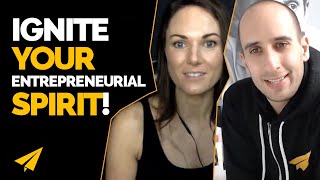
Evan Carmichael shares how he raises his 7-year-old son Hayden with the core value "believe," and discusses the hidden struggles of entrepreneurship: making $300 a month, fearing judgment, and fighting self-sabotage. He explains how a personal one-word mantra guides decisions and builds resilience.
Chapters
Welcome everybody to another YouTube Hangout. Super excited to be here. I've got a special guest who's all fired up, who woke up— it's 5 AM for her to do this interview, so I'm super pumped. It's Kate O'Brien from katemarieobrien.com. You can check her out in the description below. She's going to interview me about success and entrepreneurship and the bits that people don't talk about. But before getting into that interview and the questions, Kate, maybe a quick intro for my audience so they know a little bit about who you are and what you're all about.
Yeah. Hey everyone, lovely to meet you. So Kate O'Brien, I have, you can find me on my YouTube channel, on any social media. One thing I really love to do, and it's about pushing people's thinking and the way they relate to themselves and the way they relate to each other. And I suppose I do that in slightly controversial ways, ways in which have people kind of poke in on their own thinking. Yeah. So anyway, come over to my YouTube channel, YouTube.com/KateMarieO'Brien. There's some videos there that could possibly even challenge you a little.
I love it. And the Marie is spelled in an awesome way, M-A-R-E-E. Yes. Feeling it. Cool. Well, it's your show.
Thank you. Thank you. And also for those of you who are watching from the Game Changer Global Summit, huge welcome. Evan Carmichael, I just want to say it's a pleasure to meet you and I've been watching your YouTube channel and I love what you put together and I just love how you clearly have been a guy who's gone all in and been willing to have a vision and then really grow something to match that. And I had a little bit of a read of who you are and how you started and I loved the story of So you're 5 years old with your sister and you guys are selling artwork. This is a guy with like born entrepreneurial spirit. Can I ask you first up, because I know you're all about helping entrepreneurs in the world, what made you such an entrepreneurial little spark at the age of 5? Was it a nature-nurture thing?
I don't know. That's an interesting one. So I mean the story quickly, I was 5 years old. I grabbed my 3-year-old little sister and we both started just making drawings on a piece of paper. And then I went to my neighbors and started knocking on doors and selling it to them. And I made my first 10 cents as an entrepreneur. My parents were not entrepreneurs. They had, you know, stable jobs. My dad worked for the government, you know, for years and years and eventually retired and then got another job. So that I didn't have my parents to look up to for kind of entrepreneurship, but they always did encourage all 3 of us, I have 2 sisters, to do whatever we wanted and make us believe that we could do whatever we wanted to do. And that really, you know, all 3 of us kids went off to do crazy things, way different from each other and way different than our parents, and went off to achieve a lot more, I think, too. And so I don't know, I think the entrepreneurship thing didn't really come from them necessarily, but the encouragement and guidance and belief and letting us experiment and try and fail and not judge us for doing something different. I remember when I was— I had a— my parents went to parent-teacher meeting. I forget how old I was, I was super young. And the— I got a bad mark in art class and my teacher gave some instructions about drawing a window with a tree and I did it, but then I added some other stuff to it and my teacher like gave me a bad mark because I didn't follow her instructions exactly. And then my mom got into a fight with her and said, hey, you want— you said a window with a tree, that's what he gave you. And then he gave you more, so you can't blame him for that. So like standing up to my teachers and just always encouraging me to do whatever I wanted to do. So there's definitely, I think the parenting really helped me in that role too.
Sounds like a lot of nurture as well. So out of interest, and I'm saying this selfishly because I'm a parent and I'm assuming there's going to be a lot of parents on our platform who are watching this. Do you have kids, Evan?
Yeah, yeah, I have a 7-year-old. I don't know if you can see in the video here. Little Hayden. So yeah.
How does that influence how you bring up Hayden?
Um, you know, I'm a big believer that everybody has one word that defines who they are. It's what the topic of my new book is about. And once you understand who you are, then you can start to live a life and have a business that's more on purpose. And so believe is my one word. It's what I got from my parents. They always told me that it was Evan Carmichael, and I could do anything that I wanted, even when I wasn't successful, even when I was getting bad report cards, even, you I got into trouble, sure, I got punished, but also I always was made to feel like I could do whatever I wanted, I could do better, I could always push myself. And so I continue that same tradition with my son. I think the best gift that I could give him is for him to believe in himself and not just follow in my footsteps or somebody else's footsteps. Maybe he doesn't want a YouTube career, an entrepreneurship career. That's cool. Right now he wants to be a scientist. So great, like you could do science. Let's go learn some science. And when I pick him up from school, we have this little tradition where I will say, I'm Hayden Carmichael, that's his name. I'm Hayden Carmichael and I can do, and he'll in the backseat go, anything. And so I think, you know, my parents gave me that gift of believe and I want to pass that on that belief, that support, that appreciation, that non-judgment to my son and make him feel like he can do anything he wants to.
I can feel that from you. It's actually interesting, Evan. I've had the total pleasure of interviewing, you know, a lot of the big names in the industry on this platform over the last 4 years, and I've got to say, sitting here talking with you, you're almost exactly— you're pretty much exactly what I thought you were going to feel like. A super, if you don't mind me saying, super grounded. You've got this real, you've got this very realness to you which is interesting given the massive success of your audience and how much you've grown your business. Can you tell me a bit about how have you actually managed to keep this grounded human feel that you really do have given like the size of your success because you've been extremely successful and it's very easy. I'm just going to segue into this while you're kind of thinking. Sure. Is that, you know, when people often get success and get fame, sometimes people can actually get carried away with the ideas of who they are, and then sometimes they can kind of like lose a little bit of touch of like the ground. I don't feel that from you at all. How?
I don't know. I don't know. It's interesting. I mean, I— thank you. I try to channel my core values through everything that I do, and I think it also kind of depends on what I'm doing, I can be very confident in what I'm doing. I can turn up, I can get angry, I can— if you want to debate something and I'm convinced that this is the path to go, not that it's going to be demeaning or attacking or anything to you. So I can be really confident and I can also be really humble just depending on the situation. I think one of the things that's really helped me is just gratitude on a daily basis. It's one of the things that, that, uh, that I do is I've had a gratitude practice for a number of years where I just think about 3 things that I'm grateful for. And, uh, I think it's— I think if you can remember the, the great stuff that you have in your life and be thankful for it, then when the bad stuff happens, it doesn't overwhelm you. Uh, it's really hard to be super angry and upset and depressed and down in dark places when you're also grateful for what you have. And I think as entrepreneurs, we need that. For the entrepreneurs who are watching and listening, it's a lot of down days being an entrepreneur. You know, you can have a lot of success too, but there's still going to be a lot of down days. And I think, I think the gratitude helps, helps you stay grounded. I think, I think success and, and, and fame or whatever you want to call it, I think, I think it just exposes more of who you are, honestly. Like, I've met a lot of people who are at the top of their game who are really genuine and personable and just nice people as well. So I know I still have a long way to go from where I want to be and what I'm at right now. And so I think, I think the people who were, who have a big attitude when they're famous, they had a big attitude when they weren't so famous. They weren't a great person when they were not so famous too. And, and the fame and money and success just maybe exposes more of who they were. So I appreciate you saying that. My parents would be super happy to hear that. Yeah, and I think both of those things just exposes more of who you are and then just being grateful for what you have makes a big difference.
Yeah, I like what you said with that. I think it really magnifies what's there, huh? Thank you. You mentioned this before when you were talking about entrepreneurship. There's the days where there's highs and there's the real successes that you can get, and then there's the days. Can you talk a little bit about that? Because you hear people talking about, oh, well, that person was an overnight success, and often people see the end result and the product of what people have produced and then relate to that as if that was their journey going in. But the reality of it is, my experience certainly has been, it's It's the, you know, giving up a lot of my life, not having a bit, you know, I don't really have a social life for a long time and, you know, it's just full commitment. You know, can you talk a little bit about the reality of entrepreneurship and the parts that possibly people don't see or don't relate to? Because what I see is that when they're just relating to the end result, then when they are personally experiencing the not being able to see immediate success, they then make themselves wrong, and then that in byproduct has them give up earlier and struggle through it, not really getting it. It's like it's the long haul and it's the patience. Can you speak to a little bit, Evan?
Yeah, I think it's actually one of the biggest disservices that we do to entrepreneurs. I think we celebrate entrepreneurs, and rightly so. Like, I believe all the world's problems will be solved by entrepreneurs. It's not going to be solved by government or corporations. It's going to be solved by us. You know, world peace, you know, natural disasters, major health illnesses, it's going to be solved by entrepreneurs. And so we are right to celebrate them. But we don't showcase the amount of work and pain that goes into making a business. And, you know, kudos to people like you who are putting on summits and trying to help spread education and, and give maybe a little dose of reality. Because I think what ends up happening is one, too many people jump into it too soon who maybe shouldn't even be entrepreneurs, who just, they like the, they're attracted to the glam and the fame and the glory and the idea of making a lot of money. Um, and maybe that's not what they should be on the path to do. And also for the people who do start, what's most saddening for me is they feel isolated and alone. This is what I felt when I was starting too, that when I look at websites and when I look at magazines and when I watch videos, I see all these people having so much success. And here I am grinding, working hard, thinking I'm doing the right thing and I'm not getting results. Like, what's wrong with me? How come these guys are doing so well and I can't make my thing take off because it's supposed to be easy and supposed to be the path and I'm not figuring it out and it crushes a lot of people and most people are too ashamed, too afraid to admit that. You know, I was making $300 a month in my first business and I couldn't afford to go out. I had to pick one thing a month that I could do with my friends like a birthday or pizza and beer or something because that $20 was a lot. To me. And I couldn't, I didn't have the courage to tell my friends that I couldn't afford to be there. It was, yeah, I'm living the entrepreneur life, you know, I'm just, I got so many things going on. I'm so busy, busy, busy, busy, you know, building my business. And I wanted them to see me as, I want them to be jealous of what I was doing, not feel sad for me. And I think that's a lot of entrepreneurs. Like, we expect it to be easier than it is. Nobody's talking about how hard it is. And then we set ourselves up for failure and we set ourselves up for massive, you know, potential depression. Just, you're so isolated and alone. And so I think talking about how hard it is to be an entrepreneur and recognizing that lots of people think about quitting. Like, I told my partner I quit. And it's normal to think about quitting a business, especially in the early days. And a lot of people thought about it. So if you're thinking about quitting your business, you know, you're out talking to people and doing interviews and say, yeah, everything's great, I'm so happy. And like, this business is all about XYZ and you're trying to promote, you're in hustle mode. Meanwhile, you think like, I don't know if I want to keep doing this. Like, I'm not, I feel bad about myself. I'm not getting results. Maybe I should quit. Who do you tell that you're thinking about quitting your business? A lot of people don't have anybody to tell, and they think that they're abnormal, and they think that they're a failure, where it's totally normal and it happens to almost everybody. And so just sharing that side of things, I think, I think will help a lot of people. For people to feel like this is part of it, to have that expectation, and to know that they are not alone and that they are not worthless and that this is part of the path. I think that'll make it a lot easier for people and for them to have success and also for them to feel good about themselves and what they're doing. So I think, I think the work you're doing is great to be able to like ask these kinds of questions, have these speakers on, and not just talk about winning all the time, but some of the things that go into it and the hard journey that, that people have to take.
So thanks, Evan. I appreciate that. And also appreciate your answer. And for whoever's listening, I just want— I, you know, if you hear anything in this interview, I would love it if you just really got that, like got it on a cellular level that it takes something and that it's part of the journey when you feel like on one hand you're putting out the smiley face but on the other hand you're rocking in the corner sucking your thumb, like that can be a part of it and it doesn't mean anything. You talked about the future of entrepreneurship which actually, which really fascinates me. I'm curious, what do you see even as the future of entrepreneurship? I mean the world is changing astronomically like we've never seen. In history. And I mean, I know it's forecasting crystal ball stuff, but what do you see with the future of entrepreneurship?
I think more and more people are going to do it. I think everybody has always had an idea for something that they want to do. I think if you go back 100 years, people are still thinking, ah, I wish I could do that. I had this idea for this new invention. I think it's just way easier now to do it. The both from a, from a money point of view, 100 years ago to start a business you needed to have a lot of money. You needed to have a, a factory and a store and it cost you a lot of money to get started. Where now you could just, you know, you could be a YouTube entrepreneur, you could be an Instagram entrepreneur, you can just get started from your phone. You don't need to have money to get started. Uh, so because those barriers are going down, you're gonna— it's easier for people to get into it. I think too now, as you see more and more different kinds of people being successful, then there's more role models to look up to. So, you know, Zuckerberg making it big as a young entrepreneur inspired a lot of other young entrepreneurs to say, hey, look what he did, I can do that too. You don't have to wait till you're 40, 50, 60 to do your own thing. I'm 19, I want to go do it right now. And as you see entrepreneurs breaking through and having those successes, they become role models for the next generation. And you see that across all industries. You see, you know, I'm a baseball fan. So Jackie Robinson, you know, was the first Black baseball player in baseball. And after he made it, then everybody, like, they wanted to aspire to be like Jackie. And now, you know, most of baseball, you're going to have tons of Black players. It's, it's the norm. Um, and so when you see somebody like you hitting it, then you feel like you could do it too. And so there's so many different kinds of entrepreneurs now having success that inspires the next generation to want to go out and do more. So I think, like, look at what you're doing. It wouldn't have been possible 20 years ago. Here we are having a conversation from halfway across the world talking business, and this would have cost an exorbitant amount of money to put together before, and now we're able to do it just through a webcam and an internet connection. And so people will see what you're doing and be inspired, say, hey, look what Kate did. Mommy, look what Kate did. Like, 10-year-old girl looking up to you and said, I wanna do that. I wanna do something like that. And then she's inspired to wanna go bet on herself to do something. So I think people have always had, I think it's part of human nature is you're thinking about opportunities. Want to do something more. I think now with how, how cheap it is to get started and how, uh, how many role models we had to look up to, that we're only going to see more and more people, um, try and start different things.
I like it. You said just before, you talked about almost like, you know, one person kind of leads the way with a torch, which opens the door for a lot of people who could look up to that person. I was, um, I stayed up last night watching some Will Smith talk, uh, Will.I.Am stuff.
Okay.
I love Will.i.am, like, but he's just such an innovator. And it made me think about, you know, Will.i.am came from that area of, you know, a harder upbringing, and he's totally opened the door for people and led the way because he's into robotics and he's brought that to that generation, which is fantastic. And he actually said something really interesting. He said that you have to have the willingness to fall flat on your face over and over again and to constantly go to places that you don't know. See, it's easy to, you know, be in the background and be in your head and keep saying the same stuff to yourself or keep having the same conversations. But if you actually jump out and go out on that skinny branch and you have those conversations that you don't know how to have and do the things you don't know how to do and be willing to fall on your face each time, then you're learning new stuff. What do you think about the willingness to fall on your face? In relation to the space.
I think most people have an unhealthy relationship with failure. I think people see failure as this one final thing that then because you didn't make it, that's it, you're done. And a lot of people, a lot of people do that. A lot of people shrink down. A lot of people see an opportunity, take their shot, doesn't work out. And then they say, well, that's— I took my shot. That's it. I'm done. And then they go back to the other life that they didn't like working, you know, for somebody else or whatever it was that they wanted to do. And, uh, and I think that's wrong. I think if you look at any successful person, not even entrepreneur, musician, athlete, or whatever it is, uh, they failed tons of times. They failed more than they succeeded, and that's why they succeed. And so failure is just part of the path. Failure is part of the, uh, the journey to success. And it's only really failure if you stop. If you learn from it, then you can find another way to do it. Like, okay, that didn't work. Let's find another path and how to do it. And each time you get a little bit better. And so whoever you're— like, if somebody is afraid of that, if somebody is really— if they are afraid of falling on their face and that's why they're not doing it, if somebody watches this interview, you know, and looks up to what you're doing and says, hey, I want to do an interview in my field of figure skating or whatever it is. But they're too afraid to do it, I would go and look at whoever is the most successful person that you respect and look up to. You know, I have a bunch of people on my wall behind me. Whoever it is for you, a figure skater, a musician, Will.i.am, a politician, an entrepreneur, you know, an athlete, whoever it is, look at their story and look at how many times they failed and failed and failed and failed and failed, and use that as inspiration, especially if you feel an emotional connection to that. Person. You know, like, I could have Howard Schultz behind me, his story inspires me. You know, you may not know who Howard Schultz is, so that's not gonna— like, don't do what I do, do something that's inspiring for you. And so I think, I think there is that unhealthy relationship with failure. And I think alongside of that, one of the biggest things that people worry about with failure is not so much failure, but not working, it's, it's the judgment of other people because you failed, right? I think if people could fail in private, then they would be much more open to it than failing and your husband sees it or your friends see it or your people, your community see it. And I think an amazing skill to get used to is, is practicing not making decisions based off of expectations of other people. And the story I like to tell with this is my son— we've talked about a little bit already— uh, likes to— Hayden, yeah, it's good memory. Uh, he, he likes to wear different color socks. That's his thing. Yeah, he will never wear the same socks. You bunch them together, he will take them apart, and then he has to wear two different color socks. That's, that's his thing. Uh, I, I like— I support— like, I love it. I don't want to judge him and say, hey, you wear the same socks. Like, those are the things that sometimes parents do. Like, well, why? Why is it actually important that he wears the same socks? This is really the fight that we want to have. Um, I encourage it. I love it. And I was moving to my new condo, and I was throwing away some stuff as you move, and I had these mismatched socks, and I was all set to throw them away. And then I thought, huh, Hayden likes to wear different color socks. Maybe I'm gonna wear some mismatched socks. And the first thought that came into my head was, oh, but what if people see me in my socks and not the same color? You know, that's not— I go, maybe I'll do it at home, but if I go out, I have different color socks on. That's not cool. And because I had that thought, then I had to go out and do it in public because I was so worried about how other people would judge me. Then I had to go out and do it to build the muscle to stop making decisions based on how other people would potentially see me. I would walk to— I'm an owner of a dance studio here in Toronto. We teach salsa. And I would walk to the studio, and most of the path is on side streets. And so I've got music playing in my ears, and I'm dancing, and I'm like grooving out. I might be singing as I'm walking down the street. And then as I get closer to the main intersection, there's people there, it's like, oh.
Yeah, yeah.
I go back to conforming with everybody else. And as soon as I caught that, most of that is just subconscious. As soon as I caught that, I'm like, why am I stopping? What do these people care? I'm not doing something that is offending them. I'm not trying to make their lives worse in any way. That's a different story. And so as soon as I caught that, like, okay, now I need to go to that intersection and dance on the street with my music on. I got to stop shrinking down because of how somebody might judge me. And I think that's a really important muscle to start to build for anybody, not just entrepreneurs, for anybody, that the reason that you don't do something should never be because you're afraid of somebody's judgment. You want to do things because you want to do them. And failure is okay. And it's part of the path to success. But if the reason is you're worried how somebody is going to look at you, it's not good enough because you should care more about your opinion of yourself than other people's opinion of you.
I feel like going, amen.
Do it. Amen.
And I hope I don't wake up my kids. They're asleep next door. Mum, you're on another interview being loud again.
Well, that's another thing. That's another muscle to start to build. And I'm like, you've had a ton of practice with it, but for people listening and watching, when you catch yourself doing that, like, I feel like I should just do that. Just do it. I feel like yelling amen. Yell amen. Like, if you go to a seminar or conference or you're watching, you know, Kate's next thing online in your home office or whatever, and you say like, I feel like yelling amen, like, Yell amen, like get used to doing that, get used to trusting that little voice inside your head and stop shrinking down.
Yes. And I'm just going to go again, amen.
There you go, I love it.
Beautiful, Evan, very cool. I hope, if you don't mind me asking, can I ask you about, you know, like, so you just talked about that little thought of noticing how you shrink, how you've shrunk yourself down. If you don't mind me asking, where does that show up now in your life in terms of business? Like, is there anything that you, like, that next level, because you know we've always got a next level of what we want to push to, and I know someone like you who you've clearly connected into your passion. And so passionate people are always like, oh my God, you know, it's the next level, you're hungry for whatever you can create in this world. So that next level for you, is there anything that comes up for you now where you have a You know, you have to still build that muscle and you notice the thought of wanting to shrink down. You're like, all right, because of that, I will.
Yeah. The, the biggest one that will help me get to the next level. I don't know it because I'm doing it subconsciously. And that's the thing. That's the hardest part. You are doing so many, we all are doing so many things subconsciously that are holding ourselves back and we just do it out of routine and we don't question or catch it. Enough. Once you start to catch it, then you can start to make changes. One of the biggest ones that I did was I am a— I like to give value to people and I like to make sure that their time is respected. And so that's a really good thing in that I'm always early for a meeting, I'm always on time, I'm always prepared, if anything overprepared. But the downside would be I would be too afraid of not providing value that I would say no to things or I wouldn't take the opportunity or would cancel potentially on people or wish that it would get canceled.
Hmm.
Where this is the thing that I love doing, like, I love talking to you. I love doing interviews. I love spreading the message. I love reaching more people. But the Evan of 10 years ago would have probably said yes to doing this meeting. But then secretly, as it comes up, like it's coming up in half an hour, like, ooh, you know, I hope Kate cancels on me. Like, it's like I'm sabotaging myself where I know this is what I love to do. This is, this is what I love doing. And so sometimes it makes sense for a bigger thing, like if I commit to a big speech in front of an audience that is bigger than I've ever done before, it's gonna be on national TV, it's natural to feel nervous because you've never done it before. And I would still feel anxious, and if somebody would cancel on me, I would feel okay, like, "Hey, no worries, yeah, yeah, yeah, cool, great. Oh yeah, we'll reschedule another time, don't worry about it at all." So it makes sense for the big things that you're scared of. For me, it would happen on the smallest occasions. Like it would happen with an entrepreneur who wants to meet for coffee and it's a startup entrepreneur and I know I can help her and I've helped tons of people like her and I love helping. Like I know I'll come out of the meeting feeling so great that I was able to help this person with their business, but going into it, I'm hoping that she's going to cancel on me. And I remember there was this one woman in particular, there was this scenario, I was going to meet her at a local coffee shop and just help her with her business. And I was secretly hoping that she would cancel on me like I always do or always did. And then I came out of the meeting and I, and I just sat down and it was an amazing meeting. Like she was so grateful and so happy and you could see that she had really made a shift and she was going to go off and apply this. And I felt so good about myself. And then I remember thinking, I wanted this to cancel, like this thing that gave me such joy and energy. I wanted her to cancel on me. I was secretly praying that it would cancel. And like, this isn't right. Like, this is— that was the, that was the moment where I realized that I was sabotaging myself. And so the more I caught that behavior, we call it, we have an expression in North America, Monday morning quarterback. I don't know if the same thing, if that means anything, but Basically, a football game was on Sunday, and so the Monday morning quarterback is, you think the next day of all the things you could have done.
Right?
After the presentation is over, oh, I should have done that, and I should have, you know, so it's fine. So you reflect on what mistakes you made and what you should have done. So when you realize a limiting behavior, then you'll do a lot of that. You'll do a lot of the next day thinking, ah, I should have I did it again, right? I held myself back again. I should have done better that time. And then so you get that closer to the point. So instead of it being the next day, it's only like 3 hours later, 3 hours after the meeting, you realize, and it's, then it's 2 hours and 1 hour, then 10 minutes. And you slowly get closer and closer to that point where you made that self-sabotaging potential decision. And then something happens when you get to that point. You realize in the moment, like I'm sabotaging myself right now. This isn't the next day, I'm looking back, like it's happening right now. I'm about to sabotage myself again. And then having the courage to do the thing that you're supposed to do, but that you don't want to do. Having the courage to push through and say, I'm not going to do the thing that I always do. I'm going to take this path because this is where I need to go. And once you get used to doing that consistently, then you can really start to break down your limiting barriers and really start to make progress. Every major growth that I've had in my business has never come from a business strategy. It's come from me breaking through a limiting belief that I had and then going out and executing against it.
Amen.
Yeah, I love it.
This is stunning, Evan. And I just want to say thank you for being willing to like really share all that. And I'm sure anyone who's— everyone who's listening is getting absolute gold from that. I just want to share a little bit personally, because I know you don't know me and the audience most likely doesn't know me. So I had massive social anxiety. So I was, you know, extremely, you know, years ago, social anxiety. I actually also had anorexia for 3 years and depression. So, you know, the person you're talking to today feels very different to the person that I was years ago, in fact, total rock bottom. I remember standing at a checkout, at a supermarket checkout. To buy like, I think it was a packet of gum or whatever. And standing there, I was like 4th in queue. And literally the amount that my palms were sweating and my heart was racing because I literally had to speak to a human being at the checkout. And, you know, I was 4th in queue and each person that went down and it was counting down to me, I remember I felt like I was going to vomit. 'cause I had to speak to a human being. And you know, like what was going through my head was, how was I going to, you know, how would I introduce myself? Would I say hi? Would I say hello? Would I say hey? You know, like those are my options. Hi, hello, hey. And like the intensity that went into that. And I've got to say the only thing that's got me from there, which is total, like it was insanity, the experience that I had to here where, you know, I said yes to this live interview is actually when I have had these opportunities is learning to say yes regardless of how I feel. It is the only way. I think sometimes people are— thanks, Siri— you know, I think sometimes people are wanting to wait until they feel that they can, until they say yes to things, but I think we have to kind of switch it the other way around. We have to say yes first, which is why I'm so glad you're having this conversation. Thanks, Evan.
Yeah, and especially when you can commit to somebody else Yeah. And especially when it's out in the future, right? Like, yeah, yeah, yeah, we'll meet in 3 months. Sure.
No problem.
And then that 3 months comes and then you don't want to cancel on that person. Like, it's actually here. Okay, here we go. Because there's also the fear of looking bad in front of that person. So you want to, you're going to do it. Yeah, I agree. I think I'm a big believer in trying almost anything once. Just to get the experience, just to see. And if you're not going to do something, then there should be a really solid reason behind it, not just because you're afraid to do it. I'm just getting used to building that habit. You know, I ask a lot of people, so whenever I do interviews with people, my default will be, hey, how about we do it as a YouTube interview? I want to promote you. How about we— how about I give you some free promotion? Is that— does that sound like a good idea? Right. And, uh, some people say yes and some people will say no. And usually the ones who say no are just too afraid to do it. And they'll come up with, with a reason why they can't, right? Like, uh, um, yeah, I don't have a webcam, so I'm, you know, I can't do it. Go buy a webcam. Like, it's not, it's not a real reason. You're just afraid. Uh, and I don't, I don't, I don't push on somebody like that that I don't know Right? If you didn't want to do this, I would have said, hey, what do you want? You want to do a Skype call? However you want to do it, let's do it, Kate. I'm okay with it. But kudos to you for saying yes.
Yeah, literally, this was the one interview out of all the interviews I've done that I was like, hmm, I felt it. I felt it when, you know, the opportunity was there. And I was like, yeah, literally what was in my mind was because it challenges me, I must. Yeah. So thank you for the opportunity to like literally practice that muscle again in a different environment.
I love it. And the more you see that popping up, getting used to it, it's the same with the multicolored socks. It's the same with the dancing on the street.
Yeah.
Why are you shrinking down from this?
Yeah.
Is there a legit reason or is it just that you're afraid? And having the, you know, we tell ourselves really smart reasons why we can't do something. We're, you know, we're smart people and we tell it, we come up with really convincing reasons why we can't do something. And getting used to calling yourself out on your own BS to say, listen, you're just afraid, let's do it. Getting used to doing that becomes easier and easier and easier. It's just like any other muscle that you try to build, becomes easier and easier and easier and easier. And so maybe the first thing is something really small, you know, if you have social anxiety, it was Saying yes to a coffee meeting with somebody, you know, oh, I don't want to get out of my house, or like, who's going to be at the coffee shop, or, you know, whatever it is. It doesn't have to be some big, huge goal where you're now speaking in front of thousands of people. Just getting used to that habit will take you so far in your business, but in your life. And it's connected to when you think of something that you want to say or you want to do, just taking some kind of action on it. Like, why not say amen and yell it? You know, okay, I'm going to wake up the kids. Okay, that may be a legit reason, right? Like, I don't want to deal with the kids at 5 AM when they're sleeping. But otherwise, why would someone be afraid? Well, you know, I'm on live camera. I don't want to I can't say that, there's people watching, you know, and that's not a great reason for not to do it. So like you stepped up again and did it again. And so I think it's one of the most important lessons that people can learn to start breaking down their barriers, their limiting beliefs, and start living a life that's a lot more meaningful for them.
Thank you. And I just want to recap that for everyone. Noticing the areas where you go to shrink yourself down and then being willing to actually go there anyway, despite how you might feel on the inside. Even my husband, Hinari and I, we actually are in business together. We talk a lot about the conversational domains that we have within our life that we are not comfortable in. So, you know how I can operate in this area of my life and like this kind of like narrow strip here is where I'm really comfortable and this might be, you know, for some people this comfort zone might even be success, right? And the conversational domain that they're not comfortable in is perhaps family or relationship or relating to people. Or this conversational domain that I'm comfortable in is whatever. But then at least like outside of that, all the places that I'm not comfortable in. I'll just give a quick example. Like, you know, for example, if someone is the nice person and the good person and they identify that as who they are, then perhaps a conversational domain that they're not comfortable within could be their power. And so, like, in a situation where they are actually called to be like, really, you know what, this is, you know, to actually like call to step up to the plate and bring some power to something, you know, might not be something that they can do because that's not who they are. Or sometimes conversational domains I find a lot of people can't go to is around sexuality. I know it's a little bit outside entrepreneurship, but it's a conversation of where can people not go to? And that's actually literally for me, and I'll just go there first, I've been playing for myself in two domains in the last couple of years because they're uncomfortable for me. One is my power, and then the other one is sexuality. I'm just curious for you, is there perhaps a conversational domain or an experiential domain that you haven't been used to, that you're perhaps not as comfortable in, that you want, that you expand into, or you want to, or you try out?
So it's a Interesting topic. I have a couple things to say on that. First, for me, if there is something that, again, I feel like I want to learn and do and I feel is important to where I'm growing, then I force myself into the situation to be able to do it. Just like the dancing in the street in the socks or having a hard conversation and leading the team or letting somebody go. I will force myself to do it. What's the reason why I'm not doing it? Because I'm just afraid. So I'll go and do it. There's probably lots of areas again that are subconscious that I am restricting myself that I don't know about yet, that I am yet to discover. But as soon as I do discover one, then, then I have to go out and attack it. I think what really helped me and what can help a lot of people is basically the topic of the book, is finding out the one core value that you have to give yourself the self-awareness and the ability to build a life that is best fit for you. So as an example, my one word is believe. We've talked about it. I want to bring believe in all situations. Believe gives me strength. Believe allows me to also find a path that may not be the same path that other people take to solve that problem. So as an example, letting somebody go. It's important, like as an entrepreneur, it's great to think that everybody's just gonna work out and hooray, but some people are gonna have to be let go. And sometimes that's your fault 'cause you're, you know, a bad manager, you made the wrong hire, and sometimes it's their fault for not doing their work. For someone who's positive and optimistic, how do you let somebody go? It was my first— letting somebody go was— I was super scared about it. So I had to do it because I'm scared about it. And it's the right thing to do. But then it challenged me. I think, okay, my one word is believe. How do I fire in a believe way? All the stuff that I saw about firing, I didn't like any of it. It's like, you need to fire on a Friday so that they can't hack your computer or take stuff with them, or all of these reasons, like you got to fire with somebody there. So there's a witness. And I don't know, everything I read, I read because I was anxious. I was worried about— I read all sorts of stuff on firing and I didn't resonate with any of it. And so I knew I had to do it, but I didn't want to do it in the way that I read. So I challenged myself to think, okay, I'm going to believe. How do I, how do I fire with belief? And for me, it was having a conversation with them and really just understanding that this wasn't even the best fit for them. You know, like, he, he wanted to be a baker. Like, his heart of hearts, he wanted to be a baker, and he's working for me doing, you know, marketing stuff. Uh, and he loved, he loved me and the environment and positivity, but he wasn't doing the thing that he was supposed to do. You know, like, and he had nobody pushing him to be a baker, and he was too afraid to take that leap and go be a baker. And so understanding that, it was about September when we had this conversation. I said, listen, uh, I'll work with you till the end of the year, and then I want you to go and be a baker because you want to be a baker. And however I can help you get there, if you need a reference, if you need you know, me to come in with you to the bake shop, whatever it is, like you're supposed to go off and do that. Don't— like you're holding yourself back doing here. And it can come across as self-serving and listening to it if you just read it in the book, because sure, it helps me. The guy's not working for me anymore. It's great. I can get somebody else who's meant for the position. But it comes from a genuine love and care for him because I believe in him and his potential to be something more than what I can give him. I can't give him a baking job. Working for me. It's just not going to happen. I'd love to stretch my team and go into new areas, but the Evan Carmichael Bakery is not on the horizon for what I want to do. And so I discovered how to fire in a believe way. And I think understanding what your one word is, your core value, and then seeing everything that you do in a business context as well as a personal context through that lens helps, yeah, helps one give you the confidence to do it and then helps you find your path that may be different than everybody else's path. So that's a long answer, but those are my thoughts. I think it's super important.
I love it. It sounds like that one word can become, I'm assuming, like the barometer on what to measure or decide through all the different things. Tell me how You've clearly found your passion. A lot of it can be easier when people really connect, like really align with that thing that they're really passionate about, then it is easier to then stay the course and to dig deep. If you're like passionate, then there is really no other option, even though you might have the kind of wobbles in your head. How do people actually find what they're really passionate about? Because I think sometimes people can, get a little bit overwhelmed by the conversation around, what am I here to do? And then it can get a little bit overthought. So what, you know, how do people really connect into what they're passionate about?
Yeah, I think, so I think the two most important exercises people can go through is one, finding out what they stand for, right? Finding their one word, finding their belief system. And that is, that is a lot of self-reflection. That is a lot of a lot of personal time, a lot of thinking. You can't think your way to find your passion though. You can take like different tests and say, well, based on this, I'm supposed to be a teacher or whatever it is. And that might be a start, but you can't think your way into a relationship. You can't, you know, you're married, you can't just sit there and put on a piece of paper, here are the 10 things that my husband has to have and then poof, here he is, because when you get into that relationship, you're going to realize that 2 of those things didn't matter and you have to add 4 more to the list that now do matter to you that you didn't even realize before. And so my advice in terms of finding your passion, because it is one of the most important things that you need to do, if you look at anybody who's had success in their careers, they follow something they're passionate about, is to try stuff. Is to explore, is to say yes. You know, I own a salsa dance company. On paper, it looks like a really silly investment. When I first walked into a salsa dance class, it was just a fun thing to do. And on paper, I'm too tall, I don't speak Spanish, I take big steps, I didn't learn the music growing up, like all of these things against me. But I loved it. I had fun. I wanted to go back again. And so I wouldn't put so much pressure. If I put all that pressure to say, I need to find my next business, this has to be it, I have to know on the first try and that's it, then I probably wouldn't even gone to that salsa class. And if I did, it would have been so miserable because I'd be waiting for it to be this amazing thing. And, uh, instead I liked it and I wanted to come back and do it again. And I liked it and wanted to come back and do it again. And I continued to like it. Then I became a regular student. I became an investor. And then I bought the business in January of this year. And it's the largest salsa dancing school in North America. We'll teach 5,000, 6,000 students a year how to dance salsa. And if I just didn't say yes and take that one class, I wouldn't have known. And so if I think, I think you may have some inklings, it's like one, listen to that voice. Like, I want to say amen, say amen. You know, I want to, I want to— you pass by and you see that sign for piano lessons. It's like, that's interesting. We'll take the thing and call the guy and take a piano lesson and just see. You never know where it's going to lead. Like, a lot of times it doesn't make sense. It doesn't make sense looking forward. You can't, you can't figure out, like, if you try to plan your career with your head, you're never going to make it because your head only understands a world that currently exists where your heart can make a new world for yourself. So you make the big decisions in your life with your heart, and then you use your head to figure out how to make it happen. And so you can't think your way to something that you need to make a decision with the heart. And so it's saying yes to things. It's trying stuff out. Try anything once. If you don't like it, that's okay. If you do, then you keep doing it until you find the path that feels like, you know what, this is the right thing to do. Now's the time. I want to— I want to devote more and more and more and more time to this. I can't put this down. I love this so much. I got to keep going. And then that's what you should be doing. And some people, that journey is longer than others. But the people who can't find their passion, I would challenge them to look at their activities, and I would say they're not doing anything. They're going home and watching TV shows and have the same life. They're living the same boring life. They're not trying to do anything. They're just trying to think their way out of it. They're trying to read an article on, 25 jobs to start in 2017, and that's what they're gonna do, right? You gotta, you gotta try and feel it out. You gotta do it. You gotta say yes. You gotta go to meetups. You gotta go to that event that you've never been to, um, and just see. You know, I remember you talk about sexuality, and this is, you know, now we're going off topic, but, uh, I like going to, uh trade shows. I like just seeing how people are promoting their businesses. I like seeing how, you know, what's happening in the city, what businesses are up to. And on the same day, my wife and I went to the sex show in Toronto and the RV show, and it's like total opposite worlds. The RV show is like motorhomes and trailers and, uh, you know, all the country stuff. And then the sex show was obviously totally different.
Oh yeah, cool.
Yeah. And like, honestly, we didn't enjoy either of them. It was, it was okay. Like, we enjoyed the company, we enjoyed each other, we enjoyed watching the things and going into the RV and learning something new. Um, but we wouldn't go back. But we went to both, where a lot of people are so fixated on this is this This is my life, right? You did the headbanging thing. This is my life. And that's, that's the lane I'm always going to stay in forever. I'm never going to explore anything. So someone invites you to the RV show, try it, say yes, see what happens. So invites you to the sex show, see what happens. Now you don't want to do something that may put you in like massively harm's way, but most of the things in life aren't that scary. Um, So at least, at least so you know. Maybe I go to the RV show and I love it. Maybe I like become obsessed with this RV and now I want to drive across the country in my RV on my book tour. And then I, you know, start an RV company and I become, you know, like that could be a whole new business thing. I wouldn't have known unless I went to the RV show.
Absolutely. I love that. I absolutely love that. And I love what you said about make your decisions with your heart and then think the follow-through with your head. So Evan's book is Your One Word, and it feels like a real theme of every conversation we've had comes back to this. It's like, what is that word? What is that core value that is driving you? And given that you're saying, you know, make your actual decisions with your heart, that connects to that core value. So I highly recommend whoever is listening to this is to grab Evan's book, Your One Word, and have a read through it. and then really apply it to what it is that you're interested in. So thanks, Evan. Actually, I just want to finish by asking you this question. I see you're standing up.
Yeah.
You're standing up, right?
Yeah.
And then I'm realizing like I'm literally leaning on— I've got a back and I've got arms and I'm like fully supported. I'm like, tell me about standing up. You're into life hacking?
I've been standing up for 12 years, I think. I'm just thinking how old I am now. Yeah, I started when I was like 20. I'm 36 now. I started when I was 24. 24, 25-ish.
So tell me, tell me what's, what's the benefits? Get me— I want to get out of this chair. What's the benefits of it so that I can get it so that I want to do standing up as well?
Sure. So I mean, I was standing up before it was a thing to stand up, before sitting was cancer or whatever. I was in my, I was in my 20s and I was having really bad back and knee problems. And I'm like in my mid-20s, early 20s, and I was going to see a chiropractor every week, getting the adjustments, getting the insoles, uh, getting like the custom orthotics, getting like the electroshock therapy. Like every week I had to go do this. Now I spent a lot of time on the computer, it's the nature of my business. I probably had terrible posture, um, but come on, I'm in my 20s, this isn't supposed to be happening in your 20s, right? And so I think I read somewhere, I forget how it first came onto my radar, but standing up as an option and not wearing shoes. So I've been barefoot this whole time too. And I started small. I always like test— like, here's the thing, right? Stand-up desk. Oh, I need to go get a stand-up desk. Oh, it's going to cost me X amount of money and blah, blah, blah. All this, all these reasons why you can't do it. And so it's like this big goal in the future that you never get to. I took my laptop and I took a bookcase and I just started working from the bookcase. That's it. Just to experiment, try. Like, I'm gonna try something right now. Okay, let's get my laptop and go work from the bookcase. Was it the exact ergonomic height? No. You know, could have been better, 100%. I got tired after an hour of standing up, you know, because I'm not used to it. Um, and I liked it. It's just one— it was one small test on one day, like going to the RV show and going to the sex show that led to zero. The standing up desk led to this, where it's been 12 years of standing up. Like, you never know. And so my back doesn't hurt anymore, my knees don't hurt anymore. That was the most immediate, like, health benefit that I got. Um, I also find that I had more energy when I'm standing up. When I did phone calls back when I had a phone, I would always stand up and walk around because I had more energy. And when I was doing the audiobook for this, they put me in this tiny room and you're recording the audio and there was a seat and the microphone. And there I sat down and I started reading. I'm like, this doesn't feel right. I said, can I stand up? Like, do you mind if I stand up while I read this? Because I have more energy when I stand up. And he's like, yeah, you could stand up, but you're gonna be, we're filming from, we're recording from 10:00 AM to 5:00 or 6:00 PM. You're gonna stand up that whole time? Like, yeah, yeah, yeah, I stand up all the time. Don't worry, we got it. It's like, okay, 'cause they had to make a whole bunch of adjustments to now move the microphone up and calibrate and all that stuff. But the audiobook was fire. The audiobook was amazing. It was so much better because I could stand up and doing this, like talking to you, I'm much more— I feel more comfortable and much more energetic by me standing up than sitting down. And so that was a side benefit that I came to realize later. The real benefit was just for the health of my knees and my back. And so those two, being barefoot as much as possible And standing up. And when I first started doing it at my old office, it was kind of awkward because I would have a meeting at my desk and I would be standing and other people aren't used to standing. So they would be like hunched over and then I learned and I brought them chairs, but then they're sitting and I'm standing and it still felt awkward.
You're like the presenter.
Yeah, it was awkward. So then I ended up getting a boardroom table. I'm like, okay, meetings are in the boardroom and I'll sit down for that. I still sit down. It's not like I stand up all day long. I eat dinner, I sit down, right? It's not, you know, to the crazy extreme. But yeah, you need to work your way into it. You know, you can't just stand up all day long. But I get a lot of benefits from it and super appreciative of it.
That's awesome. Thank you. I'm hearing this theme throughout the whole conversation is like being willing to try new things. Like if you have an invitation to something or if you have an inkling or a thought, so just try it. There's nothing to lose. Try it and you just don't know. It's either at the worst you just don't like it and you just don't do it again, and at the best you just have no idea what door it could open. Thank you so much. I've just loved chatting with you. You've got You're so interesting and bring so much heart to what you do, which is interesting because you're such a businessman, but you bring a lot of heart to it. So thank you.
Cool. Yeah, I appreciate that. And, you know, I've done a ton of interviews recently because of the book. And I've really enjoyed this one. You've got an amazing vibe, ask awesome questions. And I know it's been way longer than we planned for, but it's just, it's kind of flown because I've really sincerely enjoyed talking with you.
Thanks so much, Evan. And I just want to finish off by saying Your One Word. Those are the 3 words that you need to go search and either get it in audiobook or in real hard copy. But Your One Word, go and grab that book. You've obviously loved this interview and you'll actually get like a full book worth of Evan's gems downloaded. So thank you so much. Evan, what's a parting comment you want to share with the with the audience to finish?
Believe. That's it. Believe in yourself. Believe in what you're doing. Believe it's going to work out. Believe.
All right, and I have to finish on amen, brother. Thank you.
That could be your one word. Amen. You never know.
I think so.
Take care. Thanks, Kate.
Thanks, Evan.
More from Evan


How the Biggest Mistake in History Created A Trillion-Dollar Empire | Sergey Brin



9 Machiavelli Principles That Force People To Respect You | Machiavellian Philosophy



The First 10 Words That Instantly Ruin A Sales Conversation | Vanessa Van Edwards

The Top 1% Mindset Behind The First $5 Trillion Company | Jensen Huang (Nvidia)

