How to Fix Your MONEY MINDSET and Create Real WEALTH! | Dawn Dahlby Interview
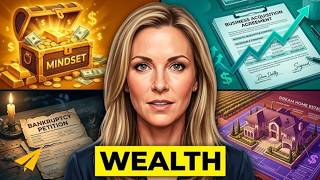
Certified Financial Planner Dawn Dahlby, the U.S.'s first behavioral financial advisor, argues most people have a "worth crisis" because they chase money without connecting it to their values. Her "living wealthy" framework divides income into four buckets: guilt-free spending for core values, debt repayment, essential expenses, and giving. She uses a client choosing between a bigger house and travel to show why knowing what "enough" means matters more than earning more.
Chapters
We're all insecure human beings. We don't have enough money. We don't have enough purpose. We don't have enough life. And it's because, you know, we're not building both our worth and our wealth at the same time. I think so many advisors are just out there preaching like, save your money, save your money, save your money, right? And what I've learned through— I'm very technical. I've done comprehensive financial planning. I'm like, you guys, all you're doing is saving your extra money so you can pay more in taxes or you can give more to your kids. Is that really in alignment with your values? I think we're so busy living someone else's life There she is. Hi Evan, I'm so excited to be with you today. I love your platform.
Amazing. Well, welcome aboard, Dawn. It's awesome to connect with you. And I love your story. I love the whole idea of fixing your mindset around your money. So Dawn, for those of you who don't know, is a— she's the money, she's the money woman. She'll help you invest your money, keep your money, has a new definition of what it means to be wealthy and spells it differently than most people where it's well, W-E-L-L-T-H-Y, and named what, the country's first behavioral financial advisor. So why don't we start right there? What does that mean to be the country's first behavioral financial advisor?
Well, you know, sitting with clients for over 22+ years, one-on-one with clients, helping them build their wealth and manage their assets, I realized there was still a missing component to how we're giving financial advice out. And it's really about the behavior and the relationship people have with money. And I think we're all, you know, money's super important. We all want more of it. I've never met somebody that doesn't want more money, right, Evan? But it's like, why are we chasing the money and how's it aligned with who we are? And how do we really continue to get the right type of advice to build your wealth, but also making sure it's in alignment with who you are as a human being and how you're living your life.
It's like you're combining psychology with personal development with investment advice altogether.
100%. In fact, you said the, like, the, the word that we've, you know, defined is living wealthy, W-E-L-L-D. It's really about It is really about that personal development and it is building, you know, the technical advice about building wealth is super important. That is why I am a Certified Financial Planner and the psychology and the personal development around money is super important. I define it as living wealthy is really about the combination is we all want security in our life. We all want money security and we all want personal security and it is really living life at that intersection And I think we really have a wealth crisis in our world right now. And I think it's all about the foundation of because we have a worth crisis. We're all insecure human beings. We are, you know, we don't have enough money. We don't have enough purpose. We don't have enough life. And it's because, you know, we're not building both our worth and our wealth at the same time.
So what are some of the mindset issues around money that we have and how do we fix them?
You know, I think the biggest mindset issue is really, it is a mindset. It's all how we think. And I think we're all chasing what is that enough number and how much is enough. And we don't take the time to stop and think about really what that number is and how, what is enough in our life. And in taking that combination of what is the number and what is enough in life is really you know, what we're all chasing for. I just think, you know, Evan, you and I, we sit here and we have beautiful platforms and we talk to people all day long and, you know, when you peel it back, like, people just want to be happy, right? We all just want to be content, fulfilled, happy, but I think we don't really, I think we're not honest with ourselves on what that is and how, you know, we haven't defined really what happiness is for us and we're just constantly on this cycle of chasing. I think we're chasing the wrong thing. We don't take time enough to reset our mind and to think about life and think about money.
So what are some of the questions that you ask clients or exercises that you have them go through? Because you have a very different process than most financial planners.
Yeah, you know, it's really about using both sides of your brain. You know, some of us are really analytic or some of us are really creative. And I, tap into both sides of my brain. So, you know, for, for 20-plus years, for two decades, it was just the technical part. And, you know, like setting a financial plan and figuring out what people's goals are and what their cash reserves are and how to protect their assets and how to minimize their taxes and minimize their expenses and their investments and how they're going to leave their estate and their legacy. But, you know, and I did that thousands and thousands of times with one-on-one with clients. But, but the really defining moment for me is when we're like, wait a second, that's all important because we need the technical advice, but what about how you're living? Like, what about creating more of an alignment with your values of who you are as a person and where you're able to own that, where you're able to own your purpose, your vision, your core values, your goals, and really get crystal clear on what you value as a human being and making sure we're building our wealth in alignment to that area.
So can you give an example of, of how to do that? Maybe it's with, you know, a current client that we can leave unnamed, or, or a theoretical example, like, to make it a little more practical for people?
Yeah, you know, I, I always go back to this one particular client where, you know, their goal was to retire and to have, um, and their goal was to retire, but they wanted to move and have a little bit bigger house. And so we talked about could they afford that or not? And it really came down to their, you know, they told me their values were, were family. They're super important for them to be able to have family, their teenage daughters to come back into the house during the holidays, that kind of stuff. But they all, what was really also important was, you know, them being able to travel and being connected with, you know, experiencing more of the world. But they only had so much money, right? They have X amount of dollars in their investment portfolio. And so what we really had to take a step back and really get to the core issue of what do they really value? Do they really value a bigger house and having their children come back to, you know, holiday time and the expense of that versus the expense of them being able to really meet their values of experiencing life and traveling and spending their money that way? Because most of us don't have an unlimited source of funds. So it's about prioritizing and making those decisions. So it's about getting crystal clear on what, like truly, what do you value? Like pulling that back, what is it that you value as a human being? Is it family? Is it relationships? Is it spirituality? Is it travel? Is it adventure? Is it like alignment? Like what is truly the things that you value? And then making sure that we're building our wealth around that versus just chasing the dollar. So many of us just chase, we want more, we want nothing, like there's never enough. We just chase, chase, chase without taking a step back and going, the why behind the chase? Like I'm all about more money. So don't get me wrong. Like I'm a technical wealth advisor and it's about building wealth, but it's about doing it the right way.
Why don't we use you as a quick example? So what does Dawn value the most? And then how have you altered your investment decisions based off of that?
Yeah, no, I think that's a great question. So, you know, I personally value alignment in life. I'm a very spiritual person. I value relationships. I value success and achievement. I value excitement. Like I have a, you can see I have a lot of energy. And what I've realized, like in my past, I was giving all of those things, really my values and my strengths, I was giving that to clients one-on-one. And I'm about halfway through my career and I realized, oh my gosh, you know what? I'm truly not in alignment with the gift that I've been given. And that's really to influence people and to show people a different way of thinking about forward thinking versus backward thinking and giving people this opportunity to really value on what's possible in people's lives. Like I've done that one-on-one. For the last 2 decades, but I realized I fully wasn't using my skills and my abilities. So that's why I developed a digital platform so I can reach more people. And I think that's, you know, I realized that my values were, I wasn't in alignment, but I wasn't using them to the full potential. Does that make sense?
Yeah. And so then, and you got your book coming up about Living Wealthy and you've got your courses, which YouTube will link up in the description below. So how does that impact the investment decisions that you make? So this is— I mean, I get that you're seeing investing as a holistic thing, is how are you spending your time so that you're creating courses and you're writing books and you're spending more time with clients and asking the questions so they can make a better decision. How does that— if you want to live more in alignment, like if somebody came to you— I'm just trying to use that as an example so people kind of get a sense. So somebody came to say, hey, you know what, alignment is one of my most important core values. How do I then build a portfolio? 'Cause now we get to the technical side of the investing. How would, what is that shift in what I end up investing in with my money as opposed to just my time?
I don't think it's really what you're investing in. It's how much money you're going to invest for the future from a savings perspective and how much money you're gonna have available to you to be able to spend today. It's about the alignment of the today and tomorrow. It's not whether you're investing in crypto, you're investing in international and mid-cap and small-cap. It's about that. That's the easy part. We all have it, you know, we— you have a diversified portfolio. That's 101 of investing. But it's really about how much you're putting towards your investment for the future so you can live in alignment with today and tomorrow. I think so many advisors are just out there preaching like, save your money, save your money, save your money. Right? And what I've learned through— I'm very technical. I've done comprehensive financial planning. I'm like, you guys, all you're doing is saving your extra money so you can pay more in taxes or you can give more to your kids. Is that really in alignment with your values? Or do you want to free up some of that tax money? Do you want to free up some of that savings so you can live for today as well? And I think that's the alignment. It's not where you're investing. It's really how much.
So if somebody said, yeah, again, using you as an example, hey, I want to launch a course and I want to write a book and that's going to cost me money because I want to invest in this business. Then you make the decision to say, okay, well, invest X into your portfolio. That's going to take care of the future. But then also we need to pull Y out so that you can create your digital course and write your book, etc.
Well, you're absolutely right. And that to me, like having the digital course and having the book and I'm doing this beautiful high-profile event in Las Vegas in February where we're having celebrities come and we're having a ton of thought leaders, like that costs a lot of money to put together, right? But it's in alignment with me. And so I get to make the decision on how much I'm gonna spend on that today and how much I'm going to save for my tomorrow. And so when I'm true to me and I'm living my values and my purpose and my, that's why I call it own your worth, when I'm truly owning my worth, I get true alignment and I'm not just in this fear-based relationship with money saying, I can't afford to put on this event and I can't afford to write a book and I can't afford to build this platform because I'm so focused on my future. It's focused on the right alignment. And Evan, your alignment is very different than mine. Like we all have these beautiful stories and these beautiful alignment opportunities for us and I think People need to take a step back and just figure that out. I think, I don't wanna go on and on and on, but I think we're so busy living someone else's life too. I mean, people are on social media all the time and all we're doing is comparing ourselves and scrolling and going, what does Evan have and what I don't have? Like, and what does this person have? Why do they have more money? Or it seems like they have more money. We live in this trap of comparison. And I think so much of our extra time in life spent on comparing you to me versus us taking a step back and going, well, what is it? What do I really need? And quit living in fear and chasing the dollar. You gotta chase the dollar in a healthy way and live wealthy.
I love that you humanize it. You know, I think a lot of people are very afraid to talk to their financial advisor. Like, ask people like, top 10, who do you not wanna talk to? It's like their dentist, their lawyer, and their financial advisor. Because they don't understand it, because it often gets very technical, and they feel not good enough, and it's like, I'd rather just not see it because then I pretend like I don't have a problem. But you humanize it and make it feel not just okay, but this is empowering. Taking something that makes me feel bad and then turn into something empowering and say, hey, it's like, we can make this happen. You can plan a better future. And so I love the vibe because we've had a bunch of financial people, you know, on the show come in and talk and nobody leads with this kind of stuff.
Yeah, right. Well, and you think about it, like money is probably, you know, if we really took a step back, like money's probably one of the most important things in our lives. It's like oxygen, like we can't live without money, right? And so we all have this emotional connection with enoughness and an emotional connection with money. But what happens is like, just like you said, is people start fearing money. And because it's so technical and it's over their head and they never feel like they have enough, so they avoid it. And that's the last thing we need to be doing. We need to be talking about money, especially women. Like, we don't talk enough about it's okay to have enough. It's okay to be wealthy. It's okay to have enough money. It's okay to want more. It's okay. To learn and be educated about how much is enough and celebrate that and empower people to live a better life. And if you had to peel me back, like, I love money too, but if you had to peel me back, it's all because like my whole mission and vision and goal in life is just to teach people a better way to think about what's possible for them and allowing them to live a different life. And not get strapped in the fear. I've been strapped with fear and anxiety my whole life. Like it's in me genetically and it's just, you know, it's been part of who I am. But once I was able to, you know, own myself and understand the psychology and the technical part about wealth and understanding how to align my life, like that's when life started getting so much better for me. And now I just want to share it with the world. And that's what's really important because we have this fearful, thing with money. It's just ugly and gross. And I'm like, no, let's bring it, bring it on, and let's talk about it. Let's have honest communication about it and what we need to do technically and psychologically to build more wealth because we need more money.
You talked about women. I know that, you know, it's on your website and the materials and some of the courses and the events and books. Obviously, there's some things that are very— it's just a human thing. But what's the difference between men and women? I know it's a broad brush and not everybody's gonna be like that, but why the focus on women? Why do you think it's so needed compared to men? Not that you're like turning men away, but specifically women, like why the difference? And what is the difference?
To be quite frank with you, it's really not just about women. I think women are more attracted to this type of thinking about money. And I think women in particularly need this type of coaching and advice. I also think that women tend to historically not having, it's not okay for us to negotiate and to talk about money. And we are very, we're emotional creatures and men are very emotional. It's just that women actually can, it's more accepted for us to show our emotions than a man. When a man shows his emotions, now I'm generalizing, right? But when a man shows his emotions, it's weak and it's not as powerful. And I think that's why my message probably resonates more with women. And I think my message resonates more with successful women because just like myself, I've been an entrepreneur my whole life. I'm a CEO of a multimillion-dollar investment company. You know, I'm an entrepreneur, a business owner. That type of message resonates with how do you continue to grow and be at the top of your game, but recognizing that we all have emotions and when we don't deal with our emotions, especially as women, and we let the emotions take over, we're not gonna, we're gonna limit our success as entrepreneurs. Does that make sense?
Yeah. I'm curious, what was the, like the evolution of Dawn? So you spend your first, however many years, you've been doing this for a while. You look super young, but you've been doing this for a while. You do it like everybody else does at the beginning, and it's just about the technical and the numbers and the question. What, what was the thing that sparked the difference to say maybe the way everybody else is doing it isn't enough?
Yeah, right. It's twofold. It was me personally realizing when I had made 5 times the amount of income that I ever thought I would dream of making, but I still feared that credit card statement. Back in the day when we used to get those credit card statements, we'd open it up like, oh my God, what the hell did I spend over the last month? Like, I would still have this fearful relationship with money myself. And I would allow that to continue to dictate my decision-making. And I noticed it myself. And then I noticed it, like, I would give all my clients I'm a CFP, I'd give them the right financial planning advice, but then we'd have meeting after meeting after meeting and I'd realize, oh my God, like, you guys still think you're gonna run out of money? Like, what is your problem? Like, I'm showing you the technical financial plan. I'm showing you 1,000 different scenarios that's gonna show you to never run out of money. Why are you guys not spending your money? Like, you know, so I realized, oh my gosh, there's this yin and yang with spending and this emotions and retirees are still not spending their money and all they're doing is hoarding it and saving it or, Or we have people that are overspending. You know, like I got myself caught up in overspending earlier on in my career. It's like, 'cause I wasn't enough, so I spent enough to be enough, you know? And I realized this yin and yang relationship with spending and saving was impacting me as the leader of a wealth, you know, leading clients. And then I realized the clients weren't listening to my technical advice. I was like, gosh dang it, well, I need a different approach. I need people to fall in love with their money and realize that they can like loosen up the purse strings a little bit and live. We all just want to live. And they weren't able to do that until I started having those conversations with them. But I'm telling you, I didn't recognize that in the clients until I started recognizing it myself. I was like, oh, mama here needs to work on her, you know, like I need to work on my own relationship with money. I had all the technical advice, I had all the income coming in, It wasn't until it's like, oh yeah, so we need to combine this relationship, the psychological, the personal development piece of money, and the technical advice at the same time. And I feel like if advisors out there, advisors out there, if they're not helping their clients with both of that, those things, like that we're doing a disservice to clients. I've watched clients fall asleep in meetings when I start pulling up the Morningstar report and talking about the beta and the alpha and you know, like all the technical stuff about building wealth, they're like, what? Like, I saw them, you know how you've seen people like pretend to yawn or not pretend to yawn, but they're yawning, but they're trying to hold it back.
Kevin.
Yeah. Yeah, it's like, oh my, why are we, why am I wasting, I'm wasting their time and I'm wasting my time. So let's get to the real issue of how they wanna live. Like, and that's where it was just like, you know what, I need to make a change in how I present advice, how I give advice, the technical stuff, super important, but you just need to make that change.
Were there any rules that helped you then and maybe even now that maybe gave you the permission, whether it's, I'm gonna spend X% of what I make, or I'm gonna donate X% of what I make, like, were there any, like, okay, I have no choice, so I set these rules. Did anything like that help you get over the mindset hump?
100%, and this is the technical advice. And so, You know, all through financial planning, when we sit down with clients, we don't really care about their budget or their spending. We're just like, how much you have and how much are you saving for your future? And I was like, this is not okay. So what I developed is a comprehensive financial planning tool that said, okay, you guys, we need to understand this alignment piece and what your real net income is. We all think of, when we hear the word net income, We think, well, net income is after we've saved, or after we've paid our taxes. It's like, yeah, but that's not really what, real net income is after you've paid your taxes and after you've committed a percentage of your gross income to saving for your future, 'cause we have to save. And then we have this real net income after taxes and after saving. Then we get this pile of money that we get to align into different buckets. We get a saving, or we get a spending bucket. We get a debt bucket. We get a core value bucket, and we get a charitable bucket, like how much money are we giving away. So I have these 4 buckets that I say, okay, people, based on your core values, like Evan, if I picked on you right now and said, name me your 5 core values, and then what I would do is I would say, okay, I'm gonna start to analyze those values and, and understand if they're costing you money from a spending perspective, or are they helping you save money? And those core values, if you are living out those core values and they're costing you money, great. Then you can spend 25% of your real net income on the things that you value the most in life. Like, how cool is that? Is it going out to dinner? Is it working out? Is it building your business? Like, what are the things? 25%, guilt-free, guilt-free, non-negotiable, every single month, 25% of your real net income on the things you love. And you can spend 35% of your real net income on debt. Like, I love debt too. Like, I love healthy debt. I don't love credit card debt, okay? I hate credit card debt, but healthy debt to build yourself up for the future, and debt that it's associated with an appreciating asset, like, 35% of your money of your real net income on debt. And then 35% of your money on all of the BS stuff that we have to spend our household expenses on, right? Just to survive. And then, you know, a portion, you can, you know, 5% of your real net income on charitable giving. Like when you follow that bucket, you create a spending plan, not a budget. You create freedom and security for today while you're still planning for tomorrow. And that is the technical advice that I give clients to be able to live in alignment with their today and their tomorrow.
Yeah, one of the hardest things I had to deal with was just getting comfortable spending money. I'm still like at the core, the startup entrepreneur making $300 a month, like eating bean salad lunch every day and just having no money. And so even when I had money, I didn't, I didn't spend it. And I thought that was actually good, but then realized, oh, but like, you could, you could be doing more things to bring you joy in your life, but also invest into the business. Like, I wasn't growing my company as much as I should have because I was too afraid to spend money on things. So I'm a lot better, but I probably still have a lot of that scarcity, early Evan in there too, that I'm still working through.
Well, and I appreciate you saying that, Evan, but, you know, your platform is about your belief walks that you take. Right, and your beautiful rainy walk yesterday with your wife and then the Disney, right? Like, I saw it. But the belief walks because I believe when you start peeling back the personal development and building your worth up, I'm telling you, it 100% comes down to what you believe in. And do you believe in yourself enough and your energy of action you're gonna take around building your business? And if you do, then you're gonna put more of your money and your financial resources, in fact, you can even take out debt to do that. If you're gonna believe in yourself 100% and you're gonna follow through on your actions, then that's a great, that's a great alignment piece, right? But if you don't 100% believe and you still live in this fearful relationship and you let your negative anxiety and emotions take over your life and you don't 100% believe, you know, then you're gonna fail or you're gonna, you're not gonna be as successful as you wanna be. So it is about beliefs. And I love that. That's why I love your platform so much, because when I start peeling back worth and wealth, the floor, the bottom line denominator is belief. It's all how you believe in yourself and your wealth. But you probably still also what you just said too, it's like you're spent. You need to loosen up some of the purse. You need to like, you need to live for today and you need to have a spending plan because like, like it's like telling, I told another podcast I did a couple weeks ago, it's like, You know, if you don't do that, you don't loosen up and live today, it's like being on a diet your whole life. Like, we all know that never— like, 100% of the time, that never works. 100% of the time, being on a budget doesn't work either. It's the same concept, right? And we want to live life on actionable steps that we can take that work, not what is going to limit how we think and what we believe. And that also limits our wealth-building opportunities.
I love it. Well, you're bringing up all sorts of anxiety and feels here. So I've got some work to do. I gotta get the book, I gotta join the courses. Where do you wanna send people to? You've got your event coming up, you've got books, you've got courses. What's the main thing you wanna guide people to?
My biggest thing, Evan, is I want people, no matter where they're at in their journey of wealth building, that they can reach out to me for advice and help. If they want free advice, they can follow me all over social media. If they want, they're like, oh, I'm ready to implement some of this actionable advice, they can go to my website, DawnDahlby.com. I mean, there's something for everybody there. The book, Living Wealth, or Live Wealthy, is going to be all over the place in April of next year. It's going to be online. It's going to be in the brick-and-mortar stores. I'm super pumped about this event. So if you're a female and you really wanna make a big impact in your life and you wanna learn how to build both your wealth and your worth at the same time, we have Own Your Worth Experience. Just go to my website. You can learn all about everything there. And I'm so happy to connect with anybody because I'm telling you, it's your mindset, it's your thinking, it's your ability to make better decisions about yourself. And you're just one decision away from living a wealthy life.
I love it. Well, YouTube, we'll link to all that in the description below. Go check it out. Dawn, thank you for your time, the energy, the gift, helping me, but the audience and the big mission you're on. Super inspiring. And can't wait to see all the amazing things that you create.
Thank you. And thank you for having me. Like I said, I'm so impressed with you and your platform. It's been a pleasure.
Much love. Thank you, Dawn.
All right. Thank you.
To see my sit-down with Tony Robbins' personal financial advisor, check the video right there next to me. I think you'll love it. Continue to believe, and I'll see you there. There's this myth the market goes up, the market goes down. That's not really true. So how do I know who the person is to help me build my wealth plan? Like, how do I identify that person?
More from Evan


How the Biggest Mistake in History Created A Trillion-Dollar Empire | Sergey Brin



9 Machiavelli Principles That Force People To Respect You | Machiavellian Philosophy



The First 10 Words That Instantly Ruin A Sales Conversation | Vanessa Van Edwards

The Top 1% Mindset Behind The First $5 Trillion Company | Jensen Huang (Nvidia)

