How to Handle Life’s Ups and Downs | Keep Your Ego in Check
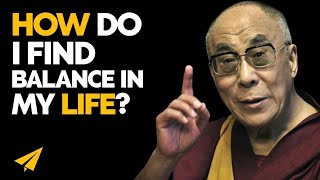
Evan Carmichael explores holding opposing ideas at once: humility and confidence, gratitude and the drive to improve. He shares how he swings between pride in his YouTube channel and harsh self-critique, and argues that true growth comes from embracing these contradictions rather than choosing one.
Chapters
Good morning, Believe Nation! My name is Evan Carmichael. My one word is believe, and I believe that entrepreneurs will solve all of the world's major problems. So to help you on your journey, today's message is keep things in perspective. Over to you, Dalai Lama.
Do you believe that your time on here, on Earth, has been a success?
Success? That also relative. Some feel, I think, some achievement there, and some feel failure. So difficult to say. I think all human life like that. Some part failure, some part achieve. It is wrong to pick up one thing, then say, oh, very success. Wrong. And pick up one thing of failure, that also wrong. Things are relative.
I think one of the hardest things that people have a hard time grasping about me, and this is the people on my team, is the ability to pull from both ends that seem opposite, but really I find come together, to be very humble and feel like I know nothing, and also feel very confident and feel like I know a lot, right? Just depending on what the circumstances are. And so as an example, look at my YouTube channel. I'm always striving to get better and feel like I have a lot of work to do, and I feel like I have a really good channel and I'm super proud of everything that we've done. Both at the same time. I hold both concepts in my head at the same time. And so, depending on who I'm talking to, I might be really hard on myself. I might be saying, you know, my channel, I need to get better, I need to create better content, I need the research to be better, I need to be better in front of the camera, I need my editing to be better, I need everything about my channel to be better because yeah, we've hit a quarter million or three-quarters of a million subscribers, but like, I know I can do so much more. I need to get really, really, really good. I look at who else is out there. I look at Les Brown and Tony Robbins and I see their ability to connect and reach people, and I want to do that. I need to hone my skills and get better, just drive and improve. And a lot of times people look at me and say, like, that's okay, that's crazy. Like, you should be, you should be proud of yourself. Like, look at what you've done. You've got 100 million views on your YouTube channel, you've got 750,000+ subscribers, you're making 3 videos a day where most people can't even do one a week. Like, why are you so hard on yourself? Your channel is really good. And then my default thinking is, well, I know my channel is not— my channel is amazing. My channel is insanely good. I think my channel is the best channel in the world. I think I might be the first YouTuber to win a Nobel Prize for entrepreneurship. Like, it's awesome. The work I'm doing is meaningful and having a huge impact. It's just bullying from both spectrums. Like, I am so proud of everything that me and my team make and so filled with confidence in what we're doing, and I know that the impact is real. And what we do sucks and isn't good enough and needs to get better consistently. And so I think that perspective helps. I think you have to be able to pull from both sides. I think it applies to a lot of things in life. I look at leadership. I look at the people under me on my team. I look at sometimes I need to push them harder. Sometimes they might feel like they're amazing and you say, well, you know what? You kind of suck. Like, let's go. I know you can do way better. And sometimes I need to build them up and say, listen, you're amazing. Why are you Don't be so hard on yourself. Depending on what they need in the moment. You know, Alex, who comes in, who's part of Toronto Dance Salsa, and if he comes in and he's really low and feeling down, I need to build him back up and say, you are really good. You're a really good instructor. You don't need to be that hard on yourself. Because the negative energy prevents him from doing amazing things. And sometimes he comes in so hot, he's like, I'm the best thing ever. And I'm like, you know what, you suck, dude. Like, here are all the things that you need to go off and get better at. Because the positive energy, again, prevents you from going off and doing great things. And so, when you can hold both, when you can stay balanced, when you can either be in the middle or pull from both ends at the same time, I think that's where you not just have more success, but you also feel more grounded, more happy, more secure, less concerned about other people's thoughts, less insecure about yourself and your ideas and where you're going. Finding ways constantly to both be grateful for everything you have. I'm so grateful for everything in my life. I think I have such an amazing life. I don't want anybody else's life out there. I want my life. I love this life. It's great. And I want to do more. I want to help more. I need to push harder. So it's both constantly. I think if you are only pushing, only pushing, pushing, pushing, pushing, you're never happy. You're never happy. There's always a place to push, right? There's always something else you can do, and you're never happy with what you've done. And if you're only happy, you're only grateful, and you're only playing down here, then you feel great, you feel bliss, which is awesome, but then you're not contributing enough. Like, I feel if you have the ability to help, then you have the responsibility to help as well. And so if you have all this great natural talent and ability and you're able to work hard to be able to improve other people's lives, but you're not because you're just happy and relaxed and laid back, I don't think that's a fulfilling life either. So I think you need both. You need the gratitude and you need the push that I'm not good enough. I have everything I need and I have nothing.
Both.
Same time. Right? And so keeping things in perspective, I think maybe when people meet me, it's one of the hardest things to wrap their heads around. I'm having a discussion still with Alex around it today, and he's still confused by some of the things I'm saying. And we've been working together for a while now, but I think it's super important. And if you can find that perspective and keep that balance, it'll help you be that best version of yourself. So the question of the day today is, I'm curious, what are two opposite ideas that you hold at the same time that the outside world may look at you and think you're crazy? Like, how can you believe this and this, but you see them as just opposite sides of the coin and you can hold both at the same time. What are those two thoughts for you? I'm really curious to find out and I hope you'll share down in the comments below. I also wanna give a quick shout out to Eric Peterson. Eric, thank you so much for picking up a copy of my book, Your One Word. I really appreciate the support, man, and I hope you enjoyed the read. So thank you guys so much for watching. I believe in you. I hope you continue to believe in yourself and whatever your one word is. Much love, and I'll see you again tomorrow morning for another shot of espresso.
When you have a downtime, like if something didn't work the way you want, what do you do to get back on that positiveness? I talk to the mountain. I have a mountain next to my home that is called Roche de Ney. It goes up to 2— it's very low— goes up to 2,000 2,400 or 2,500 meters. Or I talk to the Dents du Midi, which is 4,000 meters, which is a little bit further away from my house, which I see every morning. I see those two mountains. And I say to these two mountains, "Mountains, I have a problem, but when I look at you, you are 37 million old." And I'm a little guy here with a little problem. 'Can you help me?' They will say, 'Come on, look what we have already seen in so many years. Your problem is a nano problem. Come on, get up.' Just get up, do it, voilà. That's it.
13 years ago, you were completely bust, gone, no money. You had £5, you know, $7 left in your hand. You'd use it for a taxi back to your parents, and your career in the record business had just come to a sudden shuddering halt. And here you are 13 years later, you're worth hundreds of millions of dollars, life's taken a huge turn upwards, but I get the sense with you that what happened to you 13 years ago still defines you now.
Yeah, I mean, it wasn't the best of times, but then again, when I look back on it, it wasn't the worst of times, you know, because I think particularly here in Hollywood Where most people get it wrong is they're afraid of losing what they've got. They're just terrified of losing their fame, as you said, power, money. But actually, once you've lost it, you can always get it back again. I mean, it's not the end of the world. I mean, being ill is worse. So because I've actually faced what are most people's worst fears and recovered from it, it's not as bad as you think, you know. I didn't lose my confidence. My friends were still my friends. I lived with my parents, and I just saw it as a challenge that I've got to get myself back on my feet again.
What advice did your parents give you then?
They were really, you know, honest to God, they were just cool about it. You know, they were parents. They just, you know, wanted to look after me, live with them for a while. My dad lent me some money to pay the bank, then eventually I managed to pay my dad back. You know, it was what any parent would do, but like I said, it's It wasn't the worst time of my life, and actually when I look back on it now, I still smile because I bought this beat-up old British sports car, worked 18 hours a day, and I was so determined, Piers, just to get it right this time, because I knew why I'd got it wrong. So now I find it much easier to deal with things.
If that wasn't the worst time in your life, what was?
Well, when my dad died was the worst time in my life, as you know, you and I discussed that. It was just that, you know, like getting ill, losing a parent or losing, you know, somebody close to you, that's the worst thing that can ever happen in your life. You know, all the things that I worry about now, just trivial. I mean, you know, even the whole kind of Idol, X Factor thing, I laugh about it because it's such a high-class problem. My show is better than your show. It's like, but we're both— we both got a show.
It was a bit like Colin Firth and Hugh Grant and the fountain in Bridget Jones.
Exactly. Exactly. Over what? I mean, the fact that we're here, we can do this, it's Fantastic.
Keep things in perspective. I know we all say it, but it really is. You have to keep reinforcing it. You know, all of everyone in this audience, you know, knock on wood, you're going to do just fine. You're going to have your 4-bedroom house. You're going to have your car with power windows. You'll be able to go to SeaWorld whenever you want to. And but along that way, there are going to be ups and downs. And actually, those ups and downs tend to happen a lot when you go to transition points. When you're entering the workforce, you're entering some type of a new phase in your life. And you just always have to keep on the kind of the long-term game, the end game. And I'll tell you myself, I've gone through some fairly dramatic ones right when I was out the gate. When I was— this was 1998. I just graduated. I was a few months older than most of y'all. And some computer magazine had seen something I had done, and they wrote this this neat profile about me. They called it "Future So Bright." And I saw that magazine. I was very proud of it. I was like, "Oh, look, I'm set, you know. I have this career ahead of me. I'm already profiled in a magazine." And frankly, I got kind of into myself. And that's okay. You can enjoy your successes, but I really didn't have any perspective. And frankly, it was a dangerous thing to happen. And to really put things in perspective, and I'm happy it did happen, 2 months later, I had kind of switched jobs and, you know, higher salary. I thought I was on the fast track. And I had a new boss. And on the first 3 days of work, he spent an hour just completely castigating me, essentially telling me that I was not worth his time, that I was incompetent as far as he was concerned. And so you can imagine, you know, like a lot of successful whole life, fancy degrees from fancy universities, 2 months ago I was profiled in a magazine, and then now all of a sudden, not even, almost not even 23 years old, I was back in a hotel room in the middle of nowhere crying, not knowing what I was going to do with my life, convinced that it was all end of everything, that everything was for naught. And, you know, so you get through them, you wake up in the morning, things look a little bit better. A week later, things look a little better. You start circulating your resume around. I did find another job 2 months later. And it's okay. And the one thing I want to stress, because, you know, I've gone through ups and downs, and you only have one perspective for your own life, but I suspect many of y'all are going to have higher ups than I've had, and many of y'all are going to have higher— lower downs. And I worry about that sometimes. The ones of you who have higher ups, just keep them in perspective. And it's inevitable, some of you are going to race ahead and be be so successful that none of us can imagine it right now. But keep them in perspective. You know, when you enjoy the successes, but when your ego starts feeling a little bit large, keep in mind the sun will supernova one day, the galaxies will collide, we are these small little mammals on this small planet, or, you know, there's 100, 200 billion stars in the galaxy, in just our galaxy alone. And just have peace in the little success. And when you have a hard time, and you will, and those who go through painful periods, you might stumble and start your first few times out the gate, also keep in perspective that those stresses, put them in perspective of the universe. They are small. They're going to be things that you'll be able to laugh about, talk about 10, 15 years from now, or hopefully 10, 15 days from then.
More from Evan


How the Biggest Mistake in History Created A Trillion-Dollar Empire | Sergey Brin



9 Machiavelli Principles That Force People To Respect You | Machiavellian Philosophy



The First 10 Words That Instantly Ruin A Sales Conversation | Vanessa Van Edwards

The Top 1% Mindset Behind The First $5 Trillion Company | Jensen Huang (Nvidia)

