How to Harness Your POTENTIAL | Unlock Success
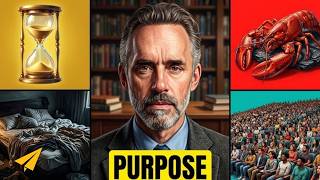
Jordan Peterson and Evan Carmichael discuss discipline, responsibility, and meaning. Peterson argues creativity requires painful repetition and sacrifice of comfort. Carmichael offers a three-step framework: align choices with your core values, root purpose in personal pain, and apply learned methods.
Chapters
Before you can be a painter who can paint what's beyond mere memory, you have to inculcate that discipline skill, and a lot of that is painful repetition and hard grinding work. It's the sacrifice of the present for the future. But once you manage that, then things open up, and virtually everything you learn of value is like that. It's very, very, very difficult to learn to write, and there's arbitrary rules that you have to follow and bind yourself to. And while you're learning those rules, the probability that you have any creative freedom to speak of or any facility with the rules is very low. You're a rank beginner, even to some degree, whatever creativity you have is going to have to be stifled while you're passing through that keyhole. But if you pass through it, then something massive opens up on the other side. And it is definitely the case that disciplinary institutions, universities, are exactly that, is they're places of guidance and they're places to encourage people to develop the discipline that's necessary to see beyond the discipline. I mean, that's why we have disciplines. The words aren't there by accident. You have to narrow yourself first and then you can broaden outward. And that's part of the process of maturation. That's part of the sacrifice of childhood. In childhood, you're nothing but potential, but it's not realized, and you don't know how to realize it. And so then the question is, well, how do you get to a point where you realize the potential? And the answer is you sacrifice almost all of it to a single direction.
This is Nietzsche's commentary on the Catholic Church.
He's a great admirer of the Catholic Church, despite the fact that he was also a radical critic of Christianity.
Said the—
see, the thing about the Catholic Church is that it forced Everything to be interpreted within a single explanatory framework, and that was a discipline.
And once that discipline was established, then the disciplined mind could explode in every direction, which is precisely what happened.
And so, and, and, and that's the thing about growing up, is that when you're a teenager and a young adult, you have to sacrifice everything you could have been as a child to be the one thing that you're aiming at. But then that opens up, and the universities are part and parcel of that process.
And you need the guidance because the library is too large to wander through it unaided.
The problem isn't that people aren't willing to make sacrifices. The problem is that you're not sure if you're making the right sacrifice or not. You're worried that there might be another path, that you might make the wrong choice, and then you will regret it. That is crippling thinking, and today I'm going to teach you how to escape it. Knowing what decision you should make is actually not that difficult. Having the courage to go off and do it is a different story, because chances are whatever you want to do will require courage, is going to be outside your comfort zone, is not what you went to school for, is not what your parents or your friends want you to do. It's something totally wild and different, and we often come up with really logical reasons why we can't do it. But finding the path to making the right choice is not that difficult. I'm going to give you a 3-step process that will help. Number 1 is understand that you are built to serve. It's the name of my new book, Built to Serve. You can pick it up, you can preorder it right now, evancarmichael.com/book. Go check it out, go get it. But you are built to serve. You want to help other people. So in terms of making decisions, you want to do things that will serve other people. Serving others is hardwired into us. They did fMRI scans of the brain. And when you help other people, it hits the same part of your brain as food and sex. More than receiving, more than getting gifts is helping others, serving others, being of use. You want to wake up every day and feel like the work you do matters, that you're having an impact. We all want to go off and have an impact. You are built to serve. And so already in your decision-making, does it serve somebody else? Does it help other people in some way? If it's yes, you're making progress. In the book, I go through a 3-step process. Who, why, how. So who, your one word most important core value. What do you stand for? Who are you? You have one word that is more important than all the others. So belief is my most important core value. And so already the decisions that I make are through the lens of belief. This video is about belief. I hope it's my intention. I may not always execute on it as best as I can, but it's always my intention. And so if you understand what your one word is, then it allows you to make your decision-making process a lot cleaner, a lot simpler, a lot easier. Next is your why. Your purpose comes from your pain. Your why comes from your pain. The thing that you want to help and serve other people with, the problem that you want to solve, is the same problem that you went through. The people who you will love serving are the people who are currently struggling with the thing that you struggled with. Your purpose comes from your pain. And so whatever was the most painful moment in your life, the moment where you felt the lowest, the worst, the most worthless as a human being, Your purpose for the rest of your life is to help other people who currently feel that way. So think about who you used to be, who you were 5 years ago, whenever you were struggling the most. There's lots of people who currently are like you used to be. You want to go serve them. And then the how becomes, how did you get through it? How did you get out of that problem? You may not even be fully out of the problem. Whatever you struggled and suffered with, you're not done. You're still growing, you're still learning, you're still improving, you're still climbing that staircase, you know, of knowledge and growth. But every time you take a step up on the staircase, you can reach back and pull somebody else up one more step, one more step. The more you learn and grow, the more you can pull people up with you. And so however you got out of the hole, even though you're not done, you're better than you used to be. There's lots of people who currently are who you used to be, and so however you got out becomes a recipe to teach other people as well. And so that's the first part. You're built to serve. You go through the who, why, how process, and you can figure out with a lot more clarity the decisions that you need to take you're taking in your life. Number 2 is understanding that you want to make big decisions in your life with your heart and the small ones with your head. Big decisions with the heart, small ones with the head. Don't make a list. People take out a paper and they make a list of pros and— don't do that. Don't make big decisions logically because the big things that you want in life come from creating a new world that doesn't exist. You're trying to create a masterpiece of a life that does not exist for anybody else. Your life will be a masterpiece that nobody has created yet. That is something that your brain can understand. Your brain is logical. Logic can't understand creating something new because that's art, that's passion, that's heart. Your heart can create something new. Your brain understands something that currently exists, and so your heart has to make the big decisions. Don't make big decisions through logic. You make big decisions through the things that you love doing. It's why following your passion is the number one piece of advice consistently across all high achievers, successful entrepreneurs, innovators, leaders, they all say it. You have to follow your passion. You have to find the thing that you love doing because that's going to carry you to create something that's never been created before. And so whenever you're deciding to do something, get your head out of the equation. It's not about logic. It's what do you love doing? What do you badly want to do? What would fill you up? Big decisions with the heart, small ones with your head. So you use your heart to decide what you want to do and then you use your head to figure out how to do it. At the very beginning, chances are your head and your heart are against each other. Your heart wants to do this, your head says, "You can't do that. You didn't go to school. You're not capable of that. Are you nuts? You can't do that. Stay here, stay safe. This is where you should be." Your heart says, "No, I want to do this crazy thing." You decide with the heart, and then your head has to come on board. When you say, "I am doing this," then your brain says, "Okay, well, She's serious, so let's figure out how to do it, right? I'm going to help use my head now to figure out how to go off and create this thing because my heart's demanded it. Big decisions with the heart, small with the head. And step number 3 is trust your ideas and act. Trust that the ideas that come to you— an idea probably came to you today, whatever idea flowed through you— trust that it is flowing through you, that it came to you for a reason, that you are a genius, that you have great ideas. And that you are not born to sit here, come up with great ideas, and do nothing about them. Trust your ideas. We don't trust our ideas enough. We don't trust ourselves enough. That idea was given to you for a reason. You have to go do something about it and act, even though it doesn't make sense, even though people may judge you, even though it's probably not going to work out the first time you go off and do it, right? Trust your ideas. Teach yourself that as soon as you get an idea, that that's the right thing for you. Trust that that's the right thing for you. Right now, if I'm thinking about whatever, sushi, then sushi is the right thing for me and I'm going to eat sushi tonight. It may sound crazy. That's how you need to start making decisions. You need to start listening to your intuition more, right? Listening to your heart, listening to your gut more than trying to just follow simple logic in your head. Trust that the ideas that come to you are amazing and that you need to act on it immediately, today, right now. Also, to make sure you're actually taking action after watching this video, I've designed a special free worksheet just for this video. The worksheet will highlight all of the lessons learned in this video, as well as pull out our 3 favorite learnings and quotes that will inspire you to actually do something. The worksheet will also give you space to write down what your key takeaways are and your specific plan of action to make sure you're getting results. If you want the worksheet designed specifically for this video, absolutely for free, There's a link in the description below. Go click on it and start building the momentum in your life and your business. I'll see you there.
So, one of the things I've been talking to my audiences about is the relationship between responsibility and meaning, which is— what would you say? It's a constant refrain in the book. It's one of its underlying messages, let's say, or themes is a better way of thinking about it. You know, if you start with the presumption that there's a baseline of suffering in life and that that can be exaggerated by— as a consequence of human failing, as a consequence of malevolence and betrayal and self-betrayal and deceit and all those things that we do to each other and ourselves that we know that aren't good, that amplifies the suffering. That's sort of the baseline against which you have to work. And it's contemplation of that often that makes people hopeless and depressed and anxious and overwhelmed and all of that. And they have the reasons. But you need something to put up against that. And what you put up against that is meaning. Meaning is actually the instinct that helps you guide yourself through that catastrophe. And most of that meaning is to be found in the adoption of responsibility. So if you think, for example, if you think about the people that you admire— well, you think about when you have a clear conscience first. Because that's a good thing to aim at, which is something different than happiness, right?
A clear consciousness is different than happiness.
Yeah, it's better.
Yeah.
You're not guilting yourself, you're not feeling bad about yourself.
That's right.
You feel that you've justified your existence, right? And so you're not waking up at 3 in the morning in a cold sweat thinking about all the terrible things that you've involved yourself in.
What you said to someone that you shouldn't have said or how you acted or lied.
What opportunity you lost or the things that you've that you've let go that you should have capitalized on, and all of that. And so if you think about the times when you're at peace with yourself with regards to how you're conducting yourself in the world, it's almost always conditions under which you've adopted responsibility.
Right?
At least the most guilt I think that you can experience perhaps is the sure knowledge that you're not even taking care of yourself. So that you're leaving that responsibility to other people. Because that's pretty pathetic.
And I—
unless you're psychopathic and, you know, and you're living a parasitical life, and that characterizes a very small minority of people, and an even smaller minority think that's justifiable. But most of the time you're in guilt and shame because you're not— you're not— not only are you not taking care of yourself, let's say, so someone else has to, but you're not living up to your full potential. And so there's an existential weight that goes along with that.
If you concentrate solely on your career You can get a long way in your career. And I would say that that's a strategy that a minority of men preferentially do. That, that's all they do. They work like 70, 80 hours a week. They go flat out on their career. They're staking everything on the small probability of exceptional status in a narrow domain. But it's hard on them. They don't have a life. It's very difficult for them to have a family. They don't know how to take any leisure activity. Like, they get very one-dimensional. Now, it may be that that unidimensionality is the price you have to pay to be exceptional at one thing, right? Because if you're gonna be something like a genius-level mathematician, and you wanna do that for— or a scientist, say— it's like, you're in your lab, you're in your lab all the time, you're working 70 hours a week or 80 hours a week, you're smart, you're dedicated, you're unidimensional, and that's how you get to beat all the other people who are doing that. It's the only way. But the problem is you don't get a life. Now, if you love being a scientist and you have that kind of focus of mind, well, first of all, you're a rare person, and second, you're going to pay for it. But fine, more power to you. But, but it's a, it's a risky business to do that. You sacrifice a lot for it, you know. And I would say most often, if you're speaking about having a healthy life, That isn't what you do. You spread yourself out more. So, you know, you have a family, you have some things that you do outside of work that are meaningful to you and useful. You, you have a network of friends. Well, that, that, those 3 things alone, or 4 things alone, are plenty to keep you well-oriented. And then if one of those things collapses, you know, everything doesn't go. Now, the price you pay for that is The more you strive to optimize that balance, the less likely you are to be fantastically successful at any single one of them. But you might have a very, you know, if you consider your life as a whole, that might be a winning strategy. It's like, make a damn schedule! And stick to it! Okay, so what's the rule with the schedule? It's not a bloody prison! That's the first thing that people do wrong, they say, "Well, I don't like to follow a schedule." It's like, well, what kind of schedule are you setting up? Well, I have to do this, then I have to do this, then I have to do this, you know, and then I just go play video games, because who wants to do all these things that I have to do? It's like, wrong! Set the damn schedule up so that you have the day you want! That's the trick. It's like, okay, I've got tomorrow. If I was going to set it up so it was the best possible day I could have, practically speaking, what would it look like? Well, then you schedule that, and obviously there's a bit of responsibility that's going to go along with that, because if you have any sense, one of the things that you're going to insist upon is that at the end of the day, you're not in worse shape than you were at the beginning of the day, right? Because that's a stupid day. If you have a bunch of those in a row, you just dig, you know, you dig yourself a hole and then you bury yourself in it. It's like, sorry, that's just not a good strategy. It's a bad strategy. So Maybe 20% of your day has to be responsibility and obligation, or maybe it's more than that, depending on how far behind you are. But even that, you can ask yourself, "Okay, well I've got these responsibilities, I have to schedule the damn things in. What's the right ratio of responsibility to reward?" And you can ask yourself that, just like you'd negotiate with someone who is working for you. It's like, "Okay, you gotta work tomorrow." Okay, so I want you to work tomorrow. And you might say, "Okay, well what are you gonna do for me?" that makes it likely that I'll work for you? Well, you could ask yourself that, you know. So maybe you do an hour of responsibility and then you play a video game for 15 minutes. I don't know, whatever turns your crank, man. But you know, you have to negotiate with yourself and not tyrannize yourself. Like you're negotiating with someone that you care for, that you would like to be productive and have a good life. And that's how you make the schedule. It's like, and then you look at the day and you think, well, if I had that day, that'd be good. Great! You know, and you're useless and horrible, so you'll probably only hit it with about 70% accuracy, but that beats the hell out of zero. Right? And if you hit it even with 50% accuracy, another rule is, well, aim for 51% the next week, or 50.5%, for God's sake. Because you're gonna hit that position where things start to loop back positively and spiral you upward. And so, that's one way that you can work on your conscientiousness, is to plan a life you'd like to have. And you do that partly by referring to social norms, that's more or less rescuing your father from the belly of the whale. But the other way you do that is by having a little conversation with yourself about— as if you don't really know who you are. Because you know what you're like, you won't do what you're told. You won't do what you tell yourself to do. You must have noticed that. It's like you're a bad employee and a worse boss, and both of those work, you know, for you. You don't know what you want to do, and then when you tell yourself what to do, you don't do it anyways. You should fire yourself and find someone else to be. But, but, you know, my point is, is that you have to understand that you're not your own servant, so to speak. You're someone that you have to negotiate with. You don't have to necessarily have done anything wrong for things to get completely out of control. It's a terrifying doctrine. But it's not a hopeless doctrine because it still says that there's a way forward. There's a pathway forward. And the pathway forward is to adopt a mode of being that has some nobility so that you can tolerate yourself and perhaps even have some respect for yourself as someone who's capable of standing up in the face of that terrible vulnerability and suffering. And that the pathway forward, as far as the existentialist is concerned, are concerned, is by— well, certainly by the avoidance of deceit, particularly in language, but also by the adoption of responsibility for the conditions of existence and some attempt on your part to actually rectify them. And the thing that's so interesting about that is— well, two, as far as I'm concerned, and some of this is from clinical experience, you know, if you take people, and I've told you this, and you expose them voluntarily to things that they are avoiding Avoiding and are afraid of, you know, that they know they need to overcome in order to meet their goals, their self-defined goals. If you can teach people to stand up in the face of the things they're afraid of, they get stronger. And you don't know what the upper limits to that are, because you might ask yourself, like, if for 10 years if you didn't avoid doing what you knew you needed to do, by the def— by your own definitions, right, within the value structure that you've created, to the degree that you've done that, What would you be like? Well, you know, there are remarkable people who come into the world from time to time, and there are people who do find out over decades-long periods what they could be like if they were who they were. If they said— if they spoke their being forward. And they get stronger and stronger and stronger, and we don't know the limits to that. We do not know the limits to that. And so you could say, well, part, perhaps the reason that you're suffering unbearably, can be left at your feet. Because you're not everything you could be, and you know it. And of course, that's a terrible thing to admit, and it's a terrible thing to consider. But there's real promise in it, right? Because it means that perhaps there's another way that you could look at the world, and another way that you could act in the world, so what it would reflect back to you would be much better than what it reflects back to you now. My experience is with people that we're probably running at about 51% of our capacity. Something— I mean, you can think about this yourselves. I often ask undergraduates how many hours a day you waste, or how many hours a week you waste. And the classic answer is something like 4 to 6 hours a day. You know, inefficient studying, watching things on YouTube that not only do you not want to watch, that you don't even care about, that make you feel horrible about watching after you're done, that's probably 4 hours right there. Now, you think, well, that's 20, 25 hours a week, it's 100 hours a month, that's 2.5 full work weeks, it's half a year of work weeks per year! And if your time is worth $20 an hour, which is a radical underestimate, it's probably more like $50, if you think about it in terms of deferred wages. If you're wasting 20 hours a week, you're wasting $50,000 a year. And you are doing that right now. And it's— because you're young, wasting $50,000 a year is a way bigger catastrophe than it would be for me to waste it, because I'm not gonna last nearly as long. And so if your life isn't everything it could be, you could ask yourself, well, what would happen if you just stopped wasting the opportunities that are in front of you? You'd be who knows how much more efficient. 10 times more efficient. 20 times more efficient. That's the Pareto distribution. You have no idea how efficient efficient people get. It's completely— it's off the charts. Well, and if we all got our act together collectively, and stopped making things worse, because that's another thing people do all the time. Not only do they not do what they should to make things better, they actively attempt to make things worse because they're spiteful, or resentful, or arrogant, or deceitful, or homicidal, or genocidal, or all of those things all bundled together in an absolutely pathological package. If people stopped really, really trying just to make things worse, we have no idea how much better they would get just because of that. So there's this weird dynamic that's part of the existential system of ideas between human vulnerability, social judgment, both of which are, are, are major causes of suffering, and the failure of individuals to adopt the responsibility that they know they should adopt.
Take a bit of a look at yourself and think about what's not so good that you could improve, that you should improve by your own standards, and that you would improve, you know, and set yourself a little goal. You know, maybe you're not studying at all and you're at university, or maybe you're, maybe you're at work and you've got this stack of paper there, you know, and You haven't looked at that damn stack for like a month and you know that you should be and you're bothering yourself at night because you're avoiding that. It's like maybe think, well, I've avoided that stack of paper completely for one month. I'm quite a coward when it comes to whatever snakes might be hidden in that stack of paper. How about tomorrow? I just like put that stack of paper in front of me on my desk and I like glance through it for 15 seconds. See if I can do that. It's like, well, you set yourself a goal of improvement. You know, it's a humble goal because really, are you such a coward that the best that you can bloody well manage after a month of avoidance is 15 seconds of exposure to a stack of paper? You know, it could easily be.
You've been avoiding it.
You're obviously afraid of it. And so the situation could be that dismal and dire And you might think, well, geez, it's no balm to my ego. It's not fostering the strength of my ego to recognize myself, someone who could only withstand 15 seconds of exposure to that thing I'm afraid of. And so that's a form of humility too. It's like there's things you could do to improve and you know what they are. And there's small steps that you could take that you might take that would put you in that direction. And then the question is, are you big enough to take those small steps? Are you capable of grappling with the fact that you're fundamentally flawed to the point where you have to break things down into almost childlike steps in order to manage them? And the answer to that is, yeah, you are. And that's the lot of— I don't know if it's a lot of everyone. Most people have things they avoid. And they're afraid of. So I would say to some degree, it's the lot of everyone. People vary in the degree to which they've conquered that. And you do meet people from time to time who are extraordinarily disciplined, but most of the time they've got disciplined in exactly this manner. It's through slow incremental improvement. And then you challenge yourself. It's like, well, could I do this that would be better? Then you find out and then you think, well, is there something slightly larger and more challenging that I could do that would be better? And you try it and you find out. And as you try it and you find out, generally you get better at it and you can take on larger and larger challenges.
I started to pay very careful attention to what I was saying. I don't know if that happened voluntarily or involuntarily, but I could feel a sort of split developing in my psyche. And the split— and I've actually had students tell me the same thing has happened to them after they've listened to some of the material that that I've been describing to all of you. But split into two, let's say. And one part was the, let's say, the old me that was talking a lot, and that liked to argue, and that liked ideas. And there was another part that was watching that part, like, just with its eyes open, and neutrally judging. And the part that was neutrally judging was watching the part that was talking and going, "That isn't your idea. You don't really believe that. You don't really know what you're talking about. That isn't true." And I thought, "Hmm, that's really interesting." So now I've— and that was happening to like 95% of what I was saying. And so then I didn't really know what to do. I thought, "Okay, this is strange, so maybe I've fragmented and that's just not a good thing at all." I mean, it wasn't like I was hearing voices or anything like that. I mean, It wasn't like that. It was— well, people have multiple parts. So then I had this weird conundrum. It was like, well, which of these two things are me? Is it the part that's listening and saying, "No, that's rubbish. That's a lie.
That's—
you're doing that to impress people. You're just trying to win the argument." You know, was that me, or was the part that was going about my normal Verbal business me, and I didn't know, but I decided I would go with the critic. And then what I tried to do, what I learned to do, I think, was to stop saying things that made me weak. And now that— I mean, I'm still trying to do that because I'm always feeling when I talk whether or not the words that I'm saying are either making me align or making me come apart. And I think the alignment, I really do think the alignment is I think alignment is the right way of conceptualizing it, because I think if you say things that are as true as you can say them, let's say, then they come up, they come out of the depths inside of you. Because we don't know where thoughts come from, we don't know how far down into your substructure the thoughts emerge, we don't know what processes of physiological alignment are necessary for you to speak from the core of your being. We don't understand any of that, we don't even conceptualize that, but I believe that you can feel that. I learned some of that from reading Carl Rogers, by the way, who's a great clinician. Because he talked about mental health in part as a coherence between the spiritual, or the abstract, and the physical. That the two things were aligned. And there's a lot of idea of alignment in psychoanalytic and clinical thinking. But anyways, I decided that I would start practicing not saying things that would make me weak. And what happened was that I had to stop saying almost everything that I was saying. I would say 95% of it. It's a hell of a shock to wake up and— I mean, this was over a few months, but it's a hell of a shock to wake up and realize that you're mostly dead wood. It's a shock, you know, and you might think, well, do you really want all of that to burn off? It's like, well, there's nothing left but a little husk, 5% of you. It's like, well, if that 5% is solid, then maybe that's exactly what you want to have happen.
You have to negotiate until you come to the best solution that can be negotiated, which isn't necessarily a perfect solution, but it might be the best one that can be done. And then you have to stick with it until the next negotiation. And if you get upset during the negotiations, which you likely will because these are difficult topics, how to divide up responsibilities in the house, and people get mad because they feel they've been taken advantage of or aren't being listened to. One of the rules was, well, you can leave the discussion, but only until you calm down. And then you have to come back because these things have to be pushed through. They have to be negotiated through because the alternative is, well, important things don't get done or people do them resentfully because they're sort of forced by their own orderliness or their own conscientiousness or by force, psychological or otherwise, on the part of other people. These things have to be negotiated through. You can tell if you've got the balance between making peace and speaking the truth right if the conversation continues. And it can be emotional and will be and can be difficult because important things have to be dealt with. But as long as the people are still in the conversation and communicating, then you Then, you've got the balance right. You know, and you might have to take a break. Maybe you have to hold off till the next day. Maybe sometimes when you're negotiating something that's difficult, you have to offer the other person the opportunity to sleep on their decision too, which I think is often a very good idea. If you have to make an important decision in your life, it's very useful to tell the person that you're negotiating with that, "Look, I'm interested in this and it seems good. But I'm not going to agree until I sleep on it. Gives you— well, lots of things happen when you sleep. You organize your brain when you sleep, at least to the degree that you can organize it. And you can often be more solid or more doubtful about a decision if you sleep on it. You have to be humble and wise enough to understand that you might have to aim pretty damn low, especially in those places where You're not functioning well. And it might be so embarrassing that you can't even— that you can't bring yourself to fathom that that's actually who you are. But, you know, Jung described the fool, the archetypal figure of the trickster and the fool, as the precursor to the savior, to the redeemer. And that's an unbelievable bit of wisdom, because what Jung meant was that to put yourself together, which is to follow the path of redemption, to follow the Redeemer. If the Redeemer is a type of personality that you could in fact be inhabited by or manifest, then the first step towards that is to allow yourself to be a fool, right? It's because you, you don't know what you're doing. You have to admit that, and there's going to be a loss of ego or destruction of ego, arrogant ego, that necessarily accompanies that. But you need the loss of that arrogant ego because it's precisely what's interfering with your movement forward. You know, it's part of the adversarial process, mythologically speaking, that stops moral progress. You're too proud of who you think you are to notice what you're like so that you could change properly. You don't want to sacrifice that part of yourself. It's probably associated with some delusion that helps you maintain, what would you say, a positive, although very fragile, self-image, you know, in the absence of genuine effort.
If you're harmless, you're not virtuous. You're just harmless. You're like a rabbit. A rabbit isn't virtuous. It just can't do anything except get eaten. It's not virtuous. If you're a monster, and you don't act monstrously, then you're virtuous. But you also have to be a monster. Well, you see this all the time. Harry Potter's like that too. It's like, he's flawed, he's hurt, he's got evil in him. He can talk to snakes, man. He breaks rules all the time. All the time. He's not obedient at all. But, you know, he has a good reason for breaking the rules. And if he couldn't break the rules, him and his little clique of rule-breaking, you know, troublemakers, if they didn't break the rules, they wouldn't attain the highest goal. So it's very peculiar, but it's very, very, very, very, very common mythological notion. You know, the hero has to be— the hero has to be a monster. But a controlled monster. Batman is like that, you know. I mean, it's everywhere. It's the story you always hear. Stop doing the things that you know are wrong, that you could stop doing. Right? So it's a fairly limited attempt. First of all, we're not gonna say that you know what the good is, or what the truth is, in any ultimate sense. But we will presume that there are things that you're doing, that for one reason or another, you know are not in your best interests. There's something about them, that you just know you should stop. They're kinda self-evident to you. Other things you're gonna be doubtful about. You're not gonna know which way is up, and which way is down. But there are things that you're doing that you know you shouldn't do. Now, some of those you won't stop doing for whatever reason. You don't have the discipline, or maybe there's a secondary payoff, or you don't believe it's necessary, or it's too much of a sacrifice, or you're angry or resentful or, or afraid. Who knows? So forget about those for now. But there's another subset that you could stop doing. It might be a little thing. Well, that's fine. Stop doing it and see what happens. And what'll happen is, your vision will clear a little bit. And then something else will pop up, in your field of apprehension, that you will also know you should stop doing, and that you could stop doing. 'Cause you strengthened yourself a bit by stopping doing the particular stupid thing that you were doing before. That just puts you together a little bit more. And you could do that, repeatedly, for an indefinite period of time. And, you know, So that doesn't necessarily mean that you're going to ever be able to formulate a clear and final picture of what constitutes the truth and the good. But it does mean that you'll be able to continually move away from what's untruth and what's bad. And, you know, that's not a bad start.
When I was 25 or so, I probably weighed about 138 pounds. I smoked like a pack of cigarettes a day. I drank tremendous amount of of alcohol. I was from Northern Alberta, this rough little town up in Northern Alberta called Fairview. And, you know, there were long winters there, and my friends were heavy drinkers, and most of them dropped out of school by the time they were 15 or 16, went off to work on the oil rigs. And, you know, it was a rough town, and we drank a lot. I started when I was 14. And, you know, um, and so I was— I had a lot of bad habits, let's say, and, uh, things that were And I wasn't in great shape physically. And I was also still intellectually obsessed by, as I am now. And so that would have been, that would have been in '85. But when I, but I decided around then, about '85, '84, something like that, maybe a little earlier, that I was really going to try to get my act together. And so I started doing that. I, you know, I, first of all, I quit smoking, though that took a a long time because I eventually had to quit drinking too in order to quit smoking. And I started working out, started playing sports, which I'd never done. You know, I don't regret that. I had a fine time when I was a kid, and— but I needed really to get disciplined. And I had to do it because I was working on these hard problems that, you know, that I've been discussing with all of you. And I've been working on them really, you know, obsessively since I was probably about 18, maybe even earlier than that. And got to the point around 25 when I was in graduate school trying to get my PhD, doing all my research. Like, I published 15 papers by the time I graduated with my PhD, which was by, I think, by a fairly large measure the most papers that any undergraduate student at that time had ever published at McGill. I think that's right, might have been twice as many, or maybe twice as many, maybe even 3 times as many. And at the same time, I wrote Maps of Meaning, which was a terrible, terrible, terribly difficult difficult thing to do because I was writing about 3 hours a day doing that. And I couldn't do all that and continue with my misbehaviour, you know, my sort of— what would you say? My hedonistic— my massive hedonistic consumption of alcohol and all of that. I just couldn't keep it up and also work seriously on the issues that were at hand. You know, I had to stop. That's a sacrifice. I had to stop.
You're actually tougher than you think. You never knew that. And maybe you didn't want to take on the responsibility because, you know, people play a role in their own demise, so to speak. When you had opportunity to go out and explore or withdraw because you were afraid, you chose to withdraw because you were afraid. So it's not only that you were overprotected often, it's that you were willing to take advantage of the protection fact that you were overprotected and run back there whenever you had the opportunity. You know, so maybe you're a kid in the playground, right, and you're having some trouble with other kids, and you know in the back of your mind, I should deal this with— deal with this myself. But you go and tell your mom and get her to intervene, and you know that that's not right. You know that you're breaking the social contract, but it's easier. And so that's what you do. You run off to an authority figure and hide behind the great father. Right, roughly speaking. Well, the problem with that is you don't learn how to do it yourself. So then you have to relearn it painfully when you're 40. So then you take people out, you say, well, what are you afraid of? Rank it from 1 to 10. So 10 is— make a list of 10 things you're afraid of. The least— the thing you're least afraid of, we'll call number 10. So we'll start with that. Okay, well, I'm afraid of elevators. Okay, well, let's, let's look at a picture of an elevator. Let's have you imagine being in an elevator. Let's go out to an elevator and let you watch the terrible jaws of death open, because that's how you're responding to it symbolically, right? And you're going to do that at the closest proximity you can manage. You find out, you go do that, it works. You're nervous as hell, especially from an anticipatory perspective, shaking. You go out, you stop, you You watch it happen, and you actually calm down. You do that 10 times, and it no longer bothers you. Well, what you've learned— that you didn't die. But more importantly than that, you've learned that you could withstand the threat of death. That's what you've learned. And then you move a little closer, and then you move a little closer, and then you move a little closer, and finally you're back in what's no longer the elevator from a symbolic perspective. It's a tomb, right? It's, it's, it's a place of enclosure and isolation. And you learn, "Hmm, turns out I can withstand that." And then you're much more together, much more confident. And that's often one of the things that often happens in situations like that. I've seen this multiple times, is that if you run someone through an exposure training process like that and toughen them up, they'll often start standing up to people around them in a way they never did before.
You need a value hierarchy. It's inevitable that you have a value hierarchy. And that you look at the world through it, and that it should be well structured, and that there should be something of divine importance at the top. I would say what should occupy the top position is the realization, for example, that each person is of divine value, and that the most appropriate way of interacting with potential is by embodying and speaking the truth. That's not a bad way of briefly conceptualizing what might be at the highest pinnacle of the value structure, I would say that's what the logos is. And so the soul is a— the soul is what manifests itself in the choice between different pathways, in, in the choice between different ways of transforming the potential of the future into the actuality of the present. And it does that by making ethical decisions, by choosing between good and evil at each choice point. And to the degree that it chooses good, then it takes the raw potential of the future and it transforms it into the being of the present that is good. And to the degree that it does that in a manner that's evil and contaminated by malevolence and hatred and vengefulness, then it takes a pathway that corrupts the world and makes things worse. And it's the soul that's doing that, and it's the soul that's responsible for that. And it's also that active part of the soul that's shaping the deeper soul in some sense, which would be something like the cumulative consequence of all those choices, something akin to what people more classically have referred to as character.
It was the night before we were putting drywall in our house. We were redoing a house, and he had put in all the plastic piping, you know, and I was going to test the joints. They're supposed to be glued together with this pipe glue, right? And I said— I told him I had to test the joints, and he said, well, you don't have to test my joints, they never leak. And I thought, yeah, that's okay, how about if I test them? So I went up on the third floor and filled the pipes with water, capping them in the basement like you're supposed to. And like half an hour later, I had 2 inches of water in the basement. There were 30 leaking joints. That was the night before the drywallers were supposed to show up. So, well, so he wasn't particularly competent. That's the point of that story. But even more so, he had put a bunch of the plastic pipe outside where the drywall would be, so it would have been sticking through the wall. So I spent a frenetic night, you know, sawing through plastic pipe and re-gluing joints so that my— well, so that the drywallers could come in. What's the point? If you're gonna be a plumber, man, be a good plumber! Because otherwise all you do is go out there and cause trouble! We don't need people to cause more trouble. We need people to solve problems! You know, and so you can be a tradesman, and you can be— you can make a lot of money as a tradesperson. It's a bloody reliable, honorable, forthright, productive way of making a living. And there is a hell of a lot of difference between a working man who knows what he's doing and one who doesn't, both in terms of skill and ethics, right? And you work with someone who knows what they're doing, it's a bloody pleasure. They tell you what they're gonna do, they tell you how much it will cost, they go and do it, it works, and you pay them. Perfect! Everyone's happy. And that's what happens when you have genuine hierarchies of competence. And so you listen to these panderers of egalitarianism and equity, and they fail to recognize completely that there are differences in rank between people. It's not such a terrible thing, man. Maybe you wouldn't be a great lawyer, like, it's certainly possible. Most people aren't. But that doesn't mean there isn't something you could be great at. There's lots of hierarchies to attempt to climb, and if you fail in one, go try in another. But the point is, you're still trying to aim for the top. And what the hell are you gonna do if you don't try to aim for the top? You know, flap about uselessly and whine about your life? It's not helpful. It'll just make you miserable. You're not reliable to anyone. You can't help out in a crisis. It's like, so you tell young people, and this is another message for conservatives, like, I don't care what you're gonna do, but go out there and make something of yourself, for God's sake. Be an honest person and work and get to the top of whatever it is that you want to get to the top of, you know. And, and, and, and stand up for yourself like a respectable human being and be a bit of a light on the world instead of a blight. You know, and you can tell young people that, and they haven't been told that by anyone now. And so the young men are so hungry for that that it's painful to watch. They're so relieved when someone finally comes up and says, hey, you know, you get your act together a bit, discipline yourself, see if you can learn to tell the truth, concentrate on something for a year or two, you could be a bloody world beater. They think, really? That's possible? Wow, that would be That would be interesting! That might make life worth living! It's like, yeah, it might! So why don't you go do it? That's what the damn universities were supposed to be teaching people, and they've forgotten that! I went to Harvard a month ago, month and a half. I used to teach there. And I talked to a bunch of students, you know, and I told them, it's not easy to get into Harvard, you know? Like, you're a valedictorian if you're at Harvard. And not only are you a valedictorian, you're way better than most people at at least 2 other things. Or you don't get in. And so, like, it's— I don't know what the acceptance rate is, like 5%, and believe me, not everybody applies. So it's a very selective school. And so why am I saying that? It's like, these are high-quality kids. So I told them what I just told you. It's like, here you are at Harvard, it's like, get yourself educated, man. Read some books, learn to talk, learn to think, make yourself into something. Get the hell out there and make the world that put you here happy that you were put there in that great institution. You know, and they came up to me afterwards and said, God, I wish someone would have told us that when we were in our first year. It's like, Jesus, why didn't someone tell them that? For God's sake, it's supposed to be the greatest university in the world. Is it so difficult to figure that out?
We're built for struggle, us human beings.
You're not after the bubbles of bliss that Dostoevsky described in Notes from Underground. We're built to contend with the world. We're built to contend with reality. You want a challenge, and the best way that you can take on a challenge— because a challenge fortifies you. So you don't want to be secure, you want to be strong, and you get strong by taking on optimal challenges. And so you lay out your destiny in the world, and you take the slings and arrows of fate, and you make yourself stronger while you're doing so. And you might fail, and fortune might do you in, but it's your best bet. And you know, people have also— people have extracted unbelievable successes out of catastrophic failures. And so, and I'm not saying that in a naive way. I know perfectly well what happens to people. You know, you're doing fine in life and then you get cancer and then 6 months later you're dead. And all the heroism in the world isn't going to save you at that point. But that's not the point. That's not the point. Life is bounded by mortality, but that doesn't mean that you don't get out there and contend, and you develop by contending, and you minimize the net amount of suffering in the world. And that's something, man. That's something to do.
It isn't merely that your fate depends on whether or not you get your act together and to what degree you decide that you're going to live out your own genuine being. It isn't only your fate. It's the fate of everyone that you're networking with. Worked with. And so, you know, you think, well, there's 9 billion— 7 billion people in the world. We're going to peak at about 9 billion, by the way, and then it'll decline rapidly. But 7 billion people in the world, and who are you? You're just one little dust mote among that 7 billion. And so it really doesn't matter what you do or don't do. But that's simply not the case. It's the wrong model, because you're at the center of a network. You're a node in a network. Of course that's even more true now that we have social media. You'll know 1,000 people at least over the course of your life. And they'll know 1,000 people each, and that puts you 1 person away from 1 million, and 2 persons away from 1 billion. And so that's how you're connected. And the things you do, they're like dropping a stone in a pond. The ripples move outward, and they affect things in ways that you can't fully comprehend. And it means that the things that you do and that you don't do You are more important than you think. And so if you act that way, of course, the terror of realizing that is that it actually starts to matter what you do. And you might say, well, that's better than living a meaningless existence. It's better for it to matter. But I mean, if you really asked yourself, would you be so sure if you had the choice? I can live with no responsibility whatsoever. The price I pay is that nothing matters. Or I can reverse it and everything matters. But I have to take the responsibility that's associated with that. It's not so obvious to me that people would take the meaningful path. Now, when you say, well, nihilists suffer dreadfully because there's no meaning in their life and they still suffer, yeah, but the advantage is they have no responsibility. So that's the payoff, and I actually think that's the motivation. Say, well, I can't help being nihilistic, all my belief systems have collapsed. It's like, yeah, maybe. Maybe you've just allowed them to collapse because it's a hell of a lot easier than acting them out. And the price you pay is some meaningless suffering, but you can always whine about that and people will feel sorry for you. And you have the option of taking the pathway of the martyr, so that's a pretty good deal, all things considered. Especially when the alternative is to bear your burden properly and to live forthrightly in the world. Well, what Solzhenitsyn figured out, and so many people in the 20th century— it's not just him, even though he's the best example— is that If you live a pathological life, you pathologize your society. And if enough people do that, then it's hell. Really. Really. And you can read The Gulag Archipelago if you have the fortitude to do that, and you'll see exactly what hell is like. And then you can decide if that's a place you'd like to visit, or even more importantly, if it's a place you'd like to visit and take all your friends. Family and friends, because that's what happened in the 20th century. Now, this baboon here, who's supposed to be basically just a fool when the story was first written, he turned into what's essentially a shaman across time. And so he represents the self from the Jungian perspective. Now, the self is everything you could be across time. So imagine that there's you and there's the potential inside you, whatever that is, you know. And potential is an interesting idea because it's It represents something that isn't yet real, yet we act like it's real. Because people will say to you, "You should live up to your potential." And that potential is partly what you could be if you interacted with the world in a manner that would gain you the most information, right? Because you build yourself out of the information in the Piagetian sense. But it's deeper than that too, because we know that if you take yourself and you put yourself in a new environment, new genes turn on in your nervous system. They encode code for new proteins. And so you're full of biological potential that won't be realized unless you move yourself around in the world into different challenging circumstances, and that'll turn on different circuits. So it's not merely that you're incorporating information from the outside world in the constructivist sense. It's that by exposing yourself to different environments, you put different physiological demands on, on yourself, all the way down to the genetic level, and that manifests new elements of you. And so one of the things that happens to people, and this is a very common cultural notion, is that you should go on a pilgrimage at some point to somewhere central. And that would be, say, like the rock in Pride Rock in The Lion King, because you take yourself out of your dopey little village, and that's just a little bounded you that everyone knows and that isn't very expanded. And then you go somewhere dark and dangerous to the central place, and while you do that, You have adventures and they toughen you and pull more out of you, like, partly because you're becoming informed, which means information. It means you're becoming more organized at every level of analysis, but there's also more of you too.
You don't tell your kid, "Here's an impossible thing. Why don't you go out and fail?" You say, "Here's something worth going after.
Here's a step you could take that would push you beyond where you are." but that you also have a reasonably high probability of succeeding at.
Right? They call that— Within a time frame.
Within some time frame.
That's the other thing. You have to parameterize it with regards to time frame. That's right. And that puts you in the zone of proximal development. And that's a concept that was generated by a guy named Vygotsky. He was a Russian developmental psychologist and a smart one. It's where the idea of the zone comes from, to be in the zone. And when you're in the zone, you're expanding your skills skills in a manner that's intrinsically rewarding because you're succeeding.
And so you want to set—
if you're good to yourself, you think, okay, I need to set a goal, but I need to set a goal that someone as stupid and useless as me could probably attain if they put some effort into it. Then you've got it perfectly because it's not so high that it's grandiose or impossible that you fail necessarily and then justify your bitterness. It's like, well, I could do—
well, because that happens to people.
Happens all the time.
Yeah, it's like this all the time, you know.
It's like, it's— yes, exactly.
Well, I set a goal and I didn't attain it, so I'm not going to set any more goals, right?
It's like, no, you set a goal that was inappropriate for the time frame. That's right, you didn't calibrate it properly, and you're playing a trick on yourself because you wanted to fail so that you could justify not having to try. And being a victim. Yeah, which isn't helpful. You're still going to be a victim. There's no way out of that, man. So, you know, because life is this— life is a challenge that in some sense can't be surmounted. So there's no way out of your problem, but there are certainly proper ways of dealing with it.
Yeah, if you configure your life so that what you are genuinely doing is aiming at the highest possible good, then the things that you need to, to survive and to thrive on a day-to-day basis will deliver themselves to you. That's a hypothesis, and it's not some simple hypothesis, right? Because what it basically says is, if you dare to do the most difficult thing that you can conceptualize, your life will work out better than it will if you do anything else.
Well, how are you going to find out if that's true?
Well, it's a Kierkegaardian leap of faith. There's no way you're going to find out whether or not that's true unless you do it. So no one, no one can tell you either, because just because it works for someone else, I mean, that's interesting and all that, but it's no proof that it'll work for you. You have to be all in in this game. There is no more effective way of operating in the world than to conceptualize the highest good that you can and then strive to attain it. There's no more practical pathway to the kind of success that you could have if you actually knew what success was.
You'll discover a little bit more about your potential as you discover who you are, especially the darker parts of yourself, because then you discover your potential for mayhem. There's some real utility in that, you know, discovery that you're dangerous. It's such a useful discovery. It's actually something that strengthens you because the first thing that a realization like that can in fact produce is the, the ambition to incorporate that danger into a higher order personality, that dangerousness into a higher order personality. And that can make you implacable. That can make you someone who can say no when you need to say no. You know, that can make you someone who won't avoid necessary conflict. And so that's unbelievably useful.
The world shifts itself around your aim. Because you're a creature that has an aim. You have to have an aim in order to do something. You're an aiming creature. You look at a point, and you move towards it. It's built right into you. And so, you have an aim. Well, let's say your aim is the highest possible aim. Well then, so that sets up the world around you. It organizes all of your perceptions. It organizes what you see and you don't see. It organizes your emotions and your motivations. So you organize yourself around that aim, and then what happens is the day manifests itself as a set of challenges and problems. And if you solve them properly, then you stay on the pathway towards that aim, and you can concentrate on the day. And so that way you get to have your cake and eat it too, because you can point into the distance, the far distance, and you can live in the day. And it seems to me that that's— that makes every moment of the day supercharged with meaning. That's how— because if everything that you're doing every day is related to the highest possible aim that you can conceptualize, well, that's the very definition of the meaning that would sustain you in your life.
If you want to know how to structure your life properly according to Jordan Peterson, check out the video right there next to me. I think you'll enjoy it. Continue to believe, and I'll see you there.
More from Evan


How the Biggest Mistake in History Created A Trillion-Dollar Empire | Sergey Brin



9 Machiavelli Principles That Force People To Respect You | Machiavellian Philosophy



The First 10 Words That Instantly Ruin A Sales Conversation | Vanessa Van Edwards

The Top 1% Mindset Behind The First $5 Trillion Company | Jensen Huang (Nvidia)

