How to Make Courageous Decisions | Fix Your Business Mindset
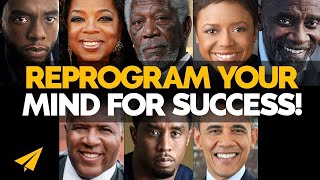
Evan Carmichael presents eight success rules from Black leaders including Chadwick Boseman, Oprah Winfrey, and Morgan Freeman. Mellody Hobson warns against letting money drive decisions. Chris Gardner introduces spiritual genetics: the idea that you can choose greatness regardless of your background.
Chapters
What is the message to the world with Black Panther?
I think the message is that it works to have, you know, a Black cast.
Do not make any decisions based on money. None. It's the worst way to make a decision.
There's no substitute for becoming an expert and being the best at your craft.
What's up, Believe Nation? It's Evan. My one word is believe, and I believe in you. I believe you have an amazing gift inside you that I want to see explode out onto the world. Now, this is a new series called Black Excellence. I don't pretend to know what it's like growing up as a Black man in America, but I do believe that you can support one community without putting another community down. So my aim with this series is to shine a light on excellence in the Black community. I hope you enjoy. So let's kick things off with rule number 1: Prove them wrong with Chadwick Boseman.
What is the message to the world with Black Panther?
Uh, I think the message is that, is that it, that it works. To have, you know, a Black cast. That it worked.
It worked.
You know, it works that our stories can resonate not just in this country but throughout the world. We've been on a tour showing the movie. We went to South Korea just before the Olympics came. And their excitement, we were like the Beatles when we showed up. Like, I'm not playing.
It was amazing. Enjoy it.
Yeah. And in London, so it's that, that, that, that, That idea that a Black movie can't travel, that's been said very often.
Mm-hmm.
When studios talk about funding movies, they will make that statement that, you know, we don't sell overseas.
Yeah.
It's the exact opposite, it seems to be.
Rule number 2, envision a greater future with Oprah Winfrey.
I was raised on a farm with my grandmother. For the first 6 years of my life. I knew somehow that my life would be different and it would be better. I never had a clear-cut vision of what it was I would be doing. I just always felt somehow— I remember absolutely physically feeling it at around 4 years old. I remember standing on the back porch— it was a screened-in porch— and my grandmother was boiling clothes. Because, you know, at that time we didn't have washing machines, and so people would, you know, physically boil clothes in a great big iron pot. And she was boiling clothes and poking them now. And I was watching her from the back porch, and I was 4 years old, and I remember thinking, my life won't be like this. My life won't be like this. It will be better. And it wasn't from a place of arrogance. It was just a place of knowing that things could be different for me somehow. I don't know. What made me think that?
Rule number 3: Be courageous with Morgan Freeman.
Here's a stat from, uh, from your show, and it says that the richest 85 people on this planet have as much money as the poorest 3.5 billion.
Yeah.
Right.
That's on the planet, however. You know, that's—
It's not far off in America.
No, it isn't far off in America, but we still— and we still here don't abandon the idea that it isn't finite. Yeah, it isn't finite. If you were born— where were you born?
Me?
Yeah, Baton Rouge, Louisiana. Baton Rouge General Hospital.
Baton Rouge, Louisiana. I was born in Memphis, Tennessee. Um, I had a long haul, uh, from where I came from to here, but here we are, right? So proof is in the— proof of the pudding is in the eating, and here we sit at the dining table.
But it's hard to—
when you say that to some people, because they say, oh, there you go with the pull yourself up by the bootstraps thing, and you know, you're just being respectable. Not everybody can do that.
Bullshit. Everybody can. Everybody doesn't— Courage. Courage is the key to life itself. There are a lot of people who are born in situations where they say, well, I just, I'll never get out of this. They won't. I say to people who say, "Well, I would like to have done so-and-so-and-so." I say, "Well, you could have done it." They say, "Well, I couldn't get out of here." Man, the bus runs every day.
You're exactly right. Yeah. If you can conceive it in your mind—
If you can think of it, you can do it. That's the human condition. If we can imagine it, we can do it. And I think that the, the condition of each individual human.
Rule number 4: Don't make decisions based off of money with Mellody Hobson.
Do not make any decisions based on money. None. It's the worst way to make a decision, which I know is so hard to say. I mean, I didn't grow up with any money, and I know so many of us are— our families have a lot at stake. They've put a lot into us, made a lot of sacrifices for us. And you say you don't have the luxury of doing that, but I actually think you do. You will be more successful if you make decisions based upon what is going to feed your soul, make you feel value— valued, validated, you know, have you waking up in the morning and racing to work, whatever it might be. And I can tell you after a short amount of time, money will not be enough. At the end of the day, a bigger paycheck is another suit or more real estate, more square footage. That's what it comes down to. You end up with another room and a fuller closet. And after a while, that's not gonna do it.
Rule number 5, choose to be great with Chris Gardner.
We're developing this concept that we call spiritual genetics. I mean, we all understand genetics. You're gonna get your mom's eyes, your dad's nose. Nothing you can do about it. But the spirit of who you're going to become as a person, the soul of who you're going to become as a man or a woman, I believe you can choose. I believe you can choose. You've read my book, you know I could have become my stepfather. I could have become another alcoholic, wife-beating, child-abusing, illiterate loser. And a lot of people would have said, well, look where he's from. He didn't have a choice. Well, I did. I chose to embrace the light I saw in my mom. The light was greater, and I chose to embrace the light. Briefly, how the book came to be. I didn't just sit down one day and say, "Let me write a memoir." I was not prepared to just sit down and go through all these little boxes of stuff that we all have in our heads. The minds were all stamped with the same tag, "Do not disturb." It was not my choice, but I was getting an award one night for fatherhood. Big program, and the emcee wants to keep the program rolling, and he kept citing all these statistics, and he kept saying the same things over and over. If you're from this family, if you're from this house, if you lived in this environment, this is who you're gonna turn out to be. None of the things were good. And I kept sitting there saying to myself the extended version of, "That's BS. That's BS." To the point that when I got up to the microphone to get my award, you know what came out of my mouth. I'm so glad I said it because in a room full of 1,000 people, so many people came up to me afterwards and said, "Thank you." because I'm from that house, I'm from that family, I'm from that environment just like you, and I made a conscious choice to go the other way.
Rule number 6: Be around information with Sean Combs.
If I was coming today, I would do whatever it would take for me to get to the information.
I don't—
I think that no matter what, it could have been in the times of Jesus, before Jesus, caveman times, it was about being around information. Back in caveman times, it was about Who knows how to make a fire? 'Cause my ass is cold. You know what I'm saying? And now it's like, you know, who really knows who is successful in this day and age and how they are successful? So I think that our educational system needs to be fixed in a sense because, you know, a degree means something to me, but experience kind of means more. And a point of view of where people want to go kind of mean more than somebody saying, "I have a master's from Harvard," or whatever. No, I need to know, are you ready to go to war with me? That's what I need to know.
Rule number 7: Become an expert, with Robert F. Smith.
The most important thing I think you can do as a young person— so I'm going to speak to a couple different groups here— young person in our community is to become an expert. To be skilled in whatever it is that you are desirous of pursuing. And that takes countless hours and in some cases is outreach for knowledge and information, and in some cases it is building a learned capability. And to me, there is no substitute for that. You know, the gift of gab, the— there's no substitute for becoming an expert and being the best at your craft. And that's what I focused on. So if you are sitting in your organization thinking about going to do something else, you need to make sure that you are the best skilled in that organization before you do that, or you spot an arbitrage in the market that you can uniquely take advantage of over a long period of time. But the first thing is you've got to have those skills. I mean, there's— you can You say, oh, I'm gonna go figure it out, but I think you should figure it out before you leave and have a very specific design in mind where you can take advantage of that arbitrage. And I like to say not measured in years, but measured in decades. Okay, and then one of the most important things which I learned in chemical engineering is you have to keep the ignorant uninformed. Don't tell everyone how to do it. If you spot that arbitrage, go do it and then build systems and barriers so that not everyone can come into your marketplace once they realize that you're making a fortune in it. Okay, right. So I mean, be thoughtful about it. You know, people have put barriers to us for hundreds of years, and they've been thoughtful about it. So be thoughtful about creating an economic opportunity for yourself and for your community where you can sustain that advantage. We do some things in our communities that no one does.
And rule number 8, the last one before the bonus clip, is be willing to try. With Barack Obama: I believe we can keep the promise of our founding.
The idea that if you're willing to work hard, it doesn't matter who you are or where you come from or what you look like or where you love. It doesn't matter whether you're Black or white or Hispanic or Asian or Native American or young or old or rich or poor, able, disabled, gay or straight. You can make it here in America if you're willing to try.
Now I've got a special bonus Gary Vaynerchuk clip for you, but before we get into that, I'd love to know what did you think of this video? What do you think of this new series? Did you enjoy it? Should we continue it or not? Do you have suggestions for how we could improve it? I would love to hear from you. Please leave it down in the comments below. Thank you guys so much for watching. I believe in you. I hope you continue to believe in yourself and whatever your one word is. Much love. I'll see you soon, and enjoy the bonus clip.
To black privilege, which I genuinely believe that in a world that we live in, and by the way, I believe in all those privileges, wealth, white, celebrity. It's a nice, it's a better time to be black than it was 30, 40, 50, 60, 70, 80 years ago, especially when hip-hop culture, there's not a white kid that works at VaynerMedia that isn't affected by hip-hop culture.
Oh yeah, I mean, black people have changed the world. I mean, you know, it's so funny, you know, they talk about people people co-opting our culture, but you know, you look at a movie like Get Out, like they wanna co-opt our consciousness, period. They wanna co-opt our spirits. And I just feel like it's a spirit that has permeated the whole planet. Like everything starts and ends to me with hip-hop culture. Like they still like to use the term pop culture, but pop culture just means popular. What's the most popular culture out right now?
Hip-hop really taught me that. Hip-hop, I'm 41, and I was really into hip-hop. And when I was in high school, hip-hop was really hardcore. You gotta be a gangster. Like guys, as you guys know, made up their backstories to make it seem like they came from tougher places, 'cause you couldn't be accepted the way you can now if you grew up in a, you know, I always think about 8 Mile, the last scene, right? Clarence's parents, you know, like. But it's interesting, when it changed, in like, after Pac and Biggie got killed, and people were like, fuck, you know, like, let's talk more about like, and it was happening a little bit before. When it got into champagne, and it got into like, you know, polo shirts and like umbrellas, Bentley, right? Like when it got into a different thing, what it was like, oh my God, all those kids thought that was cool. And then when, I'll never forget it, when I saw Lil Wayne start caring about skateboarding, I was like, okay, something very weird's about to happen because that, yeah. And you've seen it, right? Like it's just in a totally different place.
Raise your standard.
Apple, at the core, its core value is that we believe that people with passion can change the world for the better.
Not one drop of my self-worth depends on your acceptance of me.
I don't ever give up. I'd have to be dead or completely incapacitated.
Hey, Believe Nation, if you want to see my all-time favorite top 10 rules of success, I have a very special secret video for you. These are the individual clips that I have personally learned the most from and applied to my life and my business. Check the link in the description for details.
More from Evan


How the Biggest Mistake in History Created A Trillion-Dollar Empire | Sergey Brin



9 Machiavelli Principles That Force People To Respect You | Machiavellian Philosophy



The First 10 Words That Instantly Ruin A Sales Conversation | Vanessa Van Edwards

The Top 1% Mindset Behind The First $5 Trillion Company | Jensen Huang (Nvidia)

