How to Make It as an Actor | The Secret to Getting Noticed in Auditions!
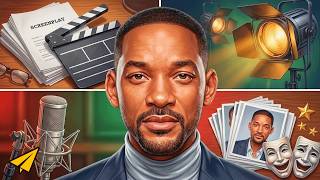
Denzel Washington, Will Smith, and Jackie Chan share how to build an acting career. Stop chasing jobs and focus on living truthfully in each audition. Washington turned down a lucrative role that conflicted with his values; Smith says confront your emotional blocks and be willing to look foolish.
Chapters
Good morning, Believe Nation! I started the Making It series to try to learn from people who've accomplished success in a certain field, learn from them, get their advice on how you can reach success in that field as well. And so we had a lot of success with the first one, Making It as a Musician. We're gonna continue the series, the pilot project, see if you guys still want this series to continue. This one is gonna be Making It as an Actor. As you watch, if there's something that somebody says that really resonates with you, as usual, please leave it in the comments below and put quotes around it so other people can be inspired as well.
When I was younger, everybody told me not to be an actor. To this day, I say that to people who come up to me and say, "I'm thinking of going into acting, what do you think?" I say, "Absolutely not, it's a terrible idea, don't do it." Because that's what everyone said to me, and I think if you're gonna make it in this business that is so full of rejection and hardship, um, you need to believe in yourself despite what everybody you love and trust tells you. And it's a very personal journey. And so that was really helpful, I think. You know, the advice to stay away from this career was really helpful in my own understanding that it was that important that I pursue it.
I think the audition process is no different than going for a meeting as a cinematographer, or if you want to be in any of the disciplines of this industry. Very often the thing that actors tend to do is I think they tend to focus on the wrong thing. So if I were to say to you, what do you think the purpose of an audition is? What would your answer be? What's the purpose of an audition? To live truthfully in the moment. Very nice. Most people would say to get the fucking job. Alright, now That is a very, very, very dangerous place to start, to want to get the job. Now, look, let's face facts. If you get the job, how great. That's fucking great. It's icing on the cake. It's fantastic. But I believe that if actors were better willing to adopt a philosophy that it is an opportunity to walk into a room and to begin a relationship that may not pay off with that particular job. Sometimes actors are so nervous and they want that job so much, or they can't pay their frickin' rent, they gotta get that frickin' job, they gotta get that frickin' job.
Hi, I'm—
hi, hi.
Well, we see that. You know, the director sees that. So the problem with that is that You're not being yourself. You can't be truthful in the moment when your focus is on the result instead of what, on that day, at that moment, is the beginning of a process. "Can I work with this actor?" the director's thinking. "Does this actor pay attention? Do they listen? And when I give them direction, do they actually change anything?" Do they take direction? "Go that way." And if you can stand in a room and say, "I may be raw, I may be undeveloped, I may have no experience, but I trust myself enough and I believe in myself enough on this day that I want to introduce myself to this director, casting director, producer, assistant. And by the way, be really nice to the assistants because no one behind that table is any different than you. Everyone behind that table is just as ambitious as you are. That director wants to be doing better things. That casting director wants to be a director. That assistant— that assistant wants to be the casting director. Everybody wants to be somewhere else in 10 years, just like you do. So we're all in the same boat. And it's sometimes hard to believe this, no matter how rude they might be, no matter how, you know, because some of them are just— they're dicks in those kind of situations. But my point is this: they're on your side because they have to cast this thing. And because people are fundamentally lazy, they'd rather be home smoking pot and watching TV. So they want you to be good. They want you to solve their problem. And too often I think people don't realize that you have to take the long view. The short view is, I want this job, I need this job, I want this job. The long view is, I have a chance to meet someone I may admire, someone I could work with, but I may not be right for this job on this day. That has nothing to do with my talent. It could be 1,000 reasons why you don't get a job. But if I'm good enough, If I stand on that stage and I show them where my talent is on this day, I walk out that door, they might look at each other and go, "She's really good. She's really good. She's not right for this, but she's really good." And the next time they do a film or the next time they do a play, they'll bring you back. And someday along that long road, you may get that job. But it's about relationships. And it's about trusting yourself and where you are and realizing you are good enough for where you are right now on that day. And I believe in the long view.
You don't have to compromise yourself. You know, if there's something you don't feel good about, then don't do it. The most important choices I've made was to say no. And I've said no many a time to films that I just didn't, especially early on, I just didn't feel comfortable with. There was one script that was brought to me, I called it the nigga they couldn't kill him. He was accused of raping his wife in the '40s, and they tried to hang him, but he didn't die. And they tried to electrocute him. They were like, it's a comedy. I'm like, it ain't funny to me. So I actually called Sidney Poitier, who I was fortunate at that time to— and still to be able to call. And I said, you know, this movie, I'm sick. And they all offered me $600,000 to play the nigga they couldn't kill. That's what I called it.
I wouldn't name it.
And he said to me, and I'll say this to you, he said, the first 2 or 3 or 4 films you make in this industry, Denzel, will determine how you proceed. He said, I'm not going to tell you what to do, but remember that the first 3 or 4 or 5 films you make will determine how you proceed. I turned it down.
I turned the money down.
I needed the money.
I turned it down. 6 months later, I got Cry Freedom. So stick to your guns. If you don't feel like you should do it, then don't do it. Because you don't want to be, you know, you don't want to be a negative energy on the set. That's how I feel. So I'm like, you know, I ain't doing this because I'm gonna slap somebody the second day. So I just, you know, it's something— I think the most important decisions you can make as an actor, actress, is saying no. I'm saying no, you don't have to take your clothes off. If you don't want to, then don't do it.
Do you remember the audition when you first met De Niro?
That was, yeah, I mean, that was one of those incredible auditions that came around that I suppose every kid had been waiting for for a long period of time because it's just not that often that you get a starring role above Robert De Niro in this incredible, you know, screenplay. Ellen Barkin and Michael Caden Jones, and it was just, everyone was sort of fiending for this role. And I got down, I suppose, to the final 5, and there was like a last sort of day. Toby was there, and I do remember thinking to myself, I gotta do something. I gotta do something to stand out. And in the audition, there was Art Linson, Michael Caden Jones, Art Linson was the producer. And De Niro, and I remember there was a mustard jar scene, and he had to jam a mustard jar in my eye repeatedly. It was an abuse scene, and the script sort of didn't call for it, but I got up and I— he said, "Now, is it empty? Is it empty?" And I got up and I screamed, "No!" Like, completely unnecessary, but I screamed in his face, and I sat there, you know, with my head, you know, looking like a red tomato, and everyone started laughing at me in the entire room. De Niro, everybody was in hysterics. I sat there frozen thinking, "Oh my God, I just screwed this entire opportunity up." And I just sat there frozen. And then, you know, Bob, in traditional De Niro fashion, kind of just looked at me and went, "It's good, it's good, it's good." And then, you know, we carried on doing the scene, and I think I actually had dinner with De Niro recently, and he told me, no, I was the one who said, I was the one who said you should get the, get the job.
You have to clear your own personal blocks, right? You have to be able to be vulnerable in front of anybody, you know. You have to be comfortable looking silly. You have to be comfortable making mistakes, and you have to break the thing inside of you that doesn't you didn't want people to see, right? Because as soon as you allow people to see, all of a sudden you get access to things that you didn't realize you had access to, right? Um, for example, like, the thing I used to do is when I was in probably 18 or 19 years old, um, I got in touch with those blocks. The camera hates emotional blocks. Like, you put a camera in somebody's face and they're uncomfortable about delivering emotion, it looks fake, and You feel it. You immediately know it's not real, right? Especially look at the size of this screen, and in a shot, that whole screen could be just your eyes, right? So it's like you can't hide discomfort, uncertainty, so you have to be able to get comfortable, you know, just being anything! Anything that you have to be for the role, you have to be comfortable being it!
Yeah, that was kind of weird. I was so scared.
But you know, but that is the part of it. And then by the same token, you have to, you know, be able to just be quiet, to be nervous, to really love someone.
Here we go.
You know, so we're But really, at the end of the day, it's about finding ways. Like, you have to get comfortable doing it in front of your father. That block is the thing. You're gonna— the block that you have for your father is the block you're gonna have for the camera, is the block you're gonna have when there's a pretty girl behind the camera that's working and you want to look cool for her, you know? You don't want her to see you cry, you know? So think— so that block, you can use your your father, if he makes you uncomfortable, it's perfect because that's the discomfort you have to break in order to be able to bear yourself in front of the camera.
I have to say something smart real quick.
Okay, so as opposed to what I'm saying?
Um, no, you said too much smart stuff. I gotta say smart stuff too. So I have a story about you, actually. Okay, so what you were saying, I feel like Being afraid of girls, being in front of the camera, being scared in general, all of those things are just really the same thing. It's just really being afraid of what people will think. So I think why you can be such an amazing actor is because when you were a teenager in Philly, he would go to the mall and he would stand up on a chair like this and he would say, "Hey, can I have your attention, everybody? Everybody? Uh, my name is Will Smith and I'm gonna be famous one day." You guys don't know me yet. Yeah, and then he would sit back down. Yeah, he'd sit back in his chair, but he was just comfortable saying and doing anything. So when you got in front of the camera, you were okay to let that emotion go, you know?
That was like practice for me to break that fear.
That's always practice.
Girls are great too, like, to just, like, at a party, get comfortable walking up, saying hi, and getting rejected hard in front of your friends.
Yeah, I could be all right with getting rejected.
You gotta bring good, because acting, every take is rejection. That's what it is. You do a take and people don't clap, it's rejection. And you can't allow that to close you down because bearing yourself is what makes you look strong on camera.
There's no point in doing something if you're not gonna do it absolutely, you know, and do it to the hilt. And so yeah, there did come a point when I suddenly started to get more satisfaction out of it and realizing there was something that, even though I can't quite bring myself to say something of worth to it, that I can say something worth me doing it for. And if I'm going to do it, if I'm going to take the time to do it, then I want to do it in as much of an immersive way as possible. Because, you know, you just come to learn in life that the things that you really get a kick out of are the things that you just can't deny. They're the things that when you're doing them, you can think of nothing else but what you're doing, you know? I fucked up my whole arm and wrist. I got metal plates here and here and screws all up and down my arm through riding motorcycles, not on the streets, but on racetracks. And that was something which I realized was very much, when acting is good, why I like it, because when you're riding a motorcycle to the hilt, knowing the danger involved, you have to be absolutely focused on what you're doing. You can't allow anything else in, and there is such a thrill to doing that. You know, that's why it's so hypnotic and just mesmerizing, and I just love it. And I realized that the best times I feel a similar thing with acting, and it doesn't happen that often, because it's a team thing, you know. On a motorcycle, it's just you and it going. This is a team thing, and you require the environment to be created in which you can do that. But when that does happen, that's what I love about it. Yeah.
Well, the best, the best advice for fellow actors is this: know what your job is. About 18 years ago, I had this cognition that I realized I was going into auditions trying to get a job, and that simply wasn't what what I was doing. It wasn't what I suppose I'm supposed to be doing. An actor is supposed to create a compelling, interesting character that serves the text. You present it in the environment where your audition happens, and then you walk away, and that's it. Everything else is out of your control, so don't even think of it. Don't focus on that. You're not going there to get a job. You're going there to present what you do. You act, and there it is, and walk away. And there's power in There's confidence in that. And it's also saying, I can only do so much. And then the decision of who might get a job is so out of your control that it really, when you analyze it, it makes no sense to hold on to that. That to me was a breakthrough. And once I adapted that philosophy, I never looked back. And I've never been busier in my life than once I grabbed on to that.
I mean, it's important not to give yourself boundaries, which we can do quite easily. Okay, people talk about aiming for the skies. Sometimes even aiming for the skies is intimidating. Just don't give yourself boundaries. Your sky and my sky might be different, you know what I mean? But neither of us will touch the sky if we give ourselves boundaries, you know what I mean? Whatever your sky is, whatever your biggest dream is, I might have already touched that, you know? So in other words, What sky? Where does the sky end? I'd rather people go, you know what, I'm not going to restrict myself to going, I can only do this, or I can only do that, or I have to do it this way, or I have to do it that way. I think it's important that people just go and lose the boundaries, lose the conformity, and just go for it.
I said, look, why don't we change everything opposite Bruce Lee? Be myself, just me. Jackie Chan.
That takes a lot of confidence.
Yeah, and belief.
And also, I really thank you, the producer, Wu Siyuan. He said, okay, do whatever you like to do. Yeah, change. No Bruce Lee comedy. When Bruce Lee kick high, I kick low. When Bruce Lee after punch, I do just like normal human being.
Normal.
When I was young, I'm fighting on the street, one by one, boom, I knock somebody down. Two by one, I knock somebody down. 3, I run away. So in the movie, do the same thing. I just— everything used in the movie is my real life.
I never imagined in my wildest dreams that I would be successful.
Hugger.
Roll play.
Action.
The fear is always there with actors that you'll never work again.
Help. Help me.
Help me.
That goes with the territory.
Oh, gee, where am I gonna go now?
You have that fear the second job, third job, fourth job. You have it all the way down the line. So each happy event as it's happened has been a surprise.
I'm not out of date, am I? I mean, picking flowers for a woman as a sign of appreciation?
No, not at all. Except those are poisonous things. I'm Damocles with the sword, you know. I really think it's up there by a hair. And every day it doesn't happen, I'm just thrilled.
Yeah!
I never thought it was going to happen to me. You can't if you're an actor. I'm really freaking here, Johnny. Why is he here? Some people do, I guess, go in saying, "I'm gonna be a star." And they are. But for all those people that say that, I bet there are hundreds of thousands who say that and are still, you know, struggling.
Where you going?
I don't know.
I know a lot of my success has to do with luck. I've also poured a lot of hard work into it, so I feel in some way that I can justify myself, you know. But I'm just happy that things have happened this way.
Thank you guys so much for watching. I hope you enjoyed. I'd love to know, what did you think of the video? Do you want this series to continue? Did you learn a lot from it? Which part was your favorite? Let me know in the comments what you thought, what you learned from it, what you're gonna apply to your life, to your business. If we should continue this series, put it in the comments below and I will join in the discussion. I also wanna give a quick shout out to Ms. Lynn. Thank you so much for buying a copy of my book. It really, really means a lot to me. For those of you watching, if you want your chance at a shout out in a future video, make sure to Pick up a copy of the book and email in your receipt so we can keep track. Thank you guys so much for watching. Have an amazing day. Continue to believe, or whatever your one word is, and I'll see you soon.
More from Evan


How the Biggest Mistake in History Created A Trillion-Dollar Empire | Sergey Brin



9 Machiavelli Principles That Force People To Respect You | Machiavellian Philosophy



The First 10 Words That Instantly Ruin A Sales Conversation | Vanessa Van Edwards

The Top 1% Mindset Behind The First $5 Trillion Company | Jensen Huang (Nvidia)

