How to Master DISCIPLINE Fast | 16 Minutes with Tony Robbins & John Maxwell
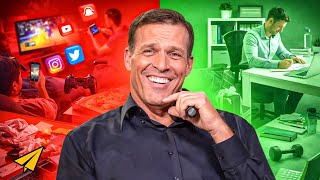
Tony Robbins, Dwayne Johnson, LeBron James, and others explain how discipline works. Les Brown says do the work before you feel like it. Eminem credits sobriety and relentless work ethic. LeBron's highlight moments come from countless hours on fundamentals.
Chapters
Discipline!
Discipline!
Discipline!
Discipline?
Discipline!
Discipline!
Discipline!
Discipline!
Discipline!
Discipline!
Hello Believe Nation! Today we're going to talk about how you can develop discipline. And as always guys, as you're watching if you hear something that really inspires you please leave it down in the comments below put quotes around it as well so other people can be inspired and when you write it down it's much more likely to sink in for yourself as well. Enjoy!
So Tony, uh, one of the critics actually that I once met said, yeah, Tony's techniques, they were great for about a year and a half and then they wore off. What do you say to that?
It's real simple. If you don't work out, you don't get a— you don't get a muscle, right? So I always tell people, this is There's a daily practice, like priming. If you don't do that, if you get up and you just have no discipline whatsoever, you get no value of anything. Diets don't work when you don't do them. Exercise doesn't work when you don't do them. But most of the people have some experiences that they want to shift, and once you shift those things, your whole life changes. But life is constant growth. My life isn't here because I went to one seminar one time and now my life is fit for life. I work out, I train my mind, I train my body, and it becomes a lifestyle. It's not just like you're depending upon somebody else. I'm not here to become somebody's guru. I'm not here to give them a gift. I'm here for them to open up their own gifts. And that's really what my work has been.
I've never met a person who was not successful that didn't have a great amount of self-discipline within their life. Self-discipline and being able to perform and being able to keep your life on schedule and being able to keep commitments and promises and meet deadlines is essential to success. None of us, none of us can afford to have a life that is controlled by someone else, or a life that is basically controlled by our emotions. I learned many years ago that there are two kinds of people. There's the type of person who says, "I'm gonna wait till I feel like it before I do it." And then there's a person who says, "I've gotta do it so that I feel like it." One will never get anything done because they're still waiting to feel the moment to move, and the other person says, "No, I need to move, and then I will begin to feel the moment." Sanya, self-discipline is essential in your life and in my life if we're going to get things done. So I have a challenge for every one of you this weekend. The challenge is simple. As you go through your weekend, and sometimes it's kind of a, hopefully, an easier time of your week, ask yourself, am I practicing self-discipline in my life? Am I doing the things that I should do because I need to do them, or am I kind of waiting to Feel the moment. Do like our friends Nike say, just do it.
How different do you think your career and possibly your life would have been had you not embraced the physical fitness part early on?
Oh man, you know, it just gives me, between my physical fitness and my faith, I have so much discipline in my life. And I have such a positive outlook on life and, you know, the opportunities that I have and the things that I've been able to accomplish in my life. But it starts out, you know, I'm up at 4:30 in the morning. I'm in my kitchen having breakfast, 5 o'clock I'm in the gym, 6:30 I've already had another shake, and 7:30 I'm eating a couple turkey burgers, dropping the kids off at school, and by 9 o'clock I'm having another meal, and I've already been to church and worked out, and, you know, I feel like there isn't anything that I can't accomplish.
When I was in high school, I must have been maybe 16 or 17 years old, and I went rock climbing in El Dorado Canyon. Near where I grew up in Boulder. I'd been climbing about 3 or 4 years. And I went to do a climb called T2. Now, at the time, T2 was a relatively difficult climb. And I went at it with a kind of an arrogant lack of preparation. And I hadn't prepared for being able to do certain kinds of finger cracks. I figured, I'll figure it out when I get there. And I also didn't pause— this is that thing about boldness and discipline. I didn't pause to really double smack— double check all my systems. OK. So I'm on the 4th pitch. I'm about 400 feet above the ground. I'm going across this slanting crack system that I'd had trouble— that I started to have trouble with. My forearms started to engorge with blood and lactic acid, which means at some point, even if you're on a big hold, your hands are going to melt off. OK. And I'm about to fall. I'm 400 feet above the ground. But it should be OK, because there's protection. I'm tied into the rope. I may take a fall, but I'll get caught. For some reason— and to this day, I still don't know why— my brain triggered that I should look at my knot. And I looked down at my knot. My knot had come untied. I had made the mistake of never really thinking about the best knot for certain types of situations, and I tied him with what's a bowline. Now, the advantage of a bowline is it's easy to untie, right? The disadvantage of a bowline is it's easy to untie. It had come untied as I kept moving across, and it is just hanging in my harness. I'm seconds away from falling. Only now I will die. I will die if I fall off. My forearms are melting. And the knot had come untied. And so I called down to my partner. I said, my knot came untied. What is he going to do? He can't do anything. He'd just watch me fall to my death. And there was an old fixed piton in the rock that we put there from the first ascent. An old soft iron piton. And I looked at it. And I probably had 15, 20 seconds before my hands would unwrap, if that, maybe 10. I took a runner and I clipped it into the piton. I clipped the piton into my harness— that runner into my harness and just went, please hold. And I let go. And it held. I put in a backup. I grabbed the knot, retied it, went to the ledge. I didn't convulse into— I was very calm at that moment. When I got to the ledge, I went into convulsions. Pulse of shaking. I was sick to my stomach for days because of the, the whatever happens chemically. What I learned from that is two things. The first is that when you're in an unforgiving world, gravity is unforgiving. It doesn't care. It never takes a day off, ever. And if you make one mistake, it can kill you, if it's the wrong kind of mistake. And what I learned is that sense of, yeah, I want to do adventurous things. I want to climb rocks. I want to be in Yosemite. I want to do things that get my adrenaline going. But I need the discipline to always do all the right preparation, to always think about the right knots, to always be cross-checking my system so that I can do those bold things and stay alive in an unforgiving environment. And as you and I spoke about earlier today, I think that's the rest of— I think we're all heading into an unforgiving environment where we're going to have to be both bold and disciplined. The second thing I learned, what if that piton had not been there? We might not be here together. It was just by chance that that piton was right there. And what you realize when you rewind the tape of your own life is that there are these crucial moments where if the luck had gone the other way, you might have gotten killed. And so what you have to do is to always be putting those extra disciplines in place because I was lucky to live. And what I took from that is I never want to have to be lucky to live again. I want to live because of my discipline, not because of my luck. [Speaker:EVAN CARMICHAEL] Going on perhaps a decade of running simultaneously two global companies, how do you get the stamina to keep going and to stay fit personally and mentally and physically?
Well, you know, somebody said with little discipline you do little things, with a lot of discipline you do a lot of things, and with total discipline there is nothing which you cannot do. It requires a lot of discipline. I mean, obviously because you're gonna move from one world to the other, from one culture to the other, from two completely different company, you have jet lags, organization, People are expecting you when you come down from a plane after 14 hours flight to be fresh and ready for them. They're not expecting the CEO to come and say, oh my God, this jet lag, he cannot answer a question. They want you to be on the go all the time. So this requires a lot of discipline. You have to organize yourself. If you know you're gonna do this job and you accept the job, you have to organize yourself in order to do it. It's tough, but there is a solution. There is a solution for it. But it requires a lot of choices, personal choices. There are a lot of things you cannot do. You know, there are a lot of things you can do, but you're going to do them within a certain order, but particularly with a lot of discipline.
In 2009, when the mixtape— and there was a period where I think around that time you were kind of like, you know, is this something that's going to work for me or not? What is it that got you through?
How'd you work through that?
Yeah, it's tough to say exactly what it was. I think it was hard work. It was discipline. It was knowing that if this doesn't work out, then I will have to get a 9-to-5. And I don't want to do that.
No.
I really don't want to do that. And it was working with Ryan. Putting everything into the music. And leading up to that point, I think that you have to look at my track record. I had always wanted to get sober. I could never get sober. I couldn't make music while I was under the influence of drugs or alcohol. Finally got sober in 2008, got out of rehab, and was like, all right, this is it. I've wasted years of my life. And if this is going to work, It has to work now. There's no alternative. And I met somebody that had the same dedication as me, that put everything into the music, everything into the craft, and didn't go out, didn't really have many friends.
Just kidding.
Just kidding. We only hang out with each other. No, it's somebody that wasn't going to be like— up until that point, I was making music with people that were constantly putting their priorities into getting—
Cooler people.
No, not at all. Getting loaded or chasing women or whatever. And that's what I did for a long time. And it led me to being broke and in rehab and moving back into my parents' house, which is awesome. But I wanted a career. And Ryan was somebody that had this— the same discipline and sacrificed everything.
What my dad always told us when we were growing up, that if you earn a dollar, you don't save anything. If you earn a billion dollars, you won't save anything. And so that discipline of investment, keeping something, don't consume everything you get, actually helped me significantly.
Those star moments that, you know, fill the highlight reels and, you know, leave an audience in awe to watch— oh wow, play that again, I want to see that— those seconds are built on thousands and thousands and thousands of hours that a lot of people wouldn't think are worth, you know, adding to a highlight reel. Basic fundamentals being applied over and over and over and over again. Getting up a certain time, doing certain things, cooking your meals, going to, you know, do your cardio, walking through the disciplines, keeping the checklist and staying on top of them. Those are the things that, you know, when you string them together, start to create a day of efficient action. The more likely you are to string those days of efficient action together, the more likely it will be that you can set up your own success.
How would you personally describe your style of leadership?
Close to the human being. I think discipline is very important, very important, but discipline is relative, especially when you work together with young players.
Yeah.
Never lose the target. I don't know how to say it. Never lose the target. Always stay focused on it. So that's pretty clear because that's— and always think it's still possible. So that's not the right word in English. Believe. Yeah, for sure. Believe. It's a little bit different to believe. Believe is you can create, you can Believe in something, but you can lose belief quite easily. So to be stronger in the bad moments, things like this.
I always wanted to win the World Cup. That was the reason I started. And as the time went by, I started enjoying cricket and I started realizing the challenges of cricket. And my coach was instrumental, and along with my brother, to my elder brother, Ajit. To make me realize the importance of leading a disciplined life, a focused life, and to make me push harder. They found reasons, and even towards the end of my career, I followed that formula. If I scored runs, let the rest of the world talk about it. I think about the next game. And that, right from my school days, became an unwritten formula, unwritten law at home, that we don't talk about last game, we talk about next game. And however many runs I scored, I wanted to go out and score more than that. So if I didn't score, I would have a restless night. If I scored runs, I would still have a restless night thinking that how am I going to score more? And that's how it all happened. I mean, I normally don't discuss numbers, but this is something that I must share with all of you. Towards the end of my school cricket career, I already started playing first-class cricket, and the last season I can proudly say that I averaged 1,025 because I only got out once in the whole season. And my brother and my coach was instrumental in that because every time I scored runs, none of them said well played to me. And that's why in my farewell speech, I said to my coach, At least now you can take a chance by saying well done. There are no more matches in my career, but something that I lived for was appreciation from my coach and my brother, which never happened. I mean, and that was something which, you know, sort of kept me giving my best all the time.
Thank you guys so much for watching. I'd love to know what did you think of this video? What was your favorite clip and what are you going to immediately apply to your life or to your business somehow? Also, how have you How do you develop discipline and do you have any wisdom to share that others can learn from? Leave it down in the comments below. I'm gonna join in the discussion. Finally, I wanna give a quick shout out to Jude Gbeku. I hope I pronounced that okay. Thank you so much, Jude, for picking up a copy of my book, Your One Word. It really, really, really, really means a lot to me and I hope you're enjoying it. So thank you guys again for watching. I believe in you. I hope you continue to believe in yourself and whatever your one word is. Much love. I'll see you soon.
More from Evan


How the Biggest Mistake in History Created A Trillion-Dollar Empire | Sergey Brin



9 Machiavelli Principles That Force People To Respect You | Machiavellian Philosophy



The First 10 Words That Instantly Ruin A Sales Conversation | Vanessa Van Edwards

The Top 1% Mindset Behind The First $5 Trillion Company | Jensen Huang (Nvidia)

