How to Master SELF-AWARENESS in 10 Minutes | Be a Leader
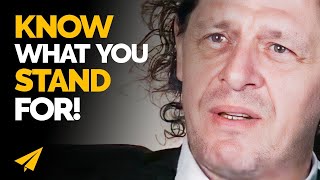
Evan Carmichael argues most people lack self-awareness and follow louder voices instead of leading. Marco Pierre White says rebellion needs winning results. Peter Thiel shows how CEOs without clear beliefs fail, while Steve Jobs succeeded by staying true to his. Find your one core value, write it down, and use it to guide every decision.
Chapters
Good morning, Believe Nation! Today's message is Fight for Your Beliefs. Over to you, Marco Pierre White.
Many people have condemned me for being controversial. I was never controversial. As I've always said, most of my reputation is a product of exaggeration and ignorance. Did I shout? Yes, I did. But I led from the front. I nailed my colours to the mast. I fought for my profession. If you're going to be a rebel, make sure you win. If you're going to be a revolutionary, then fight for what you truly believe in. And that's all I ever did. And the boys behind me, they followed me.
Most people don't know what they stand for, and so they don't know what they're fighting for. Most people are lost, and that's why they end up following somebody who has more certainty, who has more self-awareness than they do, instead of living their own life. Instead of being a leader for yourself, you're following somebody else who just has more confidence and self-awareness. You need to know what you stand for to know what you're fighting for. This is why I wrote the book, and not some promotional final piece here, it's super important. It's identifying what is the one thing that you will not compromise. What is the one most important core value to you? Most people don't know. And if you don't know, then how are you living a life and running the business with any kind of purpose? You'll just be constantly reacting to what other people are giving you. You're living somebody else's life and not your own. And so I think the self-awareness is one of the most important things that you can have, not just as an entrepreneur, but as a human being. For you to know what your one word is, for you to know what your one single most important core value is that becomes the lens through which you see the world, now you can proactively build a business and proactively create a life that reflects your most important core value. Now you know what to fight for. Now you know what you're no longer willing to accept because you've always shown these tendencies, you've always gravitated towards this one word, this one core value. But it was always haphazard. It was always when things come up, it was always random. And so what are the chances that that perfect mentor or guide or relationship or business opportunity is going to just fall on your lap? It can happen, but it's a small percentage. Where now if you purposely are setting out to build a business and a life around your most important core value, That percentage is going to dramatically explode. Now you're no longer willing to be around people who don't share the values that you do. Now you're not going to be with people who pound down your ideas, who tell you all the reasons why you're not going to be successful. Now you're going to be open to opportunities, and they're going to find you, that support you doing great things. Most people though haven't figured it out. Most people won't figure it out, and it's why most people will not be great leaders. It's why most people will never build a great life. It's why most people walk around feeling like they could be doing so much more in their life, and they're not even coming close to reaching their potential. Doesn't mean you have to be down in the dumps, doesn't mean you have to have no success. There's also people who have plenty of success, but they know that they could be doing more. They know they're nowhere close to their ceiling, and they don't know how to get there, and they don't know what's wrong. What's wrong is you don't know what you stand for. What's wrong is you don't know what you're fighting for. What's wrong is you're just following other people instead of being the leader you were meant to be. So find your one word. Find your single most important core value, and then you found what you should be fighting for. So the question today is, I'm curious, what is your one word? What is the single most important thing that you are fighting for? I want the one word, and I want a sentence or two as to why it really means something to you. Why is it so important to you? Leave it in the comments and we'll join in the discussion. I also want to give a quick shout out to David. David, thank you so much for picking up a copy of my book, Your One Word. I really, really, really appreciate the support and hope you're enjoying it. Thank you guys so much for watching. I believe in you. I hope you continue to believe in yourself and whatever your one word is. Much love, and I'll see you again tomorrow morning for another shot of espresso. I wake up every morning. Hey Believe Nation, thank you so much for watching. If you want to learn more about this subject, get a little bit deeper on it, I'm going to share some extra bonus clips that I hope you'll enjoy.
And what I'm telling artists is you got to have balls and got to let these guys know if you're a DJ, be a DJ. If you're a radio personality, be a radio personality and nothing more. We make the music that allows them to have a voice on the radio and they took control and tried to say, that they have all the power and gonna dictate what we have to do. I spoke out against it, so they got a dummy to go up there and be a dummy on the radio and speak on their behalf and talk about me. And, um, it's really unfortunate because they're using him and he's not even a part of my fight. My fight is a big fight. My fight is against any power structure that's going to try to hold back freedom of speech, and that fight ain't over yet.
Amazed at how few people have a belief system What do they actually believe in? I— and yeah, it's okay to offend you guys. 90% of you will do what's expected of you as opposed to what you want to do. And, you know, I even, when I come to an event like this, say, why am I here? Why would I even bother to take an hour of my valuable time? No, it's true. I have to have a purpose. My goal is very simple. If I can convert one of you— there's probably 400, 500 people here— if I can convert one of you to follow your belief and have the guts to follow your belief, I'll think of the hour as well spent. So I always say, what am I trying to do and why? I don't speak because somebody, you know, will write nice things about it. I always sort of have a purpose, but I have a belief system. And most people, even successful companies— and I have a big beef with Fortune 500 CEOs I can talk about— there's very little leadership there. Don't have an internal compass of what they believe in. It's what do others expect. You know, when I graduated, I went into entrepreneurship. Nobody went into entrepreneurship out of the business school, and people said, why wouldn't you work for Goldman or McKinsey? I said, why would you? Like, I couldn't fathom why you would want to do that job, right? I still can't, by the way. For those of you going to those places, and I'm sure there's plenty, I'm probably not the right person to talk to you. I frankly don't even care to talk to you. All of you others, I think there's something wrong with anybody who fundamentally wants to go work for one of the consultants or the investment banks today in this part. They don't understand how the world is going to work in the future. But my point again is have a belief system, follow that compass. And I'm overstating it a bit, so there may be some hope for those of you going there. But it's only a little bit of an exaggeration. Let me go back to this issue of Fortune 500 CEOs. I've talked to many over the years. If a New York Times writer writes an article, they want to change their strategy, they want to respond. How silly is that, that some English major who's never had a business job can determine the strategy of a Fortune 500 company? Why? Because they care about what's written, not what their belief system is. You know what Elon Musk would say to that writer? Go get a real job. What Jeff Bezos would say, that's leadership. Having a belief system, knowing what's driving you to do what you do, not you fitting in to do career enhancement or making it look good to somebody else, whether it's to your friends or to your boss or to shareholders. And frankly, you look at all the companies that are languishing, in the Valley, the older companies, they generally don't have a belief system. They're generally trying to meet some quarterly target without saying, here's how we will be different and here's how we'll do it. Apple languished for 10, 15 years, and then Steve Jobs came in with a point of view and created the most valuable company in the world. He did irrational things. If you go back to January of 2000, And 7, January 1, everybody was saying nobody wants a phone without a keyboard. Nobody wants a phone that costs $699. I can go on with the litany. Those were all English majors writing articles. I have this beef against English majors. Not all English majors are bad, but the majority of them at Stanford are undirected and don't have a goal or a purpose. Sorry. And that's not to say among them there isn't 20% that are really good. They just didn't get the right guidance and ended up in the wrong place. I like purposeful education.
More from Evan


How the Biggest Mistake in History Created A Trillion-Dollar Empire | Sergey Brin



9 Machiavelli Principles That Force People To Respect You | Machiavellian Philosophy



The First 10 Words That Instantly Ruin A Sales Conversation | Vanessa Van Edwards

The Top 1% Mindset Behind The First $5 Trillion Company | Jensen Huang (Nvidia)

