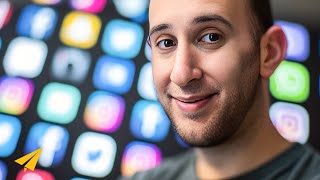
Evan Carmichael walks through building social media skills for a communications career: start by monitoring mentions of your name and industry, then move into conversations and content creation. Interview experienced practitioners to learn and generate unique material, like UK entrepreneur Michael Dunlop did to become an authority.
Chapters
Hi, I'm Evan Carmichael. Welcome to another edition of Ask Evan. Today I'm answering a question from one of my LinkedIn group members. LinkedIn is something new that I'm getting more and more involved in, and this is part of a B2B— what's the group? B2B Social Media Marketing, I think, something like that. Janice wrote in with a question to say, I'd like to learn the quickest way to learn about social media for business. I've been working in communications at a software company for more than 14 years. I haven't had to use social media because the company's market is very specialized and wouldn't require it. However, I'm currently looking for another job in communications, and while I have a strong writing/editing background in both English and French, I've never done Web 2.0. It seems to be a strong requirement for many communications jobs I see. How do I fill this gap quickly? So, great question, Janice. Thanks for it. It is definitely a skill set that is in demand, and that if you're looking for a job in communications, you're going to have to know, and the more you can position yourself as an expert, the better. In terms of getting started, I do actually have a worksheet to help entrepreneurs with their, with their social media skills, but I don't want to turn this into a sales pitch. You can check that out if you want, just off my site. But my main strategies for getting started with social media is first to monitor. So if you can't use it for your company right now, I would try to look at ways to use it for yourself. So I'd either look for ways to use it for your technology company, or look for ways to use it yourself and brand yourself as an expert. And I would first start by monitoring. So monitoring is basically looking for anybody who mentions your name, your company name, your website. And phase 1 is just recognizing champions. So this is how I got started into social media. My first avenue was through Twitter, and I thought Twitter was, was really stupid. Like, people are talking about their cats, what they ate for lunch. Why is this relevant to me. I did a search for my company name, the website, and I found that people were talking about my business and I wasn't a part of the conversation. And you want to be wherever your customers are, right? So phase 1 is just recognizing your champions and saying thank you. You know, everything was good. Fortunately, all the stuff that was about my website that's being talked about was all good. Awesome. But you always want to make sure that you're involved with your customers and you're hanging out where they are. So that's, that's kind of step 1, just monitoring key terms. And thanking people or, or responding to criticism if you do get any, uh, that are out there. The next step is I try to look for ways to get involved in the conversations that are happening and try to position yourself as an expert. So if you're now trying to get a job in a new field, especially in communications, it would help for them to see that you really know what you're talking about on social media. And so you could become, uh, or start becoming a social media thought leader and you can share your experiences with how you're learning about it. You can ask people questions who are more advanced in the field, start to build a Rolodex of contacts. You can potentially interview people who are really good at it and share their secrets, or interview people who are in the roles that you want to be at, or who are having success with social media at bigger companies that maybe that's where eventually you want to get to. You'll not only learn from them, but you'll, you'll build an expertise set yourself. People will look forward to seeing the content that you're creating here, and you're building a contact list of people who you can rely on if you have questions down the line. Eventually you wanna move from being the one asking all the questions to being the one also giving advice. And you can either do it from people asking you questions. You may not have any now, so, you know, all the videos that I do are coming from questions from my audience, so I don't have to kind of make up questions that come into me. But if you don't have an audience yet at the beginning, You can participate in forums, or you can look at other tweets that are happening, or other LinkedIn discussion groups, and instead of answering the question in that forum, you can create a video, or you can create a blog post, or you can create a LinkedIn post, and then make it detailed, show how you're an expert and you know what you're talking about, and link to it so people can then comment on it. So, it can be really scary if you've never done it before, just like any new thing. And it can often be overwhelming. And for, you know, for you trying to get into that field, it is a new skill set that you should ideally pick up. Again, I'd start off really simple, basic, put in words related to your current company and related to yourself, and just monitor at the start. And then slowly start to get involved in discussions, share what you think might work, but also ask questions and interview people who are experts in the field so you have unique content that you can share. And if you're part of this B2B social media marketing group that we're both members of. You can learn a lot from that group, but you can also, for people who you meet and connect with there, you could do an interview with them. You can learn from their success and you could post that content up on the LinkedIn group, and then as people read it, they'll come to associate your name with these awesome interviews and expert thought leadership around social media. One of my favorite examples of this is a guy named Michael Dunlop, who's a young entrepreneur in the UK. He started a blog called Income Diary that I don't think he's a part of anymore, or maybe his brother's running or something like that. But the start of it was really good where he was a young entrepreneur who basically didn't know anything about setting up an online business, and so he went out and interviewed some of the most successful people, people who became his mentors and guides about how to run an online business. And the first blog posts were basically just him asking questions, and eventually he became known as the guy to go to for how to run an online business, and he gained expert status even though he wasn't sharing the information himself. He was pulling it from these other people who he respected. And so in the process, he learned a lot about how to be an expert in that field. He made a lot of great contacts and mentors who he can go to ongoing for repeat information, repeat help. And then he was eventually able to brand himself as that expert so people would come to him as he learned through the process. So it's a great way to get started. To learn quickly by talking to people who've already done what you're trying to do and shortcut your way to success. And that's, that's kind of how I recommend you getting started. And I'm excited to hear about your progress and hopefully you'll post it either on YouTube or in our LinkedIn group. So thank you for the question. For those of you watching, if you like the video, please give it a thumbs up below. Makes me wanna do more for you. And if you have a comment about this video or a question about your own business or challenge you're facing, feel free to leave it in the comment section below. I always read those. I love seeing them come in. And I look forward to being able to answer them for you. So thank you, and I'll see you on the next episode.