How to MASTER Your Instincts in 40 Minutes | Jocko Willink’s Method
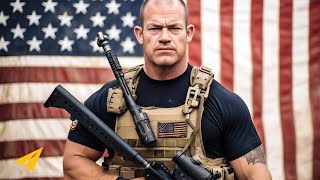
Jocko Willink explains how to master your instincts by training yourself to fight rather than quit. He warns against the "liar" instinct that urges surrender, teaches you to reframe adversity as good, and says the way to confront fear is to start immediately and do the thing that scares you.
Chapters
Discipline is your best friend. It will take care of you like nothing else can. Do not take the easy way out. Do not give up based on instinct. Take the step. Step aggressively towards your fear.
He's an American podcaster, author, and retired United States Navy SEAL. He received the Silver Star and the Bronze Star for his actions in the Iraq War. He started a weekly podcast covering topics like like leadership, exercise, and lessons from a former Navy SEAL. He's Jocko Willink, and here's my take on his top 10 rules for success. Rule number 6 is my personal favorite, and I'd love to know which one you guys like the best. Also guys, as you're watching, if you hear something that really resonates with you, please leave it down in the comments below, put quotes around it so other people can be inspired by your sharing, and also when you write it down, you're much more likely to lock it in for yourself too. Enjoy.
One of my direct subordinates, one of my guys that worked for me, he would, he would call me up or pull me aside with some major problem, some issue that was going on, and he'd say, 'Boss, we got this and that and the other thing.' And I look at him and I'd say, 'Good.' And finally one day he was telling me about some issue that he was having, some problem, and he said, "I already know what you're gonna say." I said, "Well, what am I gonna say?" He said, "You're gonna say good." He said, "That's what you always say when something is wrong and going bad. You always just look at me and say good." And I said, "Well, yeah, when Things are going bad? There's gonna be some good that's gonna come from it. Didn't get the new high-speed gear we wanted? Good. Didn't get promoted?
Good.
More time to get better. Oh, mission got canceled? Good, we can focus on another one. Didn't get funded? Didn't get the job you wanted? Got injured? Sprained my ankle. Got tapped out? Good. Got beat?
Good. You know Unexpected problems?
Good. We have the opportunity to figure out a solution. That's it. When things are going bad, don't get all bummed out, don't get startled, don't get frustrated. If you can say the word "good," guess what? It means you're still alive. It means you're still breathing. And if you're still breathing, well, then hell, you still got some fight left in you. So get up, dust off, reload, recalibrate, re-engage, and go out on the attack. I always say that Discipline is the root of all good qualities, but you have to absolutely apply it to things outside of just waking up early. It's, it's everything. It's working out every day, making yourself stronger and faster and more flexible and healthier. Discipline is eating the right foods to fuel your system. It, it's about disciplining your emotions so you can make good decisions. It's about having the discipline to control your ego so your ego doesn't get out of hand and control you. It's about treating people the way you would want to be treated. And, and doing the tasks that you don't necessarily want to do, but that you know will help you or help your team. It's about facing your fears. Takes discipline to face your fears so you can conquer them. And that's what discipline is. Discipline means taking the hard road, the uphill road, to do what's right for yourself and for other people. It's so often the easy path, the easy path that calls to us to be weak for that moment, to break down for that moment. To give in to the desire and the short-term gratification. But the discipline will not allow that. The discipline calls for strength and fortitude and will. It won't accept weakness. It won't tolerate another breakdown. The discipline can seem like it's your worst enemy, but the reality is discipline is your best friend. It will take care of you like nothing else can, and it'll put you on that path. The path to strength and health and intelligence and happiness. And most importantly, it'll put you on that path to freedom. People want to know how to stop the laziness, and they want to know how to stop the procrastination. And, you know, they have some idea in their head, you know, some kind of a vision of what they want to do, but they don't know where to start. They don't know where to start it, you know. They don't know where to start. And so they say, "Hey, where do I start? And when's the best time to start?" And I have a very simple answer for that. Here and now. That's it. You want to improve? You want to get better? You want to get on a workout program or a clean diet? You want to start a business? You want to write a book or make a movie or build a house or a computer or put together some mobile application? Where do you start? You start right here. And when do you start? You start right now. You initiate the action aggressively. You go, because the idea isn't gonna execute itself, and the book isn't gonna write itself, and the weights out in the gym, they're not gonna move themselves. You have to do it, and you have to do it now. And that means you gotta stop thinking about it and stop dreaming about it and stop researching every aspect of it and reading all about it and debating the pros and cons of it. Just start doing it. Take that first step and make it happen. Get after it and get after it here and now. A person's strengths are often their biggest weaknesses, and so that also means that their weaknesses can be their strengths. So me, I am weak. In all those ways that I listed, I am weak, but I don't accept that. I don't accept that I am what I am and that that is what I'm doomed to be. No, I don't accept that. I'm fighting. I'm always fighting. I'm struggling and I'm scrapping. And I'm kicking and clawing at those weaknesses to change them, stop them. Some days I win. Some days I don't. But each and every day I get back up and I move forward with my fists clenched toward the battle. Toward the struggle. And I fight with everything I've got to overcome those weaknesses and those shortfalls and those flaws as I strive to be just a little bit better today than I was yesterday. First of all, before the war, the military sent me to college. So I had to go to college. And I, as I said earlier, as I've said before, I was super focused when I went to college. I'd been in the SEAL Teams for 10 years. I was a go-getter. I was a hard charger. I was like, oh, you want me to read this book? Boom. I would sit down and just force myself to read it. And then got back to the SEAL Teams, and like, like when I went to college, I literally read every single thing that I was assigned. And nobody does that in college. Nobody does that. I read every single page of every single thing I was assigned during college. That's ridiculous. It's almost a waste of time. It's almost embarrassing. Echo definitely thinks it's a waste of time, but, but it was because I just could just lock my brain down and get it done. So then get back to the teams, and in the teams, officer in the teams, you have a lot of administrative paperwork to do, evaluations and after-action reports and all these things. And I would do the same thing. I just go into lockdown mode and I put my brain on it, and boom, I'd go through it and just get it done. I would just be able to focus. So like each thing, laser focus, laser focus.
That report, done, gone.
Report done. There's another kind of instinct that you need to be on the lookout for, and this one is a liar. This one is a saboteur. Well, this one is a backbiter, and like the devil himself, he's a shapeshifter. He's gonna disguise himself and make you think he's got your best interest in mind. But he doesn't. This is the instinct that says you've had enough. This is the instinct that says you've, you've, you've given it your best shot. You can, you can stand down. You can back off. You can take a knee. This is the instinct that says 'You can rest now.' Do not listen to that instinct. Do not listen. That instinct is a liar and wants to bring you down. That's the instinct that's a defense mechanism. It wants to give you an out, a place to run to. A little, little place of sympathy and amnesty. A little place of amnesty where everything is forgiven, where all these, these failures can gather together in comfort and drown their sorrows in lies and in deception. And they tell each other And they'll tell you, you did the best you could. Now they'll say the deck, the deck, the deck was stacked against you. And they'll say it's not your fault. And they'll tell you it's okay to stop. It's okay to settle. It's okay to to give up. And that is the instinct you need to fight. You need to push back, to smash into the ground. Do not take the easy way out. Do not give up based on instinct. If you are forced to stand down, to retreat, so that you can rebuild and reattack, so be it. But make that decision based on logic, not on the instinct of surrender and defeat. And you need to train that instinct. Your instinct. Train it to say, get up, go, fight on. And if that is what you become, if that becomes your fundamental reaction to adversity, if that becomes your gut instinct then you will overcome just about anything that stands in your path. There's been thousands and hundreds of thousands and millions of warriors that have been in very stressful situations and faced evil and faced death much worse than the situation I'm in or you're in that we might consider stressful. And I even did this when I was overseas, when I was on deployment, when I was a combat leader, I was feeling stress. And you know what? We took casualties and it was awful and it was heartbreaking. And, but there, were other soldiers and warriors throughout time that have been in much worse situations. Gettysburg or Vicksburg or the Battle of the Bulge. And, and all those horrible situations, they prove really that humans can withstand almost, almost unimaginable stress. Which meant to me that I could too, and you can. And the first step for me is doing that, taking that look to gain some perspective. And then in order to gain perspective, you gotta do something that we already talked about. You've gotta detach. You've gotta detach from the problems or the stress that you're experiencing. So that you can get that perspective of them. Now, there's a couple different types of stress. Now, if it's something that you can control that's causing you stress, well, why aren't you getting control of it? Now, there's also stress that's caused by things that you cannot control. And if you remember, cocking earlier about artillery and how horrible that was. And what made it so horrible was that there was no control over it. So if you can't control something and you can't get control of it, you have to at least embrace what you can. And I'm not saying you're going to embrace artillery shelling, but I'll tell you what, when it comes to things like artillery, or for us in Ramadi was IEDs, and we could do everything we could do to mitigate that risk, but eventually there's only so much you can do and you cannot completely eliminate it, but you can't control it. So why are you going to worry about it? Why are you going to stress about it? If there's something that's completely beyond your control, You cannot, you've gotta detach from it and not let yourself get stressed about it. And on top of that, if it's something that you can't control, how can you look at it in a different light? How can you see it in a way that you could actually take advantage of it? How can you take that stress and make it into some kind of ally? You know, the, The chaos of combat is something that I couldn't control, but I had to embrace it so I could try and figure out how to take advantage of it. So when it comes to stress, don't fight it. Turn it on itself and use it. Use it, use it to make yourself sharper and more alert, and use it to make yourself think more and learn more and get better and use that stress as a catalyst to make yourself better.
Your book isn't— I mean, it's thick, but I should have been able to read this in 2 or 3 solid days of reading.
Yes.
I told you how successful I was.
Yes, not very.
And that bugs the shit out of me. And it's a, it's a, it's a Uh, it's a fail. It's a, it's a—
you know what though, I think this is a failure on my part. I, I think that this is the same thing that we were talking about on the last podcast, and I think Echo said when you say, oh, you know what, I'm not going to finish this book right now, it's— it— I don't really want to. It's sort of like when you say, oh, I'm not going to quit.
No, it's not that I don't want to though.
That's what I'm saying. You say, but I don't want to do it right now. I can push it off a little bit. You accept that? You accept that answer? You accept that answer? The soldier Jody, right, wouldn't accept that answer. Would not.
Do you self-talk?
Not really, not really. I'm not a guy that says, you know, I'm gonna do this, I'm gonna do that. I just do it, right? I just go and do whatever that thing is. You know, I actually took this question from Twitter and I answered the question in one word. You've lived a life dominated by doubt and fear. How do you step into bravery? Step. That's how you step into bravery. Step, take the step. Step aggressively towards your fear. And that, that step towards your fear is the step into bravery. Because we're scared of what we don't know. There is only one way to learn and to know, and that is to confront that fear. You have to step, you have to go. And this simple action, this simple attitude, it answers so many questions. My theory here would be, if you're afraid of fighting and altercations, go train jiu-jitsu. If you're afraid of heights, work on some rock climbing. If you're afraid of the water, it's time to swim, it's time to surf, it's time to get out there. If you're afraid of pull-ups, if you're afraid of pull-ups, do pull-ups. If you're in squats, do squats. If you're afraid of public speaking, go speak in public. Mm-hmm. If you're afraid to start a business, Start a business, make it small. And on all these, what you have to do is you have to mitigate the risk and you have to ease yourself into it, but you gotta go for it. And eventually you will overcome that fear. Mm-hmm. But the hard part is you gotta take that first step.
Yeah.
You gotta take that first step to begin to inoculate yourself against the fear, against the fear of the thing that's in your mind, because that fear generally is in your mind. Yeah, you know, when you get up on stage to do public speaking, people are not going to throw tomatoes at you and say, oh my, you're an idiot, get off the stage. No, right, they're, they're going to sit there, you know, so there's nothing to fear. Yeah, it's in, it's in your head.
He's a large man. You're a small man.
Yeah.
I tweeted at Jocko and I asked him if you'd like to take part in a fitness challenge.
He graciously came with a counteroffer and said, "How about a grappling match?" For some reason, I said yes. And so here I am now in San Diego.
Get on top of him. Put your foot on his throat. He wants my head. He wants my head. Okay, you okay? He actually asked to get choked out, so there it is. Jiu-jitsu. Decisive victory. Uh, but yeah, you know, really honestly, it's just, uh, because I've been training for a long time and I have that skill set. You know, it's something that anybody could get. It's not because I'm special, it's just because I trained for a long time doing this. And if the world If the roles were reversed and he'd been training longer than me, you'd be doing that right there to me. That's the way it works. Even if I look like this and you look like that? Yeah, I'm more than happy to get a 135-pounder in here right now that'll show me what it's about. They'll do you worse than I just did you. I hear you. Do you want that? I do not. I got guys standing by that are hungry. I've had enough of jocko for one day. I don't need anybody else.
Thank you guys so much for watching. I hope you enjoyed. I made this video because Michaelangelo Raco asked me to. So if there's a famous entrepreneur that you want me to profile next, leave it down in the comments below and I'll see what I can do. I'd also love to know what did Jocko say that had the biggest impact on you? What clip did you enjoy the most and what immediate action are you going to take in your life or your business after watching this clip? Leave it down in the comments below and I'm going to join in the discussion. Finally, I want to give a quick shout out to Zaino. Thank you Zaino so much for picking up a copy of my book, Your One Word, and posting that picture online. I really appreciate it. Also Zaino, thank you so much for all the love you've given to the Believe Nation community for being a part of almost all of our live chats and just being a force for good in the comments. I really, really, really appreciate your support, man. So thank you guys so much for watching. I believe in you. I hope you continue to believe in yourself and whatever your one word is. Much love.
I'll see you soon. Nobody likes being evaluated, right? Nobody. Mm-hmm. Now you might get somebody that says, oh, I love being coached. And there are some people that are pretty positive about that. And as a matter of fact, I have clients where they want to be coached, right? But most people, especially in a normal environment— like if you go out and you hire someone to coach you, okay— but most people in a normal environment, they don't like being evaluated. They don't like being judged. Yeah, always judging. So the first thing you have to do when it comes to being evaluated is get that in your head, that you, like everybody else, has defense mechanisms, and they're gonna flare up as soon as somebody says something critical of you. As soon as somebody goes to evaluate you, your defense mechanisms are gonna go up. And then once that happens, once you feel those defense mechanisms go up, You got to put your ego in check. Mm-hmm. You got to put your ego in check. And then once you do that, you got to listen. Listen. I know it sounds crazy. Listen to what they're saying. Don't even— don't even think of a response. Say to yourself, you know what, I'm not even gonna respond. I'm only going to listen to what they're saying. Yeah.
But, and to kind of add to that—
You're already, you can't even take it.
No, no, I can take it.
Oh, okay.
I'm saying, but I think, 'cause people will quote unquote do that, but they won't really do it as far as just, I'm not gonna say anything, I'm just gonna listen.
Yeah.
They're— That's actually how they set it up too. Look, I'm not even gonna say anything. Exactly. I'm just gonna listen.
Yes, exactly what I'm talking about. It's like, you don't, or they'll all body language, you know, the kind where they're like, You know, they'll do that kind of stuff.
Don't do that. Well, don't do that. So, so you're right, you got to listen and not just listen, but truly listen. Not listen just with your ears, but listen with your mind and your brain and with an open mind, an open mind. And then think about what people are saying and then see it. This is important. See it from their perspective. Because if you just see it from your perspective, you're not even seeing what the criticism really is. You're only seeing the defense of the criticism. So actually get in their mind and say, wow, what does this look like from their perspective? Why would they be taking the effort and the risk and the challenge of trying to present this problem to me if it wasn't important? Are they just doing it just to make me mad? No, they're trying to help you. And you know what, just like, just like a joke, you know, they say like every joke has some little truth to it. Every little criticism, even if the person is your arch rival, their criticism is built on something. Something, yeah. So what is that reality that you can take away from it? Even though you got to take it with a grain of salt, especially if the person— like it says here— if the person has different opinions and motives. Well, of course they have different opinions. You want people with different opinions. Maybe they have different motives, so maybe you think they're trying to usurp your authority or something like that. So you maybe you got to take it with a grain of salt, but find the grain of truth in there too, and find what it is from their perspective, what the problem is, and learn from it. And one of the most beautiful things about this is you take the criticism and you make adjustments. You know, how do I deal with about being evaluated? I I try and accept the evaluation and make adjustments to improve myself as a human. That's how I deal with being evaluated. And I'm not saying I deal with anybody better than anybody else, because everybody gets defensive, myself included. Mm-hmm. You know, we had a little conversation when we started tonight, right? Sure. You said I repeated some stuff on the last podcast. Allegedly. And, you know, and then we talked through it, and then I said, you know, and, you know, I noticed that your camera work was a little bit off. And, you know, it was just the— my point was just to prove how defensive we all get. Can we all get— and you know what I did? I said, you know what, I noticed that too, you know. As far as me repeating, there was a couple little sections, and it was because we pulled— I pulled from multiple different books and they had a little bit of overlap.
Same thing.
Yep. And looking back on it, probably shouldn't have, but at the time I thought, you know what, this is emphasizing really important points. Yeah. But still, people don't want to hear the same thing over and over again, so I probably shouldn't have done that. So guess what? Criticism accepted.
Right on.
I will adapt, adjust, and I will make improvements to my game based on your criticism of my technique, my skill, and my life. There's so much knowledge out there, so much information, so many ways to get better, and we make, we make so many mistakes. We're the, we're the product of our mistakes, and oftentimes the lesson is sitting there right in front of our face. It's there to be learned, but we miss it, or we don't pay attention to it, or we think we know better until it punches us in the face. And the most important thing to learn is that we have so much to learn. We all do. And we can learn from school and from people and from experience. And we learn from life. But you have to process the information, you have to absorb it, you have to accept it, you have to open your mind, you gotta free your mind so that you can learn and make real progress. And as far as regrets and things I wish I would have done differently, of course hindsight— hindsight is 20/20. And looking back, of course, who wouldn't want to take another go at something and improve on the first try by doing it again? And then why not do it again and again and again? And why not just do it over and over again again until you have it perfect. But the fact is, you don't get that chance. You get one shot, one shot at this gig right here. Life. One life. That's all you've got. And regret in and of itself, it's worthless. It does nothing for you. In fact, the only valuable thing in regret is the lesson you learned, the knowledge that you gained. But walking around filled with regret gets you nothing. So learn and move on. Don't let regret beat you down. Don't be a slave to regret. No, let it teach you. Let it make you better. Let the fear of regret fuel you to take action. Today, now, to take action now to become a better person, not filled with regret, but filled with knowledge, filled with knowledge and strength and power, and filled with life with the man in the cave and this idea and this thought of the enemy. And, and that was a thought that used to drive me and kind of haunt me and make me get up early and work hard to push myself because I knew that somewhere out there, there was an enemy, a real enemy, a real man, a person, a human that was waiting for me, that was preparing for me. And therefore, I needed to prepare for him. I needed to be ready. I needed to be the things I always talked about. I needed to be stronger and faster and smarter and better so that when we did meet on the battlefield, I would be ready for that rendezvous, for that meeting, that fate, that battle. And that thought, that thought of the enemy, it— yes, it absolutely fueled me. And when I was a leader in the SEAL Teams, in charge of men, it was even more profound because I was thinking about that rendezvous for everybody that I led, everyone I was in charge of, everyone that I trained. And I felt that burden, the burden of responsibility to prepare those men and protect those, those men, those, those frogmen, those warriors, my brothers. And it, it was my burden to train those guys and prepare them. And that burden, it may have made me a little bit crazy, a little bit paranoid, a little bit over the top. But I didn't really know any, any other way. And so now I am no longer a combat leader. I no longer prepare men for war. So the drive and the motivation is from a different place. It's from a solemn place. The drive now and the motivation now is not really from the enemy anymore. Now it's from my friends, my brothers. It's from those seals that I knew and that I cared about. More than anything. And that they sacrificed everything for us, for me. And those guys, they gave their lives for us. And now I cannot help but think and remember that every breath that we take is a— it's a gift. It's a sacred gift from those men. Every day we have, every sunrise, every thought and every smile and every laugh, it's a gift. And I will treasure that gift, that gift of life, then I will not let it go to waste, not one second of it. And I'll cherish every moment of it, and I will live it. I will live it. In their memory. In their honor.
More from Evan


How the Biggest Mistake in History Created A Trillion-Dollar Empire | Sergey Brin



9 Machiavelli Principles That Force People To Respect You | Machiavellian Philosophy



The First 10 Words That Instantly Ruin A Sales Conversation | Vanessa Van Edwards

The Top 1% Mindset Behind The First $5 Trillion Company | Jensen Huang (Nvidia)

