How to Model Success and Achieve Breakthrough Results! | Tony Robbins | #Entspresso
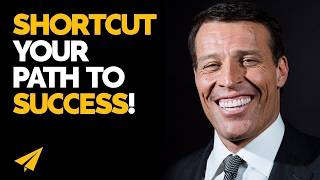
Tony Robbins and Evan Carmichael explain how modeling success works: study how others solved problems you face, then adapt their tactics. Carmichael landed his first $13,500 deal by copying Bill Gates' partnership approach. Sam Walton, Quincy Jones, and Shawn Mendes all used the same shortcut.
Chapters
I believe in modeling. I believe success leaves clues.
Whatever problem is in front of you in your business, in your relationships, in your life, your career, someone has already faced it and already has solved it.
We knew so little about the variety store business that we had to take the book that was written by Ben Franklin and apply the principles.
Rise and shine, it's Enspresso time! Good morning, Believe Nation, it's Evan. My one word is believe, and I believe in you. I believe you have an amazing gift inside you that I want to explore that onto the world. So let's start your day off right together. Grab your coffee and sip on today's message: Model Success. Over to you, Tony Robbins. How did you go from basically not having a hot meal to, you know, basically being a guru, an international guru doling out financial advice?
Well, essentially, I was just— Worth magazine just named me their Power 100, was the 100 most influential people in global finance, along with Carl Icahn, the guys I interviewed. But part of it is I believe in modeling. I believe success leaves clues. If someone has done very well financially for decade after decade, they're not lucky. They're doing something different. If someone is fit and healthy and they've managed it for 20 years, they're like, if they got a great relationship, they're not lucky. So I'm really good at deciphering what those things are. So I would go sit down with someone like Jack Bogle you know, who built, you know, a $3 trillion industry, right? You know, and what he's doing there at Vanguard. And I'm supposed to have a 45-minute interview and we go 4 hours. And he says he's been in the business 65 years. And in the book he says it was the most penetrating emotional interview he's ever done in his life. 'Cause I kind of extract it outta their brain and then make it simple so you can apply it.
Whatever problem you have right now, someone has already figured it out. Whatever problem is in front of you in your business, in your relationships, in your life, your career, Someone has already faced it and already has solved it, and it may have taken them decades in some cases to solve it, and you can learn what they did, apply it to your situation, and in minutes have a solution. This is the ultimate shortcut to success. It's why I named my channel, my YouTube channel, Modeling the Masters, because my goal was to be able to model people who've done a lot more than me and hopefully speed my path forward and take you guys along my journey with me. I always say that Bill Gates saved my company, my first company. Now, I've never met Bill Gates. He's still alive, I still may get my chance, but I never met Bill Gates, but he personally saved my company because when I was struggling, when I was making $300 a month, when I couldn't survive in my company, when I didn't know what to do, when I said I quit on my partner because I wasn't getting results from my company, after that worst day of my life, I woke up the next day and said, I said, you know what, somebody has solved this. Somebody has figured out how to sell software. I'm not the first guy in the world to try to sell software. Who's already done this and how can I model that success? And so I looked at Bill Gates and how did he make his first million dollars? And I applied that strategy. For him it was partnerships. And within a couple weeks I had my first deal with $13,500 and that was, that was gold to me. That was insane money for me at the time. And more importantly, I had a method to continue to make more money, form more partnerships, bring that more into my company. And I learned that just by reading his story. By all of the struggle and energy and effort that Bill Gates went to to build Microsoft, here's a strategy that worked for him. I can learn from that and immediately apply it to my company and start seeing some results. It was crazy. And so it's how I approach every new problem that I don't know how to solve. Instead of just trying to come up with every genius idea myself, look at who's already solved it and apply it to my situation. Now, it'll always need some tweaks. The way it worked for Bill Gates is not the exact way that it works for me, but he took me 90% of the way. I just had to figure out that last 10% instead of trying to figure out the entire 100%. And so whatever challenge you have in front of you, whatever it is, whether it's I want to launch a YouTube channel, whether it's I'm trying to figure out how to turn my side hustle into a full-time business, whether it's I'm trying to build a better relationship. Whatever problem is in front of you, you are not the first person to go through this. Millions of people have gone through this. Learn their stories, whether it's reading the biography, whether it's watching a top 10 video, whether it's listening to a podcast, whatever form you like to learn best from. I like video. I like— I'm a visual person, so that's why I make so many videos for this channel. Whatever format you like learning most, go out Find the people who've done it, learn from their strategies, try it, tweak it for yourself, and solve the problem. And then move on to the next one. And try to make that your default template. Whenever you are faced with a problem that you do not know how to solve, yes, you want to bring your own creativity and ingenuity to it, and you want to look at who's already solved this problem. Because it will shortcut your path to solving it. So I have a special bonus clip for you guys, but before getting to it, I have a question of the day for you, which is: What is one thing that you have modeled from somebody else and have had lots of success with? I'm really curious to hear from you. Please leave it down in the comments below. Thank you guys so much for watching. I believe in you. I hope you continue to believe in yourself and whatever your one word is. I'll see you again tomorrow morning for another shot of espresso, and enjoy the bonus.
I wake up every morning, espresso keep me going.
Neither one of us knew the business.
True.
We knew so little about the variety store business that we had to take the book that was written by Ben Franklin and, and apply the principles and apply the controls and the merchandise, uh, merchandising programs that, that they outlined for us. But of course, knowing you and knowing I myself a little bit We added on, didn't we? That's, uh, that's exactly right. But, uh, we were mavericks even then, and we started doing strange things like cranking up ice cream machines on the sidewalk on Saturday night, popcorn on the other end of the sidewalk, hawking anything we could hawk on that, uh, looked like it might have a chance to sell wherever. It made an easy life, actually. We worked hard. That's right. But, but it gave us a, a vehicle to to ride on. That's right, exactly. Without, without having to buy merchandise, you know, ourselves all the time, or distribution centers, not having to do the thing we'd had to do when we built Walmart.
But I also grew up watching people like Paul McCartney, you know, and, and, and what Michael did for performing in general is— that's, I think that's what you're talking about, is like stage performance on stage. Why we really fell in love with Michael was because he He just like, it wasn't even about captivating you. Like, he did something to your blood when he performed on stage. Um, but there was always a thing about him on stage where you like, you can't touch that. Yeah, like you can't, you can't. That's what made it so, that's what made it so grandiose. And then you mix that with people like Paul McCartney who Have you seen him recently? Well, I saw him at like 70.
Yeah, I saw him at the Grammys when they did that.
Okay, the guy's like 70 and he plays for like 3 hours, stadiums, and he— and it's like you feel like you're in his living room. And he— the only pause between songs is like so he can put a different guitar on or, you know, get down on the piano, and he talks. He has people laughing in the crowd and And so when you think about those two sides of being on stage, that's what I grew up idolizing. So that's something that I've always wanted to incorporate. So when you go, you know, when it's about, you know, a song like Señorita, it's like I only want to play the end of the song because this is the song everybody can sing to each other and you can feel like, you know, it feels like a block party all of a sudden. And so those are always the two things that I was able to pick up on when I was younger. And like, those are my favorite two. And they're both on the opposite ends of the spectrum when you really break it down like that. But those are my two favorite things to do at a show is to make people go like, damn. And then to make people go like, you know what? I'm having fun. Yeah, you know, like those two things.
We try to play like Miles, try to play like Charlie Parker, like Pat Navarro. And you— and when you come out of that, there's 10 different people, and your personality is going to finally transcend— not transcend that, but, but, uh, morph into its own personality, because it is a personality. And if you are— have, have traveled the roads of all the great people— but I think that happens with anything. If it's a cameraman, you know, you look at, uh, Serrano or whatever, you know, all your favorite people, and just deal with just the best. Or like classical composers or whatever, and, or people that deal with drama, you know, with the elements of drama, because they all do it a different way. And jump into it, jump all over it. I'm serious, you know, just don't be bashful, jump into it, try to copy it just like it is. I mean, I mean, you can't do this on a professional level, but I mean in training your mind, you know, to think on that level, the highest level. Go with everybody from Johnny Williams to Goldsmith, you know, to Alan Silvestri, you know, Stanley Clark, everybody.
Raise your standard.
Apple, at the core, its core value is that we believe that people with passion can change the world for the better.
Not one drop of my self-worth depends on your acceptance of me. I don't ever give up. I'd have to be dead or completely incapacitated.
Hey, Believe Nation, if you want to see my all-time favorite top 10 rules of success, I have a very special secret video for you. These are the individual clips that I have personally learned the most from and applied to my life and my business. Check the link in the description for details.
More from Evan


How the Biggest Mistake in History Created A Trillion-Dollar Empire | Sergey Brin



9 Machiavelli Principles That Force People To Respect You | Machiavellian Philosophy



The First 10 Words That Instantly Ruin A Sales Conversation | Vanessa Van Edwards

The Top 1% Mindset Behind The First $5 Trillion Company | Jensen Huang (Nvidia)

