How to Scale a Purpose-Driven Business (Without Losing Heart)
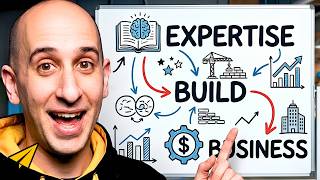
Evan Carmichael coaches Dr. Tiffany Troeso, a retired oncologist, on scaling her business to help cancer patients and caregivers navigate doctor conversations. Her model spans a book, two courses, a podcast, concierge services, and a community platform. They map out a content strategy using batch-filmed videos, a virtual assistant, and systematic follow-ups to stay top of mind with referral partners.
Chapters
Tiffany is a medical oncologist on a mission to empower women facing cancer. After 25 years treating thousands of patients, she saw a huge problem. Doctors and patients weren't speaking the same language. Tiffany came to this coaching session ready to build a business that bridges the gap and saves lives. We break down how to turn her knowledge into scalable courses, content, and services that actually reach the people who need her most. You'll see how to grow without losing the personal touch. If you're a purpose-driven expert ready to lead with your heart and scale with strategy, this session is for you. If you've been here before, drop a hashtag #Believe in a comment so I can feature you here in a future video. And if you're new, welcome to Believe Nation, the only channel that helps you believe in yourself daily, one video at a time.
My name is Dr. Tiffany Troeso, and I'm a medical oncologist. I have worked in the medical oncology space for over 25 years. I was at Memorial Sloan Kettering Cancer Center for most of that time. I have recently retired I'm starting my own venture with a company called Winning the Cancer Journey and Second Look Oncology. I joined Movement Makers because I wanted to increase my reach. I want to be able to help as many women and their loved ones with cancer as possible. I've seen that there's an enormous need in the population for understanding cancer care, cancer treatment options, as well as wellness surrounding having cancer and survivorship. So as an oncologist, as a practicing physician for over 25 years, I have seen thousands of women in the clinic, treated thousands of women with cancer, and I have always noticed that there is a very large divide between what the patient knows and what the doctor is trying to tell them. And I often find that that divide is what causes so much of the stress, anxiety, and fear. And I feel that by increasing everyone's education, I can help promote confidence. I can help promote calmness during the treatment as well as through the entire cancer journey. And so therefore, I have a very big message that I want to spread, that I want to spread.
And I joined Movement Makers so I could spread that as much as possible.
Movement Makers has really helped me to begin and to develop my podcast. I'm so excited about where it's headed, and I have learned so much from Movement Makers.
Dr. Tiffany in the house, how you doing?
I'm wonderful.
How are you, Evan?
Thank you so much for having me today.
I'm great. So Tiffany is a part of our Movement Makers community. As part of that, we're, we're doing this live together too, which will be fun. What's on your mind? How can I help?
I think you know a little bit about me, the fact that I'm a medical oncologist and my mission is to basically help empower, educate women with cancer. And I just found as a medical oncologist taking care of 25, for 25 years, thousands of patients, that there was a big divide between what the doctors wanted to accomplish and what the patients could understand and really work with. And so I'm trying to fill that gap and help patients become more empowered so they can participate better in their care. So I have a big mission and I have lots of women that I'd like to reach. And I wanted to talk to you about your ideas on how to best build out my business, how to get my brand so that I can become a thought leader.
So what's the main thing you're gonna be selling then? Is it books? Is it courses? Is it speaking? Is it training other oncologists? What are we selling?
So pretty much all of that except for the training component. I have a book that I am sitting on to publish soon. I'm hoping to build my audience a little bit more to make sure that it's received because I think that this book can help thousands of women. It essentially walks people through their whole journey with cancer from a physician's experience. And so I think it's extremely helpful for patients. It comes from years and years of my own expertise So I have a book, I have an online course, and I have a wonderful community that I'm building to be supportive for other cancer patients as well as their caregivers. And I would like to speak. I need to get out there and, and really help influence people so that they understand the components of how to be the most successful they can during their cancer journey to get the best outcome that they could possibly get.
And the course you have is designed for women going through cancer right now?
I have two courses. One is for women going through cancer and also one for the caregivers to help women's caregivers who are trying to help point them in the right direction, help give them guidelines, help give them support and how they can best manage their own situation vis-à-vis the patient.
And is the main business model going to be selling the course?
The main business model is to be selling the course, but I also, I'm also doing one-on-one concierge oncology second opinions. So a patient has a diagnosis, new diagnosis, or say they have a point in their time of their treatment that they need to make a treatment change. At that juncture, I would be a very valuable resource because what I can do as an oncologist from Memorial Sloan Kettering for 25 years is review all of their records, help them understand them better, help them understand their choices, and then also to help provide second opinions. So that's, that's really where I think some of my business is going to be developed, but also with those with the idea that I can build it out in a larger framework so that I can attract and help more people with the, with an evergreen type of a video course.
And then who hires you then for that? Is it the family? Is it the woman who has the cancer?
Yes, correct.
They're hiring you as a second opinion. Okay. And then so content-wise now, what are we doing? Biz Dev show? We're doing Buy Breakthrough videos? We're doing thought leadership content? What are we doing for content right now?
So for content right now, I've been doing my podcast that I began on YouTube under your direction, and I've been bringing in thought leaders on that. And basically it's called The Empowered Patient, and I am bringing in people that— it's, it's more or less a biz dev type of a program where I am bringing in different thought leaders that will be of interest to my clients and to my potential patients, and also so that people can learn about the inadequacy basically of our healthcare system and how to best navigate it. So I've been speaking to a lot of concierge physicians, people that work in sort of the ancillary spaces where we do mindset, we do physical activity contributing to overall women's health during cancer. But I've also been doing some thought leadership types of pieces where usually on social media I'm posting interesting articles and explaining them to people in sort of a layman's fashion and trying to let people understand things about oncology that might actually contribute to their health.
Awesome. Okay. So the podcast or the Biz Dev Show, these are people who could potentially refer you people for your courses and services?
Yes, yes, absolutely. Right.
And that's already started?
Yes. Yep.
Perfect.
Slowly, slowly.
Slowly in terms of getting referrals or slowly in terms of getting people on the show?
Both. So I have a very wide network already and I sent out emails to a lot of them and I have met through this process several people that I think are very interesting and wonderful for me to interview. I have not yet gotten any referrals yet for new patients, but I'm still building.
Do they know what you do? Like they know you have courses, they know you do concierge services, like in the interview and like afterwards you told them, here's what I do, I'd love to be a second opinion.
I think that the— I have 8 videos so far in my podcast, so I'm pretty, I'm pretty new to the system, but I do bring it up. I do talk about what I do. I think where I am lacking somewhat is in the follow-up after the interview and also systematizing getting those Shorts out to Instagram, for example. So I need to set up a better system, I think, in which that can happen more automatically.
So, I mean, for that success to work, I mean, you might get something right away if they have somebody, but these are all busy people who probably like you now, hopefully. I mean, you just spent half an hour with them on an interview. They probably like you after doing it.
Sure.
Right. Uh, and so, but they may not remember you a month later, 2 months later, 6 months later, right? So they have, just like you, I mean, if you're talking to somebody and then 3 months later you may not remember everybody that you've, you've talked to for the past 3 months.
Sure.
So staying top of mind is critical for referrals cuz it's not that they don't like you. It's just that if you're not top of mind when they have somebody coming in the door, you don't get the referral. So the, the once a month clip that you send— yep, is just set a date. Like, if you've done 8, then the first 8 days of the month get assigned to 8— those 8 different people, and a new clip goes out to them. You could do all the clips up front in advance. Like, you could just pop it all— even open clips, open clips today. Yeah, get 30 clips, 10 clips, whatever. So you get it all done in advance and then just on the, on each day you're sending somebody a new clip.
Yes.
But you're staying top of mind. It's like you're leading with a give each time, right? And so they're gonna like, this Dr. Tiffany is amazing. Every, I check, they almost, they're almost like guilty to not help you back some way because you're, you just keep doing their job for them on social media of giving them clips. Cuz everybody's trying to build their own brand and they probably haven't been interviewed that many times, if ever. And so now you're giving them content, which is maybe the best content they've ever had, that then they can share. Right, right. So that's key in the follow-up. I mean, yes, keep bringing on. So usually like, are they the right people? Can these people potentially refer business to us or not? That's a— we're not just bringing on our friends or people who you can have a good conversation with. It's, can they, will they, do they have people who have, or clients of theirs that could refer you business? Cool. Do they like you? Hopefully yes. You know, and then in the follow-up to, every month sending them a new clip. So you're staying top of mind with them. So if that's running cool, then it's now just tweaking it and making it a little bit better in that system.
Yeah.
For the thought leadership stuff, it's so interesting because it's so, man, in this space there's so much confusion. I don't know if we want to call it misinformation. Somebody says do this, somebody else says do the exact opposite. It's like, who do we trust? That's going to help us, right? It just sounds so crazy. It's like, eat a keto diet. The keto diet is the worst thing for you. Eat whatever the protocols are.
Eat protein.
And so whenever there's so much different opinions, trust becomes important. So that's where the thought leadership stuff can really play in.
Sure.
When you said that you're doing content on articles, so something's come up and then you're again, most articles, scientific journals, are meant to be understood by someone like you with 6 degrees behind you, right? On the wall, where I read it like, what am I looking at? This makes zero sense. It's so confusing, right?
No, but my job is to be able to explain it to people like you who have Doritos on the wall. Yeah.
Well, you know the story behind the Doritos?
Tell me. Tell me. Tell me.
So if you go to damnedoritos.com, you'll see the Doritos. But this is actually— it's actually a big bag. It's a Costco size, like half human size bag. When you're on a diet, people say get rid of the junk food from your house, which I think is fine for step 1, but there's a little voice inside my head that says I don't like making decisions that make me feel weaker. So it's basically me telling myself that I'm not capable of being around the Doritos. So I don't like that. And so Doritos are behind me. People say like, why do you get sponsored by Doritos? Can't you get a healthier sponsor? If they knew why, they would never sponsor me because I want to— it's a reminder to myself that I'm stronger than the Doritos every day.
I love that.
So I look at that, it's my own pat on the back that, hey, I didn't eat the Doritos because my mouth is watering just thinking about the Doritos behind me. I would eat that entire bag, no problem. But I'm not going to because damn the Doritos. So, yeah, damnthedoritos.com is a more detailed explanation of it. I love that. But you're right. Most people are just eating Doritos, eating junk food, don't understand the science. And then when it's just— they get so overwhelmed that then why even bother? Okay. I don't know what to do. So when you're doing that right now, what's the format? So you see some article in a journal that comes out. How are you sharing it right now?
So I just posted actually the last 5 minutes of our meeting. So I have an article that came out yesterday. It was very, very interesting. It was sort of the intersection of functional medicine and sort of allopathic medicine, which is what I kind of learned. And basically the article came out in the Journal of American Medical Association, big journal, and it was all about the gut microbiome and its interaction with the patient's cancer and cancer treatments and how by having a very healthy microbiome and not taking antibiotics and eating a high-fiber diet and things with— things like sauerkraut can help promote your microbiome, which is basically bacteria that live in your gut, and how the healthier the microbiome is, the more effective the immunotherapy will be and how more effective that you will actually be able to control your cancer with your own immune system, et cetera, et cetera. And so I basically just not dumbed it down, but I wrote it so that I was explaining it to a patient, right? And this is why—
Where did you say that? Where— what's the format? Where did you post it?
So I made a picture of, you know, a diet, like just a creative diagram. I think I used ChatGPT to create a diagram of the gut microbiome just so it was a little picture with it. And then I put in like a, you know, 100-word description of the article and explain why I thought it was important and why I thought people should know about it.
And you posted it to Instagram or LinkedIn?
I posted it to LinkedIn. Instagram is a little bit more of a challenge for me because you can't just throw posts up there. You gotta make a carousel or you gotta make a reel out of it or something. So this gets a little more complicated, but—
Are you like a natural news junkie for your space?
It's part of my job and part of my profession to stay up to date with interesting things that come out. There are other physicians in my space that will post I will talk about, you know, every article that comes out about breast cancer. I haven't been doing that quite as much. I've been trying to pick, pick and choose for more of a general population, but I could, I could funnel down to, you know, one thing like breast cancer advances.
So one content format that we don't talk too much about is what we call culture videos. So you're talking about what is in culture and you're basically reacting to something that is in culture. And that could be a news article. And typically, I mean, journals may not be the best title, but like news articles typically have great headlines because they're in the business of capturing attention with headlines. And so if there's something that came up in the New York Times or USA Today or CNN or whatever, that then you pull it up and react to it and it's a video. Yeah. So you're taking the same headline and then you do a Zoom screen share, Riverside screen share, whatever your preference, and you react to the content. So you load the article and then you talk about it, whether it's good, it's ridiculous, you agree. I mean, usually just this is completely right doesn't do as well as what's wrong. Right. Of course, if you're naturally already doing that and looking at content, then it's an easy content format to follow. If you make long form for YouTube, then that's easy to take the transcript and turn it into a LinkedIn post, to take some captions and turn it into an Instagram post if you wanted to. But if you're already naturally looking at news and commenting on it, I'd explore doing a YouTube series talking about it. Just turn the camera— I mean, you're in your office, you look great. Share screen. You're barely like— it's not about, uh, you and how entertaining you are, although, you know, you speak a lot better than a lot of doctors, which is great.
Well, thanks.
But between that and the more, uh— have you— have we worked through growth videos yet with team?
Not, not specifically.
Okay, so you do thought leadership. It's, uh, like, if you— the growth videos are— we're looking at videos that have done well in other people's channels that have more views and subscribers. So What in this niche of women with cancer? I mean, that's a niche, but that's giant. You're like, how many women have cancer just in America right now? It's an insane number, right? So it's not like some tiny little micro niche that you're a part of. What are the videos? And then you take the similar, you take the same title and you make your version of it. The actual video doesn't matter. You don't have to watch their video. It's just a good title so that if somebody is watching that video, we want our video to show up next. So we're going after people, they're already watching content, they're curious. People go to YouTube to learn, right? Where are they going? They might go to ChatGPT or they're going to YouTube. They're trying to learn from experts. And so they watch your video or they're watching somebody else's video and then yours shows up next. That combination, like if you had the podcast is more focused on shorter-term revenue and relationships. But the videos aren't expected to do— we don't care how well they do. And the people you bring on may not be the best speakers or the most entertaining or have the most dynamic thoughts. It just serves a different purpose. The goal isn't mass viewership. The goal is relationship building. But then if you mix in the culture videos and the growth videos on the thought leadership side to start seeing you, because when you're doing an interview, you're not the expert. You're asking questions.
Right.
So the point of that is to build a relationship that leads to referrals, right? And karma, I guess, is having good relationships with people. But the thought leadership stuff is meant to showcase you as an expert, not just the person kind of who asks questions and hosts a health show, right? What is a good— I mean, the articles, it's when it comes out, right?
Like, you can't just say, okay, today, honestly, I could find something interesting to talk about almost every day if that's something that I should be doing, especially because we're heading into the month of May and June where the big national cancer conference is happening and so things will be coming out like wildfire. And so, yeah, no, I could definitely create lots of content from that.
If you started with long-form YouTube reacting, then you could take that and turn it into a LinkedIn post. You could take a smaller version, turn it into an Instagram post.
Yeah.
As long as it feels— a lot of people struggle because they're not staying on top of the news in their fields. And so it feels like pulling teeth because I don't know, I don't watch the news. I don't know what to talk about. But if you're already following it, yeah, and that's already being talked about right now, then that could be, I would definitely throw it in the mix. So you have your podcast. Yeah. Then you have the news or culture videos, and then you have the growth videos where we're tying into what's already done well in your space and making your version of it. Okay. Then there's that, then there's like, what's a reasonable balance for you? You know, your comment in Movie Makers earlier today about like, I'm doing everything. I'm, I'm a one-woman show. Oh my gosh. How do I, where do I spend my time on everything? Right.
Sure, I wake up every morning trying to go, all right, what am I doing today?
Yeah. So what's a reasonable balance that makes sense? I mean, as you grow, team can handle some of the things, but team is not gonna be reacting to the news and making a culture video. Like, you're the expert.
Sure.
And this kind of content also is, you know, the editing and the, like, it's not why people are watching the videos. But if they're watching your video and there's some woman climbing a mountain, B-roll with epic music, that's not why they're watching your content. They're coming to learn. So the most important thing isn't editing, but is you sharing something that just shifts my thinking. Because what you do actually saves lives. It actually saves lives, right? I mean, I help entrepreneurs. It's great, but you're actually saving lives, right? And if people don't have access to that information, might take a different approach and then they're not alive. It's a big deal. What is a reasonable mix for you in terms of thought leadership videos around growth topics? So somebody made a video on the 8 ways to treat your cancer. Okay, so you're going to make a video called the 8 ways or 7 ways or whatever to treat your cancer. I don't know how long that takes for you to kind of prep and get ready for versus just doing it. Usually a culture video is easier to do because you're reacting to something instead of, oh, okay, what are the 8 ways? Now you gotta think of the 8 ways and have a sticky note or something and it takes a little more prep work typically.
Sure.
But when I'm working with someone, I'm always trying to figure out what's the fastest path to getting traction? Because if a video takes half a day to make one video, that's like slowing us down a lot. What's a good balance? What feels right for you?
If I could get somebody to help me process the videos, put them together, if they have to be multiple takes, if they could put them together and put captions on for me and put the article in the background and then post it, I can make the videos very quickly.
Okay.
So I need somebody to do that.
I mean, that's a part-time VA who can help you with that. Yeah, sure. That, I mean, I don't know if you want to hire overseas or, you know, American, but that's a, you know, $5 to $10 an hour job.
Yeah, sure.
It's also the mistakes in the middle don't matter that much. It's just the beginning. So I would spend a few seconds thinking about how do I want to start this video? And even if you have to do it 4 times, the first 30 seconds really matters of a video. So there's an article that just came out and you've got all this cancer research coming out in the next 2 months, right? Okay. An article comes out, like, what's a headline or what's an article that might come out that you might react to?
Most effective sequencing of different cancer treatments in a woman with breast cancer.
Right. Okay. So an article comes out like that, right? So now you're going to load the article up and you're going to talk about the most effective sequencing for women with breast cancer. Okay. What's your opinion? What do you believe? Is this article great? Does this article completely miss the boat? Is their sequencing totally wrong and it's going to hurt? Or it's like you 100% agree? Whatever your most important opinion is, it's worth spending 5 minutes to collect yourself, think, here's what I believe about this article. And then say that. And the first 30 seconds you might do 4 times. That's 2 minutes, right? Right. So you're trying to get the words out right, plus the right emotion and energy. Because if you say the right words with zero energy, then it's not going to perform as well.
But I'm pretty Italian though, so there's usually a lot of energy there.
What part? My mom was born in Italy.
My father's family came from Italy.
What part?
You know, actually, it seems to change. I haven't really gotten it straight. I think they said Sardinia.
Okay, great. So if you did the first 30 seconds 4 times, and just don't stop the recording, just keep doing it. Once you get through the first 30 seconds, they're like, oh, that was really good, then you just keep going. And if you make a mistake or you stumble, just keep going. Like, it doesn't matter. You're not killing your retention. If you're doing a, I don't know how long, if you're doing a 15-minute reaction to an article, you're gonna walk through the points. You would have to make a mate, like you'd have to spill water on your computer or fall out of your chair or like do some mate. Like that doesn't need editing, right? Just talk to me. And if you make a little mistake somewhere in the middle, it's fine. You're human. Like I'm getting to know you. That first intro really matters and then the rest almost doesn't matter. The thing that matters is are you actually an expert? Like are you teaching me something? Because if I'm sitting there I'm watching a 15-minute video and I learn nothing, okay, that's a problem. But I think you know what you're talking about, right? So that should be good. So the editing side doesn't matter as much. And if you make a ums or mistake, like, just, you just keep going with it. So then it also, if it's, if you're doing it, just post. And if you're having team do it, I also wouldn't want them spending 3 hours editing, you know, a 15-minute video of you. Right. And so it's self-editing the beginning of you just saying whatever your powerful opinion is. Do that 4 times.
Yep.
Get, get the last version to the point where like, that was really good. And then just keep going. And that's your content. The reacting is probably easier to do because you have a, it's not a script, but you have a visual aid to go with cuz you're reacting to whatever the content is. Sure. The 7 ways to navigate breast cancer. You might be able to just pop those out, but you might also have to think about what are the 7 ways. How do you usually plan that process? Like, if that was a video, the 7 steps to dealing with your breast cancer, what would you— like, could you come up with 7 steps quickly, or is that going to take you half a day to script?
No, I could come up with those off the top of my head.
Okay. Usually you'd say like sticky note, if you—
right.
So sticky note would be like, what's your opinion? What do you believe about healing from breast cancer that most people don't believe?
I believe that managing your inflammation and your stress helps to interact with your body's own ability to heal from the treatments and from the cancer, and that it's important to keep an even keel.
Okay. So you have to be careful how hyperbolic we get because it's medical. And so—
Did I go too medical already?
No, I would go more hyperbolic, but there's limits, right? Right. Sure. The reason why you're not healing is because you're too stressed out.
Okay.
Can you authentically say that? Do you believe it? Is it too hyperbolic? Right. But a clear— like, you're not healing from your cancer right now because you're too stressed out. Or the number one thing that will help you heal from your cancer is reducing your inflammation. I'm pulling at things. It's got to be authentic to you what you actually believe. But that would be for making that video. That's your first sentence. Something powerful like that. And you can write it down and then just list what the 7 things are. Number 1, we're going to get proper sleep. Number 2, we're going to put on a sticky note. Like, you don't need a whole script, but just so that you're not in the middle of the video with like, okay, hold on, pause, let me think, what is point number 6? Right? But if you think—
I got number 1. You know what number 1 is?
What's number 1? Sleep.
You come first.
Oh, there you go.
You must come first.
That's a nice left turn. I like that.
Thank you.
Yeah, but that's exactly it. It's like most people would say something else. Diet, exercise, sleep, vitamin D, sunshine. You're flipping it, which is great. That's the whole point is that we get a little U-turn there. Like, oh, I wasn't expecting that. Huh, I wonder what else she's going to say. Let me watch the rest of this video.
Sure.
But that's the whole point, right? Right. So if you can get that, it should fit on a sticky note. Your one sentence, like, the number one reason why you're not healing is because you're too stressed out.
Cool.
And then whatever your 7 points are, then just point form so that you can refer back, because you could talk to each of those, right? So you could say, put you first, point number 1. You could talk for 5 minutes, 4 minutes, 3 minutes about what that means, right? You don't need to have that all Perfect. Great. Like, this is where it's great if you're actually an expert like you are. So if you can mix it up between those 3 formats and see what starts to— again, I don't want you spending, you know, 2 hours to make a 15-minute video. It can't take that long. It's gotta like, trust yourself, trust your instincts, trust that your content is good, trust your knowledge. And the more reps you put in, the better each one's gonna get. The thing that matters the most is just the first minute of that video. Um, so podcast, you're doing it. Biz Dev Show, awesome. We're just gonna be a little more, uh, follow-through on, on the, you know, every month sending them something. Um, culture videos, those news articles, share screen, talk about it. And then growth videos where you're seeing what's already working in the space and making your version of it.
Got it. Even wrote it all down.
There you go. It's a little bigger than a sticky note, but I love that. What is that, a cue card? What are you writing on?
No, it's just a little pad.
Oh, cool. Use that pad.
Yeah, gotta have a pad and pen everywhere.
You're— I mean, it's amazing. You have everything you need to succeed, right? Like, your entire video script should fit on that pad.
Yeah.
And should take like 5 to 7 minutes to put together. If it's taking too long, it's just overthinking. Right.
Yeah. And then hair and makeup that takes forever. But once that—
well, yeah, I mean, you know, film all day. But to that point, it's actually good to have a day or, or an afternoon dedicated just to filming.
Yeah.
So that hair, makeup, and even just, um, mindset, attitude, uh, it's easy to keep it in the flow once you've started.
Right.
So you could film one half day every month and have all your content for the month.
Yep.
Yep. Will do. All right. Well, thank you for, uh, I mean, great to have you, Movement Makers. Thank you for the mission you're on and can't wait to see you build and grow.
Thank you, Evan. This was so helpful. I really appreciate you so much. This is great. Thank you for having me be part of Movement Makers.
And congratulations, you're one video closer to who you're meant to become.
To watch me coach another entrepreneur, check the video right there next to me. I think you'll love it.
Continue to believe, and I'll see you there. Jerry joined Movement Makers with a clear purpose: help people believe in themselves again. But doing that work at scale requires more than heart. It takes systems, clarity, and boundaries. In this coaching session, we unlock the strategy that lets him reach the world without losing himself in the process.
More from Evan


How the Biggest Mistake in History Created A Trillion-Dollar Empire | Sergey Brin



9 Machiavelli Principles That Force People To Respect You | Machiavellian Philosophy



The First 10 Words That Instantly Ruin A Sales Conversation | Vanessa Van Edwards

The Top 1% Mindset Behind The First $5 Trillion Company | Jensen Huang (Nvidia)

