How to Stay AUTHENTIC in the Music Industry | Ed Sheeran’s Advice in 10 Minutes
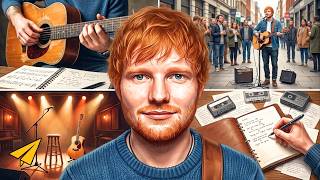
Ed Sheeran shares his rules for making it in music: stay authentic, practice relentlessly through daily songwriting and gigging, and treat albums as commercials for live shows. He credits a surprise ballroom-dance video with helping his biggest song reach 720 million YouTube views.
Chapters
He's an English singer-songwriter and occasional actor. In 2014, he was nominated for Best New Artist at the 56th Annual Grammy Awards. He received the Songwriter of the Year award in 2015. He's Ed Sheeran, and here are his top 10 rules for success.
Carrying on the momentum, I think that's the biggest challenge for any artist. You know, like, to get up to a stadium level for any artist is kind of the peak, but then the challenge from there is staying at that level. To remain at a stadium level, to keep releasing records that not necessarily are hits, but just connects with people. I've never been worried about my records selling millions of copies, but I have been really intent on writing songs that come from me, but when they go out, they belong to people and people can relate to them and get into it. And then they'll come to the shows. The show's always the end goal. I see an album as a commercial to a show. You buy the album or download the album or stream the album or however you listen to the album and then you think, "I want to go and see him live," and then you go to the show. Yeah, I guess my advice for young performers is just do you. Like, there's 7 billion people in this world and there was no one like you and there's no one who's going to write songs like you and no one who's going to sing like you as long as you keep it exactly yourself. I mean, imitate people to a point to get your influence and kind of help you write songs and help you learn guitar and help you sing, but once you've found your voice, just do that and stick with it. Even if it sounds like it's odd and people are telling you it won't work, just stick with it and eventually it will. Because there's 7 billion people in the world, there's bound to be one person that likes your music. Have you ever heard of this theory about the 10,000 hours theory? Yes. So that theory works, right? So when I first started out, I saw Damien Rice in concert and I mention it in a song. I said, "I won't stop till my name's in lights, stadium heights with Damien Rice." And literally, like, I watched him and was like, "I want to do that one day." and wrote a million songs, did a million gigs, and have ended up kind of doing a similar thing. But it literally came from writing a song a day, or 2 songs a day, or 5 songs a day, and just getting all these songs out of me. Doing a million gigs, sometimes 3 gigs a day, sometimes we did 6 gigs a day one year at Glastonbury. But I think if you view it as a dirty tap, when you switch a dirty tap on, it's going to flow shit water out for a substantial amount of time, and then clean water is going to start flowing. And now and then you'll get a bit of shit, but as long as it gets out of you, it's fine.
So with songs, you're going to write shit songs at the beginning.
You are. My songs were terrible. My raps were terrible. Like, I listened to it the other day, it was awful. But I got it out of me, and the more and more you write, the more and more you experience, and then you start flowing clean water and songs start getting better and better and better. And when you just, you're on a good streak, you're writing good songs, now and then you're going to write a shit song, and that song is out of you and you can move on. And it's the same with gigs. Like, you will always play bad gigs at the beginning. That's what you need to do. And then the more gigs you do, the better you'll get. Now and then you'll have a shit gig, but that's alright because you've you've got it out of you and you've experienced it. So I just say the more and more you can do, you put in your 10,000 hours, write as many songs as possible, gig as much as possible. What I've learned about music today is no one has to buy your record anymore. Like, no one has to. Usually they buy your record if you're a likeable person. Adele's incredibly likeable, Taylor's incredibly likeable, Bruno Mars is incredibly likeable, Sam Smith's likeable, I'd like to think that I was likeable. You have to be a likeable person.
You mentioned Hitler just now.
Yeah, but for people to be likeable persons, you have to get to know them. On Twitter, it's very much instant thoughts, and Snapchat's very much instant thoughts, Facebook's instant, instant, instant, and it's all like your personality coming out through something. And you'd find kids, instead of being like, "Oh, well, I'm gonna illegally download the album 'cause I wanna hear it," they'll be like, "Oh, I think they're a nice person. I'm gonna support that," and then they'll go and buy the album. And I think that's a really important thing nowadays. And I've never been disproven, 'cause anyone that comes across as a dick does not sell that many records.
You think somehow that aspect of your personality will, will come out and turn off people?
I honestly do. I honestly do. I think, you know, it's, it's, it's a lot different than, than back in the day. If I was a successful musician in the '70s and there was a newspaper article about me, it could be true, it could not be true. Like, if there's, there's TMZ footage now online on YouTube and you watch it, like, it's there, it definitely happened. So, like, it's, um, yeah, I think it's, I think it's very important to be a good person nowadays in music. And I found that every everyone at a certain level, they're all nice. Everyone's nice. And everyone who's mid-tier, who's very— what's the word? Very self-conscious about themselves and their talent, they're the ones who get a bit nasty. The biggest lesson I've learned from my breakthrough success is everything is not what it seems, from good things to bad things, you know. Everything has a kind of silver lining. And I think it's a healthy way to live when you're in this industry, to be a little bit cautious, because I went in here, in, came into this industry with very, very wide eyes and like, everything's great, everyone's my friend. And then you kind of realize the more, the deeper you get into it, it kind of shrinks a little bit. My dad always said to me, like, if you don't need to get a degree to do a job, then go out and experience it. Like, You know, if you want to be a doctor, go and get your grades and stuff. If you want to be a musician, your education is going to come from doing shows, writing songs, practicing, meeting people, networking. So just start off as early as possible and do that. I've been influenced by many people. I've watched a Coldplay DVD numerous times and taken little tricks that Chris Martin does with the crowd, even if it's just like "Sing this part here." One thing I learned quite early on is my friend went to go and see U2, and I think they were singing "Streets Have No Name" or something, and he'd paid money to be front row, and he was there, and then Bono goes, about to get to the chorus, and Bono goes, "Now you sing!" Like that, and my friend was like, "No! No! No! You sing! I paid to come and see you!" So now every time when I play, I'll make sure I do the whole song, and then the sing-along happens. So it's like, I'll make sure people get what they paid for. And then like, because having a crowd sing it back is the most amazing thing in the world. And I kind of want to have that for the whole concert. But then also you need to— so I give as much as I can and then you do the sing-along. Basically, I was an actor before I was a musician. Like, I was in— you look like an actor when you said that. Did you say that? You actually went, basically, I was an actor before I was a— that, that was my main thing. I loved acting. I was in loads of theater groups. I like did that at school all the time. And then I quickly realized, like, the weird thing is, like, I can show you in 30 seconds how talented I am at music, but I can't show you in 30 seconds how talented I am at acting. And I, and I, I realized, like, I can't actually have a successful acting career without having a good part first, and I just don't like auditions. So, um, yeah, for me, uh, I— that there was a point where I auditioned for this, uh, ITV show, and it was, uh, music and acting. And I thought, oh, this will be fun. And I got down to like the final 6, and I said to myself, if I get this, no more music, just acting. And if I don't, no more acting, just music. And I didn't, and then just did music, and then it kind of all went well. But I've always wanted to act, but I didn't want to do something for the sake of it. I'm going to play you a song. Okay, so this is, this is my thing. When, when people go, when people go, oh, oh, you're so talented, you were born with natural talent, I'm like, nope. Have a listen to this, right? This is the— Has this been played in public before? No. Okay, so this is an exclusive.
Ed Sheeran when he was shit, basically.
Basically, all I'm saying is when people say artists are born with talent, you're not. You have to really learn and really practice. This is me playing guitar and singing. I'm gonna put it into my mic like this. It's okay, Sophie. It's all right, Sophie. I understand. Hold me. And then, and then— Wow. But you know what? Wow. You know what? I did practice. After that you practiced? I did, yeah, no, I just, I probably needed it.
So thinking out loud, 720 million views. 720 million views on YouTube. How does that happen?
Um, that was a conscious decision actually, because there's like certain, certain things you can do to make a music video go viral, which is like quite a difficult thing to do nowadays. So you just have to do something that makes someone click on a video, watch it, and go, I want to share that with 10 people. Like, I have to share that with 10 people. And I never appear in my music videos. I always make like a little cameo if I appear at all. And I'm not a very svelte person. I'm not very talented at much else other than music. But I decided to do—
Doesn't seem to have gotten in the way.
Well, but I wanted to make a music video where I did a ballroom dance. I wanted to, like, à la So You Think You Can Dance, but like, not on TV reality. Like, I trained on tour 5 hours a day to learn this ballroom dance. Shot the music video in a suit. I never wear suits either. Like, it was basically doing the opposite of what anyone thought I was as an artist and then seeing it and then everyone was like, "Oh, that's weird." And then they shared it with lots of other people and then it just kind of blew up. But the reason I chose it for that song is I knew that song was the biggest song on the album. So to do the, like, most standout video for the biggest song, when you combine them, it both blows up.
Thank you guys so much for watching. I made this video because Hussam Ezzie asked me to. So if there's a famous entrepreneur that you want me to profile next, leave it in the comments below and I'll see what I can do. I'd also love to know which of Ed Sheeran's top 10 rules had the biggest impact on you. Leave it in the comments and I'll join in the discussion. Thank you so much for watching. Continue to believe and I'll see you soon. Oh, so cold. Are we recording?
More from Evan


How the Biggest Mistake in History Created A Trillion-Dollar Empire | Sergey Brin



9 Machiavelli Principles That Force People To Respect You | Machiavellian Philosophy



The First 10 Words That Instantly Ruin A Sales Conversation | Vanessa Van Edwards

The Top 1% Mindset Behind The First $5 Trillion Company | Jensen Huang (Nvidia)

