How to Stay FOCUSED and WIN | Kelly Slater's Approach to Life
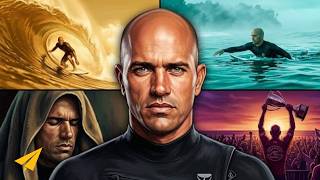
Kelly Slater found his calling at eight years old when a wave brought pure joy, and he's chased that feeling ever since. Rob Machado balances competitive surfing with travel and family, believing true inspiration comes from pleasure, not just winning. Both emphasize that losing interest means it's time to shift focus.
Chapters
I was just a goofball as a kid, so I actually wanted to be a comedic actor.
And I think that was one thing my mom always wanted for me. She always wanted me to follow my dreams. Has anyone in here ever wanted to get worse at something?
I think probably in that moment I knew that this is what I was going to do forever.
You know, the real inspiration comes from just the pleasure of doing things.
You know, if you get too focused on competition sometimes and you don't have anything else happening, then, um, you get lopsided.
I had many, many years where I had all my energy strictly going into trying to improve my surfing, win heats, and that was laser focus. You know, if you're not getting better, then it's not fun anymore.
You know, that's my theory.
I guess the measure of success is, you know, the end result.
I'm not a religious person. I don't even know if I believe in God, but it was a gift from God. It was like this—
He's an American professional surfer known for his competitiveness and style. He's been crowned World Surf League champion a record 11 times. In 2007, he became the all-time leader in career event wins. He's Kelly Slater, and here are his top 10 rules for success.
Surfing is, in its most basic sense, it's just a true freedom of expression. I was just a goofball as a kid, so I actually wanted to be a comedic actor up until the time I was about 10 years old. Well, surfing has really defined my life on probably every level in some way. I believe I believe in certain people, there's just this built-in desire and drive to win that's sort of beyond what other people can understand.
I come from a small city in Florida, in Central Florida, and there's not too many people in my city who've sort of spread out around the world. And I, I live around the world, I travel around the world, and it's really great, it's a lot of fun. But I think as a kid I had a lot of ideas that were really big, and both my parents had passions that they never really followed. Both my parents loved to play music. Dad played guitar. My mom loved to sing and play banjo. My dad did a little bit of theatrical acting. But they never really followed their dreams, either one of them, you know. And I think that was one thing my mom always wanted for me. She always wanted me to follow my dreams and to think big. Don't just think of, like, you know, just a little problem you have at school or just a little— I mean, you got to take care of those things too, but it's thinking about the, you know, someone like the Dalai Lama, he's thinking about the whole world every time he makes a decision, you know, and if people think, if more people think that way, more big great things happen. Has anyone in here ever wanted to get worse at something? I mean, if you're trying to get better, you're competitive, whether it's with yourself or with someone else. Some people try to get— try trying to get more better. Does that make sense? I mean, like, "Mó better." "Oh, that's the one." Better or stronger or— But Rob and I were both raised in very competitive homes. Rob's dad made the Malloy brothers' father break a ping-pong paddle and cry one time in his own home. This is not a joke. No, it was serious. Actually threw the paddle and broke the wall, screaming, cussing, I heard. But Rob's dad and his older brother are like crazy, crazy competitive guys. That's how I always knew them, hanging out when we were teenagers, you know? Like, Jim would beat us at tennis, and then he was way better than us at golf, and he would like take us to the golf range and we'd be hitting balls and he'd be like, "What the hell are you doing? That looks terrible. That's awful." And he'd just like berate us, like just kind of He was constantly pushing that button, and it wasn't— it never was, like, mean. Well, it was mean, but it was nice. You know, it was always out of love, 'cause Jim just wanted us to see better— wanted to see us be better at things, and he loved— I think your dad really loved that competitive environment and being a part of it and just experiencing it.
The wave I rode, I think I was 8 years old. That wave stands out in my head probably more than any wave in my life for some reason. It wasn't any sort of amazing wave. It was just a little wave, probably you know, waist or chest high. I took off on it, and I just did— I did a bottom turn, and I did a little turn off the top, and I just did that 3 different times. And when I finished the 3rd one, I came down, I sort of straightened off on the wave, and I looked over, and my dad was smiling at me. And right at that moment, it was just such sheer joy, you know, like connecting with my dad, but also finding the thing that, like, I was becoming good at. I think probably in that moment I knew that this is what I was gonna do forever.
[FOREIGN LANGUAGE] And I was inspired to go travel around the world. I wanted to be able to make money and travel around the world and surf all these great tropical places. But at the end of it all, after going all these places for so many years and doing so many things, the real inspiration comes from just the pleasure of doing things. It doesn't have to be the best or biggest or most exciting wave or journey or whatever. It really comes down to sharing with people, having time with your friends and your family and the people you love.
Most of the things I do are things I enjoy and, you know, kind of fulfills my life. And some things make me busy and can distract me, so I gotta, you know, make sure I don't do too many of those. And, you know, if you get too focused on competition sometimes and you don't have anything else happening, then you get lopsided, you know, and I've done that before, and I don't really want to go back in that direction. You know, you got to structure things your own way, take advice that's gonna help you and structure it your own way, and I just, I feel like generally I can maintain what I do and focus on the competition too.
I've been really, you know, no excuses. I've put in 100% effort. In, you know, when I've surfed heats the last couple years. But I have been, especially in the last year, been very distracted by a lot of other stuff. And just, I had many, many years where I had all my energy strictly going into trying to improve my surfing, win heats, and that was my laser focus. And, um, you know, last couple years been a little bit more business and side things, and, and also, you know, just a, a slight lack of the same amount of interest, you know. It's not exciting after all these years and stuff, you know? I mean, you— I don't know what you felt at the end of your career, but, you know, at some point you start kind of going, "Well, okay, I've been here, I've done that, I've surfed against this guy." You know, what's the new excitement in that? Super inspired to get better at surfing. You know, if you're not getting better, then it's not fun anymore. You know, that's my theory.
If you're getting worse at something, you might as well find something else that you can get good at. I had an idea of how I wanted to surf waves, and I wanted to be able to do that, and I didn't see really anyone who surfed that way, you know, the way I thought.
Oh, you guys! When you're forming an idea, when you have a vision, whether it's music or it's a company or technology, You know, you have people thinking about it that are coming up with, brainstorming all these great ideas, and then it starts to get bigger, and then you need people who can reach out on those different branches and grab the right people. And I think that's where the success comes in. You gotta have that like mind, but then you have to have different ideas and different viewpoints. And I guess the measure of success is, you know, the end result, whatever comes in the end.
I was in Fiji just a month after he died, and I was surfing in this event. The waves were absolutely perfect, and I just was sitting there while I was surfing the heat and just started daydreaming about my dad. And I just went, gosh, my dad's never surfed one wave as good as any of these waves out here. And all of a sudden, this wave came, and It was— I'm not a religious person. I don't even know if I believe in God, but it was a gift from God. It was like this—
pshh!
And I took off on it, and I— you know, for people who don't know about surfing, the ultimate thing is to get a barrel, get inside the tube. And I think I pulled in the barrel for about 10, 12 seconds on this wave or something. It was right, I swear, 15 seconds after I had this thought in my head about, "I wish my dad could catch one of these waves," and then that wave came. And I came out of that wave and I just like pointed at the sky and it was like I knew my dad was there with me. It was almost like that wave that I got when I was 8 years old, you know?
Thank you guys so much for watching. I made this video because Julia Beatriz Schmidt asked me to. So if there's a famous entrepreneur that you want me to profile next, leave it in the comments below and I'll see what I can do. I'd also love to know which of Kelly's top 10 rules had the biggest impact on you. Leave it in the comments and I'll join the discussion. Thank you so much for watching. Continue to believe, and I'll see you soon.
More from Evan


How the Biggest Mistake in History Created A Trillion-Dollar Empire | Sergey Brin



9 Machiavelli Principles That Force People To Respect You | Machiavellian Philosophy



The First 10 Words That Instantly Ruin A Sales Conversation | Vanessa Van Edwards

The Top 1% Mindset Behind The First $5 Trillion Company | Jensen Huang (Nvidia)

