How To Take Control Of Your Future (Before It's Too Late) | Denis Waitley
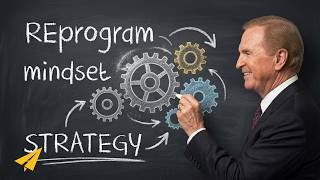
Denis Waitley argues that in a world moving faster than ever, you must become a "change master" or become obsolete. He contrasts outdated corporate cultures focused on short-term profit with new ones built on empowerment, continuous learning, and performance-based pay. Knowledge is now the source of power, and staying relevant demands lifelong learning and humility.
The world changes faster today than ever before. You have to decide if you will master change or become a victim of it. You can no longer expect a company to take care of your entire career. You must take control and become a lifelong learner. A special thanks to the Whateley family for partnering with us to release this video exclusively on my YouTube channel. To check out more about Dennis Whateley Global, click the first link in the description below.
We live in a fast-forward world with more changes in one of our days than in a decade or more of our grandparents' lives. You and others in your region are at the center of what is being transformed into the greatest economic and geopolitical power base for the foreseeable future. This metamorphosis is one of the most awesome examples of human ingenuity and perseverance in recorded history. You have both the opportunity and responsibility to create a harvest of abundance and fulfillment —for your families and generations to follow. It is up to you. There is a Chinese fable about a wise man who lived outside a large village. And every Saturday he would come into the main square, and the villagers would surround him to be healed or to gain words of wisdom, which the wise man had been doing for years. There also lived nearby a young, ambitious man who was jealous of the wise one and resented his popularity. The young man had a plan to embarrass the wise one. He would come into the village square with a dove tucked inside his hands and ask the old man if he knew what was in his hands. If the old man guessed correctly, he would ask another question: "Is the dove alive or dead?" If he said it was alive, the young man would push his hands together and break the dove's neck. And if he said it was dead, he would simply open his hands and allow the dove to fly into the sky. So with his plan in place, the young man set off toward the village square in the mid-afternoon at the busiest time of the day. As he approached the old man, the wise one was busy assisting people with different problems and offering words of wisdom. The young man confronted the wise one and, speaking so everyone could hear, he said, "Hey, old man, I have a question for you." The wise man turned and smiled. "Yes, of course. What is it?" The crowd, sensing something of a showdown, moved in closer. The young man continued, "My question to you is, what do I hold in my hands?" The wise one smiled and said, "Well, that's easy. You have a beautiful dove in your hands." The young man chuckled, "Well, can you tell me if it is dead or alive?" The wise man paused, reflected, yet hesitated to answer. The young man, relishing his apparent checkmate, retorted, "Well, old man, you seem to be at a loss for words." The villagers were silent with anticipation as tension filled the hot afternoon air. The young man, sensing victory, shouted, "For years and years you've had an answer for everything. What about now, old man? What about now?" With this last statement, the wise man gave his trademark smile. And replied in his steady, friendly manner, "Young man, the fate of that lovely dove is in your hands." And so it is with change in your life. It's up to you. There are only two choices facing leaders today and in the future: you must become change masters or become obsolete as change victims. Today in the knowledge-based world, where change is the rule, a set of personal strategies is essential to success, even survival. Never again will you be able to go to your place of business on autopilot, comfortable and secure that the organization will provide for and look after you. Each of us must be willing to stand out while fitting into society. We must be team leaders, not just team members. We can no longer say, Why don't they do something? We must say instead, "Here's what I'm going to do to solve the problem by thinking globally and acting locally." In order to gain respect of others, we must first earn it. We must be respectable. In order to be a role model, we must first set a positive example. In order to lead others, we must first lead ourselves. You must look in the mirror when you ask who's responsible for your success or failure. You must become a lifelong learner and leader, for to be a follower is to fall hopelessly behind the pace of progress. What worked yesterday won't work today. Why? Yesterday, natural resources defined power. Today, knowledge is power. Yesterday, leaders commanded and controlled. Today, leaders empower and coach. Yesterday leaders demanded respect. Today leaders encourage self-respect. Yesterday employees took orders. Today leaders make decisions with teams. Yesterday value was extra. Today value is everything. Yesterday profits were earned through expediency. Today profits are earned with integrity. The culture of the national and multinational corporation is changing dramatically. Companies that cling to the old ways and attitudes are doomed to extinction. The old corporate culture— maximum short-term return on invested capital for shareholders with replaceable employees, expedient methods, environmental waste, aging factories, assembly line production, central line authority, managing one-on-one— are gone. The new corporate culture to meet ever-increasing customer demands in rapidly changing world markets with highest quality products and services through educated, dedicated, skilled, performance-compensated teams who transmit their core excellence and their value in their contribution, resulting in maximum long-term return on invested capital for shareholders. As employees, which most of us are, we have but two choices today: to be a team leader of a winning team or face being cut. Because employers too have two choices: empower the few who will be their new team leaders or see their top producers exercise their free agent rights and join another team that does have the vision, culture, synergy, and leadership to win. A team, in short, that has embraced the new culture. The new employee paradigm: autonomy and empowerment, minimal supervision, maximum training, meaningful work in environmentally safe places with a mission to help society, a career path upward, the opportunity to grow and move up the ladder in the company, incentives and compensation based on performance standards, and a flexible schedule with consideration of family, and cultural pursuits, and also a team leader able to be a standout while remaining a team player. Most of us believe that the computer would give us more time for leisure and personal pursuits. More significantly, however, the computer has brought us competition from everywhere in the world, competition of a global order. Factories in America and Europe are rusting as foreign competitors dominate one industry after another, from machine tools to motorcycles, from consumer electronics to steel. The eventual outcome of this global economic restructuring is anything but clear. But what is clear is the force behind the competition, the inexorable yearning of people throughout the world to improve their own standard of living. They too want a seat at the banquet table, together with cars, vacations, and comfortable, well-equipped condominiums, apartments, and houses. Consider the computer's impact. Designed as a tool for managing complexity, it also adds complexity, just as new freeways add more traffic. The computer enables us to sort, store, and retrieve material with ever-increasing speed. But the faster data can be analyzed, the faster decisions can be expected, and the greater the pressure to reach them. And the computer's efficiency is hardly lost on our competitors. They install, program, and use them to produce goods and services of the same quality as ours for far less money. Thus the competitive edge will belong not to those who use computers but to those who know how to inspire more productivity and excellence from each individual. We're well into a new century of unprecedented human growth and development. We must reexamine and reevaluate the way we think, the way we respond to life's daily challenges in what will be a time of even more astonishing change. The new leaders in these new decades will welcome change rather than try to resist it. They will have learned how to make change work for them rather than against them, and they will have developed unique strategies and skills that enable them to create opportunities from challenges. The new leaders actually benefit from change, some of which they create themselves. Like surfers, they ride the waves using their power to take them where they want to go. Rather than try to resist change, they seek harmony with it. In response to rapid change, the new change masters introduce it in the form of new methods that increase effectiveness and efficiency, create new products and new services, lower costs, and encourage ideas to enhance productivity. They learn how, why, and where things are changing so they can exploit the possibilities. Instead of fighting for market share, they create new markets. They respond to global competition by determining what they're best at and then doing it. Knowledge portability is a term you'll hear often in the future. It's shorthand for saying that the geographic boundaries to knowledge have been erased. The computer and telecommunications with smartphones and tablets have made possible instant information access throughout the world, and therefore anything of high quality can be made anywhere. Companies are restructuring, relocating, and re-engineering to eliminate their own boundaries and hierarchies, and so too must individuals reinvent themselves. In order to adapt to a fast-forward world in which Shanghai is only seconds in communication from New York and Washington is no further from Beijing. One CEO put it very bluntly: "Unless we manage change, we're going to change management." Chinese philosopher Lao-tzu advised us that "to know others takes intelligence, but to know myself takes wisdom. We all yearn to shape our own lives, fashion our own destinies, but most of us find ourselves in the same dilemma from our teens. How do we really want to spend our days? What choices should we make? What can we do that will fill our lives with meaning and bring us the adventure and rewards that we seek? How do we know we've chosen the right career and the proper goals? Who should be our role models now? The acquisition of knowledge is a lifelong experience, not a collection of facts or skills. Not long ago, what you learned in school was largely all you needed to learn. You could rely on that knowledge for the rest of your life. With knowledge expanding exponentially, this is no longer true. Hundreds of scientific papers are published daily. Every 30 seconds, some new technological company produces yet another innovation Your formal education has a very short shelf life. Thus, lifelong learning means far more than formal classroom knowledge. In a world at which working with people is essential, it also means deepening your understanding of yourself and others. A shared belief emerged from a recent roundtable discussion among a group of innovative multinational business leaders. All the leaders, while innovating in their business lives, were doing the same in other spheres of their lives. They agreed that their subordinates' executive growth depended on personal growth and that those who believed that they had completed their education were on a fast track to personal obsolescence. Lifelong learning, once a luxury for the few, has become absolutely vital to continued success. But while there are dangers in trying to become a leader without thoroughly knowing your field, There also are dangers in thinking of yourself as an expert, especially the danger of losing your sense of wonder. Leaders who continue learning throughout their lives never forget that they always have more to learn. Although their knowledge and experience may have made them teachers, they can continue to think of themselves as students. The most compelling reason to avoid thinking like an expert, even while continuing to acquire your expertise, is that your assumptions may damage your ability to generate and work with new ideas in a fast-forward world in which the only rule is change. Although change is the rule, you must not let change be your ruler. You must tap into the knowledge and experience of everyone in your organization. Some of the youngest and lowest-paid employees have ideas that can increase the efficiency and effectiveness of your enterprise. And some of the older veterans, who are seldom called upon to voice their opinions on productivity, have experienced virtually every type of business challenge at some point in their careers. By challenging your own assumptions and being open to ideas and suggestions available from a variety of human resources within your sphere of influence, you'll join the ranks of the successful leaders who will own the future. They are the change masters.
And congratulations, you're one video closer to who you're meant to be. Believe. For some more incredible Dennis Waitley motivation, check the video right there next to me. I think you'll love it. Continue to believe, and I'll see you there.
You know, I love the concept and the story of Acres of Diamonds. Uh, when you stop to think of it, Acres of Diamonds is a story of everyone looking for success in all the wrong places.
More from Evan


How the Biggest Mistake in History Created A Trillion-Dollar Empire | Sergey Brin



9 Machiavelli Principles That Force People To Respect You | Machiavellian Philosophy



The First 10 Words That Instantly Ruin A Sales Conversation | Vanessa Van Edwards

The Top 1% Mindset Behind The First $5 Trillion Company | Jensen Huang (Nvidia)

