How to Teach Yourself ANYTHING | Elon Musk Wisdom in 9 Minutes
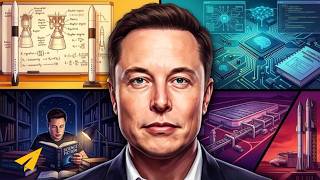
Elon Musk didn't need an aerospace degree to become a rocket company CTO. He learned physics, read extensively, and talked to smart people. T-Pain taught himself to sing without a coach. Intensive, focused study can compress years of learning into weeks.
Chapters
And then I read a lot of books and talked to a lot of smart people. You're self-taught?
Yeah.
Think about your school experience. You memorize a whole bunch of statistics and random facts and figures that help you pass a test, and then 99% of it vanishes.
You can learn more from speaking to people in 15 minutes than if you spent your life doing something.
Rise and shine, it's enespresso time! Good morning, Believe Nation, it's Evan. My one word is believe, and I believe in you. I believe you You have an amazing gift inside you that I want to see explode out onto the world. So grab your coffee and sip on today's message: Learn it yourself. Over to you, Elon Musk.
I wake up every morning, espresso keeps me going. I wake up every morning.
How did you get the expertise to be the chief technology officer of a rocket ship company?
I do have a physics background. That's helpful as a foundation. And then I read a lot of books and talked to a lot of smart people.
You're self-taught? Yeah.
Well, self-taught, yes, meaning I don't have an aerospace degree.
So how did you go about acquiring the knowledge?
Well, like I said, I read a lot of books, talked to a lot of people, and have a great team.
You'd be surprised at how much you can learn when you get rid of the idea that the degree makes the difference. Think about your school experience. You memorize a whole bunch of statistics and random facts and figures that help you pass a test, and then 99% of it vanishes. Where when you are learning something that you know how to apply and is directly applicable to your passion, you remember it. And so that allows you to learn really, really, really quickly. You either adopt the mindset— why I love this video— you are either Elon Musk or you are the interviewer. You are either Elon Musk and you approach a situation and you say, "I can learn anything. I will be self-taught. I will figure it out. I will read books. I will watch videos. I will teach myself how to do this thing." Or you're like most people, that interviewer who will say, "You're self-taught? You didn't go to school for this?" And you need to decide right now what camp you want to fall into. As long as you are in the "you're self-taught" questioning, not possible mindset, limiting beliefs, you're always going to be held back. Where if you can adopt the mindset that I can learn anything that I want to, I can go up against experts who've been doing this for years because I just care more about this thing. And when I dedicate myself to something, I will learn it and be amazing at it. If that's your approach going in, then guess what? You will be. I look at my Instagram account as an example. Took me 6 years to get to 6,000 subscribers or 6,000 fans, something like that. 6 years, right? Thereabouts. And I just never really put a priority on it. In the past month, I've grown it by 1,000 plus. So 6 years to get to 6,000, 1 month to get to 7,000, and we're growing and we're growing, we're growing. And I haven't talked about my Instagram account outside of Instagram apart from this. Now, for those of you guys watching, I would love it if you want to follow me on Instagram. Instagram, my first public appeal. So I've been studying, I've been spending extra time trying to understand the algorithm, hashtag usage, pictures, quotes, frequency, all of the things that make Instagram important. Understanding stories, understanding highlights, understanding how to tag within stories, and I'm teaching people on my team how to do it. I had a call the other day with an Instagram expert. This is somebody who gets paid to coach people on how to do their Instagram accounts. And when I'm talking to him, I'm talking the same language. I've only been doing this for a week at that time, but because I spent a week immersing myself and understanding what's happening on Instagram, I can talk at the same level as somebody who's been doing this for years. And it's not to say that I'm some amazing genius. You could do the same thing too. You're just preventing yourself from doing it because you think you need to have years of experience, because you think you need to have a degree, because you think you need to go to school for this. Whatever the thing is that you want to learn, if you want to be great at it, you can be in a really, really, really short amount of time if you just dedicate yourself to it. And so you need to decide: do you want to be that Elon Musk and believe that you could teach yourself anything and be a genius at it? Or do you want to be the reporter and always question everything and say, "You're self-taught? It's not possible." What mindset do you want to adopt? Now I've got a special bonus clip for you, but before getting to the bonus clip, my question of the day is: What was the last thing that you taught yourself to do that you are really proud of? Leave it down in the comments below. I'm really curious to find out. Thank you guys so much for watching. I believe in you. I hope you continue to believe in yourself and whatever your one word is. Much love, enjoy the bonus clip, and I'll see you again tomorrow morning for another shot of espresso.
I wake up every morning, espresso keep me going.
Learning is a lifelong thing. It doesn't end at Harvard Business School. It's your responsibility. I think if you're in any profession at all, you have to do it consistently, all the time. I think I spend probably 50 or 60% of my time learning, reading, talking to people, traveling. It's the only way you can keep on top of this global world of ours. And it's even tougher now because of the globality of the businesses you're going to deal in.
How?
Reading is the most important one, but the second one, which is often forgotten, is talking to other people. You can learn more from speaking to people in 15 minutes than if you spent your life doing something. They can explain it to you, and you can learn from watching people. You also are going to learn by— I'm gonna call it imitation— but by watching other very good people and how they operate in difficult circumstances. I learned a lot of things what not to do and a lot of what to do by watching other people.
I mean, one definition that I have for a good team is a group of people that makes better decisions as a whole than it would individually make as a sum of the parts. And when you're— I think most smart people like learning, right? And I mean, that's like one of the thrills of starting a company, right?
Is you're just—
the learning curve can be so steep. And if you can set up a team dynamic where you're constantly learning from the people around you, then I mean, what's better? Right, it's like these are the people I wake up every morning and I wanna go learn from and work from.
Is that one of your heuristics for hiring people too, to like hire people that you learn from?
Yeah, and when building a team, you want to think about the dynamics so that way you can maintain this property that the team makes better decisions as a group than any individual would.
You went into singing, you self-taught? Yeah, self-taught, I never ever ever had a vocal coach. I'm totally, I'm not against vocal coaches, but like they used to try to tell me like, you know, You sing good, but we're going to get you a vocal coach. And, you know, I'd always be like, no, I'll teach myself.
But how did you find out you could sing?
Because rapping is like—
I don't— I honestly, personally, I sucked at singing at one point when I was like 17. Like, I was horrible. I was the worst singer. Like, this is to all you bad singers out there. I was a horrible singer, right? And every single day I would listen to John Legend. And I would go on the back of the city bus because I was very shy of singing.
Like, it's—
damn, I can't come in front of somebody and sing. It's very nerve-wracking to sing.
Yeah.
So what I would do is I would go on the city bus and go to the back, back, back, and I would sing really low just when people were there. No matter if they were there, they heard, I would sing really low. Then as I got a little older, I started singing a little higher. Then I just didn't give a fuck. I started going on the bus and I was just singing, singing, and people would be like, yo, you have a pretty voice. The muscles in my vocals, uh, started getting stronger. And I'm in for it, I'm in for it. You know, singing is one of the most important components to me, so like, yeah, that's kind of how it all started. And the reason why I'm versatile at singing is because I taught myself, and when I was teaching myself, I wanted to try to sound like everything so I could teach myself how to sing this way and sing this way, and you know, and eventually I think that became, you know, the way I became versatile with my singing. So let me give you the one secret to happiness. One word. This is all you need to be happy.
The most important word ever.
If you had to think of one word that's most important to you or that sums you up or that would be kind of like a little beacon. Hey, Believe Nation.
If you want to know what the most important one word is Tony Robbins, Gary Vaynerchuk, Oprah Winfrey, will.i.am, and Howard Schultz, I have a very special secret video for you. Check the description for details.
More from Evan


How the Biggest Mistake in History Created A Trillion-Dollar Empire | Sergey Brin



9 Machiavelli Principles That Force People To Respect You | Machiavellian Philosophy



The First 10 Words That Instantly Ruin A Sales Conversation | Vanessa Van Edwards

The Top 1% Mindset Behind The First $5 Trillion Company | Jensen Huang (Nvidia)

